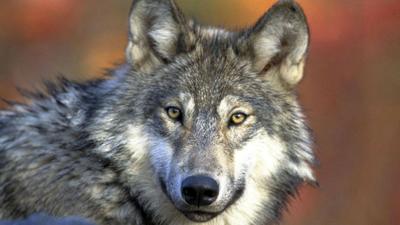
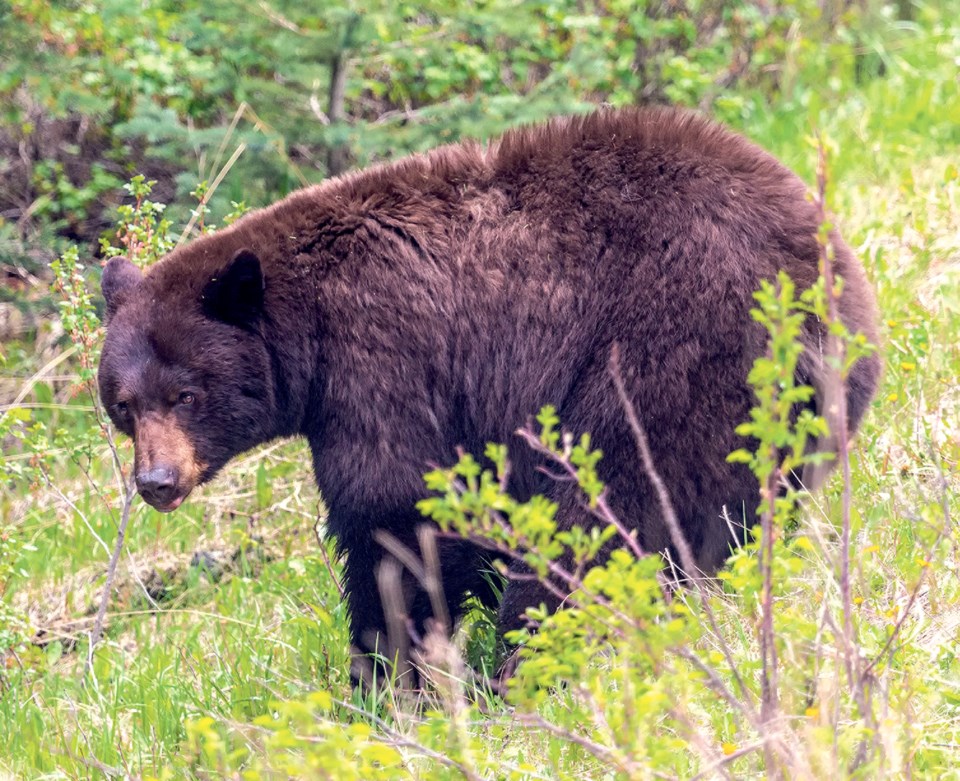
HELENA, Mont. – At its Oct. 28 meeting, the Montana Fish and Wildlife Commission is considering adjustments to wolf trapping regulations for the 2021 season.
The changes are aimed at minimizing the possibility of non-target capture of lynx and grizzly bears. Both species are protected under the Endangered Species Act.
The proposed changes look at more clearly identifying occupied grizzly bear habitat and adjusting the season dates for trapping and snaring in these areas.
The proposed default opening day in areas likely to have grizzly bears would be Dec. 31, according to a release. However, this date could move earlier if the department determines most grizzly bears are denned for the winter.
The proposal would also close snaring for wolves on public land within Lynx Protection Zones. These zones have long been established in state…
HELENA, Mont. – At its Oct. 28 meeting, the Montana Fish and Wildlife Commission is considering adjustments to wolf trapping regulations for the 2021 season.
The changes are aimed at minimizing the possibility of non-target capture of lynx and grizzly bears. Both species are protected under the Endangered Species Act.
The proposed changes look at more clearly identifying occupied grizzly bear habitat and adjusting the season dates for trapping and snaring in these areas.
The proposed default opening day in areas likely to have grizzly bears would be Dec. 31, according to a release. However, this date could move earlier if the department determines most grizzly bears are denned for the winter.
The proposal would also close snaring for wolves on public land within Lynx Protection Zones. These zones have long been established in state trapping regulations and are generally in the greater Yellowstone area and northwest Montana.
Montana Fish, Wildlife & Parks took public comment on wolf regulations during this past summer. The commission then set the current season dates and regulations in August.
The public can comment on these potential adjustments during the Oct. 28 meeting, which will be held at the Montana State Capitol, room 303, and through Zoom.
To testify on items on the commission agenda, you must sign up by Oct. 27 at 12 p.m. You can sign up here.
To the editor: When I first witnessed images of terrified bobcats, foxes, and other wildlife with metal jaws crushing their limbs while humans stood smugly smiling over them, I didn’t know what I was looking at. I thought that it was illegal activity or maybe something from another country. I soon found out that not only was this cruel activity—trapping—legal, but it’s endorsed by the Vermont Fish and Wildlife Department (VFWD). Tradition runs deep in Vermont and some of those traditions run contrary to modern science and ethics.
When I started researching trapping in Vermont back in 2010, I quickly learned that it was worse than I ever imagined. It set me on a course that has changed my life. Much of what I come across is too horrific to describe in words, but photos and videos shared by Vermont…
Stowe — Trapping season starts on the fourth Saturday of October each year in Vermont and runs through March 31. Each trapping season, dogs, cats, and other non-targeted animals, including protected species, are injured or killed in traps. According to public records obtained by Protect Our Wildlife, a dog was trapped in a leghold trap set for coyotes during the first week of trapping season last year. Some of the other non-targeted captures that were voluntarily reported last year include a barred owl, a great blue heron, and a Canada goose. Vermont Fish & Wildlife does not require trappers to report when they trap a non-targeted wild animal.
Traps may be set on private land — with permission — and public land, including National Wildlife Refuges, home to federally protected species including Canada lynx.
BENTON COUNTY, Tenn. (WKRN) – An active homicide investigation is underway in a small Tennessee community after a hunter was found dead on Tuesday.
Benton County Sheriff Kenny Christopher says the 55-year-old Timothy Ring had been shot multiple times at what appeared to be close range. His body was discovered on his rental property, some 25 yards away from his truck in the wood line.
John Boivin, Local Journalism InitiativeA black bear was quite happily rooting through Kyle Storie’s refrigerator when the Edgewood resident interrupted him at 4 am. Storie managed to get the bear out of the house safely a few minutes later.Image Credit: Kyle StorieOctober 21, 2021 – 12:00 PM
An Edgewood family was shaken but unharmed after a black bear broke into their home in the middle of the night recently.
Kyle Storie says he’s not sure what caused him to get up at 4 am on September 30. It was pitch black in their home on the outskirts of the community, and all was quiet.
“I’m a deep sleeper, and our bedroom door was closed,” he said. “We didn’t hear a thing… not even my dogs did!”
Storie walked into his living room and saw the fridge light on in the kitchen. He took a step forward and felt the crunch of a Frosted Mini Wheat under his bare foot.
“I’m like, ‘What the heck? Was my son having a weird midnight-eating thing?’” he thought as he casually walked into the kitchen.
Then he stopped. A metre and a half away, a 450-pound boar black bear was looking at him.
“It was sitting there in my kitchen, with the fridge and cupboard doors wide open, just having a snack on the kitchen floor,” he said. “He kind of lunged at me, did a fake charge, and the big wheeze and jaw click they do.”
His first thought was for his family’s safety. He moved back into his bedroom and woke his partner, Jessica.
The two of them went out into the hallway again. While Jessica went to ensure Storie’s six-year-old son was safe and call 9-1-1, he tried to figure out what to do next.
“I have an antique double-edged axe, for decoration, so I pulled that off the wall,” he says. “I’m still in my boxer shorts and bare feet. Everything’s happening really rapidly, right?
“I approach the bear and I smash the flat of my axe on the floor, which reverberated across the room,” recalls Storie. “I’m roaring at the bear, ‘Get out of my house, man! It’s you and me bear, and I’m prepared!’”
It was then Storie saw his cellphone on a table beside him. He grabbed it as the bear tried to find a way out of the kitchen.
“I thought, I have to take a picture of this or no one would ever believe me,” he says.
Storie opened both doors in his house, and after some more yelling, axe banging and ursine confusion, the bear finally found its way out. Storie says he slammed the doors shut and just slumped to the ground, trying to process what had just happened.
“I just kind of had a moment. I’m not the kind of guy who is easily shaken at all, I’ve never been scared of anything my whole life,” he told the Valley Voice. “But the thought of my son could have woken up to have a pee, and could have encountered a bear – that just flashed into my head. I got so mad.”
But with the family safe, Storie was able to look around and figure out what happened. The bear had come up to the kitchen window, and pulled the simple wood-framed glass pane out of the wall and threw it outside.
“So the majority of the noise from the broken glass would have been outside the house,” speculates Storie. “And then he climbed right in, across our kitchen table.
“I figure he was in our house for at least a half an hour before I woke up.”
After cleaning up the mess, Storie decided to take some precautions.
“I’m from Prince George, so I know how to make spike boards for windowsills,” he says. “I nailed them to the kitchen window and the window he broke into the night before.”
It was a good thing he did. Because the next night, the bear was back.
“He checked out windows and pricked his paws on the spikeboard, before he went for the baited trap the COs had left earlier in the day,” says Storie. “He was like, ‘nah, there’s some really good stuff inside there, and if that doesn’t work out I’ll save it for my way out.’”
The bear was caught that night, taken away and destroyed by the COs. It had become too acclimated to humans.
Storie says bears are common in the area, but even more so lately as forest fires south of the community have driven the animals into new territory looking for food.
“We’ve seen 15 to 20 different bears in the area in the last month, including a young grizzly,” he says. “It’s like the wildfires drove them all north, probably came up the valley way.”
And if you should find a bear in your house in the middle of the night, Storie has some advice drawn from experience.
“Give them an exit point, as many options as you can for exit, and then get really loud, assertive and abrasive,” he says. “I wanted him to know he wasn’t welcome.”
“It’s important for us to know how our actions as a community are being effective, or not effective, in keeping bears out of town and hopefully reducing the number of relocated bears.”Oct 21, 2021 8:30 AM By: Cathy Ellis
CANMORE – Three black bears – a mama bear and her two cubs – were killed earlier this summer amid concerns for public safety as they fed on a buffet of dogwood in a Canmore residential neighbourhood.
Officials for Alberta Fish and Wildlife have repeatedly told the Outlook that no bears have been destroyed in Canmore so far this year, but finally confirmed this week that the bear family was destroyed back in August.
“We apologize for the error,” said Carla Jones, a spokesperson for Alberta Solicitor General and Justice – the ministry that oversees fish and wildlife – in an email.
Jones said six bears have been euthanized in the Cochrane district as of Oct. 18, which included the three bears in Canmore.
She said these numbers only include incidents that would fall under the jurisdiction of fish and wildlife officers.
“(It) does not include any bears that were relocated or euthanized in provincial parks,” she said.
The mama bear and her cubs were feasting on dogwood in the Rundle Plant Lane area near Canmore Creek. The food source has since been removed so as not to attract any more hungry bears to the area.
“They were getting into trouble, they were closing distance on people, bluff-charging,” Jay Honeyman, a human-wildlife conflict specialist with Alberta Environment and Parks, told CTV Calgary. “We caught them and they had to be destroyed.”
Jones said fish and wildlife officers use the provincial black bear response guide to determine how bears are handled.
“This guide provides a standard approach in deciding black bear management responses,” she said.
“The guide is a result of a collaboration among biologists, enforcement officers and problem wildlife specialists, and is reviewed annually and revised as required.”
Following the destruction of the three bears, Canmore has been on heightened alert with several other black bears feasting on backyard crabapple trees and mountain ash berries following a poor wild buffaloberry crop and an abundance of opportunity in town.
According to fish and wildlife, 23 bears have been captured throughout the Cochrane district, which includes Canmore and the Bow Valley.
Five black bears were relocated and shipped out of Canmore within one week at the end of September, including a sow and two cubs. Two black bears have been hit and killed on the Trans-Canada Highway.
Honeyman said it hasn’t been a good year for bears, but in “reality it’s a very average year.”
“We’re moving these bears in the fall, which is just before denning, which is a terrible time to move bears. The success rate is really low,” he told CTV.
“There’s a lot of people in town who call themselves environmentalists and really care for wildlife… these are the people that are sending me pictures of bears on their back deck eating crabapples.”
Bear biologist Sarah Elmeligi said it’s important for residents to know many bears are being relocated out of Canmore or killed and how it compares year over year.
“It’s important for us to know how our actions as a community are being effective, or not effective, in keeping bears out of town and hopefully reducing the number of relocated bears,” she said.
“With a goal as a community to reduce human-wildlife conflict, if we’re not being successful, then we need to be able to take a step back and figure out some new actions to increase success.”
Elmeligi said it is vital for the community to get behind initiatives like removing wildlife attractants to help prevent bears from coming into town.
She said relocated bears typically don’t survive in the long-term.
The success rate is low because of challenges faced by bears in establishing themselves in new areas due to competition with other bears, foraging for food or denning for winter.
“The solution is to not be relocating as many bears, and the way that we do that is to change how we behave and how we manage our properties and our town,” she said.
“We need to make sure that when bears do come into town they don’t linger, they walk through town and continue on their merry way and no conflict results.”
However, Elmeligi did say the province’s bear response matrix in the response guide on black bear relocation is somewhat problematic because it is way too subjective.
“Unless the bear is engaging in its natural behaviour in its natural environment, then you can relocate… it’s like a quick option to come to,” she said.
“It’s important that these bear response matrixes provide consistency, that it doesn’t really matter who responds, that they would respond in the same way.”
Joe Biden46th and current president of the United States
As President Biden pushes Congress to pass his climate agenda just days before world powers gather in Scotland to hash out a new international accord, more than two-thirds of Republicans (67 percent) continue to insist that climate change is “not an emergency,” according to a new Yahoo News/YouGov poll.
Coming on the heels of a summer that featured record-setting heat waves, wildfires and floods — all exacerbated by climate change — the result is a stark example of how U.S. politics imperils global progress on the issue.
The survey of 1,704 U.S. adults, which was conducted from Oct. 19 to 21, found that nearly all Democrats (78 percent) and a plurality of independents (45 percent) view climate change as “an existential threat that must be…
From Project Coyote: http://www.projectcoyote.org/state-judge-issues-dramatic-decision-in-striking-down-wisconsin-wolf-hunt/?eType=EmailBlastContent&eId=6b526199-c685-4540-8d69-488e3ad75763 Decision could spare hundreds of wolves targeted for killing Madison, WI. — In the biggest news so far for wolf protection in the United States in 2021, a court in Wisconsin issued an injunction today requiring the Wisconsin Department of Natural Resources (DNR) to set the quota at zero wolves for the upcoming wolf trophy hunt scheduled to start Nov. 6. The injunction was granted at the request of Animal Wellness Action, the Center for a Humane Economy, Project Coyote, Friends of Wisconsin Wolf and Wildlife, and Wisconsin resident Pat Clark as part of a legal action filed against DNR. In a prior decision, Dane County Judge Jacob Frost also denied a motion to intervene from an extreme Kansas-based trophy hunting group whose prior legal actions set the stage for the slaughter of 218 wolves in February 2021.Judge Frost’s decision to enjoin the hunt rested on his concern that DNR has violated the Wisconsin Constitution by failing to finalize formal rules and follow its own policies related to the wolf hunt. Instead, DNR has been relying on an “emergency rule” since 2012. Pointing to a failure of democratic decision-making, Judge Frost acknowledged the “perverse result of an emergency rule that has lasted about a decade.” DNR’s emergency rule has had devastating impacts on the state’s wolf population, with a first blow delivered in February and a second one planned for November.“DNR needs to stop it,” Frost said in his oral ruling issued from the bench Friday. “They need to actually comply with the law.” The judge ordered DNR to set the wolf quota at zero, and to issue zero licenses allowing hunters to kill wolves until it engages in formal rulemaking.”The Court brought sanity and balance to the wolf debate in Wisconsin by requiring DNR to follow the Constitution and stop taking unlawful actions related to wolf management, including its reckless approach to the planned November wolf hunt,” stated Paul Collins, Wisconsin state director for Animal Wellness Action. “Zealots hell-bent on eliminating wolves invited this legal action.”Opponents of the planned November wolf trophy hunt argue that DNR has recklessly managed wolves, including in the aftermath of the lifting of federal protections by the outgoing Trump administration that took effect in January 2021. Part of the state’s mismanagement included setting a wolf kill quota of 130 for the upcoming hunt without any sound scientific basis or conservation rationale. During quota-setting hearings in August, DNR freely conceded that it did not fully comprehend the final impact of the disastrous February 2021 trophy hunt when at least 218 wolves were slaughtered in a 60-hour killing spree that exceeded the set quota by 83 percent. Despite acknowledging that one of the primary reasons for the excess killing of wolves in February was the delayed reporting period — which enabled hunters to skirt the cap by claiming they didn’t get the “stop shooting” order until it was too late — DNR actually lengthened the reporting period for the proposed November hunt, allowing hunters even more time to prolong the killing of wolves. This action would have virtually ensured another overkill despite evidence of social media posts from hunters encouraging last-second reporting to maximize the number of wolves taken. “We are heartened by this rare instance of reason and democracy prevailing in state wolf policy,” said Michelle Lute, PhD in wolf management and National Carnivore Conservation Manager for Project Coyote. “Today and yesterday’s hearings made clear that the DNR violated the constitution, and that the wolf slaughter scheduled to start in November would result in catastrophic and irreparable harm and must not occur.””While the injunction brings welcome temporary relief from ongoing killing of wolves in the state, we can’t stop working to make sure that what happened in February 2021 never happens again in Wisconsin,” stated Melissa Smith, Executive Director of Friends of Wisconsin Wolf and Wildlife. “We know that this injunction will be challenged by powerful and wealthy interests who care little about the rule of law and just want to see the senseless slaughter continue.”Neither Michigan nor Minnesota elected to allow trophy hunting and trapping of wolves in 2021, leaving Wisconsin alone among range states in the Great Lakes region on wolf policy. The granting of the injunction gives Wisconsin’s wolves a reprieve until federal protections can be restored in separate proceedings in federal court. Plaintiffs in the case are represented by Joseph Goode of Laffey, Leitner & Goode, LLC, Jessica Blome of Greenfire Law, PC, and Claire Loebs Davis of Animal & Earth Advocates. ###