Christian Right Pushes State-Level Policies to Erode Church-State Separation

Christians march near the Pennsylvania State Capitol
Pro-Trump Christian nationalist Jericho Marchers hold religious icons and an American flag as they march past the Pennsylvania State Capitol.

BYEleanor J. Bader, TruthoutPUBLISHEDAugust 31, 2021SHAREShare via FacebookShare via TwitterShare via Email

A white lower-case t on a black background

READING LISTPOLITICS & ELECTIONSChristian Right Pushes State-Level Policies to Erode Church-State SeparationENVIRONMENT & HEALTHVaccination Can Stem the Rise of New Variants. Time to Double Down.POLITICS & ELECTIONSCould the Taliban Takeover Become a Wedge Issue for the Far Right?ECONOMY & LABOR750,000 Households May Face Eviction If Congress Doesn’t Act, Says Goldman SachsEDUCATION & YOUTHFL Imposes Penalties on School Districts With Mask Rules, Despite Court RulingPRISONS & POLICINGThe Court Knew She Didn’t Commit the Murder. They Sentenced Her for It Anyway.

If conservative religious leaders have their way, the words “In God We Trust” and the Ten Commandments will soon be affixed to the walls of all U.S. classrooms and courthouses. Every gathering — PTA, library or school board meeting, city council hearing and sporting event — will begin with a prayer, and we’ll all be expected to lift a glass in celebration of an annual Religious Freedom Day and Christian Heritage Week. What’s more, doctors, therapists and other health professionals will be able to refuse care to those whose sexuality, gender identity or expression they dislike. So will clergy, business people and social service providers.

And there’s more. Much more.

A 51-page document, “Model Religious Freedom Measures Protecting Prayer and Faith in America,” lays out a wish-list, complete with ready-made model legislation and talking points for conservative, Christian activists to use in statehouses throughout the country.

Get our free emails

  • Email

The “model measures” are the brainchild of what was once called Project Blitz — a campaign coordinated by the Congressional Prayer Caucus (CPC) Foundation, a 33-state coalition of Christian nationalist lawmakers “advocating for the right of individuals to engage in public prayer and the expression of faith” — and the National Strategic Center, the CPC’s training arm. Another sponsoring group, the National Legal Foundation, works to “glorify the Lord Jesus Christ” via legal action, and its litigation has included representation of Philadelphia Catholic Social Services’ refusal to place foster children with same-sex couples and opposition to Pittsburgh’s 15-foot abortion clinic buffer zone to keep anti-abortion protesters from accosting patients. The fourth sponsor is WallBuilders’ ProFamily Legislative Network, whose mission is the promotion of “Biblical values.” According to its website, this includes seeking redress for what they see as “a serious shortfall in many educational systems,” most significantly, the lack of religion in the public square.

The effort is more than the pie-in-the-sky pipe dream of the far right. In fact, so far in 2021, 74 bills supported by these groups have been introduced; 14 have passed, including Ten Commandment Display acts in Texas and North Dakota and four proclamations recognizing Religious Freedom Day on January 16.

Fighting for Church-State Separation

But resistance to the religious right’s agenda is building. Since Project Blitz first launched in 2017, progressives, civil libertarians and people concerned with the erosion of church-state separation have gotten organized, not only monitoring state legislation, but pushing back against discriminatory bills and efforts to bring faith into public schools, courtrooms and secular gatherings. Called Blitz Watch, the coalition includes 13 groups, among them: American Atheists, Americans United for Separation of Church and State, the Interfaith Alliance, and Jews for a Secular Democracy.

Frederick Clarkson, a senior research analyst at the Massachusetts-based Political Research Associates, an organization that focuses on researching the far right, told Truthout that the Blitz-driven measures are “part of a coherent plan to bring the U.S. to religious dominion.” This, he explains, is the belief that God has called conservative Christians to exercise dominion over society by taking charge of each and every political and cultural institution.

“All of the legislation they’ve proposed makes interrelated sense to them,” Clarkson says, whether it’s posting “In God We Trust” on walls; taking over public library boards to control what books children can access; declaring that the U.S. is built on a foundation of Christian precepts; offering elective classes in Bible literacy in public high schools; or opposing comprehensive, LGBTQIA+-inclusive sex education classes.So far in 2021, 74 bills supported by these groups have been introduced; 14 have passed.

“They are a formidable adversary,” he says, “Proponents of these bills are the same people who deny climate change and oppose changes in our understanding of race and gender, and they are now hijacking the idea of religious freedom.”

Clarkson has studied the religious and secular right wing for decades and says that people who crafted Project Blitz have a clear strategy: start with seemingly noncontroversial measures and build from there. “‘In God We Trust’ has been the national motto since 1956,” he explains, and since it is already on all paper currency, the expectation was that it could be painted on walls and added as an option on car license plates with minimal opposition. They may be right: already, 20 states give drivers the option of purchasing an In God We Trust license plate.

Since these wins, Clarkson continues, the religious right has moved beyond slogans to craft carefully strategized political campaigns that zero in on local policymaking.

“They started with low-hanging fruit, but the idea of taking over school and library boards, for example, is not new,” Clarkson says. “Back in the 1960s, the John Birch Society — an explicitly racist group founded by candymaker Robert Welch in 1958 to oppose communism and the growing welfare state — realized that they could take advantage of low-turnout elections to get onto school boards and oppose sex education classes.”

The strategy has gained traction.

Legal Challenges to the Right-Wing Religious Push

According to Alison Gill, vice president for legal and policy at American Atheists, Project Blitz activists understand that bills surrounding the posting of the national motto are difficult to contest. “Courts have determined that in order to have legal standing in federal court, you need to be able to show that you’ve been harmed, and it’s hard to prove that seeing the words ‘In God We Trust’ has hurt you,” she told Truthout.

In addition, Gill continues, courts have repeatedly found the phrase to be “symbolic” or “historic,” rather than religious.

License plates, however, may provide an opening for challenges. “Mississippi puts the motto on all tags, unlike other states which make it one of many options that people can voluntarily purchase, and residents have to pay an additional $32 to buy a plate without the phrase,” she says. “Several groups, including American Atheists and Mississippi Humanists, have sued the state about this, charging that it is discriminatory, and the case is currently in discovery.”

Still, Gill concedes that support for the motto is extensive. “The movement to put ‘In God We Trust’ everywhere began to move forward after school shootings became more common,” she explains. “Many people believe that bringing God back to schools will be a shield and protect students and staff. It seems like a desperate measure, though, since young people today are the least religious generation we’ve ever seen.”

Gill is right: Researchers have found that 21 percent of Generation Z, born between 1996 and 2015 identify as atheists and a third say they have no religion.

Sanctioning Discrimination

Despite trends toward less religiosity among younger people, Gill notes that many Christian nationalists are pushing for religion to have a more invasive place in public life, holding that religion and government should not be separate. Nowhere is this clearer than in promulgation of state Religious Freedom Restoration Acts, or RFRAs. “These bills give hospitals, medical providers, foster care and adoption agencies, and others the right to deny care to LGBTQIA+ people,” Gill says. “We defeated a raft of RFRA and ‘In God We Trust’ bills so far this year, but I expect we will continue to see more being introduced next year and beyond.”

The threat is extremely serious.

The National Conference of State Legislatures reports that over the past 28 years, 21 states have passed RFRAs — giving religious conservatives the right to refuse to take part in abortions, gender affirmation surgery and anything else they consider “morally objectionable.”

This was not the original intent of RFRA — initially a federal bill — when it first passed Congress in 1993. At that time, the law stipulated only that “government should not substantially burden religious exercise without a compelling justification.” This changed in 2014 when the Supreme Court expanded RFRA to allow an employer (in this case, Hobby Lobby and Conestoga Wood Specialists) to rescind employee health coverage for contraceptives. The court found that the religious beliefs of the employer superseded the rights of workers to comprehensive health care. Since then, Blitz Watch and other right-wing monitors have seen the “religious exemption” invoked to justify discrimination against religious minorities, nonreligious people, women and the LGBTQIA+ community.

More recently, Gill adds, RFRA has been used to keep churches open during COVID — allowing them to eschew mandatory masking, vaccination requirements and maintenance of social distancing — by deeming these health protections a “substantial burden.” Since the start of the pandemic, Arkansas, Montana and South Dakota have used mandates to shutter churches as a pretext to pass local RFRAs.

Gill calls the COVID rationale “ridiculous,” and notes that it is imperative that lawmakers and the public be educated about the devastating impact these measures can have on impacted individuals and communities.

“The best place to challenge RFRAs and other ‘model legislation’ is at the legislative level,” Heather Weaver, senior staff attorney at the ACLU Program on Freedom of Religion and Belief, told Truthout. “Educating lawmakers about the aim and consequences of these bills is better than suing later.” But, she adds, bringing progressive faith leaders into the fight is paramount. “They can help counter false claims that the U.S. was founded as a Christian nation and speak directly and compellingly about the harms these bills cause for religious minorities, women and LGBTQIA+ people.”

Public pressure, she adds, is key. “People of faith are especially effective in making clear that these bills are not supported by all Christians and can offer cogent arguments as a counterbalance to the Christian nationalists.”

Another important argument, members of Blitz Watch say, is emphasizing that the founders of the U.S. considered religious freedom sacrosanct. “The concept of religious freedom is that everyone gets to decide for themselves what religion, if any, to follow. This is why the idea of religious freedom has thrived,” Nikolas Nartowicz, state policy counsel at Americans United for Separation of Church and State, told Truthout. “Efforts to bring religion into schools and government are not new, and the effort to rewrite our history and think of ourselves as a Christian nation has always been both wrong and incredibly dangerous. What’s new is that the right-wing effort is now very well coordinated.”

Clarkson agrees. “We should know in our bones that we can’t take anything for granted,” he says. “When we get complacent, it leads to misplaced optimism in the inevitability of progress, but progress needs to be constantly defended…. As progressives, we can’t let [the Christian right] run away with the meaning of religious freedom. But to be effective, we need sufficient knowledge of the other side to know how to respond.”

From “pet” cougars to flooding victims, animal rescue requires preparation

A Humane WorldKitty Block’s BlogBy Kitty Block and Sara AmundsonCalendar Icon August 31, 2021In New York City, our Animal Rescue and Response team helped coordinate the safe removal of a cougar being kept as a “pet.” Julie Larsen Maher/Bronx ZooOn Sunday, Hurricane Ida slammed into the Gulf Coast, 16 years to the day after Hurricane Katrina’s landfall. Our Animal Rescue and Response team moved toward the strike zone, ready to assist animals in need. Bringing together supplies, equipment and personnel to support emergency response agencies in their relief efforts, we operate within a web of agreements that bind us to disaster response entities at all levels. It’s critical for us to be ready to go the moment authorities ask for our help.

Hurricane Ida grew in intensity quickly, but as it formed and approached, we worked with Greater Good Charities to co-sponsor a flight taking homeless shelter animals in Louisiana out of the storm’s path before it hit. We brought the animals to the San Diego Humane Society, a member of our shelter and rescue partner program. Such pre-storm response helps ensure the safety of animals awaiting adoption in threatened areas while freeing up space, shelter staff members and resources that organizations require to respond to their community’s needs during and after a storm—which often includes providing a temporary home for pets while their guardians secure a safe living situation.

When it comes to disaster, everyone knows to expect the unexpected. Those who rescue animals do more than simply expect it—they plan for it. They train, they mobilize resources, they collaborate. That critical preparation is the foundation for the flexibility that each new crisis requires.

The preparation principle has shaped the work of our Animal Rescue and Response team, which responds to hurricanes, wildfires, floods, and other dangerous situations, along with cases of cruelty and endangerment involving individual animals. The HSUS has been doing such work since the 1970s, and over the past five years alone, we’ve deployed well over 100 times.The past week has seen our teams helping in critical situations far beyond the Gulf Coast. In Tennessee, our team provided supplies and caring hands to help the animals and the overwhelmed staff at the Waverly Animal Shelter who were affected by deadly floods. In New York City, the team helped a cougar being kept as a “pet.” We received a request to help remove an 11-month-old, approximately 80-pound, female cougar from a home in the Bronx. That required a complex collaboration with authorities, including the New York State Department of Environmental Conservation, the New York City Police Department, and the Bronx Zoo. Our team was at the scene when the homeowner surrendered the cougar, helped coordinate her safe removal and ensured her safe transportation to the Bronx Zoo, where she received excellent care from veterinarians and caregivers. The cougar is now on her way to Turpentine Creek Wildlife Refuge, an accredited sanctuary in Arkansas, where she will receive lifelong care in an environment more suited to her needs. (Her situation was another reminder of why we’re also fighting to pass the Big Cat Public Safety Act.)Whether it’s helping one animal in a Bronx home, or hundreds of animals in the wake of a hurricane, the key to success is being prepared. That’s why, in the aftermath of Hurricane Katrina and the forced abandonment of animals that was imposed by authorities at that time, we led the campaign to pass the Pet Evacuation and Transportation Safety (PETS) Act to require that disaster response agencies seeking federal funds prepare disaster plans encompassing the needs of animals. We’re still working to strengthen the capacity of those agencies through our partnerships and we’re pressing for passage of the Providing Responsible Emergency Plans for Animals at Risk of Emerging Disasters (PREPARED) Act (H.R.1442) and USDA’s issuance of the emergency contingency rule. Both this bill and USDA’s proposed regulations would ensure that commercial animal dealers, exhibitors and research facilities who are regulated under the Animal Welfare Act develop contingency plans for the animals in their care during disasters. During Congress’ August recess, we worked with Rep. Dina Titus, D-Nev., to mobilize a bipartisan letter signed by 115 representatives urging USDA to reinstate its long-delayed rule.Even if all such agencies were fully prepared, however, there would still be a role for our Animal Rescue and Response Team. Disasters and emergencies are unpredictable, and it’s our job to respond effectively. We’re grateful to supporters and allies who stand with us as we try to help animals and people through some of the toughest moments they’ll ever go through—and we’re grateful to be able to make a difference in these crises.

Sara Amundson is president of the Humane Society Legislative Fund.
The post From “pet” cougars to flooding victims, animal rescue requires preparation appeared first on A Humane World.
Related StoriesDog meat traders to be prosecuted for the first time in Indonesian history – EnclosureDog meat traders to be prosecuted for the first time in Indonesian history‘I rescue animals from disaster areas. Climate change is a gamechanger.’

British Ex-Marine Escaped Afghanistan With 200 Animals, But Left Afghan Staff Behind


https://www.vice.com/en/article/xgx35j/afghanistan-dogs-evacuation-paul-farthing
 
Despite animal shelter owner Pen Farthing’s efforts to evacuate his entire
staff and animals, he was unable to bring his Afghan colleagues with him to
Britain.
HM
<https://www.vice.com/en/contributor/hanako-montgomery>
—
 
Nearly 200 dogs and cats in Afghanistan were evacuated to London along with
the British founder of the animals’ shelter, but the facility’s staff
failed to leave the country.
 
Flying on a privately-funded charter plane, Paul “Pen” Farthing, the
shelter’s founder and a former British Royal Marine, arrived in Heathrow
Airport on Sunday morning with as many as 100 dogs and 70 cats, the *BBC
<https://www.bbc.com/news/uk-england-essex-58370218>* reported.
World News <https://www.vice.com/en/section/world>
US Killed Suspected Suicide Bombers Plotting Another Attack on the Kabul
Airport
<https://www.vice.com/en/article/y3djqg/us-drone-strike-suicide-bombers-kabul-airport-civilians-dead>
GAVIN BUTLER
08.30.21
<https://www.vice.com/en/article/y3djqg/us-drone-strike-suicide-bombers-kabul-airport-civilians-dead>
 
Farthing, his 24 staff members and their families could have fled the
country on Wednesday
<https://twitter.com/BWallaceMP/status/1430327318434754568> aboard a
British military aircraft, but he refused to leave without his animals. He
said he later received the British government’s approval to land with the
animals, but a sudden change in visa requirements on Friday inadvertently
left his staff unable to join his flight out of Kabul.


*If there are no dogs in Heaven, then when I die I want to go where they
went. (Will Rogers)*
 
*the wild, cruel beast is not behind the bars of the cage. he is in front
of it – axel munthe*
 
*”Never doubt that a small group of dedicated citizens can change the
world. Indeed, it’s the only thing that ever has.” Margaret Mead*
 
*Until every cage is empty. Until every animal is free*

Back to topHere’s Why There Are So Many Animal Freedom Protests Happening Right Now


Here’s Why There Are So Many Animal Freedom Protests Happening Right Now
Vegans and non-vegans must unite to help end animal exploitation, says
activist group Animal Rebellion
https://plantbasednews.org/lifestyle/interviews/animal-freedom-protests/
by Jemima Webber <https://plantbasednews.org/author/jemima-webber/>3 hours
ago
 
-[image: image.png]
–
 
Aseries of protests took place recently across the UK as activists call for
the end of animal exploitation. Animal and climate justice movement Animal
Rebellion <https://animalrebellion.org/> is leading the charge. It uses
mass civil disruption to urge for a shift to a plant-based food system.
 
A spokesperson from Animal Rebellion spoke to *Plant Based News* about its
approach to fighting animal cruelty.
The 2021 National Animal Rights March
 
This weekend, thousands of people gathered in London to participate in the
2021 National Animal Rights March. Supporters marched past Unilever,
Cargill, and the Marine Stewardship Council’s headquarters.
 
At least one thing that these organizations have in common is that they
profit from the animal-based food industry, which is what Animal Rebellion
is aiming to tackle.
 
“We’ve taken the approach to focus almost exclusively on farmed animals,”
Animal Rebellion said about the movement’s goals. “The main reason is that
there are so many more animals that are in terrible conditions and being
exploited compared to other industries [like fashion and animal
entertainment].”
 
In fact, around 75 billion land animals and trillions of fish are killed
for food each year.
 
“We should tackle it. And if we can get that even a bit of the way there
that would make a huge difference for the majority of animals alive today.
It’s a really big scale issue. It’s also a unique opportunity because it
ties in with climate and the debate surrounding animal testing on cosmetics
too,” they explained.
Building the pressure[image: image.png]
 
Animal Rebellion strives to complete nonviolent yet disruptive campaigns,
which have accelerated as of late. Around a week ago, protesters slept over
at a McDonald’s restaurant to demand a plant-based food system. It resulted
in the arrest of 38 activists. Other ‘Rebels’, as they’re referred to, dyed
the Buckingham Palace fountains blood red to protest the use of crown land
for hunting and animal agriculture.
 
“We call it a Rebellion,” they said, adding that Extinction Rebellion
<https://rebellion.global/>, the sister organization to Animal Rebellion,
developed the framework. It involves a short yet intense period of
protests, as an alternative to one-off protests.
 
“One-off protests are really easy to ignore. It’s really disruptive for a
day, police are strained for a day. But then it goes away and people forget
and it moves on,” the spokesperson explained.
 
“But if you do it for a sustained and prolonged period then it gets
increasingly disruptive and annoying and in your face. So it’s like a build
in pressure.”
 
They added that the format allows people to take one or two weeks off to
focus and have a ‘really impactful disruptive period’, before returning to
their day-to-day lives. “So we concentrate the movement a little bit into a
shorter period.”
A shared mission
 
It’s a massive undertaking, and one that would be difficult to accomplish
without as many hands on deck as possible.
 
The protests have attracted a wide range of supporters – not just vegans.
Animal Rebellion’s spokesperson explained that some activists are
campaigning for the systemic shift away from animal agriculture while not
following a plant-based diet themselves. This is the case for some
non-vegan Extinction Rebellion activists, who still agree that updating the
food system is ‘totally the right message’.
 
“They really support it. They agree that animal farming is killing the
planet and they’re willing to get arrested for it. It’s amazing,” the
spokesperson said, referring to actual recent events.
 
“If we said to them, ‘oh if you’re not 100 percent vegan you can’t join
us’, we’d be missing out on these people who are really committed, really
passionate and want to do great things,” they continued. “It’s helping us
be bigger and broader than we would’ve been otherwise. And I think once
people are in our spaces, which are animal product-free, it kind of helps
them shift anyway.”

Caldor Fire Update: Neighborhood Firefight In Meyers; Flames Advancing Toward South Lake Tahoe

August 31, 2021 at 10:34 amFiled Under:Caldor Fire, Evacuations, Highway 50, South Lake Tahoe, Strawberry, Wildfire, Wildfireshttps://www.cbsnews.com/live/cbsn-local-bay-area/?premium=1&optanonConsent=15

COVID-19 Latest With Stanford Health Care00:00 – 1M AGOJohn Cox Talks Recall Election11:22 – 15M AGOBay Area Weather Forecast02:21 – 17M AGOLIVE: Gov. Newsom Highlights Vaccine Milestone00:01 – 17M AGOLIVE: Gov. Newsom Highlights Vaccine Milestone00:02 – 17M AGOLIVE: Gov. Newsom Highlights Vaccine Milestone29:19 – 47M AGOLIVE: Gov. Newsom Highlights Vaccine Milestone00:03 – 47M AGOLIVE: Gov. Newsom Highlights Vaccine Milestone00:03 – 47M AGOLIVE: Gov. Newsom Highlights Vaccine Milestone05:46 – 53M AGOCOVID-19 Latest With Stanford Health Care10:40 – 1H AGOBay Area Weather Forecast00:36 – 1H AGOJohn Cox Talks Recall Election11:22 – 1H AGOBay Area Weather Forecast02:22 – 1H AGO

MEYERS (CBS SF) — Hundreds of firefighters battled the advancing flames of the wind-whipped Caldor Fire in the subdivisions surrounding the Sierra Mountain community of Meyers early Tuesday, dousing spot fires in attempt to save homes from the destructive path of the raging wildfire.

The megafire has grown to 191,607 acres and was 16% contained. In describing the conditions Tuesday morning, Cal Fire officials said flames were spreading among the tree tops.READ MORE:49ers Not Alone In Mulling When To Start Rookie QBs

“Crown fire runs and ember casting remained active covering distances of up to three quarters of a mile,” officials said. “Lower elevations of the fire saw strong down canyon winds that tested control lines.”

The fire roared over Echo Summit on Monday evening after leaving a path of burned trees and homes along Highway 50, and began its downslope run toward the evacuated city of South Lake Tahoe.

By early Tuesday, the blaze was burning in and around Park River Estates along Highway 89, in the Meyers subdivision of Tahoe Paradise and advancing on Christmas Valley, about 10 miles from South Lake Tahoe.

Red Flag Warning winds fanned the flames and were expected to gust up to 40 mph on Tuesday. Combined with fuel from thick forests, difficult terrain and bone-dry underbrush, the wall of flames was unrelenting in its advance.

“This fire has show us to be unpredictable, terrain driven, weather driven, it’s been very active, very rapid progression at times,” said Cal Fire spokesman Keith Wade.

The blaze — combining with the Dixie Fire burning farther north in Plumas and Lassen counties — has also dashed the decades-long belief that a wildfire could not cross the Sierra Nevada. Both fires crossed the Sierra and had burned more than 1 million acres combined by Tuesday morning.

“We haven’t had wildfires burn from one side of the Sierras to another,” said Cal Fire Chief Thom Porter. “We did that with the Dixie [Fire], now we have with the Caldor. Two times in our history and they’re both happening this month. So we really need to be cognizant that there is fire activity happening in California that we have never seen before.”

Clouds of silver dollar size embers were being churned by the flames, fueling the rapid advance near Meyers and down Highway 89. The advancing blaze forced officials to order nearly 22,000 South Lake Tahoe residents from their homes in a mass exodus on Monday.

“These ember casts can travel sometimes up to a mile ahead of the fire,” Wade said. “It tells you that there is a risk, and that’s why we are evacuating them, this fire can easily extend and those communities down there and the people, we want them out of harms way.”

CALDOR FIRE:

Among the evacuees was long-time resident Will Cottrell. He was stunned as he watched the flames reach Echo Summit.

“That’s a climbing area up there too,” he said. “That hillside. It’s cooked.”

The 77-year-old waited until the last minute to leave his home just south of Meyers, turning on the sprinklers and packing up whatever he couldREAD MORE:Homicide Victim Found In San Francisco Portola District

“I’m a physician and so my whole medical home office where I had to work for the last year is now squeezed into the back of the car,” said Cottrell, as flames surrounded his neighborhood. “What I see now says bail out.”

Initially, residents fleeing the fire clogged the only route out of town. But by late Monday afternoon, the normally bustling tourist mecca took on the appearance of a ghost town. Hotel and casino parking lots in Stateline were empty, businesses and restaurants shuttered.

Meanwhile, evacuation centers set up in nearby Gardnerville, Reno and Truckee were filled to near capacity.

Among the evacuees housed in Gardnerville was South Lake Tahoe resident Don Caudle.

“I think it’s going to be weeks before we can go back,” he said. “I lived in Tahoe for 40 years and they’ve never had a fire like that.”

Porter said at a briefing on the state’s wildfires that the Caldor Fire grew by more than 20,000 acres since Sunday and in conditions that had fire spreading in all directions.

ALSO READ: Caldor Fire Threatens Beloved Camp Concord on Shore of Lake Tahoe

“Difficult road conditions, hard to access. It’s been burning in heavy timber, just very, very difficult conditions,” said Porter. “We’ve been making headway at times. I reported last week about how we have effectively an inversion that puts kind of a lid on fire activity. But then when the air clears, it’s like taking a lid off of your pot of boiling water. All of a sudden, there’s that plume of heat and steam that comes out, same thing happens on a fire. Also it sucks in oxygen from all directions, put fires and spot fires in all directions. That’s what happened yesterday.”

Outside of the Tahoe Basin, spot fires also erupted Monday in Lower Echo Lake, Aloha Lake and Desolation Wilderness areas.

The El Dorado County Sheriff’s Department issued additional mandatory evacuation orders Monday for the western shore of Lake Tahoe, from Emerald Bay to Tahoma on the Placer County line and then west to the border of the Desolation Wilderness.

Cal Fire Operations Chief Tim Ernst said the fire made a run on Sunday from around Strawberry on Highway 50 northeast to Echo Lake, where it was burning on Monday morning.

“A number of structures were lost in that area,” Ernst said.

So far, the flames have destroyed 482 homes — many of them residences in the fire-ravaged community of Grizzly Flats and along Mt. Ralston Road off Highway 50 — and were threatening another 21,451 structures.

Flames also continued to threaten the Sierra-at-Tahoe ski resort, located near Echo Summit. On early Tuesday, webcams showed towering flames near the ski runs where large snow-making machines were being used to keep the vegetation wet.MORE NEWS:4.1 Earthquake Rattles San Benito, Monterey Counties

The fire, which was first reported on Aug. 14 near the community of Grizzly Flats, is not expected to be fully contained until at least Sept. 8. Officials said the cause is under investigation.

Bears and police roam empty South Lake Tahoe as town prepares for worst from Caldor Fire

https://www.sacbee.com/news/california/fires/article253878883.html

BY SAM STANTON AND

JASON POHLUPDATED AUGUST 31, 2021 10:15 AM

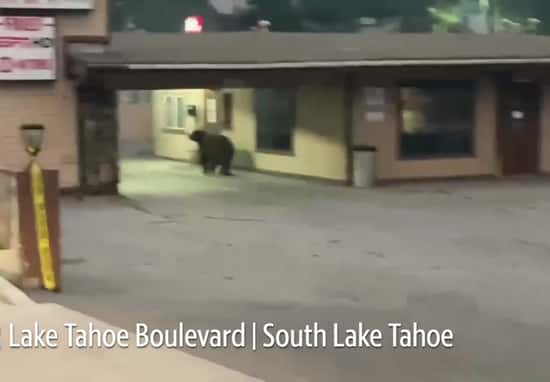
Play VideoDuration 0:28See lone bear roam a deserted South Lake Tahoe boulevard amid Caldor Fire evacuationsA large bear roams South Lake Tahoe, deserted after the Caldor Fire forced evacuations. Only police patrols and a few bears are making their way along roads in the tourist town as the California wildfire roars on. BY SAM STANTON

READ MORE


California Wildfires

The latest on the wildfires burning in California. Get updates on the Caldor Fire, Dixie Fire and others, including size, containment, evacuation orders and more.

EXPAND ALL

SOUTH LAKE TAHOE

South Lake Tahoe was virtually deserted early Tuesday, with only police patrols and a few bears making their way along the roadways as the Caldor Fire edged closer to the evacuated tourist town.

Police guarded the city throughout the night, rolling through parking lots where a handful of journalists and evacuees were spending the night in their cars, and driving through neighborhoods to keep looters from entering abandoned homes.

Sacramento Bee journalists who were stopped and checked for identification late Monday were told by police only a handful of people have decided to stay. With a population of 22,000 and thousands of daily visitors, South Lake Tahoe is a popular spot during the summer and winter seasons. Many people who live here work in the nearby casinos, restaurants, resorts and shops.TOP VIDEOSWATCH MOREhttps://imasdk.googleapis.com/js/core/bridge3.478.1_en.html#goog_1860454687https://imasdk.googleapis.com/js/core/bridge3.478.1_en.html#goog_1506353084https://imasdk.googleapis.com/js/core/bridge3.478.1_en.html#goog_1320145774https://imasdk.googleapis.com/js/core/bridge3.478.1_en.html#goog_1320145776https://imasdk.googleapis.com/js/core/bridge3.478.1_en.html#goog_1320145778×See lone bear roam a deserted South Lake Tahoe boulevard amid Caldor Fire evacuations

The quiet morning followed a hectic day that saw thousands flee as the Caldor Fire grew overnight to 191,607 acres, hours after it spilled over Echo Summit into the Lake Tahoe basin. The fire was only 16% contained, and the head of Cal Fire, Thom Porter, said it marked only the second time in recorded history that a fire had burned over both sides of the Sierra Nevada. The first was the Dixie Fire earlier this summer.

Late into the evening, the fire was menacing the communities of Christmas Valley and Meyers, just south of South Lake Tahoe. But the fire grew by only about 5,000 acres overnight.

Labor Day Sale

Unlimited digital access – $3 for 3 monthsCLAIM OFFER

The lack of a human population in South Lake Tahoe and Meyers offered opportunities for bears that frequent the area. Just after 6 a.m. Tuesday, a large bear could be seen pawing through the rear end of a pickup truck parked at the Loud Wedding Chapel on Lake Tahoe Boulevard.

The bear had apparently made its way along the road that leads from Stateline, Nevada, to South Lake Tahoe. Overturned trash cans at the Shell gas station and other businesses lined the roadway.

There was no sign that any businesses plan to reopen today. The McDonald’s near South Lake Tahoe from Echo Summit had a flashing open sign, but it was not. Patients have been evacuated from Barton Memorial Hospital in South Lake Tahoe, and the El Dorado Sheriff’s Office moved inmates to another facility away from the approaching fire.

Many motels that dot this resort community had “no vacancy,” “sorry,” or simply “no” signs lit up, despite the fact that their parking lots were completely empty.

California Wildfires newsletter

Get the Bee’s latest coverage on wildfires in our state.SIGN UP

This site is protected by reCAPTCHA and the Google Privacy Policy and Terms of Service apply.

The story was different across the Nevada state line where many evacuees went to spend the night along with hundreds of police officers from around the region.

The lake that makes this community so famous was barely visible early Tuesday, as a thick blanket of smoke from the Caldor Fire had settled over it. There was no visible sunrise at 6:30 a.m., just an Air Quality Index that read 500 — the maximum value on the iPhone weather app.

Driving in from Nevada had a feeling of navigating through light snow, only with flakes of ash reflecting in the headlamps a stifling haze of smoke dropping visibility along the road that rings the pristine border lake.

“You don’t want any part of that,” said a man in a Nevada Department of Transportation state employee working a roadblock.

Visibility downtown along Highway 50 is a mile or less. The El Dorado Savings Bank clock — which flashed the wrong time — said it was 44 degrees. The only other movement on the streets, aside from bears, crows and emergency vehicles: the occasional snake of ash on the road that looks like snow.https://26dc4c9bd865234235f7c4f7957d9d5a.safeframe.googlesyndication.com/safeframe/1-0-38/html/container.html

BLANKET OF SMOKE OVER TAHOE BASIN, EMPTY STREETS

Inside Harrah’s casino early Tuesday, four men were playing slot machines with names such as “Treasure Ball” and “Buffalo Link” while dozens of police officers streamed up the escalators for the morning briefing.

The casino parking lots were overflowing with law-enforcement vehicles from agencies all over Northern California, including the South Lake Tahoe police, the California Highway Patrol, and the Rocklin and Folsom police departments.

In the Safeway parking lot, two boats on trailers and a camper had been left behind. And many of the homes and businesses in South Lake Tahoe had tall ladders leaning against their eaves, a move designed to give firefighters easy access to the roof if needed during a fire.https://26dc4c9bd865234235f7c4f7957d9d5a.safeframe.googlesyndication.com/safeframe/1-0-38/html/container.html

Throughout the night, the fire burned the hills along Christmas Valley, which includes a subdivision of homes along the Upper Truckee River south of the lake. Echo Summit lies directly above.

David Cochran, chief of the Reno Fire Department, posted a video at 5 a.m. Tuesday of crews working overnight to protect the Echo Summit Lodge, a hostel operated by volunteers at about 7,400 feet in elevation with views over the Lake Tahoe basin and South Lake Tahoe below.https://platform.twitter.com/embed/Tweet.html?dnt=false&embedId=twitter-widget-0&features=eyJ0ZndfZXhwZXJpbWVudHNfY29va2llX2V4cGlyYXRpb24iOnsiYnVja2V0IjoxMjA5NjAwLCJ2ZXJzaW9uIjpudWxsfSwidGZ3X2hvcml6b25fdHdlZXRfZW1iZWRfOTU1NSI6eyJidWNrZXQiOiJodGUiLCJ2ZXJzaW9uIjpudWxsfSwidGZ3X3NwYWNlX2NhcmQiOnsiYnVja2V0Ijoib2ZmIiwidmVyc2lvbiI6bnVsbH19&frame=false&hideCard=false&hideThread=false&id=1432669720579244036&lang=en&origin=https%3A%2F%2Fwww.sacbee.com%2Fnews%2Fcalifornia%2Ffires%2Farticle253878883.html&sessionId=5d6b6124ea1851052fbbbed528bca4be1e4a1da4&siteScreenName=sacbee_news&theme=light&widgetsVersion=1890d59c%3A1627936082797&width=550px

RELATED STORIES FROM SACRAMENTO BEE

FIRES

Watch Caldor Fire as it reaches Christmas Valley, jumps Highway 89 near South Lake Tahoe

AUGUST 30, 2021 7:11 PM

FIRES

Slight damage to Sierra-at-Tahoe ski resort. See the scene after Caldor Fire burned through

AUGUST 30, 2021 4:03 PM

FIRES

Ida collapses Mississippi road; kills 2, injures at least 10

Exposing the Big Game's avatarThe Extinction Chronicles

https://news.yahoo.com/mississippi-highway-collapses-2-killed-090206465.html

Associated Press

Tue, August 31, 2021, 2:02 AM·3 min readIn this article:

    LUCEDALE, Miss. (AP) — Two people were killed and at least 10 others were injured when seven vehicles plunged, one after another, into a deep hole where a dark, rural highway collapsed asHurricane Idablew through Mississippi, authorities said Tuesday.

    Torrential rain may have caused the collapse Monday night, and the drivers may not have seen that the roadway in front of them had disappeared, Mississippi Highway Patrol Cpl. Cal Robertson said. The George County Sheriff’s Department received the first call about a crash at about 10:30 p.m.

    Robertson told The Associated Press that some of the vehicles ended up stacked on top of each other as they crashed into the abyss, which opened up in a rural area without street lights. Ida dumped as much as 13 inches (33 centimeters) of rain as…

    View original post 236 more words

    Greta Thunberg: Scotland not a world leader on climate change

    Exposing the Big Game's avatarThe Extinction Chronicles

    https://www.bbc.com/news/uk-scotland-58387017

    By Kevin Keane
    BBC Scotland’s environment correspondentPublished10 hours agoShareRelated Topics

    media captionGreta Thunberg on COP26, travel plans and Cambo oil field proposals

    Campaigner Greta Thunberg says she doesn’t regard Scotland as a world leader on climate change.

    The Swedish activist told BBC Scotland she recognised that some countries “do a bit more than others” but that none were coming close to what was needed.

    Onthe Scottish Greens’ deal to enter government, she said some politicians were “less worse” than others.

    But she said tackling climate change was not as easy as voting for a green party.

    The 18-year-old said: “Of course there might be some politicians that are slightly less worse than others. That was very mean but you get the point.

    “It’s a hopeful sign that people want something that’s more ‘green’ – whatever green means – but in order to solve this we need…

    View original post 802 more words

    South Africa detects new coronavirus variant, still studying its mutations

    Exposing the Big Game's avatarThe Extinction Chronicles

    Reuters

    FILE PHOTO: People queue outside a coronavirus disease (COVID-19) vaccination centre in Cape Town

    FILE PHOTO: COVID-19 vaccination in Houghton, Johannesburg

    1/ 2

    South Africa detects new coronavirus variant, still studying its mutations

    FILE PHOTO: People queue outside a coronavirus disease (COVID-19) vaccination centre in Cape TownAlexander WinningMon, August 30, 2021, 9:19 AM·2 min read

    By Alexander Winning

    JOHANNESBURG (Reuters) – South African scientists have detected a new coronavirus variant with multiple mutations but are yet to establish whether it is more contagious or able to overcome the immunity provided by vaccines or prior infection.

    The new variant, known as C.1.2, was first detected in May and has now spread to most South African provinces and to seven other countries in Africa, Europe, Asia and Oceania, according to research which is yet to be peer-reviewed.

    It contains many mutations associated in other variants with increased transmissibility and reduced sensitivity to neutralising antibodies, but they occur in a different mix and scientists are not yet sure how they affect the behaviour…

    View original post 207 more words

    Rand Paul says ‘hatred for Trump’ is stopping study of horse and human drug to treat COVID-19

    Exposing the Big Game's avatarThe Extinction Chronicles

    https://thehill.com/changing-america/well-being/570130-rand-paul-says-hatred-for-trump-is-stopping-study-of-horse-and

    Demand for ivermectin has surged despite it being an unproven treatment for COVID-19.ByJoseph Guzman | Aug. 31, 2021https://imasdk.googleapis.com/js/core/bridge3.478.1_en.html#goog_1550167755Volume 20%00:1701:01More Videos00:35Rand Paul: ‘Hatred for Trump’ blocking research into Ivermectin as COVID-19 treatment00:58In ‘horrifying and amazing’ video, a giant tortoise attacks, devours baby bird02:26Study says new Lambda variant could be vaccine-resistant02:50Trita Parsi- Other Major, U.s.-backed Middle East Powers Are Just As Interventionist As Iran00:55OPINION: In Afghanistan, President Biden had to play the losing hand his predecessors dealt him00:49The signs you have the delta variant are different than original COVID-1901:39Briahna Joy Gray- Voters Are ‘Torn’ Over Ohio Special Election03:39Zaid Jilani: ‘I Don’t Think’ Anyone Will Try To Defund The Police After Milley’s Comments00:33NBC News reporter accosted during live coverage of Hurricane Ida00:59Kennedy family erupts over release of assassin who killed Robert F KennedyClose

    Story at a glance

    • During a meeting with dozens of his constituents Friday, Paul claimed researchers are…

    View original post 632 more words

    Climate Crises Converge as Wildfire Burns West and Hurricane Pummels South

    Kandaysha Harris wipes her face before continuing traveling through the storm of Hurricane Ida on August 29, 2021 in New Orleans, Louisiana.
    Kandaysha Harris wipes her face before continuing traveling through the storm of Hurricane Ida on August 29, 2021 in New Orleans, Louisiana.

    BYSharon Zhang, TruthoutPUBLISHEDAugust 30, 2021SHAREShare via FacebookShare via TwitterShare via Email

    A white lower-case t on a black background

    READING LISTWAR & PEACEAs Biden Threatens More War, Don’t Forget the Afghanistan Invasion Was IllegalENVIRONMENT & HEALTHClimate Crises Converge as Wildfire Burns West and Hurricane Pummels SouthPRISONS & POLICINGThe Court Knew She Didn’t Commit the Murder. They Sentenced Her for It Anyway.WAR & PEACEDon’t Listen to Panetta and Bolton. The US Must Stay Out of Afghanistan.POLITICS & ELECTIONSRand Paul Says “Hatred for Trump” Is Why Med Experts Oppose Ivermectin for COVIDREPRODUCTIVE RIGHTSAnti-Choicers Fail to See That Overturning “Roe” Will Impact Their Own Rights

    Hurricane Ida made landfall in Southern Louisiana on Sunday as one of the most powerful hurricanes to ever hit the U.S. It has knocked out power to the hundreds of thousands of residents of New Orleans and over 1 million in Louisiana and has caused at least one death so far.

    Scientists say that the climate crisis has, without a doubt, made Ida more intense as higher water temperatures offshore act as fuel to a hurricane’s fire. Greenhouse gases resulting from human activity have contributed to a rise in average water temperatures in the Gulf of Mexico by 3 to 5 degrees Fahrenheit since the late 20th century. The category 4 storm has so far blown entire roofs off buildings, devastated the Louisiana town of​ Jean Lafitte, and overwhelmed hospitals already filled with COVID patients.

    Ida’s storm surge was so strong as it made landfall that the hurricane actually reversed the flow of the Mississippi River, something that experts say is extremely rare. With the threat of levee failure hanging over Louisiana, the hurricane, since downgraded to a tropical storm, is headed into Mississippi.

    Uncompromised, uncompromising news

    Get reliable, independent news and commentary delivered to your inbox every day.

    • Email

    Though many residents evacuated the region before the storm, many others, unable to evacuate, have been left behind. Some people simply cannot afford the costs associated with seeking shelter out of the storm or may not have reliable access to transportation out of the area, such as a car. Other populations, such as incarcerated people, have no choice either way.

    As Ida blasted through Louisiana, the climate crisis intensified blazes across the country. Wildfire Caldor has engulfed hundreds of homes in its wake as it has moved across eastern California in the past two weeks. It now threatens Lake Tahoe, where residents on the California side have been ordered to evacuate.

    The Caldor fire has been particularly hard to contain. Firefighters have pushed back their estimated date for containment of the fire to September 8. As the Caldor fire blazes on, the Dixie Fire, just 65 miles to the North, is well into its second month of burning. At nearly 50 percent containment and with over 770,000 acres burned so far, the Dixie Fire is the second-largest fire in California history, beaten only by the August Complex fire from last year.

    California’s weather has become drier for longer periods over the past decades as global warming and climate disruption have lengthened the wildfire season and pushed winter rains further and further back in the year. It has wreaked havoc on the state, where six of the seven largest fires in the state, including the Dixie Fire, have occurred over the past year or so.

    It’s unclear if all of these disasters were caused directly by the climate crisis, but they were surely fueled by it. As climate scientists warn of dire consequences if the world continues on its current path, the western part of the U.S. has experienced record heat waves, making July 2021 the hottest month in recorded history on Earth.

    The converging climate disasters come as officials struggle to contain the pandemic scouring the country and contend with massive unrest in Afghanistan: Two crises that may seem unrelated but have actually been exacerbated by the climate crisis. Climate change helps spread infectious diseases, scientists have warned for years. There’s evidence that air pollution, including that of burning fossil fuels, has worsened COVID outcomes for frontline communities living in areas that bear the brunt of increased air pollution. Meanwhile in Afghanistan, the Taliban has exploited the economic devastation and serious resource shortages brought on by the twin effects of drought and flooding caused by climate change to successfully overthrow the government that was propped up by the U.S.

    Climate unrest has been on full display through this year and the last. But nearly all of these problems exacerbate each other, solidifying the so-called threat multiplier effect of the climate crisis.