Prisoners to plug worker shortage in meat industry

https://www.bbc.com/news/business-58303679

ADVERTISEMENThttps://9b58d0ac8b249391a485f5010ec36b80.safeframe.googlesyndication.com/safeframe/1-0-38/html/container.html

By Michael Race
Business Reporter, BBC NewsPublished5 hours agocommentsCommentsShareRelated Topics

Butcher handling meat

Abattoirs, butchers and meat processors are set to employ prisoners and ex-inmates to help plug labour shortages.

Meat industry leaders held talks with the government on Monday to discuss options of how businesses could link up with prisons to fill vacancies.

The Association of Independent Meat Suppliers told the BBC the industry had about 14,000 job vacancies currently.

It said Covid, Brexit and perceptions over career paths had caused a looming “recruitment crisis”.

The industry body said businesses would seek to link up with prisons that contain prisoners who are part of the Release On Temporary Licence (ROTL) programme.

ROTL is a risk-assessed temporary release programme that inmates in open prisons use to gain work experience to help them in their transition back into the community.

Tony Goodger, of the Association of Independent Meat Suppliers, said the industry body would contact members who required staff and work with the Ministry of Justice to put them in contact with prison services, in a bid to recruit people about to leave prison or current inmates.

Mr Goodger said some members already employed inmates on ROTL, and had found them to be “well behaved, hard-working, and willing to learn”.

“It’s down to the members [who they employ],” he said. “They [prisons] have got offenders and prison-leavers, we have got members who need labour. It seems sensible to bring the two together.”

Turkey processing giant Bernard Matthews has previously formed links with HMP Norwich and regularly visits the prison as part of its recruitment cycle, to assess candidates and offer inmates contracts to start upon release.

Abattoir

Mr Goodger said that many prisons taught inmates food safety skills, which would aid them in finding work in the industry.

“We have suggested that they look at some of the other free training available such as the FSA’s Allergen training and Vacuum Packing training, in order that offenders can leave prisons ‘job ready’,” he added.

The food manufacturing industry has also looked to employ former armed service personnel. However, the number of people taking up jobs has been low.

The Covid pandemic and Brexit have both contributed to current worker shortages, with furloughed workers finding new jobs and EU nationals returning to their home countries.

The British Meat Processors Association said the current level of vacancies represented about 15% of the industry’s workforce.

The industry body said its members were “trying absolutely every avenue” to recruit workers.

Training expansion

The government recently announced the expansion of a kitchen training scheme across jails in England and Wales.

The Clink Kitchens Scheme sees prisoners train in professionally run prison kitchens for up to 35 hours a week while working towards professional qualifications to help them find employment on the outside.

However, the food industry is not the only sector to witness a shortage of workers. A lack about 90,000 HGV drivers “is placing increasingly unsustainable pressure on retailers and their supply chains”, according to lobby groups.

In a letter to Kwasi Kwarteng, the business secretary, the British Retail Consortium (BRC) and freight trade group Logistics UK have warned that consumers will suffer unless the government intervenes.

A Ministry of Justice spokesman said it would support “all industries with skills shortages where possible”.

“Helping prisoners find jobs during their sentence and after release makes it much less likely they will reoffend,” he added.

Nature crisis: Talks resume on global plan to protect biodiversity

https://www.bbc.com/news/science-environment-58306288

ADVERTISEMENThttps://43ea1304162bd443332a41d69989e873.safeframe.googlesyndication.com/safeframe/1-0-38/html/container.html

By Matt McGrath
Environment correspondentPublished4 hours agoShareRelated Topics

flower

UN negotiators have resumed work on the text of world-wide plan to protect nature and species for the next decade.

The draft Global Biodiversity Framework aims to conserve at least 30% of the world’s land and oceans.

It will also push to eliminate plastic waste and cut pesticide use by at least two thirds.

The pact was due to be agreed at a UN biodiversity summit in China this October, but face to face talks have been delayed until April next year..

The Convention on Biological Diversity (CBD) is a UN treaty that has been ratified by 195 countries plus the European Union.

The United States signed the agreement in 1993 but has failed to ratify it and remains outside the pact.https://buy.tinypass.com/checkout/template/cacheableShow?aid=tYOkq7qlAI&templateId=OTBYI8Q89QWC&templateVariantId=OTV0YFYSXVQWV&offerId=fakeOfferId&experienceId=EXAWX60BX4NU&iframeId=offer_0e763acc7b457c03340a-0&displayMode=inline&widget=template

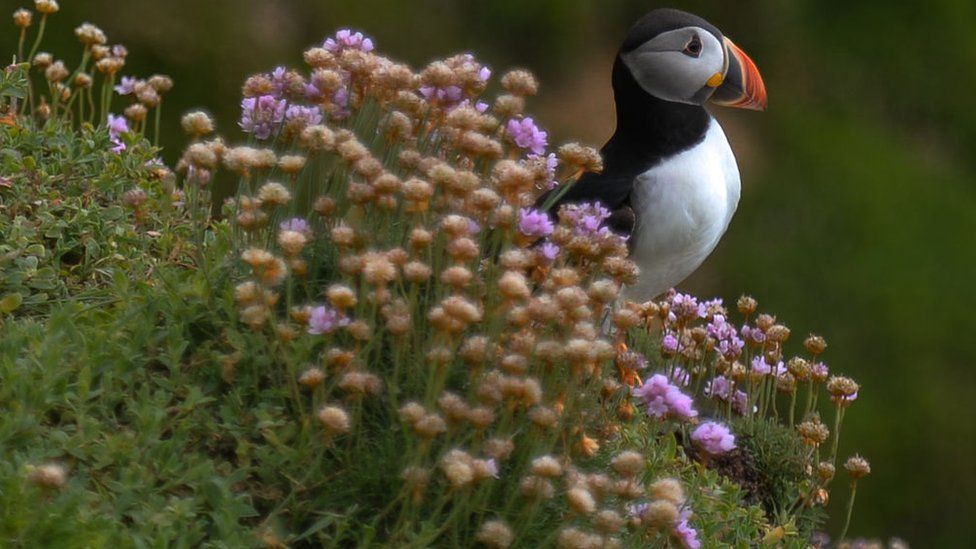
puffin

Over the past three decades, countries have agreed a series of plans under the CBD to protect nature at the global level.

More than a decade ago negotiators agreed goals to preserve plants and species, in the decade from 2010-2020.

However, the nations of the world failed to fully meet any of the 20 targets which included protecting coral reefs and tackling pollution.

Negotiators are now working on a new, enhanced plan that would set goals for the next decade and beyond.

The draft of the new agreement has already been published and proposes 21 targets for 2030 including:

  • At least 30% of the land and seas should be conserved through effective, equitably managed measures;
  • There should be a 50% or greater reduction in the rate of introduction of invasive alien species, with controls to eliminate or reduce their impacts;
  • Nutrients lost to the environment should be cut by at least half;
  • Reduce pesticide use by at least two thirds;
  • Eliminate the discharge of plastic waste;
  • Nature’s contribution to global efforts to cut greenhouse gases should be increased;
  • Redirect or eliminate incentives harmful to biodiversity by at least $50b a year;
  • An increase in the funding for the conservation of nature to at least $200b a year.

The framework document had been due for discussion between government ministers at the biggest conservation meeting in a decade in Kunming, China

The gathering, known as COP15, was due in October 2020, but has been delayed three times due to the Covid pandemic.

There will now be a two-part meeting, with the first element taking place virtually this October. The second part with two weeks of face to face meetings will convene next April in China.

It’s expected that the key outcome of the October discussions will be the Kunming Declaration.

seas
image captionThe new framework aims to protect 30% of the land and oceans

Observers believe it will give an important steer to the efforts to land an ambitious biodiversity treaty.

“This document will be the first time that China, as COP15 president, will directly decide a specific political outcome,” said Li Shuo, with Greenpeace China.

“So the quality of this declaration will be a test for China, I think it will also tell us a lot about China’s leadership style, and what they will do in the second half of the COP next year.”

Experts are concerned that much of the discussion to date has been focused on the question of targets.

“If you think about targets, they really only outline the vision of where we need to be in 10 years,” said Li Shuo.

“The more challenging part is actually how do we get there? You need implementation, you need the rules and the national commitment. To really do the work you also need resources.”

Another key question that will need resolving in the negotiations is termed the digital sequence of information on genetic resources.

This is a highly contentious issue and refers to digital biological data and the sharing of benefits between countries that might arise from the use of these resources. At present it is not covered by the proposed framework, but some observers believe it may form part of the final agreement.

“The digital sequence of information and access and benefit sharing is one of those terms that’s quite complicated,” explained Georgina Chandler from the RSPB.

“But it is basically another way of saying resources being mobilised from developed to developing countries, because at the heart of it, that is part of the issue as well.

“And we know from countries such as Brazil and others, that they definitely want to see that integrated into the post 2020 framework for there to be an agreement around ambition as well.”

So many people in this Texas town got Covid-19 that the school district shut down and then the city essentially closed

Exposing the Big Game's avatarThe Extinction Chronicles

https://www.cnn.com/2021/08/23/us/texas-town-covid-outbreak/index.html

ByRosa FloresandAshley Killough, CNN

Updated 10:37 AM ET, Mon August 23, 2021

Iraan, Texas (CNN)From the front lawn of her friend’s house, Vicky Zapata went live on Facebook recently and burst into tears, praying.”We ask you God, that you heal our town, Father, from this disease,” Zapata said in the livestream.

      Inside the house, looking out through the glass front door, was her friend Carla Balderas, who was quarantined due to Covid-19, along with her 9-year-old son Reinaldo. Missing was Carla’s husband Sammy. He was in the local hospital, fighting coronavirus.https://f213716631e44591722d7453589e6770.safeframe.googlesyndication.com/safeframe/1-0-38/html/container.html

        As Zapata panned the camera to show her surroundings, more than a dozen cars could be seen parked in front of the house, their occupants following the livestream from inside their vehicles, to be Covid safe.

          Zapata reflected on that moment in an interview with CNN, describing it as a cry for mercy given…

          View original post 1,056 more words

          AG Kaul sues to remove Natural Resources Board member who has refused to leave

          BY: HENRY REDMAN – AUGUST 18, 2021 12:59 PM


          Headshot of attorney general josh kaul at the state of the state speech

           Attorney General Josh Kaul at Governor Tony Evers’ first State of the State address in Madison, Wisconsin, at the State Capitol building on Jan. 22, 2019. Photo by Emily Hamer/Wisconsin Center for Investigative Journalism is licensed under CC BY-ND 2.0

          Wisconsin Attorney General Josh Kaul filed a lawsuit Tuesday to remove Fred Prehn from the Natural Resources Board. 

          Prehn, a Republican appointee of former Gov. Scott Walker, has refused to vacate his seat as board chair for months — taking advantage of what he says is a quirk in state law that has allowed him to maintain control over the state’s environmental and conservation policies. 

          “Dr. Prehn’s term is over,” Kaul said in a statement. “His attempt to remain on the Natural Resources Board indefinitely, in defiance of the will of the voters, is fundamentally undemocratic. We’re asking for a clear ruling that Dr. Prehn is no longer a member of the Natural Resources Board.”

          Gov. Tony Evers announced Prehn’s replacement, Sandra Naas, on April 30. Prehn’s six-year term was supposed to expire on May 1. Naas taking her seat would give Evers appointees a majority on the board. 

          Kaul filed the lawsuit after numerous state and national groups, including the Humane Society of the United States, called for the Democratic attorney general to use his authority to boot Prehn from his seat. 

          Many of the groups asked for Kaul to take action before the board set the quota for this fall’s wolf hunt, a controversial topic after the hunt earlier this year far exceeded the prescribed limit. GET THE MORNING HEADLINES DELIVERED TO YOUR INBOXSUBSCRIBE

          Instead, Kaul filed the lawsuit one week after the quota was set. 

          “We applaud Attorney General Kaul for stepping up to do what is right for Wisconsin’s citizens, wildlife and natural resources,” Nicholas Arrivo, an attorney for the Humane Society of the United States, said in a statement. “As demonstrated by last week’s disastrous decision to force through an excessive wolf hunting quota with total disregard for the recommendation of the state’s own expert biologists, the role of the Natural Resources Board is simply too important for Prehn to be playing politics. Prehn’s refusal to vacate his seat not only violates the law, but also violates the trust of Wisconsinites in what is supposed to be a nonpartisan Natural Resources Board that serves the people.”

          In a heated meeting last week, Department of Natural Resources staff suggested the quota for this fall’s wolf hunt be set at 130. Prehn and the other Republicans on the board succeeded in setting the quota at 300 — a number scientists say will have a destabilizing effect on the state’s wolf packs. 

          “It’s outrageous that by squatting in his expired position for months, Prehn was able to vote for the arbitrary slaughter of 300 more wolves this fall,” said Collette Adkins, carnivore conservation director at the Center for Biological Diversity. “We commend Attorney General Kaul for taking action. New leadership is long overdue on the Natural Resources Board, and we hope that Prehn’s removal marks the beginning of a better future for Wisconsin’s wildlife.”

          After the wolf quota was set at more than double what state biologists had proposed, state Sen. Tim Carpenter (D-Milwaukee) accused Prehn and Republicans of thwarting the will of Wisconsin voters by refusing to let go of control over policies on issues such as animal management and the regulation of chemicals in the state’s water. 

          Carpenter called it “an utterly cynical ploy to deny the consent of the governed so that radical right wing Republicans can set the terms for the upcoming wolf hunt and other crucial environmental decisions to be made by the Natural Resources Board.” 

          A week later than environmental groups would have liked, Kaul’s lawsuit — filed in Dane County Circuit Court — asks for a judge to rule that Prehn doesn’t have the right to remain in his seat or to rule that Gov. Evers has the power to remove him. 

          The next meeting of the Natural Resources Board is scheduled for Sept. 21.

          On Covid and climate we can achieve change – but we’re running out of time

          Robert Reich

          A simple breakfast with a friend presented a serious dilemma and pointed to both the need and precedent for action

          A large plume from the River Fire fills the air with smoke in Colfax, California.
          A large plume from the River Fire fills the air with smoke in Colfax, California. Photograph: Elias Funez/AP

          Sun 22 Aug 2021 08.32 EDT

          312

          On Saturday morning I met a friend for breakfast at a local diner. We weren’t sure whether to sit outside because of the surging Delta variant of Covid, or inside because stinging smoke from wildfires consuming northern and western California had spread into the Bay Area.Our Own Worst Enemy review: a caustic diagnosis of America after TrumpRead more

          Our small dilemma is a microcosm of what many Americans are going through or will be soon. The combination of multiplying Covid variants and mounting environmental damage is making the air dangerous to breathe, inside or out.Advertisement

          https://imasdk.googleapis.com/js/core/bridge3.476.0_en.html#goog_601337782https://imasdk.googleapis.com/js/core/bridge3.476.0_en.html#goog_260720873https://imasdk.googleapis.com/js/core/bridge3.476.0_en.html#goog_1768999453

          What to do? Clean air is the quintessential public good. It’s supposed to be free, abundant and safe. Few Americans alive today have ever before worried about microscopic particles containing deadly infections or deadly bits of carbon.

          And yet largely because we’ve taken it for granted, and therefore as a society didn’t pay enough attention to public health or to the disintegrating environment, the air we breathe is no longer safe. We now need to rely on masks, air filters and other devices to protect our lungs. And it’s far from clear how long this will go on or if and how it will ever end.

          It’s not as if we weren’t warned. But it’s been bizarrely difficult for us as a society to focus our attention on this most basic of all needs. I’m tempted to blame Republicans, capitalism, greed, the oligarchy. But these feel like copouts.

          Our collective tendency is to wait until big problems become catastrophic before dealing with them. Most of the time we’d rather not pay attention. We have all we can do to make a living, bring up our kids decently, save a bit for retirement, hopefully have a bit of fun along the way. We assume others will take care of the biggest threats.

          Or we tell ourselves there’s nothing more we can do. We may try to live modestly, recycle and conserve energy, use masks and get fully vaccinated. We might even write a few emails to politicians advocating for cleaner air and for stronger public health measures. Beyond this, it can feel hopeless.

          Hell, I was in a president’s cabinet. I personally know dozens of members of Congress. I have a big megaphone. But when it comes to this simultaneous pandemic and environmental crisis, I sometimes despair too.

          Americans speak a lot about “revolution”. We’re a nation born of revolution. What we don’t talk about enough is a revolution in our thinking and behavior – realizing that we are not above and outside the natural world but part of it, that we cannot continue to exploit and plunder for profit, that there is something called the common good that requires personal sacrifice, and that those of us who are better off have a moral duty to sacrifice the most.

          Yet I’m old enough to remember when California had smog days when the air was putrid and orange, when older and sicker people dared not venture outside and kids couldn’t play outdoors. I’m also old enough to remember when Britain had noxious air – coal-fired fogs that blanketed cities, burned lungs and sometimes killed thousands.

          I don’t recall the last pandemic, but I do remember when polio ripped through the land, spreading fear and paralysis. It put two of my six-year-old friends into iron lungs.

          A destroyed building is reflected in standing water after Hurricane Delta landed in Lake Charles, Louisiana on 10 October.

          In all these instances, we acted – as a people, as a society. We got smog out of the air. Britain cleaned up too. And we dutifully lined up at school to get polio shots (without the howling of governors or anti-vaxxers). We eradicated polio.

          In other words, despite our tendencies to wait until the last moment, to get caught up in our own private needs and wants, and feel overwhelmed in the face of gigantic problems, we sometimes achieve the common good. It’s important to remember this.

          My friend and I chose to have our breakfast outside. I’m not sure it was the right choice. Although we reduced our risk of Covid, the smoke stung our eyes and probably did worse to our lungs. But I am sure this is not the only choice ahead.

          Montana Wildlife Commission Okays Unethically Destroying Wolves and More

          Exposing the Big Game's avatarCommittee to Abolish Sport Hunting Blog

          From: Trap Free Montana Public Lands <info@tfmpl.org>

          Because we know how much you care, we wanted to give youafollow-up from the Montana Fish & Wildlife Commission August 20, 2021 hearing on the final for wolves, river otters, and trap setbacks.The latter, as an after thought, showedup for public comment 2 weeks after the wolf and furbearer trapping proposals June 24th public hearing.

          In a nutshell, wolves lost.During the hearing, Commissioner Tabor made a motion to the wolf proposals for the 2021 wolf season which:
          Allows the killing of 450 wolves. Wolves killed exceeding the 450 ”initiates a commission review with potential for rapid-in-season adjustments”, and will be re-engaged at intervals of 50 wolves killed. Quotas per region were set as:
          Region 1 195 wolves
          Region 2 116
          Region 3 82
          Region 4 39
          Region 5 11
          Region 6 3
          Region 7 4
          which similarly will initiate a commission…

          View original post 1,485 more words

          If Plants Have Feelings, How Does This Aft Our Advocacy for Animals?

          By Karen Davis, PhD, President of United Poultry Concerns

          This article was first posted August 22, 2021 on Animals 24-7.

          Can a tree be “strategically responsive, and exhibit kinship, or a sense of self? Is a tree intelligent?” – Rebecca Giggs, “The Trees Are Talking,” The Atlantic, July / August 2021.

          Online title:
          A Better Way to Look at Trees
          – The Atlantic

          Painting of trees
          Illustration by Danny

          This intriguing article in The Atlantic recounts modern discoveries of behavioral complexity in plants and the implications of this complexity. Reading it, I was reminded of my conversations with two different people about the possibility of plant consciousness. If plants can be scientifically shown to experience themselves and their surroundings with their own forms of biological consciousness and sensitivity, how does this discovery affect the case for animal rights, based on animal sentience?

          My first conversation was with animal rights activist and author, Norm Phelps (1939-2014) who, while believing that the world is informed with a Buddhist-like spirituality, did not believe that plants – trees, bushes, vines, grasses, etc. – possess consciousness or sentience of any kind. Yes, like animals, they have DNA and are organic like animals, but unlike animals they cannot run away from predators and they lack a brain and a central nervous system. As Giggs writes in “The Trees Are Talking,” “The notion that plants ‘do’ anything, outside of surging toward the light and siphoning water, would imply threshold competencies that have long been regarded as mental, or at the very least sensory.”

          There’s an understandable concern among animal advocates that if plants can be shown to be conscious, sentient beings, the case for animal rights collapses into a welter of universal pain and pleasure, making it hard to argue that we should not harm and kill other animals since they, like us and unlike plants, have well-developed central nervous systems, pain receptors and pleasure centers. Like us, birds, fish, and our fellow mammals show evidence of fear and wellbeing. Land animals – mammals and birds – cry out in pain; birds, fish, and mammals nurse wounded body parts, and seek to avoid those who have hurt them in the past. Thus, whatever sensory experience plants may or may not have, there is no question about the sensory experience of animals, be they chickens or chimpanzees, underwater dwellers or insects, whose sentience is increasingly recognized.

          Vegetarian peace activist and coauthor with her husband Scott of Living the Good Life, Helen Nearing (1904-1995) said that we may assume a degree of sentience in plants and still recognize that there’s “clearly a distinction between a new-born baby lamb and a newly ripened tomato.”

          My second conversation, more recently, was with a person who cares about animals, though not about animal “rights” per se. Our conversation began by his saying he looked forward to visiting a friend with a fishing business, and to fishing with his friend. I asked how he felt about hooking a fish painfully in the mouth and yanking the fish out of the water that a fish needs in order to breathe. For the fish, fishing is a mental and physical trauma involving pain, fear, injury, and a slow and terrifying asphyxiation comparable to our being hooked in the mouth and drowned.

          He replied that pretty soon plants will probably be shown to feel pain and suffering similar to pain and suffering in animals; if this is so, we will be just as guilty for hurting and killing plants as for hurting and killing animals, including fish.

          I said I agree that we should refrain from assuming that plants have no experiential equivalent of what we know in our own lives as feelings. Even if plants don’t experience pain and pleasure in our sense. this does not necessarily exclude experiences particular to plants that involve their sense of themselves and the relevant parts of their environment. “Experience” may comprise more than we know. Surely all organic beings, be they plants or animals, have an experiential component that distinguishes all of us from inanimate objects.

          The fishing discussed in our conversation was not “survival” fishing, but rather “recreational” fishing, including “catch and release” fishing, which is profoundly cruel to the victim whose trauma is maximized by being returned to the water with mouth and facial injuries as well as brain damage from the lack of oxygen the fish endured when swung at the end of a pole into the air. Back in the water, the injured fish is no longer fit to defend herself or himself from predators and other dangers, as before. A lingering injury to the body and mind of the fish, inviting infection, may follow. The damaged fish may have an aquatic family that he or she can no longer protect or participate with.

          Fish caught in a net with mouth gaping and expression of horror
          The face of this trapped fish expresses fear. Courtesy of Fish Feel.

          The premier advocacy organization for aquatic animals, Fish Feel, cites the following:

          In his book Pleasurable Kingdom: Animals and the Nature of Feeling Good, world-renowned animal behaviorist Jonathan Balcombe, PhD, explains how fish are falsely, yet “commonly denied feeling” perhaps because of “their relative lack of facial expression.” He states:

          When they are impaled on a hook, fish don’t scream or grimace, though their gaping mouths may evoke a look of shock or horror to the empathetic witness. Using facial expression as a guide for sentience is hardly valid when one considers that some of the most intelligent and highly sentient marine vertebrates – namely the dolphins and whales – also lack facial expression, at least any that most of us can readily detect. However, animals have many other ways of visually signaling their feelings. Crests, dewlaps, pupil dilation and contraction, color changes, and body postures and movements are among the many visual ways fish and other animals convey emotions. Water is also a potent medium for communicating via chemicals and sounds.

          The idea that if plants have feelings we may therefore harm and kill animals for our appetites and amusement, since sentience is no longer considered a feature unique to animals, but a trait inherent in life itself, is morally untenable and devoid of empathy for either plants or animals. People who argue against animal rights by invoking the “suffering” of a carrot in being pulled from the ground and eaten tend to be less concerned about plant sensitivity than they are about asserting their right to exploit animals, armed with the notion that if all living things have feelings, then “All is permitted.”

          For those of us who truly care about not harming plants needlessly, it helps to remember that when we eat animal products, we consume many more plants indirectly than when we eat plants directly, because farmed animals are fed huge quantities of grasses, grains, and seeds to be converted into meat, milk, and eggs. An animal-free diet causes fewer beings to suffer and die for us.

          Surely, we should treat trees and other forms of plant life with respect, and not wantonly, whether or not they are conscious and sentient as we experience these attributes. In “The Trees Are Talking,” we are introduced to “a new vision of tree life. . . . This newfound tree is networked, sensitive, companionate, and communicative; it matters as part of a conjoined whole. . . . Such findings make trees seem capable of so much more than we once imagined.”

          Similarly, oysters, clams, and insects are being shown to be capable of much more than we once imagined. Like fishes, they are members of the animal kingdom. As such, they deserve the benefit of the doubt. Their behavior indicates sentience and awareness even if the sources of their feelings are elusive to science, which apparently is not even the case anymore. Neuroscientist Lori Marino points out, for example, that there are “close to one million neurons in an ant or bee brain.” All insects, she writes, “possess a complex central nervous system . . . and many insects show very complex learning capacities. . . . [and] we found that fish and crustaceans feel pain when it was assumed that was just not possible for ‘simple’ organisms.”

          We are reminded that there may be ways of feeling being alive in the flesh, even in wooden “flesh,” that we will never fathom. Nor is the perception of pain per se the only proof or sine qua non – an indispensable condition – of sentience. Conscious perception of nonpainful but highly distressing stimuli includes gagging, inability to breathe (dyspnea), smell of blood, apprehension, fear and more. Throughout history, various groups of humans, birds and others have been dismissed as mindless and insentient or “low on the scale of evolution” as was once assumed about ground-nesting birds such as chickens, until the truth showed otherwise.

          Thus, even if Buddhism does not regard plants as sentient or possessed of awareness, and therefore in no need of the compassion we owe to animals “not to kill or injure any human, animal, bird, fish, or insect,” we can no longer rely on this assumption, any more than on the Biblical claim in Matthew 6:28 that the lilies of the field “neither toil nor spin.” With our newer insights into plant life and ecology, it appears that in their own evolved ways, this is precisely what “the lilies” do, just like animals, just like us. Taken together, we, the plants and our animal kin are the conjoined family of life on earth.

          For more on this topic, see:


          KAREN DAVIS, PhD is the President and Founder of United Poultry Concerns, a nonprofit organization that promotes the compassionate and respectful treatment of domestic fowl including a sanctuary for chickens in Virginia. Inducted into the National Animal Rights Hall of Fame for Outstanding Contributions to Animal Liberation, Karen is the author of numerous books, essays, articles and campaigns. Her latest book is For the Birds: From Exploitation to Liberation: Essays on Chickens, Turkeys, and Other Domesticated Fowl (Lantern Books).

          Amazon Reviews Praise FOR THE BIRDS: FROM EXPLOITATION TO LIBERATION by Karen Davis, PhD

          https://upc-online.org/alerts/210822_if_plants_have_feelings-how_does_this_affect_our_advocacy_for_animals.html

          Carbon from UK’s blue hydrogen bid still to equal 1m petrol cars

          Exposing the Big Game's avatarThe Extinction Chronicles

          https://www.theguardian.com/environment/2021/aug/22/uk-switch-to-hydrogen-power-must-not-rely-on-fossil-fuels-warn-campaigners


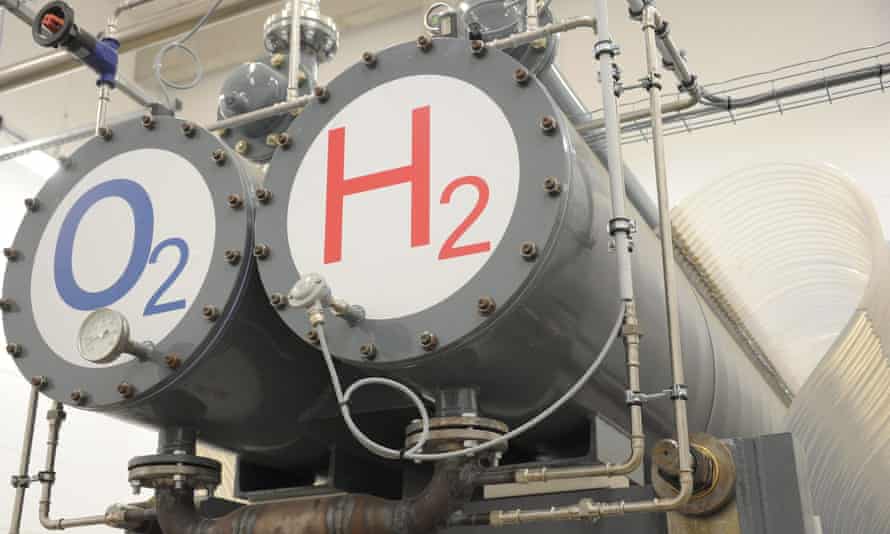
          Hydrogen power

          Government’s plan to use ‘blue’ fossil-fuel hydrogen alongside green version raises concern, say campaigners

          A hydrogen-hybrid power plant in Germany.
          A hydrogen-hybrid power plant in Germany. The UK plans to use hydrogen technology to replace fossil gas use in factories, refineries and heating.Photograph: Bernd Settnik/EPA

          Jillian AmbroseSun 22 Aug 2021 12.27 EDT

          Opting for hydrogen that is made using fossil fuels rather than renewable electricity could create up to 8m tonnes of carbon emissions every year by 2050, according to an analysis of government data.

          The figures show that the use of fossil-fuel hydrogen, or “blue hydrogen”, would create the same carbon emissions each year that more than a million petrol cars would produce, compared with using zero-carbon “green hydrogen”.

          Ministers plan to use both blue and greenhydrogento replace fossil gas in factories, refineries and heating, but new figures show that an over-reliance on blue hydrogen would still lead to…

          View original post 594 more words

          President Biden’s job approval ratings drop as Covid cases rise and crisis in Afghanistan mounts

          https://www.cnbc.com/2021/08/22/president-joe-bidens-job-approval-ratings-drop-as-crisis-in-afghanistan-mounts-.html

          PUBLISHED SUN, AUG 22 20219:00 AM EDTBrian Schwartz@SCHWARTZBCNBCSHAREShare Article via FacebookShare Article via TwitterShare Article via LinkedInShare Article via EmailKEY POINTS

          • An NBC News poll released on Sunday shows 49% of all adults surveyed say they strongly approve of the job Biden is doing as president while 48% disapprove.
          • A vast majority of those polled say they disapprove of Biden’s handling of the current situation in Afghanistan, with only 25% noting they approve of the way he’s dealt with the crisis.
          U.S. President Joe Biden delivers remarks on evacuation efforts and the ongoing situation in Afghanistan as Secretary of State Antony Blinken stands by in the East Room at the White House in Washington, U.S., August 20, 2021.

          U.S. President Joe Biden delivers remarks on evacuation efforts and the ongoing situation in Afghanistan as Secretary of State Antony Blinken stands by in the East Room at the White House in Washington, U.S., August 20, 2021.Ken Cedeno | Reuters

          President Joe Biden’s job approval ratings have taken a dive as he’s been criticized for his administration’s handling of the withdrawal of U.S. troops from Afghanistan and while Covid-19 cases surge across the country.

          An NBC News poll released Sunday shows 49% of all adults surveyed say they strongly approve of the job Biden is doing as president while 48% disapprove. The 49% represents a drop of four percentage points compared to a previous NBC News survey done in April. The disapproval number is up by nine percentage points from that same prior poll.

          Among the registered voters surveyed, 50% say they approved of Biden’s job performance while 48% noted they disapproved.

          The NBC News poll shows they interviewed 1,000 adults and the survey has a margin of error of plus or minus 3.10%. The survey took place from August 14 through August 17.

          A vast majority of those polled say they disapprove of Biden’s handling of the current situation in Afghanistan, with only 25% noting they approve of the way he’s dealt with the crisis.

          Biden has been under scrutiny for the way his administration has handled trying to evacuate allies in Afghanistan as American troops pull out of the country and the Taliban retake control of the government there.

          While new coronavirus cases continue to go up across the country, Biden’s approval of handling the pandemic has fallen significantly.

          Of those surveyed, 53% say they approve of the president’s way of handling the pandemic. That’s a drop of 16 points compared to a poll taken in April. Just over 40% of the poll’s participants say they disapprove of Biden’s handling of the coronavirus pandemic.

          https://www.cnbc.com/2021/08/22/president-joe-bidens-job-approval-ratings-drop-as-crisis-in-afghanistan-mounts-.html

          Opinion: The key to preventing a future pandemic is in changing the way we treat animals

          By Valentina Pucarelli, Photojournalist
          August 20, 2021

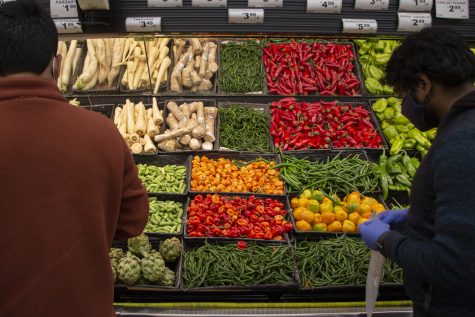
          Pete’s Fresh Market at 2333 W. Madison St. offers a wide variety of fruits, vegetables and alternatives for meat and dairy. Valentina Pucarelli

          It is still unclear whether humans first contracted COVID-19 in a lab or in the wildlife trade market in China.

          What we do know is COVID-19 has zoonotic origins, meaning that if we weren’t using animals for research or as food, we might not be where we are today.

          This is not only true for COVID-19, but also many other zoonotic diseases — diseases with animal origins — in the world such as Ebola, bird flu, swine flu, salmonella and E. coli, among others.

          Dr. Aysha Akhtar isa public health specialist and CEO of the Center for Contemporary Sciences, an independent nonprofit organization that focuses on reducing the use of animals for scientific experimentationby advancing human-specific research and testing methods. Akhtarsaid shepredicted this pandemic in 2014.

          “I wasn’t the only one, many other scientists and doctors have been saying for quite some time … that our relationship with other animals is increasing our risk for infectious diseases and will likely be the cause of the next pandemic,” Akhtar said.

          A studyconducted by the National Center for Biotechnology Information reviewed workshops conducted by the U.S. Centers for Disease Control and Prevention between 2014 and 2016, before the COVID-19 pandemic. The studyfound up to 75% of new or emerging infectious diseases came from animals, accounting for 15.8% of all deaths and 43.7% of deaths in low-resource countries. This resulted in about 2.7 million human deaths worldwide each year, the study found.

          Akhtar said one of the reasons therisk of infectious diseases is so high among humans is because of how animals are treated in factory farms and the wildlife trade market.

          According to Akhtar, animals are beingjammed into very small spaces in extreme temperatures and are put under very stressful conditions for their meat, milk andfur, which weakens their immune systems, leading to diseases that are easily caught and spread.

          “How we treat animals comes back to affect us in every way, whether directly or indirectly,” Akhtar said.

          Akhtar said one of the most significant changes we can individually make to prevent new diseases is through a vegan lifestyle.

          “The only way we’re really going to end factory farming though, is if the demand for meat, eggs and dairy goes down, and that means that each of us has to make a decision about who or what we choose to eat,” Akhtar said.

          According to Dr. Michael Klaper, an internationally-recognized doctor and educator,going vegan is alsoone of the most effective decisions we can make to prevent getting seriously ill. He also credited a vegan lifestyle with reducing the risk of getting the vast majority of degenerative and fatal diseases like cancer, diabetes, heart attacks and more that can result from a Western style of eating.

          “The vast majority of degenerative diseases that take so many lives and cause so many trillions of dollars around the world, are largely the result of the Western style of eating,” Klaper said. “A whole food plant based diet that has the ability to reverse these diseases.”

          A study conducted by the BMJ Nutrition Prevention & Health found that people who follow a plant-based diet have a 73% less chance of experiencing a moderate-to-severe case ofCOVID-19, compared toparticipants who did not follow a plant-based diet.

          “In the 21st century, adopting a plant-based diet is the healthiest, most loving, most sane, most compassionate, most sustainable thing that we can do, ” Klaper said.

          Some of the biggest misconceptions about being vegan arethat people are not getting enough nutrients and that a plant-based diet is expensive.

          I personally have been vegan for seven months for all reasons: the animals, the environment, my genetically high cholesterol, and more recently, because I do not want another pandemic. I have not spent any extra money on food, and am probably saving money as I am cooking more, eating out less and not buying as many processed foods.

          On top of that, my stomach is loving it and I overcame my cheese addiction.

          According to Klaper, with the exception of vitamin B-12, a whole food, plant-based diet can provide all the necessary nutrients needed.

          Foodslike beans, chickpeas, lentils, rice, peanuts, sunflower seeds, pasta, fruits and vegetables that can provide a balanced vegan diet can be found for alow cost at stores like Aldi and Walmart, and local urban farms offering “pay what you can” programs and CSA boxes.

          The COVID-19 pandemic has notbeen fun for anyone, so I doubt there is anyone who would want to go through it again. The good thing is, by changing the way we eat, we can actually help reduce the risk of another one, plus improve our individual and public health.

          “A lot of the power is really in our hands, so if we choose one plate of food over another, we could significantly reduce our risk for the next pandemic,” Akhtar said.