Responding to the state’s COVID-19 situation, the Louisiana Department of Wildlife and Fisheries (LDWF) has canceled National Hunting and Fishing Day (NHFD) events scheduled for September 25 across Louisiana.
“This was a tough decision, but we think the right decision,” said LDWF Secretary Jack Montoucet. “Like so many others, I looked forward to attending the events and watching families, especially young people, learn about hunting, fishing, shooting, and other outdoor activities. But, the risk to the public’s health to hold the NHFD events was too great.”
NHFD is a national event celebrated in all 50 states on the fourth Saturday in September. It was created in 1972 when Congress passed two bills establishing a specific day to celebrate the conservation contributions of the nation’s hunters and anglers.
Statewide Iowa — Iowa’s 16-day teal only hunting season begins statewide Sept. 1, offering hunters an opportunity to enjoy Iowa’s wetlands and shallow lakes during the mild late summer weather.
The U.S. Fish and Wildlife Service makes the September teal season available when the teal population is above certain levels. It offers hunters 16 bonus hunting days and does not take any days away from the regular duck hunting seasons.
“The teal season is a good opportunity to introduce young or novice hunters to duck hunting because these birds will fly all day and decoy fairly well,” said Orrin Jones, state waterfowl biologist with the Iowa Department of Natural Resources.
Teal will be moving in to Iowa in mid to late August and bird numbers can improve overnight with the change in weather up north.
Teal favor mudflats and shallow water so the current…
New regulations for hunting are on the horizon in response to the park’s recent redesignation to “national park and preserve.” However, hunters and hikers should be aware that these changes will not take effect until January 1, 2022.
Areas where hunting is currently prohibited in the park include Grandview, Camp Brookside, the Arrowhead Trail Area, the Park Loop Trail Area, and the Burnwood Environmental and Education Area. Hunting is also prohibited within 500 feet of heavy visitor use areas, including established campgrounds, day-use areas, and visitor centers.
Under West Virginia state hunting regulations, it is illegal to…
Jim Fornetti shows both beginning and experienced trappers some of the equipment and methods for trapping weasels. He’ll be holding a workshop during the U.P. Trappers’ Beginning Trappers Workshop on Aug. 28 in Hermansville. (Photo courtesy Mike Lewis)
HERMANSVILLE — The south-central district of the Upper Peninsula Trappers Association will hold its annual Beginning Trappers Workshop on Saturday, Aug. 28, at the William Anderson Sportsman’s Club in Hermansville.
Running from 9 a.m. to 5 p.m. EDT, the event is free and open to the public and put on by the group’s District 3 that includes Menominee, Delta and Dickinson counties.
There will also be trapping demonstrations for children of all ages, free weasel boxes, dog-proof raccoon traps and muskrat colony traps for appropriate-aged youngsters. The muskrat traps will be built on-site by older kids under guidance of District 3 members.
The group’s annual workshop has been held in February for a number of years, organizers said in an email, with this being an additional summertime workshop with trapping seasons coming soon.
“I am sure the kids will be anxious to try out their new traps and ideas they get from this workshop,” said workshop coordinator and U.P. Trappers Secretary Mike Lewis.
“A lot of trapping — particularly muskrat — is done in water, and early fall is a great time to capture the water dwellers, (which include) beaver, muskrat, otter and even raccoon, which frequent the water as well.
“The youngsters won’t have to wait very long to get out and use their new free trapping equipment and knowledge.
“There will be a lot of free stuff for the kids, including free tips and advice from not only the presenters, but from any of the ‘old trappers’ in attendance. These veterans love to help kids — or anyone — with any questions they may have. They also readily share their tips and trapping stories to anyone interested.
“With all that experience, these guys can provide a wealth of knowledge sure to shorten the learning curve for any trapper.”
He added that each youngster will win a prize along with the free traps and magazines that will be handed out. Kids will also have the opportunity to sign up for upcoming trapper education courses.
Food and refreshments will be available with food prepared by the William Anderson Sportsman’s Club.
The day’s schedule — all times EDT — opens with a weasel-trapping demo by Jim Fornetti at 10:30 a.m., “Trapping for Beginners” by John Gunville at 11:30 a.m., colony trap building at 12:30 p.m., lunch at 1:30 p.m., raffle and door prize drawings at 2:30 p.m., weasel box-trap and dog-proof coon traps to be given out at 3:30 p.m. and a coyote trapping demo by Randy Johnsen at 4:30 p.m.
Trevor Barnes of Barnes Hide and Fur Co. will be on hand buying fur, stretched and dried only. He will also have trapping supplies for sale. Potential workshop attendees can call Barnes before the show at 517-741-3595 to let him know how much fur you have to sell or to make sure he brings the supplies you need.
The William Anderson Sportsman’s Club is located near the Hermansville Pond west of Hermansville and can be reached by turning south at the blinking traffic light on U.S. 2, onto County 388 and going about a quarter mile west on Third Street to its end.
Information compiled by Journal Sports Editor Steve Brownlee. His email address is sbrownlee@miningjournal.net.
GRAND JUNCTION, Colo. (KKCO) – For its third consecutive year, Colorado Parks and Wildlife is rewarding hunters for sharing their expertise and love of hunting with others.
CPW is encouraging hunters to take a friend hunting by entering their contest. Experienced hunters who take the time to pass on their knowledge to novice hunters and submit a photograph and brief story about their experience will be entered to win prizes. Photograph and story submissions will be judged by their ability to inspire.
“I often run into people wanting to hunt but they just don’t know how to start. Most of them just need a mentor to help out,” said CPW Hunter Outreach Coordinator Bryan Posthumus. “It is so easy to ask your friends, co-workers, or family if they want to hunt and help them get started. Quite a few started out small game hunting. Many of the hunters last year are planning on hunting with their new hunting buddy this year.”
How it worksADVERTISEMENT
Mentors can take a beginner hunter out or mentees can encourage an experienced hunter to teach them how to hunt and enter to win some great prizes by submitting a photograph and brief story of their time out in the field. Registration opens Aug. 1, 2021 and will remain open until Feb. 28, 2022, submissions are due on the same date. Prize drawings will be made March 31, 2022.
To be eligible to enter:
Mentors must be at least 18 years of age or older at the time of entry and must hold a valid 2021 Colorado hunting license (the “hunting license”).
Mentors must have held a Colorado hunting license in at least 3 of the last 5 years (2016-2020).
Mentees must also be 18 or older at the time of entry and hold a valid 2021 Colorado hunting license.
Mentees must also either have:
Never had a hunting license until 2021,
Only had a hunting license in 2020 (e.g., a second-year hunter) or
Not had a hunting license in the past five consecutive years (i.e., since 2016).
Both individuals must follow rules and regulations in the 2021 Colorado Hunting Regulations; this includes possession of all appropriate licenses. Employees of Colorado Parks and Wildlife, and their immediate family (spouse, parents, siblings and children) and household members of each such employee, are not eligible.ADVERTISEMENThttps://016bfe33ed152f9a16051a124e8e2e20.safeframe.googlesyndication.com/safeframe/1-0-38/html/container.html
Contest participants must follow all applicable Colorado hunting regulations.
Prizes
Prizes will be awarded at the end of the contest to winners of the photo/story competition. All prizes are non-transferable. No substitution may be made except as provided. The winner is responsible for all taxes and fees associated with prize receipt and/or use.
Media Contact: Jordan Rutter, Director of Public Relations| jerutter@abcbirds.org <mailto:jerutter@abcbirds.org> | @JERutter <https://www.twitter.com/JERutter>
The Migratory Bird Protection Act has been introduced to restore safeguards for birds, like Baltimore Oriole. Photo by Agami Photo Agency/Shutterstock
(Washington, D.C., July 29, 2021) Today, Representative Alan Lowenthal (D-CA) joined with Representative Brian Fitzpatrick (R-PA) and 46 original co-sponsors to introduce the Migratory Bird Protection Act (MBPA) <https://lowenthal.house.gov/media/press-releases/congressmen-lowenthal-fitz patrick-introduce-legislation-permanently-protect> to reaffirm long-standing protections for migratory birds against industrial take – that is, unintentional but predictable killing of birds. Bird populations in North America are plummeting – a stunning 3 billion birds <http://3billionbirds.org/> have disappeared from the continent since 1970 – and federal law is essential to conserving and recovering these populations.
The MBPA reaffirms the Migratory Bird Treaty Act (MBTA), one of our nation’s first conservation laws, which was enacted to implement our international treaty commitments to protect populations of migratory birds. Unfortunately, the Trump administration finalized a regulation that cancelled protections for migratory birds by declaring that the law no longer protects birds from unconstrained incidental take by oil and gas developers and other industries.
“The MBTA has been a critical tool for bird conservation for over 100 years,” Congressman Lowenthal said. “Democratic and Republican presidential administrations since the 1970s have interpreted and applied the law in a similar way, which has saved countless numbers of birds. Our Migratory Bird Protection Act would prevent future federal executive action that may apply a flawed interpretation to the MBTA, and once and for all reaffirm and formalize all of the MBTA protections. We must prevent future reinterpretations that might let commercial interests off the hook when it comes to killing birds.”
“We must take the necessary steps to protect and conserve migratory bird populations,” Congressman Fitzpatrick said. “We must ensure that longstanding protections for birds are fully maintained while providing greater regulatory certainty. I am proud to join Rep. Lowenthal in introducing the bipartisan Migratory Bird Protection Act, which takes important steps to protect millions of migratory birds.”
“Americans love migratory birds and want to see them protected,” said Jamie Rappaport Clark, President and CEO for Defenders of Wildlife. “Stripping away longstanding protections from birds to buffer unsafe industry practices is irresponsible and reckless. Rep. Lowenthal’s bill puts our nation back on track to support and protect birds for all of us to enjoy and celebrate.”
The Migratory Bird Protection Act ensures durable protections for migratory birds from industrial activities and provides regulatory certainty to responsible developers in managing incidental take, so long as they follow best management practices to avoid bird deaths. This important and reasonable approach gives industry clear and consistent expectations for protecting birds without jeopardizing our international commitments and conservation legacy.
“Birds have inherent value and are an economic driver along with providing essential services necessary to people, from natural pest control to crop pollination. This Act provides the certainty industry needs while also ensuring birds receive the protections they deserve,” said Jennifer Cipolletti, Director of Conservation Advocacy for American Bird Conservancy.
“Our beloved birds need our care and protection more than ever,” said Noah Greenwald, Endangered Species Director at the Center for Biological Diversity. “Habitat loss and climate change are accelerating rapidly, so it’s urgent that Congress pass this bill and give birds a fighting chance at survival.”
“With over one-third of America’s native species at increased risk of extinction and a loss of more than 3 billion birds in the past half century, now is the time for Congress to act,” said Dr. Carol Chambers, President of The Wildlife Society. “Through Congressmen Lowenthal’s and Fitzpatrick’s leadership, the Migratory Bird Protection Act will provide support for wildlife biologists and managers to work collaboratively towards the proactive conservation successes America is capable of.”
On a parallel track, the Biden administration decided to rescind <https://apnews.com/article/donald-trump-wildlife-only-on-ap-billings-birds– 3a70c8432db631dce7df4f9050f1b013> a Trump-era legal memo that justified cutting bird protections and announced a replacement rule recognizing incidental take protections for migratory birds. The Biden administration also formally dropped an appeal <https://defenders.org/sites/default/files/2021-02/MBTASecondCircuitWithdraw alAppeal.pdf> of a federal district court ruling that rejected the Trump administration’s attempt to strip protections for birds under the MBTA. However, the near-gutting of the MBTA by the Trump administration and the potential for inconsistent federal court decisions highlight the fragility of migratory bird protections. Congress should now act to assure migratory birds have protections.
“This Act will guarantee bedrock protections for birds and the communities who rely on and support them,” said Katie Umekubo, a senior attorney at NRDC (Natural Resources Defense Council). “It will build upon and modernize a law that has protected both iconic and backyard bird species for over 100 years, right when our feathered friends need it most.”
“We have lost 3 billion birds in North America since 1970 and climate change threatens extinction for two-thirds of bird species. It is critical that we strengthen this baseline protection for birds and that is what this bill will do,” said Sarah Greenberger, Senior Vice President of Conservation Policy at National Audubon Society. “Birds are telling us they are in trouble and we are running out of time to act. As Congress looks to build toward America’s future, it should also help bring birds back.”
“Since 1970, we have lost 3 billion birds <https://www.nwf.org/Latest-News/Press-Releases/2019/09-19-19-3-Billion-Bird s-Lost> in North America – a devastating crisis for biodiversity, wildlife, and all those who enjoy birdwatching. The Migratory Bird Protection Act ensures durable protections for iconic migratory bird species like the Little Blue Heron and Wood Thrush,” said Jim Murphy, Director of Legal Advocacy for the National Wildlife Federation. “We applaud Congressman Lowenthal’s leadership on this issue and look forward to working with policymakers to save migratory birds.”
<https://act.abcbirds.org/a/take-action-mbta/> Please ask your U.S. Representative to co-sponsor the Migratory Bird Protection Act and strengthen protections for migratory birds.
###
American Bird Conservancy <http://abcbirds.org> is a nonprofit organization dedicated to conserving wild birds and their habitats throughout the Americas. With an emphasis on achieving results and working in partnership, we take on the greatest problems facing birds today, innovating and building on rapid advancements in science to halt extinctions, protect habitats, eliminate threats, and build capacity for bird conservation. Find us on abcbirds.org <http://abcbirds.org> , Facebook <https://www.facebook.com/AmericanBirdConserve/> , Instagram <https://www.instagram.com/americanbirdconservancy/> , and Twitter (@ABCbirds <http://twitter.com/abcbirds> ).
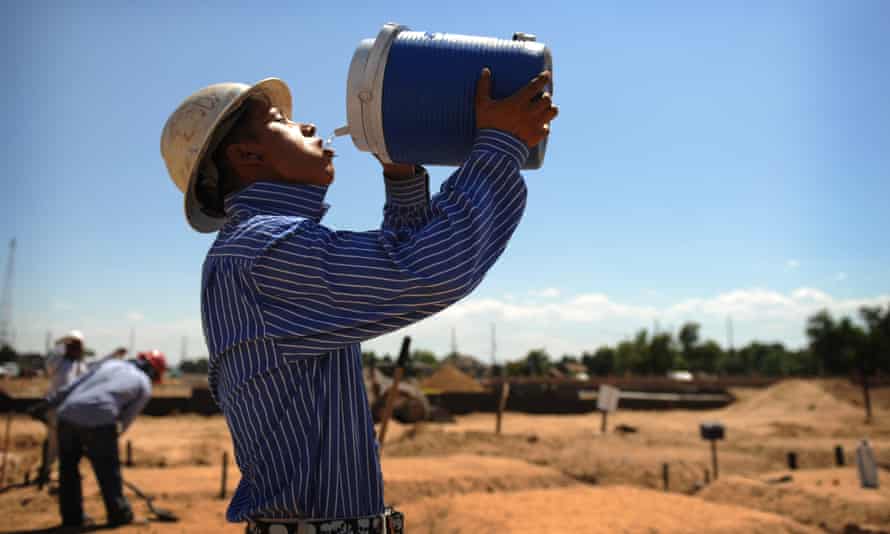
By 2050, nearly 60% of outdoor workers could experience at least one week when extreme heat makes it too dangerous to work if little to no action is taken
Between now and midcentury, rising temperature will expose outdoor workers to more frequent and dangerous heat conditions.Photograph: Cyrus McCrimmon/Denver Post/Getty Images
In the next few decades, Americans who work outdoors could increasingly find that it is simply too hot to do their jobs without risking their health.
By 2050, nearly 60% of outdoor workers – such as construction workers, emergency responders and farmworkers – could experience at least one week of workdays when extreme heat makes it too dangerous for them to work. This is in a scenario where little to no action is taken to reduce emissions. Currently less than 10% of outdoor…
IMAGE:A BUMBLEBEE ATTACHED TO A FLIGHT MILLviewmoreCREDIT: DANIEL KENNA / IMPERIAL COLLEGE LONDON
Rising temperatures could help some northern-latitude bees fly better, but more frequent extreme weather events could push them past their limits.
Bees’ flight performance affects their ability to pollinate plants – a crucial service for many of our crops. Now, researchers from Imperial College London have measured the relationship between bumblebee flight performance and surrounding temperature.
Measuring the motivation of bumblebees to fly and their flight endurance, the team found performance rose rapidly from the lower tested limit of 12oC and peaked between 25-27°C. Beyond this, however, they found performance started to decline.
Their results indicate that whilst bumblebees found in more northern latitudes may see benefits to flight performance under future climate warming, populations in southern latitudes, where temperatures above 27o
Tearing across the bone-dry landscape of the El Dorado National Forestat unfathomable speeds, California’s Caldor Fire near Lake Tahoe exploded in size from6,500 acresTuesday morning to53,772 acresWednesday morning with no containment, triggering a flurry of evacuations, torching parts of a small town and injuring at least two people, officialssaid.
In this long exposure photo, embers fly from burning trees as the Caldor Fire grows on Mormom Emigrant…
Statewide Iowa — Iowa’s sunflower and wheat fields will be popular places on Sept. 1, when thousands of hunters slip into the standing flowers and field edges in the early morning darkness for the opening day of dove hunting season.
Fast paced and fun, dove hunting can be done by nearly everyone regardless of skill level or mobility. It doesn’t require expensive equipment to participate, only clothes that blend in to the background, a bucket and plenty of shells. There’s a lot of action with a steady stream of doves coming in.
The Iowa Department of Natural Resources (DNR) includes a list of wildlife areas atwww.iowadnr.gov/doveswhere dove plots were planted and identifies the access point nearest the plot. Hunters are encouraged to do some preseason scouting to see if the sunflower planting was successful or was damaged from the summer hail storms…