


The couple had their names removed from the shipment, and placed an order for the animals’ feet to be turned into “stools,” an “umbrella stand,” and a “trash can.”
By Mike SpiesJuly 29, 2021

This story was published in partnership with The Trace, a nonprofit news organization covering guns in America.
In the early fall of 2013, an export company in Botswana prepared a shipment of animal parts for Wayne LaPierre, the head of the National Rifle Association, and his wife, Susan. One of the business’s managers e-mailed the couple a list of trophies from their recent hunt and asked them to confirm its accuracy: one cape-buffalo skull, two sheets of elephant skin, two elephant ears, four elephant tusks, and four front elephant feet. Once the inventory was confirmed, the e-mail stated, “we will be able to start the dipping and packing process.” Ten days later, Susan wrote back with a request: the shipment should have no clear links to the LaPierres. She told the shipping company to use the name of an American taxidermist as “the consignee” for the items, and further requested that the company “not use our names anywhere if at all possible.” Susan noted that the couple also expected to receive, along with the elephant trophies, an assortment of skulls and skins from warthogs, impalas, a zebra, and a hyena. Once the animal parts arrived in the States, the taxidermist would turn them into decorations for the couple’s home in Virginia, and prepare the elephant skins so they could be used to make personal accessories, such as handbags.
The LaPierres felt secrecy was needed, the e-mails show, because of a public uproar over an episode of the hunting show “Under Wild Skies,” in which the host, Tony Makris, had fatally shot an elephant. The N.R.A. sponsored the program, and the couple feared potential blowback if the details of their Botswana hunt became public. Footage of their safari, which was filmed for “Under Wild Skies” and recently published by The Trace and The New Yorker, shows that Wayne had struggled to kill an elephant at close range, while Susan felled hers with a single shot and cut off its tail in jubilation. Plans to air an episode featuring the LaPierres’ hunt were cancelled.
Records obtained by The Trace and The New Yorker show that Susan leveraged the LaPierres’ status to secretly ship animal trophies from their safari to the U.S., where the couple received free taxidermy work. New York Attorney General Letitia James, who has regulatory authority over the N.R.A., is currently seeking to dissolve the nonprofit for a range of alleged abuses, including a disregard for internal controls designed to prevent self-dealing and corruption by its executives. In a complaint filed last August, James’s office asserted that trophy fees and taxidermy work “constituted private benefits and gifts in excess of authorized amounts pursuant to NRA policy to LaPierre and his wife.” The new records appear to confirm those allegations. The N.R.A.’s rules explicitly state that gifts from contractors cannot exceed two hundred and fifty dollars. The shipping and taxidermy of the Botswana trophies cost thousands, and provided no benefit to the N.R.A.—only to the LaPierres. In the complaint, James’s office alleged that the LaPierres also received improper benefits related to big-game hunting trips in countries including Tanzania, South Africa, and Argentina. The attorney general declined to comment further on the details of the case.
Taxidermy work orders containing the LaPierres’ names called for the elephants’ four front feet to be turned into “stools,” an “umbrella stand,” and a “trash can.” At their request, tusks were mounted, skulls were preserved, and the hyena became a rug. The episode represents a rare instance in which the gun group’s embattled chief executive is captured, on paper, unambiguously violating N.R.A. rules; the e-mails show that Susan directed the process while Makris’s company, Under Wild Skies Inc., which received millions of dollars from the N.R.A., picked up the tab.
Andrew Arulanandam, the N.R.A.’s managing director of public affairs, said, over e-mail, that the LaPierres’ “activity in Botswana—from more than seven years ago—was legal and fully permitted.” The couple’s safari trips, he added, were meant to “extol the benefits of hunting and promote the brand of the N.R.A. with one of its core audiences.” Moreover, he claimed, “Many of the most notable hunting trophies in question are at the N.R.A. museum or have been donated by the N.R.A. to other public attractions.”
The LaPierres’ effort to keep their taxidermy work secret spanned four months and involved multiple individuals, companies, and countries. On September 27, 2013, the shipping company in Botswana sent its first e-mail to the LaPierres and informed them that the animal parts would be sent to a different company, in Johannesburg, South Africa, before making their way to the United States. “We will be keeping you advised on the progress of this shipment as it moves along these processes,” the message said. In early October, after multiple phone calls with Susan, the American taxidermist wrote to one of the shipping agents involved in the exportation process. He explained that there had been a recent controversy involving Makris, and that the LaPierres “can not afford bad publicity and a out cry.” The taxidermist added, “That is why they are trying not to have there names show up on these shipments so the information does not fall into the wrong hands.” Two months later, the taxidermist checked in with Makris, and asked what he should do with the items once he received them. “W and Susan will tell you how they want theirs mounted,” Makris replied, before reminding the taxidermist that “they said you could handle the import discreetly.” Makris then informed the taxidermist that he would pick up the couple’s tab.
VIDEO FROM THE NEW YORKERHow Far Can Abused Women Go to Protect Themselves?
Throughout December, 2013, e-mails show that the taxidermist negotiated with both export companies on the couple’s behalf, with Susan, and also others, copied. “AS requested by the LaPierre’s in a earlier email there name and contact information is to be replaced with my name and contact information,” one note to the Botswana company read. The organization replied that trophies “can only be exported from Botswana in the name of the licensee,” and that “it’s been that way for years, and the export regulations stipulate this.” The taxidermist replied, “This request was only made by Susan and Wayne LaPierre and understand you need to follow the law were applicable.”
The taxidermist then turned his attention to the company in South Africa. On December 10th, the taxidermist told Susan that, once the hunting trophies arrived in Johannesburg, an agent would generate a new air waybill to attach to the shipment and enter the taxidermist’s name on it as the consignee, instead of the LaPierres’. When the trophies arrived in the United States and were cleared through government agencies, it would look as though they belonged to the taxidermist. “Awesome,” Susan replied.
Once the shipping crates landed in Johannesburg, another contact of the taxidermist’s drove two hours to check if the LaPierres’ names were written on the containers. When the friend discovered that they were, he scrubbed them off. In late January, 2014, the taxidermist told Susan that the shipment had arrived. “Looks like everything is here and no protestors,” he wrote.
After Susan killed the elephant in Botswana, video shows, she was fixated on the creature’s feet. As she touched them, she said, “He’s so wrinkly. . . . Wow. A podiatrist would love working on him.” Photographs of the taxidermied appendages show that the animal’s wrinkled gray skin, the light coating of hair, and the massive, cracked toenails are all preserved, and, in the case of the stools, topped with wooden rings and black leather seating pads.
The taxidermist had successfully completed a highly sensitive, laborious project. Two years later, in 2016, he reached out to Susan because he was trying to buy a boat from someone she and Wayne knew, and he hoped that Wayne could connect them. In an e-mail, the taxidermist said it was fine if she could not help, noting that “life will go on.” Still, he asked for the courtesy of a reply, one way or the other. He did not receive one.
Arulanandam, the N.R.A spokesman, alleged that “communications” with the taxidermist stopped after he “appeared to make threats against members of an N.R.A. delegation that participated in the Botswana excursion. He also sought benefits and payments to which he was not entitled.”
The taxidermist wrote a parting e-mail three months later, expressing his frustration at the lack of response. It wasn’t so long ago, he said, that Susan had “begged” him over the phone to remove the LaPierres’ names from their “harvested Elephants” and promised him “ ‘A BIG FAVOR’ ” in return. In case she had forgotten, he reminded her, “you could not afford protesters” and a “media shit storm.”
The couple had their names removed from the shipment, and placed an order for the animals’ feet to be turned into “stools,” an “umbrella stand,” and a “trash can.”
By Mike SpiesJuly 29, 2021
This story was published in partnership with The Trace, a nonprofit news organization covering guns in America.
In the early fall of 2013, an export company in Botswana prepared a shipment of animal parts for Wayne LaPierre, the head of the National Rifle Association, and his wife, Susan. One of the business’s managers e-mailed the couple a list of trophies from their recent hunt and asked them to confirm its accuracy: one cape-buffalo skull, two sheets of elephant skin, two elephant ears, four elephant tusks, and four front elephant feet. Once the inventory was confirmed, the e-mail stated, “we will be able to start the dipping and packing process.” Ten days later, Susan wrote back with a request: the shipment should have no clear links to the LaPierres. She told the shipping company to use the name of an American taxidermist as “the consignee” for the items, and further requested that the company “not use our names anywhere if at all possible.” Susan noted that the couple also expected to receive, along with the elephant trophies, an assortment of skulls and skins from warthogs, impalas, a zebra, and a hyena. Once the animal parts arrived in the States, the taxidermist would turn them into decorations for the couple’s home in Virginia, and prepare the elephant skins so they could be used to make personal accessories, such as handbags.
The LaPierres felt secrecy was needed, the e-mails show, because of a public uproar over an episode of the hunting show “Under Wild Skies,” in which the host, Tony Makris, had fatally shot an elephant. The N.R.A. sponsored the program, and the couple feared potential blowback if the details of their Botswana hunt became public. Footage of their safari, which was filmed for “Under Wild Skies” and recently published by The Trace and The New Yorker, shows that Wayne had struggled to kill an elephant at close range, while Susan felled hers with a single shot and cut off its tail in jubilation. Plans to air an episode featuring the LaPierres’ hunt were cancelled.
Records obtained by The Trace and The New Yorker show that Susan leveraged the LaPierres’ status to secretly ship animal trophies from their safari to the U.S., where the couple received free taxidermy work. New York Attorney General Letitia James, who has regulatory authority over the N.R.A., is currently seeking to dissolve the nonprofit for a range of alleged abuses, including a disregard for internal controls designed to prevent self-dealing and corruption by its executives. In a complaint filed last August, James’s office asserted that trophy fees and taxidermy work “constituted private benefits and gifts in excess of authorized amounts pursuant to NRA policy to LaPierre and his wife.” The new records appear to confirm those allegations. The N.R.A.’s rules explicitly state that gifts from contractors cannot exceed two hundred and fifty dollars. The shipping and taxidermy of the Botswana trophies cost thousands, and provided no benefit to the N.R.A.—only to the LaPierres. In the complaint, James’s office alleged that the LaPierres also received improper benefits related to big-game hunting trips in countries including Tanzania, South Africa, and Argentina. The attorney general declined to comment further on the details of the case.
Taxidermy work orders containing the LaPierres’ names called for the elephants’ four front feet to be turned into “stools,” an “umbrella stand,” and a “trash can.” At their request, tusks were mounted, skulls were preserved, and the hyena became a rug. The episode represents a rare instance in which the gun group’s embattled chief executive is captured, on paper, unambiguously violating N.R.A. rules; the e-mails show that Susan directed the process while Makris’s company, Under Wild Skies Inc., which received millions of dollars from the N.R.A., picked up the tab.
Andrew Arulanandam, the N.R.A.’s managing director of public affairs, said, over e-mail, that the LaPierres’ “activity in Botswana—from more than seven years ago—was legal and fully permitted.” The couple’s safari trips, he added, were meant to “extol the benefits of hunting and promote the brand of the N.R.A. with one of its core audiences.” Moreover, he claimed, “Many of the most notable hunting trophies in question are at the N.R.A. museum or have been donated by the N.R.A. to other public attractions.”
The LaPierres’ effort to keep their taxidermy work secret spanned four months and involved multiple individuals, companies, and countries. On September 27, 2013, the shipping company in Botswana sent its first e-mail to the LaPierres and informed them that the animal parts would be sent to a different company, in Johannesburg, South Africa, before making their way to the United States. “We will be keeping you advised on the progress of this shipment as it moves along these processes,” the message said. In early October, after multiple phone calls with Susan, the American taxidermist wrote to one of the shipping agents involved in the exportation process. He explained that there had been a recent controversy involving Makris, and that the LaPierres “can not afford bad publicity and a out cry.” The taxidermist added, “That is why they are trying not to have there names show up on these shipments so the information does not fall into the wrong hands.” Two months later, the taxidermist checked in with Makris, and asked what he should do with the items once he received them. “W and Susan will tell you how they want theirs mounted,” Makris replied, before reminding the taxidermist that “they said you could handle the import discreetly.” Makris then informed the taxidermist that he would pick up the couple’s tab.
VIDEO FROM THE NEW YORKERHow Far Can Abused Women Go to Protect Themselves?
Throughout December, 2013, e-mails show that the taxidermist negotiated with both export companies on the couple’s behalf, with Susan, and also others, copied. “AS requested by the LaPierre’s in a earlier email there name and contact information is to be replaced with my name and contact information,” one note to the Botswana company read. The organization replied that trophies “can only be exported from Botswana in the name of the licensee,” and that “it’s been that way for years, and the export regulations stipulate this.” The taxidermist replied, “This request was only made by Susan and Wayne LaPierre and understand you need to follow the law were applicable.”
The taxidermist then turned his attention to the company in South Africa. On December 10th, the taxidermist told Susan that, once the hunting trophies arrived in Johannesburg, an agent would generate a new air waybill to attach to the shipment and enter the taxidermist’s name on it as the consignee, instead of the LaPierres’. When the trophies arrived in the United States and were cleared through government agencies, it would look as though they belonged to the taxidermist. “Awesome,” Susan replied.
Once the shipping crates landed in Johannesburg, another contact of the taxidermist’s drove two hours to check if the LaPierres’ names were written on the containers. When the friend discovered that they were, he scrubbed them off. In late January, 2014, the taxidermist told Susan that the shipment had arrived. “Looks like everything is here and no protestors,” he wrote.
After Susan killed the elephant in Botswana, video shows, she was fixated on the creature’s feet. As she touched them, she said, “He’s so wrinkly. . . . Wow. A podiatrist would love working on him.” Photographs of the taxidermied appendages show that the animal’s wrinkled gray skin, the light coating of hair, and the massive, cracked toenails are all preserved, and, in the case of the stools, topped with wooden rings and black leather seating pads.
The taxidermist had successfully completed a highly sensitive, laborious project. Two years later, in 2016, he reached out to Susan because he was trying to buy a boat from someone she and Wayne knew, and he hoped that Wayne could connect them. In an e-mail, the taxidermist said it was fine if she could not help, noting that “life will go on.” Still, he asked for the courtesy of a reply, one way or the other. He did not receive one.
Arulanandam, the N.R.A spokesman, alleged that “communications” with the taxidermist stopped after he “appeared to make threats against members of an N.R.A. delegation that participated in the Botswana excursion. He also sought benefits and payments to which he was not entitled.”
The taxidermist wrote a parting e-mail three months later, expressing his frustration at the lack of response. It wasn’t so long ago, he said, that Susan had “begged” him over the phone to remove the LaPierres’ names from their “harvested Elephants” and promised him “ ‘A BIG FAVOR’ ” in return. In case she had forgotten, he reminded her, “you could not afford protesters” and a “media shit storm.”
July 28, 2021 16 Comments

The United States Court of Appeals for the 9th Circuit ruled against the National Pork Producers Council and the American Farm Bureau Federation in their challenge to Proposition 12, the strongest farm animal protection law in the world. tongchuwit/iStock.com7.3KSHARES
Today, a three-judge panel in the United States Court of Appeals for the 9th Circuit unanimously denied an attempt by the National Pork Producers Council and the American Farm Bureau Federation to strike down California’s Proposition 12, considered the strongest farm animal protection law in the world.
Championed by the Humane Society of the United States, Proposition 12 is the ground-breaking animal welfare ballot measure passed by California voters in a landslide in 2018. It bans the extreme confinement of egg-laying hens, mother pigs and baby calves used in the veal industry, and prohibits the sale in California of eggs, pork and veal if they are the products of animals confined inside cruel cages.

Today’s news comes just one month after the U.S. Supreme Court rejected a separate meat industry legal challenge to Proposition 12. The 9th Circuit’s ruling affirms what the HSUS and the Humane Society Legislative Fund have long advocated, and what courts have repeatedly held: that states have the right to pass laws that reject cruel products and protect their citizens’ health and safety.
The HSUS intervened to defend Proposition 12, along with Animal Equality, Animal Legal Defense Fund, Animal Outlook, Compassion in World Farming USA, Farm Sanctuary and the Humane League.
The vast majority of egg-laying hens, veal calves and mother pigs in the U.S. are locked in the type of extreme confinement systems Proposition 12 outlaws. Animals inside factory farms suffer horrifying abuses on a daily basis. For nearly their entire lives, egg-laying hens, mother pigs and baby calves are crammed in tiny, dirty cages where they can hardly move, leaving them unable to engage in many of their most basic natural behaviors. The cruel, filthy conditions have also been linked to zoonotic disease by the United Nations.
The HSUS and HSLF are battling every day to end this animal cruelty. Our legislative campaigns have resulted in the passage of farm animal protection laws in over a dozen states, and our corporate campaigns have convinced hundreds of food corporations to adopt cage-free policies. The transition to a more humane, safe and sustainable agricultural model is underway, and we urge the Biden Administration to support this effort.
Today’s legal decision makes it even more clear that the cruel caging of farm animals has no place in a humane society. We’ll keep making that point in boardrooms, legislatures, courtrooms and public discourse until the crates and cages are just a bad memory.
Sara Amundson is president of the Humane Society Legislative Fund.
With international attention continuing to shed light on Wisconsin’s reckless and grossly over quota February 2021 wolf hunt, the Department of Natural Resources (WDNR) remains tight-lipped about recent scientific reports that as many as a third of the state’s wolves were killed legally and illegally since losing federal protections in January of this year. Instead, WDNR officials are simply moving forward with plans for the next hunt in November 2021, while bear hunters continue to feed bears and wolves from thousands of intentional bait sites.
In 2020, more bear hunting hounds were killed by wolves than livestock in the state. Despite arguments for the February wolf hunt centering on the reported impact wolves were having on livestock producers, the biggest conflict that has hunters hating wolves more than any other game animal, is the killing of an average of two dozen bear hounds a year in mostly state and national…
View original post 510 more words


ALBANY — The New York State Department of Environmental Conservation said Wednesday that hunting and trapping licenses and deer management permits (DMPs) for the 2021-2022 seasons are on sale.
In addition, DEC announced new opportunities for hunters this year, including expanded hunting seasons and allowing youth ages 12 and 13 to hunt deer with a firearm or crossbow in Upstate counties that have passed a local low and “opted in” to participate.
Licenses and permits can be purchased online, at any one of DEC’s license-issuing agents or by telephone at (866) 933-2257. New hunting and trapping licenses are valid from Sept. 1 through Aug. 31, 2022. Annual fishing licenses are valid for 365 days from date of purchase.https://c18f01dea868c167beb2e2d77e3ba18f.safeframe.googlesyndication.com/safeframe/1-0-38/html/container.html
DEC encourages outdoor enthusiasts to consider…
View original post 725 more words
https://nypost.com/2021/08/04/game-hunter-swindled-financier-out-of-2m-on-big-kills-suit/
ByPriscilla DeGregoryandAbby Weiss
August 4, 2021|6:19pm|UpdatedEnlarge Image

Angus Murray is suing Jason Stone for allegedly falsifying measurements of big game animals that he helped him hunt, such as a Roosevelt Sable Antelope.Shutterstock
Those are some big bucks!
A wealthy financial advisor claims a well-known game hunter swindled him out of more than $2 million — by faking the measurements of his high-profile kills to rack up accolades and drive up business, a new lawsuit charges.
Angus Murray, the CEO and founder of investment firm Castlestone Management, says alleged wolf-in-sheep’s-clothing Jason Stone falsified measurements of…
View original post 645 more words





ByBen Cost
August 6, 2021 | 11:30am Popular Texas fishing guide Raymond “Skipper” H. Mock died after contracting a “flesh-eating” disease from an oyster cut.Facebook
A popular Texas fishing-boat guide tragically died last month after contracting a ravenous “flesh-eating” bacteria from a seemingly innocuous wound.
South Padre Island’s Raymond “Skipper” H. Mock, 61, had reportedly been infected with vibriosis, or fish poisoning — a bacterial infection most commonly associated with eating raw or undercooked seafood or exposing open wounds to water,the Houston Chronicle reported.Family and friends believe he most likely picked up the flesh-ravaging microbes through an oyster cut,according to Newsweek.
The fisherman officially died July 30 due to organ failure caused by sepsis, a “life-threatening condition that occurs when the body’s response to an infection damages its own tissues,”per the Mayo Clinic.
“It’s a very invasive disease,” said Dr. Sandra Lozano, a physician…
View original post 744 more words
BYJessica Corbett, Common DreamsPUBLISHEDAugust 6, 2021SHAREShare via FacebookShare via TwitterShare via Email

READING LISTRACIAL JUSTICEMLK’s Family and Civil Rights Leaders Call for Voting Rights March on WashingtonENVIRONMENT & HEALTHDemocrats Propose Medicare for a Few More Instead of Demanding Medicare for AllPOLITICS & ELECTIONSGOP Lawmaker Suing Pelosi Over House Mask Rules Contracts COVIDPOLITICS & ELECTIONSRepublicans Balk at Infrastructure Adding to Deficit After Opposing Pay-ForsECONOMY & LABORPredatory Banks at Walmarts Made Over 100 Percent of Profits From Overdraft FeesECONOMY & LABORCOVID Relief Packages Dramatically Reduced Poverty. They Should Be Permanent.
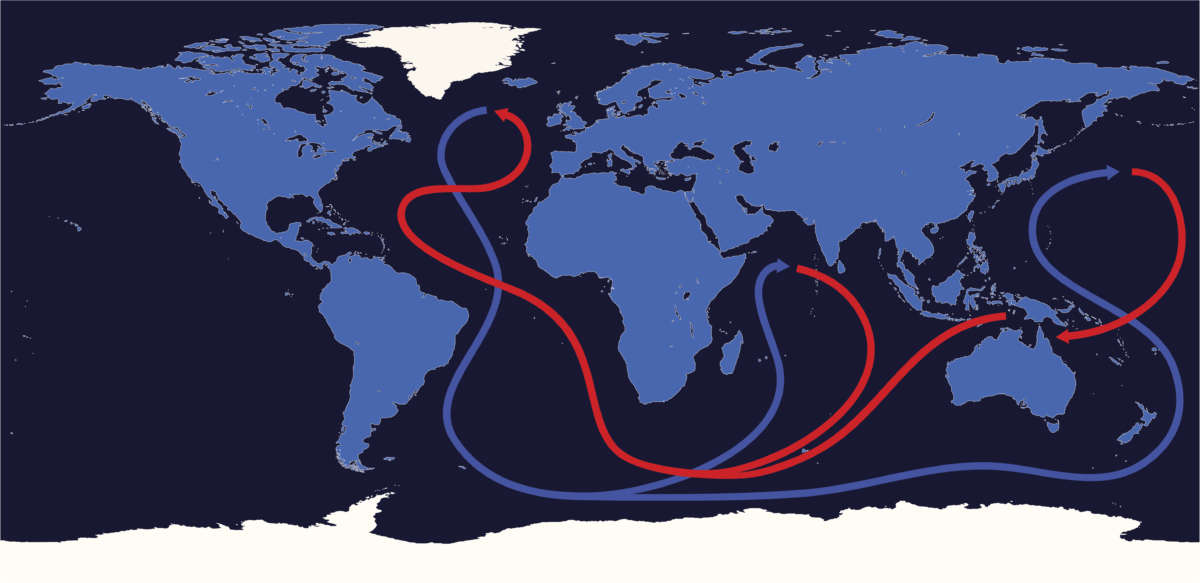
While heatwaves, fires, and floods produce warnings that “we are living in a climate emergency, here and now,” a scientific study suggested Thursday that a crucial Atlantic Ocean current system could collapse, which “would have severe impacts on the global climate system.”
The study, published in the journal Nature Climate Change, focuses on the Atlantic Meridional Overturning Circulation (AMOC), which includes the Gulf Stream. As the United Kingdom’s Met Office explains, it is “a large system of ocean currents that carry warm water from the tropics northwards into the North Atlantic,” like a conveyor belt.
Previous research has shown AMOC weakening in recent centuries. The author of the new study, Niklas Boers of the Potsdam Institute of Climate Impact Research (PIK), found that this is likely related to a loss of stability.
Get the latest news and thought-provoking analysis from Truthout.
“The Atlantic Meridional Overturning is one of our planet’s key circulation systems,” Boers, who is also affiliated with universities in the U.K. and Germany, said in a statement.
“We already know from some computer simulations and from data from Earth’s past, so-called paleoclimate proxy records, that the AMOC can exhibit — in addition to the currently attained strong mode — an alternative, substantially weaker mode of operation,” he continued. “This bi-stability implies that abrupt transitions between the two circulation modes are in principle possible.”
In the absence of long-term data on the current system’s strength, Boers looked at its “fingerprints,” sea-surface temperature and salinity patterns. He said that “a detailed analysis of these fingerprints in eight independent indices now suggests that the AMOC weakening during the last century is indeed likely to be associated with a loss of stability.”
“The findings support the assessment that the AMOC decline is not just a fluctuation or a linear response to increasing temperatures,” he continued, “but likely means the approaching of a critical threshold beyond which the circulation system could collapse.”
As The Guardian’s Damian Carrington reports, the collapse of “one of the planet’s main potential tipping points” would be devastating on a global scale:
Such an event would have catastrophic consequences around the world, severely disrupting the rains that billions of people depend on for food in India, South America, and West Africa; increasing storms and lowering temperatures in Europe; and pushing up the sea level in the eastern U.S. It would also further endanger the Amazon rainforest and Antarctic ice sheets.
The complexity of the AMOC system and uncertainty over levels of future global heating make it impossible to forecast the date of any collapse for now. It could be within a decade or two, or several centuries away. But the colossal impact it would have means it must never be allowed to happen, the scientists said.
“The signs of destabilization being visible already is something that I wouldn’t have expected and that I find scary,” Boers told the newspaper. “It’s something you just can’t [allow to] happen.”
It is unclear what level of global heating would cause a collapse, “so the only thing to do is keep emissions as low as possible,” he added. “The likelihood of this extremely high-impact event happening increases with every gram of CO2 that we put into the atmosphere.”
Some climate action advocates responded to the study by highlighting a science fiction movie that, as famed film critic Roger Ebert wrote nearly two decades ago, “is ridiculous, yes, but sublimely ridiculous — and the special effects are stupendous.”https://platform.twitter.com/embed/Tweet.html?dnt=true&embedId=twitter-widget-0&features=eyJ0ZndfZXhwZXJpbWVudHNfY29va2llX2V4cGlyYXRpb24iOnsiYnVja2V0IjoxMjA5NjAwLCJ2ZXJzaW9uIjpudWxsfSwidGZ3X2hvcml6b25fdHdlZXRfZW1iZWRfOTU1NSI6eyJidWNrZXQiOiJodGUiLCJ2ZXJzaW9uIjpudWxsfSwidGZ3X3NwYWNlX2NhcmQiOnsiYnVja2V0Ijoib2ZmIiwidmVyc2lvbiI6bnVsbH19&frame=false&hideCard=false&hideThread=false&id=1423354708865990657&lang=en&origin=https%3A%2F%2Fwww.commondreams.org%2Fnews%2F2021%2F08%2F05%2Funimaginably-catastrophic-researchers-fear-gulf-stream-system-could-collapse&sessionId=82a4e79f48f64c64814c576ccb0afdb18090df3b&siteScreenName=truthout&theme=light&widgetsVersion=1890d59c%3A1627936082797&width=500px
“We all laughed at The Day After Tomorrow, back in 2004,” said Guy Shrubsole, policy and campaigns coordinator at Rewilding Britain. “Turned out it was a documentary.”
The environmental advocacy group 350 Tacoma responded to the findings with a call to action.
“There are warning signs that the Gulf Stream could collapse, an unimaginably catastrophic (and irreversible) impact of fossil fuel-caused climate breakdown,” the group tweeted. “Scientists say we cannot allow this to happen. People in power stand in our way.”
The study comes ahead of a United Nations climate summit in Glasgow set to begin October 31. Last month, U.N. Secretary-General António Guterres noted the upcoming event and reminded leaders of wealthy countries that “the world urgently needs a clear and unambiguous commitment to the 1.5-degree goal of the Paris agreement,” and “we are way off track.”
Exclusive: IPCC says gas, produced by farming, shale gas and oil extraction, playing ever-greater role in overheating planetFiona HarveyEnvironment correspondentFri 6 Aug 2021 02.00 EDT
Cutting carbon dioxide is not enough to solve the climate crisis – the world must act swiftly on another powerful greenhouse gas, methane, to halt the rise in global temperatures, experts have warned.
Leading climate scientists will give their starkest warning yet – that we are rushing to the brink of climate catastrophe – in a landmark report on Monday.The Intergovernmental Panel on Climate Change will publish its sixth assessment report, a comprehensive review of the world’s knowledge of the climate crisis and how human actions are altering the planet. It will show in detail how close the world is to irreversible change.
One of the key action…
View original post 676 more words


