
by Sharon Guynup on 3 August 2021
- The new, highly-contagious Delta variant — spread with the ease of chickenpox — is causing COVID-19 cases to skyrocket across the globe as health officials respond with alarm. “The war has changed,” said a recent internal U.S. Centers for Disease Control and Prevention (CDC) document.
- Globally, numerous infectious diseases are being transmitted between wildlife, livestock and humans at escalating rates, including outbreaks of COVID-19, Ebola, dengue, HIV and others, as the threat of new emergent zoonotic diseases grows ever greater. The cost is huge in lives lost and ruined economies.
- The driver: human activities, particularly intrusion into wild landscapes and eating and trading wild animals. Bringing people, domestic and wild animals into unnatural proximity exposes all to pathogens for which they lack immunity. International travel and a booming global wildlife trade quickly spread viruses.
- Experts say that a “One Health” approach is urgently needed to prevent future pandemics — simultaneously addressing human, animal and ecosystem health, protecting humanity and nature, and incorporating disease risk into decision-making.
In early 2020, as a novel coronavirus swept the globe, a little-known word entered dinner table conversation. COVID-19 was “zoonotic”: a disease that originated in animals, then evolved, breached the Darwinian divide, and jumped to humans. On March 11, 2020, the World Health Organization (WHO) declared a global pandemic.
Now, with another wave surging worldwide — and more than 600,000 new cases being diagnosed daily — a new fear-evoking word has entered the lexicon: “variant.”
“The war has changed,” according to an internal document from the U.S. Centers for Disease Control and Prevention (CDC). The new highly contagious Delta variant has evolved to spread with the ease of chickenpox and causes more serious disease.https://www.youtube.com/embed/kQwd6seYg9Y
Now, infections near 200 million globally, with a staggering death toll: more than 4.2 million lives lost. Experts say the true numbers are far higher: A new study estimates deaths in India at 10 times the official figure. The pandemic has also sparked a global recession, thrusting more than 95 million people into extreme poverty. With this new Delta variant, and the very likely possibility of more variants to come, the crisis is far from over.
As the world reels, experts are raising a bright red warning flag: This is not just a once-in-a-century event. “Pandemics are [happening] more like once every 10 years right now,” said zoologist Peter Daszak, president of the nonprofit EcoHealth Alliance in New York City. Meanwhile, there is little discussion on why the COVID-19 pandemic happened or the urgent action needed to prevent the next global disease outbreak, he said.

Emerging zoonotic disease
Viruses need a host organism to replicate and then spread into new hosts, so survival requires that they constantly evolve to evade a species’ immune system. That evolution has allowed viruses to move back and forth between animals and humans for millennia.
Today, up to 75% of all new infectious human diseases are zoonotic, and most originate in the tropics.
There’s a vast pool of unknown viruses out there, Daszak said, possibly more than 1.6 million. Of those, 600,000 to 800,000 could potentially infect humans. “Most of the risky viruses we see out there come from mammals; a few come from birds,” he added.
Some are carried by intermediate hosts or by parasites, particularly mosquitoes and ticks. Many are fatal. They generally have no cure.

Modern examples are numerous: The AIDS crisis, caused by the human immunodeficiency virus, or HIV, originated in Central Africa, where it crossed to people from primates, possibly in the late 1800s, and was probably contracted when a person consumed infected chimp meat. One of the deadliest, Ebola hemorrhagic fever, first appeared in 1976 near the Ebola River in what is now the Democratic Republic of Congo. It kills about half of its victims. It, too, is thought to be transmitted via the butchering and eating of infected chimps, and possibly fruit bats and infected forest antelope. In 1998, the Nipah virus jumped from flying foxes to pigs to humans on a Malaysian farm carved into the rainforest. In 2009, the H1N1 swine flu appeared in Mexico, a hybrid of bird and pig viruses.
Few people around the globe who contract West Nile virus via a mosquito bite ever connect it to birds living near the source of the Nile River in Uganda. Mosquitoes transmit multiple diseases, including yellow fever, Zika virus and dengue. Ticks transmit Lyme and other bacterial and viral diseases. The list goes on.
Spillover
The rate of spillover — diseases moving between species — has surged in tandem with rapidly escalating human impacts on the planet. COVID-19 is just one of about 500 new zoonotic diseases detected since the 1950s.
For decades, epidemiologists, conservationists, veterinarians and public health experts have issued dire warnings regarding spillover: Aggressive encroachment into intact ecosystems and altering the planet’s natural systems is creating dangerous health risks.
These incursions have brought people, their domestic animals and wildlife into unnatural proximity. In close contact, they swap germs, pathogens that can then mutate and jump into new, vulnerable hosts that lack immunity to them. Diseases can pass in any direction between wildlife, livestock and people — and back again.
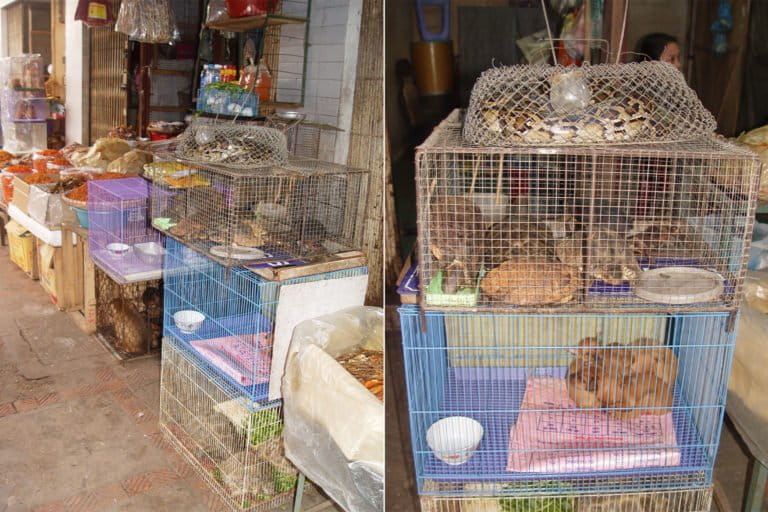
Scientists are still debating the source of COVID-19, whether it came from wildlife sold for food at the Huanan Seafood Wholesale Market in Wuhan, China; was somehow transmitted through horseshoe bats, a reservoir species; or accidentally escaped from the Wuhan Institute of Virology biotech lab, which studies coronaviruses. Most scientists lean toward a wildlife spillover, but regardless of its origin, this pandemic was human-caused.
“It was preventable; it was not a surprise, and it was predicted,” said Steve Osofsky, director of the Cornell Wildlife Health Center in Ithaca, New York.
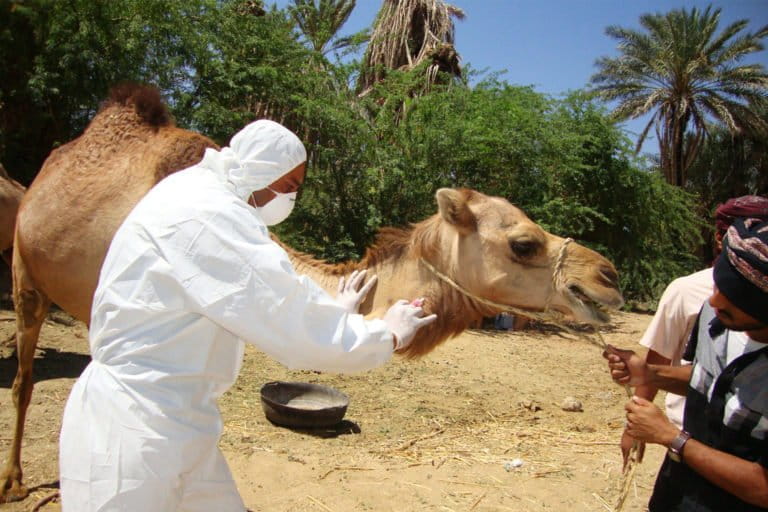
Two coronavirus outbreaks preceded COVID-19: The 2003 SARS (severe acute respiratory syndrome), which likely moved from bats to people by way of civets sold in Chinese wildlife markets, and MERS (Middle East respiratory syndrome), which appeared in Saudi Arabia in 2012, carried by dromedary camels. There are seven known coronaviruses that infect people.
A human-created crisis
There are really only a few ways we invite pathogens into humanity’s living room, Osofsky said: by eating the body parts of wild animals; by capturing and mixing wild species together in markets; and by razing tropical forests and destroying what’s left of wild nature — which he said we’re doing “at a dizzying pace.” A recent study published in the journal Science noted that “the tree of life is being pruned by human activities at an unprecedented rate.”
Biodiversity has been called the immune system of the planet; its devastation puts us at great risk. Growing research shows that when we disrupt natural systems, zoonotic disease threats rise exponentially. While some species disappear, others proliferate unchecked, including rodents and many known to carry pathogens that infect humans.
It’s really a numbers game. “When we erode biodiversity, we favor species that are more likely to be zoonotic hosts,” said Rick Ostfeld, a disease ecologist at the Cary Institute of Ecosystem Studies in Millbrook, New York. “The next pandemic disease is far more likely to come from a rat than a rhino. We inadvertently make life golden for the rats of the world by replacing native habitat with strip malls, mega-dams and soybean fields,” he explained.
Osofsky added this caveat: “It’s important not to let fear of diseases create a backlash against wild creatures. We need wildlife and wild places.” Healthy ecosystems guard us against the next pandemic.

Zoonotic disease source: Altered landscapes
Numerous studies show that human-altered landscapes are red-flag zoonotic risk zones. Deforestation increases disease outbreaks. These most frequently occur in tropical countries where primary forest is opened up for plantations and ranches, often to produce commodities at industrial scale: beef, soy, and palm oil. Mining, logging and urban sprawl also clear huge tracts. While outbreaks can occur anywhere, human incursion affects all living things, disrupting deeply interwoven, interconnected natural systems that have evolved in synchrony over millions of years.
Incursion into pristine West African forest offers a vivid example of the pandemic domino effect. First, logging roads opened forests to bushmeat hunters. Then villages appeared, and with them came larger roads, with more forest felled for farms. That brought thousands of people into close contact with bats and other animals believed to harbor Ebola virus. There have been about 32 Ebola outbreaks since 1976.
“Those sectors never had to — and certainly never did — consider health consequences,” said Christian Walzer, a veterinarian and executive director for health at the Wildlife Conservation Society.


Livestock and other domestic animals living in close proximity to wildlife also serve as intermediary hosts for spillover into humans. For example, in Malaysia, farms carved into the forest brought fruit bats into villages, drawn there by planted mango trees. Once there, Nipah virus moved from bats to pigs to people.
While attention is frequently given to livestock health, those concerns are mostly geared towards “farm-to-fork” food safety issues — not spillover, said Waltzer. It’s important to note that disease can flow in either direction: Domestic animals can also infect wildlife.
Zoonotic disease pathway: Wildlife trade
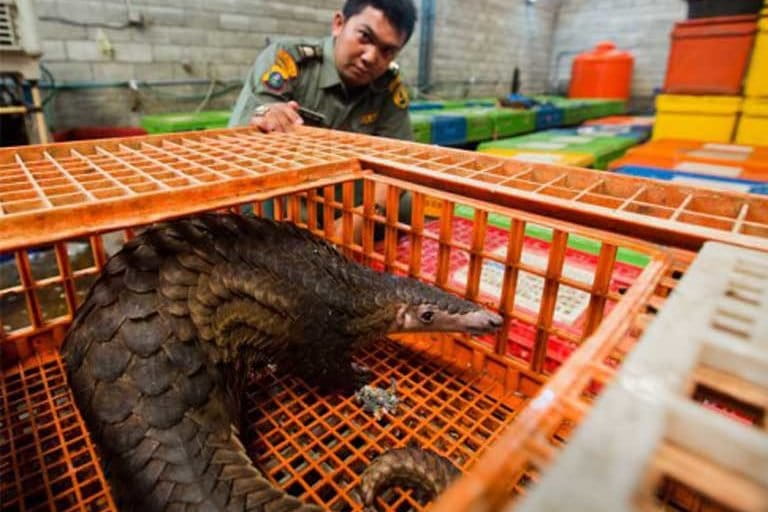
The massive global wild animal trade has ignited numerous disease outbreaks. Each year, hundreds of millions of animals are shipped worldwide, legally and illegally, live, dead and in parts. It’s an extremely lucrative business driven by consumer demand for traditional medicines, bushmeat, trophies, exotic pets, food, clothing and home décor.
Trafficking and wildlife markets are “dangerous breeding grounds for the next pandemic,” said Chris Shepherd, executive director of Monitor, a nonprofit focusing on the wildlife trade.
In African, South American and Asian markets, wild species are jammed together, cheek by jowl, in filthy, cramped cages where feces, urine and blood mix, and where humans shop. Wildlife is often kept beside domestic animals. Many of these animals are weak, in poor health after traumatic capture and transport, and all are exposed to a plethora of new pathogens.
A live animal market was the likely source of the H5N1 bird flu outbreak in Asia, allowing the spread of avian flu from wild birds to chickens and turkeys to people.
Despite the current pandemic and its likely zoonotic origin, commercial trade in wild animals hasn’t significantly slowed, Shepherd said, or even been addressed.
 A slow loris at a market in Hanoi, Vietnam. Traded animals are stressed by capture, transport, and sale, weakening their immune systems making them more prone to disease. Image © E. Bennett/WCS.
COVID-19, SARS and other outbreaks originated in China, the world’s largest consumer of both legally imported and illegally trafficked wildlife.
For decades, China has also farmed wild animals for consumption. In 2020, the government shut down wildlife markets and facilities that raised wild species for food, but allowed loopholes for animals grown for “ornamental use,” including fur, or ingredients in traditional Chinese medicine — loopholes that still allow disease transmission.
The global legal trade in wildlife dwarfs the illegal trade, valued at about $19 billion per year by the U.N. But pathogens don’t care if they’re carried by a specimen that has been legally or illegally traded, Shepherd said. In November, Denmark culled 17 million minks after animals on fur farms contracted COVID-19 from people. Minks in Wisconsin also became infected.
Zoonotic disease pathway: Bushmeat
Bushmeat is another key route of infection, said Walzer. Spillover into humans often happens through hunting, butchering, consumption and transport of wild meat, which offer ideal conduits for the spread of pathogens, he said.
Most bushmeat today comes from West and Central Africa. The U.N. estimates that at least 5 million tons of bushmeat are hunted in the Congo Basin alone each year, including apes, monkeys, rats, bats and other potential disease carriers. But bushmeat also flows out of forests across Africa, Asia and Latin America. The logging and oil industries have greatly facilitated the commercial bushmeat trade, building roads that provide hunters entry into previously inaccessible areas. Local people also use these roads, hunting to earn needed cash.
Markets in small villages and large cities sell wild meat to very different clientele. Millions of Indigenous peoples and rural communities rely on bushmeat to survive, but most of the demand comes from urban dwellers. In cities, wild meat is a luxury, high-priced item, often bought as a way to connect with ancestral traditions or to flaunt wealth. Consumers span the globe, with thousands of tons smuggled into Europe each year. All of that meat represents potential disease vectors.
We have met the enemy, and it is us
In the U.S., the COVID-19 pandemic sparked anti-Asian racism and attacks against Chinese-Americans. But “We need to stop trying to blame a country, a behavior, or a specific group of people,” said Daszak. “We have to recognize that we all have a role in this, and until we do, we’re going to continue to suffer in the ‘Age of Pandemics.’”
Every country on Earth trades in wild animals and wildlife products — legally and illegally — and buys imported soy, palm oil, beef, wood or other forest-destroying products. Few people realize, for example, that the U.S. is the second-largest consumer of illegal wildlife.
Our pigs, chickens, cattle, dogs and other domestic animals can all carry diseases. Fur-trimmed ski jackets bought by Europeans and Americans often come from raccoon dog farms in China — potential vectors for the next zoonotic disease.
Meanwhile, as climate change warms the planet, dengue fever, Zika, yellow fever and other vector-borne diseases are spreading into new territory. They’re spread by mosquitoes, ticks, fleas, freshwater snails and other vectors. The Asian tiger mosquito is particularly efficient, spreading debilitating diseases to humans and domestic animals including horses and dogs.

The WHO calls the global surge in dengue cases “alarming.” In 1970, the virus was present in just nine countries, but is now endemic in some 100 nations. From 2000 to 2019, cases skyrocketed from 505,000 to 5.2 million. Simply put, a warmer world harbors more mosquitos and other insects that are looking for someone to bite, carrying viruses looking for new hosts.
Once an outbreak begins, it’s very difficult to contain. The current pandemic has shown how quickly we can spread a new virus. In our globalized world, international travel and trade can infect far-flung corners of the planet before carriers even show symptoms. Since it emerged in December 2019, COVID-19 has been reported in 222 countries and territories.
‘One Health’ becomes a movement
Almost two decades ago, the alarming spread of HIV, West Nile, bird flu, SARS and other diseases birthed the “One Health” movement. It was based on the premise that human health, animal health and ecosystem health are inextricably linked. Veterinarians, including Osofsky, were key architects: unlike physicians, they were accustomed to thinking about the interface between animal and human health.
In 2004, health experts from the U.N., WHO, and governments worldwide gathered in New York City with physicians and vets for a “One World One Health” symposium organized by the Wildlife Conservation Society.
During that meeting, Osofsky and colleagues presented what became The Manhattan Principles, 12 recommendations focused on enhancing our respect for the natural world while preventing zoonotic disease and other consequences of poor environmental stewardship. They noted that infectious diseases threaten people, food supplies, economies and “the critically needed biodiversity that supports the living infrastructure of our world.”
The summit amplified a clarion call for new research into how human activities are rapidly transforming Earth’s natural systems, and for interventions that could create a healthier planet.
 Practicing safe wildlife sample collection methods during a Dong Nai Wildlife Health Training event, November 2013. Image © WCS Vietnam.
The goal, Osofsky said, is to better inform public policy regarding land and ocean use, public health, and the environment that supports us all.
The Manhattan Principles, updated in 2019, helped mainstream the One Health concept: the WHO, U.S. CDC, and many other institutions now say they incorporate a “One Health” approach.
The cost: Both human and wild
In a “normal” year, without a global pandemic, there are more than 1 billion zoonotic disease cases, killing roughly a million people. The 1998 Nipah outbreak cost $500 million; the 2003 SARS outbreak cost some $40 billion. Lost global economic output caused by COVID-19 is an order of magnitude larger: A U.S. Congressional report projects the cost at $28 trillion.
Prevention will not only save lives; it will save money. With a comparatively small investment — about $140 million per year over 10 years — researchers could identify 85% of the world’s viruses, according to a joint U.N.-WHO report. Placing genetic sequences for those viruses in the hands of vaccine makers could help protect against future pandemics.
The tremendous value of such an approach is underlined by the current crisis. Messenger RNA (mRNA) technology and coronavirus vaccines were in development before COVID-19 hit. “We are lucky right now,” Daszak said of this coincidental head start. “But as we waited for a vaccine … millions of people died. Luck is not a strategy, and luck is not a way out of the pandemic era.”
The emphasis remains on surveillance, preparedness, stronger health care systems and better vaccines, all of which are crucial. But ignoring prevention — failing to address high-risk development and human behaviors that enable disease transmission — comes at a very high price, said Ostfeld, with great loss of life and livelihoods and wrecked economies. “We are not incorporating the enormous cost to human health in our cost-benefit analyses of development projects. It is completely ignored.” What’s needed, he said, is to incorporate disease risk into government and health policies up front.
Osofsky calls this a critical juncture in the history of human civilization. “Whether you’re talking about climate change, loss of biodiversity or emerging disease,” he said, “all are symptoms of humanity’s lack of regard for nature.”

Preventing the next pandemic will require global cooperation, Osofsky concludes. It requires bringing together experts from across the societal spectrum — finance ministers, trade organizations, medical doctors, veterinarians, epidemiologists, zoologists, public health, agriculture and environment professionals, as well as business leaders, Indigenous peoples, and others — to identify and mitigate high-risk activities in high-risk areas.
“It’s time to redefine our relationships with wild nature and our fellow species,” Osofsky said.
Citations:
Carroll, D., Watson, B., Togami, E., Daszak, P., Mazet, J. A., Chrisman, C. J., … Tomori, O. (2018). Building a global atlas of zoonotic viruses. Bulletin of the World Health Organization, 96(4), 292-294. doi:10.2471/blt.17.205005
Epstein, J. H., Field, H. E., Luby, S., Pulliam, J. R., & Daszak, P. (2006). Nipah virus: Impact, origins, and causes of emergence. Current Infectious Disease Reports, 8(1), 59-65. doi:10.1007/s11908-006-0036-2
Gibbs, A. J., Armstrong, J. S., & Downie, J. C. (2009). From where did the 2009 ‘swine-origin’ influenza A virus (H1N1) emerge? Virology Journal, 6(1). doi:10.1186/1743-422x-6-207
Verma, R., Khanna, P., & Chawla, S. (2013). Yellow fever vaccine: An effective vaccine for travelers. Human Vaccines & Immunotherapeutics, 10(1), 126-128. doi:10.4161/hv.26549
Jánová, E. (2019). Emerging and threatening vector-borne zoonoses in the world and in Europe: A brief update. Pathogens and Global Health, 113(2), 49-57. doi:10.1080/20477724.2019.1598127
Maxmen, A., & Mallapaty, S. (2021). The COVID lab-leak hypothesis: What scientists do and don’t know. Nature, 594(7863), 313-315. doi:10.1038/d41586-021-01529-3
Mizumoto, K., Kagaya, K., & Chowell, G. (2020). Effect of a wet market on coronavirus disease (COVID-19) transmission dynamics in China, 2019–2020. International Journal of Infectious Diseases, 97, 96-101. doi:10.1016/j.ijid.2020.05.091
Lau, S. K., Woo, P. C., Li, K. S., Huang, Y., Tsoi, H., Wong, B. H., … Yuen, K. (2005). Severe acute respiratory syndrome coronavirus-like virus in Chinese horseshoe bats. Proceedings of the National Academy of Sciences, 102(39), 14040-14045. doi:10.1073/pnas.0506735102
Guynup, S., Shepherd, C. R., & Shepherd, L. (2020). The true costs of wildlife trafficking. Georgetown Journal of International Affairs, 21(1), 28-37. doi:10.1353/gia.2020.0023
Killerby, M. E., Biggs, H. M., Midgley, C. M., Gerber, S. I., & Watson, J. T. (2020). Middle East respiratory syndrome coronavirus transmission. Emerging Infectious Diseases, 26(2), 191-198. doi:10.3201/eid2602.190697
Whitmee, S., Haines, A., Beyrer, C., Boltz, F., Capon, A. G., De Souza Dias, B. F., … Yach, D. (2015). Safeguarding human health in the Anthropocene epoch: Report of The Rockefeller Foundation–Lancet Commission on planetary health. The Lancet, 386(10007), 1973-2028. doi:10.1016/s0140-6736(15)60901-1
Scheffers, B. R., Oliveira, B. F., Lamb, I., & Edwards, D. P. (2019). Global wildlife trade across the tree of life. Science, 366(6461), 71-76. doi:10.1126/science.aav5327
Keesing, F., & Ostfeld, R. S. (2021). Impacts of biodiversity and biodiversity loss on zoonotic diseases. Proceedings of the National Academy of Sciences, 118(17), e2023540118. doi:10.1073/pnas.2023540118
Gibb, R., Redding, D. W., Chin, K. Q., Donnelly, C. A., Blackburn, T. M., Newbold, T., & Jones, K. E. (2020). Zoonotic host diversity increases in human-dominated ecosystems. Nature, 584(7821), 398-402. doi:10.1038/s41586-020-2562-8
Morand, S., & Lajaunie, C. (2021). Outbreaks of vector-borne and zoonotic diseases are associated with changes in forest cover and oil palm expansion at global scale. Frontiers in Veterinary Science, 8. doi:10.3389/fvets.2021.661063
Liu, Q., Cao, L., & Zhu, X. (2014). Major emerging and re-emerging zoonoses in China: A matter of global health and socioeconomic development for 1.3 billion. International Journal of Infectious Diseases, 25, 65-72. doi:10.1016/j.ijid.2014.04.003
Desbordes, R. (2021). Spatial dynamics of major infectious diseases outbreaks: A global empirical assessment. Journal of Mathematical Economics, 93, 102493. doi:10.1016/j.jmateco.2021.102493
Myers, S. S., Gaffikin, L., Golden, C. D., Ostfeld, R. S., Redford, K. H., Ricketts, T. H., … Osofsky, S. A. (2013). Human health impacts of ecosystem alteration. Proceedings of the National Academy of Sciences, 110(47), 18753-18760. doi:10.1073/pnas.1218656110
Gruetzmacher, K., Karesh, W. B., Amuasi, J. H., Arshad, A., Farlow, A., Gabrysch, S., … Walzer, C. (2021). The Berlin principles on one health – Bridging global health and conservation. Science of The Total Environment, 764, 142919. doi:10.1016/j.scitotenv.2020.142919
Wadman, M. (2021). The overlooked superpower of mRNA vaccines. Science, 373(6554), 479-479. doi:10.1126/science.373.6554.479
Osofsky, S. A., & Pongsiri, M. J. (2018). Operationalising planetary health as a game-changing paradigm: Health impact assessments are key. The Lancet Planetary Health, 2(2), e54-e55. doi:10.1016/s2542-5196(17)30183-3
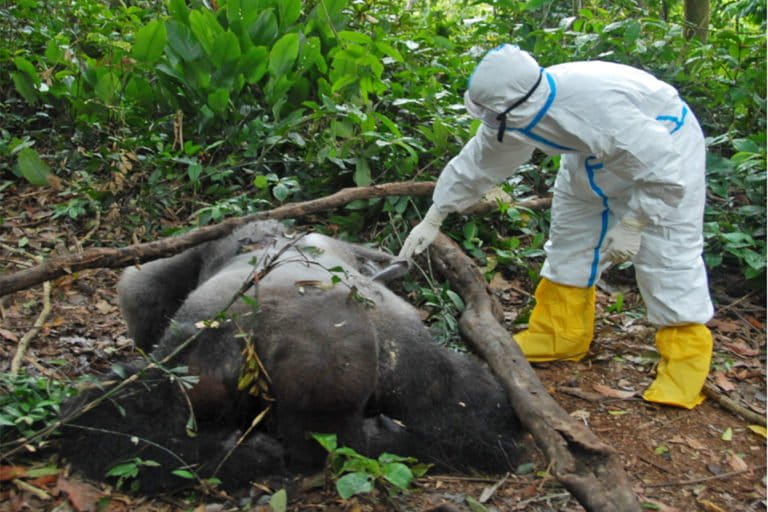
Banner image: The carcass sampling method uses knowledge and experience gained from previous disease outbreaks. Samplers work in pairs and wear personal protective equipment. Image courtesy of Sebastien Assoignons/WCS.
FEEDBACK: Use this form to send a message to the author of this post. If you want to post a public comment, you can do that at the bottom of the page.







 A scuba diver is shown observing the purple, white and green microbes covering rocks in Lake Huron’s Middle Island Sinkhole.
 Small hills and “fingers” in the mats of the sinkhole are caused by gases bubbling up beneath them.

 by


