Wisconsin, increasingly divided between rural and urban views, faces hard, contentious questions of how big its remaining wolf population should be
Listen to article8 min
Adrian Wydeven checks his compass after distant wolves responded to his howls in the Chequamegon-Nicolet National Forest in northern Wisconsin in early July. (Peter Kendall)
ByPeter KendallYesterday at7:00 a.m. EDT727
CHEQUAMEGON-NICOLET NATIONAL FOREST, Wis. — The howl that Adrian Wydeven sent into the moonless summer night sounded like what a wolf might make, a descending run of low tones, impressively loud and sustained.
The answer that came back from the dark forest was far more authentic, however. It started as a single note, deep and mournful, that rose in volume and complexity as at least one other wolf joined in, their melody lines crossing, inadvertently forming ominous chords as they passed.
“It feels like you are having a conversation with them,” Wydeven whispered as…
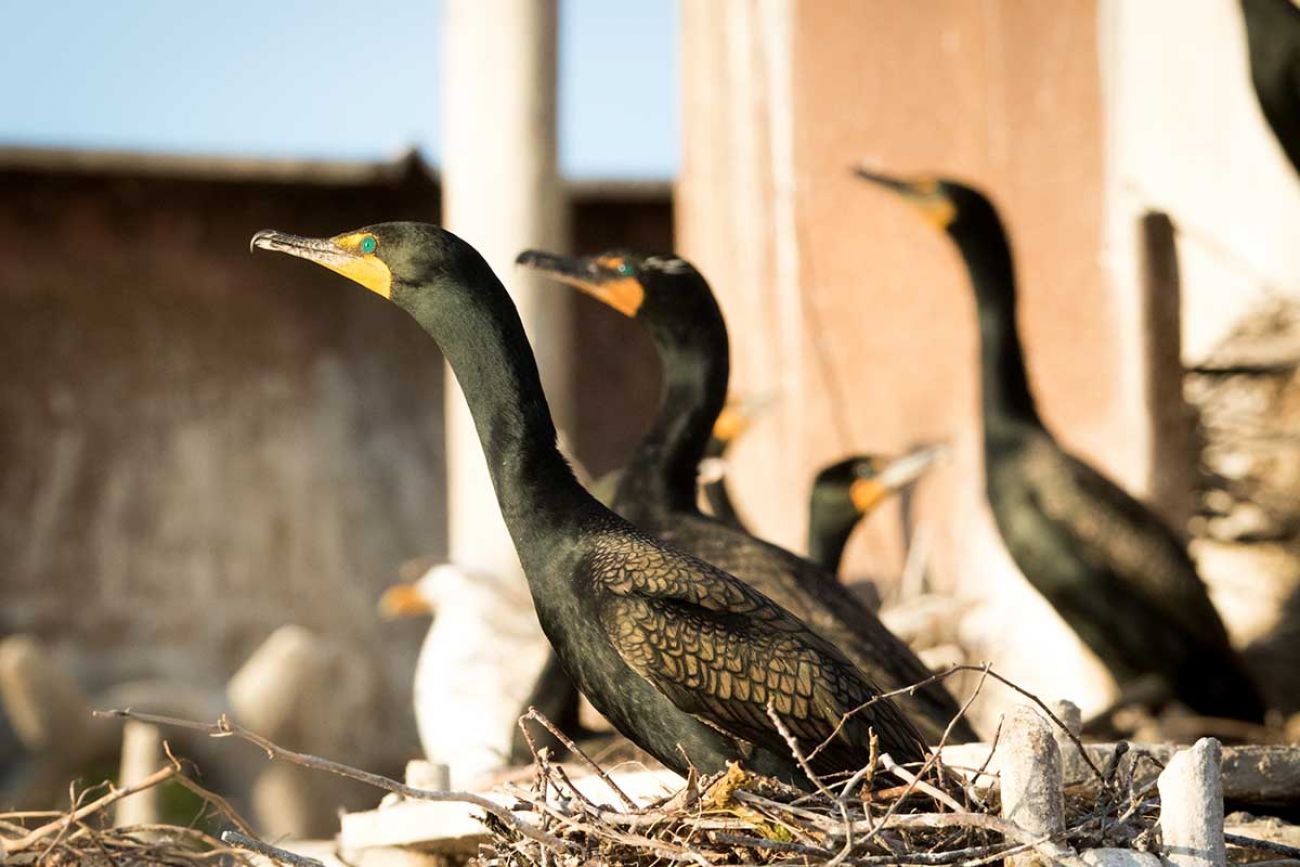
Under a new federal permit program that took effect this year, Michigan officials can kill up to 9,650 cormorants and destroy up to 1,400 nests in hopes of keeping fish out of cormorants’ bellies and on Michigan anglers’ fishing hooks. (Bridge file photo)July 28, 2021Kelly House, Makayla CoffeeMichigan Environment WatchGreat Lakes, Upper Peninsula, Rural Michigan
After years of urging federal regulators to let them protect fish by killing double-crested cormorants — a slender, black seabird that nests in colonies throughout the Great Lakes region — Michigan anglers and wildlife managers have gotten their wish.
Under a new federal permit program that took effect this year, Michigan officials can kill up to 9,650 adult birds and destroy up to 1,400 nests in hopes of keeping fish out of cormorants’ bellies and on Michigan anglers’ fishing hooks.
Claramunt said Michigan will likely only kill about a third as many cormorants as its permit allows.
The new lethal control program is welcome news to Tom Frontjes, a resort owner and charter boat captain on the Les Cheneaux Islands in northern Lake Huron, which is home to a cormorant colony that numbered 1,500 nesting pairs in 2018.
The islands’ once-abundant sportfish stocks have dwindled from their heyday, and the local tourism industry has suffered as a result. Frontjes attributes those declines in large part to the cormorants.
Each adult bird can eat about a pound of fish per day. Every year that the local colony went unchecked, Frontjes said, was “another nail in the coffin” for fishing tourism.
But while anglers rejoice over the ability to combat a bird they view as competition, some scientists and bird advocates argue the government is wasting resources on a killing program that won’t revive fish populations.
The birds, they argue, are being scapegoated for broader ecosystem changes that have upended the Great Lakes food web.
“People see them eating fish and think they have to be controlled,” said Jim Ludwig, an Ontario-based scientist who studies cormorants. “That’s the mindset, but I don’t think the data supports control on the Great Lakes at all.”
‘Stop the growth’
Cormorants are protected under the Migratory Bird Treaty Act. But the U.S. Fish and Wildlife Service can and does grant exceptions to the act’s ban on killing migratory birds.
A hearty thanks to all 97 new sustaining members who joined us in June 2021. Our team is supported in part by readers who trust our nonpartisan, nonprofit storytelling. Please join.DONATE HEREI’m already a member!
In the years since, state fish managers and fishing advocates have pushed to regain the ability, said the DNR’s Claramunt.
They won a victory this year, when the federal government launched a new permit program that allows state and tribal wildlife managers to take as many as 121,500 double-crested cormorants nationwide. That’s as much as one-seventh of the U.S. population.
“We needed a new permit system to move forward with a long-term solution, and I’m happy with this approach and this system so far,” Claramunt said.
States must clear several hurdles to get a permit, including showing that they’ve already tried non-lethal control methods such as chasing birds in boats or using loud pyrotechnics to scare them away. They must apply for a new permit each year.
State fishery managers and their designees have long harassed cormorants at big colonies throughout the state. But, Claramunt said, “when you harass them long enough, they get conditioned and they pretty much know you’re not a threat.”
State fishery managers are focused on 13 sites this year, including large Great Lakes colonies on Beaver Island in Lake Michigan and the Les Cheneaux Islands in Lake Huron, along with inland sites such as Brevort Lake near St. Ignace and Indian Lake near Manistique.
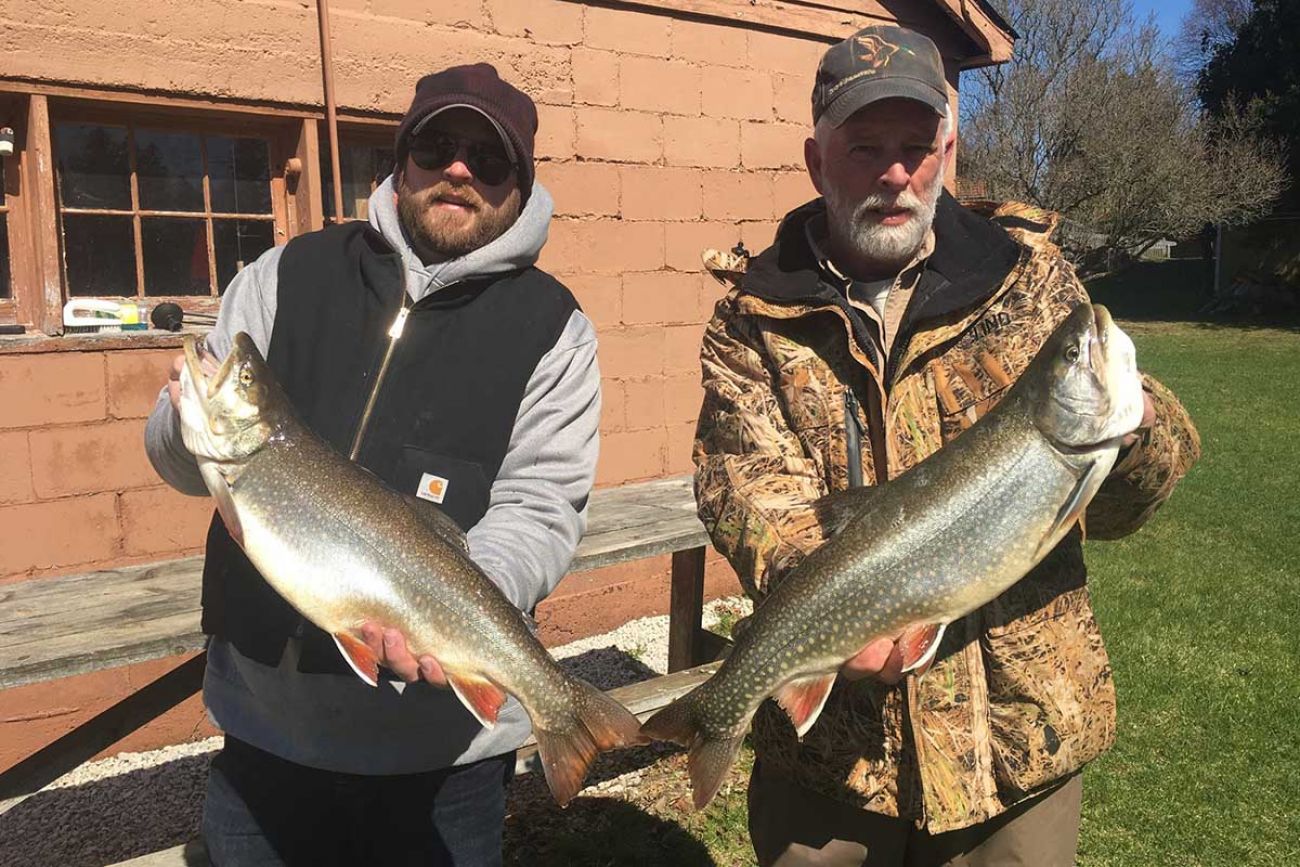
Derrek Stuk and Rick Frontjes pose with their catch. Tom Frontjes, a boat captain and resort owner in the Les Cheneaux Islands, said cormorants congregate in shallow bays while fish are spawning, enabling the birds to “do a ton of damage in a very short amount of time.” (Courtesy photo)
So far, workers have killed cormorants at five of the 13 sites, while resorting to harassing the birds at the rest.
On the Les Cheneaux Islands, workers have visited the local cormorant colony multiple times this year on lethal control missions, Frontjes said.
It will take time to shrink a colony that has rebounded since the former federal control program ended, he said, but “I’m thankful that we’re able to stop the growth.”
Does killing birds save fish?
Not everyone agrees.
In a position statement opposing the order, the Michigan Audubon Society noted that other pressures on the Great Lakes, from invasive mussels to habitat loss and pollution, pose far bigger threats to Great Lakes fish.
By killing cormorants, the group said, government officials are “encouraging the persecution of a visually-obvious target, when the reasons for dwindling sportfish populations are complex and lack a silver bullet.”
Other seabirds also eat fish, noted Ludwig, the Ontario-based scientist. But cormorants, with their black plumage and prehistoric appearance, bear the brunt of anglers’ ire.
He chalks it up to a sharply disputed theory of “cultural bias against any animal that’s black,” combined with the cormorant’s communal nesting habits: Their densely-packed colonies make them a highly-visible target.
Ludwig believes the killing program will needlessly harm a native bird species that may already be in decline. A federal program that once kept close track of cormorant nesting sites ended in 2008, he said. As a result, species managers lack a clear picture of how Great Lakes cormorant populations are faring today.
The fish and wildlife service has vowed to develop a protocol to resume monitoring within a year.
Ludwig said his surveys of selected cormorant colonies in the Great Lakes indicates the birds are struggling to find food and protect their nests from eagles that have started eating cormorant chicks as a replacement for the disappearing fish.
“The entire structure of the ecosystem shifted,” Ludwig said, and the culprit is invasive mussels, not hungry cormorants.
Scientific studies have drawn mixed conclusions about whether the birds can drive down sportfish numbers in the Great Lakes, though there is clearer evidence of their impact in smaller inland lakes.
On the big lakes, fish and wildlife managers say the birds’ nesting behavior makes them a localized threat.
Cormorant colonies can number as large as thousands of nesting pairs. One study found that as cormorant numbers rose on the Les Cheneaux Islands, the local perch fishery collapsed.
With all those birds confined in a small area, Frontjes said, “they can do a ton of damage in a very short amount of time,” picking off perch by the thousands as the fish gather in the islands’ shallow bays to spawn.
Nobody is proposing eliminating the birds entirely, Frontjes said, “but you can’t have them totally decimating other species, either.”
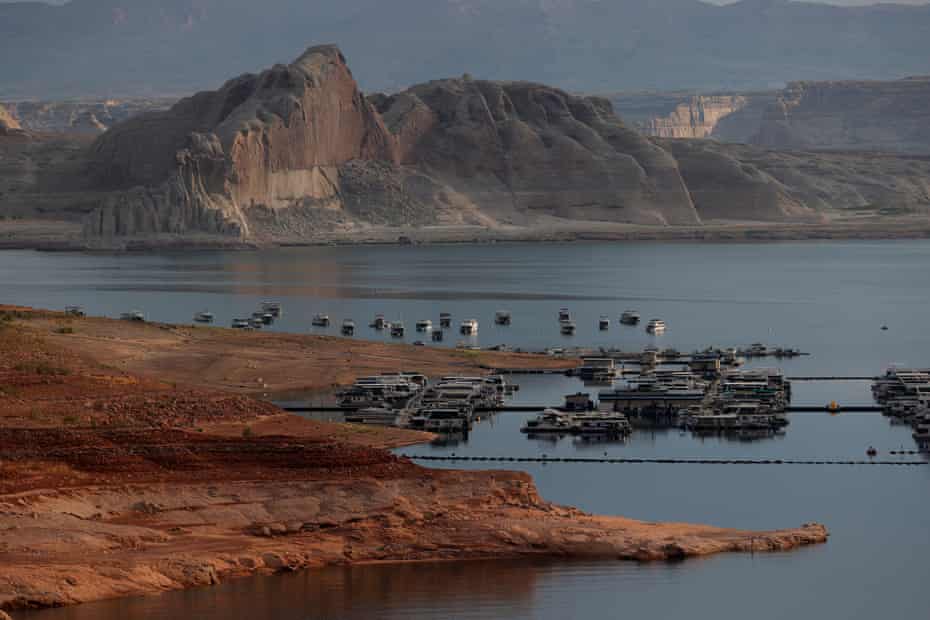
The giant reservoir is currently three-quarters empty and will keep dropping at least through next spring due to record low snowpack levels in the Colorado River basin.Photograph: Justin Sullivan/Getty Images
At Lake Powell on the Arizona-Utah border, the water line has dropped to a historic low, taking a heavy toll on the local industrySupported by
Chaos erupted at Bill West’s business in Page,Arizona, last week when he was forced to tell dozens of paid clients their summer vacations were either canceled or on hold – effective immediately.
West, the owner of a houseboat timeshare company, was scrambling after record-low water levels at Lake Powell – one of the most popular motorized boating destinations in the US – disrupted recreational and tourism activities throughout the region.
The National Park Service abruptly announced earlier this month that houseboats could…
The lifestyles of around three average Americans will create enough planet-heating emissions to kill one person, and the emissions from a single coal-fired power plant are likely to result in more than 900 deaths, according to the first analysis to calculate the mortal cost of carbon emissions.
The new research builds upon what is known as the “social cost of carbon”, a monetary figure placed upon the damage caused by each ton of carbon dioxide emissions, by assigning an expected death toll from the emissions that cause the climate crisis.
The analysis draws upon several public health studies to conclude that for every 4,434 metric tons of CO2 pumped into the atmosphere beyond the 2020 rate of emissions, one person globally will die prematurely from the increased temperature. This additional CO2 is equivalent to the current lifetime emissions of 3.5 Americans.
Adding a further 4m metric tons above last year’s level, produced by the average US coal plant, will cost 904 lives worldwide by the end of the century, the research found. On a grander scale, eliminating planet-heating emissions by 2050 would save an expected 74 million lives around the world this century.
Air pollution caused by the burning of fossil fuels is also directly killing people, with a landmark Harvard University study published in February finding that more than 8 million globally are dying each year from the health effects of toxic air.
“There are a significant number of lives that can be saved if you pursue climate policies that are more aggressive than the business as usual scenario,” Bressler said. “I was surprised at how large the number of deaths are. There is some uncertainty over this, the number could be lower but it could also be a lot higher.”
The research, published in Nature Communications, illustrates the vast disparities in the emissions generated by people’s consumption in different countries around the world. While it takes just 3.5 Americans to create enough emissions in a lifetime to kill one person, it would take 25 Brazilians or 146 Nigerians to do the same, the paper found.
The social, or financial, cost of carbon has become a widely-used metric after its creation by economist William Nordhaus, who subsequently won a Nobel prize, in the 1990s. The measurement calculates the damage caused by a ton of emissions, factored with the ability to adapt to the changing climate.
Under Nordhaus’ DICE model the 2020 social cost of carbon is $37 a metric ton but Bressler’s addition of the mortality cost brings this figure up to $258 a ton. This change to the model would imply that an economically optimal policy would be to radically reduce emissions to reach full decarbonization by 2050, a scenario that has also been backed by climate scientists as one that would avoid the worst ravages of global heating.
“Nordhaus came up with a fantastic model but he didn’t take in the latest literature on climate change’s damage upon mortality, there’s been an explosion of research on that topic in recent years,” said Bressler.
Gernot Wagner, a climate economist at New York University who was not involved in the research, said that the social cost of carbon is a “crucial policy tool” but is also “very abstract”.
“That makes attempts to translate our climate impact into more relatable terms so important,” he said, adding that the new research on the mortality cost shows the “results are certainly dramatic”.
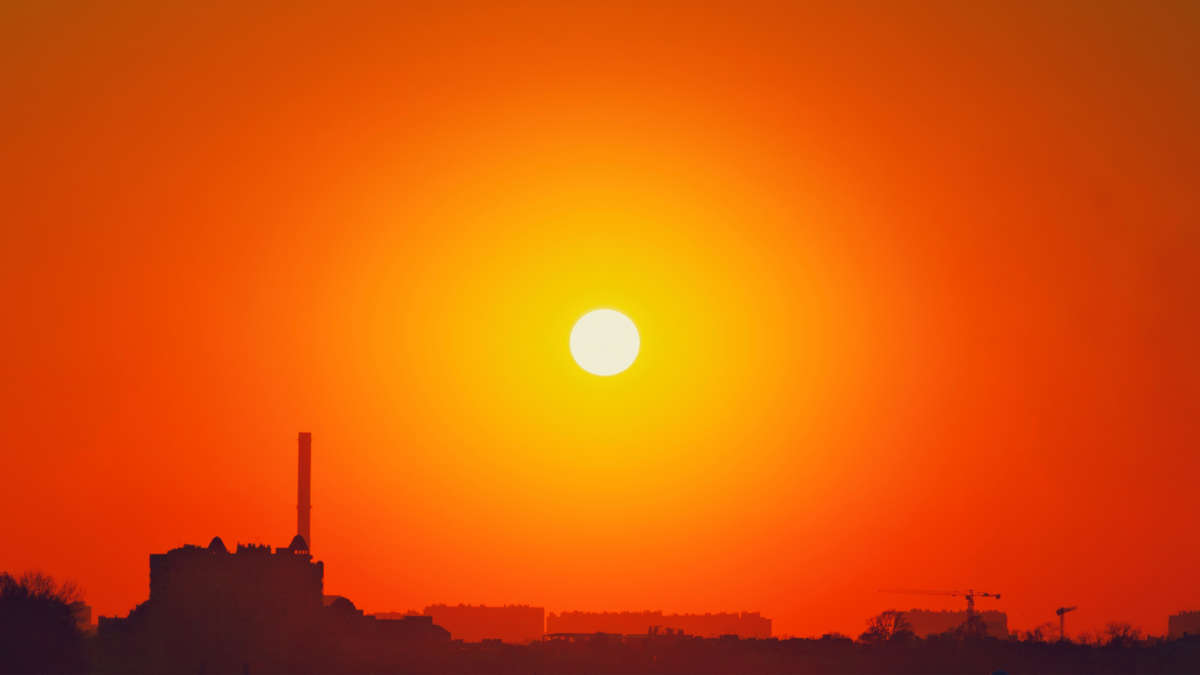
A series of heatwaves has swept the globe over the past month, including the dramatic heat and wildfires in the US Pacific north-west, where temperature records in Seattle and Portland were shattered and caused hundreds of people to die from heat stroke and other related conditions. Scientists say the climate crisis, driven by carbon emissions, is making heatwaves far more frequent and severe.
Bressler said that while his paper looked at the emissions caused by individual activity, the focus should instead be on policies that impact businesses and governments that influence carbon pollution on a societal scale.
“My view is that people shouldn’t take their per-person mortality emissions too personally,” he said. “Our emissions are very much a function of the technology and culture of the place that we live.”
Minister of Agriculture Lana Popham provides an update about fish farms in the province during a press conference at the legislature in Victoria on June 20, 2018. File photo by The Canadian Press/Chad HipolitoListen to article
British Columbia has placed a moratorium on new mink farms and capped existing farms at their current numbers after two more of the animals tested positive for the virus that causes COVID-19.
The Agriculture Ministry says each farm is required to report the total number of mink to the provincial health officer and the medical health officer in their regional health authority.
The new provincial health order comes after two mink tested positive for the virus on a farm that’s been under quarantine and samples from five more of the animals from the same farm tested positive at B.C.’s animal health lab with final results pending from a national lab in Winnipeg.
GET TOP STORIES IN YOUR INBOX.
Email *
It says the mink that tested positive were identified through a provincial surveillance project that aims to assess the potential for virus transmission to “free-ranging” animals.
The ministry says in a statement that in this instance, four mink had escaped their cages and were captured on the farm.
It says the province is reviewing its policies related to fur farms while ensuring biosecurity measures are in place to protect both the public and animal health.
ByJareen Imam, CNNUpdated 5:51 PM EST, Fri January 23, 2015
ShutterstockOfficial: There’s no way to know how much a bear, such as this one, will consume at a bait site.
STORY HIGHLIGHTS
Four black bears were found dead in the New Hampshire woods after a chocolate overdose
A hunter was said to have left about 100 pounds of chocolate out as bait
Wildlife experts in New Hampshire are looking at possible ban with such baitCNN—
Four black bears that died in the New Hampshire woods last year overdosed on chocolate bait, wildlife officials said this week.
A necropsy by the University of New Hampshire showed the bears – two adult females and two cubs – died from too much theobromine, a chemical compound in cocoa that’s toxic to animals.
The bears were found dead in September within 50 feet of where a hunter said he placed 90…
A Humane WorldKitty Block’s BlogBy Kitty Block and Sara Amundson July 28, 2021Mink suffer immensely on fur farms all over the world. Jo-Anne McArthur/We AnimalsEvery year, the U.S. Department of Agriculture releases a report on mink fur production, and this year’s report shows a promising outlook for mink, a species that suffers immeasurably for nothing but trim on a jacket, a pom on a hat or purse or eyelash extensions.The number of mink killed last year for their fur dropped 49% to 1.4 million, the lowest number on record according to USDA reports going back to 1975. This means that more than a million mink were spared from having to endure an unnatural life in a filthy cage and a death in a gas chamber. It’s also a sign that our campaigns against fur in the fashion industry and consumer markets are succeeding in making the point. No animal should suffer so much for something so frivolous.Previous lows in the annual mink production statistics hovered around 2.5 million mink in the early 2000’s before the numbers peaked in 2014 and 2015 at 3.7 million mink.Another good indicator of our success is that the overall value of the U.S. mink trade dropped to $47 million, a 19% decline from 2019, the lowest on record.While the pandemic has had a significant impact on the global fur trade, this downward spiral started well before 2020.USDAThe pandemic revealed one more reason why mink farming must come to an end. Mink are especially susceptible to SARS-CoV-2, the virus that causes Covid-19, and the virus can jump back and forth between mink and humans, as well as from farmed mink to wild populations. Mink fur farms can incubate dangerous mutations that could potentially undermine the efficacy of vaccines. Outbreaks have occurred on more than 430 mink fur farms in the US, Canada and the EU, and that number continues to rise. More than 20 million mink were killed in response to the outbreaks, and several countries have suspended or completely ended mink fur production. Estonia became the latest country to ban fur farming just last month.While this sharp decline in production has led to a temporary increase in pelt prices, we expect that to be short-lived. Since the end of March, we’ve seen fur-free announcements from some of the biggest names in fashion. Saks Fifth Avenue, Valentino, Neiman Marcus, Canada Goose, Alexander McQueen, Balenciaga, Holt Renfrew, Moose Knuckles and Mackage have all proudly announced the end of fur. We haven’t seen this sort of momentum since Gucci, Michael Kors, Yoox Net-a-Porter, Jimmy Choo and Burlington Coat Factory announced fur-free policies in 2017. That inspired a new wave of fur-free announcements the following year from brands like Chanel, Versace, Coach, Burberry and so many others. The companies that continue to sell fur are becoming scarcer and scarcer.But we won’t stop our work against fur production until using fur in fashion is a relic of the past. HSUSWe’re dedicated to working with local advocates to secure fur sales ban in cities, counties and states across the country. In May, Weston, Massachusetts became the second city in the Bay State to ban fur sales following a similar ban in Wellesley last year, and the Massachusetts legislature is considering a statewide ban, as well. When West Hollywood banned fur sales in 2011, it led to a fur-free Berkeley, San Francisco, Los Angeles and eventually a fur-free California.Just last month, Israel became the first country to ban fur sales, and we’re involved with a push for a Fur Free Britain. Our Humane Society International UK team is leading that charge and has welcomed the UK government’s recent call for evidence to consider the case for a fur sales ban, a proposal that has strong support with 72% of Brits in favor of ending fur sales. We’ve partnered with Stella McCartney to see the end of the fur trade in the UK and around the globe.HSI/UKThere’s a very real chance we could see an end to the fur trade in the Western world in the coming decade, and substantial progress against it in other nations. The fur trade is down, but it is not out, and the biggest fights are yet to come. That’s why we need YOU to share every fur victory on social media, sign every fur petition (including our petition to G20 leaders), take every moment to thank companies that have gone fur-free and ask the ones that haven’t to join the right side of history and call your city council and state representatives to let them know that you support a ban on fur sales.Together, we can—and will—win this one for the millions of foxes, mink, rabbits, raccoon dogs, chinchillas and coyotes who are confined and killed every year for their fur.Sara Amundson is president of the Humane Society Legislative Fund.The post Mink fur production drops to historic all-time low in the US appeared first on A Humane World.Related StoriesThe narrative about sharks needs to change—before it’s too lateTravelers: What you should know about encountering wildlife right now – EnclosureTravelers: What you should know about encountering wildlife right now
AUGUSTA, Maine (AP) — Maine’s bear hunters can start setting bait for the animals later this week.
Maine has a large and growing black bear population that numbers about 35,000. State biologists have said that population is growing by about 3% every year. The state has tried to manage the growth of the bear population with its hunting season.
Most of the bear hunt takes place with the use of bait. Hunters are allowed to start laying bait on July 31, and they can hunt with the use of bait from Aug. 30 to Sept. 25.
The bear season continues until late November, though far fewer bears are taken in the later months. The use of bait has long attracted criticism from wildlife advocates who believe it is cruel and note that the bear population has continued to grow despite its use.