Chinese city inundated with a year’s worth of rain in just 4 days

https://www.accuweather.com/en/severe-weather/death-toll-deadly-china-flooding-zhengzhou-henan-province/985921

By Maura Kelly, AccuWeather meteorologist

Updated Jul. 21, 2021 12:51 PM PDTCopiedhttps://imasdk.googleapis.com/js/core/bridge3.472.0_en.html#goog_1220455419Volume 0% Dangerous and devastating flooding in China

Over 100,00 people have been evacuated and 12 people have died so far from flooding in Zhengzhou, China.

Dramatic rescues have been taking place across parts of central China this week after record-setting rainfall turned streets and subways into raging rivers, and AccuWeather meteorologists warn that rain and thunderstorms will continue in the coming days.

As of Wednesday night, local time, at least 25 people deaths were being blamed on the flooding, which occurred after days of heavy rainfall swamped cities across the Henan province in east-central China, The Associated Press reported.

Rain that first arrived across this portion of central China on Sunday continued at times through Tuesday, dumping record-breaking rainfall over the province.

A traffic police officer guides residents to cross a flooded road with a rope during heavy rainfall in Zhengzhou, Henan province, China, July 20, 2021. Picture taken July 20, 2021. China Daily via REUTERS

Soldiers were deployed to divert rivers and pump floodwaters after flood prevention systems were overwhelmed across Zhengzhou, the capital city of Henan, situated along the Yellow River, and neighboring cities, the BBC reported.

According to the World Meteorological Organization, the rainfall over a period of four days in Zhengzhou was more than what typically falls throughout the entire year. Not only that, according to Reuters, the Zhengzhou weather bureau said rainfall totals over the three days were an occurrence that happens only “once in a thousand years.”

Streets were turned into rivers, easily pulling cars downstream and catching some people in the swift rapids. Floodwaters also poured into the region’s tunnels and subway systems.

CLICK HERE FOR THE FREE ACCUWEATHER APP

Videos emerging on social media showed commuters trapped in subway cars as water levels rose. Eventually, as the water level increased, the commuters struggled to keep their heads above water. According to the BBC, more than 500 people were rescued from the tunnels.

According to CGTN, 150 children and teachers had to be rescued after a nursery filled with floodwaters. Firefighters used plastic bins to float the kids out of the building and to higher ground.

The BBC reported that 200,000 evacuations have taken place due to rising water levels and power outages.

Some of the evacuations included the First Affiliated Hospital of Zhengzhou Hospital, which has been coined “the largest hospital in the world” after the building lost power for a period of time.

People try to commute through floodwater caused by a rainstorm in Zhengzhou City, central China’s Henan province, 21 July 2021. (Local media via Reuters)

According to a local reporter, families of patients gathered outside as 600 critically ill patients were transferred to another facility. One resident told the BBC that they had no water, electricity or power.

Farther north in Luoyang, officials announced that a 65-foot (20 m) crack had developed in the dam following heavy rainfall, and warned that the dam could “collapse at any time,” the BBC reported.

Residents in the town of Sishui were stranded on rooftops as floodwaters rose.

On Wednesday night, local time, severe flooding was also reported in Xinxiang and Hebi, all located in the Henan province.

AccuWeather Lead International Meteorologist Jason Nicholls said that an area of low pressure that formed along a stationary front over central China is to blame for the flooding rainfall across Henan province.

In other news:Typhoon In-fa churns in West Pacific on course toward China, TaiwanHow the Bootleg Fire is generating its own weatherCities disappear behind veil of dangerous wildfire smoke

“The strong area of high pressure over the Sea of Japan just east of the Korean Peninsula has helped to bottleneck the pattern in eastern China,” Nicholls added.

This slowing down of the storm helped to create the phenomena known as training thunderstorms.

“Training describes when thunderstorms repeatedly build back over the same locations that have already been impacted by storms. It’s akin to multiple cars of a freight train passing over the same section of track, one after the other,” said AccuWeather Meteorologist Mary Gilbert.

Rainfall totals quickly skyrocketed for locations trapped under training thunderstorms.

In Zhengzhou, around 24.6 inches (624 mm) of rainfall was reported in just 24 hours on Tuesday, according to China’s meteorological authority. One-third of that rainfall fell during the 4 p.m. hour, local time, which “smashed historical records,” the BBC reported.

Serious flooding has been an ongoing concern across the country. Heavy rainfall caused severe flooding in multiple areas of China last week, including in the southwestern province of Sichuan where more than 120,000 were affected. Dramatic video captured several vessels being tossed over a raging waterfall on a swollen river near the city of Bazhong.

People try to commute through floodwater caused by continuous rainstorm in Zhengzhou City, central China’s Henan province, 21 July 2021. (Local media via Reuters)

Rounds of showers and heavy thunderstorms are expected to linger over east-central China on Thursday and Friday as the stationary front remains draped over the region.

A break in this weather pattern is expected to arrive as Typhoon In-fa makes landfall over the eastern coast of China by this weekend.

As the typhoon approaches land, showers and thunderstorms farther inland will be stunted as high pressure develops to balance out the low pressure at the coast.

Keep checking back on AccuWeather.com and stay tuned to the AccuWeather Network on DirecTV, Frontier, Spectrum, FuboTV, Philo, and Verizon Fios.

Top US scientist on melting glaciers: ‘I’ve gone from being an ecologist to a coroner’

Exposing the Big Game's avatarThe Extinction Chronicles

https://www.theguardian.com/environment/2021/jul/21/climate-crisis-glacier-diana-six-ecologist

Diana Six, an entomologist studying beetles near Glacier national park in Montana, says the crisis has fundamentally changed her profession

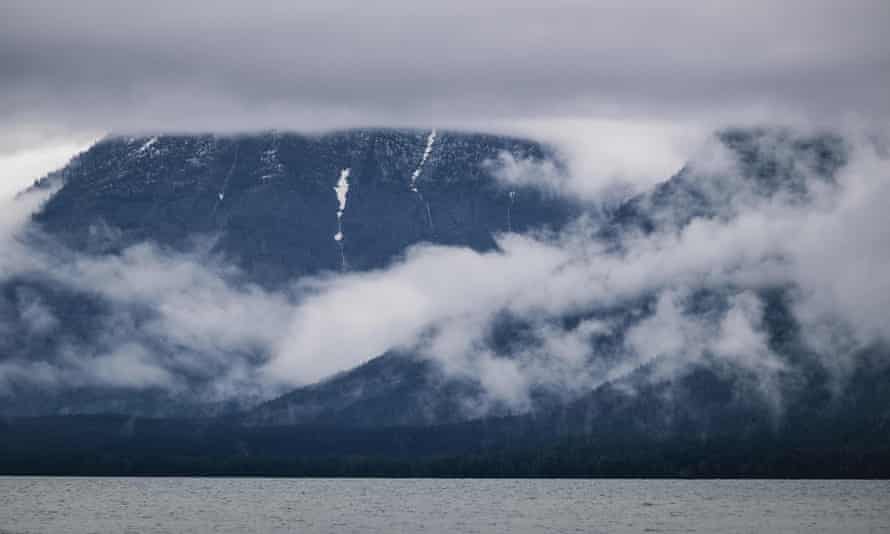
Clouds and rain are seen on Lake McDonald as Glacier national park opens to visitors in June 2020.
Clouds and rain are seen on Lake McDonald as Glacier national park opens to visitors in June 2020.Photograph: Kent Meireis/Zuma Wire/Rex/Shutterstock

Supported by

SEJ

About this contentJyotiMadhusoodananWed 21 Jul 2021 04.00 EDT

Diana Six’s love of the outdoors began before she could form words, run, or collect the bugs and fungi that were precious to her as a child. A tough home life eventually led her to drop out of school and live on the streets. But biology classes in community college helped Six discover her calling in studying various forms of life. “They took me right back to how I was as a kid,” she says.

Now an entomologist at the University of Montana, she has spent the last 30years researching how bark beetles are decimating…

View original post 803 more words

2 Australian States Say Their Sharks Will No Longer ‘Attack.’ They Will Only ‘Bite’

Updated July 21, 20211:12 PM ET 

SCOTT NEUMANTwitter

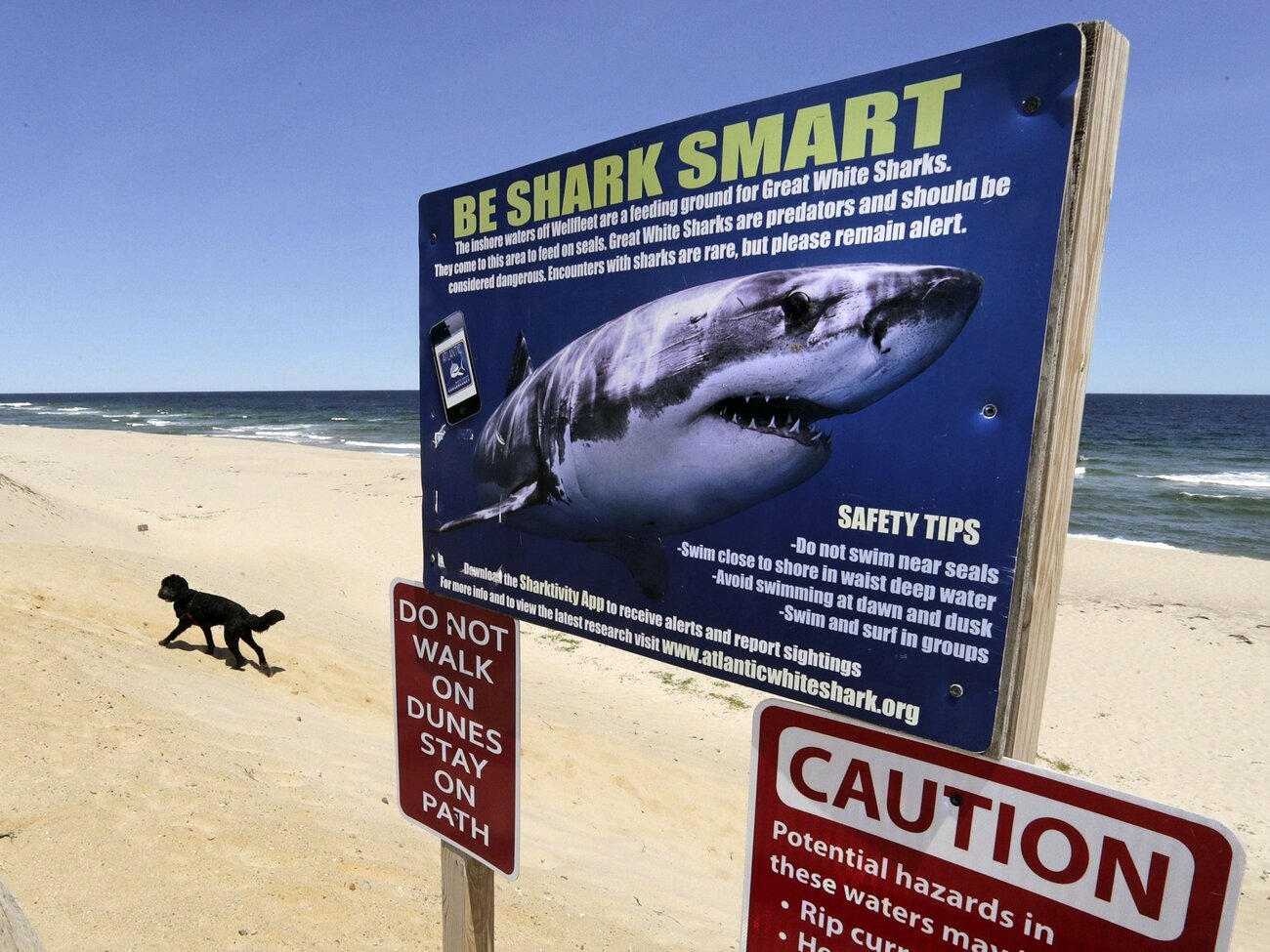
A sign at Newcomb Hollow Beach in Wellfleet, Mass., warns of sharks in 2019. Beachgoers on the other side of the world will be happy to learn they will not be attacked by sharks … just bitten.Charles Krupa/AP

Shark Week may never be the same again: Two Australian states — Queensland and New South Wales — have softened their tone when it comes to the language of reporting shark attacks, opting for a little more nuance.

From now on, sharks will “bite,” not “attack,” and when humans have a less-than-ideal meeting with them, it will be referred to as an “encounter” or an “incident.”

In case you’re wondering whether this is yet another example of government bowing to political correctness, it turns out that the states are simply falling in line with scientific thinking on the subject.

“[It] helps dispel inherent assumptions that sharks are ravenous, mindless man-eating monsters,” Leonardo Guida, a shark researcher at the Australian Marine Conservation Society, told the Sydney Morning Herald recently.

The change comes in two states where “attacks” are most common

Queensland and New South Wales have had the highest number of reported shark attacks in Australia since 1700, according to data compiled by the Florida Museum’s International Shark Attack File.

At a shark symposium in May, a senior Queensland official said the state government prefers to use “bites” over “attacks.” The state’s Department of Agriculture and Fisheries was quoted by the Herald as saying that while it has “no formal direction” for how to describe such situations, “some people may just have a personal preference for the language they use.”Article continues after sponsor message

In New South Wales, the department of public information says it’s “respectful that each incident is best described by the individual involved,” a spokeswoman said, according to the newspaper.

Researchers say language can make it harder to protect threatened species

Christopher Pepin-Neff, a senior lecturer at the University of Sydney who studied the language used around shark encounters, notes that before the 1930s in Australia, they were described as “shark accidents.”

In a 2011 article in Slate, Pepin-Neff said he thought it was time to retire the “shark attack” phrase.

“Such language creates a one-dimensional perception of these events and makes protecting threatened shark species more difficult. After all, why care about an animal that wants to eat us?” he wrote.

Shark Trust, an organization based in the United Kingdom and dedicated to “safeguarding the future of sharks through positive change,” contends that media reports of shark bite incidents “use highly emotive, often misleading language.”

“[S]uch language can also ‘criminalise’ sharks in the mind of the public, with terms such as ‘man-eater’ or ‘rogue shark’ incorrectly implying an intent to target or harm humans.”

The suggested change in language has garnered some pushback: One individual whose profile says they are based in the Australian city of Darwin tweeted: “They say sharks that bite humans do so by mistake thinking your some type of seal or fish. Sadly too many people in Australia and around the world have lost their lives due to shark mistakes. Meanwhile getting your arm bitten by a shark will still feel like an ‘attack’ to me.”

No matter what you call it, “bites” are exceedingly rare

Sharks killed 10 people worldwide in 2020, in what was considered an unusually deadly year for shark attacks.

The vast majority of human-shark encounters have a much happier ending — at least for the human — scientists say. And the lifetime risk of death by shark is far lower than dying from just about anything else you can imagine (including, yes, far lower than being killed by lightning).

In any case, of the more than 500 shark species, only about 30 are “reported to ever attack a human,” according to the Florida Museum.

“We humans tend to think the world revolves around us,” Micah Sklut, the owner of Surf Captain, a national surf forecasting site and a surfer himself, tells NPR.

“Sharks are just being sharks, and generally couldn’t care less about ‘attacking’ humans,” he says. Even so, “If you live in Florida or other sharky waters, as a surfer, you certainly have to be more aware of the marine environment you are choosing to enter.”

More: https://www.npr.org/2021/07/21/1018755085/2-australian-states-say-their-sharks-will-no-longer-attack-they-will-only-bite

More than 53,000 tails collected from South Dakota nest predators program in 2021

Exposing the Big Game's avatarCommittee to Abolish Sport Hunting Blog

https://www.mitchellrepublic.com/northland-outdoors/7120679-More-than-53000-tails-collected-from-South-Dakota-nest-predators-program-in-2021

NORTHLAND OUTDOORS

2021 marked the third year of the Gov. Noem-led programWritten By:Marcus Traxler|4:58 pm, Jul. 20, 2021

    South Dakota State Parks.

    South Dakota State Parks.

    PIERRE – Gov. Kristi Noem and the South Dakota Department of Game, Fish and Parks announced the results of the 2021 Nest Predator Bounty Program on Tuesday, July 20.

    A total of 53,642 nest predator tails were turned in by 2,773 participants when the program was open from April 1 to July 1.

    The goal of the program is to reduce local nest predator populations as a way to enhance pheasant and duck nest success. The program, created as a outdoors-focused priority by Noem, is targeted at removing predators, such as raccoons, striped skunks, opossums, red fox and badgers.

    “South Dakota is one of the only states that hunts our state bird. The nest predator bounty program began in 2019 as a key component of my Second…

    View original post 220 more words

    This butterfly was the first to go extinct in the US because of humans

    Exposing the Big Game's avatarThe Extinction Chronicles

    https://www.cnn.com/2021/07/20/world/xerces-blue-butterfly-extinction-scn/index.html

    ByAshley Strickland, CNN

    Updated 7:02 PM ET, Tue July 20, 2021

    germany insect apocalypse pkg atika shubert_00002612

      The race to see why insects are disappearingCNNThe race to see why insects are disappearing03:06Sign up for CNN’s Wonder Theory science newsletter.Explore the universe with news on fascinating discoveries, scientific advancements and more.

      (CNN)As the first North American insect to go extinct due to humans, a blue butterfly has become an icon for insect conservation — and what happens when humans destroy habitats without thought for the creatures living in them.The last of the Xerces blue butterflies fluttered through the air in San Francisco in the early 1940s. Now, they can only be seen in glass displays at museums.These periwinkle pearly-winged insects lived in the coastal sand dunes along San Francisco and were first characterized by scientists in 1852. When urban development swept through this part of California, the sandy soils were…

      View original post 1,102 more words

      Can we stop Earth from heating up?

      Exposing the Big Game's avatarThe Extinction Chronicles

      https://www.livescience.com/can-we-stop-earth-from-heating-up

      ByAndrew May,All About Space magazineabout 9 hours ago

      A high-altitude balloon mission would investigate a controversial way to reduce global temperatures.

      Sunrise over planet Earth.

      One idea to keep the planet from heating up is to seed an upper layer of the atmosphere with aerosols that would reflect a portion of the sun’s energy back into space.(Image credit: Image Source via Getty Images)ALL ABOUT SPACE

      All About Space issue 117
      (Image credit: Future)

      This article is brought to you byAll About Space.

      All About Spacemagazine takes you on an awe-inspiring journey through our solar system and beyond, from the amazing technology and spacecraft that enables humanity to venture into orbit, to the complexities of space science.

      In 2021, Earth reached a bleak milestone: The concentration ofcarbondioxide (CO2) in the atmosphere hit 150% of its value in preindustrial times, according to the U.K.Met Office. To prevent the worst…

      View original post 1,405 more words

      Bezos’s Space Stunt Got Almost as Much TV Time as Climate Crisis in All of 2020

      Biden Promised Diplomacy, But He’s Overseeing Military Buildup Against China

      Poverty Wages and Tax Dodging Funded Bezos’s Ridiculous Space Trip

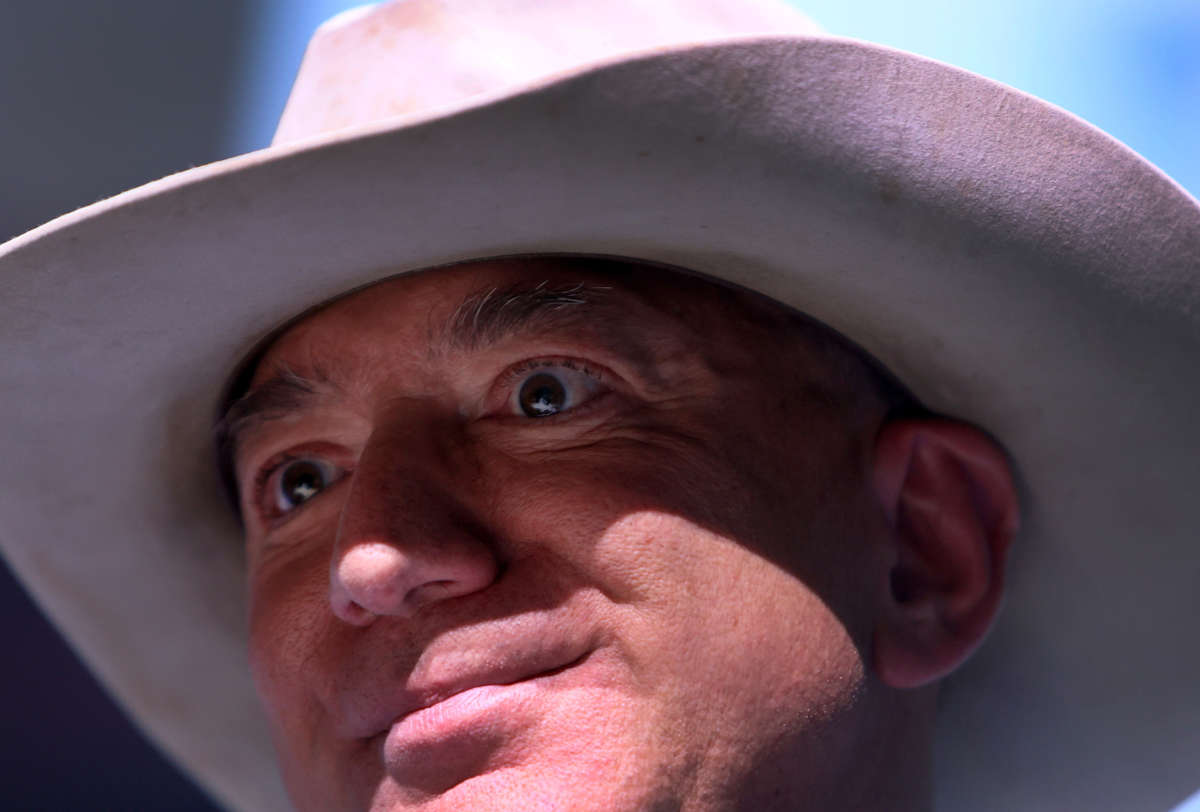
      Jeff Bezos in a cowboy hat
      Jeff Bezos speaks about his flight into space on Blue Origin’s New Shepard during a press conference on July 20, 2021, in Van Horn, Texas.

      BYWilliam Rivers Pitt, TruthoutPUBLISHEDJuly 21, 2021SHAREShare via FacebookShare via TwitterShare via Email

      A white lower-case t on a black background

      READING LISTECONOMY & LABORPoverty Wages and Tax Dodging Funded Bezos’s Ridiculous Space TripPOLITICS & ELECTIONSTrump Has Convinced His Followers He’s About to Return to Office This SummerWAR & PEACEBiden Promised Diplomacy, But He’s Overseeing Military Buildup Against ChinaPOLITICS & ELECTIONSInvestigating Trump Is “Absolutely” a Possibility, Says Jan 6 Commission ChairPOLITICS & ELECTIONSAOC Calls GOP Refusal to Advance Infrastructure Bill Tactics for “Killing Time”IMMIGRATIONLet’s Call the “Border Crisis” What It Is: Another Big Lie From the Right

      Jeff Bezos’s 10-minute trip to space has inspired a myriad of reactions, from boredom to anger to a surge of “space penis” memes making fun of the shape of his rocket. I am mortally certain this was not the reception Bezos — the richest person on Earth — was hoping for. And I hope that the world’s unimpressed reaction is followed by greater scrutiny of Bezos’s wealth, why he has it, and why we live under a system that makes it possible for anyone to hold over $200 billion while paying virtually no taxes.

      By all reports, Bezos has been obsessed with space for 30 years, and spent a small fortune — a pittance to him, it is to be noted — almost but not quite getting there. After his billionaire rival, Richard Branson, pulled a similar stunt 10 days ago, you’d have thought from the media coverage that Branson had landed on the moon and discovered cold fusion in a crater. The coverage of the Bezos fling was about as exciting as this cat meme, and all he got for his troubles in the end were enough penis jokes to last 10 lifetimes.

      You’d think the owner of The Washington Post would rate more ink from his colleagues in the biz, but alas for Bezos, he has learned a hard but unavoidable lesson: Almost nobody remembers someone who does something for the second time.

      Stay in the loop

      Never miss the news and analysis you care about.

      • Email

      Case in point, and a pop quiz (no Googling the answer, you): It is universally known that Neil Armstrong was the first astronaut to step on the surface of the moon during the Apollo 11 mission. Who was the first astronaut out the door of Apollo 12, the second mission to land on the moon? Answer: Charles “Pete” Conrad. Extra points: What did he say after stepping out of the spacecraft? Answer: “Whoopie!”

      Don’t worry, I had to look it up, too. No disrespect meant to astronaut Conrad, who did it right.

      Yet as ridiculous as Bezos’s space coffee break was, I still get occasional pushback when I refer to people like him and Branson, who pay almost nothing in taxes annually, as “tax cheats.” They aren’t cheating, I am told, but are playing by the laws as they find them. Change the laws if you don’t like them!

      Well, that right there is the thing. Most of us aren’t billionaires who can afford to financially adopt the kind of powerful politicians who can rewrite the tax codes in our favor. What do you call a system where rich people pay Congress members to do just that? I call it cheating, and sleep like a baby at night. If I slip a few Benjamins to the home plate umpire so he will expand the strike zone for my pitcher during the game, I am cheating, and that is this.

      Such behavior has launched Bezos into an economic atmosphere no spacecraft can reach, whatever shape it may hold. In one second, Bezos makes as much or more money than the average worker pulls down in a week. In a minute, he makes more than the average worker earns in a year. “Based on the median net worth of an average US household, $97,300, an average American spending $1 is roughly equivalent to Bezos spending $1.95 million,” reports Business Insider. “The Amazon CEO’s net worth took a hit of more than $10 billion in 2019 — and he still didn’t lose his spot as the world’s richest person.”

      Yes, Bezos has donated some of his money. After many years of not giving much of his fortune away, he and his then-wife have donated $2 billion to combat homelessness and improve education, gave $200 million to the Smithsonian Institution’s National Air and Space Museum, and pledged $10 billion to combat the climate crisis since 2018. This is great, but it represents an infinitesimal portion of his fortune. Thanks to the magic of compound interest, his own money will make that money back for him in the time it takes to drive to Nana’s house.

      Instead of lauding Bezos’s late-blooming philanthropy, we should be asking ourselves: Why is it OK for anyone to have the amount of money that Bezos has, when so much of the world has so little?This was a step toward the commercialization of space, and I want no part of that.

      Moreover, we should consider the manner in which that fortune was amassed. Amazon, Bezos’s massive company, came to be a $1.5 trillion economic juggernaut by using brazenly monopolistic tactics to either buy up rivals or run them off the road. The company pays almost nothing in taxes, and to pad the bottom line, Amazon has become one of the most notorious union-busting corporations on Earth.

      “Recently, Amazon won a closely watched National Labor Relations Board election against the Retail Wholesale and Department Store Union at a warehouse in Bessemer, Alabama,” John Logan reported for Truthout in May. “But it did so only after spending millions of dollars on harassing and intimidating its workers for two months before the vote. Now, the company is using the same strategy to bust a new independent union drive at its Staten Island facility in New York.”

      Before embarking on his little trip, Bezos made word noises that seemed to indicate he sort of, kind of gets it. When asked if these “joyrides for the wealthy” waste money that could be used to help people on Earth, he replied, “Well, I say they’re largely right. We have to do both. You know, we have lots of problems here and now on Earth and we need to work on those, and we always need to look to the future. We’ve always done that as a species, as a civilization. We have to do both.”

      We have to do both … so long as I get to play with my toys first. It was a politician’s answer, the kind of pabulum senators spout to reporters before the elevator doors close. I’ll believe Bezos and his ilk mean it if I never, ever hear talk about low-orbit billboards advertising Amazon products, or about corporate logos (come to think of it, the Amazon logo also has some strange penis action going on) visible on the moon. I fear that is where we are headed, because Bezos and Branson did not do this for the sake of discovery or exploration. They were clear: This was a step toward the commercialization of space, and I want no part of that.

      Again, I am not alone. “What Branson’s and Bezos’s baby jaunts into the sky represent is not progress,” writes Barry Petchesky for Defector. “They are not about exploration or knowledge. They are moneymaking ventures. They are, as initially envisioned, about the promise of spaceflight tourism. They are symbolic, but of a future (and a present!) where only the extremely wealthy can get a taste of the peak awe that humanity is capable of feeling.”

      There was no peak awe in beholding the Bezos space penis, and word has it Tesla billionaire Elon Musk is lining himself up to be the next obscenely wealthy turd to bounce some expensive metal off the inside of the outer atmosphere.

      Meanwhile, billionaires like Bezos made your yearly salary three times over in the minutes it took you to read this article. Launch that into space.

      Police arrest 19-year-old man accused of abusing horse at Norfolk stable

      https://www.wcvb.com/article/norfolk-massachusetts-horse-abuse-suspect-arrested-turner-hill-equestrian-stables/37081941


      WCVBUpdated: 4:08 PM EDT Jul 20, 2021Infinite Scroll EnabledPlay Video SHOW TRANSCRIPT
      GET LOCAL BREAKING NEWS ALERTS

      The latest breaking updates, delivered straight to your email inbox.SUBMITPrivacy NoticeNORFOLK, Mass. —

      A Boston man is facing multiple charges in connection with a reported sexual assault of a horse that happened in Norfolk last week, according to police.

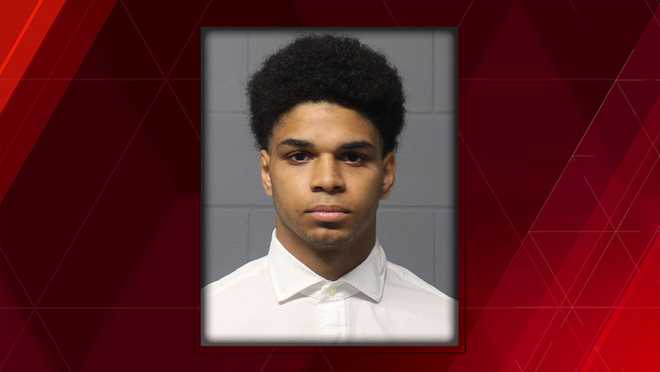
      Norfolk police say 19-year-old Jackson Z. Kelley, who lives in Boston’s Allston neighborhood, turned himself in late Tuesday morning with his attorney.Advertisement

      Kelley was arrested, booked at the police station and transported to Wrentham District Court to be arraigned on the following charges: sexual contact with an animal, cruelty to animals and nighttime breaking and entering with intent to commit a felony.

      “The Norfolk Police Department would like to thank the public for taking the time to come forward and become involved,” reads a statement from the department. “We received many calls providing information which eventually led to the identification of Kelley as the suspect.”

      The MetroWest Daily News, a WCVB media partner, reports that during his arraignment on Tuesday, Kelley was ordered to be held without bail pending a dangerousness hearing that is scheduled for Friday.

      The owner of Turner Hill Equestrian Stables, Hillary Swarr, confirmed to NewsCenter 5 on July 17 that one of the horses at her Miller Street facility was sexually assaulted in the early morning hours of July 15.

      “I don’t think anybody is prepared for something like this,” Swarr said.Play Video

      Swarr says she got an alert from her security system at around 4:30 a.m. on July 15 and she saw a man inside the stables abusing one of the horses when she checked her security cameras.

      According to Swarr, the man unplugged all of her security cameras except one, and was able to flee the scene before anyone could get to the stables to stop or apprehend him.

      “I felt violated. I felt lost. I felt scared,” Swarr said. “To see that someone would come into my own home and degrade a positive environment left me feeling violated.

      According to Swarr, the suspect — later identified as Kelley — knew how to handle horses and is familiar with the animals.

      “Someone, perhaps, in the business was savvy enough to get into the barn; be able to halter a horse, which to people who are novice, was not the easiest task; was able to put it on a cross-tie system, which secures the horse in a certain, particular area; and had the knowh0w to get grain or feed to keep it occupied,” Swarr said.

      Jackson Z. Kelley, 19, of Boston's Allston neighborhood

      Norfolk Police Dept.Jackson Z. Kelley, 19, of Boston’s Allston neighborhood

      In a statement, the horse’s owner — who wishes to remain anonymous — said that while she questions why the man committed the “grotesque act” on her horse, she feels “empowered” to support her fellow members in the Massachusetts equestrian community, both people and horses alike.

      “If it weren’t for good surveillance, we’d never know about this,” the statement reads. “No one should experience sexual assault, and we will find this individual and bring him to justice.”

      Swarr says DNA samples were collected from the mare that was assaulted and were being processed by investigators. She says the horse that was assaulted was not injured.

      Norfolk Police Detective Samuel Webb, who led the investigation, told The MetroWest Daily News that he sent an alert out to surrounding communities to see if they had any information or similar incidents.

      “I was able to get some leads from that,” Webb said. “I have some things I’m going to check out.”

      Swarr told The Daily News that she has installed a new security system that will hopefully prevent an incident like this from happening again to any of the 22 privately-owned horses that reside at her stable.