Lightning strikes kill 76 people in India; some victims were taking selfies

Exposing the Big Game's avatarThe Extinction Chronicles

https://www.cbsnews.com/news/lightning-india-76-deaths-victims-taking-selfies/

https://c9eeafc521df5242a622da0a50730e14.safeframe.googlesyndication.com/safeframe/1-0-38/html/container.html

Watch CBSN Live

UPDATED ON: JULY 12, 2021 / 2:36 PM/ CBS/AFP

https://www.cbsnews.com/embed/video/?v=5306ee5319d23ffee798ebb619c437b4#xVkLb9s4Ev4rhoA17i6WrZf1yCJYOEm7m7s%2BgqQ94BAHBiVSNtd6VZTsuIH%2F%2B81QlKU47WYXm71DA4viYzgz%2FDjzjfqokbrKi4TstNOqrNlIo2zDI6adQkOsYUgbaRtOWa6dPmq8YqnQTu8etWpX4JxNTmGcU2i61A%2BcKGB6FMWR7kTU0wNqxTpjPnUoMWlkWjA3LR5uWHyFK9bRwnhX7r4G8cUD%2BexvreV%2FxK%2FXvpVcvL90%2Fsl%2FhtkiqZcwU7ANK0mir3mSMKqTuGKlnvDlquLZUhdVyddM6EVe1Akp9SqvSy4qHQyAcVLxPNM5%2FlFOQGbFqwR1v22EDhqhAyl00AodKKEDJXQ8HmvomzUshEZcJ0kr593xEhQ4MM1BwcCxbECqVshAaTboaTbg2eBKaRaRLM94RJJPry664ikMkLTQTk3Xco0gsAzfMAywqS7lbBjw%2Fe71HQlZAioY9qnhg4Ckec%2FAcDjwlCyZQEQIPMhVVRXidD6ZT6JQZGwrzDE0QBuQFI2jPJ1PVnU4n%2FD5pJxPLMMy5xPDm09Maz6JvdB34E%2BPGJnqjkkd3bfcSA%2BtkJKAWRb12XxSreo0zAhP5hPXMR5s15hPpjQgYIQVurbn%2BGRqURoRw2K%2BY3mUBtNGGz2uBQLg9SCkH5TRvakZWI6uVBr%2FWizBU6tvusT6C11iWr7x4FnoE%2BIzy%2FGCqe0Zpus4fkxslzmGYUbUYIT9f3yyH2lFCWGFbT%2BXyRPniCKBYDMmabIc83w%2BIQU4ZAM%2BkCFnPnkpRMwnSvB80sWpnvyizOkYgpQcGaujaNyvXmArOIBVIo5PAawwplPDcT3XhldplrWQE1MiwFPj1K79dlfrf75tnJcpqWBbUqAT5XnMJw96WrDl55t3MKM%2BcvZ2u32qi3Ly68FAngIXV2mRo6raaUwSATkF0giPZALBuxG4Jgls09WZS4juGIGrk9DFlsecqeM7Qex0sZ%2BkepTwQuDN4qBnGa0gV91paMmApNBN0kEz4x5wRkqWVZ9wvw8kxRh6cX77YTB7319%2BvmvG7nqDs%2FeDi1YISZJ2B13toHS4ByizgoucwnITdGREYOjUTFSYLVPYvBmoC0CmEAcXgMxZFEHPeZJH60MgFZ8FK2%2FrUEQlDxk9TBdFnom8bOet2MPsksWkTvDEjRH802TveddrByNnOpoGqC9FZ8fb5neR8Gz9BAlebHjeeDOOt2mZjjNWwc2j88kS4PdTJDg924DtC4WVhSICiy0LFwDqIRHZ9mxqGbZpDiMCs1%2B6pcM4IcuzH6xzkkYhPFgalfAQSVXIh%2Bz8UskHkA98xCGhOLbLInhktVxAWMWHKavKM9Ow7GGnBdy3WLV%2FsGc%2F5%2FkyYZezq4vb2dViY8D4pszO7m5mHy4%2Fvr8fwrkUZ5uUFCbuB5fKGYqeSZuiN%2FnHBfgv4wwOJVvATVuAudfGhXFhe7NL3TIuHN1589bTZ2%2BtqX7%2B5vzi3HQv3%2FrTN0PwGpxpgfdjATfxTHoftPvBegt%2FR3dxuFnWIPlRPvZD8fXsETkZKxeCf2X74Qru0wsSCqRksAwf%2B6G8cWeP8rEfNpzu7LF57ocgu8L4IXeRrf0QDeViAe9nj81zP3yMU7GAK0VSsf9Rk7eLpDLvI0qQ%2F%2F0GThCH4FbttPEr0hv%2BO2kf4gVmniBeThAtJ4iVE0TKCeLkBFFyghg5QYScID5OEB1IMAEfcAUBICOtvztiBGQ2r6fPMILWAUpgRnv00INIQSsRKycSKXjNnxiFaHm66DliYPx3YUYyzCeo%2Ba34jakH4QJzFG5Qua%2F42scOxglAzwuSCkXoFX60Q8zWFIa0XmXQ4gjXKfyoXRssKSc0KMIRhSdJBLoFbYGxh%2B6qJNEa0o3EVp6KKC%2BZbENitQ1javguAMhR8bzTO3Kh6x8YJOElEwtRLZaoIprW9JBiQfCEPswns8OcqJLgNc1Dj%2FRQXzZqFRF5EuKPEbp21cv0ZUxouHhIUfe0frgu84KV1e5fDBKcBjSOUTJ1bdOj5tQJnMC0bBvonLa%2Flygnkn%2BD4yq23GEb%2BlY5bRgBy6i0QCXRmJGqLiG5R0jvGd5NdeCgOaQaTFtdZYQ3t%2BDQOFCEhxWwlSgHfhA1POOwDOjqkez55Cc873y5ZHTBszNDOzpfLt5kJEww2zUlJynBhwmb1aB%2FiaXhnWYblEQ0jHSX%2BEQ3TWZBNWlaOjBZP2Y%2BMYzQkKm6v7TN6uqEBn9bcUpZNgh3kAHZ33vzZf0ZunFo%2Bl6oh67HdKhRHT2Y%2BoZuAmmGcgKqiwDvu1pyXYeXYB6eDBA23fB00xqYxuk0OJUwUtPa0k3yp%2BxZ7ea5be3GsT4DzvTjQOQpG8CFghpNDLasZIOKrOVKlsSciZ7w9syyCly%2FUL2Hq6mGu8Kdi0u2QY1l7F62E2S0xloeAwY8f%2BHI1e60bV4mFL2EnbfNUcP0prvpVRIwMALC%2BYaBwmEbLaRXXcObxo7hQyHg0%2B%2BdnFqgKFq7QcJTDtfQOdh7C1xTRhw4UaAoMdoUliSj1yqKyB3b%2FIP6LTrjgXFJHig608Ajqh4%2BHI90HqlWkvgJBq6lpNwdFj7rvKJtN%2Bym9FcKoFWMJLxOEeWYb3jSG8YFMIVleCJYIWj7Xsl%2FXBk9I%2BtN1XDQW9Vdnqs36usKQHqDHV1hRzLylMHU6xwUgANVJ5gwQhUq%2FsqtUb7y0p%2BSI%2BPQi4r%2BFQXNvqXTy6LCR0XKJatUKFNJ8u4FXH3jm1ovDzY3qM3A%2FcsZyez%2BRx32BGQLAsWBtOEiz2IutQbCD%2FdhjU2K8cG3XLhzX0jbgqSGSbR5kUiV7f2ol2KQd4E%2BGFglUVo2efLuUbVhTr1GE%2FI6A4czeQuXaGhc4j3EVV%2FRY%2BEKftZb%2BJEJ%2FQv2CfwhOIV%2FQWvQmzuG1VdPPKmPxcue7OvxPNF8XOvPFCgx3aHbcftq1XzFBJxlyJfWMlKAHMwY9HPGK3Xp0zyUd%2Fqx343pDfNZ9bxffnDrdT4qCW8T9gDhRMYJdS9B0wYZyNpw%2FZ1tGaOpcT%2B6AwI0spqWZY5sExu2O7J87AKyjCTwHrSLalHl6ac%2BQAHsCOkNW0tSERlxCOkraiIhe3jzEK1ItmS3ADgZSy3PsH2zwWfEsJxtuiF6O54ZSE7RmQAxxZK7%2FJbKzzQdyWkO9GHBfjDfej0D7O8YYBnPDbD%2FuAFP1LZfT%2B3p99Q2j9S%2ByqI%2FqTWogcq8lubeseZ3yJJc050ig1LNadd0u6bXNf2uGRyartE1za5pdU27a3a7ud1ubreb2%2B3mdru53W5et5vX7eZ1u3ndbl63m9ft5nW7ed1ung%2FRpAkIt0Bt1rtvnd%2FTExLNvFc7pOB719qyAV5SuaJ4HsK%2ByXOwFCCFYG9SSFuXfNMyecGqGxYDO1x9hmSD2fc2yavuKxiMXwDzKI9G1f88cYFh9Ao25yR5l5Puc9jzoQsoQEjWJJ1mOZNFxS14KGE37EvNsKTrD80wZ91AZcRK6cb2%2F7vkB7SbQ7rYyg9oH0sqSfF9u%2FoXIEysPIeKor%2B40UvadDigjxnq%2BX2rlIewLEPrtMOcGYWLXbLmI6KyvNn8hhUMa6sZbX2J3BHKAAL5t1S8m0XEZjG17RCBIMC1%2FyaleJLwNczj2u8%2BVPlZs1Jc%2BMChv1XCo8sUs0SehK8goSHL0NYp3%2BgcqFhZkp38ihrl%2BZof6bCQlLQZuWUlcqZr4DmSO%2BL3SZDTDEpKKJgQ8siQsdThbe%2B1FuwtL0V1jTVPd2%2FwQPb7%2FwI%3D

Several people reportedly taking selfies near a historical fort in northern India were among 76 killed by lightning strikes during the early stages of the annual monsoon season, officials said Monday.https://c9eeafc521df5242a622da0a50730e14.safeframe.googlesyndication.com/safeframe/1-0-38/html/container.html

Deadly lightning strikes are common in the vast Asian nation during the June-September deluge, which bring respite from the summer heat across the northern Indian plains.

Of the 76 killed, at least 23 people died in the mostly desert state of Rajasthan, including a dozen who were watching the storm cross Jaipur city from watch towers near the famous 12th-century Amer Fort late Sunday, a state disaster department official told AFP.

India Lightning Deaths
State Disaster Response personnel…

View original post 445 more words

It doesn’t get much more moronic than sport hunting

Exposing the Big Game's avatarExposing the Big Game

In light of the rise in violent crime, many have pondered the question: “How do I know if my neighbor is a psychopathic serial killer?” Well, unfortunately, it’s not easy. Unless of course you happen to live in any number of rural areas across the country where hunters are required to wear blaze orange—then the psychopathic serial killers stand out like a bunch of sore thumbs.

Okay, somaybeit’s a bit hyperbolic to compare hunters to serial killers. Yes, they both obsess on and stalk their victims, whom they objectify and depersonalize in their single-minded quest to boost their self-esteem, and the kills made by both hunters and serial killers are followed by a cooling off period, but serial killing usually has a sexual component to it.

Let’s hope hunters aren’tliterallygetting off on their exploits.

Maybe a better comparison for a hunter would be to a mass…

View original post 290 more words

It doesn’t get much more moronic than sport hunting

In light of the rise in violent crime, many have pondered the question: “How do I know if my neighbor is a psychopathic serial killer?” Well, unfortunately, it’s not easy. Unless of course you happen to live in any number of rural areas across the country where hunters are required to wear blaze orange—then the psychopathic serial killers stand out like a bunch of sore thumbs.

Okay, so maybe it’s a bit hyperbolic to compare hunters to serial killers. Yes, they both obsess on and stalk their victims, whom they objectify and depersonalize in their single-minded quest to boost their self-esteem, and the kills made by both hunters and serial killers are followed by a cooling off period, but serial killing usually has a sexual component to it.

Let’s hope hunters aren’t literally getting off on their exploits.

Maybe a better comparison for a hunter would be to a mass murderer: the inadequate type who snipes with a hunting rifle at innocent passers-by from a clock tower, or fires an AR-15 at cars from an embankment over a freeway.

Either way, the plain fact is cruelty to animals often leads to the killing of people. The perpetrators of the Columbine mass school shooting in Colorado honed their slaying skills by practicing on woodpeckers with their hunting rifles. David Berkowitz, the self-proclaimed “Son of Sam” serial killer, who habitually took sport in shooting lovers in parked cars along the streets of New York City, began his criminal career by shooting his neighbor’s dog.

Why does the public put up with these people in their midst?

The mainstream media downplays the behavior of serial animal killers as though hunting was just another “sport” to report on; like they were covering some Boy Scout Jamboree. They repeat by rote hunter/”game” department jargon like the animals were inanimate objects, using emotionally void terms such as “crop” for deer or “wolf harvest” for the unnecessary torture and murder of sentient beings vastly more admirable than their pursuers.

Any society that looks the other way when people murder animals for fun does so at its peril. Marine biologist, Rachel Carson, author of Silent Spring, had this to say about the growing problem:

“Until we have the courage to recognize cruelty for what it is—whether its victim is human or animal—we cannot expect things to be much better in this world. We cannot have peace among men whose hearts delight in killing any living creature. By every act that glorifies or even tolerates such moronic delight in killing we set back the progress of humanity.”

It doesn’t get much more cruel or moronic than sport hunting.

Humans are practically defenseless. Why don’t wild animals attack us more?

https://www.livescience.com/why-predators-dont-attack-humans.html

By Patrick Pester – Staff Writer about 8 hours ago

Without tools, we’re practically defenseless.

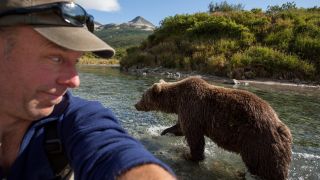
A photographer takes a selfie as a brown bear walks past.

A photographer takes a selfie as a brown bear walks past in Katmai National Park and Preserve, Alaska. (Image credit: Paul Souders via Getty Images)

“They are more afraid of you than you are of them” is a saying that is often used to reassure hikers that even large predators, such as bears and pumas, pose little threat to us. But humans are slower and weaker than these animals, so what stops these beasts from snacking on every clothed ape they come across? 

There are a few likely reasons why they don’t attack more often. Looking at our physiology, humans evolved to be bipedal — going from moving with all four limbs to walking upright on longer legs, according to John Hawks, a paleoanthropologist at the University of Wisconsin-Madison.

“There is a threat level that comes from being bipedal,” Hawks told Live Science. “And when we look at other primates — chimpanzees, gorillas, for instance — they stand to express threats. Becoming larger in appearance is threatening, and that is a really easy way of communicating to predators that you are trouble.” 

Related: How many early human species existed on Earth?CLOSERun, Bear, Run!https://imasdk.googleapis.com/js/core/bridge3.470.2_en.html#goog_124506570500:00 of 03:08Volume 0%00:00 PLAY SOUND

Bipedalism may make humans appear bigger and therefore more threatening to other species, but it also has disadvantages. It is typically slower to move on two legs than on four, meaning humans have abandoned any pretext of outrunning any four-legged creature, according to Hawks. 

“It’s sort of like a bluff,” Hawks said. “It’s like, ‘I’m walking around; I’m tough; I’m showing where I am on a landscape.'” Predators see the upright stance and assume humans are tougher than we actually are, according to Hawks. However, even if they were to call our bipedal bluff, predators have other reasons to leave us alone. HOW COMMON ARE WILD ANIMAL ATTACKS?

A 2019 study published in the journal Human–Wildlife Interactions found that about eight people die annually in the U.S. from wild animal attacks and most of these deaths are due to venomous snake bites.  

Larger primates, such as humans and chimps, live in groups and adopted the strategy of aggressively defending themselves against threats, which usually works against predators, Hawks said. Being social has therefore helped keep us safe, along with the benefits of bipedalism.

As human technology advanced, we developed an arsenal of advanced weapons, such as bows and guns, that could be used from a distance. With these weapons, humans became so deadly that they began taking the fight to predators. 

Another reason humans are rarely attacked by large wild animals is that their numbers have declined. “We’ve been trying to essentially clear the landscape that we use of large predators for a very long time,” Justin Suraci, lead scientist in community ecology and conservation biology at Conservation Science Partners, a nonprofit conservation science organization based in California, told Live Science. 

Large predators and their habitats suffered great losses in the United States before and into the 20th century, before the passing of the Endangered Species Act of 1973, Suraci noted. For example, humans hunted, trapped and poisoned wolves (Canis lupus) to near extinction, Live Science previously reported, and pumas (Puma concolor) were wiped out of the entire eastern half of North America, except for a small population in Florida, according to the International Union for Conservation of Nature. 

Related: What’s the first species humans drove to extinction? 

Predators living in other areas that are heavily populated by humans have faced similar problems. According to Suraci, the animals that have escaped human menace likely learned to become weary of our species. “For very logical reasons, some of these larger predators have a healthy fear of humans in the same way that any prey species would fear its predators,” Suraci said. 

In a 2019 study published in the journal Ecology Letters, Suraci and his colleagues played recordings of human voices through remote speakers in the Santa Cruz Mountains of California. The study showed that the sound of humans talking was enough to scare away pumas and several smaller predators, such as bobcats (Lynx rufus).

The recordings were designed to simulate benign conversation and consisted mostly of Suraci and his friends reciting poetry and passages from books. The effect was so strong, the recordings had a similar effect to removing predators from an ecosystem altogether, with reduced predator activity allowing small, would-be prey animals, like mice, to forage more than they normally would. 

Suraci thinks this fear that predators have of humans could also have an upside: It could help prevent conflict between humans and wildlife. Large predators need a lot of space, and in a human-dominated world, they need to be able to live alongside humans without conflict.RELATED MYSTERIES

—When did humans discover how to use fire?

—How did coyotes become regular city slickers?

—What would happen to Earth if humans went extinct? 

“The fear of humans that a lot of these predators show is really positive in that light,” Suraci said. “It gives us some opportunity to potentially share spaces with these animals — to go hiking in places where pumas, bears and wolves all exist, without experiencing any negative impacts.” 

Put another way, wild predators’ “healthy fear” of humans may help us coexist, “as long as we’re conscious about their presence,” Suraci said. Indeed, it’s important to be smart while hiking in regions where large predators live. For instance, in bear country, people should hike in groups and periodically yell “Hey bear,” to give animals time to leave the vicinity before an encounter, Live Science previously reported. 

Originally published on Live Science.

On This German Farm, Cows Are in Charge. Or at Least Coequals.

Kristina Berning, 21, holding her cow Ellie with her sisters Celine (left) and Michelle, (right) sitting next to them.
Credit…Lena Mucha for The New York Times

Germany Dispatch

The cows don’t have to produce milk. The pigs sleep late. No animal on this former dairy farm serves a human need. Their only purpose is to live peacefully — and provoke questions about how we eat.

Kristina Berning, 21, holding her cow Ellie with her sisters Celine (left) and Michelle, (right) sitting next to them.Credit…Lena Mucha for The New York Times

·  ·  ·  

By Melissa Eddy

  • July 10, 2021

BUTJADINGEN, Germany — Tom will lay his head in the lap of anyone who sits down to rub his neck, while Tilda prefers just to nuzzle her young son. Cuddles aren’t really Chaya’s thing, but if she’s in the mood, she’ll play pugnaciously with a bale of hay as if it’s a giant ball.

On any other farm, these three friends would no longer be alive. Tom was too small, Tilda too ill and Chaya too aggressive to survive on a modern industrial farm. Each was condemned to the slaughterhouse.

Instead, the trio found their way to Hof Butenland, an ex-dairy farm turned animal retirement home that offers sanctuary to cattle, pigs, a few horses, chickens, geese and rescue dogs.

No animal is there to serve a human need; all coexist as equals with Hof Butenland’s human residents and workers.

“We need to think about how we can live differently and we need to leave animals in peace,” said Karin Mück. She and her partner Jan Gerdes, both in their mid-60s, run Hof Butenland on the windswept flatlands of Germany’s Butjadingen Peninsula, which juts into the North Sea.

The idea of shifting away from meat and dairy products may sound revolutionary in a country better known for juicy bratwurst and Frisbee-sized schnitzel, along with afternoon indulgences of coffee topped with frothy milk and cheesecake.

But Germans are consuming less meat — last year only 126 pounds per person, the lowest amount since 1989 — while the number of vegans has steadily increased to two million.

Increasingly, even Germans who eat meat are purchasing vegan products as concerns over how livestock is kept are encouraging people to turn away from animal products, said Ulrich Hamm, a professor of agricultural sciences at Kassel University, who has studied trends in food consumption for decades.

For the humans at Hof Butenland, the turn away from animals as commodities is not only a question of human morality but of planetary survival, given the role that industrial farms play in contributing greenhouse gases to the atmosphere.

“For me it is clear, if we want to save this planet, then we have to stop using and consuming animals,” Mr. Gerdes said over coffee, with a splash of oat milk. “We have the economic power to enact change, but we have to want it.”

Mr. Gerdes took over Butenland from his father and introduced organic practices to the region in the 1980s. But even on an organic farm, he could not avoid what he called the “brutality” of how dairy cows are treated to produce milk: removing newly born calves from their mothers, who for years are inseminated again and again.

His discomfort with the process — and decades spent listening to calves cry out for their mothers — ultimately led Mr. Gerdes to quit the dairy business and adopt a policy of total egalitarianism for all the species calling the farm home.

Now, the animals are free to roam from the red brick barns built in 1841, down the tree-lined lane to the nearly 100 acres of grass-rich pasture and back again, at their own pace and on their own time. There are no milking hours to be met and the pigs, buried deep in a pile of straw, regularly sleep long past noon.

Kristina Berning leading Lily out of the trailer to the stable.Credit…Lena Mucha for The New York Times

Karin Mück and Jan Gerdes siting in their kitchen at night.Credit…Lena Mucha for The New York Times

One of the pigs is Frederick, whose stall opens onto a shady yard with a muddy pond that he and three other swine friends share with the geese. He was found after tumbling from a trailer packed with piglets bound to become suckling pigs. The driver, contacted by police, scoffed at the idea of turning back for one lost animal, so he was brought instead to Hof Butenland.

Now he snores snout-on-snout with Rosa-Mariechen, rescued seven years earlier from the corner of a feedlot, suffering from pneumonia and infected wounds from rat bites. Their stall mates, Eberhard and his son, Winfried, were rescued from a university research lab where experiments left them nearly deaf and blind.

Lab animals have a special place in the heart of Ms. Mück, who spent weeks in solitary confinement in 1985 on suspicion of building a terrorist group, after she was caught breaking into a lab to free animals being used for experiments. Alone in her cell, she had a revelation.

“One day I realized, it is the same thing that happens to the animals,” she said. “You don’t see the sun, you are separated from your friends, you have no idea what is going on around you and you have no control over your own life.”

After 20 years working as a psychiatric nurse, she met Mr. Gerdes just as he was preparing to quit farming and sell off Hof Butenland, including his herd. But when a trailer came to collect the cattle, a dozen didn’t fit.

Mr. Gerdes turned them back out to pasture and decided to leave them there, undisturbed, for good. The sanctuary was born.

To finance their undertaking, the pair initially rented out vacation apartments. Many guests wanted to donate to help support the animals, leading Mr. Gerdes and Ms. Mück to set up the Hof Butenland foundation that now serves as the financial backbone for their operations.

An employee of Hof Butenland feeding one of the pigs that spent seven years in an animal testing lab.Credit…Lena Mucha for The New York Times

Karin Mück visiting her geese.Credit…Lena Mucha for The New York Times

Social media channels are filled with videos of Chaya playing, other cows dozing in the sun and Hope, the gander (originally believed to be a goose), picking through Ms. Mück’s pockets. These clips have drawn a loyal fan base of donors, and the funds are enough to cover monthly vet bills, two workers and overhead costs. Electricity is generated on-site from a 1980s-era wind turbine.

Packages arrive at random, addressed to a cow, or to Omic, a Pekingese mix recently rescued from Romania. They hold feed bowls, treats and handwritten notes in envelopes that often include a 20-euro bill. Sponsors can sign up for group tours held twice a month, but uninvited visitors usually don’t get past the gate.

“We are called a retirement home for cows,” Ms. Mück said. “You don’t show up at a nursing home to pet the grandmas, why would it be any different here?”

A neighbor, Henning Hedden, 60, is a second-generation farmer who now rents his land to a young man running a conventional dairy with 90 cows. He has come to accept the Hof Butenland project and regularly stops by for a coffee and a chat, although he insists: “I’m still going to eat meat.”

Many neighbors who maintain working dairies argue their cows are healthy, well-treated and still able to meet the country’s still enormous demand for dairy.

Some also view the farm’s philosophy as a threat to their livelihoods.

“If we just cuddled the cows, it would be OK,” said Ms. Mück. “But what the other farmers don’t like is that we criticize the system.”

Each week, dozens of people telephone, asking the sanctuary to rescue a farm animal. But the waiting list is long.

Kristina Berning, 21, didn’t know this seven years ago, when she gathered her courage and called to ask if they would let her bring Ellie, a cow from her father’s dairy farm she was trying to save from slaughter. Initially, Ms. Mück refused — they didn’t have room — but the girl’s love for Ellie wore her down.

A cow stable on a conventional dairy farm in the neighborhood of Hof Butenland.Credit…Lena Mucha for The New York Times

A cow during the milking process on a conventional dairy farm.Credit…Lena Mucha for The New York Times

In 2015, Ellie joined the herd.

In June, Kristina and her sisters drove Lily, another cow who had become a family pet, five hours north to Hof Butenland. Ms. Berning burst into tears when Lily bounded out of the trailer and began rubbing her back on a grooming brush in the barn.

But tears of joy turned to tears of sadness two days later when Ellie, 13, collapsed and had to be euthanized. Kristina spent the night in the pasture stroking the cow and saying her final goodbye.

“I’m just glad that I could be with her,” she said. “I think it was important, for both of us.”

How the highly unusual Death Valley temperatures just got more complicated

Trouble in Alaska? Massive oil pipeline is threatened by thawing permafrost

Exposing the Big Game's avatarThe Extinction Chronicles

https://www.nbcnews.com/news/us-news/trouble-alaska-massive-oil-pipeline-threatened-thawing-permafrost-n1273589

The slope of permafrost where an 810-foot section of the pipeline is secured has started to shift as it thaws, causing braces holding up the pipeline to twist and bend.

Imae: Trans-Alaska Pipeline

Trans-Alaska Pipeline, one of the world’s largest oil pipelines, spans 800-miles from Prudhoe Bay in the north to Valdez on Prince William Sound in the south.Edwin Remsburg / Universal Images Group via Getty ImagesJuly 11, 2021, 3:01 AM PDTByDavid Hasemyer, Inside Climate News

The Trans-Alaska Pipeline, one of the world’s largest oil pipelines, could be in danger.

Thawing permafrost threatens to undermine the supports holding up an elevated section of the pipeline, jeopardizing its structural integrity and raising the potential of an oil spill in a delicate and remote landscape.

The slope of permafrost where an 810-foot section of the pipeline is secured has started to shift as it thaws, causing several of the braces holding up the pipeline…

View original post 1,285 more words

Now is the time to plan for late-summer and autumn hunting in Ohio

Exposing the Big Game's avatarCommittee to Abolish Sport Hunting Blog

[Don’t they ever give it a rest?!]

https://www.dispatch.com/story/sports/2021/07/11/lottery-deadline-ohio-controlled-deer-waterfowl-small-game-hunts/7912735002/

Dave GolowenskiFor The Columbus DispatchView CommentsAD-1:0-2https://imasdk.googleapis.com/js/core/bridge3.470.2_en.html#goog_1002392769

Entries in the lottery for spots in Ohio's controlled hunts and for the use of hunting blinds can be purchased now.

With a few exceptions that include groundhog dispatchers, coyote snuffers and feral hog terminators, hunters generally havelight duty during summer.

Yet the start of Ohio’s 2021-22 hunting seasonwill arrive in not-so-distant September. That meansthismight be a good time to plan ahead for the coming months.

A deadline is approachingJuly 31, whichis thelast day to enterthe lottery for slots inthe Ohio Division of Wildlife’s numerous controlled hunts. The hunts involving deer generally receive quite a bit of attention, although controlled hunts are also offered for waterfowl, doves, squirrels and other small game.

More thana few of the hunts are held at public locations in central Ohio or in areas that are easily reached from Columbus.

Entries forthe lottery, which cost $3 each, can be purchasedatwildohio.gov,using the same link one would use to buy…

View original post 333 more words

[Opinion]: Wolves need managing in Minnesota, period

Exposing the Big Game's avatarCommittee to Abolish Sport Hunting Blog

https://www.startribune.com/wolves-need-managing-in-minnesota-period/600076931/?refresh=true

Science tells us that, even if the powers that be do not.JULY 10, 2021 — 9:29PM

U.S. FISH AND WILDLIFE SERVICEIn October, federal wildlife officials announced the removal of the wolf’s endangered species protections.TEXT SIZE17EMAILPRINTMOREDennis Anderson@STRIBDENNIS

Wolves were first hunted some 10,000 years ago, and the fact that people are still weighing the merits of this practice demonstrates if nothing else humans’ fascination with argument. The first known wolf bounty was offered in the sixth century B.C., and between then and the early 1900s, when the U.S. government accelerated its effort to eradicate the troublesome canines with strychnine, the animals have grown in lore and legend to be both sinner and saint, depending on viewpoint, flip a coin.

So it is no surprise that the Minnesota Department of Natural Resources, its finger ever to the wind, will meet for another six months…

View original post 914 more words

US heatwave: Wildfires rage in western states as temperatures soar

Exposing the Big Game's avatarThe Extinction Chronicles

https://www.bbc.com/news/world-us-canada-57794263

Published4 hours agoShare

The Beckwourth Complex fire
image captionFirefighters are struggling to contain California’s Beckwourth Complex fires

Wildfires are raging in the west of the United States as the region is hit by a heatwave that has brought record temperatures to several areas.

Communities have been told to evacuate as firefighters struggle to battle the blazes in the extreme conditions.

Two firefighters in Arizonadied when their aircraft crashed while responding to a wildfire.

Meanwhile, Las Vegas matched its all-time temperature high of 47.2C (117F) on Saturday.

Firefighters battling the many wildfires in the region say the air is so dry that much of the water dropped by aircraft to quell the flames evaporates before it reaches the ground.

It comes just weeks after another dangerous heatwave hit North America, in which hundreds of sudden deaths were recorded, many of them suspected of being heat-related.

The region experienced its hottest June on record, according…

View original post 657 more words