They died while responding to the Cedar Basin Fire near the Prescott National Forest: “Our hearts are heavy tonight,” the Bureau of Land Management said.
July 10, 2021, 6:30 PM PDT / Updated July 10, 2021, 8:56 PM PDTBy Alicia Victoria Lozano
LOS ANGELES — Two firefighters were killed Saturday in Arizona as wildfires raged through the West, threatening California’s overburdened power grid during an oppressive heat wave and ongoing drought.
The firefighters were killed in a plane crash while conducting aerial reconnaissance over the Cedar Basin Fire near the Prescott National Forest, the Bureau of Land Management said in a statement.
Meanwhile, the Bootleg Fire in southern Oregon doubled in size Saturday to nearly 77,000 acres in the Fremont-Winema National Forest, interrupting three electrical lines that transmit power from Oregon to California, energy officials said. As a result, California lost thousands of megawatts of imported power and struggled to maintain operating reserves as temperatures soared into triple digits in parts of the state.
David Garfield clears a fire break around his home as the Sugar Fire, part of the Beckwourth Complex Fire, burns on Saturday.Noah Berger / AP
California Gov. Gavin Newsom signed an executive order Saturday to free up additional energy capacity for the power grid during the heat wave and growing fire threat. The order allows ships berthed at California ports to use auxiliary engines rather than shore power to relieve pressure on the electricity system.
The Western heat wave has also triggered fires throughout California and much of the West. California’s largest current fire, the Beckwourth Complex Fire 45 miles north of Lake Tahoe, showed no signs of slowing down after doubling in size between Friday and Saturday and jumping the state border into Nevada.
As of Saturday evening, the Beckwourth Complex Fire, which was sparked by lightning on June 30, spanned more than 60,000 acres across two states and was 9 percent contained. Nearly 1,800 personnel were assigned to the fire while an excessive heat advisory remains in effect for the area through Tuesday.
“We’re looking at unprecedented early fire season [and] extreme fire behavior,” said incident commander Rocky Opliger during a community meeting Saturday.
The fire prompted mandatory evacuations, a closure of part of a national forest and presented serious danger for area campgrounds, National Forest Service officials said. It is one of several brush fires burning in California.
“Climate change is considered a key driver” of the state’s recent wildfire woes, the California Department of Forestry and Fire Protection said earlier this year.
Officials called on Californians to conserve power Saturday despite the soaring temperatures.
“The intense heat waves we’ve been experiencing in California and throughout the West would strain just about any electrical grid,” said Elliot Mainzer, president and CEO of the California Independent System Operator, which oversees the electrical grid for much of the state. “We’re facing a serious situation here on the grid.”
Residents were also asked this week to cut back water consumption by 15 percent as a worsening drought continues to deplete water reserves throughout the state. As of Thursday, 50 of California’s 58 counties are in a drought state of emergency.
California’s northern mountain areas have experienced several large fires that have destroyed more than a dozen homes. Although there are no confirmed reports of building damage, the Beckwourth Complex Fire prompted evacuation orders or warnings for roughly 2,800 people along and the closure of nearly 200 square miles of Plumas National Forest.
On Friday, hot rising air formed a gigantic, smoky pyrocumulus cloud that reached thousands of feet high and created its own lightning, fire information officer Lisa Cox said.
Fire consumes a home as the Sugar Fire, part of the Beckwourth Complex Fire, tears through Doyle, Calif., on Saturday. Pushed by heavy winds, the fire came out of the hills and destroyed multiple residences in central Doyle.Noah Berger / AP
Spot fires caused by embers leapt up to a mile ahead of the northeastern flank — too far for firefighters to safely battle — and winds funneled the fire up draws and canyons full of dry fuel, where “it can actually pick up speed,” Cox said.
The flames rose up to 100 feet in places, forcing firefighters to focus on building bulldozer lines to protect homes.
Firefighters usually take advantage of cooler, more humid nights to advance on a fire, Cox said, but the heat and low humidity never let up.
Wildfires are also raging in western Idaho and southeast Washington, prompting both Idaho Gov. Brad Little and Washington Gov. Jay Inslee to declare emergencies in their states.
“Washington is facing a historic drought and we have already experienced record-breaking heat. We must be vigilant in our efforts to prevent wildfires, and the loss of life and destruction of land and property that comes with them,” Inslee said in a statement. “We don’t want a repeat of recent years with dangerous wildfires across the state that have destroyed towns, killed livestock and resulted in weeks of unhealthy air quality.”
Many of the benefits that humanity derives from the natural world, like the provisioning of oxygen, are priceless. Those ecosystem services that can have a dollar value assigned to them, for example the pollination of crops, generate far more value for humanity each year than the entirety of theglobal economy. Climate change can threaten these services throughthe loss of speciesor shifts in species’sizeorabundance. For example,warming temperatures have reduced the size of many birds over the last four decades; this is emblematic of the scale of climate change impacts on the world’s biological diversity. There is an urgent need for action.
Updated 7:04 AM ET, Sat July 10, 2021Dead mussels cover the beach at Lighthouse Park in West Vancouver.
(CNN)The devastating heat wave that ravaged British Columbia last week is being blamed for a massive die-off of mussels, clams and other marine animals that live on the beaches of Western Canada.Christopher Harley, a professor in the zoology department at The University of British Columbia, found countless dead mussels popped open and rotting in their shells on Sunday at Kitsalano Beach, which is a few blocks away from his Vancouver home.Harley studies the effects of climate change on the ecology of rocky shores where clams, mussels and sea stars live, so he wanted to see how the intertidal invertebrates were faring in the record heat wave that hit the area on June 26-28.
Christopher Harley estimates that a billion mussels, clams and other animals may have died from the heat.”I could smell that beach before I got to it, because there was already a lot of dead animals from the previous day, which was not the hottest of three,” he said. “I started having a look around just on my local beach and thought, ‘Oh, this, this can’t be good.'”
The next day, Harley and one of his students went to Lighthouse Park in West Vancouver, which he has been visiting for more than 12 years.
“It was a catastrophe over there,” he said. “There’s a really extensive mussel bed that coats the shore and most of those animals had died.”
Unprecedented heat
Mussels attach themselves to rocks and other surfaces and are used to being exposed to the air and sunlight during low tide, Harley said, but they generally can’t survive temperatures over 100 degrees for very long.
Another heat wave is set to scorch the Southwest again this weekend, elevating wildfire concernsTemperatures in downtown Vancouver were 98.6 degrees on June 26, 99.5 on the 27 and 101.5 on the 28.It was even hotter on the beach.Harley and his student used a FLIR thermal imaging camera that found surface temperatures topping 125 degrees. At this time of the year, low tide hits at the hottest part of the day in the area, so the animals can’t make it until the tide comes back in, he said.Climate scientists called the heat wave in British Columbia and the Pacific Northwest in the United States “unprecedented” and warned that climate change would make these events more frequent and intense.”We saw heat records over the weekend only to be broken again the next day,” Kristina Dahl, a senior climate scientist at the Union of Concerned Scientists, told CNN, “particularly for a part of the country where this type of heat does not happen very often.”
Harley said the heat may have killed as many as a billion mussels and other sea creatures in the Salish Sea, which includes the Strait of Georgia, the Puget Sound, and the Strait of Juan de Fuca, but he said that was a very preliminary estimate.He said that 50 to 100 mussels could live in a spot the size of the palm of your hand and that several thousand could fit in an area the size of a kitchen stovetop.”There’s 4,000-some miles of shoreline in the Salish Sea, so when you start to scale up from what we’re seeing locally to what we’re expecting, based on what we know where mussels live, you get to some very big numbers very quickly,” he said. “Then you start adding in all the other species, some of which are even more abundant.”He said he’s worried that these sorts of events seem to be happening more often.
It’s ‘inescapable’: Pacific Islanders have tried to flee the climate crisis, only to face new threatsBrian Helmuth, a marine biology professor at Northeastern University, said that mussel beds, like coral reefs, serve as an early warning system for the health of the oceans.”When we see mussel beds disappearing, they’re the main structuring species, so they’re almost like the trees in the forest that are providing a habitat for other species, so it’s really obvious when a mussel bead disappears,” he said. “When we start seeing die-offs of other smaller animals, because they’re moving around, because they’re not so dense, It’s not quite as obvious.”He said the death of a muscle bed can cause “a cascading effect” on other species.
Both scientists were concerned that these heat waves were becoming more common and weren’t sure if the mussel beds would be able to recover. “What worries me is that if you start getting heat waves like this, every 10 years instead of every 1,000 years or every five years, then it’s you’re getting hit too hard, too rapidly to actually ever recover,” Harley said. “And then the ecosystem is going to just look very, very different.”
Losing one of the state-endangered species can mean the pack not only loses pups, but dissolves entirely.
Hannah Weinberger July 9, 2021LIKETWEETEMAILPRINTThe gray wolf, a native Washington species, was nearly eradicated from the state in the early 1900s. Listed as endangered in the state, they are now returning to Washington on their own, dispersing from nearby states and provinces.Washington Department of Fish and Wildlife
This story was originally published by Crosscut and is republished here by permission.
When wolf biologist Trent Roussin first saw the gray wolf on May 26 in the Sheep Creek area of Washington’s Stevens County, it wasn’t immediately apparent that she had been shot. The wolf was lying on the ground miles behind a locked gate; it was quiet, Roussin says, and not particularly messy or bloody. When he and his colleagues realized she had been poached, he wasn’t surprised. But he was disappointed.
“It’s really a bummer, is the first thing you think,” says Roussin, who works at the Washington Department of Fish and Wildlife. State-endangered gray wolves, once extirpated from the area, started recovering in Washington in 2008. Apex predators like wolves help keep forest populations of deer and small predators like coyotes in check. But with increasing overlaps between ranching and wolf territory, many people in Eastern Washington see the wolves as headaches at best and threats to life and business at worst.
“We can definitely live with wolves, but we think right now we have an oversaturation of them,” says Scott Nielsen, president of the Stevens County Cattlemen’s Association. “They’re not dispersing as fast as we would like.”
At least seven wolf packs attacked livestock in 2020. Washington saw at least 12 wolf poachings between 2010 and 2018, with the latest known incident in May 2019 in Stevens County. As of April, the Washington Department of Fish and Wildlife estimates that there are at least 178 wolves spread across 29 packs in the state, the majority of which are in Eastern Washington; that’s up from an estimated 145 wolves across 26 packs in 2019.
Wolf poachers go mostly undiscovered — but that hasn’t stopped nonprofit organizations from putting up significant cash rewards for information about these incidents. While rewards generally don’t lead to convictions, Defenders of Wildlife’s Gwen Dobbs says reward offers in cases of wildlife poaching can help raise public awareness, “hopefully serving as a deterrent against potential future incidents, even if a reward does not directly lead to a conviction.”
Department of Fish and Wildlife wolf coordinator Julia Smith says the public is key to helping understand when and why these killings happen. “Even if we don’t ever find the person who did it, at least we were able to document and understand what happened here in this particular area,” she says.
The increasing size of the award — $15,000 for information related to the gray wolf Roussin found — doesn’t necessarily indicate anything about what the loss of one wolf means to the pack, to wolf conservation or to ecosystems. The true value of one wolf, those closest to the issue say, depends upon the context in which the loss happens and the scope in which you consider it.
Pack impacts
On a pack level, losing one wolf can seriously threaten the pack’s future. The wolf poached in May wasn’t just any wolf. She was a breeding female in the Wedge Pack, a small pack still establishing itself. After a series of livestock predations in 2012, Washington state killed most, if not all, of the pack, says Paula Swedeen, policy director of Conservation Northwest. New wolves colonized the area within a year or two, and things were quiet until last year, when members of the pack were lethally removed after again killing cattle. According to the 2020 annual population survey, the pack had a minimum count of two wolves.
Given the time of year, it’s likely that the wolf had had pups within the past few months, and it’s also likely they won’t survive. “Wolf pups have a high level of mortality anyway,” Smith says. The pups have roughly 50% chance of surviving their first year, even with their mothers present. The pack won’t be able to produce new pups until next spring at the earliest.
When the Smackout Pack lost a female breeder in 2015, her partner stepped in to care for the pups, Swedeen says. When the state culled a breeding female in the Huckleberry Pack during a lethal removal in August 2014, it was late enough in the season that pups were likely old enough to make it on their own.
For small packs, losing breeding females can mean the pack not only loses pups, but dissolves entirely.
In a recent research paper exploring breeder loss to packs in Denali National Park, co-written by University of Washington researchers, breeder loss preceded pack dissolution in 77% of cases.
“Breeding females tend to be the glue of the pack,” Roussin says. “On a local scale, if we lose just one breeding female in a certain recovery region, that can be a huge deal.” He points to the south Cascades, where there currently aren’t any breeding pairs.
Members of dissolved packs may stay in the area and wait for another breeding female to join them, or seek out existing members of the pack to start breeding the next season. They may also disperse in search of other packs, or to find new territory and start their own.
Starting new packs can be problematic in Eastern Washington, which is already saturated with wolves. Any direction they venture, the wolves are liable to run into other packs — and wolves are territorial so they could also get killed by other wolves, Roussin said.
Population impacts
Zooming out to the population level, though, the impacts of losing one wolf aren’t as substantial to recovery. “The research we’ve done shows wolf populations are pretty resilient to harvests and not as fragile as a lot of the conservation community believes them to be,” says Dr. Laura Prugh, a professor of wildlife ecology at the University of Washington.
Prugh, who helped lead the research in Denali National Park in Alaska, has found that where wolves are plentiful, there’s no population-level impact when you remove a wolf.
Denali hasn’t experienced extirpation, Prugh says, “so it’s possible that the removal of [the poached breeding female] wolf could slow down the recovery a bit.”
However, when the Department of Fish and Wildlife removed wolves from the Wedge Pack last summer, within about two months Roussin started hearing reports of wolves recolonizing the area. “It just goes to show that if a pack blinks out for any reason at the stage of recovery that we’re in, at least in the northeast part of the state, those territories usually fill back in fairly quickly,” he says.
While the wolf population is resilient to losing one wolf, packs disbanded in their wake can affect the way statewide recovery unfolds in space and time.
The state is already behind on its recovery goal of having packs and breeding pairs established in all three recovery zones, initially projected to be met in 2021. Researchers say dispersing wolves may not explore new territories and where there are fewer pups, there are fewer opportunities to establish new packs.
“Folks who want to see wolves removed from the state endangered species list should be vehemently opposing poaching, which is just going to prolong reaching their statewide recovery objectives.”
“Folks who want to see wolves removed from the state endangered species list should be vehemently opposing poaching, which is just going to prolong reaching their statewide recovery objectives,” says Zoe Hanley, Defenders of Wildlife’s Northwest representative, who works with communities on the ground to further human-wildlife coexistence and conservation goals.
Nielsen of the Stevens County Cattlemen’s Association agrees. The ranching community, he says, was content to leave alone the wolf poached in May. As far as the community knows, the wolf wasn’t predating on livestock. He acknowledged that breeding females are essential to increasing the population, and young wolves leave home to find new territory. “One of our goals is to get them to numbers [and distribution] where they can be delisted,” he says.
UW’s Prugh says researchers are still exploring how many wolves are needed to maintain the ecosystem benefits they bring to landscapes.
“Having wolves present is one thing, but having them perform their ecological function is another, and [how many wolves you need] is a real open question right now,” she says.
Because wolves target primarily the most vulnerable animals as prey, Defender of Wildlife’s Hanley says, they can help those prey populations remain healthier and more vigorous. Wolf predation also regulates prey distribution and group size, which can impact the diversity of that entire ecosystem over time. “It’s just so important to maintain wolves and other apex predators, so that we can ensure ecosystem health during this crazy time of climate change,” Hanley says.
“It’s just so important to maintain wolves and other apex predators, so that we can ensure ecosystem health during this crazy time of climate change.”
Human impacts
Washingtonians may feel the loss of one wolf more deeply than the wolf population itself, conservationists say.
“The wolves will recover. But it’s just unfortunate from a human perspective that folks are out there doing this,” Roussin says. Wolves die all the time: The way that this wolf died is what’s making it an issue for people.
Wolf advocates were already primed to take the May poaching hard. The state-led use of lethal removal of wolves in the Wedge Pack last summer is a sticking point for those who think any form of killing is wrong, and the pack had only just started reestablishing at the time of this poaching. A federal-level decision to delist gray wolves from the federal endangered species list in January exacerbated hard feelings.
“There’s a significant segment of the population, I think, that cares about wolves as individual animals. And it’s so heartbreaking to think about the fact that someone so dislikes those animals that they would go out of their way to kill one, especially when the population is still recovering and especially when it’s a protected species,” Conservation Northwest’s Swedeen says. “And anytime that vulnerable young animals die, that’s also very upsetting.”
Prugh says she’s amazed by the impact one poaching can have on the human political ecosystem. “They just evoke such a strong emotional response, I think, that’s really disproportionate to their actual threat or their actual benefit,” Prugh says. “I feel like in the human realm they’ve almost become just another thing to fight over, and I’ve definitely heard people say things like, ‘Well, wolves are Democrats.’ They’ve become very symbolic of the larger polarization in our society.”
Omens of serious recovery setbacks
Experts within both conservation groups and the Department of Fish and Wildlife say human-wolf relations have been trending positively since recovery started, despite a few incidences of poaching and discontent within ranching communities. Breeding pairs have increased each year since Washington started counting them. “There’s a lot of folks who might want to paint [conservation] like it’s doom and gloom, but to me from a purely biological perspective we see our wolf population trending in the direction that we want it to go… and they’re largely coming back on their own,” says Smith, the Department of Fish and Wildlife wolf coordinator.
“Most of the wolves are good wolves, and they’re not out there depredating.”
“Most of the wolves are good wolves, and they’re not out there depredating. And [the poached wolf] wasn’t one of the bad ones,” Nielsen of the rancher association says, noting that the Wedge Pack had been pretty well-behaved up until last year. “So as long as they’re behaving themselves, for ranchers, I don’t think there’s a negative impact.”
To be concerned for recovery at the population level, there would have to be pretty severe mortality, about 30% — or 50 to 60 wolves — based on recovery developments seen elsewhere, Roussin says. Smith says that last year there was a mortality rate of 9%; the year before, it was 14%. Lethal removal by the state has averaged 3% of the population each year, with the most removal occurring in 2012 at 14% of the minimum population count. Poaching hasn’t gotten to a point where it would affect population-level recovery.
“After living alongside wolves for 10 years now, I think a lot of the myths are falling away,” Roussin says of living with wolves. Livestock producers who used to talk about killing wolves, he says, realize that taking one won’t do much to the population as a whole. “Another wolf is going to be right back in there, within months or shorter,… They realize they’re not going to be able to kill all the wolves to solve the problems they think they have.”
Nielsen agrees that while tensions remain, coexisting with wolves — and interacting with the state Department of Fish and Wildlife — has been generally positive for ranchers since recovery started. But, while there’s a lower percentage of wolves creating problems, there are more wolves out there, and the problems seem to continue, he says, despite most ranchers investing in nonlethal deterrence tools. Nielsen doesn’t condone poaching, but says poaching likely happens when people feel frustrated about how wolves are being managed.
“I know social tolerance cuts two ways, but it’s not acceptable to have them eating our livestock. And we think part of why they don’t move on is because they have an abundant food supply here. And unfortunately part of that food supply is our livestock,” Nielsen says.
Hannah Weinberger is a reporter at Crosscut focused on science and the environment. Visit crosscut.com/donate to support nonprofit, freely distributed, local journalism. Email High Country News at editor@hcn.org or submit a letter to the editor.
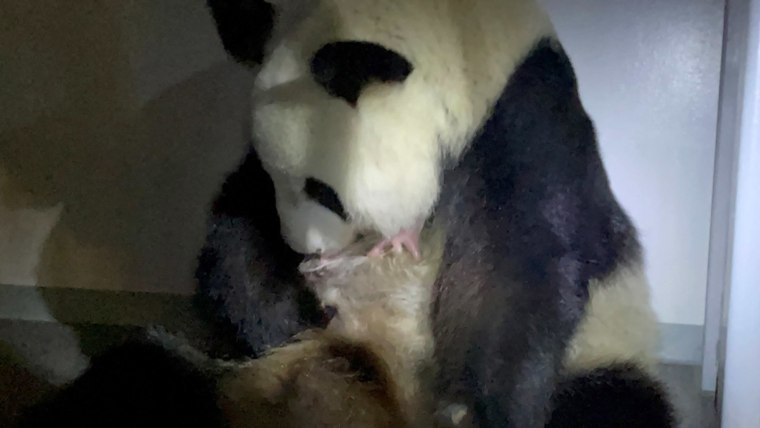
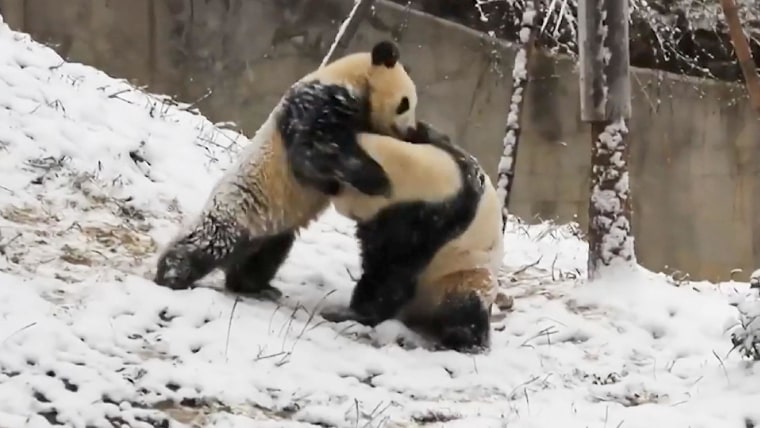
Now that the number of pandas in the wild has reached 1,800, Chinese officials have reclassified them as “vulnerable.”
After years of conservation efforts, Chinese officials have declared that giant pandas are no longer “endangered,” but are still “vulnerable.” Drew Angerer / Getty Images fileJuly 9, 2021, 6:53 AM PDTBy Christina Ching Yin Chan
HONG KONG — Giant pandas are no longer an endangered species, Chinese officials have announced, in a massive win for conservation efforts in the country.
The number of giant pandas living in the wild has reached more than 1,800, meaning the species has been reclassified as “vulnerable,” Chinese officials said earlier this week.
The new classification comes after Beijing “carried out some major activities and measures to protect biodiversity and achieved remarkable results,” said Cui Shuhong, head of the Ministry of Ecology and Environment, at a press conference Wednesday.
It is notoriously difficult to get pandas to breed both in captivity and in the wild.
He also credited tightened law enforcement supervision and a major crackdown on illegal activities on nature reserves.
Experts say China managed to preserve the animals, considered a national symbol, by taking measures that allow humans and pandas to coexist.
Becky Shu Chen, technical advisor at the Zoological Society of London, pointed out in a phone interview that most of the nature reserves are so huge that there are still populated human villages inside them.
She credited the Chinese government with teaching villagers agricultural activities that did not destroy the panda’s natural habitat, such as in Changchun, the home of a panda zoo, where locals sold “panda honey.”
Giant panda Bei Bei eats in its enclosure at the Bifengxia base in Yaan, Sichuan province, in 2019.AFP – Getty Images file
The villagers “protected the home of pandas, which is one of the reasons that they are now downgraded to ‘vulnerable,’” said Chen.
In China, the giant panda has long been considered a national treasure and has been a protected species since the implementation of the wildlife conservation law in 1958.
Beijing has also engaged in “panda diplomacy” for decades, lending the cuddly-looking creatures to zoos around the world from the U.S. to Russia as gestures of friendship.
Download the NBC News app for breaking news and politics
This isn’t the first time the species has been reclassified. In 2016 the International Union for Conservation of Nature (IUCN) reclassified the animals from “endangered” to “vulnerable” on the global list of species at risk of extinction.
Chinese officials bristled at the move at the time, maintaining that the animals were still under threat and the conservation efforts were not at a point where they could be relaxed yet.
Chinese social media users were pleased with this week’s news, saying it was not only proof that conservation efforts had paid off, but also an indication of the economic success of China.
“With our country getting wealthier, we have money to put on environmental and animal protection, just like what the Western countries did,” wrote one person on Weibo, China’s most popular social media platform.
Feral hogs cause millions of dollars in damage each year, and encouraging hunting is one way states try to control them. Some state officials believe banning hunting is the key to controlling them.
LEILA FADEL, HOST:
Across the country, feral hogs are causing big problems. Wild pigs cause more than $2.5 billion in damages each year when they root up land and crops. As Seth Bodine of member station KOSU reports, while some states encourage hunting, others have come up with a surprising way to try to control the population.
SETH BODINE, BYLINE: It’s estimated that there are more than 6 million feral hogs across the country. And they can be huge, weighing up to 200 pounds – about the same as a Great Dane. The…


 Dead mussels cover the beach at Lighthouse Park in West Vancouver.
 Christopher Harley estimates that a billion mussels, clams and other animals may have died from the heat.”I could smell that beach before I got to it, because there was already a lot of dead animals from the previous day, which was not the hottest of three,” he said. “I started having a look around just on my local beach and thought, ‘Oh, this, this can’t be good.'”