Antarctica’s Doomsday Glacier: How Doomed Are We?

https://www.yahoo.com/entertainment/antarctica-doomsday-glacier-doomed-154741354.html

Jeff GoodellWed, May 12, 2021, 8:47 AM·12 min read

I came face to face with the Doomsday Glacier (a.k.a. Thwaites glacier) in 2019, on a trip to Antarctica aboard the Nathaniel B. Palmer, a 308-foot-long icebreaker operated by the National Science Foundation. I had dubbed the Florida-sized slab of ice its nickname in an article I’d written a few years earlier, and the name stuck. Nevertheless, I was unprepared for how spooky it would be to actually confront the 100-foot-tall wall of ice from the deck of a ship. Locked up here was enough water to raise global sea levels nearly 10 feet. As I wrote in a dispatch from Antarctica on the day we encountered Thwaites, it was both terrifying and thrilling to know that our future is written in this craggy, luminous continent of ice.

Our world is heating up fast. And as every kid knows, on hot days, ice melts. The question is how quickly. At Thwaites, the melting is mostly a result of warm ocean water attacking it from below, which is stressing and fracturing both the ice shelf that protects the glacier and the glacier itself. Just how fast Thwaites and the other big glaciers that make up the West Antarctic ice sheet will all fall apart is one of the most important scientific questions of our time. And it is a question upon which the future of virtually every coastal city in the world depends. “We know there are tipping points in Antarctic ice sheets, and we also know that Antarctica is the biggest wildcard in the future sea level rise projections,” says Andrea Dutton, a professor of geology at the University of Wisconsin-Madison and a 2019 MacArthur Fellow. “Basically, it all comes down to ‘when will we reach that tipping point?’ ”

More from Rolling Stone

Last week, two new papers were published simultaneously in the science journal Nature that offer radically different visions of the Doomsday glacier, as well as radically different visions of how climate models work and what they can tell us about the future. But they agree on one thing: “Both papers make it very clear that human decisions are important, and that limiting warming can limit sea level rise,” says Richard Alley, a glaciologist at Penn State and one of the most respected ice scientists in the world. But beyond that, the two papers may as well be describing life on different planets.

Story continues: https://www.yahoo.com/entertainment/antarctica-doomsday-glacier-doomed-154741354.html

Animals to be formally recognised as sentient beings in UK law

Exposing the Big Game's avatarCommittee to Abolish Sport Hunting Blog

https://www.theguardian.com/world/2021/may/12/animals-to-be-formally-recognised-as-sentient-beings-in-uk-law

Set of government measures will include halting most live animal exports and a ban on hunting trophy imports

Animal welfare protesters are seen at a rally in front of the Al Kuwait live export ship as sheep are loaded in Fremantle harbour, 16 June, 2020
Animal welfare protesters at a rally in front of the Al Kuwait live export ship as sheep are loaded in Fremantle harbour, 16 June 2020.Photograph: Richard Wainwright/AAP

Fiona HarveyEnvironment correspondentWed 12 May 2021 01.00 EDT

5,866

Animals are to be formally recognised as sentient beings in UK law for the first time, in a victory for animal welfare campaigners, as the government set out a suite of animal welfare measures including halting mostlive animal exportsand banning the import of hunting trophies.

The reforms will be introduced through a series of bills, including an animal sentience bill, and will cover farm animals and pets in the UK, and include protections for animals abroad, throughbans on ivoryandshark fins, and apotential ban on foie gras.

View original post 636 more words

4th Wave Of COVID-19 Hospitalizations Hits Washington State

Exposing the Big Game's avatarThe Extinction Chronicles

https://www.npr.org/2021/05/11/995795457/4th-wave-of-covid-19-hospitalizations-hits-washington-state

  • Facebook
  • Twitter
  • Flipboard
  • Email

May 11, 202111:44 AM ET

WILL STONELISTEN·3:483-Minute ListenAdd toPLAYLIST

Sydney Porter of Bellevue, Wash., receives her COVID-19 vaccination from Kristine Gill, with the Seattle Fire Department’s Mobile Vaccination Teams, before the game between the Seattle Mariners and the Baltimore Orioles at T-Mobile Park on May 5 in Seattle. A late spring COVID-19 surge has filled hospitals in the metro areas around Seattle.Steph Chambers/Getty Images

As the coronavirus outbreak recedes in many parts of the U.S., the Pacific Northwest has emerged as an outlier — gripped by a late spring surge that has filled hospitals in the metro areas around Seattle and Portland.

In recent weeks, the governors of both states have hit the brakes on reopening plans in hopes of countering the rapid spread of the more contagious B.1.1.7. variant of the coronavirus, first identified in the U.K.

In…

View original post 963 more words

Covid: Serious failures in WHO and global response, report finds

Exposing the Big Game's avatarThe Extinction Chronicles

https://www.bbc.com/news/world-57085505

Published5 hours agocommentsCommentsShareRelated Topics

A crematorium worker carries wood for the cremation of victims who died from Covid-19 in Allahabad, India
image captionCrematoriums were overwhelmed in India in recent weeks amid a devastating Covid wave

The Covid-19 pandemic was preventable, an independent review panel has said.

The panel, set up by the World Health Organization, said the combined response of the WHO and global governments was a “toxic cocktail”.

The WHO should have declared a global emergency earlier than it did, its report said, adding that without urgent change the world was vulnerable to another major disease outbreak.

More than 3.3 million people around the world have now died of Covid.

While the US and Europe are beginning to ease restrictions and resume some aspects of pre-pandemic life, the virus is still devastating parts of Asia.

India in particular is seeing record-breaking numbers of new cases and deaths, with severe oxygen shortages in hospitals across the country.https://buy.tinypass.com/checkout/template/cacheableShow?aid=tYOkq7qlAI&templateId=OTBYI8Q89QWC&templateVariantId=OTV0YFYSXVQWV&offerId=fakeOfferId&experienceId=EXAWX60BX4NU&iframeId=offer_0e763acc7b457c03340a-0&displayMode=inline&widget=template

Countries neighbouring India, such as…

View original post 568 more words

Throwing money at biodiversity schemes is ineffective

https://www.bbc.com/news/science-environment-57071514

By Victoria Gill
Science correspondent, BBC NewsPublished18 hours agoShare

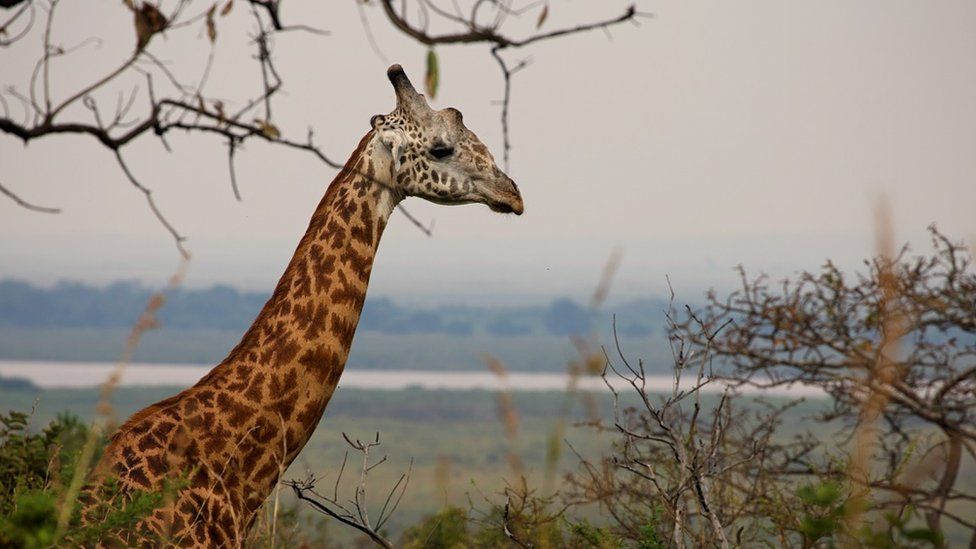
Giraffe
image captionThe economic status quo is continuing the drive the destruction of nature, the report concludes

Rich countries “throwing money” at schemes designed to enhance biodiversity is ineffective, a report by charity Third World Network says.

The report calls for “a profound re-organisation of the global post-pandemic economy to prevent further harm to the planet”.

It recommends nothing less than a “change in our entire economic model”.

Cancellation of debt owed by the poorest, most biodiverse countries would be the place to start, it adds.

Developed nations in the global north should pay for their “vast ecological debts”, said lead author Dr Patrick Bigger from Lancaster University.

“There need to be no strings attached payments to those countries,” said Dr Bigger. “Otherwise we just continue to dig this hole and try to fill the hole with money.”https://buy.tinypass.com/checkout/template/cacheableShow?aid=tYOkq7qlAI&templateId=OTBYI8Q89QWC&templateVariantId=OTV0YFYSXVQWV&offerId=fakeOfferId&experienceId=EXAWX60BX4NU&iframeId=offer_0e763acc7b457c03340a-0&displayMode=inline&widget=template

This study of the economics of biodiversity loss sets out how the current model by which money flows from rich, developed nations into schemes to enhance and protect nature in poorer nations can exacerbate the problem.

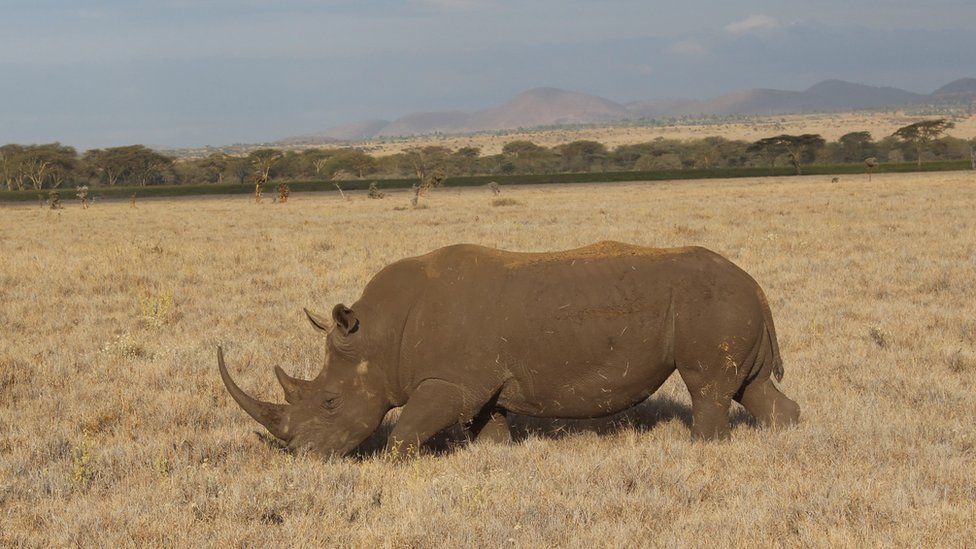
Rhino (c) Patrick Bigger
image captionConservation efforts in Kenya, and around the world, have been hindered by debt and austerity, the researchers say

Investment in activities like large-scale agriculture and resource extraction, it points out, continue to drive the destruction of natural habitats.

The gap, the researchers say, “between those who live with the environmental consequences of [resource] extraction and those who benefit from financing these developments”, is widening.

“In 2019, 50 of the world’s largest banks underwrote more than $2.6 trillion into industries known to be the drivers of biodiversity loss, an amount equivalent to Canada’s gross domestic product,” the report states.

Making things worse?

There are a number of international schemes designed to protect nature that this report deems “ineffective and underfunded”.

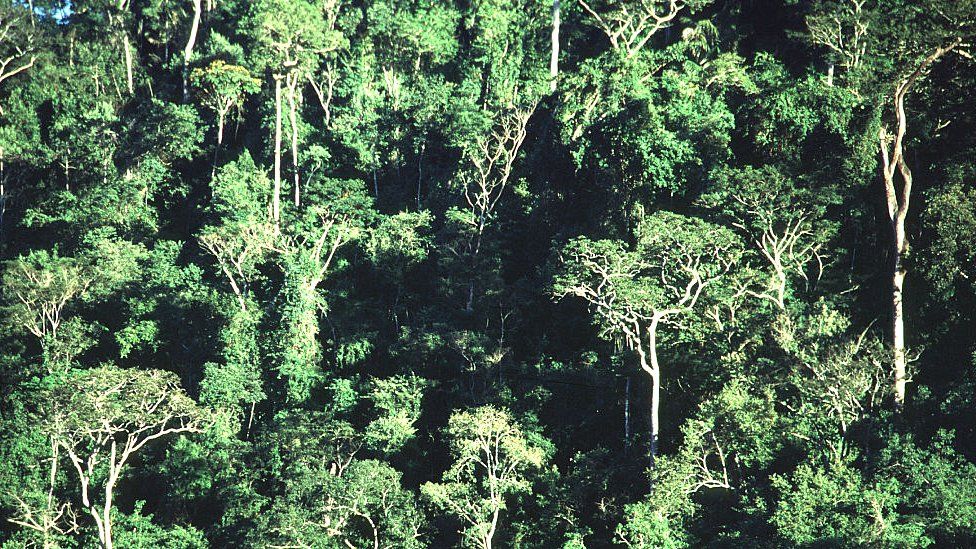
Brazil's Atlantic Forest
image captionBrazil’s Atlantic Forest: Second in biodiversity only to the Amazon

It points specifically to a UN programme that was designed to pay communities that live in valuable, biodiverse forests for “actions that prevent forest loss or degradation”. Essentially, it pays those communities in credits for activities that protect the forest.

That scheme paid out about 160 million US dollars in 2019. “While that may sound like a large number, it is far less than the monthly increase of Jeff Bezos’ fortune since the beginning of the Covid-19 pandemic,” said Dr Bigger.

In some cases, these market-driven schemes can do more harm than good.

One study of a scheme in Costa Rica, which was designed to incentivise tree-planting, revealed that it had subsidised commercial forestry, resulting in more “plantation forests” of a single non-native tree species used in the production of wooden shipping pallets.

“We need a broader rethink about how the rules of the economy are driving the sixth extinction,” said Dr Jessica Dempsey from the University of British Columbia, Canada, a researcher on the report.

“We need to take a hard look at things like tax and intellectual property policy, and even entire ideas that guide how the global economy works – like what it means for governments to be ‘financially responsible’ when austerity has such a poor track record of delivering good environmental outcomes.”

The Next Generation of Hunters Could Look Different

Exposing the Big Game's avatarCommittee to Abolish Sport Hunting Blog

May 10, 2021Laura Oleniacz

A female hunter.
A survey of college students’ interest in hunting found a group of potential hunters that included more women and people of diverse races and ethnicities than current hunters. Credit: Vidar Nordli-Mathisen on Unsplash.

FOR IMMEDIATE RELEASE

Victoria Vayervrvayer@ncsu.eduLincoln Larsonlrlarson@ncsu.eduRichard von Furstenbergrjvonfur@ncsu.eduLaura Oleniacz, NCState News Servicesljolenia@ncsu.edu

A new survey led by researchers from North Carolina State University found that the future of hunting in the United States might look different than it has in the past.

InThe Journal of Wildlife Management,researchersreportedfindings from a nationwide survey of college students’ interest and participation in hunting. They found current, active hunters were more likely to be white, male and from rural areas, and to have family members who hunted. But they also found a group of potential hunters – with no hunting experience but an interest…

View original post 647 more words

Conservationists concerned about illegal hunting and exploitation of porcupines in Indonesia

Exposing the Big Game's avatarCommittee to Abolish Sport Hunting Blog

https://www.eurekalert.org/pub_releases/2021-05/pp-cca051021.php

PENSOFT PUBLISHERS

Research NewsSHAREPRINTE-MAIL

IMAGE
IMAGE:PORCUPINES ARE BEING ILLEGALLY HUNTED AND EXPLOITED THROUGHOUT THEIR RANGE IN INDONESIA FOR LOCAL SUBSISTENCE AND COMMERCIAL TRADE. THEY ARE REPORTEDLY IN DECLINE, YET THERE SEEMS TO BE LITTLE CONTROL…viewmoreCREDIT: JAMES EATON

Porcupines are frequently traded across Asia, and Indonesia, home to five species, is no exception. They are targeted for a number of reasons: their meat as an alternative source of protein, their bezoars consumed as traditional medicine, and their quills used as talismans and for decorative purposes.

A new study examining seizure data of porcupines, their parts and derivatives in Indonesia found a total of 39 incidents from January 2013 to June 2020 involving an estimated 452 porcupines. The research waspublishedin the open-access, peer-reviewed journalNature Conservation.

There are no harvest quotas for any porcupine species in Indonesia, which makes all hunting and trade…

View original post 341 more words

ROMANIA BANS TROPHY HUNTING OF BROWN BEARS, WOLVES, LYNX AND WILD CATS

Image

Exposing the Big Game's avatarCommittee to Abolish Sport Hunting Blog

Romania has banned all trophy hunting of brown bears, wolves, lynx and wild cats in a surprise decision that gives Europe’s largest population of large carnivores a reprieve from its most severe and immediate threat.

Gray Wolf & Eurasian Brown Bear Clash | Wolf (Canis lupus) &… | Flickr

“Hunting for money was already illegal, but it was given a green light anyway,” environment minster,

Cristiana Pasca-Palmer, told the Guardian. ‘The damages [clause in the habitats directive] acted as a cover for trophy hunting.”

Gabriel Paun, an activist and conservationist behind a petition that collected 11,000 signatures in the weeks before the hunting ban, sees the government’s decision as a step towards a safer future

for Europe’s wild spaces: “The Carpathian mountains are home to more biodiversity than anywhere else in Europe,

but for too long they have been ruthlessly exploited…

View original post 16 more words

Gavin Newsom declares drought emergency for most of California, announces relief plans

https://www.sacbee.com/news/california/water-and-drought/article251298968.html

BY DALE KASLERMAY 10, 2021 01:46 PM, UPDATED MAY 10, 2021 06:35 PM

Play VideoDuration 5:13Gov. Gavin Newsom announces proposal of $5.1 billion drought planCalifornia Gov. Gavin Newsom announces a proposal of a $5.1 billion investment for drought preparedness, infrastructure and response to ensure a more climate resilient system, in Merced County, Calif, on Monday, May 10, 2021. BY ANDREW KUHN

Gov. Gavin Newsom expanded his drought emergency declaration to 39 more counties Monday, underscoring the rapid deterioration of California’s water supply in recent weeks.

The governor broadened his earlier drought order, which was limited to two counties on the Russian River, to cover most of parched California, which is plunging into its second major drought in less than a decade.

The new order covers the Sacramento and San Joaquin river watersheds, the Tulare Lake basin region and the Klamath region in far Northern California. About 30% of the state’s population is now covered by the declarations, including the greater Sacramento area and Fresno, Merced and Stanislaus counties in the San Joaquin Valley.TOP ARTICLEShttps://imasdk.googleapis.com/js/core/bridge3.457.0_en.html#goog_297238308https://imasdk.googleapis.com/js/core/bridge3.457.0_en.html#goog_1646510280https://imasdk.googleapis.com/js/core/bridge3.457.0_en.html#goog_1021849365javascript:falseSKIP ADSacramento police officer accused of filing false report appears in court via Zoom

Newsom didn’t issue any mandatory drought conservation measures, as his predecessor Jerry Brown did during the last drought.

But such mandatory orders, which could force urban Californians to cut back on outdoor usage, “are on the table” if the state has another dry winter, said Natural Resources Secretary Wade Crowfoot.

Get unlimited digital access

Subscribe now for only $1CLAIM OFFERhttps://31a7dc8a3438f8d42d9f3d2765763198.safeframe.googlesyndication.com/safeframe/1-0-38/html/container.html

Newsom issued the declaration shortly before arriving at San Luis Reservoir on the west side of Merced County, where he announced a proposal for a plethora of short- and long-term drought-assistance measures totaling $5.1 billion.

If approved by the Legislature, his “drought and water resilience package” would be part of a $100 billion economic stimulus plan he announced earlier in the day in Oakland.

Some Newsom critics say he has been reluctant to declare a statewide drought for fear of angering voters with a recall election coming this fall. But hydrology is forcing the issue.

Since he issued a regional drought emergency last month for Sonoma and Mendocino counties, warm spring temperatures have melted and evaporated most of the Sierra Nevada snowpack, which was well below average to begin with. Relatively little snowmelt — normally a big piece of the state’s summer and fall supply — reached California’s reservoirs.

The Sierra is producing “far less inflow into the reservoirs than any modeling would have predicted,” Crowfoot told The Sacramento Bee. “Much of the snowpack has melted into the ground.” Many of the major reservoirs, such as Folsom Lake and Lake Oroville, are just half as full as they normally are this time of year.

Today’s top headlines

Sign up for the Daily Afternoon Bulletin and get a quick summary of the day’s news.SIGN UP

This site is protected by reCAPTCHA and the Google Privacy Policy and Terms of Service apply.https://31a7dc8a3438f8d42d9f3d2765763198.safeframe.googlesyndication.com/safeframe/1-0-38/html/container.html

Crowfoot said the state has lost 500,000 acre-feet of water in the past few weeks, enough to supply as many as 1 million homes for a year.https://datawrapper.dwcdn.net/9rGYt/3/

While Newsom stopped short of declaring a statewide emergency, he acknowledged that the pain from the drought is spreading throughout much of the state at a rapid clip.

“We looked at the issue of hydrology, we looked at the issue of snowmelt,” Newsom said as he stood in front of San Luis Reservoir, where much of the shoreline was exposed because of low water levels. He bemoaned “this climate-induced drought, which obviously is extreme and self evident.”

Newsom said he doesn’t think California needs orders requiring mandatory cutbacks in water consumption, saying Californians have already reduced their usage by 16% since the last drought. “We have changed our habits,” Newsom said.https://31a7dc8a3438f8d42d9f3d2765763198.safeframe.googlesyndication.com/safeframe/1-0-38/html/container.html

Still, he urged Californians to take voluntary steps, like keeping showers to five minutes, fixing leaks and switching to drought-tolerant landscaping.

Crowfoot said the emergency declaration could lead to orders from the state water board that would curtail farmers and others from pulling water from rivers that feed into the Sacramento-San Joaquin Delta, the hub of the California water delivery network. That will leave more water flowing through the system, which is necessary to flush salinity out of the Delta and into the ocean.

The emergency order could also speed up the installation of temporary rock barriers in the Delta, like the state used in the last drought, to prevent salt from getting into the estuary.

The order in the the Tulare basin would enhance the state’s ability to truck emergency supplies to communities that ran out of drinking water in the last drought and could become vulnerable again, he said.

Newsom’s $5.1 billion water resiliency proposal represents a huge increase on the $745 million he proposed spending in January. Crowfoot said Newsom is now proposing spending hundreds of millions of dollars to help at-risk rural communities improve the reliability of their water supplies, and funding to enhance environmental monitoring on California’s rivers to safeguard endangered steelhead and salmon during the drought.https://31a7dc8a3438f8d42d9f3d2765763198.safeframe.googlesyndication.com/safeframe/1-0-38/html/container.html

In addition, Newsom is proposing spending for long-term projects, including $500 million to help communities that will have to permanently retire farmland because of the state’s groundwater-management law; and $200 million to help repair major San Joaquin Valley canals that have buckled because of subsidence — the phenomenon that occurs when so much groundwater is pumped that the valley floor sinks. That includes the California Aqueduct, the Delta-Mendota Canal and the Friant-Kern Canal.

Elected officials who accompanied Newsom to the reservoir applauded his plans for improving the state’s water infrastructure. “We can stop the boom-and-bust cycle of drought and no water, and a wet year,” said state Sen. Anna Caballero, D-Salinas, whose district includes parts of Merced County.