Russia warns U.S. to stay away for its “own good” as Ukraine standoff intensifies


https://www.cbsnews.com/news/russia-ukraine-us-blinken-warning-ships-black-sea/

BY ALEXANDRA ODYNOVA

APRIL 13, 2021 / 10:26 AM / CBS NEWShttps://www.cbsnews.com/embed/video/?v=9363bdaeef1b07118b8bbdbc3a4efbb4#vVZtb9w2DP4rhj8O0Vnyuw8YhnTde1d0bfNhi4eDXug7LbJlWHYuQZH%2FPsr2XdJsQD%2BsHYIkskSR1EPyIT%2BEfBptb%2Fh9uB2HCS7CW63AhtsPoR6hdeH2%2BkM43vcQbsNbq8KLUCtcVrxQtORARClyktIyI7yRQJqmSapUZbksY5Rt%2B7u30Pzkb%2Fxq4pvff2j%2B2Ak9fhe3v0Ozy3%2F9uZc6vvz%2B%2Frf%2BCqWdmfYoOd0MXHead4R3iozTcKPdgfQDOPSsGx1R2snJOTJop7s9GaFz2naOHPV4IAOeaI7aRj0a7%2FW3tpMwdC7gwk5j8HY%2B74JxsLZ3KKfgBqVw0UzGnC5dnXwI0Ifg%2FeJD8OhDsPoQLD4EJx8C78NqA1VK3tlOS27ef169o27Bjbztwy3LWUmLOM9zSim%2BZhr4iDfCbVbmj5%2BvuACD9mm1TXNUYJbvDp%2BMEW35HpwPufOROoxj77Z1VEdSuA6OLtngQqO9UcuNtG0dHSZRR7qOhjqKaczqiKZ1xGgdNZRBIZuYQM4FSblIicirnLAqVhVlIqvyoo7Gw9SKjmtTR3lK75IcbwIDGZdMlJWsuKwa0bAKaFFylQlGM754Q5rJ40E%2BR46QsxskL6ssrsjqzOavfo8YHf4VDPYFwWBxSe%2BKGK8mZZKJKi1ykRYFb7KCQqIylhUqiYVKqv8bjYeLENXdajheDeYjWFxvtIQNb81%2Bo20d8R6huI3x1%2FNIHX2q7utoVVxH4Zl8nujvB6s2yDzzyWYNwgL8%2BoGmEPqDcc%2FxZ2WZlFmeZiyniNj8rGI3C7bcjTBs2mQqT1bj%2F91sY4eWj2iW9x7EuVDr6I60Peyv3r5CiekZ2Mfj8WNfVpA%2FRwLM%2BGv3U9tb72S4bbhx2A%2BwO2g59wNfDyVPCplngkihUpIKKYigKieNoMBlXFSsKB%2Bp3PvqK0nDwAd5wB5zvez9ifnEB3Ttvdf%2BmrczU7949%2Fqp9Iv75eB6OfkTkxB67azCPYY2gDtPdCHzBmHforrlYOr90935CdyYSylx54Wx8uZMe%2B7KwfBuEk4OWoA6i7seobHDSe4Ad5cvoeGT8bGiF%2FgTzrsvHneT6iLNLrLKc%2FPA5Q2C7CHDGDlpB5jXmGAJpRn1vCzT9b1rJH2vyHHrK28SPzq3c%2BNu71HxwV52eL%2Fj%2Fr2v6%2BjyLCO9%2BVvJ2HnHjc90PyBw7XT3ZrA9DOP9L4BxCOO0AMWzPGGFYllapRWLk4QnefiAwWlh5HNDwNeMsL%2F3a9w7WLWkK3RqVrvGuQGOSQeKSN9vwI8J68yA9hFNH5nHjoxLZAlcnPP37oClJK0xIJciOF9DFn2mu46%2B0W5n7H4Paqe7r6knp6ega%2Fddx4XxAV0mGj4gVxu4nND%2FwQ8j1yFtMoX9JcWppWIkrRpFylhQkpUsLXCk4aIofJJ%2BdPWUjdzAHdbZwAOr7jt7y59IzrNOwasEUhUTmsVYJClWCvY0TkAhdZc0jlNM4fOVN5N4iQ%2FzMUEeITQlLAlYuo3zbZY%2Fip1GiKVagyP3M820cZtgtAH2o%2FuAH%2FEPkkqgcZCoQ3vsgr21qg4DjpIzRYCX7JRtmkB3Mws0GtwTI6eo%2BcNxt%2B767DwHZwEwgYInLMc3yZwS5DpKRAExETwroVFQSjUD%2BHjvhN7JEY0z2DS0Vhsvp7AHyJN5Be4GaWfmo5dw65EJPWHsTwK%2BJnZ%2BPvWVj%2F9%2F1J6wrsOjHYzy6vzmu8Uuii%2Fby%2B6qAfnBV7m%2BheAIIlxpbo5eTouswZGWFFmpCGP4qkoxDCZlZQMlp1TQ04WVuU4GjG41Vl96xvOdnQYJCxMGayWLASPwxvDR8%2F9scaX0nfdv9%2Fh4%2F7kaWCW8WeBGT61PdOxRjTZPjv0FFIHOQ%2BY7mC%2BN8wz6vHP%2Fo5ksXW0dB9YwkckRYXR3Ax3xKee7hzvo3u9iyREk4blxtKA0f2PRA4R8xdgAV2vcvqhtb2DF6b8pmtnok65%2B3p778PA3

Moscow — Russia warned the United States on Tuesday against sending warships to the Black Sea, urging American forces to stay away from the annexed Crimean peninsula “for their own good” as the situation along Ukraine’s border caused increasing concern in the West. The U.S. Secretary of State, meeting with Ukrainian and NATO officials in Brussels, made it clear that the Biden administration, along with its allies in Europe, has Ukraine’s back and considers Russia’s ongoing military buildup in the region “very provocative.”

The Turkish Foreign Ministry said on Friday that Washington had informed Ankara that two U.S. warships would pass through Turkish waters this week to be deployed in the Black Sea. The deployment would come amid a significant escalation of the conflict in eastern Ukraine between Russian-backed separatists and Ukraine’s forces, which have U.S. and European support.

Hostilities first flared in 2014 when Russia unilaterally annexed Crimea — a peninsula that sticks out into the Black Sea and is home to a Russian navy base — away from Ukraine, drawing condemnation from the Western world and a series of sanctions. 
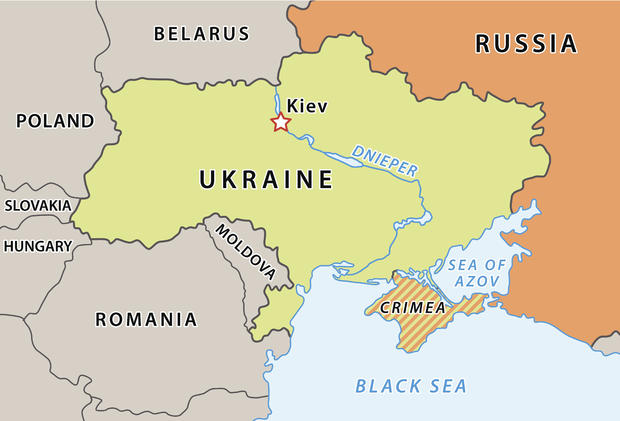
Ukraine map after Crimean crisis 2014
GETTY/ISTOCKPHOTO

Russian Deputy Foreign Ministry Sergei Ryabkov was cited by Russian news agencies on Tuesday as calling the deployment of U.S. warships in the Black Sea a provocation designed to test Russia’s nerves.https://www.cbsnews.com/newsletters/widget/e879?v=9363bdaeef1b07118b8bbdbc3a4efbb4&view=compact#tVNNb9swDP0rgs5RYjt2%2FHHr0AHbZSjQ7bQMBS3RrRBFMiQ5XlH0v49KnLbYddgliB8f%2BchH6oW7MWpnA%2B9eOEqnkHccm7rlK37SONOXdMcRZCRgdEEnMoE3IWBkn5x65q8rHj3Ig7aPqYgOny30BhXvop9wxcFHLQ3eTPHJ%2Ba8E%2F%2BTZUKm8xVLA0OaibAclmqLPRNXkZd30O%2Bjrmv%2F6K%2FUbHDElg8HfYJUHRurWneADM5XnNbRbLFUhsqooRVmqUrQgQaBS27bJiqKkKd9S7qb%2BFmIau8iKXGSlyLcsL7ti11W7d9p3HU0i%2BSkEDWwGbwOb1mHNomMhwjODmX4G55mOge25my17dE7tOQNiHjxoi4lplRsGpm1EG%2FSgMXwQeR7x7HgKxocFpbh0xqBM3l8M3GIN23xHM8ldJsoqz0RfYyF6qBocFDZSnQ18z7u6d21EWxYnf3TaJJ7Ck5ZXeYXhEN1Isjrc4ik5k5YPj1eCxTk86IhHguki8ItGn2rPzhuVyiXw%2FqJL9At8QZcKHsNIR6dPyGbsKUZ6Wp63t8vqaiizRtRVo0Se01StymmZWd4M2ECW9dk14TLUm8AU0C8CYEl6xY0%2B6si78s3hezd5efa4DyzNQaTe007uDERa3vHcAwXPM6aOH97tSJ%2BL5MJIjSAYPR3T6Y%2FeDdp8CKcEoqBNJlJUpcciU29agvnhDcFPMY6h22%2F2m3me10vimh7dfpP%2B7TeXixPL4sQURG%2B0PaAV6Qjp1YnwpMeE0iMUAWG%2FWdb13wUWM%2F6l0OvrHw%3D%3D

“There is absolutely nothing for American ships to be doing near our shores,” Ryabkov said, warning there was a very high risk of unspecified incidents if U.S. military hardware were to be positioned in the Black Sea.

“We warn the United States that it will be better for them to stay far away from Crimea and our Black Sea coast,” Ryabkov was quoted as saying. “It will be for their own good.”

Pentagon spokesman John Kirby declined during a regular press briefing on Friday to confirm the Turkish government’s statement that U.S. warships were being sent to the Black Sea. He noted that the U.S. “routinely” operates in the Black Sea, but said he wouldn’t “speak to operations.”

UKRAINE-RUSSIA-CONFLICT
Ukrainian servicemen hold a position on the frontline with Russia backed separatists near small city of Marinka, Donetsk region on April 12, 2021.STR/AFP/GETTY

The current escalation has added strain to already tense U.S.-Russian relations. Secretary of State Antony Blinken warned Russia against aggressive actions in an interview aired over the weekend, saying any aggression in Ukraine would have consequences.

Ukraine in Turmoil 

Ryabkov responded on Tuesday, accusing the Russian “adversary” of trying to undermine Russia’s position on the international stage. He reiterated Russia’s readiness to defend the interests of its citizens, and ethnic Russian speakers in eastern Ukraine.

Kremlin spokesman Dmitry Peskov said Russia was preparing itself in the event any new sanctions should be imposed on Moscow by the U.S. or its global partners.

Shmel-class gunboat of the Russian Navy's Caspian Flotilla sails along the Don River in Rostov-on-Don
A Shmel-class gunboat of the Russian Navy’s Caspian Flotilla sails past a cruise ship on the Don River during the inter-fleet move from the Caspian Sea to the Black Sea, in Rostov-on-Don, Russia, April 13, 2021.SERGEY PIVOVAROV/REUTERS

Meanwhile, Russia has continued to move forces into both Crimea and the region along its border with Ukraine. The Defense Ministry reported on Tuesday that 15 warships and vessels of the Caspian Flotilla had been sent to the Black Sea as part of previously announced military exercises.

Ukraine said earlier this week that Russia had already massed more than 40,000 troops along its border, and at least 40,000 more in Crimea. Russia says the troop buildup is part of exercises, and has stressed that its forces will go where they want, when they want on Russian territory.

“Very provocative action”

Top U.S. officials are in Europe this week, including Secretary of Defense Lloyd Austin and Blinken. Austin announced during a stop in Germany on Tuesday that the U.S. was going to deploy an additional 500 troops to that country. 

When asked if the move was meant as a message to Russia, he said it was “a sign to NATO” of the U.S. commitment to the transatlantic alliance, and of the firm commitment to Germany. Under President Donald Trump, Washington said it would withdraw thousands of the American forces who’ve been stationed in Germany for decades. That decision was suspended by the Biden administration, and now the force is set to grow.

Blinken, meanwhile, was in Brussels, meeting NATO partners, and he met separately with his Ukrainian counterpart to discuss the standoff with Russia.

“The United States stands firmly behind the sovereignty and territorial integrity of Ukraine, and I’m her to reaffirm that with the foreign minister today,” Blinken said. “That’s particularly important in a time when we’re seeing, unfortunately, Russia take very provocative action when it comes to Ukraine. We’re now seeing the largest concentration of Russian forces on Ukraine’s border since 2014. That is a big concern not only to Ukraine, but to the United States and indeed to many of our allies and partners.”   

BELGIUM-UKRAINE-US-DIPLOMACY
US Secretary of State Antony Blinken (R) meets with Ukrainian Foreign Minister Dmytro Kuleba (L) in Brussels on April 13, 2021.JOHANNA GERON/POOL/AFP/GETTY

Sitting across from him, Ukraine’s Foreign Minister Dmytro Kuleba said the Russian buildup was “taking place not only along the border of Ukraine, but along the border of the democratic world. For thousands of kilometers to the north and to the east of our border with Russia, there is no democracy. So, this is the struggle that is taking place between democracies and authoritarianism, and in this struggle the support of the United States is absolutely crucial, and deeply appreciated.”

Kuleba thanked NATO, also, and said that warnings already conveyed to Moscow through diplomatic channels, “will be supported by actions that make it very clear for Russia that the price of further aggression against Ukraine will be too heavy for it to bear.”

He said the Ukrainian and U.S. delegations in Brussels, and more broadly the NATO allies at large, would continue discussing ways to ensure stability along his country’s tense border with Russia.https://www.cbsnews.com/embed/video/?v=9363bdaeef1b07118b8bbdbc3a4efbb4#1VZtb%2BQ0EP4rUST4gOqNnfesdEItV8SJUpUrFYgGRU7s7JomcRQ7u1tO%2Fe%2FMJNlt6SGdDsQHumri2DOe92fmg8tHq%2FuGP7rrmjdGnrk7JaR21x9cZWVr3PX9B9c%2B9tJduzst3DNXCVhmWRBFVcpIFgUZCYOyItyvfZIGZSSSjDKeVUDb9of3sn43cdxZe3F7fql%2F%2F7Gll9H3F6IvTPvd1T7845ftr8UjUJtm3ADlSAxpVaMsHx4JV4Jw0nJr5UB0Tcw47NSON0R1ZHwYuOokcFplG9TwbnW7co68DvA63Jl5HV07R15Hdc7dw7BarYBVyAdghEU9Ns0%2FumfRoeKd7lTFm5%2F%2BxSVWtdJY3vbumkVJTH0W%2BBT%2BQM9x4FbpDg7iF59XvJQNCKP%2BOqRwQTN%2Fd2AMhKrlG2kwlgZDsLW2N%2Bvcy72qNJ3cm2AFCwXyrKpWlW5zbzuWuadyb8g9n7Is95gP%2Fyz3giSlrBIpBDyEgPt1CCufEj%2BswySIWBVWde7Z7diWHVdN7sUhPQQxzT3JeSloFscxzbKEiaSOZQQmBWFWRlVVogxGiTzFE0O%2BV02jeGsIyzKfRpQs161%2B7zdg5fZvzWH%2FoTnMT%2Bkh8cEeuEcKGmUxq0qa8ZqnfhSXgQj9kkWcV59vz9OZ2w9yp%2BT%2Bbmj%2BYpjpG1XJFW%2BbzUrp3OM9GLMDG6Yizb1PFVXuLRfnnnuq7Bf37%2Ff71eK82WGzAHBQrRpptTFg%2BtdGj0Ml36ieC2LsIHmrus2XPbfbN1%2F437ZSKI7v%2FgBPdDO8mI8Pio84imJGwyBKEzadMFpcXhdLzp8rUfz87urq3fkPt8X7y5ur828ui9lJQWF5CVqs2mBMj%2Br7%2F1%2F9az1A%2BYP%2BvMewTuWbewfS9nJz9%2F4KKMZX4f%2FIvCXsn4uQU%2FSVedf22gDVCeoB%2BVU1QT3WU0CjlJdRSpIoFYQx6ZNMMJ9QytJappzSkj6jtNzJDtxIUDmsSCUHPlRb6CP3xzNnOvsNspsPsrM%2FobRr3iI2fnNx61wuVNevbrh4nInuP6b6DUpF9spoAecMdJHcICS6DBWTmxbEzAdjD5lvzMlU3jTnVQU7F42uHk4Aae6MHG7H0lSDKqU4kZted0YPR7qtPJy%2FlTUfG4wfPYOfO%2B1ePO8G2VkYnUUZovjAqwdQGl0LcTOVHuS0huwNKJR%2FGkO%2FCGc%2FXC%2FRxRYSw9ZXKBI%2BOlMYW2zQW4uPYYf3BUd7r3Pv%2FERTofhdxdhpx9hXdz89YYPqMeXM53WCI9enwWbFRVkcWtS9HQ83g%2B7lYB%2B%2Fl5ASrh8mUvAoDlgiGEBumDE%2FCHgQu0%2BQH620fOpS4DgrN4%2B4hr2tFnO1yE5MFiypN1UB0Ts5wNxCet2PDR%2FQ7fOYAupD9DATngcDWAI0wOJUQ4ctNIVKN42s5kI8sS0krwUAkChTNHqzkaJQ3RuKuP0y0spcdljwoLQdRsy5AbzZyPMRLBlwCLp3aR0J6B8h4XXGSJjVgqR%2BSUmUsjBJy5iXSYIV8xfWYznwRh54JwbuaPHY6R1%2FQTnNWAnPAhkKKNnID0kYCuhqvOJEChFkKfX9UOCQsbDcjOVbcDdGB%2BYMQkPCAoeFaz9eR%2FEz2XGcGUZjFHf2fOiMM67MyrHagYyB0WYPD0A3R1nj5K7ed85Ga5G7DgfKGYKQshO6rmHesbIzqlbSvBByDB0e2mLZxZI4RWh2YCATHrAYbKpiSsIIOm2ZAFKVPEplLWRaicmBz3xH7x0VgXnLjkOrVYN0AtpjdRQvpHkATJzA8q3coWdcRK%2FNkQBLpcC5GOEG3t8pRNN7d6%2BHRuB1uHk7ywXyeXveXW4AUEJoUTvp7GXpLhg8RS%2BmSVSH9FP4a1%2FA6FHACCi2CMApFOdA1SoAgfDk4dupCaKPS%2BMsgFIOEJObhltsTZMOCxwUqHHx7A78XEQuFKiI5I0aW0z9ftDYcJ%2BPkQFIZIdOhFPhPr2YkF%2BPOR%2F1OVzB1DZl3LGJkdGQslHdA0xWmITYfMxW9bgLRUigF0x9burnNxo0gCAsTpEtgvscyv9UOApYHPXvLpog6JOq%2FvN54OnpTw%3D%3D

While no NATO deployments have been confirmed, Russia’s Defense Ministry claimed the alliance was planning to position 40,000 more troops and 15,000 pieces of military equipment close to Russian territory. He didn’t elaborate, but said that “in response to the military activity of the alliance that threatens Russia, we have taken appropriate measures.” 

NATO Secretary-General Jens Stoltenberg said earlier on Tuesday that he was “seriously concerned” by Russia’s deployment of additional forces to the Ukrainian border.

“Russia is now trying to reestablish some kind of sphere of influence where they try to decide what neighbors can do,” Stoltenberg said. 

CBSNews.com’s Tucker Reals contributed to this report.
Rainforests Could Turn Into Savannas as Climate Warms, New Study Warns

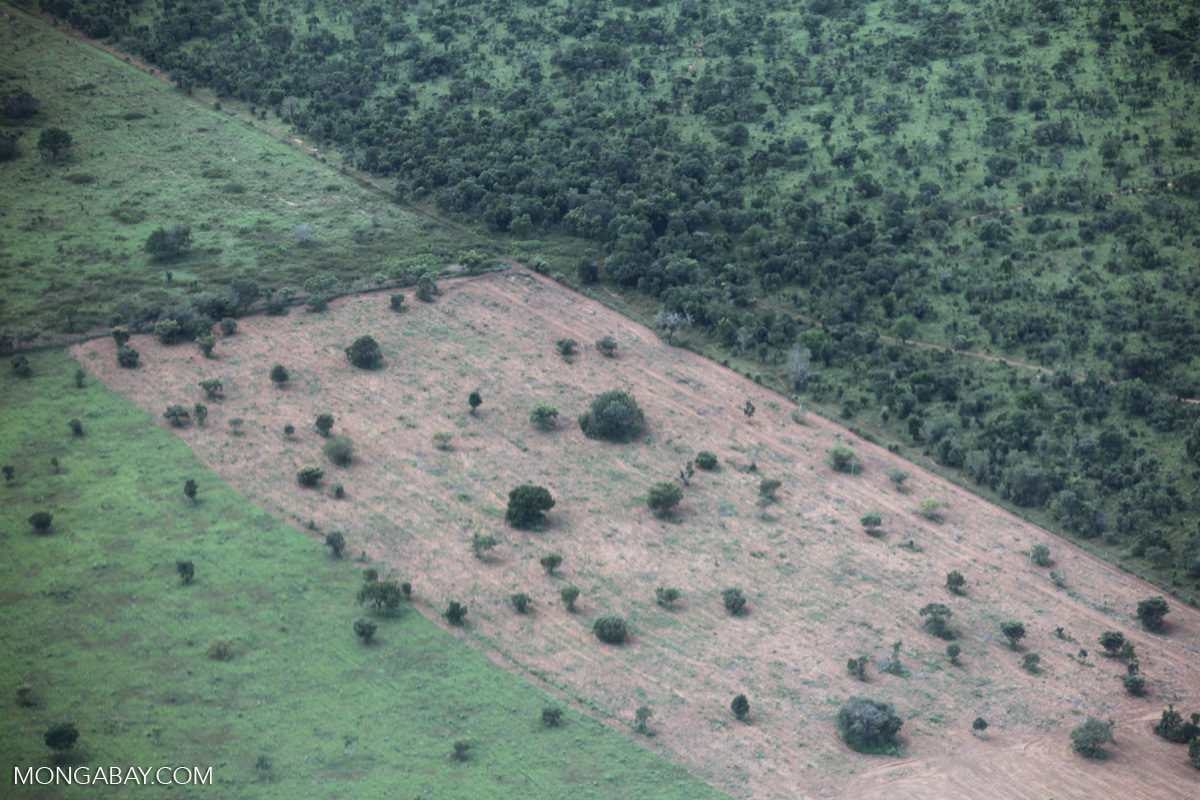
Ranchland in the Cerrado tropical savanna of Brazil.

BYMalavika Vyawahare, MongabayPUBLISHEDApril 12, 2021SHAREShare via FacebookShare via TwitterShare via Email

A white lower-case t on a black background

READING LISTPOLITICS & ELECTIONSManchin’s Objection to Infrastructure Bill May Be Motivated by Corporate DonorsECONOMY & LABORBiden’s Domestic Spending Plan Is Welcome, But More Military Spending Isn’tENVIRONMENT & HEALTHWhy I Cut Ties With Insurance Giant Liberty MutualPRISONS & POLICINGResidents of Minneapolis Suburb Rise Up Against Police Killing of Daunte WrightECONOMY & LABORPentagon and Tax Cheats Already Cost Taxpayers Far More Than Biden’s Job PlanECONOMY & LABORNew Zealand Law Granting Paid Leave for Miscarriage Sparks Organizing in US

Covering Climate Now Logo

PART OF THE SERIES

Covering Climate Now

This story originally appeared in Mongabay and is republished here as part of Covering Climate Now, a global journalism collaboration strengthening coverage of the climate story.

As the planet warms, it isn’t just humans who are feeling the heat — trees are too. Rising temperatures are disrupting a primary engine of life on Earth: photosynthesis.

A recent study from Brazil adds to fears that climate change is altering the face of the planet. Literally. Tropical forests could look more and more like deciduous forests or savannas in the future, according to the research based in Brazil’s Cerrado biome. This ecoregion abjacent to the Amazon Rainforest is where savanna, grasslands and forests mingle.

The paper, published in Environmental Research Letters in March, focused on four trees species found in both the Amazonian tropical forests and savanna land: Qualea parviflora, known as pau–terra in Portuguese; Pseudobombax longiflorum, or the Brazilian shaving-brush tree; Hymenaea stigonocarpa (jatobá do Cerrado); and Vatairea macrocarpa, also known as angelim.

Never miss another story

Get the news you want, delivered to your inbox every day.

  • Email

“The article extends present knowledge of heat tolerance to tropical species in particularly hot regions, testing species not tested before,” said Gotthard Heinrich Krause, professor of plant physiology at Heinrich Heine University Düsseldorf, Germany.

Krause, who was not involved with the study, noted that the paper underlines how “increased number of extreme heatwaves, often combined with drought stress,” compound the heat stress faced by trees.

The maximum temperatures in the Cerrado region and neighboring forests can reach 45° Celsius (113° Fahrenheit). The area has warmed perceptibly in recent decades, and heat waves that regularly sweep the region are becoming hotter and dryer.

How much a leaf warms depends on how much solar radiation it absorbs and what it loses through conduction and as long-wave radiation. Leaves facing the harsh tropical sun heat up faster than the ambient air around them.

Igor Araújo installing thermal boxes on trees to measure the temperature of leaves.

“Prolonged exposure to heat can induce damage to leaf tissue, compromising photosynthetic efficiency and, consequently, trees’ fitness,” said Igor Araújo, first author of the new paper and an ecologist at the Mato Grosso State University, Brazil.

The disproportionate warming in the Cerrado belt is driven not just by global temperature rise, but also by local deforestation and fragmentation of wooded areas. As pastureland and cropland have eaten away into forests, their cooling effect is becoming muted.

Trees cool themselves and areas around them by transpiring water through the stomata dotting their leaf surfaces. This process, along with evaporation, is also why forested areas induce rainfall. “One single adult tree in the Amazon can transpire up to 1000 L [264 gallons] of water per day, functioning as a natural air conditioner of the environment. This process is called biotic pump, which is reduced by deforestation,” Araújo said.

When faced with scorching heat and dry spells, the pores on leaves clamp shut to conserve water. “This will reduce or prevent transpirational cooling of leaves, causing substantial increases of leaf temperature above air temperature,” Krause said.

The study estimated, for the first time, what temperatures leaves can tolerate. To do this, the authors calculated the temperature at which a critical component of the photosystem breaks down and the temperatures that leaves are experiencing. The difference between the two levels is called the thermal safety margin (Tsm).

Krause said he expected that the temperature at which scientists observe permanent damage to leaf tissue to be higher than what the researchers estimate. This would mean a wider safety net, but it still would not be enough to protect most species considered in the research, given the current pace of warming.

Such a hostile environment is dangerous for leaves and trees. The tree is not shedding leaves as part of a seasonal cycle but rather because they are not performing their function of harnessing energy.

The authors found that in some species, the maximum leaf temperatures are already exceeding this threshold. But if average temperatures rise by even 2.5°C (4.5°F), this will be true for most tree species, they estimate. With a 5°C (9°F) rise, all tree species studied will suffer from leaf burn.

It’s not just tree health that declines; other scientists have shown that heat stress also affects carbon dioxide uptake by trees. According to Krause, there is a reduction in the CO2 absorbed by plants even at temperatures lower than those that short-circuit photosynthesis. “Such reduction will contribute to the reduction in carbon sink of the tropical forest,” he said.

At the moment, savanna species adapted to higher temperatures are doing better than the rainforest species. “Our results thus indicate expected shifts in deciduousness in the future and thus a trend towards savanna vegetation replacing forests in the regions in Southern Amazonia characterized by large patches of deforestation,” the authors write.

What is happening at the Amazon-Cerrado boundary may be a precursor for feverish tropical forests across the world. Unlike humans, these forests won’t have air conditioners or sunscreens to protect them.

Citations:

Araújo, I., Marimon, B. S., Scalon, M. C., Fauset, S., Marimon Junior, B. H., Tiwari, R., … Gloor, M. U. (2021). Trees at the Amazonia-Cerrado transition are approaching high temperature thresholds. Environmental Research Letters, 16(3), 034047. doi:10.1088/1748-9326/abe3b9

Tiwari, R., Gloor, E., Cruz, W. J., Schwantes Marimon, B., Marimon‐Junior, B. H., Reis, S. M., . . . Galbraith, D. (2020). Photosynthetic quantum efficiency in south‐eastern Amazonian trees may be already affected by climate change. Plant, Cell & Environment. doi:10.1111/pce.13770

Stop SB314 “The Wolf Extermination” bill

It’s here.
SB314 “The Wolf Extermination” bill will he heard and voted on Tuesday afternoon, 4/13, in the Montana House of Representatives. It will then have a final hearing and vote most likely the following day before dying or going to Governor Gianforte.

SB314 by Rep. Bob Brown mandates the Montana Fish & Wildlife Commission reduce wolves in our state down to the bare minimum, but no less than 15 breeding pairs in order to avoid re-listing. It enables them to do so by the “most liberal” and unethical methods such as hunting over bait, killing latter stage pregnant wolves, night hunting, night vision scopes, multiple wolves on one tag, and of course indiscriminate cruel traps and snares. One can easily anticipate killing contests inclusive of wolves.

Passage of SB314 will mean ~85-90% of wolves in Montana will have a legal and unjust target on their backs. Yet, they are having no difficulty killing wolves in Montana. Every year they break a new record. This 2020 wolf season was no exception. Hitting a new high, over 325 wolves were reported killed by trapping and hunting. This does not account for poaching, SB200 landowner wolf kills, highway mortality, etc. in which an estimated 500 wolves are killed every year in Montana.  Depending on who is talking, Montana’s estimated wolf population is between 800-1200 wolves, or was.

SB314 takes the other trap and kill wolves bills, HB224 Wolf Snaring, HB225 Extended Wolf Season, SB267 Wolf Bounties, passing into law now in our state with Governor Gianforte’s signature and ties them all up in a bow requiring the Wildlife Commission implement these means, methods, and more, to exterminate wolves in Montana….but avoid the Feds.

CONTACT Montana Representatives and respectfully Urge a NO on SB314. Be sure to use your own words.
Look them up and their contact info.

Let us know if you want to email them all.

In response to an email with the data, science, and our objections to SB314 we sent to all Montana Representatives, today, we already heard back from one.
Rep. Gunderson, HD1, Libby, Montana.
Gunderson Steven <steve.gunderson@mtleg.gov>
Tue 4/13/2021 
To: Trap Free Montana Public Lands TFMPL
Thanks for reminding me of the many reasons to vote for Senator Brown’s bill!!

Steve

We have not received a reply in requesting his reasons.

Call the front desk and leave a message for up to 5 Representatives urging a NO on SB314.
1-406-444-4800

Send a message via the legislative web to Montana Representative/s to vote AGAINST SB314.

Note as of 4/1/21, there were 33 message For SB314 and 344 Against SB314.

It certainly doesn’t hurt to Do ALL of the above!

SB314 already passed in Montana Senate 29:20.

This is our last chance to try to stop SB314.Please take effective action!

To listen to the House floor hearing and 4/13 vote on SB314:
They meet at 1:00.

Also today, Tuesday, the 13th, HB367, by Rep Paul Fielder, Senate Fish & Game hearing is this afternoon and we will be testifying against it. They meet at 3pm. HB367 is to amend our Montana constitution making hunting, fishing and trapping a right and the preferred methods to manage wildlife in our state. In 2004, Montana voters overwhelming supported amending the constitution to preserve the opportunity to hunt and fish, not to trap. If this reaches the Senate floor and passes with 34 out of 50 Montana Senators it will go before Montana voters in November 2022.

Do not let up on contacting and urging our Montana Senators to Vote NO on HB367 a significant far reaching Constitutional amendment disastrous to wildlife and that will cost us a small fortune to defeat if it winds up going to the voters.

To see and learn more about 2021 Montana trapping & related bills visit our TFMPl website. 

To Contact Governor Gianforte.  1-406-444-3111

Non-Residents continue to Contact Montana Department of Tourism

To see how legislators voted re trapping and related bills in 2019

Please keep those letters to the editor going! They are educational, powerful, and amplify what is befalling our wildlife in Montana. 

Donate to help with our fight. Thank you to all who have! A monthly donation, no matter how small, helps us!

Take action, now, and help us kill this disturbing unethical extreme kill wolves bill and more!

KC York 
President/Founder
on behalf of the board of directors

Thank you friends of Trap Free Montana Public Lands and to all who have been doing what they can to help!

Executives call on Biden to slash greenhouse gas emissions to curb climate change

Exposing the Big Game's avatarThe Extinction Chronicles

https://www.cnbc.com/2021/04/13/executives-call-on-biden-to-cut-emissions-to-combat-climate-change-.html

PUBLISHED TUE, APR 13 202110:00 AM EDTUPDATED TUE, APR 13 202112:40 PM EDTEmma Newburger@EMMA_NEWBURGERSHAREShare Article via FacebookShare Article via TwitterShare Article via LinkedInShare Article via EmailKEY POINTS

  • More than 300 businesses have called on President Joe Biden to nearly double U.S. targets to reduce planet-warming emissions below 2005 levels by 2030.
  • The push by leaders from companies like Google, Apple, Walmart and Unilever comes ahead of the global leaders’ climate summit the Biden administration is hosting next week.
  • The Obama administration set out to cut emissions by up to 28% below 2005 levels by 2025, but former PresidentDonald Trumphalted federal efforts to meet that target.
U.S. President Joe Biden joins a CEO Summit on Semiconductor and Supply Chain Resilience via video conference from the Roosevelt Room at the White House on April 12, 2021 in Washington, DC.

U.S. President Joe Biden joins a CEO Summit on Semiconductor and Supply Chain Resilience via video conference from the Roosevelt Room at the White House on April 12, 2021 in Washington, DC.Amr Alfiky | Getty Images

More than 300 businesses and…

View original post 234 more words

Australia’s ‘Black Summer’ Fires Have Left a Shocking Effect on Earth’s Atmosphere

Exposing the Big Game's avatarThe Extinction Chronicles

https://www.sciencealert.com/australia-s-bushfires-were-so-intense-they-heated-up-the-atmosphere-for-half-a-year

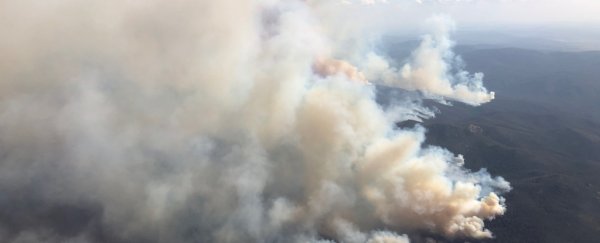
Bushfires south of Canberra on 31 January 2020. (John Moore/Getty Images)ENVIRONMENT

PETER DOCKRILL12 APRIL 2021

The scorching destruction of Australia’sBlack Summer bushfiresbetween 2019 and 2020 provided an ominous glimpse of fire’s reach in our hotter, dryer world, and the impact of the unprecedented inferno is still being measured.https://2604e4807215a5acc4c6e3fc5ca685df.safeframe.googlesyndication.com/safeframe/1-0-38/html/container.html

Just weeks ago, scientists observed that the amount of smoke spewed from the blaze into the atmosphererivaled that of a great volcanic eruption. Now, researchers say the giant smoke cloud was so immense, it measurably heated the stratosphere for months on end.

In anew studyled by first author and climate modeler Pengfei Yu from China’s Jinan University, scientists simulated the plume’s emergence and evolution, showing the worst documented wildfires in Australian history left a lasting impact on the region’s skies.

“Extreme wildfires can inject smoke into the upper troposphere and even into the…

View original post 304 more words

Gianforte signs bills allowing wolf snaring, extended seasons

Exposing the Big Game's avatarCommittee to Abolish Sport Hunting Blog

Tom Kuglin

Gov. Greg Gianforte on Friday signed billsallowing snares to be used for the trapping of wolvesandlengthening Montana’s trapping seasons.

House Bill 224andHouse Bill 225, brought by Rep. Paul Fielder, R-Thompson Falls, are two of multiple high-profile bills dealing with wolves and trapping that have seen significant debate this session. SB 224 adds snares to the list of legal traps for wolves; previously only foothold traps were allowed. HB 225 extends wolf trapping seasons by two weeks earlier and two weeks later. Unless adjusted by the Montana Fish and Wildlife Commission, the season will start the first Monday after Thanksgiving and run until March 15.

Brooke Stroyke, a spokesperson for Gianforte, said the governor signed the bills to support “the continuing efforts to manage this species and to balance the concerns of communities across the…

View original post 491 more words

Another Oahu hunting attack leaves 10-year-old girl’s horse dead

Exposing the Big Game's avatarCommittee to Abolish Sport Hunting Blog

LOCAL NEWS

by:Sam SpanglerPosted:Apr 8, 2021 / 01:02 AM HST/Updated:Apr 8, 2021 / 01:07 AM HSTjavascript:false

HONOLULU (KHON2) — A Nanakuli family is mourning the loss of their horse after they say she was attacked by hunting dogs.It is the second known horse attackon Oahu in just two weeks.

Owners are asking pig hunters to properly train their dogs, just like the owners of the horse involved in the incident on Saturday, March 27.

[Hawaii news on the go–LISTEN toKHON 2GOweekday mornings at 7:30 a.m.]

Patches was a beloved member of the Samson ohana. She had ridden in rodeos, become a grandmother and was pregnant again at 26 years old.

“You can tell where it got stirred up she flipped over reared up, there’s no dig marks, obviously everything is flat there’s flat marks it shows struggle. She jumped the fence here you…

View original post 382 more words

Alaskan glacier has started moving 50 to 100 times faster than normal, scientists say

Exposing the Big Game's avatarThe Extinction Chronicles

https://thehill.com/changing-america/sustainability/climate-change/547803-alaskan-glacier-has-started-moving-50-to-100

A glacier is surging.ByChristian Spencer | April 12, 2021https://imasdk.googleapis.com/js/core/bridge3.451.0_en.html#goog_507472533Volume 20%

Story at a glance:

  • A glacier in Denali is experiencing a surge event.
    • Glaciers move due to the ice on the base becoming wet from heat.
    • Muldrow Glacier has not moved this fast since the 1950s.

Muldrow Glacier, a mountain in Denali — south central Alaska — is moving quickly in what is called a glacial surge event.

The surging glacier is moving at a rate between 50 and 100 times faster than normal, according to Denali National Park,Gizmodoreported.

“They are these things that have fascinated glaciologists for decades,” Jonny Kingslake, an assistant professor of environmental science at Columbia University, said.

Glaciers normally move at a glacial rate of mere millimeters per day, but sometimes some of them experience rare surges, likely tied to the seasons.

The glacier surge was first discovered by Chris Palm…

View original post 238 more words

Possible life signs in the clouds of Venus

Posted by Paul Scott Anderson in SPACE | April 13, 2021

A new analysis of data from the 1978 Pioneer Venus mission, by researchers at Cal Poly Pomona, finds evidence not only for phosphine, but also possible chemical disequilibrium in Venus’ atmosphere, an additional possible sign of biological activity.Sharing is caring!

  • 4

Artist's depiction of 4 small probes approaching the planet Venus.

Artist’s illustration of the Pioneer Venus mission, which sent 4 small probes into Venus’ atmosphere in 1978. A new analysis of the data sent back supports the previous finding of phosphine, as well as other “biologically relevant chemicals” that seem to show a state of disequilibrium – a possible hallmark of life – in the planet’s atmosphere. Image via NASA/ The Planetary Society.https://5d8eee595750ed79a83255b365e62810.safeframe.googlesyndication.com/safeframe/1-0-38/html/container.html

In late 2020, scientists studying the atmosphere of Venus announced the surprising – and controversial – discovery of phosphine, a chemical that, on Earth, is produced primarily by living organisms. Jane Greaves at Cardiff University in Wales and her colleagues asked at the time: could the phosphine be a sign of microorganisms inhabiting Venus’ atmosphere? Maybe, other scientists said, but phosphine itself wouldn’t be proof of life, and subsequent studies questioned whether the phosphine was ever there at all. Then – in March, 2021 – a study from Rakesh Mogul of Cal Poly Pomona supported the original finding of phosphine and went further. It suggested other “biologically relevant chemicals” in Venus’ atmosphere that appear to be in a state of disequilibrium: another hallmark of life.

The new study focused on the re-analysis of data from the old Pioneer Venus mission, which sent four probes into Venus’ atmosphere in 1978, collecting data as they plunged toward the surface. This was the Pioneer Venus Multiprobe part of the mission, with three small probes and one larger one. The scientists analyzed data from the largest probe. The tantalizing peer-reviewed results were published in Geophysical Research Letters on March 10, 2021.Molecules shown as small spheres connected by rods are displayed in an inset to the left, with a crescent planet in background.

Artist’s illustration depicting molecules of phosphine in Venus’ atmosphere. On Earth, and as far as scientists know, there are only 2 ways to produce phosphine: either artificially in labs or via living microbes. Image via ESO/ M. Kornmesser/ L. Calçada/ NASA/ JPL-Caltech/ Royal Astronomical Society/ Attribution: CC BY 4.0.https://5d8eee595750ed79a83255b365e62810.safeframe.googlesyndication.com/safeframe/1-0-38/html/container.html

From the paper:

We re-examined archived data obtained by the Pioneer Venus Large Probe Neutral Mass Spectrometer. Our results reveal the presence of several minor chemical species in Venus’ clouds including phosphine, hydrogen sulfide, nitrous acid (nitrite), nitric acid (nitrate), hydrogen cyanide, and possibly ammonia.

The presence of these chemicals suggest that Venus’ clouds are not at equilibrium; thereby, illuminating the potential for [possibly life-related] chemistries yet to be discovered.

Mogul and his team found that the original analysis back in 1978 focused only on the most common chemicals that were expected to be found in Venus’ atmosphere. He told space journalist Nancy Atkinson in a March 25 article for The Planetary Society:

The focus on the minor and trace [chemical] species was minimal. That’s what we realized after looking at the archival data and the associated publications. We immediately found signals in data that other publications hadn’t discussed or mentioned. That was all we needed for motivation to keep going.

As well as phosphine, the new analysis suggested the existence of additional chemicals including hydrogen sulfide, nitrous acid, nitric acid, hydrogen cyanide, carbon monoxide, ethane, and potentially ammonia and chlorous acid.https://5d8eee595750ed79a83255b365e62810.safeframe.googlesyndication.com/safeframe/1-0-38/html/container.html3.1M1.2KMust Watch Sky Events in 2021

According to Mogul and his team, these chemicals could be evidence for redox disequilibria, processes suggestive of life. For example, on Earth, microbes take advantage of the redox disequilibrium found in natural environments like water to derive energy. Could something similar be happening in the atmosphere of Venus? Are parts of the atmosphere, at least, a potential habitable zone for microorganisms?Colorful thick clouds on surface of a planet in space.

False-color view of Venus (to bring out details) from Japan’s Akatsuki orbiter. Image via JAXA/ ISAS/ Akatsuki Project Team/ Royal Astronomical Society/ Attribution: CC BY 4.0.Chart of differently colored horizontal layers of atmosphere, with arrows, lines and text annotations.

The temperate zone in Venus’ atmosphere where temperatures and pressures are more habitable for life. Image via Seager et al. (2020)/ Astronomy.

The data for this study come from the Large Probe Neutral Mass Spectrometer (LNMS), which was on the largest of the four probes that descended to Venus’ surface in 1978. The composition of the atmosphere was measured several times during descent. LNMS targeted gas molecules in the atmosphere that have a neutral charge. Phosphine would be one of those gases.

The Pioneer Venus data are important, especially since they were obtained in-situ, in the atmosphere itself, instead of remotely by Earth-based telescopes, as the other data last year had been.

The disequilibrium in Earth’s atmosphere is due to life, but whether the same is true for Venus is still unknown. This latest study supports that it could be, but more data are still needed, most likely from a return mission, to know for sure. Astronomers also say that this kind of disequilibrium could be used to search for evidence of life on exoplanets. Wouldn’t it be fascinating if that first evidence actually came from someplace much closer to home? From the linked paper in Science Advances (2018):

Chemical disequilibrium in planetary atmospheres has been proposed as a generalized method for detecting life on exoplanets through remote spectroscopy. Among solar system planets with substantial atmospheres, the modern Earth has the largest thermodynamic chemical disequilibrium due to the presence of life.

Headshot of man in front of lake and trees.

The new study was led by Rakesh Mogul at CalPolyPomona. Image via LinkedIn.

I asked Greaves on Twitter what she thought about the new analysis:https://platform.twitter.com/embed/Tweet.html?dnt=true&embedId=twitter-widget-0&features=eyJ0ZndfZXhwZXJpbWVudHNfY29va2llX2V4cGlyYXRpb24iOnsiYnVja2V0IjoxMjA5NjAwLCJ2ZXJzaW9uIjpudWxsfSwidGZ3X2hvcml6b25fdHdlZXRfZW1iZWRfOTU1NSI6eyJidWNrZXQiOiJodGUiLCJ2ZXJzaW9uIjpudWxsfX0%3D&frame=false&hideCard=false&hideThread=false&id=1377210043267960835&lang=en&origin=https%3A%2F%2Fearthsky.org%2Fspace%2Fphosphine-disequilibrium-venus-atmosphere-pioneer-venus-1978&sessionId=47f37d5d416ca03d1f04d2120895349439690223&theme=light&widgetsVersion=1ead0c7%3A1617660954974&width=500px

Something else that isn’t known yet is whether there could be any correlation between the chemicals found and the unusual “unknown absorber” dark patches in Venus’ atmosphere. Some scientists had previously hypothesized that they could actually be microbes, since the size and absorption characteristics of the particles in the patches were found to be similar to some earthly bacteria. I asked Mogul and he replied:https://platform.twitter.com/embed/Tweet.html?dnt=true&embedId=twitter-widget-1&features=eyJ0ZndfZXhwZXJpbWVudHNfY29va2llX2V4cGlyYXRpb24iOnsiYnVja2V0IjoxMjA5NjAwLCJ2ZXJzaW9uIjpudWxsfSwidGZ3X2hvcml6b25fdHdlZXRfZW1iZWRfOTU1NSI6eyJidWNrZXQiOiJodGUiLCJ2ZXJzaW9uIjpudWxsfX0%3D&frame=false&hideCard=false&hideThread=false&id=1375330432393244674&lang=en&origin=https%3A%2F%2Fearthsky.org%2Fspace%2Fphosphine-disequilibrium-venus-atmosphere-pioneer-venus-1978&sessionId=47f37d5d416ca03d1f04d2120895349439690223&theme=light&widgetsVersion=1ead0c7%3A1617660954974&width=500px

Today, the surface of Venus is horrendously uninhabitable, with temperatures of 840 degrees F (450 degrees C) – hot enough to melt lead – and crushing atmospheric pressure. But the middle layers of the atmosphere are temperate and Earth-like in temperature and pressure, although the clouds do contain abundant sulphuric acid. But there has been growing evidence that the planet used to be much more Earth-like earlier in its history, with rain, lakes and oceans. Less than a billion years ago however, something happened to cause a catastrophic greenhouse effect, where Venus transformed into the hellish world we see today.

Could there have been microscopic life of some kind, which then sought refuge in the clouds, away from the burning surface? Perhaps.

It will be very interesting to see what other follow-up studies say about this newest chapter in the phosphine on Venus enigma, and the possible disequilibrium. As Mogul said:

There are always mysteries to be solved and I think what we just showed that sometimes old data can reveal new stories. This is all a process, and moving forward is what science is all about.

Earth-like planet in space.

Scientists think that Venus was once much more Earth-like, with rain, lakes and even oceans. Did it ever have surface life? Image via NASA.

Bottom line: A new analysis of data from the 1978 Pioneer Venus mission finds evidence not only for phosphine, but also possible chemical disequilibrium in Venus’ atmosphere, an additional possible sign of biological activity.

Protests as Japan says it will dump radioactive water from crippled Fukushima nuclear plant into the Pacific


https://www.cbsnews.com/news/japan-fukushima-radioactive-wastewater-nuclear-plant-pacific-ocean-protest/

BY LUCY CRAFT

APRIL 13, 2021 / 7:07 AM / CBS NEWShttps://www.cbsnews.com/embed/video/?v=27c2db22c86bece439a19414820ef4a4#xVb7b9s2EP5XBP04hBYpUS8Dw9Cse3dpkLQbsKgwKJKy2VAPiJSdoMj%2FvqMkK066oUC3bgiMSNQ9v7v7jh98Nti20%2BzeX9t%2BkGf%2BXgnZ%2BusPvrKyNv765oNv7zvpr%2F19K%2FwzXwl4FEleMikFytM0RJTTEGWpoCitKOOJJDKiTrbu7q5k9ZPTiK5eC3IRV7e%2Fy73%2B4eq3Wl%2FXV%2BflNrnMwz%2FIr%2B9B2uhhC5LvWccaxLqub%2FfSoF5qyYxqtujAjJUHZmWPVGNb1DGuKsVRyyVrQN8qq12cPzsDHuTUGM%2B23mRAeo%2FqnlP3jmpC3oISPFSD1k9tHIPwliC874fbwexUzT6ydzmF472e7XLWtI3iTL%2F592xaVUtjWd35a5KQLAppEmcYY8hi6JlVbQMfSP74%2BoqVUoNvTNZxDgb09N5AqlDKmm2lcbU2rkQ7azuzLoIi4KVp5MGQFTwo8GcVX%2FG2LoLdUBaBKoK%2BCEIckiLAtAhIBBp5meeYUxSnMkI0ohnKk5ygGGcJk5RilqVFYHdDXTZM6SJIKL6LElwELMsyIUVJeRzlLOM8yqCFIp7RLBdRRKdoUDUYSAd9XnOgxTGCoGhK0ex%2B9b7bAiq7v0w%2F%2BoLpkzDDd2kI%2BfM0JCTMcZnyPCoFxRWLeVQJkgtGEiq%2FfP4PZ37Xy72Sh7e9fgKE6bTicsVqvV2pFmrVQfL7EH6OJIrgU0NdBLPhIvAXZjmxD1mIFdDK%2BGU1wz5BPb%2BAKwB7p81zxEmW0TSKMY0SEkM7ubTCzShYOyj6VR0N2dFr%2BJ%2B7rdq%2BZhbcQq0AxHEYi%2BAO1Z3cvr16BRLDM7APh8PTWGaQP6%2FkI%2BLK%2FFR3rQvLX1dMG6B3IHvFR3p3PZ%2BxKOVJXCIOnYdoyUtUYpGgqsSS8TDNSZo9MrOLzk2Lkj3r%2BQ5Wxs109g46iPWysW%2Bc9QtWO7r79vz64lT6%2FH76cDN9eQdtJztlWgFnBHxAVo6%2BfOIcym0N5qYPA6QujVlSYFq%2F4BxOznXLbxcyM2%2BN7K%2BH0vBelVIs4qZrG9P2R7mdvHvxUlZs0K46%2BAz%2B%2FPH0%2FPE0ys9ofDYSpu0ZvwW0HWRQFcPbXo7P0FIRxm7AgerpnO9cO8f%2BCRx95VzCS2M2xm62DhVX3umEdRvm8r0ogheLDHfu95yQ5cTYZ7YfALh6uLvs20729v4XCXXwQ5pKweIkIqkgMc1pTsIoYlHiP0BxamnZSPOQjZXbe%2FcMZ7tWTA0qGzGanetcSWaHHrY7d1tEuk0%2BXwHAP6DpKvO4buEReAEelo6928Hw8FZryae2X9SK4LntIvhGmY1ut1spNqr5Gjs6OgVdme8aVmpX0OmCwnrgYy1fDBB%2F7%2B4WN36Y4DBlQLoJyxgiRIYoFyREGJOskhnDuMSuSZ%2BoHrtRD%2Fze4z2r7InIeGdJaZXhNI9QCgyNaJKUiCURQ2mS0yzjZYnTyl9ULofyJWTkigGUgTBFJPJwto6jdZw8ih1vA%2BNYe4bdG09Z76C09sRQd17PhGoZALd3VxZ3E6j6toYAFRCJFF61XBaaAcyxfrzp2Om%2BYHfSm2ngzDMwkw5FD5jDwrXBnARxLGdjoSqb%2BdS17VK1CVkRUYKzvEJZycIZWYoxwmFOSEZJlsKUvDvVO8IqlBkJEQLzxlydmIBtwI%2FehTS3QEcjT72Uewec74hkexRws7Jx11DHCPD%2FR%2BWI7MY%2FtL0Wzpw7vJ7cgvh0PJ3OFoA33PSPWMrSn%2BlvLG6C07iiOENpnIm%2F65lZYWa0owOtagVTSRc4r9uh53JiSG%2Be8LJnjbjUzLpNMHqcyX3j4ts8Ju9eZwezhHMrmVZD7QYAqlcpffLZKYCIbBxkbpe5kVlum893%2BEdrZdpv01ZZmgmdtN3pYpl7DI099uxSMbfVuGlqKRS7bCE0qMUMPiiKuaD%2FT1DO84zsF%2FIwEt4nk%2Funi%2Fzh4U8%3D

Tokyo — Japan said Tuesday that it would start discharging treated radioactive water from the crippled Fukushima nuclear power plant into the Pacific Ocean within two years. Officials in Tokyo said the water would be filtered and diluted to safe levels first, but many residents remain firmly opposed to the plan.

Protesters gathered outside Prime Minister Yoshihide Suga’s residence in downtown Tokyo to denounce the government’s decision.

More than a million tons of contaminated water is currently being stored at the Fukushima power plant in a massive tank farm big enough to fill 500 Olympic-sized swimming pools. The wastewater comes from water pumped in to cool the plant’s damaged reactors and also rain and groundwater that seeps into the facility, which was seriously damaged by the 2011 earthquake and subsequent tsunami that ravaged Japan’s northeast coast.

OLY-2020-TOKYO-JPN-JAPAN-NUCLEAR-PLANT
The unit three reactor building and storage tanks for contaminated water at the Tokyo Electric Power Company’s (TEPCO) Fukushima Daiichi nuclear power plant in Okuma, Fukushima prefecture, Japan, February 3, 2020.KAZUHIRO NOGI/AFP/GETTY

The government says it has simply run out of room to store all the water. The plan to dump the water into the ocean first came to light in the autumn of last year, when Japanese news outlets cited anonymous officials as saying the decision had been taken.https://www.cbsnews.com/newsletters/widget/e879?v=27c2db22c86bece439a19414820ef4a4&view=compact#xVPBbtswDP0VQeeokR3HVnzr0AHbZSjQ7bQMBS3TjVZZMiQ5RlD03yc5bhoM6HHYzSYf%2BcjHpxdqh6Cs8bR%2BoShti7SmKKodXdGjwin%2BSdsPIEMMDNarBI7BW%2B8xkE%2B2PdHXFQ0O5LMyT6mJ8p8NNBpbWgc34oqCC0pqvB3DwbqvMfyT5iXPKygEK0EAyzLM2a7NcsZ5JjoUwHnD6a%2B%2FSr9Bj6lYj%2FJEpIMuXEFSX1oVneDVbsOqLDYryrJhUG6AVeWuEEI2Da86eim5H5s7CGnfnOcZ4wXLNoSLerupt%2BU77LsKOoF%2BwwCGeDh5ogKZlNakHfuBOGiVjfqoI5Ip9nOkc7aPA6phiCqQbnwe%2FUH1QMwY24EjgwYTiDLBknBAEsVVnZIr4gdwSUUyOBvQB381xGnA%2BRQmoAmPSzTmpdUaZTrKWdl2U2Rc7DomGsgXZQvOGc93WSaKTFTbXZLtve5N1lZ58Gl8Zci8a4K1eFTyjb1F%2FxzsEFmVv8NjEi6ZAp7eAAYn%2F6gC9jEcnYJfFLrUerJOt6ldCj6caSP8HD5Hlw4O%2FRDNOGuJTcxFPiXn45a82nYFF6zaivYjzywF550uBKNHtxCAidQrqlWvAq2Li8APdnRylrjxJO0RQY0D095rCJ11%2FTxDTM47pokf3%2BVIvwvlgkiDIGg19ulJxHt2Sl%2BlU0GEoEkixmybHpFMsykJ%2BofTMXwIYfD1fr1fT9N0sxTexMe4X6ev%2FXo%2BErvYi10ZkU3plLMb2eI6NruOLWZjVmIsXoy2Xy93%2FH%2FMi3z%2FhOH19Q8%3D

“We can’t postpone a decision on the plan to deal with the… processed water, to prevent delays in the decommission work of the Fukushima Daiichi nuclear power plant,” Chief Cabinet Secretary Katsunobu Kato said in October 2020, without commenting directly on the plan or its timing.

On Tuesday, Suga said that after years of study, his scientific advisors had concluded that ocean discharge was the most feasible way to cope with the surplus of contaminated water.

“The International Atomic Energy Agency also supports this plan as scientifically reasonable,” he said.

Disaster In Japan 

But the decision to dump Fukushima wastewater into the ocean has drawn fire from neighboring Asian countries and local fishermen along Japan’s coast.

China called the decision “extremely irresponsible,” and South Korea summoned the Japanese ambassador in Seoul over the matter.https://www.cbsnews.com/embed/video/?v=27c2db22c86bece439a19414820ef4a4#xVb7T%2BQ2EP5XovxYYRLnnZWqCo5r71SOIh6qKnJCjj3Z9eE8FDvsohP%2Fe8dJdlkoFa1UVBDCdublmW8%2Bz3eXDabtFHtwFxVTGg7ceymgdRffXWmg1u7i5rtrHjpwF%2B59K9wDVwpciiCOyzBOSJSHQCLuC5KzihMoIQ7Ksoogpyhbd5sLqD5bjePwqr3m9Rk96uD35Wr1R9l9UqdJ%2BMtv%2FPTq8qNBaa2GJUr2bdkaTXhbAzEtMSsgPWg%2BAGGVgZ5Uw92gV7JmRDAp%2BUqSZuAKWE%2BE1ExbkcQntWwGA5oEPs2Jn5IgQw9GGmVvcjG6cEzroHVnsu6M1p3ZlrO1hVoC7lAHF9Wg1AsTNspX7fy8jdI5maJ8zTJnTdtIztTVf2nVyBq0YXXnLmicRFgmGvj4gzcZemZk27iLLEyetqesBIXeabiIEzSgpn2D18V612wJ2gJC2zqujOn0ovAKj5e6gbUOD3Eh0Z%2BR%2FBADL7zVUBaeLLy%2B8Gz2C89PcZUVHs1EGSRVQkQWpyQKfZ9kUQIEEhbksZ%2FmmS8Kz6yGumyYVIWXRP4mTHz0FQkIIU4yliZ%2BypMwiZKM5iykaS5EhBIjakbsEprleZokZNY%2B%2FNYt8VKrV6MP3jF6GmT%2BJg0wuCyjAnzBY6BUBKUPPImjjFOIK5%2BXjL8Z%2FuOB2%2FVwL2F93atn99CdkhwOWa2Wh7ItPNZh7PcB%2FlljhfdW3xXebLjw3F3zT5UfN8F2V7V9zQz6Zp11OQKn8Dak7mB5fXGKysOL0Nbr9eGc5im1c0jv1eDjDaT%2BXHft2AlbRkOCk3xkNAuBtIqCOE1LEsYBEEohJBmHjPhRKtKSxmUewBMZ7Tmy96jZHfTaoklCz3q%2BQt68QSFnFsIvTxtnT%2BMrFpD10JgrG8wZq2E07nzZ6e0sHj9Mn2%2Befz%2FbM4ZwgE7qVqBYFGKwwLTt6pja9bJGP%2B4iwPXQYXW13qWCKXXEOZ4cq5Yjq5l%2BAJuzaw395VBq3ssSxE5cd22j234LgRVsjk6gYoOyOPAP8NcdT4%2BfTsP8IIoP4tzyUM%2F4nWyWNvVYbM3bHsY1Ygq7J%2FYz5CAeodKH48uzGSWWFRM8%2BsG6xE2jb7W5Xdp02XROJ6y7ZXhd96zwjnYy3Lq%2F5zTYnWjzwvbjo%2BXczkJX%2Fzs22Gq93VCHTJS3m9rGXg%2Bb877toDcPvwIixQ2iFASLE6QtQeMoj3IahCELLemi56NtdS5AyB7GCz1vJ8QQq9uhMZ0a5qZaM8NX2FTin%2FT6T5Vhyx8%2FnH0hyF7UZ2WZcPcRwVmDYSPHY9EMLB%2FsGs9WrZg6HhoxZm9soaemeK1RbOWngcHOFQrTuffyPoM0chUe7Xhhs0LO7UFhAHiZJ4OFF9PCi0KkYWzxx%2BfAkvpjw0plQTuBmfVYPAVHAwbf29Hjxg0SP0hZlJGEZcy2fEByQQPMAc0qyJjvl77t0Geq2yZUA39weI%2FUtCcyjjRpVGVI%2ByFJKRqLkqQkLAkZSZM8yjJeln5auTuV86E8wZtZFPgBRbohNHT8bBHPj%2B4stp0EvrGONY5mD9qRxllLpRwx1J3TMyFbxo28BwdLjzNB1bc1BiiRlkE4O%2FLcTQZYhcY4spnniY5xWUl%2B4GgEk82i0%2FUtZtnovSCm%2BvG2MUglt%2FOpBWmrFOISO2HKrAgj6md5RbKSBXNmI4SWH%2BSUZhHNUmSCr%2Ft627RuqRwDc8a7WjGBLxHfeheg75C6R04%2FgXubONey6HIrYDv21k6pFoX4%2F5O0pH%2FjrtteCWvOHl5OblF8Op5OZwvIjZbhxlxC6c5PxecJ42lcRX5G0jgTf4eZWWGm862DAcl0dmDnOztQyVpiM0e7BF%2B2Q8%2FHFJfTM4FCZc8acY7oty%2FtGMPMSrc24tundNjt7HKWsIEAU3KobUtgPSup9j5bBRSBxiYRvwr3cW%2F2fDlR%2FOXZtqvCG4u09zbvAZGsbSlHNO6e6hF1ZAYbaTmg8gy08Z2ukeLYeYuhYXXmbEFtH5%2Bpxv9PVNbznNp38jBy3ZuXe%2F9J6fHxTw%3D%3D

“They told us that they wouldn’t release the water into the sea without the support of fishermen,” Kanji Tachiya, who leads a local cooperative of fisheries in Fukushima, told national broadcaster NHK ahead of the announcement on Tuesday. “We can’t back this move to break that promise and release the water into the sea unilaterally.”

Critics, including Greenpeace nuclear specialist Shaun Burnie, argue that Japan should continue storing the wastewater near the stricken Fukushima plant.

“Deliberately discharging and contaminating the Pacific Ocean after decades of contamination already from the nuclear industry and nuclear weapons testing is just not acceptable,” he said.

The actual release of water from the Fukushima plant will take decades to complete. Critics have called on Japan’s government to at least ensure that independent monitoring is in place to verify the level of radiation in the discharged water is safe for the environment. 

First published on April 13, 2021 / 4:53 AM