‘Seaspiracy’ Criticized For Anti-Inuit Racism After Targeting Seal Hunt

https://www.vice.com/en/article/akgw84/seaspiracy-criticized-for-anti-inuit-racism-after-targeting-seal-hunt

The filmmakers walked back their anti-seal hunt endorsement shortly after Ugrunna, an Iñupiaq TikToker, went viral for calling them out.By Anya ZoledziowskiTORONTO, CAApril 13, 2021, 12:02pm

  • Share
  • Tweet
  • Snap

 21-YEAR-OLD IÑUPIAQ WOMAN, UGRUNNA, POSTED A NOW VIRAL TIKTOK, EXPLAINING WHY SEASPIRACY‘S ENDORSEMENT AGAINST THE SEAL HUNT IN CANADA IS PROBLEMATIC. IMAGE COURTESY UGRUNNA (TIKTOK)

The makers of Seaspiracy, a controversial new Netflix documentary that explores the fishing industry’s threat to marine life, are facing criticism for failing to acknowledge Inuit rights and customs after endorsing a call to end the seal hunt in Canada. 

Last week, Seaspiracy’s Instagram account, which boasts more than half a million followers, shared a post with the banner, “Stop the Canadian Seal Hunt” and linked to a Humane Society petition asking the Canadian government to end the seal hunt. (The Humane Society has repeatedly faced allegations of disseminating false information about the hunt, including that it risks endangering the Harp seal population.)ADVERTISEMENT

In response, a 21-year-old Iñupiaq woman, Ugrunna, posted a TikTok that has since gone viral, amassing nearly 720,000 views. News

Vegan Influencers Keep Comparing Meat-Eating to the Holocaust and Slavery

ANYA ZOLEDZIOWSKI02.03.21

“Fuck non-Natives that dont understand the importance of traditional hunting, especially fuck Seaspiracy on Instagram,” Ugrunna says in her video. “Thousands of people have already signed this petition not understanding the impact that it has on Inuit.” 

Ugrunna points to racist, anti-Inuit messages in the comment section of Seaspiracy’s Instagram post, including one that said, “I feel nothing for human life. If you live in an area and the only sustainable way is killing animals…then move.”

“As if moving is even a possibility,” Ugrunna responds. 

Ugrunna also explains how hunting supports Inuit who already suffer huge income disparities compared to people living in the south. “We are often attacked for the lifestyle we have lived for thousands of years and it’s rooted in ignorance and in not understanding the importance of tradition and culture,” Ugrunna told VICE World News. 

On Monday, Seaspiracy posted a response to Ugrunna in an Instagram story.

“We recently put out a post sharing information about the annual seal hunt in Canada…the post however did not make the important distinction between mass slaughter of seals and the Inuit subsistence hunt, which has understandably caused some confusion and concern,” the post said. “We’d like to take this opportunity to thank Ugranna (sic) who brought this to our attention and clarify that we were referring to the industrial mass slaughter of seals, and not targeting those who depend on hunting.”ADVERTISEMENT

Ugrunna also set up her own petition calling on Seaspiracy to remove its anti-seal hunt calls from its pages. Seaspiracy’s posts have since been removed. 

While most experts agree that industrial fishing is harmful, the film, which dropped on March 24, has come under fire from some marine biologists for allegedly making false claims. For example, the film says that by 2048, oceans will be “empty” if fishing practices don’t change. “This claim is a misinterpretation of a now-dated research paper,” marine biologist Daniel Pauly wrote in Vox.  The film was produced by Kip Andersen, who is also behind vegan documentaries What The Health and Cowspiracy. What The Health was also accused of cherry-picking studies and misrepresenting facts. 

Decades of animal rights activism against the seal hunt has dramatically reduced Inuit income. According to the Guardian, after Europe banned seal products in the 80s, the average income of a seal hunter in Resolute Bay, a hamlet in Nunavut, plummeted from $54,000 to only $1,000, while 18 of 20 villages in the Northwest Territories lost an estimated 60 percent of their communities’ income.https://oembed.vice.com/2ZUKv1C?lazy=1&v=1&app=1

In 2015, the median annual income for Inuit in Canada hovered around $33,000, while non-Indigenous earners reported a median income of $43,000. Across the Arctic, food costs are also exorbitant. A turkey costs nearly $100 in Alaska, while a veggie tray can cost up to $70 in Northern Canada.

“Many Inuit rely on our traditional ways of hunting in order to survive,” Ugrunna says in her TikTok. “As if enough hasn’t been stolen from us…This form of activism does absolutely nothing for positive change.” ADVERTISEMENThttps://f0c24d67ce8b4483079947b1a1579cec.safeframe.googlesyndication.com/safeframe/1-0-38/html/container.html

Ugrunna said people viewed the video as “undermining Seaspiracy’s entire message, but that was not my intention at all.” She said she wanted the organizers to explicitly acknowledge Inuit hunting.  

“A lot of Indigenous people don’t have the right to hunt or fish still and are fighting for the right to practise their own culture. I didn’t want my people to go through that and I wanted to nip this problem at the bud to ensure my people would be safe,” Ugrunna said.

Even more problematic is the assumption that veganism is the best, or only, way to live sustainably and ethically, Ugrunna said. 

“I always like to say that if you want to really have a zero carbon footprint then research how Indigenous people ate and lived on the land you’re living on.”

Ugrunna called the apology “a good step in the right direction,” but said people can’t be applauded for doing the “bare minimum.”

“We have to ensure that they actively fight against the racism we face,” Ugrunna said.

Inuk filmmaker Alethea Arnaquq-Baril, who produced the documentary film Angry Inuk in defence of the seal hunt, told VICE World News Seaspiracy’s apology doesn’t go far enough, in part because a lot of Inuit work in commercial sealing. “You can’t just say, ‘I’m only against commercial or the Canadian seal hunt.’ Both include Inuit and are dominated by Inuit,” she said. 

More than that, Arnaquq-Baril said that unlike many Indigenous peoples in Canada who don’t consider themselves Canadians, Inuit do, so referring to the “Canadian” seal hunt as if Inuit aren’t part of that “isn’t right.”ADVERTISEMENThttps://f0c24d67ce8b4483079947b1a1579cec.safeframe.googlesyndication.com/safeframe/1-0-38/html/container.html

For Arnaquq-Baril, apologies need to be followed up with campaigns that don’t target racialized people and their economies. 

“Of course animals should not be hunted to extinction, of course conservation should be an important issue, but stop using language that makes it sound like seals are going extinct,” Arnaquq-Baril said, adding that harp seals are “nowhere near extinct, so conservation is not an issue.”World News

COVID Is Threatening the World’s Rarest Indigenous Languages

SIMEON TEGEL04.08.21

Framing the seal hunt falsely and in a racist way threatens Inuit livelihoods and causes harm—online as well, Arnaquq-Baril said, who said she and others have received racist messages and threats in response to their speaking out. 

“We’re constantly told online to just crawl away and die. I have a few messages like that that came into my life when I was struggling, and this happens on a daily basis to Inuit from the vegan community,” Arnaquq-Baril said. “I really want to debunk the idea in the vegan world that vegans are all about liberation and are fighting oppression and, therefore, can’t be oppressors themselves.”

Seaspiracy’s post is only the latest example of white veganism getting called out. Inuk throat singer Tanya Tagaq received death threats from animal rights advocates in 2014 after she posted an image of her daughter next to a dead seal. That same year, she shouted “Fuck PETA” in solidarity with the seal hunt during her acceptance speech for the Polaris Music Prize. VICE World News previously reported how the vegan movement often fails to acknowledge people of colour, even as it co-opts human suffering. 

Warm weather, lack of ice likely factors in sluggish polar bear harvest: Nunatsiavut government

https://www.cbc.ca/news/canada/newfoundland-labrador/labrador-polar-bear-hunt-1.5985705

Social Sharing

Still more than 2 months left in Labrador hunting season

CBC News · Posted: Apr 14, 2021 6:00 AM NT | Last Updated: 9 hours ago

This photo of a polar bear was taken just outside of Seal Islands, Labrador, by Nicholas Morris in 2018. (Submitted by Tristen Russell)

Only five of 12 licences to harvest polar bears have been filled on the north coast of Labrador, and the Nunatsiavut government says weather and climate explain this year’s drop. 

Each year, licences to kill polar bears are allotted to Inuit hunters on Labrador’s north coast via random selection.

For the past two years, the Newfoundland and Labrador government has allowed 12 licences to be handed out.

In 2020, 11 of those licences were filled before the June 30 deadline.

So far this season, only five animals have been killed.

The troubles with this year’s sluggish hunt are just one detail among many about what’s emerging to be an existential issue for Labrador’s Inuit, who rely on sea ice for food, resources and survival. 

“The ice conditions, the way they are now, it’s getting kind of difficult for people to get around,” said Todd Broomfield, the Nunatsiavut government’s director of renewal resources.

“When it’s difficult getting around, you can’t normally get to your places where you would hunt polar bear, so that’s having an impact this year.”

Of the five polar bears killed, three were taken from Nain hunters and one each from Hopedale and Makkovik. The licences allotted to Rigolet and Postville have not yet been filled.

According to Broomfield, the bears visit the islands peppered along Labrador’s north coast. However, a winter that has seen far less sea ice means travelling to the bears is difficult.

Shrinking sea ice in northern Labrador

22 days ago1:00Nunatsiavut residents describe the thinning sea ice, and the toll it’s taking in their communities 1:00

“It impacts your ability to get out to the outside islands where you would normally expect to see polar bear[s],” Broomfield said.

The hunt officially began in the mid-1980s with a quota of six bears for the area. In 2011 that was increased to 12 bears from the Davis Strait subpopulation, one that is said to have a population of up to 2,500 bears.

Neighbors and anglers cry foul over Sunoco’s pollution of Chester County trout stream

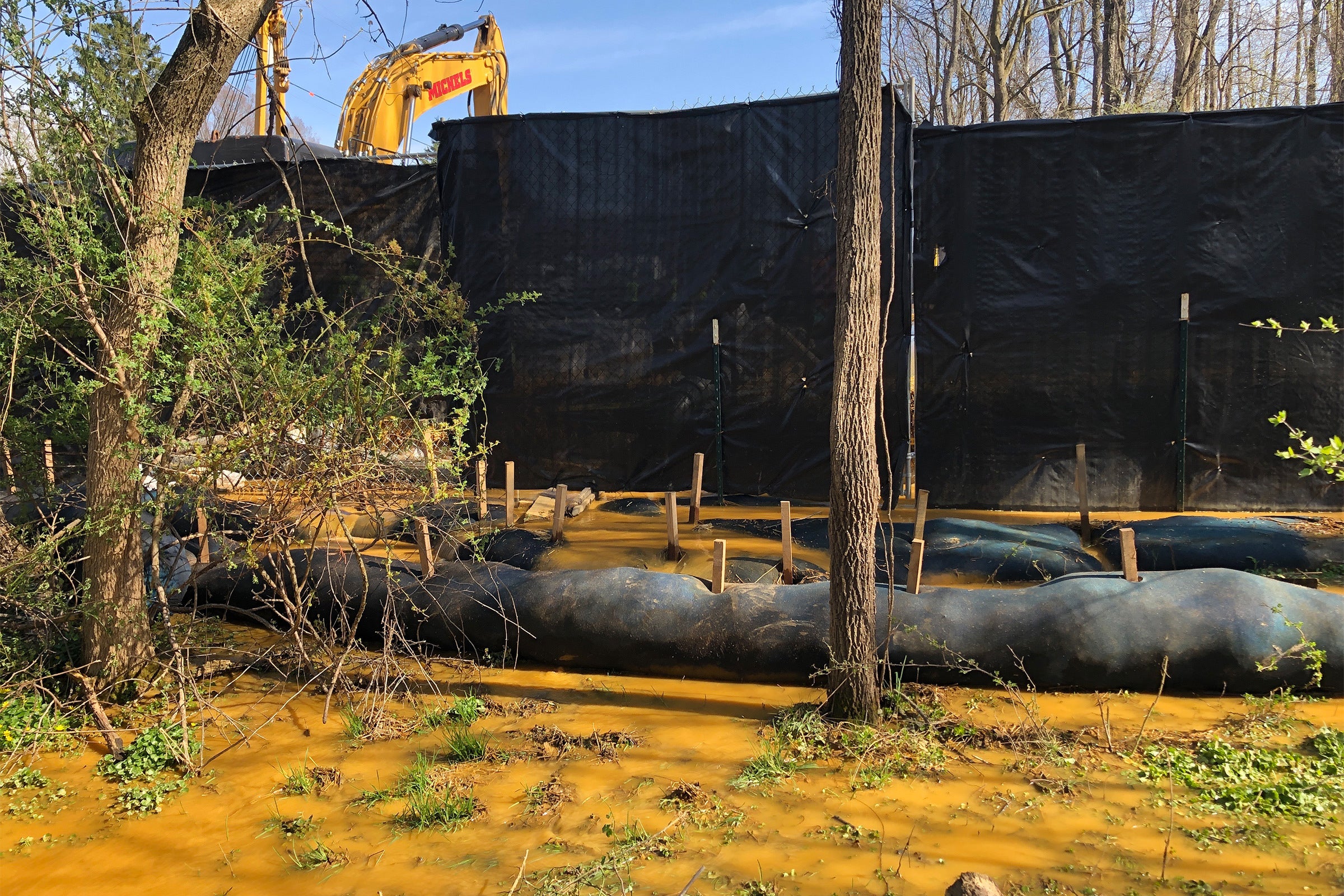
Sunoco construction site behind the Meadowbrook Manor development in West Whiteland Township. Muddy water continues to flow and pollute the West Valley Creek, a stocked trout stream. (Susan Phillips / WHYY)

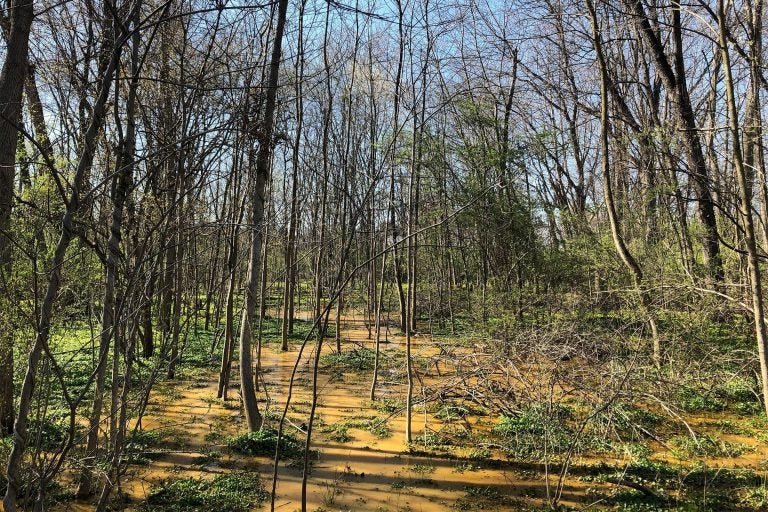
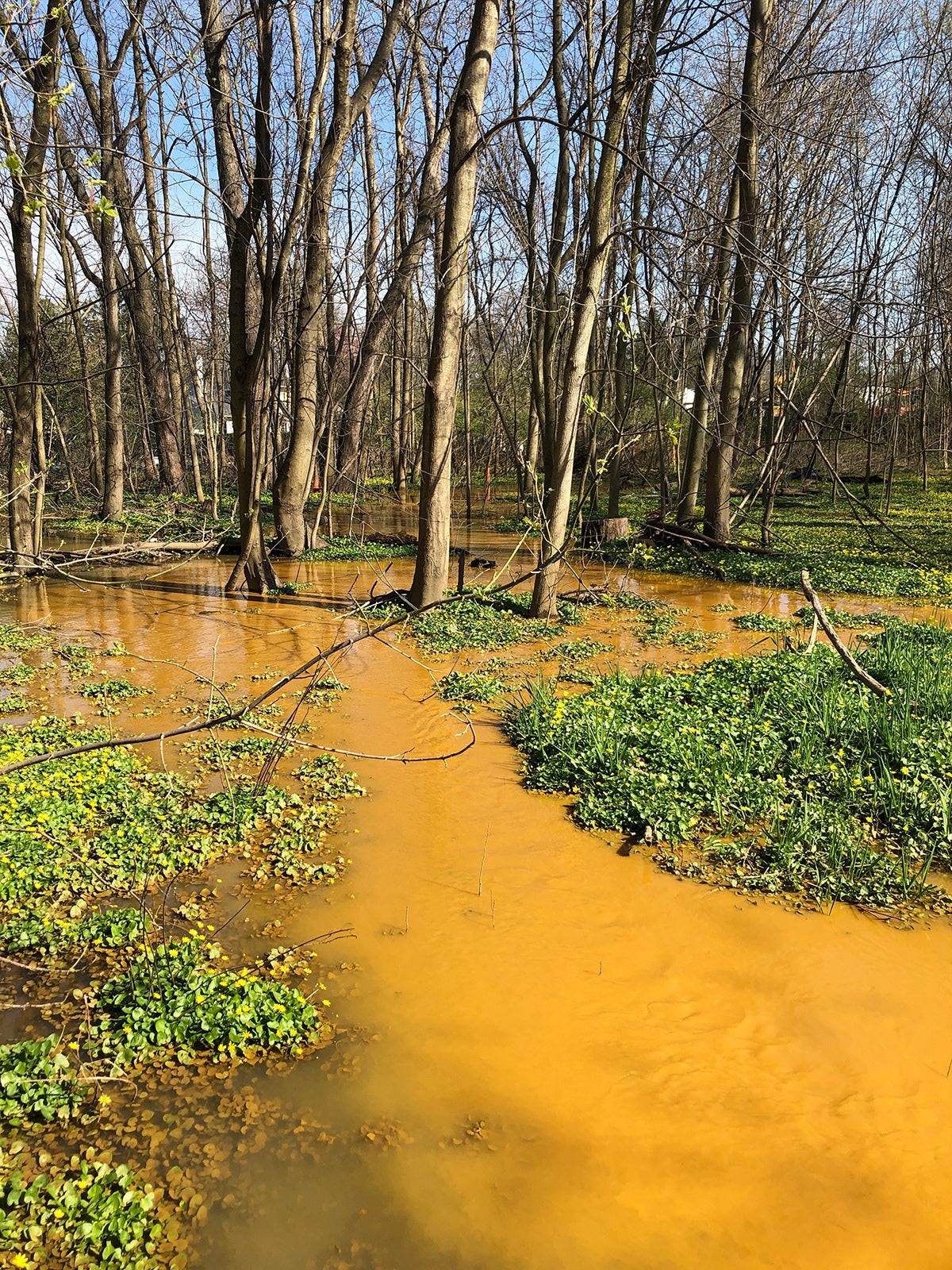
Easter Sunday brought more than chocolate bunnies and spring blossoms to the Meadowbrook Manor neighborhood of West Whiteland Township. Retired schoolteacher Libby Madarasz says one of her neighbors noticed muddy water flowing from beneath a barrier to Sunoco’s Mariner East 2 pipeline construction site. It filled a wetland behind the Chester County Library, across from Exton Square mall, where the clay-like runoff continues to pollute a tributary to West Valley Creek.

Madarasz says she and her neighbors are fed up with the noise from Sunoco’s trucks and construction operations, and the fear that they could lose their homes if continued work causes more sinkholes.

Libby Madarasz, a resident of Meadowbrook Manor, surveys the damage caused by Sunoco’s Mariner East 2 pipeline construction. (Susan Phillips / WHYY)

Earlier this week, as she walked behind a row of homes through a wooded area filled with blooming buttercups covered in murky brown water, her feet sank into the ground like quicksand. Several blue filtration socks lined the area but failed to catch all the clay particles. Madarasz is frustrated by what she sees as a lack of accountability for a project that she feels moves “full steam ahead” no matter the consequences.

“They come into our town, an out-of-state corporation, and they’re trashing this,” she said. “And I’m sure the question for them is, ‘What’s the worst that can happen? They’ll slap us with a fine, but we’ve got to make progress. So let’s just do this.’”

A statement from the company says the muddy discharge is permitted by Pennsylvania’s Department of Environmental Protection.

“The water leaving the site is colored because of the clay layer through which we are currently working,” the statement from Sunoco said. “It is being filtered through approved erosion control measures. We expect the water to remain this color until we hit a different geology. Additionally, we have an environmental inspector on site 24/7 to monitor the filtration.”

Sunoco construction site behind the Meadowbrook Manor development in West Whiteland Township. Muddy water continues to flow and pollute the West Valley Creek, a stocked trout stream. (Susan Phillips / WHYY)

DEP says the company is complying with the permits, which require it to use a series of best management practices to contain the sediment. The mesh in the filtration socks, however, is not fine enough to capture the tiny clay particles, according to DEP spokesperson Virginia Cain.

“Despite what it looks like, there’s no clear violation,” said Cain. She added that it’s unclear why the water continues to flow, and why the remedies outlined in Sunoco’s permit are not working.

Sunoco submitted a new plan Friday to mitigate the flow, which includes using a flocculant to force the clay particles to settle, as well as additional sand filters and sediment filter bags.

Though residents are worried about sinkholes, Cain said there is no connection between the current groundwater flow and the sinkholes that developed on site.

The area lies above limestone, or karst geology. It’s not clear what the company means by “a different geology.” But since construction began, dangerous sinkholes have developed in this area, including some so large they forced the company to buy several homes on nearby Lisa Drive.

The company has also run into problems with drilling through a region notorious for its complex and tricky geology and is several years behind schedule. This stretch of the Mariner East 2 pipeline is one of the last to be completed. The line runs about 350 miles across the state carrying Marcellus Shale gas to an export terminal in Delaware County, where it gets shipped to Scotland to make plastics. A workaround pipe, using an idled line, is currently carrying the gas while the new line is completed. There is also the parallel Mariner East 1 line that was laid back in the 1930s to carry gasoline to rural Pennsylvania and has been repurposed to carry natural-gas liquids. The current construction on this route uses an auger bore to create a pathway for the Mariner East 2 between the two lines.

Several sinkholes at this site have developed close to the two operating natural-gas liquids lines and at an adjacent valve station. When sinkholes developed along Lisa Drive in 2018, the state Public Utility Commission forced the adjacent operating lines to shut down. An exposed line is subject to cracks or leaks, potentially causing the highly flammable natural-gas liquids to explode, as the company’s Revolution pipeline did after a heavy rain event exposed the line in Beaver County in 2018.

Those incidents weigh heavily on the minds of Meadowbrook Manor residents, said Madarasz. The company’s instructions in case of a leak of the gas, which has no smell, is to run upwind.

“Where would I go?” she asked. “There’s a woman living here with a 7-year-old, a 4-year-old, and an infant, you want her to run?”

Sunoco construction site behind the Meadowbrook Manor development in West Whiteland Township. Muddy water continues to flow and pollute the West Valley Creek, a stocked trout stream. (Susan Phillips / WHYY)

In the meantime, Sunoco is sending a caravan of trucks to suck up as much water as possible. One day this week, the trucks entered a work site behind chain-link fencing covered in black plastic.

“The other day, I tallied and there were 42 that drove by the front of my house,” Madarasz said. “They hold anywhere from 2,500 gallons to 5,000 gallons. It’s full speed ahead. Let’s get through here as quickly as we can, and let’s put up black fences. So if we have a sinkhole, maybe we can fill it before anybody even knows.”

The damage couldn’t have come at a worse time for trout fishermen. The season began just a day before the water started flowing, on April 3. West Valley Creek, which flows into the East Branch of the Brandywine Creek, is a trout-stocked stream.

“It’s ridiculous and it’s been going on for days,” said Pete Goodman, the environmental chairman for Trout Unlimited’s Valley Forge chapter. “It’s choking out the life that lives in the stream as well as the stocked trout further down.”

Though the discharge is groundwater, and not toxic, the clay particles can smother the trout’s main source of food — macroinvertebrates. Goodman said the tiny insects, like mayflies, as well as the trout have a hard time surviving in muddy water.

“From the fisherman’s perspective, why would you bother, it’s like fishing in a cup of coffee,” Goodman said. He too is frustrated by the seeming lack of regulatory authority.

“I’ve watched for the past 20 years as the DEP has been defunded. I think there’s no teeth left in DEP,” he said.

DEP’s Cain said that the agency is reviewing Sunoco’s new plan and so far, there have been no reported impacts to aquatic life.

Gov. Signs Two Trapping Bills Targeting Wolves

Exposing the Big Game's avatarCommittee to Abolish Sport Hunting Blog

https://www.mtpr.org/post/gov-signs-two-trapping-bills-targeting-wolves?fbclid=IwAR0ScfLdDzRZNhyQoXfDuDEsQp5VxPM7IviJEsM0Dr14yW1KlimXwF8fNvY

ByNICK MOTT•APR 13, 2021ShareTweetEmail

  • A snare trap.MONTANA FISH WILDLIFE & PARKS

ListenListening…3:33Gov. Signs Two Trapping Bills Targeting Wolves

Gov. Greg Gianforte has signed two bills into law designed to reduce the wolf population in Montana. The new laws extend the wolf trapping season by four weeks and allow wolf trappers to use neck snares.

Republican representative Paul Fielder of Thompson Falls, sponsor ofHouse Bills 224and225, cited declining elk harvests in Northwest Montana as a sign that wolf populations are out of control.

“It seems like wildlife managers need another tool to manage wolf populations,” he said.

Thelatest population datashow just over 1,100 wolves in Montana, concentrated almost entirely in the western half of the state. Fielder said that’s more than four times the minimum for a recovered population set by wildlife managers

After more than 30 years…

View original post 491 more words

“PLASTICS NOW SPIRAL AROUND THE GLOBE”

Exposing the Big Game's avatarThe Extinction Chronicles

Earth

Getty ImageTARA YARLAGADDA4.12.2021 12:56 PM

MICROPLASTICScan be thought of as litter that never, ever goes away. New research into this seemingly invisible pollution shows just how durable they can be as they go from land to sea to air and back again.

Every day, microplastics — often smaller than the head of a sewing needle — infiltrateour oceans, ourseafood, and even our ownbodies.Now, scientists say the problem is more extreme than previously realized.MORE LIKE THISSCIENCE4.2.2021 3:30 AMTHE ASTEROID THAT KILLED DINOSAURS CAUSED THE BIRTH OF SOMETHING GREATBySHAENA MONTANARISCIENCE3.30.2021 4:00 PMSCIENTISTS REVEAL THE STRANGE CAUSE BEHIND A “BIBLICAL PLAGUE” IN LAS VEGASByTARA YARLAGADDASCIENCE4.9.2021 7:10 AMSEASPIRACY FACT CHECK: A MARINE SCIENTIST DEBUNKS THE CONTROVERSIAL NETFLIX DOCByJAKE KLEINMANEARN REWARDS & LEARN SOMETHING NEW EVERY DAY.SUBMIT

Ina studypublished Monday in theProceedings of the National Academy of Science,researchers…

View original post 1,234 more words

Snow chaos in Europe caused by melting sea-ice in the Arctic

Exposing the Big Game's avatarThe Extinction Chronicles

https://phys.org/news/2021-04-chaos-europe-sea-ice-arctic.html

by Maja Sojtaric, UiT The Arctic University of Norway

Snow chaos in Europe caused by melting sea-ice in the Arctic
The Finnish Meteorological Institute’s observation station used in the study, Pallas National Park, Arctic Finland. Credit: Jeff Welker

They are diligently stoking thousands of bonfires on the ground close to their crops, but the French winemakers are fighting a losing battle. An above-average warm spell at the end of March has been followed by days of extreme frost, destroying the vines with losses amounting to 90 percent above average. The image of the struggle may well be the most depressingly beautiful illustration of the complexities and unpredictability of global climate warming. It is also an agricultural disaster from Bordeaux to Champagne.https://e1ac7464d9e81ce2033a0fae7f811a32.safeframe.googlesyndication.com/safeframe/1-0-38/html/container.html

It is the loss of the Arctic sea-ice due toclimatewarming that has, somewhat paradoxically, been implicated with severe cold and snowy mid-latitude winters.

“Climate change doesn’t always manifest in the most obvious ways. It’s easy to extrapolate…

View original post 470 more words

State agency proposes hunting bans in busiest hiking areas

Exposing the Big Game's avatarCommittee to Abolish Sport Hunting Blog

https://yle.fi/uutiset/osasto/news/state_agency_proposes_hunting_bans_in_busiest_hiking_areas/11882205

13.4.2021 18:01|updated 13.4.2021 18:01

The proposal comes after two people were killed in Finland last year in separate hunting accidents within national parks.

Huomioväriseen pipoon pukeutunut metsästäjä tähtää haulikolla. Kuvassa metsästäjä ylhäältä nähtynä.
File photo of a hunter. There is no relation between the photo and the two fatal accidents that occurred last year.Image: Sauli Antikainen / Yle

State forest agency Metsähallitus has proposed the tightening of restrictions on hunting in some of Finland’s national parks following two fatal accidents last year.

In one incident, a 30-year-oldmountain biker diedafter being hit by a bird hunter’s gunshot in Urho Kekkonen National Park in October.

The agency’s Lapland Regional DirectorJyrki Tolonentold Yle that the measures could be introduced in areas that are particularly popular with hikers and other outdoor sports enthusiasts.

“We are not even proposing a total ban on hunting in national parks. Not very many [hunters] would even go to these tourist areas to…

View original post 302 more words

Tucson puppy on the road to recovery after paw caught in trap

Exposing the Big Game's avatarCommittee to Abolish Sport Hunting Blog

Ad Duration00:00PlayPlayCurrent time00:00Seek00:00Duration00:30Toggle MuteVolumeSettingshttps://imasdk.googleapis.com/js/core/bridge3.451.0_en.html#goog_2089070125Play5:10 pmAnthony Victor ReyesLOCAL NEWS,TOP STORIES

clammed puip
Pima Animal Care Center

TUCSON (KVOA) – A local puppy is on the road to recovery after the stray dog was recently found with a trap clamped on its leg.

According to a post shared on Pima Animal Care Center’s Twitter Monday, the Pima County Animal Protection Team received a report about a stray dog with “something clamped on its leg.”

When the animal protection officer arrived the scene, she identified the object clamped to the dog’s leg as a trap. She then carefully transported the pup to the clinic.

PACC’s medical team then carefully removed the trap from the dog.

Fortunately, PACC said X-rays revealed that no bones were broken by the trap. Officials say the dog only sustained a minor injury to the surface of its skin.

The dog, later named Trapper…

View original post 29 more words

US to enter mega drought which will be the worst for 1200 years – here’s what to expect

Exposing the Big Game's avatarThe Extinction Chronicles

Experts warn of permanent drought after third-driest winter in California’s history

Gino Spocchia4 hours ago2comments

As parts of the Western US emerge from one of the driest winter seasons on record, the expectation of yet another summer of wildfires will be familiar to many.

Scientists, in fact, are already issuing warnings of an increased risk of wildfires in places such asCaliforniafor 2021, and other parts of the Western US, asthe San Francisco Chroniclerecently reported.

The region, where wildfires are increasingly common, is ripe for wildfires following a winter with extremely dry conditions – and reportedly the third worst ever seen.

And it could for a single reason – what is being described by scientists as the second worstdroughtfor 1,200 years.Scientists Begin Studying ‘The Year Of The Quiet Ocean’PauseNext video0:00/ 0:00SettingsFull-screen

The Western US, a region at the front of the world’s fight…

View original post 395 more words