Carbon dioxide in atmosphere has spiked to record-setting new level

Exposing the Big Game's avatarThe Extinction Chronicles

https://thehill.com/changing-america/sustainability/climate-change/546653-carbon-dioxide-in-atmosphere-has-spiked-to

Observatory data confirms a returned trend of increasing atmospheric carbon dioxide levels.ByAlexandra Kelley | April 6, 2021https://imasdk.googleapis.com/js/core/bridge3.448.1_en.html#goog_130977516200:00 of 00:55Volume 20%Next Up

Story at a glance

  • As travel returns worldwide, carbon dioxide levels are increasing.
  • Carbon dioxide and other greenhouse gases are key contributors to climate change.

One of the U.S.’s premier observatories for measuring carbon dioxide emissions released into the atmosphere reported a record-breaking figure on April 3, noting a total of 421.21 particulate matter (ppm) of carbon dioxide in the Earth’s atmosphere — the highest daily average ever recorded.https://platform.twitter.com/embed/Tweet.html?dnt=false&embedId=twitter-widget-0&features=eyJ0ZndfZXhwZXJpbWVudHNfY29va2llX2V4cGlyYXRpb24iOnsiYnVja2V0IjoxMjA5NjAwLCJ2ZXJzaW9uIjpudWxsfSwidGZ3X2hvcml6b25fdHdlZXRfZW1iZWRfOTU1NSI6eyJidWNrZXQiOiJodGUiLCJ2ZXJzaW9uIjpudWxsfX0%3D&frame=false&hideCard=false&hideThread=false&id=1378912724323819523&lang=en&origin=https%3A%2F%2Fthehill.com%2Fchanging-america%2Fsustainability%2Fclimate-change%2F546653-carbon-dioxide-in-atmosphere-has-spiked-to&sessionId=100290235f060f3d79ff00989bcef6c7fa9b029c&theme=light&widgetsVersion=1ead0c7%3A1617660954974&width=550px

Based on data collected at theMauna Loa laboratoryin Hawaii, the peak comes after relatively low readings throughout March and early April, aside from a single uptick recorded between March 19 to 21.

Notably, however, when observing annual trends, this record-breaking volume represents a return to pre-pandemic levels.

Carbon dioxide emissions have gradually increased since hitting…

View original post 233 more words

Brazil’s COVID-19 death surge set to pass the worst of record U.S. wave

Exposing the Big Game's avatarThe Extinction Chronicles

by ReutersTuesday, 6 April 2021 13:46 GMT

https://news.trust.org/item/20210406124116-x41eq

Newslettersign up:

Trending

By Pedro Fonseca

RIO DE JANEIRO, April 6 (Reuters) – Brazil’s brutal surge in COVID-19 deaths will soon surpass the worst of a record January wave in the United States, climbing well beyond an average 3,000 fatalities per day, scientists predict, as contagious new variants overwhelm hospitals.

Brazil’s overall death toll trails only the U.S. outbreak, with nearly 333,000 killed, according to Health Ministry data, compared with more than 555,000 dead in the United States.

But with Brazil’s healthcare system at the breaking…

View original post 244 more words

Infectious Disease Expert Explains Why Next COVID-19 Wave In U.S. Is Inevitable

04/06/2021 06:08 am ET Updated 7 hours ago

https://www.huffpost.com/entry/michael-osterholm-inevitable-new-wave-coronavirus_n_606c1818c5b6c00165c52ac1

It’s likely too late to stop this upcoming surge, warned Michael Osterholm.

headshot

By Lee MoranContent loading…

Infectious disease expert Michael Osterholm on Monday warned of the inevitability of another wave of coronavirus infections in the United States.

“While vaccination is important, it is obviously a critical part of our long-term game plan, we’re not going to have enough vaccine, at the way we’re going, into the arms of enough Americans over the course of the next six to 10 weeks, with this surge, that we’re going to stop it,” Osterholm, the director of the Center for Infectious Disease Research and Policy at the University of Minnesota, told CNN’s Erin Burnett.

“It’s just simply not going to happen,” he added.

Osterholm noted that some states, even where vaccination uptake has been high, are now experiencing rising daily new infections.

As GOP-led states lift pandemic restrictions, new infections nationwide have plateaued at around 65,000. It’s a stubborn detail that has troubled public health experts.

Dr. Anthony Fauci, the director of the National Institute of Allergy and Infectious Diseases and top medical adviser of President Joe Biden, cautioned last week that now is “just not the time to pull back and declare premature victory.”https://action.publicgood.com/embed.html?partner_id=buzzfeed-huffpost&utm_source=buzzfeed-huffpost&title=Infectious%20Disease%20Expert%20Explains%20Why%20Next%20COVID-19%20Wave%20In%20U.S.%20Is%20Inevitable&url=https%3A%2F%2Fwww.huffpost.com%2Fentry%2Fmichael-osterholm-inevitable-new-wave-coronavirus_n_606c1818c5b6c00165c52ac1&utm_content=https%3A%2F%2Fwww.huffpost.com%2Fentry%2Fmichael-osterholm-inevitable-new-wave-coronavirus_n_606c1818c5b6c00165c52ac1&widget_type=card&action=Default&is_flex=true&match_type=ml&campaign_id=ea0fef93-4deb-4581-9ad2-0fae5b670347&parent_org=buzzfeed&target_id=ea0fef93-4deb-4581-9ad2-0fae5b670347&content_id=15908882&cid_match_type=post-filter%20guid%20name%20match&tag=public%20health%20~%20pfizer%20ml%20match&is_filter=true&url_id=29244908&target_name=Explore%20Breakthroughs&is_sponsored=true&sponsor_name=Pfizer%20Inc.

Osterholm on Sunday warned the forthcoming wave will more likely affect children, due to the prevalence of the more contagious B.1.1.7. variant.

“Unlike the previous strains of the virus, we didn’t see children under eighth grade get infected often, or they were not frequently very ill,” Osterholm said on NBC’s “Meet the Press.” “Kids are playing a huge role in the transmission of this,” he added on Fox News.

Lightning strikes could double in the Arctic this century, setting the tundra on fire

Philip Kiefer  5 hrs ago


Halle Berry Shows Off Lean Legs in New Bathtub PicMore meteotsunamis occur on Lake Michigan than any other Great Lake. N…

Over the course of 2019 and 2020, a handful of fires burned in the tundra of Siberia, releasing stores of carbon similar to the entire annual emissions of France. As the Arctic continues to warm, similar fires are likely to become more common: lighting, one of the few firestarters in the far north, is becoming more common.fireworks in the sky: Lightning strikes could double in the Arctic this century, setting the tundra on fire© Provided by Popular Science Lightning strikes could double in the Arctic this century, setting the tundra on fire

According to research published yesterday in Nature Climate Change, by the end of this century, lightning will be about twice as likely in the Arctic if greenhouse gas emissions continue as usual.

“We’ve been trying to find out in the Arctic region, where there’s little fire in the region previously, how that will change in the future,” says Yang Chen, who researches climate and wildfire at UC Irvine, and was the lead researcher on the study. “And the only ignition source is lightning strikes.”

Lightning requires two ingredients: warm air that rises quickly from the ground, and moisture. “When you get warm air … it kind of bubbles up through the atmosphere,” says Peter Bieniek, a climatologist at the University of Alaska who was not involved in the research. “It actually condenses, just like you would condense humid air on a cool window.” When that water freezes into ice, it can create lightning.

Rent A Private Jet In Winthrop- Current Prices May Surprise You.

SEE MOREAd by TOP PRIVATE JETS

Right now, the Arctic is cold and fairly dry, and so lightning is rare. But by comparing satellite records of Arctic lightning with global climate models showing where those conditions were likely to occur in the future, the team could predict at a fine scale how likely lightning strikes might be as time went along. Even if emissions slow down, they found, there will be about 40 percent more lightning for every degree Celsius.fireworks in the sky© Provided by Popular Science

Those turbulent, wet conditions are becoming more common across the United States. A 2014 study in the journal Science predicted that by the end of the century, the country would experience 50 percent more lightning. What’s surprising, Chen says, is the magnitude of the changes in the Arctic: “It’s really big. It’s much bigger than in other regions of the world.”

The Nature research is actually the second recent study to find this result in the Arctic: a team of researchers in Alaska predicted last year that lightning strikes would double in the state over the next century. Alison York, a fire ecologist at the University of Alaska Fairbanks who co-authored that study, says that the findings in this most recent research are consistent with other work. “The physics of climate change would say, yes, we would have increased lightning, just from increased air temperatures.”

Those changes have implications not only for the Arctic landscape, but for the entire planet.

Right now, fire isn’t a major component of the tundra. “If you think of a tundra ecosystem, you think of these little tiny plants: little tiny blueberries, dwarf mosses, birch, lots of mosses,” says York. That’s because only a few inches to a foot of ground thaw out every summer, and larger plants can’t survive in the shallow conditions. That also means that fires normally don’t spread widely. “The fires are kind of like peat burning, along the surface,” says Chen, or into the carbon stored in the ground itself.

[Related: Beavers might be making the Arctic melt even faster]

The “dirt” on a tundra is mostly layers of older, dead plants, says Troy, “forming this blanket of moss, and litter” called duff.

More lightning would mean more fire, and that could tip the environment into something entirely different. Spring melts could reach deeper into the ground, and trees could take root in the bare soil. That process is likely to speed warming, and maybe spur even more lightning.

At stake is the permafrost, the rock-hard layer of soil that hasn’t thawed in tens of thousands of years, and which locks in a sleeping giant of methane, half-decayed plants, and carbon-rich dirt. In some places, that material has piled up thousands of feet deep. When it escapes—through burning, rotting, or simply burping out into the air—it contributes to greenhouse gas emissions, speeding up climate change.

With the insulating mosses and grasses burned away, it’s likely that the permafrost will melt even faster. “That blanket keeps the permafrost cold. And as the fire burns into that blanket of duff, the underlying ground is exposed and warmed,” says Troy.

If the fire goes deep enough, there’s more ground to grow in, allowing trees and shrubs to move in, which in turn speeds up the warming process. Because trees are darker than the surrounding snow, they absorb heat rather than reflecting it. “You can actually deliver energy directly from the sun to the soil surface, so you can actually accelerate permafrost thaw,” says James Randerson, an author on the recent paper who studies climate change’s impact on Arctic ecosystems at UC Irvine.

Forests also have their own effects on fire and lightning; there’s some evidence that, because they create warm, wet conditions, they can actually promote lightning storms overhead. And when a fire is sparked in the boreal forest, it tends to jump from tree to tree, resulting in much larger blazes. Lightning will probably become more common in forests too, but won’t create the same kinds of landscape changes.

“We have not seen documentation of treeline migration on a large scale, but that might just be a process that takes a long time to observe,” Troy says. And, she notes, some of the trends can be seen in localized areas already, as in the site of a giant 2007 tundra fire that’s now growing back as willows and other brush. 

The transition might take decades, Randerson agrees. “There’s a time delay between when climate conditions are suitable, and the migration rates of these trees’ lifetimes. It takes them a while to catch up.”

More: Lightning strikes could double in the Arctic this century, setting the tundra on fire (msn.com)

Seaspiracy: What the Fishing Industry Doesn’t Want You to Know

ByMatthew ChalmersMarch 31, 2021

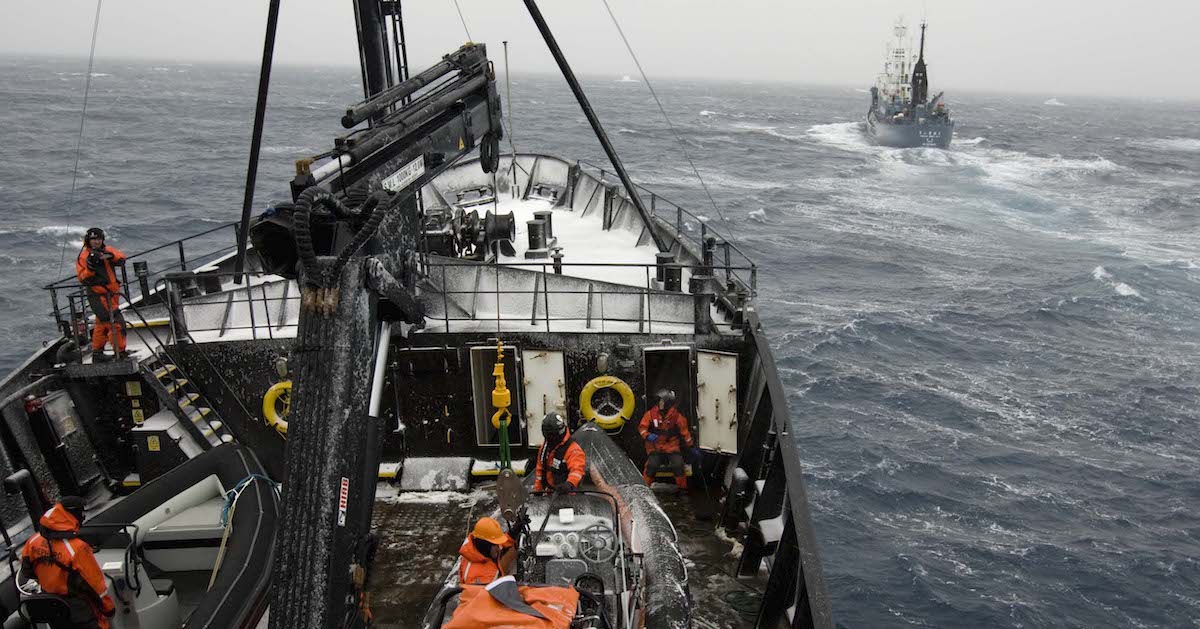
Adam Lau / Sea Shepherd Conservation Society

https://sentientmedia.org/seaspiracy-what-the-fishing-industry-doesnt-want-you-to-know/

Several days before Seaspiracy was released on Netflix, a response made by the National Fisheries Institute was leaked. Before audiences had gotten a chance to see the documentary, the fishing industry was already dismissing it as “vegan propaganda.” Unfortunately, it is unlikely that their opinion of the film emerged from any genuine Delphic foresight. Indeed, “propaganda” seems quite a puzzling label to stick on a movie that unravels its story in such a deliberate and reasoned manner.

The facts in the documentary are nothing short of remarkable. A marine biologist explains that the Deepwater Horizon Disaster, which spilled thousands of gallons of oil into the sea and saw countless images of seabirds coated in black, dying on slimy beaches, killed fewer animals than commercial fishing in the Gulf of Mexico kills in a single day. Indeed, the disaster actually allowed fish stocks in the Gulf to bounce back because it interfered with normal fishing operations. Other numbers in the film are so big they really can’t be comprehended, like the fact that humanity kills five million fish every second.

Lex Rigby, the head of investigations at Viva!, explained the apathy most people feel towards fish. “Whenever we talk about fish, we talk about harvesting them like crops,” she said. “We talk about their slaughter number in tonnage rather than individuals.” Perhaps this is one place Seaspiracy is a touch lackluster; it doesn’t dwell for long on the evidence that each fish is an individual with a distinct psychology, no matter how remote their experience is from ours, which can feel pain.

However, the movie does illustrate the troubling ways in which commercial fishing has been sidelined as an issue, even by the environmentally-conscious. Plastic is the favored bogeyman when it comes to ocean pollution, and it certainly is a serious problem. Yet popular talking points, like the murderous flotillas of plastic straws, are more or less total canards. Plastic straws make up 0.03 percent of ocean plastics, and all plastics combined kill roughly 1,000 sea turtles a year. Fishing, on the other hand, kills 250,000 sea turtles a year. Similarly, the origin of the plastic is often imagined to be apathetic consumers who purchase thirty plastic bags every trip they make to Walmart, and yet 46 percent of the Great Pacific Garbage Patch is made up of fishing nets. These nets drift through the open ocean for miles, tangling and strangling thousands of animals as they go, and are far deadlier than plastic bags.

It is not an accident that fishing has been neglected in discussions about ocean conservation either. The issue has been obscured by specious labeling and a culture of omertà amongst governments and regulators. The Earth Island Institute relies on captains’ self-reporting when they hand out their dolphin-free labels, which is an obviously poor standard of evidence. Rigby described the way self-reporting is abused by fishing vessels, drawing from her time with Sea Shepherd off the coast of West Africa, “We counted one hundred and seventeen sharks in one net. They only reported four.”

The Marine Stewardship Council, whose ubiquitous blue tick assures millions of consumers that they are purchasing vetted and sustainable seafood, seem to have included the word ‘stewardship’ in their title as some sort of bad joke. The more blue ticks they hand out, the more money they make, and one of their founding members was the food (including seafood) giant Unilever. Additionally, the world’s sustainable fisheries are proved to be anything but, seeing as 90 percent of them continue to allow commercial fishing.

Those invested with the powers of stewardship neglect them. Citizens are left in the dark with misleading labels and glib talk about sustainable fishing for a comfort blanket, while the oceans are scraped and pillaged. Aquaculture, like salmon farming, is not a sustainable alternative to wild fishing, although it is promised to be. Salmon are fed wild fish, with 1.2 kilograms of wild fish producing 1 kilogram of salmon. The farms are teeming with lice which feed on the salmon while their accumulated waste creates zero-oxygen dead-zones.

Like all great explorations of ecology, Seaspiracy highlights the dramatic intersection between animal wellbeing, environmental health, and human prosperity. European and North American fishing fleets scouring the coasts of Africa drive local fishermen to bushmeat hunting, which causes pandemics like Ebola, or piracy, as happened in Somalia. Rigby described these local fishermen as “really the only sustainable fishing there is, just one man and his net pulling up enough to feed his family.” It is these sustainable communities which industrialized seafood has ruined; and they aren’t the only ones. Indeed, mangroves are cleared at the peril of locals, who are made vulnerable to tsunamis and typhoons, and the shrimp farms that replace them are often exploited by slave labor. 

The documentary finishes with a famous event on the relatively obscure Faroe Island archipelago. Communities there participate in whale hunts, called Grindadráp, where locals round up pilot whales on boats before harpooning them en masse in the shallows. It is a gory and relentless scene, and the sea sloshes in Biblical reds under grim and misty cliffs. Here, the movie sticks the landing. Sustainable fishing has been discredited and the severity of human pillaging of the oceans has been put beyond doubt. Yet, even if these things could be managed, the film begs us to question if it would be worth it. It questions if fish and chips are really worth killing for, if dead whales soaking in a Norse lagoon is an acceptable sight in a world where kinder, greener and healthier alternatives exist. Such disturbing spectacles are by no means unique to the Faroes; one articulate whaler in the documentary points out that suffering is universal in global meat and fish production. Rigby described disturbing scenes from her own experience, from endangered whale sharks scooped up in nets in Africa, to lice-ridden salmon suffering on Scottish farms.

In 90 minutes, the film provides helpful graphics, illustrations, anecdotes, filmed evidence, mountains of data, and the opinion of scientists and ethicists to make its point. It doesn’t shrink from violence, nor does it fetishize it. The arguments are concise and plainly presented. Yet all this can be waved away by the magic wand of the fishing industry and fellow travelers as “vegan propaganda,” and well before the movie is even released. Remind me again who the propagandists are?Read More

Corporate Corruption in Global Fishing Gets New Attention

Fish Farming Is Not As Sustainable As We Thought

Commercial Fishing: How Global Food Choices Negatively Impact the Oceans

How Big Meat Is Funding Climate Denial and Polluting the Planet

Exposing the Big Game's avatarThe Extinction Chronicles

Molly TaftYesterday 1:00PM

https://earther.gizmodo.com/how-big-meat-is-funding-climate-denial-and-polluting-th-1846620142/amp?__twitter_impression=true

A worker processes cuts of beef.

Move over, Big Oil, and make some room for Big Meat at the climate shame table. Anew studyshowsagribusiness is a major sourceclimate misinformation as well ascarbonemissions.Recent Videohttps://d-10637573807304611.ampproject.net/2103240330002/frame.htmlWorn Out: The Fashion Industry’s Giant Waste Problem

The analysis,published last month in Climatic Change, looks at the PR moves behind some of the world’s largest producers of meat and dairy, comparing them to their emissions. Most shockingly, the analysis finds that all 10 of the top agriculture companies in the U.S. have contributed to efforts to downplay how agribusiness is linked to climate change.

“We’re trying to show how important thinking about the corporate actor is in this problem,” said Jennifer Jacquet, an associate professor of environmental studies at New York University and a coauthor of the paper. “These companies are not just influencing the geophysical processes…

View original post 813 more words

STATUS UPDATE OF BUDGET BILLS THAT LOWER THE HUNTING AGE FOR DEER AND BEARS

Exposing the Big Game's avatarCommittee to Abolish Sport Hunting Blog

DEFEATED PART X OF GOVERNOR’S BUDGET BILL S2508 EMERGES MODIFIED IN PART ZZ OF S2505C/A03005C !

While this isn’t the outcome we wanted to see, it is far better than it would have been without your protest.

First, thank you ALL for speaking out against Cuomo’s inclusion of a lower hunting age for “big game” and the expanded use of crossbows to kill deer and bears. Your calls and email put hunting on the radar of the legislature – including the leadership — andwe encourage you to continue your calls to keep out last-minute insertions of language that would be harmful to wildlife. You can see contact information here:http://lohvny.org/NYActionAlert.html

Part ZZ in S2505C/A03005C WILL STILL LOWER THE HUNTING AGE FOR DEER AND BEARS, ALONG WITH ALLOWING 12 AND 13 YEAR OLDS TO USE CROSSBOWS!BUT WITH MAJOR DIFFERENCES!

Part ZZ counters the Governor’s Part Xin the following…

View original post 606 more words

Criticism of Seaspiracy is Much Ado About Nothing

It’s Time to Make a Big Deal About Something And That Something is the Dying Ocean..

By Captain Paul Watson.

Predictably, the successful release of Seaspiracy on Netflix is receiving some criticism from the usual subjects. That was expected, but it really is not all that important. Many documentaries that I have been involved with over the years have been met with similar negativity and vitriol. I remember the criticisms of Rob Stewart and his wonderful film Sharkwater. And The Cove also was belittled by some although the criticisms did not prevent the film from winning the Academy Award for best documentary of the year. Sea of Shadows was also belittled as was even my own film WATSON by Leslie Chicott and I do remember Lesley’s earlier film Inconvenient Truth and all the climate change denialists with their hired “scientist” apologists lambasting the credibility of Al Gore. And don’t even get me started on all the “experts” denouncing Greta Thunberg for being too dramatic, too, young, and too naïve for their taste. Seaspiracy as a film is what it is, a message transmitted by a medium to provoke discussion and to expose and illustrate a global problem and as such it is both powerful and influential and most importantly thanks to Netflix it is reaching millions and trending phenomenally. It was never meant to be some academic scientific dissertation filled with footnotes and boring references to peer reviewed papers. It’s a film, not some doctoral thesis to be picked apart in search of validation to justify a particular bias.

If we were to produce a 90-minute film with a purely objective scientific fact confirmed narrative as suggested, it would most likely not appeal to the general public and nothing would change. The corporations and those who work for them already know the facts. They just don’t care because they are motivated by profit.Film making is story telling. It’s meant to be emotive. It’s designed to captivate viewers and to entice discussion and controversy. If people are talking about it that means it’s a success. If people are criticizing it, that means it is having an impact. If some people are condemning it, that means that some people are threatened by it.Personally, I don’t care if there are scientists and industry people who dislike the film. I don’t need biostitutes and P.R. firms to lecture me on something I have seen and witnessed with my own eyes over the last 60 years. There is no such thing as a sustainable fishery. That is my considered observation based on 60 years of experience. Phytoplankton populations in the sea have been reduced by 40% since 1950 and that is probably the most important validated scientific fact to be concerned about. (Source: https://www.scientificamerican.com/…/phytoplankton…/

Life in the Ocean is being diminished and that diminishment is escalating. I’m not surprised that there are many who wish to deny this just as there have been many quick to deny climate change.Change comes about through stories and in today’s world, the most powerful communication medium is film. Lucy and Ali Tabrizi are telling an important story and it’s a great deal to tell in a mere 90 minutes. I would have liked to have seen more details, but more tends to be difficult when making a film because there always tends to be too much material and too little time. Seaspiracy is a hit and it is reaching millions and Ali and Lucy Tabrizi have done a wonderful job in a project that I have actively been involved with for the last few years and proud to be associated with as I’m sure Captain Peter Hammarstedt and Dr. Sylvia Earle are as well. Fisheries consultant Francisco Blaha amusingly generalized the filmmakers by stating that the film has a tendency to generalize. He tweeted, “I’m over the set up where the ‘bad guys’ are predominantly Asian, the ‘victims’ predominantly black/brown, and the ‘good guys’ talking about it and saving the ocean are predominantly white.”Blaha admits in a tweet that he actually did not see the entire film and his bias is apparent in his job title as “fisheries consultant” to industrialized fishing corporations. In the film the bad guys are not predominantly Asian. The film focus is on European as well as Asian fishermen and shows how artisanal fishing communities in Africa are being devastated by industrialized fishing. Industrialized fishing corporations are the bad guys. His assertion that those in the film are predominantly white males is also incorrect. The film was made by a man of Middle Eastern background and a woman – Lucy Tabrizi and features the voices of Dr. Sylvia Earle, Dr. Jane Hightower, Tamara Arenovich, Lori Marino and Lamya Essemlali amongst others. As for Sea Shepherd, we are working hand in hand with African and Latin American nations to oppose Asian AND European exploitation of the waters of these nations. We are in fact working with and for African and Central and South America nations. This means we are working in opposition to the industry that Blaha consults for. In 2019, Blaha was the winner of the 2019 World Seafood Champion Award which is all we need to know to understand his bias

This film by Ali and Lucy is their project, it is their voice and they have every right to tell their story the way they wish to tell their story. If the critics don’t like it they should take up the challenge and make their own film. In fact, that is the only valid response. All this chatter and pooh-poohing of a film they happen to not like is irrelevant and meaningless.If they want to make a film with what they consider to be “real” science they should do it. It’s easy to be a critic, easy to slam the work and creativity of others. If there is a film they would rather see produced, one that meets with their approval they should just shut up and make it.

Farley Mowat wrote and made a TV series Sea of Slaughter a few decades ago. Solid science it was indeed yet it was dismissed by industry and restricted to the limited audience of the CBC and he was also told that he was not delivering his message properly meaning he should be doing it by not offending anyone. He warned us years ago about what was happening yet nothing changed and things became much worse.

This film despite the naysayers and the critics is a critically acclaimed success and that is a fact. It is a weapon of revelation and it is influencing millions and it needs to be built upon and not dismissed or belittled, especially by people who profess to care about marine ecology. The Ocean does not have time for the justifiers, the appeasers and the complainers. Right now, the Ocean needs activists more than scientists.https://www.ecowatch.com/commercial-fishing-netflix…

Man cited for trapping raccoons who were eating bait meant to lure turkeys out of season

Exposing the Big Game's avatarCommittee to Abolish Sport Hunting Blog

https://wchstv.com/news/local/man-cited-for-trapping-raccoons-who-were-eating-bait-meant-to-lure-turkeys-out-of-season


bySHANNON STOWERSSaturday, April 3rd 2021AA

<img src=”https://wchstv.com/resources/media2/16×9/full/1015/center/80/97eb8f86-28e4-4370-a2a6-bf2b0b08ca7c-large16x9_wvdnrcitation.jpg” alt=”

<p>A man in Nicholas County was cited this week for allegedly trapping raccoons who were eating corn put out to kill turkeys out of season. (Courtesy of West Virginia DNR Police){/p}

Facebook Share Icon

Twitter Share Icon

Email Share Icon

NICHOLAS COUNTY, W.Va. (WCHS) —A man in Nicholas County was cited this week for allegedly trapping raccoons who were eating corn put out to kill turkeys out of season.

The man was charged for killing at least two turkeys and one deer out of season, according to West Virginia Natural Resources Police. He was also cited for hunting turkey over bait and illegally trapping raccoons.https://www.facebook.com/plugins/post.php?href=https%3A%2F%2Fwww.facebook.com%2FDNRpolice%2Fposts%2F5317707034938089&width=500&show_text=true&height=784&appId

Officers said the man was using some of the illegally harvested deer meat to bait traps used to catch raccoons who were eating the corn that was put out for bait in order to kill turkeys.

The spring turkey seasonin West Virginia runs from…

View original post 14 more words