Experts say extreme weather including droughts will become more common as planet heats
A sandstorm shrouds Beijing in mid-March. The storms were brought about by higher than normal temperatures and low precipitation and snow cover.Photograph: Todd Lee/Zuma Wire/Rex/Shutterstock
Recent sandstorms that shrouded Beijing in a post-apocalyptic orange haze and intensive droughts in other parts of the country are bringing into stark relief the challengesChinafaces from rising temperatures induced by the climate crisis.
The widespread sandstorms that pelted the capital and spread as far as central China for several days in mid-March and again at the end of the month were brought on by lower than average snow cover and precipitation, as well as higher than normal temperatures and winds across Mongolia and northern China.
The combination provides perfect conditions for creating sandstorms and could signal more frequent…
A trio of young bonobos play under the watchful eyes of their caregivers..Ley Uwera for NPR
At an animal sanctuary in the Congo, several dozen Congolese schoolchildren are getting a crash course in bonobos.
These gentle, endangered apes, who resemble chimpanzees, are “our closest cousins,” educator Blaise Mbwaki tells the students in French. “They have a human character, and they are Congolese.”
“So if you eat a bonobo,” Mbwaki says, “you are eating your cousin. It is cannibalism.”
It’s a blunt message. But Mbwaki and other staff here at the Lola ya Bonobo sanctuary think it may offer the best hope of saving this species from extinction.
Only about 20,000 wild bonobos are left, and they are found only in the central rainforests of the Democratic Republic of the Congo. So the staff at Lola are working to engage Congolese students in efforts to protect the bonobos that remain.
Bonobos share nearly 99% of their DNA with humans. And studies of the animals at Lola are helping scientists understand how humans evolved traits like empathy.
But humans haven’t shown much empathy for bonobos. As a species, we’ve hunted them for food, sold their babies as pets, and spoiled much of their natural habitat.
A male bonobo at Lola yo Bonobo sanctuary. Only about 20,000 wild bonobos are left, and they are found only in the central rainforests of the Democratic Republic of the Congo.Ley Uwera for NPR
Most of the 60 or so bonobos at Lola arrived as orphans. “Their mothers were killed in the forest for meat and hunters kept the babies to sell,” says Dr. Jonas Mukamba, the resident veterinarian at Lola.Article continues after sponsor messagehttps://0d9cecb803990edf6c50d80e8f8d0024.safeframe.googlesyndication.com/safeframe/1-0-38/html/container.html
The sanctuary’s goal is to prepare the bonobos for life in the wild. In the meantime, they live in Lola’s spacious, forested enclosures and serve as ambassadors to daily delegations of school children.
The children learn that “this animal is unique in the DRC,” says ClaudineAndré, who founded Lola ya Bonobo in 1994. “It is a treasure of nature in Congo.”
André is the daughter of a Belgian veterinarian who practiced in Kinshasa. She has spent much of her life trying to make sure bonobos have a future in the Congo.
It was the Congo river that probably gave rise to bonobo. More than a million years ago, scientists believe, some bonobo ancestors ended up on the South side of the river. That separated them from their chimpanzee relatives to the North.
Neither animal likes to swim. So over time, bonobos became a separate species, one that is smaller, gentler, and less aggressive than chimps.
The 10,000 plus students who have visited Lola ya Bonobo learn all this and why it matters, André says.
“Everything is connected on the planet,” she says. “So the kids have to understand that it’s not only the bonobo [at risk]. All the biodiversity is in danger.”
The children also learn to take action if they see a bonobo being kept as a pet, which is a crime in the DRC.
“Very often it’s one of these kids from the school who call us and say, “I saw a bonobo,” André says.
Today’s students have moved from the classroom to the edge of a bonobo enclosure.
Group of school children in science class visiting Lola ya Bonobo sanctuary.Ley Uwera for NPR
“Bonjour les bonobos,” Mbwaki calls out to the group of animals eyeing their human visitors. “Bonjour Elikya,” he says to one of the females.
Elikya was born here to a mother who had arrived as an orphan. Now Elikya is raising a baby of her own.
But the ultimate goal is to release bonobos like Elikya into the wild. So Lola has established a second sanctuary called Ekolo ya Bonobo hundreds of miles away.
“It’s a place where bonobos used to be,” says Dr. Raphaël Belais, a veterinarian at Lola. “But unfortunately during the wartime the hunting was going quite strong so they have no more bonobos in this piece of forest.”
It would be nice if all the bonobos at Lola could eventually go to their new home, Belais says. “Unfortunately, some of the orphans are too traumatized or too mutilated.”
Still, more than a dozen animals from Lola have been moved to Ekolo and most of them are doing well. Their future, though, will be determined by Congolese people like the students who came to Lola today.
So I ask a 10-year-old named Gaska Basili, what he learned about bonobos during the visit.
“They are like our brothers,” he replies in French.
“And what would you do if you saw a bonobo being kept illegally?” I ask.
Scientists caution high death rate is outpacing births
Population of whales estimated at around 360
A North Atlantic right whale mother and calf in waters near Cumberland Island, Georgia in March.Photograph: AP
AssociatedPressinBostonSat 3 Apr 2021 12.47 EDT
71
North Atlantic right whales gave birth over the winter in greater numbers than scientists have seen since 2015,an encouraging signfor researchers who became alarmed three years ago when the critically endangered species produced no known offspring at all.
Survey teamsspotted 17 newborn calves swimming with their mothers between Florida and North Carolina from December through March. One calf died after being hit a boat, a reminder of a death rate experts fear is outpacing births.
The calf-count equals the combined total for the previous three years. In a dismal 2018, scientists saw no births for the first time in three decades. Still, researchers say greater numbers are…
Giving live animals as Easter gifts has been a tradition for decades, as a child I received a rabbit one Easter and baby chicks the Easter after. And beside my anecdotal evidence of the chicks wreaking havoc in my family’s backyard, there are serious humane and public health reasons to stick to chocolate gifts this Easter.
Year after year hundreds of human illnesses and agonizing deaths for baby chicks, ducks and rabbits are caused by this gift giving tradition. However, this has done nothing to curb the practice.
From 2000 through 2018 there were 76 Salmonella outbreaks linked to live poultry. Those outbreaks sickened 5,128, resulting in 950 hospitalizations and 7 deaths. The number of individual cases of Salmonella, E. coli, Campylobacter and other infections from children playing with live chicks, ducks and bunnies is unknown.
Part of the problem is that children are among the most likely to not observe good hygiene around the animals and children don’t have mature immune systems.
The Centers for Disease Control and Prevention says that children younger than five years of age shouldn’t handle or touch chicks, ducklings or other poultry, as young children are even more likely to get sick from germs like Salmonella.
In 2020, CDC and public health officials in all 50 states investigated 17 multistate outbreaks of Salmonella illnesses linked to contact with poultry in backyard flocks. The number of illnesses reported this year was higher than the number reported during any of the past years’ outbreaks linked to backyard flocks.
As of Dec. 17, 2020, a total of 1,722 people infected with one of the outbreak strains of Salmonella were reported from all 50 states — 333 people were hospitalized and there was one death. Twenty-four percent of ill people were children younger than five years of age; 576 of the 876 ill people interviewed reported contact with chicks and ducklings.
People reported obtaining chicks and ducklings from several sources, including agricultural stores, websites and hatcheries.
Humane societies and animal rights groups across the U.S. advise against purchasing these pets as Easter gifts. A leading concern among these groups is the risk of animal “dumping.” This happens after the child has lost interest in the pet and the parent releases the animal into the wild. This can lead to tragedy on part of the pet and is an ecological concern.
For instance, domestic rabbits are not prepared for life in the wild and make easy prey for predators. They also will compete with other rabbit species in the area, potentially destroy native plants and can reproduce rapidly. Domestic rabbits can also carry and spread diseases, such as the RHD virus, to the indigenous rabbit species.
For more information on handling chicks safely watch the short video below.
About Salmonella infections
Food contaminated with Salmonella bacteria does not usually look, smell or taste spoiled. Anyone can become sick with a Salmonella infection. Infants, children, seniors, and people with weakened immune systems are at higher risk of serious illness because their immune systems are fragile, according to the CDC.
Anyone who has handled live poultry and developed symptoms of Salmonella infection should seek medical attention. Sick people should tell their doctors about the possible exposure to Salmonella bacteria because special tests are necessary to diagnose salmonellosis. Salmonella infection symptoms can mimic other illnesses, frequently leading to misdiagnosis.
Symptoms of Salmonella infection can include diarrhea, abdominal cramps, and fever within 12 to 72 hours after eating contaminated food. Otherwise, healthy adults are usually sick for four to seven days. In some cases, however, diarrhea may be so severe that patients require hospitalization.
Older adults, children, pregnant women, and people with weakened immune systems, such as cancer patients, are more likely to develop a severe illness and serious, sometimes life-threatening conditions.
Some people get infected without getting sick or showing any symptoms. However, they may still spread the infections to others.
(To sign up for a free subscription to Food Safety News,click here.)
Areportfrom the World Bank is identifying the economic costs ofillegal logging, fishing, and thewildlife trade. The bank puts the cost of these illegal activities at between $1 and $2 trillion.
The report,Illegal Logging, Fishing and Wildlife Trade: The Costs and How to Combat It, found that the majority of the losses-90 percent- are from ecosystem services provided by oceans and forests, including biodiversity, flood retention, carbon storage, and water filtration. Theseneedsare fulfilled by these ecosystems and it’s expensive to be without them.Advertisement
Share on facebookShare on pinterestShare on twitter
In this post from his blog,From the Wild Side, long-time backcountry hunter and western outdoor writer David Stalling strongly criticizes recent state-sponsored wolf-killing programs in Idaho.
“We reached the old wolf in time to watch a fierce green fire dying in her eyes. I realized then and have known ever since that there was something new to me in those eyes, something known only to her and to the mountain. I was young then and full of trigger-itch; I thought that because fewer wolves meant more deer, that no wolves would mean hunters’ paradise. But after…
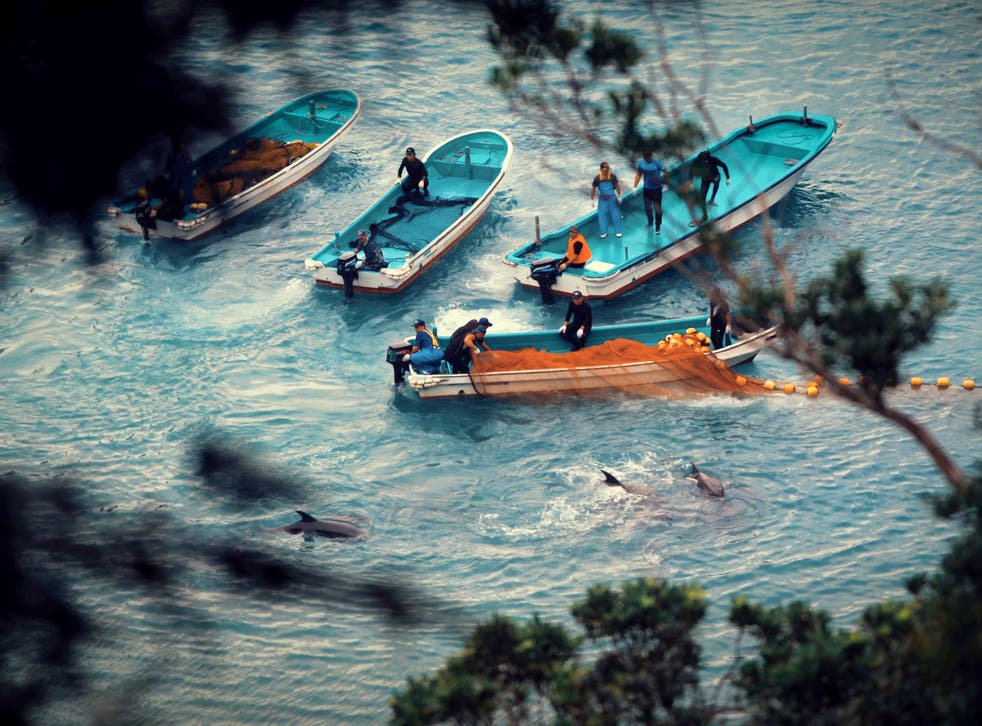
The corporate industrialized fishing interests as expected are working overtime in their attempts to discredit Seaspiracy. They are cherry picking the science and trying to suggest that industrial fishing is both sustainable and necessary. It’s not.Commercial industrialized fishing is not sustainable. It exists because of billions of dollars of government subsidies to prop it up. Remove the subsidies and the entire industry, an industry based on short term profit for short term gain will collapse.This film Seaspiracy is not directed at artisanal or indigenous fishing. In fact artisanal and indigenous fishing communities are being diminished and destroyed by corporate fishing. There are some positives. Kudos to Alaska for banning fish farms and for the hatcheries that support the wild salmon runs but this is an exception to the norm.For the most part the sea is being strangled of life by the super trawlers, the bottom trawlers, the huge seiners, the long-liners, the gill netters and by aquaculture.The situation is serious. It involves slavery, it promotes high seas piracy, it scours the sea bottom, it pollutes the marine environment with millions of tons of discarded plastic fishing debris.Corporate fishing is a global scheme of short term investment for short term gain and the fact is that coral reefs are dying, plastic is choking the depths, fish populations are being dangerously depleted and phytoplankton populations have been diminished by 40% since 1950 and phytoplankton produces more oxygen and sequesters more CO2 than all the trees and plants on land.How can it be justified for an endangered fish (Antarctic toothfish) to be caught and transported across the globe to be sold as Chilean sea bass in restaurants in Denver, Paris or a hundred other different cities? How can it be justified to feed millions of fish every year to pigs, chickens, farm raised salmon, cats and fur farms? How can it be justified to wipe out the herring runs off British Columbia to feed salmon in cages or to destroy seals in Canada or dolphins in Japan as scapegoats for the excessive greed of the fishing industry. I was raised in an Eastern Canadian fishing village in the Fifties and I have witnessed this steady diminishment of life in the sea and the astonishing ability of humanity to adapt and accept this diminishment. I have spent more than a half a century at sea in all the world’s oceans and I have seen the death, the destruction, the pollution and the greed.I don’t care what propaganda the industry and its enablers spread or how many biostitutes they hire to justify their greed. The fact is that a super trawler is an abomination against nature, a 100-mile long gill net or longliner is a weapon of mass ecological destruction and government subsidies are the evidence that worldwide, many governments are willingly complicit in the extermination of marine life and the collapse of marine eco-systems.I have seen with my own eyes the heart-breaking devastation of the Great Barrier Reef. We pulled one gill net from one ship (Thunder) from the depth of 2 kilometers off the coast of Antarctica that was 72 kilometers long and weighed 70 tons. We seized a drift net in the North Pacific that was over 100 miles in length and I’ve seen and smelt the bodies of a quarter of a million salmon rotting on the beach in Chile. Sustainable fishing is a myth and slapping the word onto a can of tuna claiming that no dolphins died is a blatant lie. And what about the tuna? 90% of Bluefin tuna populations have been eradicated? We massacre 70 million sharks a year primarily for their fins for a soup that has zero nutrition and then we complain when an average of five people die from shark attacks per year, a number lower than that of 40 people on average that die each year from falling from a skateboard. The fishing industry is driven by the politics and the economics of extinction. The more scarce the fish, the greater the demand and thus the greater the profit and there is almost a universal lack of economic or political will to police the high seas and to crack down on the poachers, the quota exceeders, the by-catch wasters and the corporate cartels that finance and control them. Predictably the industry trots out images of traditional fishermen, usually artisanal fishing communities implying that it is these hard-working individuals that we are seeking to shut down when it is the industrialized fishing operations that have been devastating artisanal and indigenous fishing communities around the world. After a long lifetime of voyages and campaigns and tens of thousands of sea miles, I have realized a truth and a reality that the industry works hard to ignore, discredit and deny. That truth is that life in the Ocean is being diminished and the very fact that we have lost 40% of our oxygen producing phytoplankton bodes darkly ill for the future of humanity. This is the reality. When the Ocean dies, we die with it.Note: For those who will surely try to claim that I am exaggerating about phytoplankton diminishment, here is a source for reference: (1) Source: Scientific American. Phytoplankton Population Drops 40 percent Since 1950 by Lauren Morello 2010.
As Netflix’s newest sustainability documentary racks up views, Sophie Gallagher looks at the biggest takeaways from the 90-minute film on fishing, marine destruction and modern slavery
he internet is home to tens of thousands of documentaries on everything from cat killers to Fyre festival, but some manage to cut through the noise, change the conversation and get people thinking differently. Just as Blackfish did in 2013 on animals in captivity, then Cowspiracy: The Sustainability Secret in 2014 on meat farming, now Netflix presents the 2021 version – Seaspiracy.
From the co-creators of Cowspiracy, this documentary on the fishing industry breaks new ground on the conversation around what it really means for seafood to be sustainable. It examines global fisheries, and shows how while many of us have been distracted by the problems caused by land agriculture, there was another problem brewing in our waters.
Travelling across the world from the Faroe Islands, to Thailand, Japan and Scotland, filmmaker and narrator Ali Tabrizi (and his partner) chart a journey from a childhood love of the ocean to pulling back the curtain on some of the biggest problems it faces, and whether those tasked with caring for it are really the stewards the public believe they are.
The documentary opens with all-too-familiar headlines of whales and other sea animals being washed up on beaches, their stomachs filled with plastic. As well as snapshots of highly-publicised campaigns about reducing the amount of plastic humans contribute to the ocean – in particular, cotton buds, straws and plastic bottles.
Tabrizi says: “There is a garbage truck load of plastic dumped every minute into the ocean and over 150 billion tonnes of microplastics are already there – they [the microplastics] now outnumber the stars in the milky way.” So far, nothing we don’t already know or haven’t seen in a David Attenborough documentary.
But it is not necessarily the plastic you might imagine
Given the amount of attention given to reducing household or personal plastic use and government campaigns to ban plastic cotton buds, straws and drinks stirrers, it is only fair that the public would see these as the greatest threats to the marine environment.
INDY/LIFE Newsletter
Be inspired with the latest lifestyle trends every week
Please enter your email addressPlease enter a valid email addressPlease enter a valid email addressSIGN UPI would like to be emailed about offers, events and updates from The Independent.Read our privacy notice
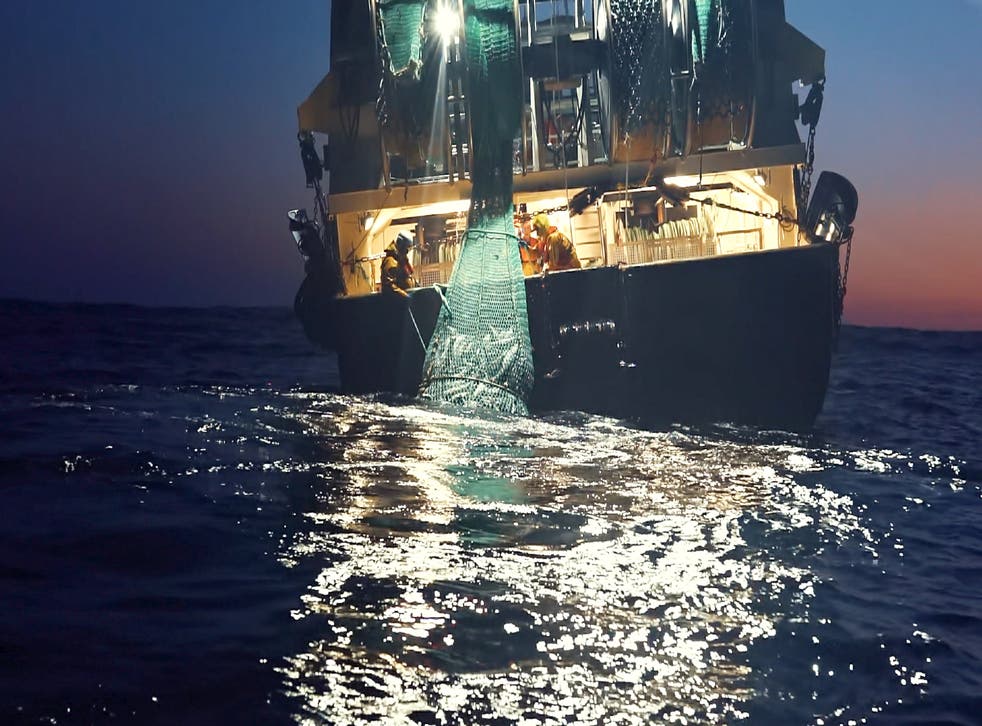
But Seaspiracy argues that actually one of the biggest plastic deposits are byproducts of commercial fishing, such as nets, claiming 46 per cent of waste in the great pacific garbage patch [a collection of marine debris in the North Pacific Ocean, also known as the Pacific trash vortex] is made up of fishing nets, while plastic straws only account for 0.03 per cent of plastic entering the ocean. And long-line fishing sets down enough lines to wrap around the planet 500 times every day.
(Netflix/Seaspiracy)
Environmentalist George Monbiot says: “Discarded fishing nets are far more dangerous for marine life than our plastic straws because they are designed to kill.”
It also claims that while 1,000 turtles are killed by plastic in the oceans, 250,000 sea turtles are captured, injured or killed by fishing vessels. Professor Calumn Roberts, a marine scientist, claims that the Deepwater Horizon oil spill in 2010 actually “benefited” marine life because “large areas were closed to fishing” giving the oceans a “respite”.
Bycatch is a huge problem caused by fishing
Bycatch is the fish or other mammals unintentionally caught when fishermen are trying to catch a target fish – for example, catching dolphins in nets designed for tuna fishing. Some of this bycatch is killed instantly but even that which is thrown back into the sea, it says is unlikely to survive. The film suggests that as many as 50 million sharks are caught annually as bycatch.about:blankabout:blank✕
Captain Peter Hammarstedt, from the Sea Shepherd nonprofit conservation society, says: “One of the most shocking things that most people don’t realise is that the greatest threat to whales and dolphins is commercial fishing. Over 300,000 whales and dolphins are killed every single year as a bycatch of industrial fishing.” Sea Shepherd also claims that up to 10,000 dolphins are caught in the Atlantic, off the west coast of France, every year during fishing.
Not only is this problematic in terms of destroying species but also for the climate, because whales and dolphins play a crucial role in fertilising phytoplankton in the sea, which Seaspiracy says absorbs four times as much carbon dioxide as the Amazon rainforest, and generates 85 per cent of all oxygen on earth.
(Netflix/Seaspiracy)
Labels aren’t all they are cracked up to be
If you are reassuring yourself that your seafood consumption is not harming dolphins as bycatch – or any other marine life – because it has the ‘dolphin safe’ label on the tin, or the Marine Stewardship Council labels, then Seaspiracy urges consumers to think again.Top Articles
Asked whether he could guarantee that every can of fish labelled ‘dolphin safe’ is actually so, Mark J. Palmer of the Earth Island Institute, in charge of the dolphin safe program, says: “No – nobody can [guarantee the product is dolphin safe] – once you’re out there in the ocean. How do you know what they’re doing? We have observers on board but the observers can be bribed and are not out on a regular basis.”
However in a followup statement on their website, Palmer has clarified: “When asked whether we could guarantee that no dolphins were ever killed in any tuna fishery anywhere in the world, I answered that there are no guarantees in life, but that by drastically reducing the number of vessels intentionally chasing and netting dolphins as well as other regulations in place, that the number of dolphins that are killed is very low.
We have observers on board but the observers can be bribed and are not out on a regular basis
“The film took my statement out of context to suggest that there is no oversight and we don’t know whether dolphins are being killed. This is simply not true.
“The bottom line is that the Dolphin Safe label and fishing restrictions save dolphin lives. Yes, commercial fishing is out of control in many cases worldwide. But canned Dolphin Safe tuna is far more protective of dolphins and target fish stocks than the vast majority of other fisheries.”
A spokesperson for the Marine Stewardship Council (MSC) added in defence of its own certification labels: “This certification process is not carried out by the MSC – it is independent of us and carried out by expert assessment bodies. It is an entirely transparent process and NGOs and others have multiple opportunities to provide input. All our assessments can be viewed online at Track a Fishery. Only fisheries that meet the rigorous requirements of our Standard get certified.
(Netflix/Seaspiracy)
“Contrary to what the film-makers say, certification is not an easy process, and some fisheries spend many years improving their practices in order to reach our standard. In fact, our analysis shows that the vast majority of fisheries that carry out pre-assessments against our criteria, do not meet these and need to make significant improvements to gain certification.”
Sustainable is not a defined term in seafood
As well as raising questions over labels such as ‘dolphin safe’ the film also asks whether there is any way that fishing can be sustainable or any type of fish we can eat that is not as bad for the oceans as large-scale commercial fishing. But much of the documentary seems to suggest sustainability is still too much of a grey term to be useful.
María José Cornax is the fisheries campaigns manager for Oceana Europe, a nonprofit ocean conservation organisation, says: “There is not a definition of sustainability as a whole for fisheries…The consumer cannot assess right not properly what fish is sustainable and what is not. The consumer cannot make an informed decision right now.”
There will be practically empty oceans by 2048
Dr Sylvia Alice Earle, an American marine biologist, explorer, author, and lecturer, says; “The estimate is by middle of 21st century if we keep taking wild fish at the level we are today there won’t be enough fish to catch,” predicting virtually empty oceans by by as soon as 2048.
Seaspiracy claims fishing catches up to 2.7 trillion fish per year, or 5,000,000 every single minute, and says that no industry on earth has killed as many mammals. It also highlights the problems generated by fishing methods such as bottom trawling [a method of fishing that involves dragging heavy weighted nets across the sea floor], which it claims wipes out an estimated 3.9 billion acres of sea floor per year.
Farming not the answer
The programme presents the option of farming as an alternative to catching wild fish from the seas. But on a visit to a salmon farm in Scotland, it reveals the problems of breeding in captivity such as illness, lice, and waste production.
It says that each salmon farm produces as much organic waste as 20,000 people and that the Scottish salmon industry produces organic waste equivalent to the entire population of Scotland each year. It also claims that as a result of shrimp and prawn farming, 38 per cent of the world’s mangrove forests have been destroyed.
(Netflix/Seaspiracy)
Slavery at sea is a massive problem
George Monbiot makes the comparison to “blood diamonds” when talking about the human impact of fisheries on the labour market, saying that slavery is still used on boats.
The documentary makes a comparison between the number of American soldiers that died during five years of the Iraq War – 4,500 – to the reported 360,000 deaths of fish workers during the same period. Captain Hammarstedt from Sea Shepherd says: “[It is] the same criminal groups behind drug trafficking and human trafficking.”
Former fishermen are interviewed at a safehouse in Thailand and claim that they were kept on boats for years – one says he was at sea for a decade – living in squalid conditions, facing death threats and being held at gunpoint. One claimed the ship’s captain kept dead bodies of other sailors in the freezer on board.
As well as human misery in the form of slavery – the documentary also makes the connection between the destruction of local fishing communities and people in poor communities being driven to subsistence on the land, eating more bush meat and land mammals, where fish is in short supply. The documentary makes the link between this increase and the outbreak of Ebola in west Africa.
(Netflix/Seaspiracy)
The best thing you can do is stop eating fish
Although the documentary does explore different options – such as eating more sustainable fish or only fish from farms rather than from the wild – it concludes that the “best thing to do for marine ecosystems is not eat fish” at all. It also says that there should be established “no take zones” for fishing around the world in order to preserve underwater habitats.
It says that long-held beliefs that fish do not feel pain or are not intelligent enough to be fearful is unfounded, and that other reasons to avoid fish include the heavy contamination of industrial pollutants – including mercury, heavy metals and dioxins.
As far as Seaspiracy is concerned, fish should be off the menu altogether.
But MSC says: “Sustainable fishing does exist and helps protect our oceans…One of the amazing things about our oceans is that fish stocks can recover and replenish if they are managed carefully for the long-term.
“While we disagree with much of what the Seaspiracy documentary-makers say, one thing we do agree with is that there is a crisis of overfishing in our oceans. However, millions around the world rely on seafood for their protein needs. With the global population set to reach 10 billion by 2050, the need to harness our natural resources more responsibly is more urgent than ever. Sustainable fishing has a vital role to play in securing those resources.”
Scientists can now use camera traps, instead of bushmeat hunters, to find an animal’s whereabouts.
Camera traps, devices used to capture wildlife using motion sensors, are saving the animals from bushmeat hunters and spotting rare animals in the process.
In the West African country of Togo, researchers were able to see images of the Walter’s duiker, a petite African antelope species, for the first time in the wild, according to Gizmodo.
Rare species of aardvarks and a mongoose were also discovered roaming the wild in Togo using camera traps.
“Camera traps are a game changer when it comes to biodiversity survey fieldwork,” University of Oxford wildlife biologist Neil D’Cruze told Gizmodo. “I’ve spent weeks roughing it in tropical forests seemingly devoid of any large mammal species. Yet when you fire up the laptop and stick in the memory card from camera traps that have been sitting there patiently during the entire trip—and see species that were there with you the entire time —it’s like being given a glimpse into a parallel world.”
America is changing faster than ever!Add Changing America to your Facebook or Twitter feed to stay on top of the news.
For bushmeat hunters, who specialize in gathering wildlife in rural communities, their services, considered illegal and an unsustainable over-hunting practice, are no longer needed for biologists to gather information. Some bushmeat hunters would kill rare animals to sell their rare carcasses to market.
The Walter’s duiker was discovered in 2010 when bushmeat specimens were compared to other known duiker specimens. However, recent images of the Walter’s duiker are the first scientists have ever seen. Few and far between, some rare species do not make the endangered listing because of the International Union for Conservation of Nature classifies them as “data-deficient.”
The Wildlife Conservation Research Unit, a Department of Zoology at the University of Oxford in England, also known as WildCRU, is trying to make a difference.
“This graceful antelope has, for the last 200 years, displayed a great talent for avoiding scientists, but proven tragically less adept at avoiding nets, snares and hunting dogs,” zoologist at the University of Oxford David Macdonald said. “Plotting their whereabouts in bushmeat markets is roughly analogous to plotting the habits of deer in the UK by mapping their occurrence on butchers’ slabs.”
State leads US in highest daily new virus cases, infection rate, positive test rate
A screenshot of Covid Act Now’s map of the U.S. with states color-coded according to their “Covid Risk Level.” Michigan is labeled as at “very high risk” of a COVID outbreak, along with 10 other states, according to data. Photo courtesy of Covid Act Now’s website. — April 2, 2021(Covid Act Now)
Michigan’s coronavirus spread is now the worst in the country as of Friday, as the state’s daily case counts and infection rate continue to rise, according to recent data.
Over the last several weeks, Michigan has seen COVID-19 has spread more rapidly, causing virus cases and hospitalizations to surge once again.In mid-March, Michigan had the highest COVID infection rate in the U.S., according to data from Covid Act Now — now the state is leading the nation in daily new coronavirus…