Traeger, a golden retriever, was caught in a wolf trap for about 90 minutes in January. The trap was illegally placed on Trail Creek Road above Mackay. He has recovered from his injuries.
Michelle Stennett of Ketchum sits with her golden retriever Traeger. The dog was caught in a wolf trap and Stennett suffered injuries when she tried to get him out of the trap. The unmarked trap was on Trail Creek Road above Mackay. The location and absence of trapper identification are both violations of Idaho law.
The bright sun along Trail Creek Road above Mackay drew three women and a dog out for an afternoon hike on Jan. 2, but the chilly day turned cold after the dog was caught in a wolf trap for about 90 minutes…
Error. Something went wrong.AZ Game and Fish frees entrapped javelinaBy KOLD News 13 Staff| March 31, 2021 at 3:47 PM MST – Updated March 31 at 3:47 PM
TUCSON, Ariz. (KOLD News 13) – A days-long search for a javelina entangled in a trap finally came to an end Wednesday and the little peccary, freed.
Officials with the Arizona Game and Fish Department searched for the animal since Saturday, March 27, 2021, according to a tweet from the agency.
The third year of the South Dakota Game, Fish, and Parks Nest Predator Bounty program begins today (April 1, 2021).
As part of Gov. Kristi Noem’s Second Century Initiative, tails from raccoon, striped skunk, badger, red fox and opossum will be eligible for $10 per-tail payments with a maximum total payout of $500,000. The per-tail payment $5 more that was paid last year.
Tails eligible for submission can be harvested via trapping or hunting. Participants need a hunting, furbearer or fishing license to be eligible to participate in the bounty program. Landowners harvesting nest predators for the program on their own land and youth under 18 are exempt from this license requirement.
“New to 2021 is the Youth Participation Trap Giveaway,” said GFP Department Secretary Kevin…
Future for bears still in flux as new U.S. Fish and Wildlife leadership develops strategy.by Amanda Eggert04.01.2021
The U.S. Fish and Wildlife Service, which administers the Endangered Species Act, is recommending that grizzly bears in the Lower 48 retain threatened status in the near-term, following the recent release of afive-year status review.
According to the report, grizzly bears in two regions — the Greater Yellowstone Ecosystem and the Northern Continental Divide Ecosystem— have made strong strides toward biological recovery, but concerns about limited habitat connectivity, human-caused mortality, motorized vehicle use in grizzly habitat, and uncertainty surrounding future conservation efforts factored into the decision to keep grizzly bears in the Lower 48 listed.
Agency spokesperson Joe Szuzwalak said FWS is still deciding on next steps following the report’s release. He said new leadership in the Biden administration is “just getting…
Habitat, not predators, is the major factor determining mule deer numbers in Nevada. (Photo: U.S. Fish and Wildlife Service).
Are coyotes and mountain lions the reason Nevada’s mule deer population rests well below historic high levels? Or is it the changing landscape and habitat in this most arid of states?
You’ve probably guessed the answer. Here’s some of the story.
In the 1800s when wagon trains, explorers, miners, and prospectors were traveling and living in Nevada, the only ungulates (hoofed animals) present in significant numbers were pronghorn (antelope) and bighorn sheep. Deer were scarce to absent.
In the early 1900s, mule deer were imported to Nevada by railroad and turned loose in eastern Nevada to serve as meat for mining camps. Deer hunting was probably a motive, too.
States that are home to these bears should be doing all they can to protect them but instead they have chosen to sell them out to trophy hunting interests. Photo by Don Getty1.2KSHARES
Grizzly bears in the lower 48 states should retain their current protections under the Endangered Species Act, according to the U.S. Fish and Wildlife Service, the primary federal agency that makes decisions on the conservation of wildlife species. This is encouraging news for these native carnivores who have been under attack from trophy hunting interests in the states they live in, and who need all the help they can get to survive.
In a report published yesterday, the USFWS recommended that grizzly bears retain “threatened” status based on a five-year scientific status review.
Under the previous administration, the USFWS, in 2017, sought to prematurely delist grizzly bears in the Greater Yellowstone Ecosystem as a handout to trophy hunters. We stopped this effort—and with it the first trophy hunting season on grizzlies in decades—in its tracks with a federal court victory in 2018 followed by an appeals court victory in 2020.
There are fewer than 1,800 grizzly bears now in the lower 48 states—a small number, by any measure. These animals were nearly wiped out of existence in the United States between 1915 and 1975. Today they occupy less than 2% of their original range in the United States.
Grizzly bear populations increase slowly. Female bears do not reproduce until they are between three and eight years of age and they produce small litters, with many years between each litter. Not all of the cubs survive to adulthood. That is why every bear must count, and why it may take a decade for a female bear to replace herself in the population. And the threats to their survival are many, including poachers, ranchers and state wildlife agencies who continually target these animals and kill them over fear and exaggerated claims that they kill cattle—claims we debunked using USDA data.
In its report, the USFWS pointed to tremendous threats grizzlies continue to face, including “limited habitat connectivity, management of access by motorized vehicles, human-caused mortality and uncertainty surrounding future conservation efforts in some ecosystems.”
The USFWS report also correctly recognized that the long-term survival of grizzly bears depends on establishing populations in parts of their historic range where they remain absent, like Washington’s North Cascades and Idaho’s Bitterroot ecosystem. We urge the USFWS to follow through by developing a comprehensive plan to achieve a truly interconnected, recovered population of grizzly bears.
States that are home to these bears should be doing all they can to protect them but instead they have chosen to sell them out to trophy hunting interests. We recently told you about Montana’s state legislature passing a host of bills in anticipation of a federal delisting. Those bills would have, among other atrocities, allowed ranchers to shoot grizzly bears they “perceived” as a threat to their livestock. They included measures such as barring the relocation of grizzly bears to promote their recovery.
These bills also allow hound-hunting of black bears in early spring and expanding wolf snaring and trapping, which could also harm grizzly bears and cubs. Fortunately, continuing federal protection will shield grizzlies from some of the worst impacts of these bills if they become law.
The Montana and Wyoming delegations in Congress are also engaged now in efforts to delist these bears—a shortsighted approach because grizzly bears and other wildlife contribute heavily to these states’ economies, with thousands of tourists flocking there each year to catch a glimpse of these animals in the wild.
We are encouraged by the USFWS recommendation today, but so long as these other threats to grizzly bears continue our work is far from done. You can rest assured we will keep a vigilant eye and continue to work hard to ward off efforts by bad state legislators, wildlife managers and members of Congress to hurt these iconic animals.
Sara Amundson is president of the Humane Society Legislative Fund.
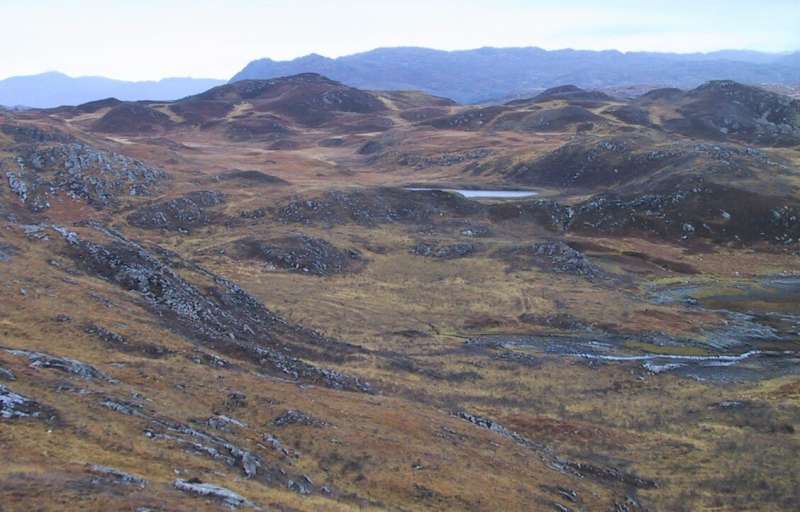
An isolation lake in north-west Scotland. Sediment analysed from the bottom of this low-lying lake tells us that it was once connected to the ocean. Credit: Professor Ian Shennan, Department of Geography, Durham University.
A team of scientists, led by researchers from Durham University, used geological records of past sea levels to shed light on the ice sheets responsible for a rapid pulse ofsea-level risein Earth’s recent past.
Geological records tell us that, at the end of the last ice age around 14,600 years ago, sea levels rose at ten times the current…
More than 20 world leaders came together Tuesday to call for a “new international treaty for pandemic preparedness and response” that would help build the cooperation needed to manage inevitable future public health crises, though a number of crucial countries are absent from the list of signatories, including China which has come under global fire for its lack of cooperation throughout this pandemic and the SARS pandemic that preceded it.
World leaders called today for an international treaty on pandemic preparedness. GETTY
KEY FACTS
In a joint article published in newspapers around the world, the leaders including the U.K.’s Boris Johnson, Germany’s Angela Merkel, France’s Emmanuel Macron and Korea’s Moon Jae-in said the Covid-19 pandemic has been the biggest challenge to world order since World War II.
Twenty three countries backed the idea of the international treaty, as well as World Health Organization chief Dr. Tedros Adhanom Ghebreyesus and European Council president Charles Michel.
The group said future pandemics and health emergencies are inevitable and proposed a treaty to foster international cooperation akin to the global settlement that emerged from World War II.
The treaty would see international cooperation on data sharing, improved alert systems, and the research, development and distribution of vaccines, protective equipment and other essential medical supplies, as well as underscore the “One Health” approach to public health that recognizes the interconnected nature of human, animal and environmental health.
The leaders, a number of whom are involved in publicspats over vaccine supplies, also highlighted immunization as a “global public good” and underscored the need for equitable access, acknowledging that there “is more we can do to promote global access” than current efforts. Top ArticlesHow To Replace The Battery InA Dell LaptopSKIP AD
KEY BACKGROUND
Far more countries will need to come on board to make such a treaty effective at tackling future pandemics, especially given the potential for problematic diseases to emerge in just a single location and spread globally. History has shown time and again that poor surveillance and inadequate responses in one country imperils the entire world. Disease surveillance from the U.S., India and Russia would all be particularly important given their geographic and demographic size as well as political clout but outbreaks can emerge anywhere. Also conspicuously absent is China, which would be especially important in making an international framework work. China has come under fire for its early handling of the Covid-19 pandemic, especially its lack of transparency regarding early cases of the disease and for obstructing investigations into the origins of the novel coronavirus. China’s apparent failure to learn from the earlier SARS pandemic, which shared many characteristics with Covid-19, including allegations of cover-ups, serves to underscore the need for international cooperation.
SURPRISING FACT
Indonesia, one of the signatories, came under heavy fire in 2007 for refusing to share H5N1 bird flu samples with WHO researchers. The global community decried the move, which broke with decades of open sharing and could have severely hampered the ability of scientists to monitor the dangerous virus, which has pandemic potential should it spillover into humans. At the time, Indonesia said it would not share samples on the basis that they could be used to produce a vaccine that the country may not be able to afford..
BIG NUMBER
23 countries backed the proposal: Fiji, Portugal, Romania, Britain, Rwanda, Kenya, France, Germany, Greece, Korea, Chile, Costa Rica, Albania, South Africa, Trinidad and Tobago, the Netherlands, Tunisia, Senegal, Spain, Norway, Serbia, Indonesia, and Ukraine.
CRUCIAL QUOTE
“No single government or multilateral agency can address this threat alone,” the leaders wrote, adding: “The question is not if, but when.”
March 31, 2021 at 1:47 pmUpdated March 31, 2021 at 1:53 pm
A wildfire burns through part of the vast Pantanal wetlands in Mato Grosso state, Brazil, on Aug. 29, 2020. Tropical forests around the world were destroyed at an increasing rate in…More
The loss of forests critical to protecting wildlife and slowing climate change accelerated during 2020, despite a worldwide pandemic that otherwise led to a dramatic drop in greenhouse gas emissions, a global survey released Wednesday has found.
The Earth saw nearly 100,000 square miles of lost tree cover last year — an area roughly the size of Colorado — according to the satellite-based survey by Global Forest Watch. The change represents nearly 7% more trees lost than in 2019.
The vital, humid primary forests of the tropics, which store immense amounts…



 Top Articles


