


Credit…Alec Soth/Magnum Photos
The Times is committed to publishinga diversity of lettersto the editor. We’d like to hear what you think about this or any of our articles. Here are sometips. And here’s our email:letters@nytimes.com.
Follow The New York Times Opinion section onFacebook,Twitter (@NYTOpinion)andInstagram.
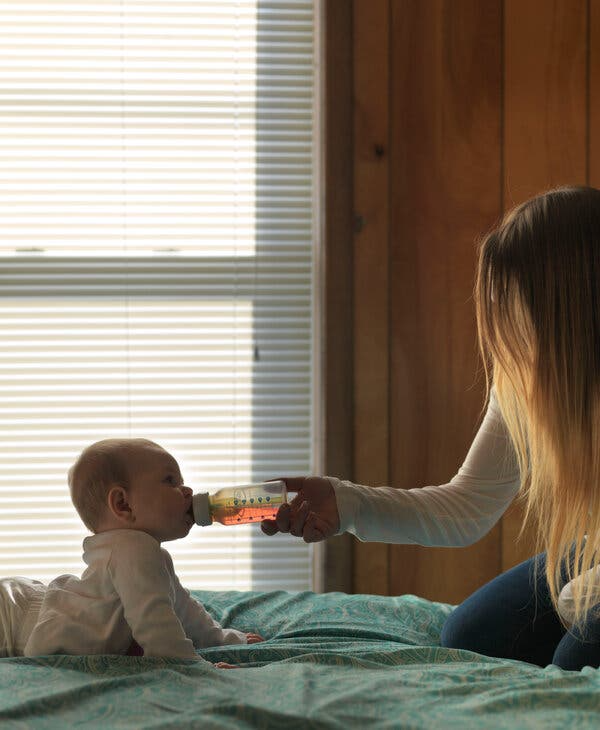
Three scenarios for a more fertile American future.
Credit…Alec Soth/Magnum Photos
Opinion Columnist
The declining American birthrate is a frequentpreoccupationof this column, and over the years that I’ve been writing about the problem it’s only gotten worse, with the apparent Covid-19baby busta punctuation mark.
But with the pandemic’s end inspiring various forms of optimism, hopes of faster growth and scientific breakthroughs, it’s worth considering what optimism about the future of fertility might look like. Because if you assume that dynamism and growth are desirable…
View original post 751 more words

https://www.foxnews.com/great-outdoors/missouri-first-black-bear-hunting-season-fall
5 hours ago
closehttps://static.foxnews.com/static/orion/html/video/iframe/vod.html?v=20210329164550#uid=fnc-embed-1
Bear down,Missouri.
The Show-Me State will host its first-everblack bear huntin a limited season this fall, officials have announced.
On Friday, the Missouri Department of Conservation (MDC) revealed that the Missouri Conservation Commission gave the green light to a black bear hunt from October 18 – 27 this year. The 10-day hunt will be exclusive to residents of Missouri and take place in designated zones in the southern half of the state.

The Missouri Conservation Commission gave the green light to a black bear hunt from October 18 – 27 this year.(iStock)
NY BEAR HUNT APPROACHES RECORD YEAR AS BLACK BEAR POPULATIONS ‘PROSPER’
Missouri is home to about…
View original post 336 more words

BYScott Cooper, Left VoicePUBLISHEDMarch 28, 2021SHAREShare via FacebookShare via TwitterShare via Email

You’ve likely seen the memes: what appears as a tiny bulldozer at water’s edge, moving the earth in an effort to dislodge a giant container ship. It has come to represent everything from taking a daily walk in a coronavirus-riddled world to the effort required in the struggle to complete a PhD dissertation.
But for global capitalism, there’s no joke.
One of the world’s largest container ships, the Taiwan-owned MV Ever Given (Evergreen) has lodged itself sideways in the narrow waterway of Egypt’s Suez Canal after running aground when a gust of wind blew it off course on Tuesday, March 23. The ship is longer than four football fields, almost as long as New York City’s Empire State Building is tall. The nearly quarter-of-a-mile-long, 247,000-ton ship is blocking the southern entrance to the canal from the Red Sea, bringing marine traffic to a standstill along one of the busiest trade routes on the planet.
Get the news you want, delivered to your inbox every day.
As dredgers, heavy earth-moving equipment, and tugboats work around the clock to free the ship, salvage experts are warning that it could be weeks before traffic can resume again. That is likely the truth, despite the Egyptian president’s advisor on seaports — who also happens to be the former chairman of the Suez Canal Authority (SCA) — telling Agence France Presse on Thursday that navigation through the canal “will resume again within 48–72 hours, maximum.”
At this writing, the ship hasn’t budged. The SCA said on Thursday that “about 19,600–26,000 cubic yards of sand had to be moved, reaching a depth of 40 to 50 feet along the canal’s bank, to dislodge the ship.”
The SCA’s pronouncements seem to be little more than wishful thinking. On Wednesday, the agency allowed 13 ships to enter the canal’s northern end from the Mediterranean Sea, but they made it only as far as a mid-canal lake where they have just been “idling.”
What looms for global capitalism is to be forced to reroute cargo ships around the southern tip of Africa, which would be a devastating blow to global supply networks that have already taken a huge hit from Covid-19. Going through the Suez Canal saves nearly nine days of travel from Singapore to Rotterdam, for example, shaving off some 6,000 kilometers of travel. By contrast, a trip through the canal takes about six hours.
Beyond the obvious costs, the environmental impact is significant. The canal route cuts carbon dioxide emissions by nearly half.
Nearly a third of the world’s shipping container freight on any given day passes through the Suez Canal, which is about 12 percent of the total goods traded globally by volume, according to Reuters. The shutdown has an acute effect on Egypt, which counts on canal traffic for much of its hard currency — some $5.6 billion in 2020, even with the generalized slowdown of global trade due to Covid-19.
The blockage of the Suez Canal — which is holding up about $9.6 billion in goods every day and costing an estimated $400 million per hour — is exacerbating the crisis of capitalism. It has caused crude oil prices to jump — more than 10 percent of the world’s crude oil passes through the canal — and is expected to force major price increases on just about everything that typically makes its way between Asia and Europe, regardless of the direction the goods are headed.
This could not have come at a worse time for the capitalists. As the Financial Times explains, the accident “has drawn attention to the inherent fragility of tightly stretched global supply chains at the very moment when they are already being buffeted by a pandemic and in an era when the philosophical underpinnings of global trade are being challenged. The strains created by Covid-19 … have exposed problems in the global trading system. Those difficulties could plausibly push governments and businesses alike to rethink a just-in-time supply-chain model that has arguably wrung efficiencies from the system at the cost of resilience.”
The pandemic, the article continues, “was already exposing vulnerabilities in global supply chains. Container shipping rates have more than tripled as companies that control shipping lines took out capacity in expectation of falling demand. Now it costs about $4,000 to ship a 40-ft container between east Asia and the U.S. west coast, up from $1,500 at the start of 2020.”
That’s extra money the capitalists do not want to be spending — even with goods moving. To expend such resources so ships can sit idly in the Suez Canal does nothing to help expand the field of profit-making and exploitation global capitalism desperately needs to sustain itself. But, as one supply chain consultant put it, such situations seem unavoidable: “The industry’s supply chain is several miles long, but only an eighth of an inch deep.”
Stuck in the muck, desperately trying to dig out of a crisis — it’s a metaphor for capitalism, especially since the start of the Great Recession in 2008. When the ship will be freed is anyone’s guess. The one thing we can be certain of is that whatever that costs the capitalists, they will find a way for you and me to pay the price.
By Karen Davis, PhD, President of United Poultry Concerns
© This article originally appeared in the Young Friends section of the July 1994 issue of Best Friends Magazine.
Our rooster, Glippie, sings on the roof of his house, adding to the music of the yard a steady, quiet trill. Living with chickens has made me realize how tuneful and talkative these fascinating birds are. The language of chickens is an essential part of their personalities and of their highly developed social life. Chickens start talking even before they are born.
Peep! About twenty-four hours before a chick is ready to hatch, it starts peeping to notify its mother and siblings that it is ready to emerge from its shell. This activity, which biologists call “clicking,” helps to synchronize the hatching of the baby chicks. A communication network is established among the chicks, and between the chicks and their mother, who must stay calm and unruffled for as long as two days while all the peeping, sawing, and breaking of eggs goes on underneath her. Since some of the chicks may have aborted in the shell during incubation, the peeps inform her how long she needs to continue sitting on the nest.


Peeps and clucks. As soon as all the eggs are hatched, the hungry mother and her brood go forth eagerly to eat, drink, scratch and explore. The chicks venture away from their mother, communicating back and forth all the while by peeps and clucks. The hen keeps track of her little ones by counting the peeps of each chick and noting the emotional tones of their voices. When a chick becomes separated from its mother, it gives a distress call, and the mother hen dashes out to find it and, if the chick is in danger, to deliver it-hopefully-from the hole in the ground, tangled foliage, or threatening predator.
Nesting calls. When a hen is ready to lay an egg, she gives a pre-laying, or nesting, call, inviting her mate to join her in finding a nest site.
Together, the hen and rooster find and create a nest by pulling and flinging around themselves twigs, feathers, hay, leaves and loose dirt, after they have scraped a depression with their beaks and feet. But first comes the search.

Primeval grumbling growls and gentle squawks. When the rooster finds a place he likes (under a log, perhaps), he settles into it and rocks from side to side, while turning in a slow circle and uttering primeval grumbling growls which may or may not convince the hen that this is the place. She may accept it, or they may look for another site. Throughout the search, the hen squawks gently with her beak open, followed by a series of short squawks of diminishing intensity, to keep the rooster coming back to her while she is away from the protection of the flock.

Egg cackles. Upon laying her egg, the hen gives out an egg cackle to announce her happy accomplishment. This brings the rooster quickly to her side, and together they rejoin the flock. To human ears, the egg cackle resembles the chicken’s cry of alarm, but to the birds there is a clear difference. A hen with chicks will continue feeding during the egg call, but will dart for cover when the alarm call goes out.
The “come over here” squawk. Often I have heard one of our hens call out to her rooster partner: “I’m all alone. Get over here!” Our normally quiet hen, Petal, raises a ruckus if her adored Jules is out of her sight for long, even if she has not just laid an egg. Her otherwise demure little voice becomes SQUAWK, SQUAWK, SQUAWK. Jules lifts his head up, straightens up, mutters to himself in what can only be described as Chicken Talk, and does an about-face. Off he goes to comfort Petal. Silence.

Cock-a-doodle-doo. Why do roosters crow? Remember that chickens are originally from the jungle. Their wild relatives have lived in tropical forests for tens of thousands of years. Perched in the trees, and sensitive to infrared light, roosters see morning light at least forty-five minutes before we do.
They also have very keen ears, a distinct advantage when living amid dense foliage. It can be difficult to see a predator and keep track of one’s flock when the sub-flocks are constantly moving from place to place while feeding. Through their crowing, every rooster can recognize the crow of at least thirty other roosters, probably more. As the protectors of the flock, roosters are always on the lookout.

A rooster’s crowing has been a muse behind many artistic works.
A shrill cry. If a rooster spots danger, he sends up a shrill cry. The other roosters echo the cry. Thereupon, the whole flock will often start up a loud, incessant, drumbeating chorus with all members facing the direction of the first alarm, or scattering for cover in the opposite direction.
All clear? All clear! When it looks safe again, an “all clear?” query goes out from the rooster, first one, followed by the others, in their various new places. Eventually, the “all clear’ crow is sent up by the bird who first raised the alarm, and a series of locator crows confirms where every other rooster and his sub-flock are at this point.
The “here’s food” song! The finding of food elicits another kind of vocal communication within the flock. Roosters love to find food and call their hens to the feast while they play deferential host at the banquet. The speed and intensity of the “here’s food” song varies according to the type of delicacy and the amount.

According to a biologist, “Two or three kernels of corn elicit about half the intensity and speed between song peaks that several bugs will be granted. When the hens hear this song they and the chicks come running to check out what the rooster has found to eat.” Soon the good news is excitedly clucked to everybody to come join the party. Hens call their chicks to food in a similar clucking voice.
Soft trills and peeps. My first chicken was a crippled hen named Viva. She touched me deeply with her soft trills and peeps that seemed to come from somewhere in the center of her body, as her tail pulsed at precisely the same time.
The piping voice of woe. In addition to their other vocal language, chickens have a piping voice of woe and dreariness whenever they are bored or at a loose end.
Occasionally, one of our hens has to be kept indoors for a while, perhaps because she is recovering from an illness or because she is a newly rescued hen who has not yet joined the flock outside. Wearily, she will wander about the rooms, fretting, or tag disconsolately and beseechingly behind me, yawning and moaning like a soul in the last stages of ennui.

A huddle of peace and well-being. As boisterous as chickens often are in the resurgent dramas of their daily life, there is a stillness in them which includes singing, often at the end of a busy day as they settle down on their perches for the night.

The historian Page Smith says of the hen in The Chicken Book that she is “rich in comfortable sounds, chirps and chirrs, and, when she is a young pullet, a kind of sweet singing that is full of contentment when she is clustered together with her sisters and brothers in a huddle of peace and well-being, waiting for darkness to envelop them.”
______________________________________________________________________________
KAREN DAVIS, PhD is the President and Founder of United Poultry Concerns, a nonprofit organization that promotes the compassionate and respectful treatment of domestic fowl including a sanctuary for chickens in Virginia. She is the author of Prisoned Chickens, Poisoned Eggs: An Inside Look at the Modern Poultry Industry, More Than a Meal: The Turkey in History, Myth, Ritual, and Reality, The Holocaust and the Henmaid’s Tale: A Case for Comparing Atrocities and other groundbreaking publications.
______________________________________________________________________________
Introduction to the chicken talk article is by Manish M, 14-year old vegan activist from Trichy, Tamil Nadu and contributor at Vegan India! website.
______________________________________________________________________________
Image credits
 Cover: Image by Светлана Бердник from Pixabay
 Peep!: Image by Pexels from Pixabay
 Peeps and Clucks: Image by Sabine Löwer from Pixabay
 Nesting calls: Photo by Sarah Halliday on Unsplash
 Egg crackles: Photo by Sheri Hooley on Unsplash
 The "come over here" squawk: Image by Ulrike Leone from Pixabay
 Cock-a-doodle-doo.Image by Prettysleepy from Pixabay
 All clear! Photo by Sarah Halliday on Unsplash
 Here’s food. Photo by Zosia Korcz on Unsplash
 Huddle of peace. pixy.org

BYJ. Alexander Navarro,The ConversationPUBLISHEDMarch 28, 2021SHAREShare via FacebookShare via TwitterShare via Email
READING LISTENVIRONMENT & HEALTHIn Louisiana, Activists May Be Winning a Battle Against Environmental RacismLGBTQ RIGHTSCorporate Media Biases Threaten the Passage of Landmark LGBTQ ProtectionsPOLITICS & ELECTIONSThreat of Authoritarianism Is No Longer on the Horizon: It’s Arrived in the GOPIMMIGRATIONComplexities at the Border Are Lost as Media, GOP Paint Situation as a “Surge”POLITICS & ELECTIONSGeorgia Republicans Just Passed a Law to Make It Easier to Overturn ElectionsPOLITICS & ELECTIONSDominion Voting Systems Sues Fox News for $1.6 Billion
Picture the United States struggling to…
View original post 1,150 more words
Ashwani Sharma28 March 2021FacebookTwitterGoogle +LinkedinWhatsappFollow Outlook India OnNews

Animal husbandry and wildlife teams at Pong DamFile Photo: Maritunjay Puri
Himachal Pradesh, which witnessed a temporary lull in bird flu cases, has once again reported deaths of migratory birds and this time the bar headed geese seem to be the latest victim of the H5N1 virus.
Principal Chief Conservator of Forests (Wildlife) Archana Sharma said 27 birds were found dead during the last three days at the state’s Pong Dam wetland.
This development…
View original post 159 more words
Cathy LissGuest OpinionView Comments
COVID-19 has not only hit humanity hard; it has also devastated millions of mink trapped in fur farms across the globe.
In some European countries, mutated forms of the virus that incubated among these farmed mink populations have reportedly jumped back to humans. Closer to home, COVID-19 outbreaks have been confirmed on mink farms in Oregon, Michigan, Wisconsinand Utah, infecting and killing tens of thousands of mink.
And, just in the last several months, two mink that tested positive for COVID-19 escaped their Oregon farm, raising the alarm about disease transmission to wild animals.
Recently, State Sen. Floyd Prozanski, D-Eugene, with support from the Center for Biological Diversity, introduced a bill to phase out the state’s 11 permitted mink farms by the end of this year.
A public hearing before the Senate Committee on Natural Resources and Wildlife Recovery is scheduled for April 5…
View original post 769 more words
https://www.huffpost.com/entry/livestock-animals-ships-suez-canal_n_605ec39dc5b67ad3871fd53a
03/27/2021 09:27 am ET
“My greatest fear is that animals run out of food and water and they get stuck on the ships,” said an Animals International representative.
Thousands of animals are packed into ships stuck backed up at the Suez Canal, according to multiple reports, raising alarms about their welfare.
Bloomberg estimates 10 ships stuck in and around the canal are carrying livestock; The Guardian reported that tracking data show that at least 20 ships are transporting animals. Most of the animals are believed to be sheep, but some ships could also be carrying cattle.
The ships now face major delays as the container ship Ever Given remained wedged in Egypt’s narrow canal Saturday after running aground on Tuesday. Dislodging it may take at least a week.
Ships carrying livestock usually bring enough food and water for just a few extra days, sources told Bloomberg. Then ships either have to head to a port for extra feed, or arrange to have another vessel unload supplies. Ships could also try to sell the animals quickly in a nearby country.
“I wouldn’t expect just after a two-day delay for a problem to have built up,” Peter Stevenson, chief policy officer at animal welfare group Compassion in World Farming, told Bloomberg. “It’s as time goes by that the problems get worse. Occasionally, there are real scandals when things go wrong, but it’s a day-to-day horror.”
The organization has previously called for an end to live-animal shipments.
Georgios Hatzimanolis, a spokesperson for the tracking website Marine Traffic, told The Guardian that while some livestock ships were waiting to enter the canal, three “appear to be stuck at various points in the canal.”
Five of the ships identified had loaded animals in Spain, and nine had loaded in Romania earlier this month, according to Animals International.
“My greatest fear is that animals run out of food and water and they get stuck on the ships because they cannot be unloaded somewhere else for paperwork reasons,” Gerit Weidinger, European Union coordinator for Animals International, told The Guardian.
“Getting stuck on board means there is a risk [for the animals] of starvation, dehydration, injuries, waste buildup so they can’t lie down, and nor can the crew get rid of dead animal bodies in the [Suez] canal,” she said. “It’s basically a ticking biohazard time bomb for animals and the crew and any person involved.”
The U.S. has offered to aid efforts to move the Ever Given to open the canal. Several incoming vessels are now being diverted around Africa’s Cape of Good Hope, and dredging vessels are working around the clock to dislodge the massive ship.


