By DAVID SHARP, Associated Press 1 day ago
Regina King, Issa Rae and More Stars Who Stunned in Jaw-Dropping Looks at…The idyllic New England town of Wellsbury from ‘Ginny & Georgia’ is closer…
PORTLAND, Maine (AP) — Bill Griffin waited more than a year for this moment: Newly vaccinated, he embraced his 3-year-old granddaughter for the first time since the pandemic began.
“She came running right over. I picked her up and gave her a hug. It was amazing,” the 70-year-old said after the reunion last weekend.
Spring has arrived with sunshine and warmer weather, and many older adults who have been vaccinated, like Griffin, are emerging from COVID-19-imposed hibernation.
From shopping in person or going to the gym to bigger milestones like visiting family, the people who were once most at risk from COVID-19 are beginning to move forward with getting their lives on track. More than 47% of Americans who are 65 and older are now fully vaccinated.
Visiting grandchildren is a top priority for many older adults. In Arizona, Gailen Krug has yet to hold her first grandchild, who was born a month into the pandemic in Minneapolis. Now fully vaccinated, Krug is making plans to travel for her granddaughter’s first birthday in April.
“I can’t wait,” said Krug, whose only interactions with the girl have been over Zoom and FaceTime. “It’s very strange to not have her in my life yet.”
The excitement she feels, however, is tempered with sadness. Her daughter-in-law’s mother, who she had been looking forward to sharing grandma duties with, died of COVID-19 just hours after the baby’s birth. She contracted it at a nursing home.
Isolated by the pandemic, older adults were hard hit by loneliness caused by restrictions intended to keep people safe. Many of them sat out summer reunions, canceled vacation plans and missed family holiday gatherings in November and December.
In states with older populations, like Maine, Arizona and Florida, health officials worried about the emotional and physical toll of loneliness, posing an additional health concern on top of the virus.
But that’s changing, and more older people are reappearing in public after they were among the first group to get vaccinated.
Those who are fully vaccinated are ready to get out of Dodge without worrying they were endangering themselves amid a pandemic that has claimed more than 540,000 lives in the United States.
“Now there’s an extra level of confidence. I am feeling good about moving forward,” said Ken Hughes, a 79-year-old Florida resident who is flying with his wife for a pandemic-delayed annual trip to Arizona in April.
Plenty of older adults are eager to hop on a jet to travel. Others are looking forward to the simpler things like eating at a restaurant, going to a movie theater or playing bingo.
Sally Adams, 74, was among several older people who showed up for “parking lot bingo” in Glendale, Arizona. She felt safe because she’d been vaccinated and because she was in her car at the first bingo event in more than year.
Once she fulfills the time to reach peak immunity, she plans to indulge in little things like eating out. Both her and her husband, who is also vaccinated, have only done takeout. Now, they feel like it will be OK to even eat indoors — as long as it’s not crowded.
“We’ll probably go in and take the farthest table from other people just to be on the safe side,” she said.
Indeed, many older adults are taking a cautious approach, especially when the U.S. Centers for Disease Control and Prevention declined to ease recommendations for travel.
Frequent traveler Cindy Charest was so excited about the prospect of jetting away for the first time in more than a year that she posted an airplane emoji with a photo of her being vaccinated on social media.
But she’s taking a wait-and-see attitude after the CDC recommended against nonessential air travel, for now.
“I think I got prematurely excited about it,” said Charest, 65, of Westbrook, Maine. But she’s ready to jump when the time comes. She’s watching for changing guidance.
Others are also cautious.
“We’re still in the thick of it,” said Claudette Greene, 68, of Portland, Maine. “We’ve made a lot of progress but we’re not done with this.”
Kathy Bubar said she and her husband are completely vaccinated but are in no hurry to push things. The 73-year-old Portland resident is planning to wait until fall before planning any major travel. She hopes to go on a safari in December.
“My goal in all of this is to not be the last person to die from COVID. I’m willing to be patient and take as long as it takes,” she said.
The Griffins were also cautious before they were reunited with their granddaughter.
Bill Griffin, of Waterboro, didn’t dare have close contact with family members until after being vaccinated because he has lung disease, heart disease, kidney disease and high blood pressure, all factors that pushed him into a high-risk category for COVID-19.
“Everybody wants to live for the moment, but the moment could have been very deadly. We listened to the scientists,” he said.
___
Associated Press writers Adriana Gomez Licon in Miami and Terry Tang in Phoenix contributed to this report.Continue Reading
https://www.theguardian.com/us-news/2021/mar/27/joe-biden-climate-talks-global-heating
Summit is designed to revive a US-convened forum of the world’s major economies that previous administrations had allowed to lapse

Edward Helmoreand agenciesSat 27 Mar 2021 17.22 EDT
99
Joe Biden is doubling down on his reset of his predecessor’s environmental policies by inviting the Russian president, Vladimir Putin, and Xi Jinping of China to the first big climate talks of his administration next month aimed at increasing cooperation to fight global heating.
The Leaders Summit on Climate talks, scheduled to be held virtually on 22 and 23 April, are an opportunity for the US to shape, hasten and deepen global efforts to cut climate-wrecking fossil fuel pollution, administration officials told the Associated Press.
According to the White House,40 invitations went out on Friday to leaders that encompass a range of…
View original post 763 more words
UP NEXT


Jess Hardiman
Published 12:35, 27 March 2021 GMT
A woman was left ‘speechless’ after trying to adopt a rescue dog, having been told her lifestyle was too ‘active’ for the pooch.
Twitter user Alice Gray (@AliceJaneGray) shared screenshots of her email exchange with an unnamed animal adoption facility, writing: “I applied for a dog today. This is the story in four parts. I’m actually speechless.”
Alice had reached out to register her interest in a medium-sized, mixed-breed dog called Angel, writing: “She’s gorgeous! Please let me know what the process is.”
She then proceeded to share a bit of information about herself, referring to herself as an ‘active 29-year-old professional, working from home full time’.
Alice wrote: “I am looking for a young dog as a companion and to make a family. I would love a dog that is active and enjoys running and hiking with me, as well as lots of cuddles and affection.”https://platform.twitter.com/embed/Tweet.html?dnt=false&embedId=twitter-widget-0&frame=false&hideCard=false&hideThread=false&id=1372249568738414594&lang=en&origin=https%3A%2F%2Fwww.ladbible.com%2Fnews%2Fanimals-woman-speechless-after-animal-shelters-brutal-response-to-adoting-dog-20210327&siteScreenName=ladbible&theme=light&widgetsVersion=e1ffbdb%3A1614796141937&width=550px
She then asked for any further information that might be needed in order to ‘start the conversation about potentially adopting’.
However, the response Alice received perhaps wasn’t quite what she was expecting, with a blunt reply simply reading: “If you read Angel’s description she is a calm puppy who loves cuddles.
“She is not at all suitable for active, running and hiking.”
Not wanting to be shut down, Alice tried to fight her corner – having assumed that the shelter must be concerned that Angel was too young for her.

Saying she felt it was ‘a shame’ that she was not being considered, she wrote back: “As she is so young I obviously wouldn’t have started her off with lots of activity until she’s older.
“But I’m hoping for a companion that can do that, can grow with me and do those things in the future.”
But still there was no dice, with a final reply from the shelter’s office saying the dog would have simply ‘hated’ being with Alice.
The email said: “It is nothing [to] do with her age. She would have hated it.
“We have a duty of care to your dogs to ensure they go to the right home for them.”

The bizarre conversation has since racked up more than 220,000 likes and 15,000 retweets on Twitter, with many users commenting to say how ‘absurd’ they found it.
One wrote: “I am belly laughing at the absurdity of this response. SHE WOULD HAVE HATED IT Genuinely one of the most joyless and tactless things I’ve ever read.”
Someone else said: “I am speechless with you. As a longtime volunteer with a breed rescue, and someone who has fostered over 20 dogs, this response is whacked out.”

Others said they’d experienced similar problems with ‘picky’ animal shelters, while some said they sided with the shelter.
Another tweeted: “Rescues aren’t perfect, but their intention is to find the most appropriate homes for their dogs. You seemed to want something out your dog that they felt that this dog couldn’t offer. Had the potential for a bad fit and return of an older animal.”
However, in a follow-up tweet, Alice defended herself by saying she had read the information about Angel carefully.
She said: “So this went a bit mad – just because this seems to be a reoccurring theme:
“1) I read the description of the dog very well. No where did it say she doesn’t like exercise or needed limited walks.
“2) I wouldn’t apply for a dog that I wouldn’t be able to offer the right home to.”
Featured Image Credit: PA
Topics: Viral, UK News, News, Animals, DogsJess HardimanADVERThttps://ef48eb0ab7bb2a8adea56551e5da41e7.safeframe.googlesyndication.com/safeframe/1-0-38/html/container.htmlADVERThttps://ef48eb0ab7bb2a8adea56551e5da41e7.safeframe.googlesyndication.com/safeframe/1-0-38/html/container.htmlADVERThttps://ef48eb0ab7bb2a8adea56551e5da41e7.safeframe.googlesyndication.com/safeframe/1-0-38/html/container.html
Tom Wood
Published 17:02, 29 June 2020 BST
A dog owner was left in stitches after her cheeky mutt managed to get hold of a set of false teeth and put them into his own mouth.https://www.ladbible.com/jw-iframe.html?videoId=jRSDRxed&autoplay=false&isNielsenEnabled=false
Stacie Owen’s little Jackapoo dog Milo has recently learned to open drawers, and it turns out that he plans on using this newly acquired skill to get himself into mischief.
When he managed to get into a particular drawer that held Stacie’s mum’s dentures, he managed to get them into his mouth in such a way that they looked as if he was giving everyone a toothy grin.
It’s absolutely hilarious, to be fair.
You’ve got to feel for Stacie’s mum who probably has had to disinfect her false teeth very thoroughly, but it certainly gave Stacie – and the thousands she’s shared the video with online – a bit of a giggle.

Stacie realised that something was going on when she couldn’t hear the wee dog doing anything. That – as every dog owner knows – usually means they’re asleep, or getting up to no good.
Anyway, when Stacie noticed that her Llandudno home had gone suspiciously quiet she went to try to find Milo and see what he was up to.
As she searched the house, she discovered that Milo had managed to get himself into her mothers’ bedroom, open up her bedside chest of drawers, and stumble upon her dentures inside.
Mercifully, she started filming the action. That’s a public service she’s done for all of us.
Milo even looks at one stage as if he’s posing for the pictures, enjoying the attention, and the fact that he looks like he’s wearing a goofy toothy smile.

In fact, he looks a bit like a strange Jim Henson creation, doesn’t he?
Stacie explained: “I wondered why he went quiet and found him in the bedroom with my mum’s old dentures,
“He likes to hold things in his mouth, he feels very proud when he has something. Whenever we go on a walk he will always bring something home.”
Since she uploaded the video to Facebook,it’s been shared more than 6,600 times, received 1,800 reactions, and at least 2,000 people have commented on it.
That’s a lot of people getting a decent laugh out of Milo’s antics.

One person commented: “Funniest thing I’ve seen in years.. I’m actually crying.”
Another added: “The laughter is as hilarious as the doggie.”
Seriously, if you need something to cheer you up on a grim Monday afternoon, this is it.
Featured Image Credit: Storyful/Stacie Owen

Junior’s quest to avenge his father is not going as planned.
BY BESS LEVINMARCH 26, 2021
https://www.vanityfair.com/news/2021/03/don-jr-liz-cheney-defeat

Back in January, RepresentativeLiz Cheneyearned the ire of many a fellow Republican when she had the audacity toclaimthatDonald Trumphad “lit the flame” of the attack on the Capitol, announced her support to impeach him, and then, days later, voted to do exactly that. Of course, nothing that Cheney said or did was wrong—Trump quite obviously incited the violent riot and heshouldhave been impeached—but to his band of loyalists in the party, the Wyoming lawmaker’s actions were tantamount to treason. (Which is an interesting point of view, given that the guy they were defending had literally tried to overthrow the results of a federal election.) Dozens of Republican representativestriedto strip Cheney of her role as conference…
View original post 1,820 more words
Scientists cross-referencing climate data with seasons suggest longer summers and shorter winter seasons.ByAlexandra Kelley | March 27, 2021https://imasdk.googleapis.com/js/core/bridge3.447.1_en.html#goog_34483743Volume 20%
Story at a glance
Certain environmental phenomena, like flowers and plants blooming early and migratory birds travelling prematurely, is more than nature working ahead of schedule.
New research posits that the seasons changing ahead of time could be a result of climate change and the warming of average global temperatures, resulting in a prolonged summer. These balance shifts could have dangerous implications for agriculture and natural environments, as well as human health.
Published in the journal of Geophysical Research and Letters,the studylooks at climate and seasonal data spanning 1952 to 2011 in the Northern Hemisphere. Collecting temperature data over these years helped scientists track when each…
View original post 314 more words
Yurok Tribe will create a captive breeding facility in Redwood national park for birds that could be released as early as this fall
Sierra CistoneSat 27 Mar 2021 01.00 EDT
363
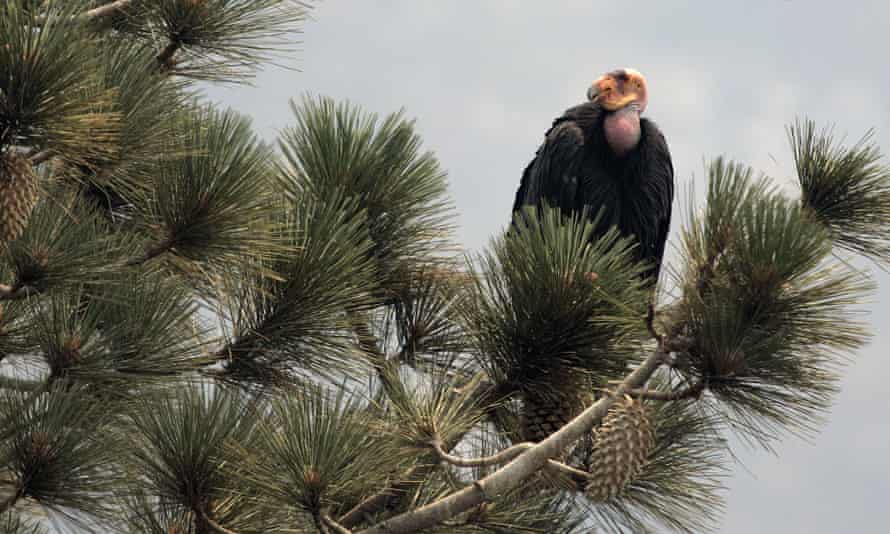
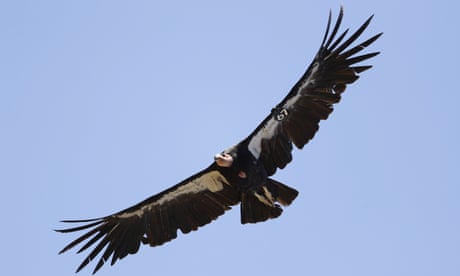
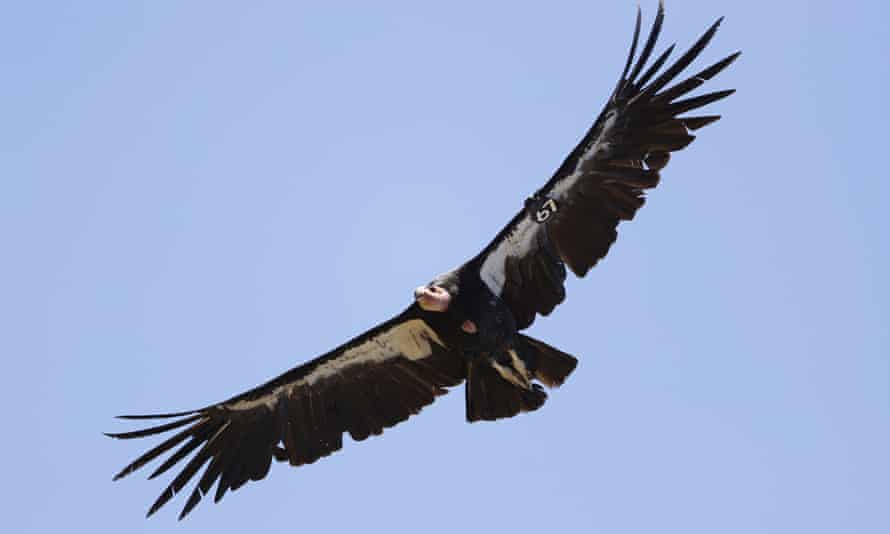
After a century of absence, the endangered California condor is set to return to the skies of the Pacific north-west.
The condor once soared from British Columbia to Mexico, but habitat loss, overhunting and, most significantly, poisoning from hunting ammunition drove the birds to near extinction.
By the early 1980s, these threats had caused such a precipitous decline in the population that only 22 remained in the wild. In an effort to regrow their numbers, biologists captured the remaining birds and began a breeding program.
Since then, the condor has been reintroduced to south and central California. Its population has expanded into parts of Utah, Arizona and Baja California in Mexico, with experts estimating the number of free flying birds at more than 300.
Now, the bird will be reintroduced in northern California. The reintroduction efforts there have largely been led by the Yurok Tribe, whose ancestral land encompasses large swaths of forest and coastline in northern California and parts of Redwood national park that were once home to the condor.
The tribe has planned for the bird’s return for over a decade, and its proposal was accepted on 24 March by the US Fish and Wildlife Service.
Through close collaboration with Redwood national park, the tribe will begin the creation of a captive breeding facility within the boundaries of the park. The facility will house captive-bred condors that could be released into the park as early as this fall.
Advertisementhttps://2352a79ad1ba979066e4c66af1a55483.safeframe.googlesyndication.com/safeframe/1-0-38/html/container.html
Although the condor population is on the uphill, its survival in the Golden state still faces challenges. California has banned lead shot and ammunition, but the laws are unlikely to completely eradicate the lead poisoning problem. Poaching of wildlife and illegal use of lead ammunition could still pose a risk to wildlife and any reintroduced condors, said Chris West, the Yurok Tribe’s condor program manager.
Yet West is hopeful about the bird’s future. Starting this new population of California condors in the far northern portion of the state could offer the bird a better chance at continued survival overall, he argued.
“There’s a big success in the number of birds out there, but you don’t want to put all your eggs in one basket,” West said.
Increasing the population could also help buffer the species against the increasing effects of wildfires, climate change and loss of genetic diversity. Condors are an important part of a healthy and functioning ecosystem. As scavengers, the birds are an essential part of nature’s clean-up crew.
Strong, big beaks allow them to open fresh carcasses, a task too difficult for their close relatives, the turkey vulture. Their efforts allow other wildlife to access the carcasses, and accelerates the recycling of nutrients on the landscape.
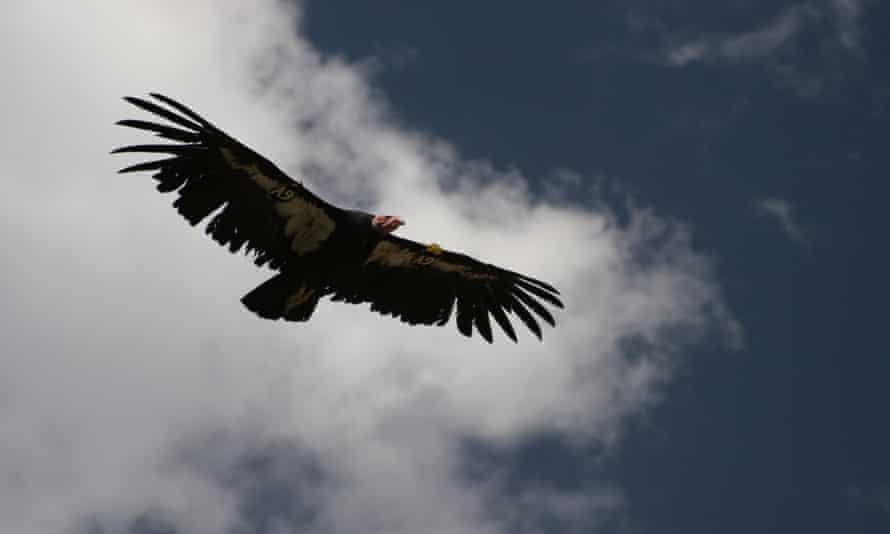
For the Yurok people, the return of the condor presents a milestone. The condor plays a critical role in the people’s tradition and culture, and the return of the bird to ancestral territory brings with it a sense of renewal for both people and the land, said Tiana Williams-Claussen, the director of Yurok Tribe’s wildlife department.
In 2003, the Yurok elder community identified the bird as the single-most important land animal to bring back to ancestral land. The reintroduction program was born only a few years after that decision, according to Williams-Claussen.
“When I actually see a condor in the sky again,” Williams-Claussen said, “it’s just mending that wound that was carried by my elders, is carried by me and that, at least in part, is not going to be carried by my children.”
| By: Colin Ruloff | Reading time: 15 minutes |
| I used to eat animals but I no longer do. I gave up the practice about six years ago. When confronted by my meat-eating friends about why I’ve given up eating animals, it’s tacitly assumed that I’m expected to provide an argument or present reasons for why eating animals is wrong. But why, I ask myself, do I have to present reasons for why eating animals is eating wrong? Surely the burden of proof is with my meat-eating friends to show that eating animals is somehow OK. After all, they’re the ones that are choosing to eat a once-sentient being. So, let’s ask: Are there any good reasons for eating animals? |
| Before we try to answer that question, it’s worth briefly describing where our meat comes from. The vast majority of meat, dairy, and eggs produced in the United States and Canada come from animals raised on factory farms. A “factory farm” is a large-scale, high-intensity, industrial complex that breeds and raises large numbers of animals so that we can harvest their meat, milk, and eggs for consumption. |
| EXPLORING ANIMAL SENTIENCE Billions of animals are raised and killed for food around the world each year. Although the majority of people consider them food, research shows that farmed animals are intelligent and emotionally complex, like dogs, cats, and other animals that so many of us see as companions.Animals Are More Sentient Than You Think: Ethologist Jordi Casamitjana says we can see animals are sentient because “they can feel, experience, and judge, and once they have judged, they can behave accordingly.” Why, then, is it hard for us to see all animals as sentient beings? “In a world where animal exploitation is heavily entrenched in most aspects of all human societies, commercial and cultural forces constantly work to deny the quality of sentience to non-human animals. Even when today’s science clearly shows most animals are sentient, this denial is mainstream,” writes Casamitjana, who is the author of “Ethical Vegan: A Personal and Political Journey to Change the World.” Chickens Are Smart (and Yes, They Can Suffer): Chickens are widely considered to be unintelligent, possibly because we view these birds as food animals. In fact, chickens account for 95 percent of the animals farmed for food globally. But research shows these birds are smart, can show empathy, and are capable of feeling pain. Jennifer Mishler explores what we know about the minds of chickens, considering information from experts such as Dr. Lori Marino, to answer the questions: “How smart are these birds, and what might they be thinking and feeling?” Sentience: What It Means and Why It’s Important: As our name suggests, sentience is at the heart of what we do at Sentient Media. Dr. Jane Kotzmann weighs in on what it means. “‘Sentient’ is an adjective that describes a capacity for feeling. The word sentient derives from the Latin verb sentire, which means ‘to feel,’” writes Kotzmann. “Sentient beings experience wanted emotions like happiness, joy, and gratitude, and unwanted emotions in the form of pain, suffering, and grief. Kotzmann believes animal sentience is being increasingly recognized, which makes it a worthy topic of discussion in any circle. If we can simply agree “that sentient beings are capable of experiencing pain and suffering,” she writes, “most humans would further agree that it is morally wrong to inflict unnecessary pain or suffering.” Study: Emotional Well-Being of Cows Is Harmed by Denying Outdoor Access: A new study conducted by researchers at Queen’s University Belfast and published in the journal Scientific Reports found that cows are less happy if kept indoors. Furthermore, the researchers found that being outside allowed the cows to engage in behaviors natural to them—concerning, given the confinement they experience on factory farms. “Pasture access can promote natural behavior [and] improve cows’ health, and cows, given the choice, spend most of their time outside. However, the effects of pasture access on dairy cows’ psychological well-being have been poorly understood—that is what our judgment bias study intended to measure,” said Dr. Gareth Arnott. Read more from Sentient Media.We’re reporting the truth about animal agriculture. Your donation fuels our work. |
| Animals in factory farms are typically packed into confinement facilities. Broiler chickens, for instance, are crammed into massive windowless warehouses, and are denied fresh air, sunshine, and pasture. These sheds contain anywhere from 10,000 to 50,000 birds. Sows are confined to small metal crates on concrete slatted floors with no straw or bedding to lie on and without fresh air or sunlight. When the animals are ready to be harvested they are then crammed onto eighteen-wheelers and shipped on multiday journeys to the slaughterhouse without food or water. Once they arrive, they are in a weakened physical and psychological state. The animals are hungry and exhausted, confused and frightened. Once inside the slaughterhouse, the animals are jammed into metal shackles, strung upside down (which often causes the breaking of limbs), and brought to the slaughterer. OK, enough of the gruesome details. Let’s return to the question I posed at the outset: are there any good reasons for eating animals? More exactly, the question I want to ask is this: is it OK to inflict intense suffering on factory-farmed animals so that we might eat them? I’ve encountered quite a few arguments that try to show that it’s OK to inflict suffering on factory-farmed animals; but instead of examining all of them, I’ll just focus on the four or five arguments that most people find persuasive. Read the full story here. |
Despite the well-documented environmental impacts of the meat industry and the explosion of the market for plant-based alternatives, American meat consumption remains high

Grim new facts about meat’s impact on livestock, workers, and the planet seem to emerge every day, and when it comes to animal agriculture’s impact on the climate, the figures are particularly dour: The international livestock industry is responsible for 14.5 percent of the world’s greenhouse gases, while the cattle industry is the main culprit in the deforestation and destruction of the Amazon, which releases carbon emissions into the atmosphere. Against this apocalyptic backdrop, some of the most sophisticated plant-based proteins ever developed are marketing themselves as no less than potential planet savers. Impossible Foods aims to “save meat, and earth,” while Beyond Meat bills itself as “the future of protein.” Both hawk plant-based meat alternatives, most notably in the form of ground beef-like bricks or patties that “bleed” just like the real thing.
The impulse of these startups to replicate beef rather than back away from burger-like proteins entirely in their quest to save civilization shows how daunting a task it is to get people, especially Americans, to give up meat: In the U.S., eating meat has long been intertwined with grand representational ideals. Beef especially defines classic notions of masculinity, with hamburgers in particular often representing “American” identity, whatever that means. (As a result, beef often becomes an object of political performance.) Despite clear evidence that animal agriculture harms the planet, as of 2018, just 5 percent of Americans identify as vegetarian and only 3 percent as vegan, numbers that have held steady for years. And meat consumption is still growing in proportion to the rest of our diets. Until the 2020 coronavirus pandemic, meat consumption had steadily risen in the U.S. each of the previous five years, with the average American eating 224.3 pounds of beef, pork, and poultry in 2019.https://9dd0c57873b0eaf37e002996292eb1c9.safeframe.googlesyndication.com/safeframe/1-0-38/html/container.html?n=0
It’s true that beef consumption is actually on the decline, with the average American eating less in 2019 (58.1 pounds) than they did during the 1970s, when the average person peaked at around 88.8 pounds a year. But meat consumption overall is on the rise, and during the early days of the pandemic, some were surprised to find that consumers actually turned to beef more than usual: An additional $5.7 billion in beef sales took place last year compared to the previous one, amid coronavirus-related shutdowns. “I’m surprised how strong beef demand was in the face of COVID-19, because we often think of beef consumption happening at the higher-end restaurants around the country, and many of those restaurants have been closed,” says Scott Brown, associate extension professor in the University of Missouri’s College of Agriculture, Food & Natural Resources. “It tells us that that’s probably a shift from restaurant consumption to at-home consumption or takeout consumption.”“It’s really a math problem. We don’t have enough land to keep raising animals in this way.”
If Americans keep eating as much meat as they have been, the outcome will be cataclysmic, argues Leah Garcés, president of Mercy for Animals, an animal protection organization that advocates for a vegan lifestyle. “It’s a catastrophic risk to the future of our planet, food security for future generations, and to our healthcare system to continue to irresponsibly consume animals,” says Garcés, author of Grilled: Turning Adversaries into Allies to Change the Chicken Industry. “It’s really a math problem. We don’t have enough land to keep raising animals in this way, and instead, we should be using the land to raise crops directly to feed ourselves. And we should be thinking very, very clearly about future generations and protecting the environment and the health of ourselves and others as we move forward.”
And the way forward, some argue, is to make giving up meat feel less like a sacrifice — and more like participating in a movement.https://9dd0c57873b0eaf37e002996292eb1c9.safeframe.googlesyndication.com/safeframe/1-0-38/html/container.html?n=0
Since 1909, the federal government has tracked how much meat — beef, pork, poultry, and otherwise — the public consumes, and not surprisingly, those figures usually parallel economic trends. Beef sales, last year exempted, tend to coincide with periods of economic prosperity: In 1932, while the nation was in the grips of the Great Depression, U.S. beef consumption per capita hit a low of 32 pounds. In contrast, as the nation ushered in a wave of economic stability in 1976, beef consumption hit its high, only for an economic downturn in the early 1980s to dip sales once more.
Something else happened in the ’80s, too: The decade saw the publication of studies that linked red meat — beef and pork — to a risk of developing serious medical problems such as heart disease and cancer. By the time Oprah Winfrey swore off hamburgers over concerns about mad cow disease in 1996, beef sales were plummeting. Chicken became the nation’s top protein, and beef was badly in need of a rebrand.
In recent years, the beef industry has been selling a comeback: Some suggest that technological advances, such as genetically modified beef, can make beef more palatable to the public. “The use of genetic changes produces different beef today than was the case 25 years ago,” Brown says. “Changes in the genetic makeup of the average cattle herd are putting beef products in front of consumers that they like more than they would have in the ’90s.” It’s leaner, tastier, and more tender, he explains. On the other end of the spectrum, as beef-eating increasingly becomes a partisan issue, the masculine sheen around beef could be one of its larger selling points.https://9dd0c57873b0eaf37e002996292eb1c9.safeframe.googlesyndication.com/safeframe/1-0-38/html/container.html?n=0
But a major factor in continued beef consumption is, not surprisingly, money: Garcés points to the power of meat lobbyists to explain why beef consumption is rising. “In other countries, for example, in Europe, there are caps on how much lobbying and how much money and campaign funding can go to a candidate,” she says. “Here, we don’t have real regulations, so money is given and promises are made. This has created a very skewed interest toward increasing meat consumption and doing whatever we can to bend the market toward increasing consumption, like making the product unnaturally cheap. … It’s very challenging to fight those powers.”
From 2010 to 2020, the meat industry more than doubled its contributions to political candidates and parties, according to data from the Center for Responsive Politics. But even as these contributions have grown, so has consumer consciousness about meat’s impact on the environment. This increasing awareness has inspired some meat-eaters to actively incorporate more plant-based meals into their diets, a growing trend known as flexitarianism.
One of the biggest misconceptions people have about Kimberlie Le, co-founder of the plant-based meal startup Prime Roots, is that she’s vegan, she says. While the direct-to-consumer meals her company sells are all meatless — made with protein-rich koji fungi grown in the San Francisco Bay Area — Le is a meat-eater.https://9dd0c57873b0eaf37e002996292eb1c9.safeframe.googlesyndication.com/safeframe/1-0-38/html/container.html?n=0
“I consider myself a flexitarian, which is actually the majority of our customers,” says Le, who started her year-old business at the Alt: Meat lab at UC Berkeley’s Sutardja Center for Entrepreneurship and Technology. Flexitarians eat meat but also regularly consume plant-based meals, and the demographic is a sizable one, according to the marketing firm Packaged Facts. A survey it conducted in August found that 36 percent of consumers identify as flexitarian. “A lot of people consider themselves flexitarians once they hear the term and know what it’s all about,” Le says. “We’re not trying to get everyone to turn vegan, because it’s not right for everybody. It is really hard, given that there isn’t a plant-based version of every single thing in the grocery store.”
Le felt inclined to lower her meat consumption and launch a plant-based food company because she was concerned about the meat industry’s environmental impact. When Le was growing up, she never thought much about how a burger was produced or the cow from which the beef came, she says. Food simply brought her family and friends together for joyous occasions. But, today, she says, the public doesn’t have the privilege of ignoring meat production’s impact on the planet.
Although the most obvious answer to mitigating meat’s impact on the environment would be to simply stop eating it, convincing Americans to become flexitarians, like Le, may be a more attainable goal. “The way I look at it, what seems easier?” Garcés asks. “To turn half of America vegetarian or have half of Americans’ meals be vegetarian? Obviously, the latter is more achievable … and that’s the kind of thing we should be aiming for. It would have a huge impact on our environment, our health as a country, and on animals.”https://9dd0c57873b0eaf37e002996292eb1c9.safeframe.googlesyndication.com/safeframe/1-0-38/html/container.html?n=0“The way I look at it, what seems easier? To turn half of America vegetarian or have half of Americans’ meals be vegetarian?”
The fanfare that’s greeted the plant-based proteins of Beyond Meat and Impossible Foods — part of what the New York Times recently called a “meatless gold rush” — could very well inspire more consumers to try mock meats. In recent years, both companies garnered global headlines due to highly promoted collaborations with fast-food chains such as KFC, Burger King, and McDonald’s, which bring their products to the millions of people who consume fast food daily. In 2019, Beyond Meat became a publicly traded company with the best-performing U.S. public offering in recent history, and speculation persists that Impossible will go public as well. (Cattle ranchers and lobbying groups have taken notice, with 30 states announcing legislation that would limit the products’ ability to use the word “meat”; the Washington Post notes the changes come amid the “enormous political power” of cattle associations.)
Despite the considerable buzz surrounding Beyond and Impossible, the retail value of the U.S. plant-based meat industry is about $1 billion, compared to the meat industry’s estimated retail value of $95 billion, meaning the former isn’t likely to overtake the latter as the nation’s dominant protein anytime soon. A wider flexitarian consumer base, along with more awareness about beef’s impact on the environment, could move the needle.
Andrew Gunther, executive director of A Greener World, which promotes sustainable agriculture solutions, understands why many activists want the public to reduce its meat consumption. But he argues effective climate strategies are “not as simple as eating less beef.” Focusing on whether or not to eat meat, Gunther says, is part of a greater need for people to reconsider their lifestyles, which entails looking beyond meat consumption to consumption more broadly. Buying televisions, airplane tickets, iPhones, or new clothes are all consumption habits with an environmental impact.https://9dd0c57873b0eaf37e002996292eb1c9.safeframe.googlesyndication.com/safeframe/1-0-38/html/container.html?n=0
When it comes to meat specifically, “it’s where and how the beef was produced,” he says. “Perhaps we should actually look at the amount of meat we eat, whether that’s fake meat or otherwise. … We may be eating too much. … In the middle somewhere is the solution, where we need to eat what is a nutritionally appropriate amount of proteins from a sustainable source.” Gunther points to research from the University of Oxford and the University of California, Davis indicating that a path exists to make animal agriculture climate neutral. Other researchers have conducted studies that found feeding cows red seaweed dramatically reduces the number of methane emissions they release into the atmosphere through their burps.
And the meat industry itself must be held accountable. Sara Amundson, for one, is encouraged that the U.S. Department of Agriculture appears to be taking the livestock sector’s effect on global warming seriously. Amundson, president of the Humane Society Legislative Fund, notes that the USDA “now has somebody specifically tasked on climate change. So, there’s got to be some acknowledgment that methane, and animal-based agriculture as part of that, are contributing [to global warming].”
Amundson’s group would like the federal government to give farmers incentives to stop the intensive confinement of livestock. It also wants the government to support the development of plant-based and lab-grown meats to combat climate change.https://9dd0c57873b0eaf37e002996292eb1c9.safeframe.googlesyndication.com/safeframe/1-0-38/html/container.html?n=0
Gunther points to a need “to focus on improving the way we farm.” That means getting rid of the herbicide and crop desiccant glyphosate, respecting animals as an integral part of the agricultural system, and creating a sustainable farm of the future, he elaborates. In such a model, farms would share energy, ruminant animals would freely graze the land, and consumers would eat the right amount of food at the right time of year.
“Whatever our solution is, it needs to be capable of feeding the planet,” according to Gunther. Amundson agrees, noting that “there are some emerging countries where we’re seeing growth in animal-based agriculture.” That, she says, is concerning, “because quite honestly if we are going to wrap our heads around how to deal with this crisis from a global perspective, we obviously need to be sensitized, aware, and willing to take on animal-based agriculture.”
As a sustainable-farming advocate, Gunther asserts that revolutionizing the agriculture system is a major way to fight global warming. Consumers can work toward that goal by purchasing pasture-raised beef rather than the industrial variety. This shift can make a dent, if only a small one, in the climate crisis. “We could cut down on the amount of beef we eat because I’m guessing nutritionists would say we eat too much,” Gunther says. “We could demand that [cattle] are outside on pastures that we can’t use as humans. Then, it becomes pretty darn sustainable.”https://9dd0c57873b0eaf37e002996292eb1c9.safeframe.googlesyndication.com/safeframe/1-0-38/html/container.html?n=0
Nadra Nittle is a senior reporter for Civil Eats. She lives in Los Angeles. Yadi Liu is an award-winning visual artist who is passionate about finding the optimum balance between illustration and modern art.
Fact checked by Kelsey Lannin
Copy edited by Rachel P. Kreiter
https://www.cnn.com/2021/03/26/weather/sea-level-rise-accelerating-east-coast/index.html
By Jackson Dill andBrandon Miller, CNN
Updated 9:41 AM ET, Fri March 26, 2021 Rising water caused by Hurricane Sandy rushes into the Carey Tunnel (formerly the Brooklyn-Battery Tunnel), on October 29, 2012 in New York City.
(CNN)Along a stretch of the East Coast that includes New York City, sea-level rise has increased at its fastest rate in the prior 100 years compared to the past 2,000 years, according to a newstudyled by Rutgers University.”The global rise in sea-level from melting ice and warming oceans from 1900 to 2000 led to a rate that’s more than twice the average for the years 0 to 1800 — the most significant change,” Rutgers said of the study’s findings.The study uses new techniques and focuses on six specific locations in the northeastern US, including three in New Jersey and one each in Connecticut, New York and North Carolina.Human-induced…
View original post 1,049 more words