Montana Governor Given Written Warning After Trapping, Killing Of Yellowstone Wolf

https://www.boisestatepublicradio.org/post/montana-governor-given-written-warning-after-trapping-killing-yellowstone-wolf#stream/0

By NATE HEGYI• MAR 23, 2021The Mountain West News BureauShareTweetEmail

  • Montana Gov. Greg Gianforte trapped and killed an adult black wolf, like the one pictured, near Yellowstone National Park on February 15. The wolf, 1155, was born and radio-collared within the park.JIM PEACO / NPS

Montana’s newly elected Republican governor violated state hunting regulations when he trapped and shot a collared wolf near Yellowstone National Park in February, according to documents obtained by the Mountain West News Bureau.ListenListening…4:12

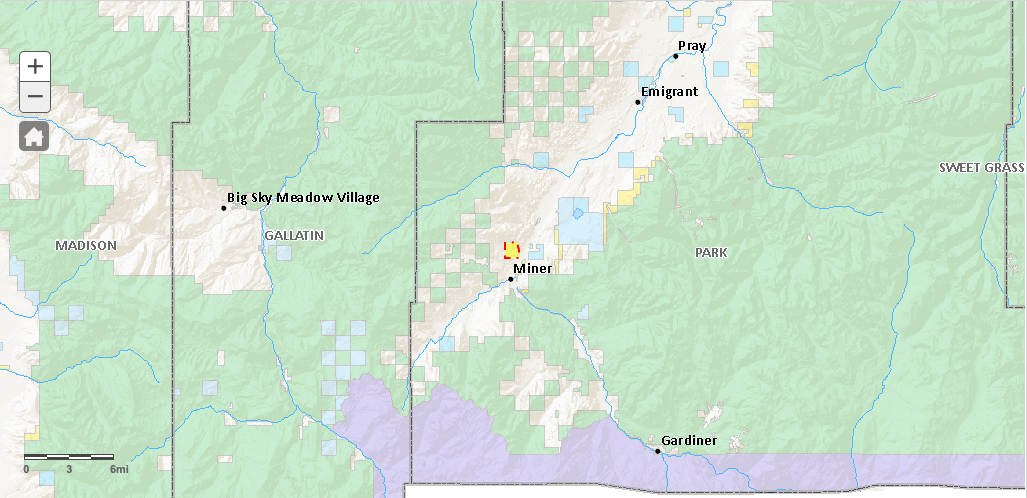
Gov. Greg Gianforte killed the adult black wolf known as “1155” roughly ten miles north of the park’s boundary in Park County. He trapped it on a private ranch owned by Robert E. Smith, director of the conservative Sinclair Broadcasting Group, who contributed thousands of dollars to Gianforte’s 2017 congressional campaign. 

While wolves are protected inside Yellowstone National Park, it’s legal to hunt and trap wolves in Montana – including wolves that wander beyond the park’s boundaries – in accordance with state regulations.

Gianforte violated Montana regulations by harvesting the wolf without first completing a state-mandated wolf trapping certification course. Montana Fish, Wildlife and Parks issued the governor a written warning, and he promised to take the three-hour online course March 24. Montana Gov. Greg Gianforte

According to Montana’s wolf hunting regulations, “A person must attend and complete a wolf-trapping certification class before setting any trap for a wolf,” and the state-issued certificate “must be in possession of any person setting wolf traps and/or harvesting a wolf by trap.”

The course gives would-be wolf trappers “the background and rules to do so ethically, humanely, and lawfully,” the course’s student manual states.

John Sullivan, Montana chapter chair for the sportsmen’s group Backcountry Hunters and Anglers, said the governor should’ve known about the certification requirements. 

“He has been hunting and trapping for a long time and I would be surprised to learn that he didn’t know better than to complete that education,” Sullivan said. “We hope that he apologizes to the citizens of the state for circumventing the process that we all have to go through.”

“It’s difficult to fathom accidentally not taking that class,” he added. “When you go to buy your wolf trapping license online it clearly states that trapper education is required.”

The governor’s spokesperson, Brooke Stroyke, said in an emailed statement that “after learning he had not completed the wolf-trapping certification, Governor Gianforte immediately rectified the mistake and enrolled in the wolf-trapping certification course.”

The governor did have all the necessary hunting licenses to harvest a wolf, according to Montana Fish, Wildlife and Parks spokesperson Greg Lemon. 

“Typically, we approach this sort of incident as an educational opportunity, particularly when the person in question is forthright in what happened and honest about the circumstances,” Lemon said in an email. “That was the case here with Gov. Gianforte.”

Lemon said the warning was a “typical operation procedure” and the governor was allowed to keep the skull and hide. As governor, Gianforte oversees Montana Fish, Wildlife and Parks and appointed its director earlier this year. Gov. Gianforte trapped and killed the wolf on land owned by Robert E. Smith’s Point of Rocks Ranch, LLC, according to location data obtained by the Mountain West News Bureau.

Word of Gianforte’s wolf-kill violation comes as the Republican-controlled Montana Legislature appears poised to send to his desk bills aimed at aggressively reducing the state’s wolf population through hunting and trapping. One would reimburse wolf trappers for the costs they incur, which critics call a “bounty.”

The incident highlights the polarized and overlapping debates in the West over how to manage growing wolf populations and trapping’s role – if it has one at all – in wildlife management. A decade after wolves were stripped of Endangered Species Act protections in the Northern Rockies, Montana, Idaho and Wyoming are asserting aggressive wolf management policies, while Colorado voters recently decided to reintroduce wolves to the Western Slope. 

Meanwhile, the New Mexico Legislature last week approved a bill banning the use of wildlife traps, snares and poison on public lands across the state, likely joining the growing number of Western states that have outlawed the practice increasingly viewed as cruel.

“It’s clearly not an ethical chase,” said Mike Garrity, executive director for the nonprofit environmental group Alliance for the Wild Rockies. “Ethical hunters try to have a clean shot so they kill the animal instantly. Trapping obviously doesn’t do that. They suffer for a long time and who knows how long that wolf was trapped before the governor went out and killed it.” 

Wolf 1155 was born in Yellowstone National Park and was issued a radio collar by wildlife biologists in 2018, according to park spokesperson Morgan Warthin. Collars allow scientists to track the movements – and deaths – of wolves. 1155 was initially a member of the Wapiti Lake pack but is now considered a “dispersed male,” which means it had wandered away from the pack to find a mate elsewhere.

Yellowstone wolves hold a special place in the nation’s heart, according to Jonathan Proctor, director of the Rockies and Plains program for the environmental group Defenders of Wildlife.

“People from all over the world come to Yellowstone specifically to see these wolves,” he said. “The fact that they can be killed so easily, right on the edge of the park in the state of Montana, for only a few dollars for a permit to trap a wolf – it makes no sense, either ecologically or economically.”

There are about 94 wolves living within the park, according to data from last year. Warthin said this was the first Yellowstone-collared wolf to be killed by a hunter or trapper this year. 

Gianforte killed 1155 on Feb. 15. It’s unclear when Gianforte first laid the traps. State regulations require that trappers check their traps every 48 hours and report wolf kills to FWP within 24 hours. Trappers also have the option of releasing a collared wolf. 

This is the second time Gianforte’s personal actions sparked controversy. In 2017, he pleaded guilty to a misdemeanor assault after he body-slammed a reporter from the British newspaper The Guardian. He was sentenced to community service and anger management.

This story was produced by the Mountain West News Bureau, a collaboration between Wyoming Public Media, Boise State Public Radio in Idaho, KUNR in Nevada, the O’Connor Center for the Rocky Mountain West in Montana, KUNC in Colorado, KUNM in New Mexico, with support from affiliate stations across the region. Funding for the Mountain West News Bureau is provided in part by the Corporation for Public Broadcasting.

NM Governor to Decide Fate of “Roxy’s” Trapping Law

Exposing the Big Game's avatarCommittee to Abolish Sport Hunting Blog

https://www.publicnewsservice.org/2021-03-23/public-lands-wilderness/nm-governor-to-decide-fate-of-roxys-trapping-law/a73637-1

share this article

From raccoons to bald eagles to domestic pets, at least four million animals die in traps each year, according to the Humane Society of the United States. (apvnm.org)

From raccoons to bald eagles to domestic pets, at least four million animals die in traps each year, according to the Humane Society of the United States. (apvnm.org)

ByRoz Brown, Public News Service – NM – Producer

March 23, 2021

SANTA FE, N.M. — A dog that died through no fault of its own on a hike with its owner near Santa Cruz Lake in 2019 could leave a lasting legacy if a bill headed to the governor’s desk is signed into law.

“Roxy’s Law,” technically theWildlife Conservation and Public Safety Act, passed the New Mexico House of Representatives last week.

It would prohibit traps, snares and poisons on public lands.

Mary Katherine Ray, wildlife chair for the Rio Grande Sierra Club and a member of the TrapFree New Mexico Coalition, said it’s taken several tries to get “Roxy’s Law” through the Legislature.

“Roxy’s law…

View original post 223 more words

Fears of AI human-to-human transmission in Russia

Exposing the Big Game's avatarThe Extinction Chronicles

https://www.poultryworld.net/Health/Articles/2021/3/Fears-of-AI-human-to-human-transmission-in-Russia-726023E/

Mar 24, 2021

The Russian Union of Poultry Producers (NUPP) has issued a statement ensuring customers that poultry products on the grocery shelves are safe for consumers despite the rising avian influenza (AI) fears.

Continue reading our articles for free!

Our aim is to provide the best in-depth information on the poultry industry. This is why you can read the first 5 articles without being signed in. After 5 articles we would like you to register using an email address so you can get instant unlimited access to all our articles. By providing us information about your areas of interest, we can serve you even better with tailored made content. We welcome you to our community.

GET UNRESTRICTED ACCESS NOW

In late February, Russia reported the first case of bird flu (H5N8) being passed from birds to humans. 7 workers at a poultry farm in Russia’s south were infected…

View original post 359 more words

China reports human death from H5N6 bird flu

Exposing the Big Game's avatarThe Extinction Chronicles

Hong Kong health officials are monitoring a human case of H5N6 bird flu in Guangxi in Southern China.HUMAN HEALTH AND NUTRITIONPOLICY AND REGULATIONAVIAN INFLUENZADISEASESHEALTH & DISEASEby The Poultry Site23 March 2021, at 9:22am

https://www.thepoultrysite.com/news/2021/03/china-reports-human-death-from-h5n6-bird-flu

According to reporting inOutbreak News, the bird flu case involved a 50-year-old man living in Hechi, Guangxi province. He became symptomatic on 16 February and began medical treatment for severe pneumonia on 17 February. He died on 2 March.

Outbreak Newssays that from 2014, 30 human cases of H5N6 bird flu have been reported by Chinese health authorities.

Human infections of avian influenza and instances of human-to-human transmission are rare. People typically become infected through close contact with infected birds and poultry or their droppings. Being in contact with contaminated environments like live poultry markets or wet markets is also a risk factor.

Read more about…

View original post 7 more words

Amid hunting expansion, ban on wolf trapping upheld in Blaine

Exposing the Big Game's avatarCommittee to Abolish Sport Hunting Blog

Wolf Project gears up for 14th season

Wolf
Wolves can now be legally hunted year-round on private land in Blaine County, the Idaho Fish and Game Commission ruled last week. The commission, however, kept the valley’s 11-month public-land wolf hunting season intact and voted to uphold its local ban on wolf trapping.Photo courtesy of Carter Niemeyer

Wolf trapping has long been illegal in the Wood River Valley—and it will stay that way, the Idaho Fish and Game Commission decided in a season-setting meeting last week.

Since Jan. 28, the commission had been weighing a proposal from two sportsmen’s groups seeking to reinstate wolf trapping in Blaine County. The groups—the Idaho Trappers Association and the Foundation for Wildlife Management—also asked to expand private-land wolf hunting in the Wood River Valley from 11 months to year-round, opening up…

View original post 603 more words

New bill looks to lower hunting age in Maine to 14

A new bill in Augusta is looking to lower the hunting age in Maine from 16 to 14 years old.
A new bill in Augusta is looking to lower the hunting age in Maine from 16 to 14 years old.(WABI)

https://www.wabi.tv/2021/03/24/new-bill-looks-to-lower-hunting-age-in-maine-to-14/

By Owen KingsleyPublished: Mar. 24, 2021 at 11:52 AM PDT|Updated: 2 hours ago

Maine (WABI) – A new bill in Augusta is looking to lower the hunting age in Maine from 16 to 14 years old.

State Representative Dustin White says the bill is aimed at allowing parents who think their kids are mature and responsible enough to be able to go hunting at an earlier age.

All the same permit and safety course requirements would still apply.

Colonel Dan Scott of the Maine Warden Service testified neither for nor against the measure but did bring up some concerns to the committee hearing the bill.ADVERTISEMENThttps://af7bd9f93b8ccfcdf7be2cc8cc7850eb.safeframe.googlesyndication.com/safeframe/1-0-38/html/container.html

”I believe in parents knowing their children better than the government. Educate our children at an earlier age to teach them the proper safety protocols, possibly reducing the likelihood of accidents or hunting violations later on in their lives,” said White.

“It’s difficult to predict if there would be an increase in incidents if people 14 to 16 years of age were able to hunt on their own after having completed a safety course. This would also permit two 14-year-olds to climb into a canoe, one behind the other, with shotguns,” said Scott.

Colonel Scott, when asked directly if he would allow his 14 year old to go hunting alone, said no.

Representative White also argues this bill would encourage more family participation on Youth Hunting Day.

F&G approves major expansion to mountain lion hunting

Exposing the Big Game's avatarCommittee to Abolish Sport Hunting Blog

Quotas to be lifted in Wood River Valley; e-calls authorized

Mountain Lion Snow
Photo courtesy of Idaho Fish & Game

The Idaho Fish and Game Commission formally removed statewide mountain lion harvest quotas for the 2021-22 big game season last Thursday during its annual season-setting meeting in Boise, according to a Monday press release.

The new policy lifts all male and female mountain lion harvest quotas—or limits on animals that can be killed, in order to prevent overharvest—in the state’s game units that impose such restrictions. The effect will be significantly expanded mountain lion season lengths starting this summer.

Sex-specific mountain lion quotas will be lifted in August in 31 of Idaho’s game units, including Blaine County’s Game Units 48 and 49 on either side of state Highway 75. (Under current rules, in Units 43 and 44, north…

View original post 294 more words

Urban environmentalism has failed — it’s time for new perspective

BY BENJI BACKER, OPINION CONTRIBUTOR — 03/23/21 12:00 PM EDT  328THE VIEWS EXPRESSED BY CONTRIBUTORS ARE THEIR OWN AND NOT THE VIEW OF THE HILL

Urban environmentalism has failed — it’s time for new perspective

Urban environmentalism has failed — it's time for new perspective

© Getty Images

At the start of Biden’s presidency, he signed an executive order promising to protect 30 percent of American land and water by the year 2030. 

Last week, congressional Democrats and Republicans sent separate letters asking for the administration for clarity on the implementation of this promise. The 30×30 goal is admirable and important for environmental protection, but its execution has the potential to shine light on the divide between urban and rural environmentalism. 

For decades, the term “environmentalist” has been associated with urban activists marching in city streets, holding signs that demand the abolition of fossil fuels. The fact is urban environmentalism has failed us. Urbanites prescribe climate solutions from ivory towers while rural Americans have the most to lose.

In the past few years, the Green New Deal and similar policy has dominated the climate change conversation. Unless you agree that we have less than 12 years to completely solve our environmental challenges, your views are largely dismissed by progressive climate hawks. That said, the Green New Deal — since its rise to fame in early 2019 — has done nothing to reduce emissions. It never will because it will never realistically pass both chambers of Congress and earn a presidential signature. For the record, even if the legislation were to defy all odds, we don’t need an economic restructuring to solve climate change. Instead, we need a new climate perspective.

Although I was raised in Wisconsin, I currently live in Seattle — one of the urban communities that often overlooks the concerns of middle America (and even the middle of its own state). Washington Gov. Jay Inslee (D) is lauded as a climate champion in progressive circles, but it only takes a brief glance at his record to see that it’s all talk and no action. Meanwhile, Americans in the middle of the country are putting climate solutions to action. I saw this firsthand while traveling the country this fall in places like Louisiana, Wisconsin and South Dakota.

These important American communities — and specifically rural communities — have been left behind in all the talk of ambitious net-zero emission goals and the Green New Deal. Rural Americans, often farmers, ranchers or outdoorsmen interact with our natural environment in a meaningful way each and every day. Unlike urban communities, which rightfully care about the health of our planet but remain detached from its realities, these Americans have firsthand experience of conserving land and wildlife. Yet, they haven’t led the charge on environmental issues for years. This must change.

It’s all too easy for us conservatives to throw our hands up and lament the state of the climate conversation. It’s all too easy to give up and allow talks to continue to be dominated by the loudest, angriest voices in the room. In fact, there’s even a name for this tendency. But, we simply can’t give into that temptation. We can’t deny that climate change is a problem because we don’t like the progressive solutions being peddled.

No, instead, we should look at this as an incredible opportunity to reclaim what being an environmentalist means. Environmentalism means standing up for local communities and stakeholders who know best how to solve the issues in their backyards. American environmentalism means putting our nation first and using our incredible history of ingenuity and innovation to set an example for the rest of the world.

We need a new environmental perspective. We need rural Americans’ voices to be amplified in the conversation. If we don’t take advantage of the opportunity to be a part of this conversation, we will continue to be taken advantage of by urban environmentalists in activism, the Democratic politicians who represent them in elections and other nations on the global stage.

Benji Backer is the founder and president of the American Conservation Coalition (ACC).

Tribal officials hopeful new Secretary of the Interior Deb Haaland can end wolf hunting in Wisconsin

https://www.greenbaypressgazette.com/story/news/native-american-issues/2021/03/22/interior-secretary-deb-haaland-could-impact-wisconsin-wolf-hunting/4731055001/?fbclid=IwAR30yH5sjqAaeG5013apZDUyOQyBLLX_WuXUvrUi3tMY_KyJ6-Zh37274Hc

Frank VaisvilasGreen Bay Press-GazetteView Comments0:580:58https://imasdk.googleapis.com/js/core/bridge3.447.1_en.html#goog_509034820about:blank

Tribal officials, especially those from Ojibwe nations in northern Wisconsin, are hopeful new U.S. Secretary of the Interior Deb Haaland can help restore protections for gray wolves and stop another hunting season this fall.

Haaland was confirmed by the Senate last week as the first Native American to head a presidential cabinet department.

The agency manages 480 million federal acres, as well as the Bureau of Indian Affairs and the Indian Health Service.

Haaland, 60, a citizen of the Pueblo Laguna tribe in New Mexico, had faced stiff criticism from Republican senators for past statements opposing fossil fuel extraction in favor of clean energy and for tweeting that “Republicans don’t believe in science.”

U.S. Rep. Deb Haaland, D-N.M., Native American Caucus co-chair, speaks to reporters on March 5, 2020 on Capitol Hill in Washington. President-elect Joe Biden plans to nominate Haaland as interior secretary. The historic pick would make her the first Native American to lead the powerful federal agency that has wielded influence over the nation's tribes for generations.

Environmental groups applauded her confirmation, and tribal officials in Wisconsin are optimistic her office can address environmental concerns in the state.

These include officials from at least three Indigenous nations: the Lac du Flambeau, Lac Courte Oreilles and Sokaogon Ojibwe nations, who all want a stop to the hunting of gray wolves in northern Wisconsin.

RELATED:Tribal leaders in Wisconsin applaud Biden’s Native American pick for Cabinethttps://f79f421de91e875232769e1a464fa0c1.safeframe.googlesyndication.com/safeframe/1-0-38/html/container.html

The gray wolf, or Ma’iingan, plays an important role in Ojibwe culture. The Ojibwe believe man arrived in the world after the rest of creation, but soon became depressed and lowly in spirit because he felt alone. Creator then introduced man to the wolf, and the two became brothers. 

“This forms the foundation of the Ojibwe relationship with wolves today,” said Peter David, a biologist for the Odanah-based Great Lakes Indian Fish and Wildlife Commission. “We consider the wolves’ best interests.”

The Ridges Sanctuary holds a free, two-part class.on learning to track carnivore mammals, such as the wolf.

David said tribal officials favor non-lethal methods in resolving conflicts wolves might have with the pets and livestock of people in and around forested areas where wolves hunt.

Conservationists say that while some farmers may lose more livestock than others to wolves, the estimated total livestock lost to all predators in Wisconsin is about 1%. They also argue there is some evidence that wolves play a large role in helping to create a much healthier ecosystem, but more research is needed.https://f79f421de91e875232769e1a464fa0c1.safeframe.googlesyndication.com/safeframe/1-0-38/html/container.html

The Wisconsin Department of Natural Resources estimated in late winter 2020 that there were about 1,195 wolves in the state, the highest in recent years.

The population comeback of gray wolves prompted the Trump administration last fall to remove the animal from the federal endangered species list, paving the way for Wisconsin to once again have a wolf hunting season.

The Great Lakes Indian Fish and Wildlife Commission represents 11 Ojibwe nations in northern Wisconsin, Minnesota and Michigan in their treaty rights to hunt, fish and harvest in Ceded Territory outside the reservations.https://www.usatodaynetworkservice.com/tangstatic/html/pgrb/sf-q1a2z3be0d353f.min.html

The treaties with the U.S. guaranteed these rights to the Ojibwe in exchange for the government taking Ojibwe land.

As part of an agreement with the DNR, GLIFWC can claim a portion of the sustainable harvest in the Ceded Territory.

Although GLIFWC officials are not commenting whether Haaland’s office can have an impact on restoring protections for gray wolves, they did claim a portion of the quota the DNR set to be killed this winter.

Wisconsin’s minimum wolf population was recently estimated at nearly 900.

That harvest goal was 200 wolves, and GLIFWC claimed a quota of 81 with the intention of protecting that number from being killed.

The gray wolf is still a protected species under tribal codes of law.

Only 119 wolves were allotted to be killed, but hunters and trappers killed a total of 216 this winter. Tribal officials feel slighted by this, and other issues, and believe Haaland can help better protect their interests.Your stories live here.Fuel your hometown passion and plug into the stories that define it.Create Account

“Our legal right to meaningful consultation by state government about mining, protected species (including gray wolves), chronic wasting disease, air and water pollution and many more decisions impacting life-sustaining resources for future generations is often given short shrift or completely ignored,” said John D. Johnson Sr., president of the Lac du Flambeau Band of Lake Superior Chippewa. “Respect for our culture and traditions is consistently denigrated by many in power, and we believe Secretary Haaland can make a big difference in protecting our people, our culture and our traditions.”

Officials with other Indigenous nations in the state are hopeful Haaland’s office can help address other environmental concerns.

Brandon Yellowbird-Stevens, vice chairman for the Oneida Nation Business Committee, said Haaland’s office can have a major positive environmental impact in the Green Bay area.

“She’ll have an impact on all of northeast Wisconsin,” he said.

That might include increasing funding for the Silver Creek Pilot Program, which aims to reduce phosphorus runoff from farm fertilizer into streams in northeast Wisconsin.

Yellowbird-Stevens said the Oneida Nation has already been able to reduce runoff by 90% working with farmers on the reservation by constructing buffers in swales.

He said her office might also help increase funding for the Great Lakes Restoration Initiative to increase the health of the Great Lakes.

“Invasive species are the main concern,” Yellowbird-Stevens said.

It is unclear whether Haaland’s office would have a direct impact on some of the other high-profile environmental concerns challenged by Indigenous nations, such as the Back Forty Mine. 

The Menominee Nation, in federal court, has challenged efforts by Canada-based Aquila Resource to start an open-pit mine in Michigan’s Upper Peninsula that would extract gold, silver, zinc and copper.

Tribal officials argued the mine would negatively impact the environment, affecting the water in the region, which is historically significant to the Menominee Nation.

Attorney Janet Brimmer, who has represented Menominee Nation in the case, said that although the mine is near the Menominee River, the tribe hasn’t had much of a say in permit applications because the mine is in Michigan.

She said she doesn’t foresee Haaland having much effect on mining permits, but Haaland could possibly encourage Michigan officials to share more information with Menominee Nation officials and improve communication.

Brimmer said Aquila’s efforts are in limbo after a wetland permit was denied by a Michigan judge and the mine is not moving forward at this point, but the company could try again later this year. 

But with Haaland being a citizen of an Indigenous nation, tribal officials in Wisconsin believe she understands the effects environmental policy has on reservations, and the country as a whole and they believe she will represent them.

“The Unites States plays an enormous role in setting climate, natural resource and environmental policies that impact the entire planet,” said Shannon Holsey, president of the Stockbridge-Munsee Mohican Nation. “Perhaps no federal agency has a greater share of that role than the department of the interior. … Rep. Haaland … represents a person who will have a deep understanding of all the responsibilities of the secretary of the Interior

CONCERNED PROFESSIONAL WILDLIFE BIOLOGISTS AND MANAGERS IN MONTANA SPEAK UP

TO: MEMBERS OF THE MONTANA LEGISLATURE AND GOVERNOR GIANFORTE

FROM: CONCERNED PROFESSIONAL WILDLIFE BIOLOGISTS AND MANAGERS IN MONTANA

We are Montana residents and professional wildlife biologists and managers with a total of  1,696 years of experience in wildlife management and wildlife habitat management. Among us  are 18 retired employees of Montana Fish, Wildlife, and Parks with 534 years with the agency,  and 3 former Commissioners from the Montana Fish and Wildlife Commission.  

We stand in opposition to the bills listed below being considered by the Montana Legislature in 2021. We find these bills to be based on misinformation about wildlife, misinformation about the effects of predators on prey species, and a lack of understanding about the complexity of natural environments in Montana. Detailed wildlife policy should be science-based and set by the Montana Fish and Wildlife Commission with the input of the public, not by the legislature. These bills will harm the image of hunters and hunting in Montana. For decades Montana has been a leader in science-based wildlife management in the US. These bills are not based on science and are harmful to wildlife and the hunting heritage of Montana.

WE STRONGLY OPPOSE THE FOLLOWING BILLS:

HB 224 and HB 225 –Allows neck snaring of wolves and extends the season for wolf trapping – Neck snares set for wolves will result in the capture of many non-target wildlife. The extension of the wolf trapping and snaring season will overlap with the times that grizzly and black bears are out of their dens resulting in bears being caught in wolf snares and traps. Data collected from radio-collared grizzly bears from 2015 through 2020 in Northwest Montana demonstrate that at least 35% of grizzly bears den later than December 1.

SB 267 – Allows paying a bounty to people to kill wolves – Paying people to kill Montana wildlife will harm the image of hunters and hunting in Montana. This is completely unnecessary since each year more than 35% of Montana’s wolf population is killed by wolf hunters and trappers.

SB 337 – Revising laws on relocation of grizzly bears. Will prevent FWP from relocating any
grizzly bears captured outside recovery zones. – This bill is contrary to 40 years of policy and cooperative grizzly management in Montana, it is contrary to the Interagency Grizzly Bear Guidelines, which Montana FWP has been a party to, and it will result in the unnecessary death of many grizzly bears. We are especially appalled that this bill is being promoted by the leadership of MT FWP. This bill will prevent grizzly bears from being delisted in Montana.

HB 468 – Allows hound hunting of black bears and a recreational chase season for hound
hunters. – Hound hunting black bears can result in cub abandonment, chronic stress, heat
exhaustion in warm weather, and abandonment of home ranges. Grizzly bears can be found throughout western Montana and hounds will chase grizzly bears who will fight and kill hounds. This will result in hound hunters shooting grizzly bears to defend their dogs or themselves when chased grizzly bears are encountered. Hound hunting of bears has been banned since 1921 in Montana. Hound hunting of bears is opposed by most hunters and is not considered fair chase hunting by most of the public.

SB 314 – Revises laws related to wolf harvest to allow bait to trap wolves, allows spotlighting of wolves on private lands, allows harvest of an unlimited number of wolves by a license holder. Use of bait near wolf traps will increase the non-target capture of many valuable wildlife species like lynx, wolverine, and fisher, among others. Spotlighting wildlife is contrary to fair-chase hunting and will harm the image of hunters and hunting in Montana. Farmers and ranchers don’t want to get up in the night to find out who is spotlighting and shooting on their property. Unlimited killing of wolves is contrary to sound wildlife management policy and is unnecessary since 35% of the Montana wolf population is killed each year already by wolf hunters and trappers.

SB 306 – Revises the Fish and Wildlife Commission to require 4 of 7 members to be “engaged in agricultural production”. – The Fish and Game commission is the primary policy setting organization for wildlife and fishery management in Montana. The majority of hunters and anglers in Montana are not engaged in agricultural production. This law will mean that the majority of the Commission will be people who are not representative of the hunters and anglers of Montana. This is unnecessary and will be harmful to wildlife and fisheries management in Montana.

AS WILDLIFE BIOLOGISTS AND WILDLIFE MANAGEMENT PROFESSIONALS, WE STAND OPPOSED TO THESE BILLS AS BEING HARMFUL TO WILDLIFE, HARMFUL TO THE IMAGE OF HUNTERS, CONTRARY TO SCIENCE, AND WRONG FOR MONTANA.

Sincerely,

Chris Servheen, Ph.D.
35 years US Fish and Wildlife Service as Grizzly Bear Recovery Coordinator (retired). Missoula, MT.

Richard Mace, Ph.D.
31 years Montana Fish, Wildlife and Parks as Research Biologist (grizzly and black bears)
(retired). Primarily responsible for grizzly bear population ecology research in the Northern Continental Divide Ecosystem. Kalispell, MT.

Harvey Nyberg, M.S.                                                                                                                               26 years Montana Fish, Wildlife and Parks, last job as Regional Supervisor (retired). Lewistown, MT.

Gayle Joslin, M.S.
32 years Montana Fish, Wildlife, and Parks as Wildlife Management Biologist and Research
Biologist (retired). Helena, MT.

Keith Aune, M.S.
41 years: 31 years Montana Fish, Wildlife, and Parks as Wildlife Research Biologist, Laboratory Supervisor, Chief of Wildlife Research (retired); and 10 years as a wildlife biologist at the Wildlife Conservation Society (retired). Bozeman, MT.

Bruce Sterling, M.S.
38 years Montana Fish, Wildlife, and Parks as Management Biologist (retired). Thompson Falls, MT.

Jim Vashro, M.S.
39 years Montana Fish, Wildlife and Parks as a fishery biologist and regional fisheries manager (retired). Kalispell, MT.

Mike Madel, B.S,
40 years: 34 years Montana Fish Wildlife and Parks as Grizzly Bear Management Biologist and Project Leader of Rocky Mountain Front Grizzly Bear Management Program (retired); 6 years UM Border Grizzly Project, US Forest Service, and Fish Wildlife, and Parks as bear habitat and Research Biologist in the Missions and the Cabinet Mountains (retired). Choteau MT.

Diane Boyd, Ph.D.
23 years: 8 years Montana Fish, Wildlife and Parks as wolf upland bird biologist (retired), 15 years University of Montana as large carnivore researcher (retired). Kalispell, MT.

Ron Marcoux, M.S.
40 years: 22 years Montana Fish, Wildlife, and Parks as Biologist and Deputy Director (retired); 18 years with Rocky Mountain Elk Foundation in land conservation and administration (retired). Helena, MT.

Kristi DuBois, M.S.
34 years: 28 years Montana Fish, Wildlife and Parks as a wildlife biologist (both game and nongame) (retired); and 6 years US Fish and Wildlife Service as a wildlife biologist (retired). Missoula, MT.

Tim Thier, M.S.
32 years: 27 years Montana Fish, Wildlife and Parks as Wildlife Biologist (retired); 5 years US Fish and Wildlife Service as Wildlife Biologist (retired). Trego, MT.

Heidi B. Youmans, M.S.
27 years Montana Fish, Wildlife, and Parks as Area Management Biologist, Upland Game Bureau Chief, Non-Game Bureau Chief (retired). Helena, MT.

Bob Wiesner, B.S.
37 years Montana Fish, Wildlife, and Parks as Wildlife Conflict Specialist and Cougar Research Contractor (retired). Missoula, MT.

Wendy Kamm, B.S.
30 years Montana Fish, Wildlife, and Parks as Game Warden (retired). Fort Benton, MT.

Graham Taylor, M.S.
42 years Montana Fish, Wildlife, and Parks as Area Wildlife Biologist and Regional Wildlife
Manager (retired). Great Falls, MT.

Jerry Brown, M.S.
37 years Montana Fish, Wildlife and Parks as Management Biologist (retired). Libby, MT.

Gary Wolfe, Ph.D.
42 years: 4 years as a Commissioner on the Montana Fish and Wildlife Commission, 12 years Vermejo Park Ranch Wildlife Biologist/Manager and big game Hunting Outfitter and Guide; 15 years Rocky Mountain Elk Foundation, Wildlife Biologist/Field Director, Director of Field Operations, Chief Operating Officer, President & CEO (retired); 11 years Vital Ground Foundation, Wildlife Biologist/Executive Director (retired); 60 years a deer and elk hunter. Missoula, MT.

Dan Vermillion, J.D.
13 years as a Commissioner on the Montana Fish and Wildlife Commission. Livingston, MT.

Tim Aldrich, B.S.
4 years as a Commissioner on the Montana Fish and Wildlife Commission. Missoula, MT.

Greg Munther, M.S.
32 years US Forest Service as Biologist and District Ranger (retired). Missoula, MT.
Chuck Schwartz, Ph.D. 36 years: 20 years, Alaska Fish and Game as Research Biologist (retired); and 16 years USGS as Leader, Interagency Grizzly Bear Study Team (retired). Bozeman, MT.

Sterling Miller, Ph.D.
21 years Alaska Fish and Game as Wildlife Management Biologist (retired). Affiliate Professor, University of Montana. Lolo, MT.

Dan Carney, M.S.
31 years Blackfeet Tribe as Senior Wildlife Biologist (retired). East Glacier, MT.
William H. Geer, M.S. 40 years: 16 years as a fisheries research biologist, chief of fisheries and director of Utah Division of Wildlife Resources (retired); 24 years as a biologist with the National Fish & Wildlife Foundation, Rocky Mountain Elk Foundation and Theodore Roosevelt Conservation Partnership (retired). Lolo, MT.

Douglas H. Chadwick, M.S.
43 years: 3 years wildlife technician with NPS, 40 years independent wildlife biologist
collaborating with various university and agency researchers. Whitefish, MT.

Tom Puchlerz, M.S. 38 years US Forest Service as Wildlife Biologist, District Ranger, and Forest Supervisor (retired). Stevensville, MT.

Kate Kendall, M.S.
36 years National Park Service and US Geological Survey as research ecologist (retired). Columbia Falls, MT.

Gary Moses B.S.
35 years; 28 years National Park Service in Glacier and Yellowstone National Parks as
Supervisory Ranger (retired); Glacier Bear Management Committee Chair; 7 years as Counter Assault Bear Spray Ambassador (retired). Kalispell, MT.

Glenn Elison, M.S.
25 years US Fish and Wildlife Service as Assistant Regional Director for Refuges and Wildlife (retired). Lewistown, MT.

Joe Fontaine B.S.
28 years: 6 years U.S. Bureau of Reclamation Wildlife Biologist,18 years U.S. Fish and Wildlife Service as Deputy Wolf Recovery Coordinator (retired), 4 years as Deputy Project Leader National Wildlife Refuge Complex (retired). Helena, MT.

Dave Wesley, Ph.D.
25 years: 20 years Ducks Unlimited as Director of Field Operations (retired); 5 years Mississippi State University as Associate Professor (retired). Missoula, MT.

Mike Getman, M.S.
35 years US Fish and Wildlife Service as Wildlife Biologist (retired). Lewistown, MT.
Glenn Plum, Ph.D. 25 years National Park Service as Wildlife Biologist (retired). Livingston, MT.

Gerald “Skip” Kowalski, M.S.
38 years US Forest Service as Wildlife Biologist (retired). Stevensville, MT.

Mary Maj, M.S.
32 years US Forest Service as District and Regional Wildlife Biologist, Resource Staff Officer, and District Ranger (retired). Bozeman, MT.

Dale Becker, M.S.
39 years: 7 years as a private wildlife consultant; 32 years Confederated Salish and Kootenai Tribes as Tribal Wildlife Program Manager. Polson, MT.

Edward Bangs, MS.
36 years US Fish and Wildlife Service as Wildlife Biologist on Kenai NWR and Northern Rocky Mountain Wolf Recovery Coordinator (retired). Helena, MT.

Jim Claar: M.S.
32 years: 21 years US Forest Service as Wildlife Biologist (retired), and 11 years Bureau of Indian Affairs as Wildlife Program Manager (retired). Missoula, MT.

Jack Stanford, Ph.D.
36 years Flathead Bay Biological Station as Director (retired). Bigfork, MT.
Amanda DelVecchia, Ph.D. 4 years University of Montana and Flathead Lake Biological Station. Bigfork, MT.

Kerry R. Forsman, Ph.D.
37 years University of Montana as Professor of Biology and Wildlife Biology (retired). Missoula MT.

Dan Pletscher, Ph.D.
29 years University of Montana as Professor and Director of the Wildlife Biology Program
(retired). Missoula, MT.

Jay Gore, M.S.
30 years: 10 years US Forest Service as Wildlife Biologist (retired); 13 years US Fish and Wildlife Service as Wildlife Biologist (retired); 7 years Corps of Engineers as Wildlife Biologist (retired). Missoula MT.

Shannon Clairmont, B.S.
18 years Confederated Salish and Kootenai Tribes as Wildlife Biologist. Ronan, MT.

Mike Phillips, M.S.
35 years: US Fish and Wildlife Service Red Wolf Restoration Leader (retired); National Park Service Grey Wolf Restoration Leader (retired); Turner Endangered Species Fund Executive
Director; Montana State Legislator 2006-2020. Bozeman, MT.

Lewis Young, M.S.
48 years: 31 years US Forest Service as Wildlife Biologist and Wildlife Program Manager (retired); 17 years as consultant with National Park Service, Bureau of Land management, and Montana Fish, Wildlife and Parks (retired). Eureka, MT.

Art Soukkala, M.S.
30 years Confederated Salish and Kootenai Tribes as a Wildlife Biologist working on Wildlife Conflicts and Restoring Wildlife Populations and Habitat. Charlo, MT.

Whisper Camel-Means, M.S.
24 years Confederated Salish and Kootenai Tribes as a Wildlife Biologist. Polson, MT.

Harold Picton, Ph.D. 

50 years Montana State University as Professor of Wildlife Management. Bozeman, MT. 

Kari Eneas, M.S. 

12 years Confederated Salish and Kootenai Tribes as a Wildlife Biologist and grizzly bear  conflict manager. Polson, MT.