Play VideoDuration0:40’We live for this’: Raleigh officer rescues injured bald eagleRaleigh Animal Control Officer Kostka had a memorable day at work Mar. 12, 2021, when he was able to help an injured bald eagle on the off-ramp at Interstate 540 and Aviation Parkway. Our media partner ABC11 News caught up to Kostka to hear from him.BYABC11
When a rescued bald eagle was brought to American Wildlife Refuge in Raleigh — dazed and unable to fly — he was given about a 20% chance of survival.
After being diagnosed for lead poisoning and starting to receive treatment, that chance is now around 55%, said Steve Stone, the director of animal care at the refuge.
He’s now called Airie, and Stone said his chances of a full recovery remain uncertain. Questions persist about whether he will survive the initial…
By Katarina Zimmer16th March 2021More than 100 constitutions across the world have adopted a human right to a healthy environment, which is proving to be a powerful way to protect the natural world.T
The history behind one of Costa Rica’s most important environmental commitments reads something like a legal fairytale. It started nearly 30 years ago, with a young boy who wanted to stop the pollution in his neighborhood and ended with a constitutional reform. The impacts of the boy’s efforts are still causing ripples to the present day.
It began in 1992, by a stream weaving through a small town near the capital, San José. Without a proper waste management system, locals would throw their garbage into the stream, causing waste to pile up at its banks. Frustrated about the situation, then…
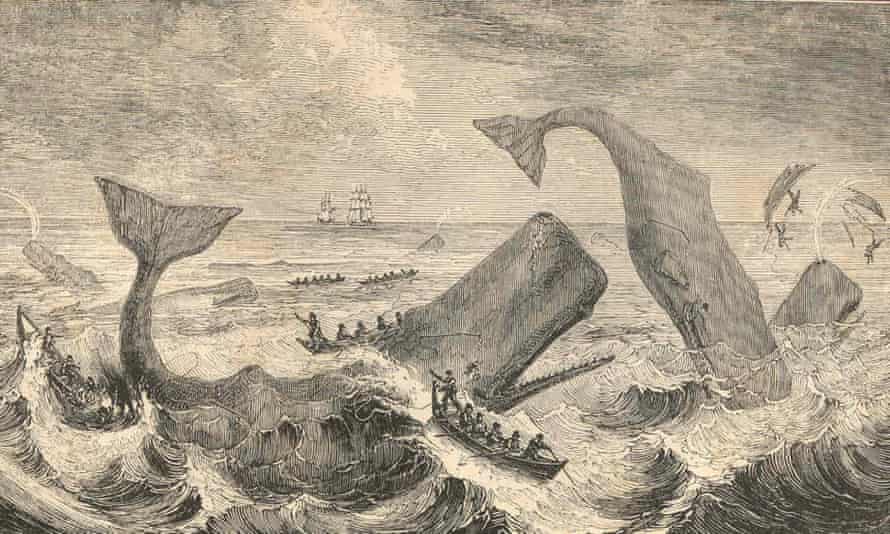
Aremarkable new studyon how whales behaved when attacked by humans in the 19th century has implications for the way they react to changes wreaked by humans in the 21st century.
The paper, published by the Royal Society on Wednesday, is authored by Hal Whitehead and Luke Rendell, pre-eminent scientists working with cetaceans, and Tim D Smith, a data scientist, and their research addresses an age-old question: if whales are so smart, why did they hang around to be killed? The answer? They didn’t.
Using newly digitised logbooks detailing the hunting of sperm whales in the north Pacific, the authors discovered that…
March 17, 2021, 5:28 AM PDT/UpdatedMarch 17, 2021, 7:25 AM PDTByWilson WongandKathryn Prociv
A dangerous outbreak of severe thunderstorms and tornadoes is forecast to threaten the South and Southeast Wednesday and Thursday, officials said.
Portions of Louisiana, Mississippi and Alabama are under “high” and “moderate” risk outlooks as large hail and damaging winds are expected to move from the southern Plains to the Southeast, according to theNational Weather Service‘s Storm Prediction Center. High-risk severe weather outlooks are rare.
Falling gas prices and a lack of maintenance may have contributed to a 40% increase in the number of methane releases from Russian pipelines in 2020, analysts say
Methane, which is released into the atmosphere through leaky gas pipes, has a global warming impact 84 times higher than CO2 over 20 years (Pic:LHoon/Flickr)
The number of methane plumes emitted from Russian gas infrastructure rose by 40% in 2020, satellite monitoring has revealed, raising concerns over the global warming impact.
Increasingly frequent methane releases from venting, flaring or leakage along two major gas pipelines came despite an estimated 14% drop in exports to Europe.
Analysis firmKayrros detected13 methane emission events around the Yamal-Europe pipeline – a 4,196 km pipeline running through Russia, Belarus, Poland and Germany – and a further 33 around the Brotherhood pipeline, 2,750-km long gas pipeline through Russia…
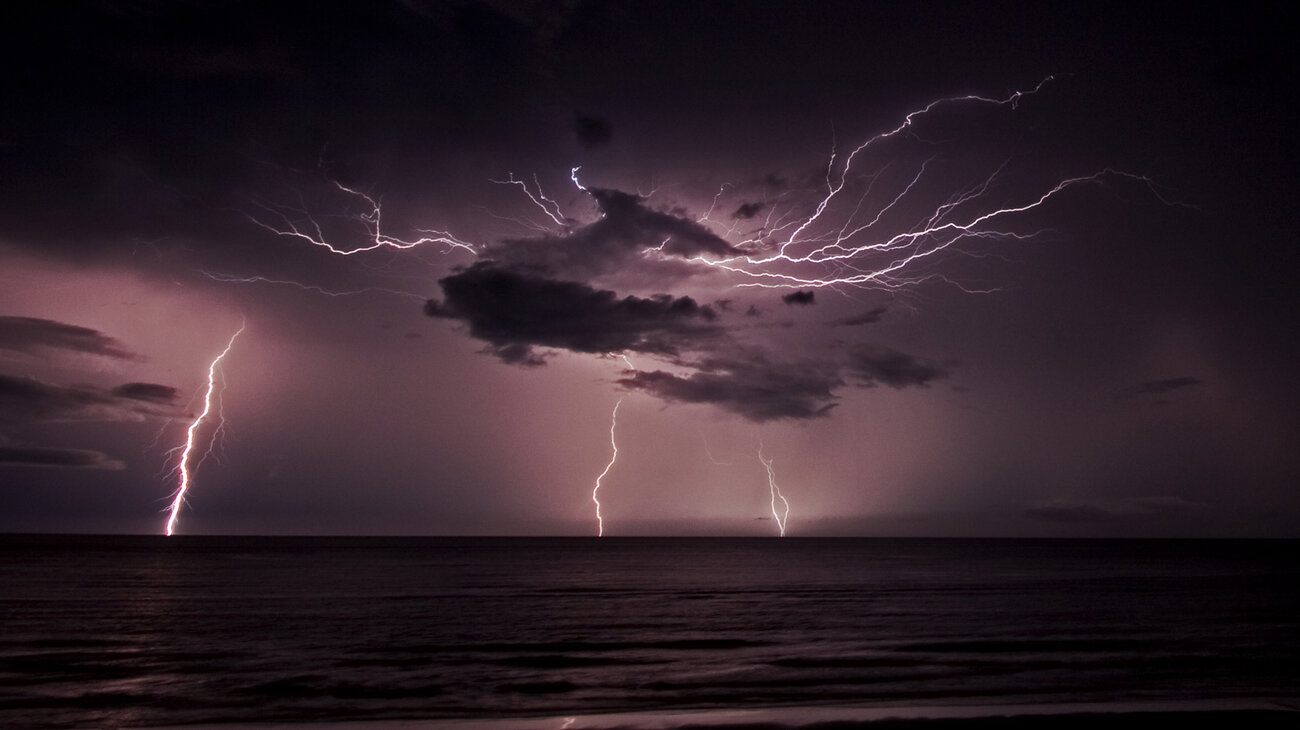
Lightning may have played a key role in the emergence of life on Earth.Nolan Caldwell/Getty Images
In 2016, a family in Illinois thought that a meteorite had hit their backyard. They called up the geology department at nearby Wheaton College to say that whatever struck their property had started a small fire and had left a weird rock embedded in the scorched dirt.
“Meteorites, contrary to popular belief, are cold when they hit the ground,” says Benjamin Hess, who was an undergraduate at the college but is now a graduate student at Yale University. “My professor readily figured out that that was probably a lightning strike.”
When lighting strikes sand, soil or stone, it immediately melts the materials into a glassy clump known as a “fulgurite,” or lightning rock. When geologists excavated the one in Illinois, they found something unexpected inside — an important ingredient for life that had long been thought to be delivered to early Earth by meteorites.
A report on the find, in the journal Nature Communications, suggests that this could have been a way for lightning to have played a key role in the emergence of life.Article continues after sponsor message
Most of the fulgurites that have been studied in the past were collected on beaches or deserts, says Hess, because “it’s really easy to see a glass structure sticking out of the sand.” One that is buried in the soil and potentially hidden by random debris or vegetation is harder to spot, although it might contain different minerals produced when the bolt hit something like clay.
When the researchers dug out the fulgurite in Illinois, they first saw glassy bits on its surface. Below that was a thick, tree-root-like structure extending down about a foot and a half. “It’s just entirely made of glass and has, like, burned soil on the outside of it,” says Hess, adding that the object looked like a foggy gray mass with a lot of air holes.
Hess and two colleagues at the University of Leeds analyzed the minerals inside and found one called schreibersite. “Which was very strange,” says Hess.
This reactive mineral contains phosphorus, an essential element for life. Phosphorus “really plays a key role in a lot of the basic cell structures,” says Hess. For example, it makes up the backbone of DNA.
Phosphorus was abundant in early Earth, but geologists know that it was mostly inaccessible because it was trapped inside nonreactive minerals that don’t dissolve easily in water. That led to a mystery: Where did all the phosphorus needed to make biological molecules come from?
One possibility is meteorites, which can contain reactive minerals like schreibersite. When the Earth was forming and for the first billion years or so afterward, the planet was pelted with numerous meteorites.
“So people thought, ‘Aha! It could actually be an extraterrestrial phosphorous source that provided the reactive phosphorous needed for life to form,’ ” says Hess.
But it occurred to the researchers that lighting offered an alternative source of phosphorus for the young Earth — and one that had certain advantages.
After all, meteorite strikes declined in number over time as the solar system got cleared out, and meteorite impacts can also be hugely destructive. “Lightning doesn’t destroy an entire 100-kilometer area when it strikes,” Hess points out.
The team did a kind of back-of-the-envelope calculation to see if lightning strikes really might have contributed a significant amount of usable phosphorus.
“There are a lot of things to consider,” says Hess, “like what was the dominant rock type that was being struck on early Earth? How much land might there have been? What was the atmosphere like? How much lightning would come from that atmosphere? How much phosphorus was in the rock type?”
Data from satellites and other monitors show that these days, there are over 500 million flashes of lightning a year and that about a quarter of them strike the ground.
Climate modeling suggests that when Earth formed, about 4.5 billion years ago, to when life first emerged, about 3.5 billion years ago, there could have been 1 billion to 5 billion lightning flashes every year.
“Assuming there was a fair amount of land, it’s upwards of a billion lightning strikes a year,” says Hess.
He and his colleagues believe that around the time life formed, the amount of usable phosphorus created through lighting strikes would be about the same as that provided by meteorites. “There’s a large uncertainty there, but basically we found that they are essentially similar,” says Hess.
This new idea about lightning is “pretty cool,” says Hilairy Hartnett, an astrobiologist at Arizona State University who thinks a lot about phosphorus and its role in the potential for life on other planets.
“All life on Earth requires phosphorus, from the tiniest virus to the largest organisms,” she notes.
She thinks this team made a lot of reasonable guesses about whether lightning was important for making reactive phosphorus, but it’s just hard to know and it’s clear that meteorites did deliver large amounts of the stuff.
Still, “the lightning strikes deliver more than they might have expected,” says Hartnett.
So even if meteorite phosphorus was the big deal on early Earth, she says, this means lightning strikes are now a way that planets around other stars might get usable phosphorus, even if they aren’t constantly smacked by meteorites.
“It’s really nice,” she says, “to be able to say there’s more than one path to generating phosphorous that could be available to a planet that might be able to develop life.”
(EnviroNews Nature)—One-fifth of Wisconsin’s gray wolf (Canis lupus) population is dead after hunters and trappers slaughtered more than 200 animals in a three-day, sanctioned trophy binge. Official numbers reported by Wisconsin’s Department of Natural Resources (WDNR) show the “harvest” exceeded quota numbers in every zone, resulting in almost twice the number of wolf-kills as was sanctioned. The numbers were updated on Feb. 26, 2021, and the WDNR notes they are subject to change, which means the number of wolf deaths could be even higher.
The stateopened hunting seasonon Feb. 22, receiving over 27,000 applications to participate in the wolf cull. WDNR made 2,380 harvest authorizations available for purchase and set the quota for wolves at 200. However, 81 of those wolves were allocated to the Ojibwe Tribes “in accordance…
MENOMINEE, Mich. (WLUK) — The body of a hunter who had been missing for four months was found over the weekend in Michigan’s Upper Peninsula.
Menominee County sheriff’s officials say they were called to the Cedar River, about a mile north of the Cedar River Campground, around 3:45 p.m. Saturday. A caller reported seeing what appeared to be a body floating in the river.
Deputies found a man’s body stuck in a group of ice shoves. Firefighters removed the body.
The victim was identified as 58-year-old Vladmir Ivanovic, a hunter who was reported missing in November. An investigation did not turn up any signs of foul play, and Ivanovic’s death has been ruled a cold-water drowning.
The New York Police Department has asked the public to help identify a man involved inanother unprovoked attackin New York City.The assault occurred along East 8th Street at around 12:30 p.m. on March 1. The 18-year-old female victim was reportedly walking when a man approached her and struck her with a hard object, NYPD told NextShark. He also grabbed the woman by her throat, which resulted in bruising. The suspect then fled the scene, and the woman refused any medical assistance when medics arrived. The male individual and the victim never exchanged words before or during the assault, the police said. The man, described to be aged 30 to 40 years old, is wanted for questioning. The NYPD also released pictures of the man taken from nearby surveillance cameras. Those who may have information are asked to contact…