He thought he would never hunt again. But with the help of friends, Sanders has been able to. Now, the Game and Fish Department is sharing his story in a new video called “Targeted Courage.”
“It’s easy for someone like me to just quit. This is my inspiration – my wife and my buddies. They’re the ones that kicked me in the butt and told me to get up off your butt and let’s go,” Sanders says in the video. New Mexico Game and Fish hasposted the…
2 MIN READHe says that view washttps://imasdk.googleapis.com/js/core/bridge3.447.1_en.html#goog_335510389
MOSCOW (Reuters) – Russian scientists are trying to understand the scale of a potential threat to the environment in Siberia: snow polluted with microplastics that then melts and seeps into the ground.
Scientists at Tomsk State University (TSU) say they have gathered snow samples from 20 different Siberian regions – from the Altai mountains to the Arctic – and that their preliminary findings confirm that airborne plastic fibres are turning up in snow in remote parts of the wilderness.
ADVERTISEMENT
“It’s clear that it’s not just rivers and seas that are involved circulating microplastics around the world, but also soil, living creatures and even the atmosphere,” Yulia Frank, scientific director at TSU’s Microplastics Siberia centre, told Reuters.
Microplastics, which are created when bigger pieces of plastic litter break up over time, are increasingly being found in the air, food, drinking water and even Arctic ice. Scientists are increasingly worried they may pose a risk to human health and marine life, though there is no consensus yet on the issue.
Tomsk scientists have previously found microplastics in the digestive systems of fish caught in Siberian rivers, confirming that they are contributing to polluting the Arctic Ocean with plastic.
“Siberia is absolutely under-researched in this aspect and our (Russia’s) interest in this problem comes late compared to the rest of the world,” Frank said.
Scientists are now studying the snow samples to understand to what degree population density, the proximity of roads and other human activity contributes to the pollution.
Reporting by Dmitry Turlyun; Writing by Maria Vasilyeva; Editing by Alex Richardson
A Todd County man charged in connection to a fatal hunting accident that claimed the life of his brother entered a guilty plea as part of a plea agreement in Christian County Circuit Court Wednesday afternoon.
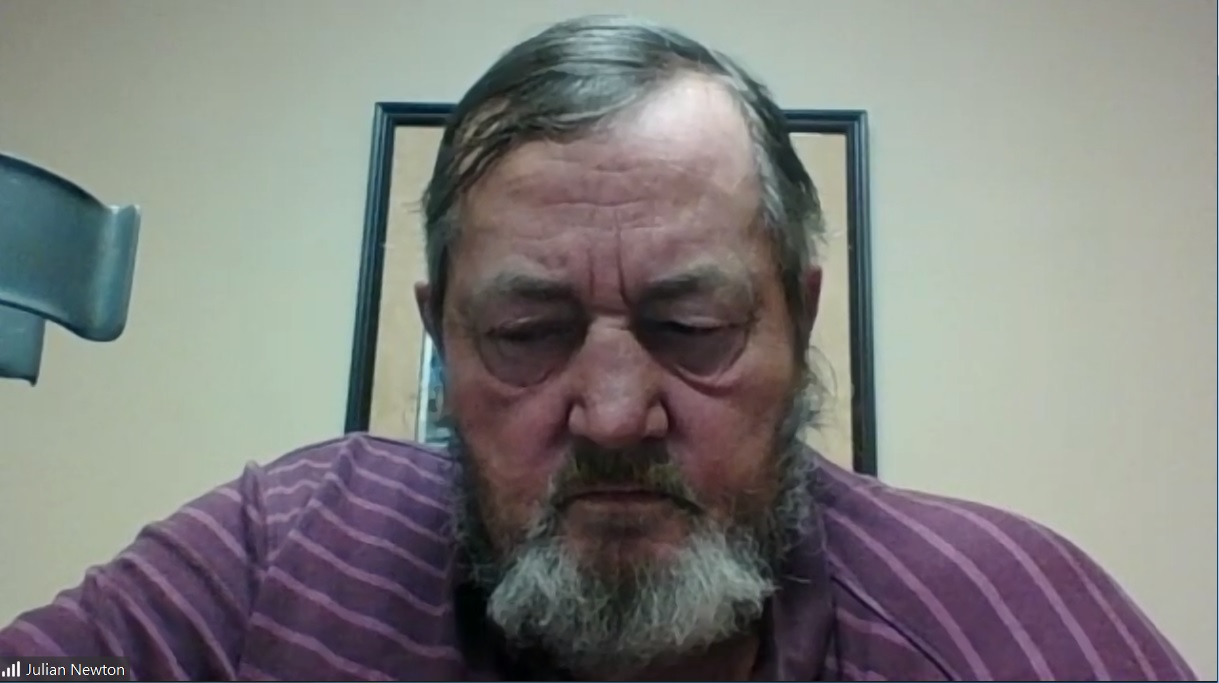
Julian Newton was charged with second-degree manslaughter, first-degree wanton endangerment, and hunting-related offenses in the shooting death of his brother, 58-year old Charles Newton while they were hunting on McKinney Road in Christian County on October 18, 2020.
Newton and his attorney Mark Gilbert along with Assistant Commonwealth’s Attorney Stephanie Bolen appeared before Judge Andrew Self, who read the charges listed as part of the plea agreement, including the manslaughter offense that was amended to reckless homicide.Audio Player00:0000:00Use Up/Down Arrow keys to increase or decrease volume.
In addition, the agreement includes forfeiture of all items seized, including a four-wheeler and van.
PUBLISHED THU, MAR 18 20218:45 PM EDTUPDATED FRI, MAR 19 20213:07 AM EDTEvelyn Cheng@CHENGEVELYNSHAREShare Article via FacebookShare Article via TwitterShare Article via LinkedInShare Article via EmailKEY POINTS
The first high-level gathering of U.S. and Chinese officials under President Joe Biden kicked off with an exchange of insults at a pre-meeting press event Thursday, according to NBC News.
The two-day talks are set to conclude Friday.
A planned four-minute photo session for the officials to address reporters ended up lasting one hour and 15 minutes due to a frothy exchange, according to NBC News
U.S. Secretary of State Antony Blinken (2nd R), joined by national security advisor Jake Sullivan (R), speaks while facing Yang Jiechi (2nd L), director of the Central Foreign Affairs Commission Office, and Wang Yi (L), China’s foreign minister at the opening session of U.S.-China talks at the Captain Cook Hotel in Anchorage, Alaska on March 18, 2021.Frederic J. Brown | AFP | Getty Images
A planned four-minute photo session for the officials to address reporters ended up lasting one hour and 15 minutes due to a frothy exchange, according to NBC News. Both the Chinese and U.S. side kept calling the reporters back into the room so they could add remarks.
Expectations were already low for the meeting in Anchorage, Alaska, with U.S. Secretary of State Antony Blinken, National Security Advisor Jake Sullivan, Chinese Foreign Minister Wang Yi and Yang Jiechi, director of the Central Foreign Affairs Commission of the Chinese Communist Party.
In his opening remarks, Blinken said the U.S. would discuss its “deep concerns with actions by China, including in Xinjiang, Hong Kong, Taiwan, cyber attacks on the United States, economic coercion toward our allies.”
“Each of these actions threaten the rules-based order that maintains global stability. That’s why they’re not merely internal matters, and why we feel an obligation to raise these issues here today,” Blinken said. “I said that the United States relationship with China will be competitive where it should be, collaborative where it can be, adversarial where it must be.”The United States does not have the qualification to say that it wants to speak to China from a position of strength.Yang JiechiDIRECTOR OF THE CENTRAL FOREIGN AFFAIRS COMMISSION
Beijing considers issues in Xinjiang, Hong Kong and Taiwan as part of its domestic affairs, and the officials reiterated at the meeting that China is firmly opposed to foreign interference.
Yang said the U.S. side “carefully orchestrated” the dialogue, according to an official translation reported by NBC.
“I think we thought too well of the United States, we thought that the U.S. side will follow the necessary diplomatic protocols,” Yang said, adding that “the United States does not have the qualification to say that it wants to speak to China from a position of strength.”
Yang said the U.S. must deal with the Chinese side in “the right way” and reiterated Beijing’s call for cooperation.I’m hearing deep satisfaction that the United States is back, that we’re reengaged with our allies and partners. I’m also hearing deep concern about some of the actions your government is taking.Antony BlinkenU.S. SECRETARY OF STATE
Under Chinese President Xi Jinping, the Chinese government has been consolidating its power at home and abroad. In the last year, Beijing has pushed ahead with major trade deals with Asia-Pacific neighbors and the European Union.
Chinese authorities have also emphasized their success in quickly controlling the coronavirus pandemic domestically, and their claim of lifting all 1.4 billion people in the country out of poverty — both of which Yang pointed to in his meeting with U.S. officials.
“We believe that it is important for the United States to change its own image, and to stop advancing its own democracy in the rest of the world,” Yang said.
China’s Ministry of Foreign Affairs did not immediately have a comment.
State-run broadcaster CCTV said the U.S. went “seriously overtime” in its opening remarks and “provoked disputes,” according to a CNBC translation of the Mandarin-language report.WATCH NOWVIDEO03:35China will be thinking “purely in their interest” in cooperation
Blinken arrived in Alaska fresh from a trip to Japan and South Korea. He told his Chinese counterparts that what he was hearing from other countries was very different from what Wang described as hopes for demonstrations of goodwill and sincerity between the U.S. and China.
“I’m hearing deep satisfaction that the United States is back, that we’re reengaged with our allies and partners,” Blinken said. “I’m also hearing deep concern about some of the actions your government is taking. And we’ll have an opportunity to discuss those when we get down to work.”
The first round of discussions between the two countries subsequently ended after more than three hours. The two-day talks are set to conclude Friday.
Tensions between the U.S. and China escalated in the last few years under former President Donald Trump, who used tariffs and sanctions to address persistent complaints about China’s lack of intellectual property protection, requirements of forced technology transfer and other unfair business practices. The dispute initially centered on trade, before spilling over into technology, finance and the origins of the coronavirus pandemic.
The 555-million-year oldfossilsbelong to oceanic creatures that predate the Cambrian explosion.
The animals may be the missing link between the first complex life forms on Earth and humans.
Peer back far enough into the fossil record and the evolutionary links between modern animals and ancient creatures become increasingly unclear. Although some of Earth’s first organisms lacked now-common features like heads, arms, and legs, researchers have traced back genes found in today’s animals—including humans—to some of the oldest complex multicellular creatures.
‘It’s likely that ‘price parity’ between plant-based and animal-derived meats will see the quickest changes made to our food system’by Dr. Alex Lockwood18th March 2021Updated 6 hours ago
Share:
Print
Reading Time: 6 minutes
It will be cost not kindness that ends animal agriculture – but when will we achieve vegan meat price parity?
As much as we care for animals, it’s likely that ‘price parity’ between plant-based and animal-derived meats will see the quickest changes made to our food system
We love cheap food. When asked, we nearly always say we prefer to buy products that are ethical, sustainable, and healthy. But research shows time and again that what actually drives most of our food choices are cost, convenience, and taste.
Most of all, it’s the price.
Vegan meat price parity
That’s why the question of ‘price parity’ is a hot topic in plant-based food. With price, especially a cheap price, such a driving force in our food choices, the cost of plant-based meats really matters.
It’s also why the European dairy lobby is trying to stop plant-based products being sold in ‘dairy’ packaging. If plant-based providers have to use different packaging, this could make plant-based alternatives more difficult to produce and, critically, more expensive to buy.
But lessons from other industries (such as electric cars) show that as technology develops and demand increases, price parity will arrive. But for plant-based meat products, when will that be? Can it really bring an end to the slaughter-based meat products that are currently cheaper and purchased more often?
Lifeguards found the 25-foot emaciated gray whale at Dockweiler Beach, south of Marina del Rey, around 4 p.m. local time, the Los Angeles County Fire Department, Lifeguard Divisionsaid Thursday on its Facebook page.
They and personnel from Marine Animal Rescue were advised to not help the animal, who they didn’t want to risk injuring critically, according totweetfrom the fire department lifeguards’ official account.
Originally, the Lifeguards, animal rescue and NOAA Fisheries — who directed them to leave the whale be — hoped the creature would manage to get back to the water…
In 1971, I wrote and recorded the song “Locomotive Breath” for the Aqualung album. The lyrical subject matter was the topic of runaway population growth.
Now, 47 years later, you have the chance to add your voice to the single most pressing problem facing future generations. From increases in global population, all other danger factors threatening our species, including climate change, continue to accrue. Apart from the odd rogue asteroid or black hole, of course.
In my lifetime alone, the population of the planet has slightly more than tripled. Yes – in one generation!
I have been a supporter of Population Matters for some years – ever since the venerable and much-loved David Attenborough became visibly the first person of real media presence to come out, unafraid to discuss the issues of population growth in our times.
Tricky and controversial stuff, I know, but don’t think that we concerned voices are about to shout down your right to have children. We are about the sense of responsible family planning and size. Responsibility not just to a nation, ethnic group or continent, but to the precious resource and life-giving spirit of planet Earth itself. No one is about to tell you what to do or not to do; merely to learn, understand and act upon your own conclusions. Responsible, informed choice. Especially for women in the modern world.
Two young chimpanzees groom each other at a rehabilitation center for orphaned chimps in Guinea. (Photo: Dan Kitwood/Getty Images)
Share
Twitter
Pinterest
Email
Mama briefly achieved international fame after her death in April 2016. The 59-year-old chimpanzee was an astute leader and diplomat who lived a fascinating life, and she could have been famous for many reasons, as primatologist Frans de Waal explains in his new book, “Mama’s Last Hug.” She ended up going viral, however, because of the way she embraced an old friend who had come to tell her goodbye.https://2dca08cd582e873dbdf042cfba66d931.safeframe.googlesyndication.com/safeframe/1-0-37/html/container.html
Mama died a week after this reunion. The video was then shown on national TV in the Netherlands, where viewers were “extremely moved,” according to de Waal, with many posting comments online or sending letters to van Hooff describing how they had wept. The same reaction later echoed around the world via YouTube.
People felt sad partly due to the context of Mama’s death, de Waal says, but also because of “the very human-like way she had hugged Jan,” including the rhythmic patting with her fingers. This common feature of human hugs also occurs in other primates, he points out. Chimps sometimes use it to soothe a crying infant.
Those connections are definitely worth seeing, and not just to help YouTube viewers empathize with a dying chimpanzee’s nostalgia. While “Mama’s Last Hug” offers some incredible anecdotes from its title character’s life, her final embrace is mainly a jumping-off point to explore the wider world of animal emotions — including, as the book’s subtitle puts it, “what they can tell us about ourselves.”
‘Anthropodenial’
Frans de Waal (center) speaks with members of the Eugène Dubois Foundation during a 2015 dinner the organization hosted at the International Museum for Family History in Eijsden, Netherlands. (Photo: Stichting Eugène Dubois/Flickr)
De Waal, one of the world’s best-known primatologists, has spent decades exploring the evolutionary links between humans and other animals, especially our fellow primates. He has written hundreds of scientific articles and more than a dozen popular science books, including “Chimpanzee Politics” (1982), “Our Inner Ape” (2005) and “Are We Smart Enough to Know How Smart Animals Are?” (2016).https://2dca08cd582e873dbdf042cfba66d931.safeframe.googlesyndication.com/safeframe/1-0-37/html/container.html
After training as a zoologist and ethologist under van Hooff in the Netherlands, de Waal received his Ph.D. in biology from Utrecht University in 1977. He moved to the U.S. in 1981, eventually taking joint positions at Emory University and the Yerkes National Primate Research Center in Atlanta. He retired from research a few years ago, and this summer he will retire from teaching, too.
For most of de Waal’s career, he has chafed under the way behavioral scientists have traditionally viewed the mental capacities of nonhuman animals. Justifiably cautious about projecting human traits onto other species — a habit known as anthropomorphism — many 20th-century scientists went too far in the other direction, according to de Waal, adopting a stance he calls “anthropodenial.”https://2dca08cd582e873dbdf042cfba66d931.safeframe.googlesyndication.com/safeframe/1-0-37/html/container.html
“Scientists have been trained to avoid the topic, even though we talk about power struggles and reconciliation behavior, emotions and feelings, internal states in general, cognition and mental processes — all the words we are supposed to avoid,” de Waal tells MNN in a phone interview. “I think it comes from a century-long indoctrination by behaviorists,” he adds, specifically crediting the American brand of behaviorism pioneered last century by psychologist B.F. Skinner, who saw nonhuman animals as driven almost entirely by instinct rather than intelligence or emotion.
Horses have some of the most expressive faces on Earth, de Waal notes, capable of conveying emotional subtlety almost on par with primates. (Photo: Mikail Brennan/Shutterstock)
De Waal cites one prominent neuroscientist who is so wary of anthropomorphizing that he stopped referring to “fear” in the rats he studies, instead merely speaking of “survival circuits” in their brains to avoid any parallels with subjective human experiences. “It would be like saying that both horses and humans seem to get thirsty on a hot day,” de Waal writes in his new book, “but in horses we should call it ‘water need’ because it is unclear that they feel anything.”
While this caution is rooted in scientific rigor, it has brought ridicule on scientists who study emotions and internal states of nonhuman animals. “We are very often accused of anthropomorphism as soon as you use ‘human’ terminology,” de Waal says. It’s true that we can’t be sure how other species feel when they experience an emotion, but we can’t be sure how other humans feel, either — even if they try to tell us. “What humans tell us about their feelings is often incomplete, sometimes plainly wrong, and always modified for public consumption,” de Waal writes. And we would need to ignore a lot of evidence to believe that human emotions are fundamentally unique.
“Our brain is bigger, true, but it’s just a more powerful computer, not a different computer,” de Waal says. To believe otherwise is “highly unreasonable,” he argues, “given how similarly the emotions manifest themselves in animal and human bodies, and how alike all mammalian brains are down to the details of neurotransmitters, neural organization, blood supply and so on.”
That feeling when
Capuchin monkeys like cucumbers, but they may reject this reward if a peer has unfairly been given something even better: a grape. (Photo: Rodrigo Cuel/Shutterstock)
De Waal draws a key distinction between emotions and feelings: Emotions are automatic, full-body responses that are fairly standard across mammals, while feelings are more about our subjective experience of that physiological process. “Feelings arise when emotions penetrate our consciousness, and we become aware of them,” de Waal writes. “We know that we are angry or in love because we can feel it. We may say we feel it in our ‘gut,’ but in fact we detect changes all over our body.”
Emotions can spark a variety of bodily changes, some more obvious than others. When humans are afraid, for instance, we may feel our heartbeat and breathing quicken, our muscles tense, our hair stand up. Most frightened people are probably too distracted to notice subtler changes, though, like their feet becoming cold as blood flows away from their extremities. This drop in temperature is “astonishing,” according to de Waal, and like other aspects of a fight-or-flight response, it occurs in mammals of all kinds.
Many people can accept that other species experience fear, but what about pride, shame or sympathy? Do other animals think about fairness? Do they “blend” multiple emotions together, or try to hide their emotional state from others?
In “Mama’s Last Hug,” de Waal offers a wealth of examples that illustrate the ancient emotional heritage we share with other mammals, in our brains and bodies as well as in the ways we express ourselves. The book teems with the kinds of facts and vignettes that stick with you long after you’ve finished reading, potentially changing your perspective on your own emotions and social interactions while shifting the way you think about other animals. Here are just a few examples:
Many ‘human’ emotions occur in all kinds of mammals, from apes to rats. (Photo: Ukki Studio/Shutterstock)
• Rats seem to have an outsized emotional range, experiencing not just fear but also things like joy — they emit high-pitched chirps when tickled, more eagerly approach a hand that has tickled them than one that has merely petted them, and make gleeful little “joy jumps” that are typical of all playing mammals. They also display signs of sympathy, not only improvising ways to rescue fellow rats trapped in a clear tube, but even opting to perform the rescue instead of eating chocolate chips.
• Monkeys have a sense of fairness, de Waal writes, citing an experiment he and a student conducted with capuchin monkeys at Yerkes. Two monkeys working side by side were rewarded with either cucumbers or grapes when they finished a task, and both were happy when they received the same reward. They much prefer grapes to cucumbers, though, and monkeys who received the latter showed signs of outrage when their partner got a grape. “Monkeys who’d been perfectly happy to work for cucumber all of a sudden went on strike,” de Waal writes, noting that some even threw their cucumber slices in apparent indignation.
• Blended emotions are less widespread, but still not unique to humans. While monkeys seem to have a rigid set of emotional signals that can’t be mixed, apes commonly blend emotions, de Waal writes. He cites examples from chimps, such as a young male schmoozing the alpha male with a mix of friendly and submissive signals, or a female requesting food from another with a medley of begging and complaining.
Nonetheless, scientists tend to label these and other displays of animal emotion very carefully. When an animal expresses what looks like pride or shame, for example, it’s often described with functional terms like dominance or submission. It may be true that a “guilty” dog is just being submissive in hopes of avoiding punishment, but are people really so different? Human shame involves submissive behaviors similar to those of other species, de Waal points out, possibly because we’re trying to avoid another kind of punishment: social judgment.
“More and more I believe that all the emotions we are familiar with can be found one way or another in all mammals, and that the variation is only in the details, elaborations, applications and intensity,” de Waal writes.
‘Wisdom of the ages’
Emotions can compel us to take action when necessary, but they also leave room for experience and judgment to inform the most effective kind of action — like protesting nonviolently instead of rioting. (Photo: Dan Kitwood/Getty Images)
Despite this trend of underestimating the emotions of other animals, de Waal also points to a seemingly contradictory habit among humans. We have traditionally looked down on our own emotions, seeing them as a weakness or liability.
“That emotions are rooted in the body explains why Western science has taken so long to appreciate them. In the West, we love the mind, while giving short shrift to the body,” de Waal writes. “The mind is noble, while the body drags us down. We say the mind is strong while the flesh is weak, and we associate emotions with illogical and absurd decisions. ‘Don’t get too emotional!’ we warn. Until recently, emotions were mostly ignored as almost beneath human dignity.”
Rather than some embarrassing relic of our past, however, emotions are useful tools that evolved for good reasons. They’re sort of like instincts, de Waal explains, but instead of simply telling us what to do, they’re more like the collective voice of our ancestors, who whisper advice in our ear and then let us decide how to use it.
Impulse control is vital for all kinds of animals, de Waal points out. A lioness, for example, must suppress her urge to pounce on prey until she sneaks close enough to catch it. (Photo: Peter Betts/Shutterstock)
“Emotions have the great advantage over instincts that they don’t dictate specific behavior. Instincts are rigid and reflex-like, which is not how most animals operate,” de Waal writes. “By contrast, emotions focus the mind and prepare the body while leaving room for experience and judgment. They constitute a flexible response system far and away superior to the instincts. Based on millions of years of evolution, the emotions ‘know’ things about the environment that we as individuals don’t always consciously know. This is why the emotions are said to reflect the wisdom of the ages.”
That doesn’t mean emotions are always right, of course. They can easily lead us astray if we simply follow their lead without thinking critically about the specific situation. “There is nothing wrong with following your emotions,” de Waal says. “You don’t want to follow them blindly, but most people don’t do that.
“Emotional control is an essential part of the picture,” he adds. “People often think animals are slaves to their emotions, but I don’t think that’s true at all. It’s always a combination of emotions, experiences and the situation that you’re in.”
We’re all animals
Pigs’ personal experiences can turn them into optimists or pessimists, research has found. (Photo: galitsin/Shutterstock)
It may seem harmless for humans to put ourselves on a pedestal, to believe we’re separate from (or even superior to) other animals. Yet de Waal is frustrated by this attitude not just for scientific reasons, but also because of how it can influence our relationship with other creatures, whether they live in our care or in the wild.
“I think the view of animal emotions and intelligence has moral implications,” he says. “We have moved on from seeing animals as machines, and if we acknowledge they are intelligent and emotional beings, then we cannot just do with animals anything we want, which is what we have been doing.
“Our ecological crisis at the moment, global warming and the loss of species, is a product of humans thinking we are not part of nature,” he adds, referring to human-induced climate change as well as our role in the mass extinction of wildlife. “That is part of the problem, the attitude that we are something else than animals.”
Climate change, biodiversity loss and similar crises may be getting worse, but as de Waal enters retirement, he says he’s optimistic about how our overall relationship with other species is evolving. We still have a long way to go, but he’s encouraged by a new generation of scientists who don’t face the kind of dogma he faced earlier in his career, and by how the public often welcomes their findings.
“I’m definitely not just hopeful, I think it is already changing. Every week on the internet you see a new study or surprising finding about how ravens can plan ahead, or rats have regrets,” he says. “Behavior and neuroscience, I think the whole picture of animals is changing over time. Instead of the very simplistic view we had before, we now have this picture of animals as they have internal states, feelings and emotions, and their behavior is much more complex also as a result.”
Mama the chimp celebrates her 50th birthday in 2007 at Burgers Zoo. (Photo: Vincent Jannink/AFP/Getty Images)
Mama had been the “longtime queen” of the chimpanzee colony at Burgers Zoo in the Netherlands, as de Waal puts it, and after she died the zoo did something unusual. It left her body in the night cage with the doors open, giving her colony a chance to view and touch her one last time. The resulting interactions resembled a wake, de Waal writes. Female chimps visited Mama in total silence (“an unusual state for chimps,” de Waal notes) with some nuzzling her corpse or grooming it. A blanket was later found near Mama’s body, presumably brought there by one of the chimps.
“Mama’s demise has left a giant hole for the chimpanzees,” de Waal writes, “as well as for Jan, myself and her other human friends.” He says he doubts he’ll ever know another ape with such an impressive and inspiring personality, but that doesn’t mean such apes aren’t already out there somewhere, either in the wild or in captivity. And if Mama’s last hug can draw more attention to the emotional depth of chimps and other animals that are still with us, then we all have reason to feel hopeful.




 © Evans, et. al./Proceedings of the Royal Society B/Courtesy Christine HallResearchers traced genes found in humans back to some of the earliest multicellular animals to roam Earth.
 by
 © Provided by New York Daily News A 25-foot gray whale died after washing up near the shore of Dockweiler State Beach south of Marina Del Rey Wednesday afternoon.


