Russian MP moves to ban poaching of killer whales & dolphins in bid to shut vibrant but controversial marine mammal park industry


2 Mar, 2021 10:29 / Updated 3 days agoGet short URL

https://www.rt.com/russia/516953-ban-mammal-park-industry/?fbclid=IwAR0Q_Tr-sEZ0mKaIG8cu4on1m093dGIJrO7UqEs14w4ZwxTOpZzCuRmmyK4

Russian MP moves to ban poaching of killer whales & dolphins in bid to shut vibrant but controversial marine mammal park industry

FILE PHOTO. An animal trainer during a killer whale show at the Moskvarium Center of Oceanography and Marine Biology at the National Exhibition of Economic Achievements (VDNKh) © Sputnik

  • 154

Follow RT on

By Jonny TickleA leading Russian parliamentarian has proposed a new bill to ban the catching of marine mammals, which would eventually lead to the closure of the country’s many dolphinaria as collections could no longer be replenished.

Authored by State Duma deputy Svetlana Bessarab, of the ruling United Russia party, the bill would prevent the practice of taking mammals such as dolphins, seals, and killer whales into captivity, including for educational purposes. The aim is to stop the poaching of animals that have evolved to live in a large oceanic territory. Over time, as the animals currently affected eventually die, institutions with marine mammals would be forced to close.

While the practice is already illegal in many countries around the world, dolphinariums are a fixture of Russian resort towns. Furthermore, poachers also sell around 100 animals a year to China, for about $2 million each.ALSO ON RT.COMBig money makes solutions tough, Putin says, as first captured belugas and orcas are released

As things stand, capturing marine mammals is already highly regulated, with purchasing from illegal poachers completed banned. However, according to Bessarab, there is now an absurd situation where state agencies seize animals from criminals and then hand them over to dolphinariums for ‘safekeeping’, despite these institutions not being equipped to rehabilitate the animals.

READ MORE: Fight for freedom: Last batch of belugas on a doorstep of ‘whale prison’ ready to go to the wild (VIDEO)

In 2018, activists discovered around 100 whales living in tightly packed aquatic ‘pens’ in Russia’s Far East. The animals were later declared as having been illegally captured, and the local governor said they would all be released back into the wild. In November 2019, the last of the captured whales were finally returned to their ocean home.

Then and now: A ‘megadrought’ in California

Exposing the Big Game's avatarThe Extinction Chronicles

By Mark Kinver
Environment reporterPublished1 day agoShareRelated Topics

https://www.bbc.com/news/science-environment-56225862

In our monthly feature, Then and Now, we reveal some of the ways that planet Earth has been changing against the backdrop of a warming world. Here, we look at the effects of extreme weather on a crucial reservoir that supplies water to millions of people in northern California.

This year islikely to be critically dry for California.Winter storms that dumped heavy snow and rain across the state are not expected to be substantial enough to counterbalance drought conditions.

Lake Oroville plays a key role in California’s complex water delivery system.

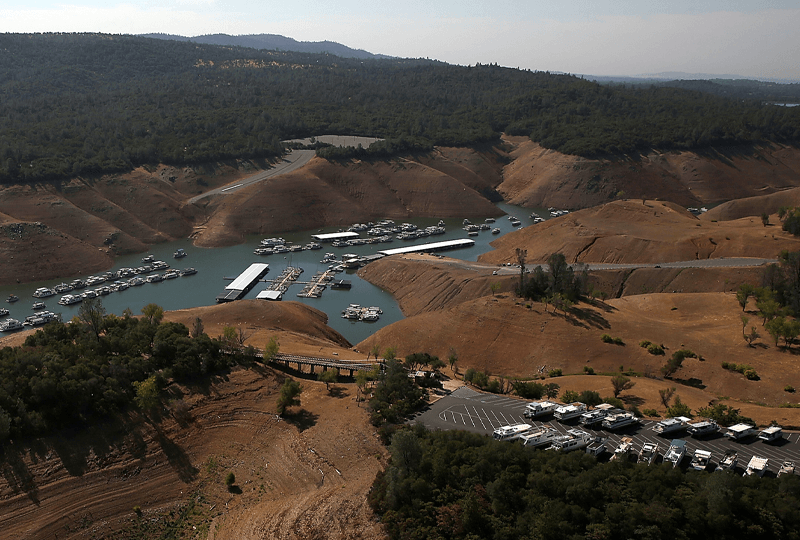
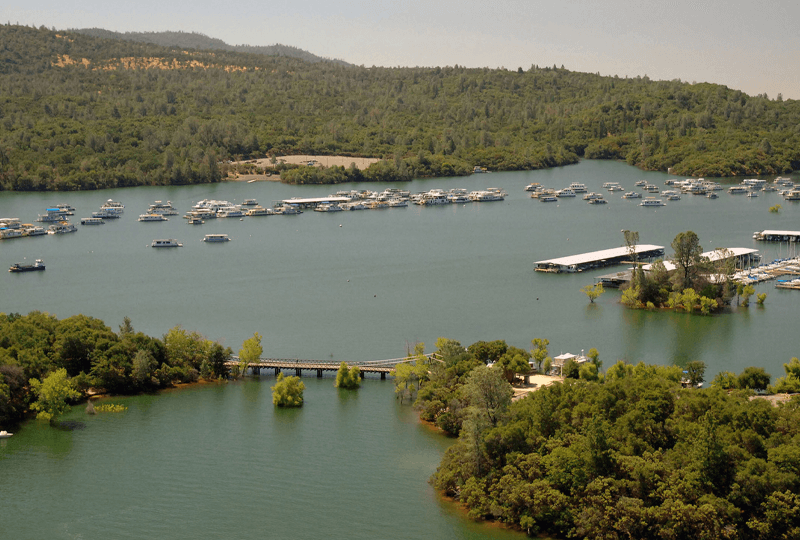
Bidwell Marina at Lake Oroville, California

Drag button to see how extreme drought has affected lake

Photo of Bidwell Marina, Lake Oroville, California, in July 2014 after several years of drought
July 2014

Photo of Bidwell Marina, Lake Oroville, California in July 2011
July 2011

Source: Getty

This 65km-square body of water north of Sacramento is the second-largest reservoir in California.

Not only does Lake Oroville store water, it helps control…

View original post 844 more words

The Great Dying: Earth’s largest-ever mass extinction is a warning for humanity

Exposing the Big Game's avatarThe Extinction Chronicles

BY JEFF BERARDELLI, KATHERINE NIEMCZYK

MARCH 4, 2021 / 8:44 PM/ CBS NEWS

Right now our planet is in the midst of what science says is an unprecedented rate of change, unlike anything seen in tens of millions of years. Overconsumption, unsustainable practices and the release of immense amounts of greenhouse gases from the burning of fossil fuels are altering our life-sustainingclimateat a dangerous pace, oceans are acidifying and losing oxygen, andspecies are dying off.

But this is not the first time that life on our planet has faced an epic challenge. The worst came a little over 250 million years ago — before dinosaurs walked the earth — in an episode called the Permian-Triassic Mass Extinction, or the Great Dying, when 90% of life in the oceans and 70% of life on land vanished.

geological-period.png
CBS NEWS

Recently, two groundbreaking studies on the Great Dying reveal…

View original post 1,128 more words

Hoskin signs hunting, fishing act at first preserve

  • BY CHAD HUNTER Reporter
  • Mar 3, 2021 Updated Mar 3, 2021

1 of 3

The Cherokee Nation recently purchased more than 4,000 acres in Sequoyah County for its first hunting and fishing preserve, seen March 1.

  • JOSH FOURKILLER/CHEROKEE PHOENIX

Tribal Councilor Mike Shambaugh, left, and Deputy Chief Bryan Warner talk March 1 at the site of the Cherokee Nation’s first hunting and fishing preserve in Sequoyah County. 

  • CHAD HUNTER/CHEROKEE PHOENIX

As Cherokee Nation leaders look on, Principal Chief Chuck Hoskin Jr. prepares to sign the Park and Wildlands, Fishing and Hunting Reserve Act of 2021 on March 1 in Sequoyah County. 

  • CHAD HUNTER/CHEROKEE PHOENIX

SEQUOYAH COUNTY – On a breezy afternoon in Sequoyah County, tribal leaders gathered at a newly purchased swath of countryside as Principal Chief Chuck Hoskin Jr. signed into law the Park and Wildlands, Fishing and Hunting Reserve Act of 2021.

The heavily wooded, 4,300-acre site is the tribe’s first preserve under the new act.https://www.youtube.com/embed/HjPZyFIIG4w?enablejsapi=1&origin=https://www.cherokeephoenix.org

“This is a big and beautiful place. This legislation is even bigger,” Hoskin said March 1. “This is the beginning of a new era in the Cherokee Nation of conservation of our lands, of setting aside lands to use for the Cherokee people for hunting, for fishing, for gathering. This is only the beginning, this 4,000-acre tract.”

Backed by the Tribal Council, the act establishes policy for preserve lands. The goal, Hoskin said, was “to do something more than just acquire land, but to manage it in a way that creates hunting preserves, fishing preserves and wildlands for gathering traditional medicines and engaging in traditional practices.”

“We also have an opportunity to construct some cabins here as we continue to deal with the pandemic,” he added. “So getting people a place to isolate in Sequoyah County – as we’re looking across the reservation to do – is important. But long term, this legislation is really about managing our lands in a way that can benefit the Cherokee people the most.”

The first tract of land in Sequoyah County should be available to CN citizens within a few months, said tribal officials.

“This property is around 4,300 acres of pristine hunting and fishing preserve land,” said Secretary of Natural Resources Chad Harsha, who will oversee the program.

CN leaders said the sprawling property is home to deer, squirrel, rabbit, turkey, dove, quail, waterfowl and fish, along with mushrooms, wild onions, wild berries, hickory nuts, wild greens and more.

“It’s been used for hunting for a number of years,” Hoskin said. “This body of water behind me is an impounded creek that’s created just a wonderful place for fishing and recreation.”

Regulations and a map are expected to be available this spring under the Natural Resources tab at cherokee.org.

“When we open this to our citizens, people will best be able to find it by going to Akins, to the Akins store off Highway 101,” Hoskin said. “It’s just a short drive off that highway. We’ll make sure on our website that information about accessing this park is made available.”https://cbc47685d864261b810bb9b4aa4af7b4.safeframe.googlesyndication.com/safeframe/1-0-37/html/container.html

Future tracts of trust property are also being considered for hunting and fishing, cultural use or archery.

“We’ve actually identified some other parcels that we already owned that will be designated as hunting and fishing preserves under this act,” Hoskin said. “One is in Adair County. The other is in Craig County.”

Harsha sees the program as a way to “enhance and expand” outdoor activities and recreation for Cherokees.

“It also is a unique opportunity to provide conservation and protect traditional practices for Cherokee citizens,” he said. “This is the first step of many.”

https://www.cherokeephoenix.org/news/hoskin-signs-hunting-fishing-act-at-first-preserve/article_a281e65e-7c41-11eb-83f6-bbcb8d4c207d.html

Hunters Killed 82% More Wolves Than Quota Allowed in Wisconsin

Exposing the Big Game's avatarCommittee to Abolish Sport Hunting Blog

https://www.smithsonianmag.com/smart-news/hunters-kill-82-more-wolves-quota-allowed-wisconsin-180977132/

The state’s Department of Natural Resources granted permits to about 1,500 hunters to kill 119 wolves, but 216 were shot

A gray wolf sits in tall grass looking toward the camera
Wisconsin was home to about 1,195 wolves in 256 packs at the end of 2020, according to the state’s Department of Natural Resources.(John and Karen Hollingsworth/USFWS)

ByTheresa MachemerSMITHSONIANMAG.COM
MARCH 2, 20211.5K3190

Hunters and trappers participating in Wisconsin’s fourth wolf hunting season killed almost 100 more animals than was allowed under the state’s quota, Paul A. Smith reports for theMilwaukee Journal Sentinel.

The state’s Department of Natural Resources issued 1,486 tags to hunters with a quota of 119 wolves. Hunting was closed at 3 p.m. on Wednesday, and hunters had 24 hours to report their kills. The final count: 216 wolves, according to data released by Wisconsin DNR on Thursday.

“It’s easy at this point in the game to say, yeah, maybe we…

View original post 623 more words

Trophy hunting is cruel, harmful

Exposing the Big Game's avatarCommittee to Abolish Sport Hunting Blog

LETTER TO THEEDITOR:

https://m.lasvegassun.com/news/2021/mar/02/trophy-hunting-is-cruel-harmful/

By Linda Faso, Las Vegas

Tuesday, March 2, 2021 | 2 a.m.

Several years ago, when Cecil the lion was killed by Walter Palmer, a dentist from Minnesota, the slaughter sparked an international outcry that shined a light on the atrocities committed by trophy hunters. The revulsion may have been in part because Cecil had a name. Every lion, rhino, bear or other species that is hunted purely for a trophy is a Cecil in some way. They may not be famous but they are sentient beings with families, killed for an ornament to be hung on a wall.

When animals are killed abroad, it is legal to ship their trophies back to the U.S. We are a country of people who care about animals and can now use our voice to ban this senseless cruelty. Please urge your Congress member to support the reintroduction of…

View original post 76 more words

Any wildlife trapping should be banned

 PREVPreviousPREVIOUS

We don’t need to kill wolves

I’ll keep this short and to the point. I applaud all of our county commissioners and the other letter writers who wrote enlightened and reasonable letters in the Feb. 19 Express. Trapping is inhumane. Period. The proponent organizations with benevolent-sounding names are complicit in the cruelty of trapping, as is Fish and Game, which claims that even sign posting is too burdensome. Are they kidding?

Blaine County especially objects to trapping, as evidenced by the unanimous opinions of our county commissioners who represent us. Trapping might be justified in the Alaskan bush where there are no groceries or clothing stores, but not in a civilized state and county where one can buy anything they need locally or online. I also expect that our tourist economy will suffer when visitors don’t want to spend their money in a place that allows such immoral activity that is a clear danger to recreationalists and their kids and dogs. This is the 2020s, not the 1800s.

Keith Saks

Sun Valley

https://www.mtexpress.com/opinion/letters_to_editor/any-wildlife-trapping-should-be-banned/article_b6610612-7bd0-11eb-9409-1b87c1c4e161.html

Montana will ‘trap’ hearts of newcomers – and maybe their dogs

Exposing the Big Game's avatarCommittee to Abolish Sport Hunting Blog

90% OFF! $3 for 3mos. unlimited digital

Dear new and current residents of our beautiful Montana:

I just wanted to let you know there are countless opportunities to enjoy our outdoors and public lands. You might see a moose, a bear or, if you are lucky, hear the wolves howl in Yellowstone. The ecosystem needs all of its players to stay viable.

Oh, but wait! You should be aware that there are traps, yes traps, in many public areas. Also snares— lethal wire nooses. They lie waiting, like land mines, to kill or maim anything that happens to encounter them. They don’t play favorites. They are not choosy. They are vastly unmonitored and under-regulated. They are secretive and cruel.

No, you did not step back in time to 1825; sadly, this is happening now.

And what’s more, there are many…

View original post 284 more words

Tyson Foods Linked to Largest Toxic Dead Zone in U.S. History

Exposing the Big Game's avatarThe Extinction Chronicles

 AlterNetOct. 31, 2017 07:33AM ESTFOOD

https://www.ecowatch.com/tyson-foods-toxic-dead-zone-2504305201.html?fbclid=IwAR2BCv6-DJDgxDt1i1n_G8lIHcdhCdthbecNr15MAuYeWp0WKLISamHTQcU

Tyson Foods Linked to Largest Toxic Dead Zone in U.S. History

Less oxygen dissolved in the water is often referred to as a “dead zone” (in red above) because most marine life either dies, or, if they are mobile such as fish, leave the area. Habitats that would normally be teeming with life become, essentially, biological deserts.NOAA

By Shana Gallagher

What comes to mind when you think of Tyson Foods? A chicken nugget? A big red logo?

How about the largest toxic dead zone in U.S. history? It turns out the meat industry—and corporate giants like Tyson Foods—are directly linked to this environmental catastrophe in the Gulf of Mexico, and many others.

Industrial-scaleagricultureto support America’s livestock is the number one source of water pollution in the country. But while industrial agriculture to feed animals raised for meat is currently resource-intensive and ecologically destructive, it doesn’t have to be. Solutions exist…

View original post 1,122 more words

Zombie mink, infected escapees, and COVID outbreaks: How mink farms became a political flash point

Mink farms are notoriously oppressive, but COVID-19 outbreaks at facilities are putting them in the spotlight

https://www.salon.com/2021/03/03/zombie-mink-infected-escapees-covid-outbreaks-how-mink-farms-became-a-political-flash-point/

By MATTHEW ROZSA
MARCH 3, 2021 10:59PM (UTC)

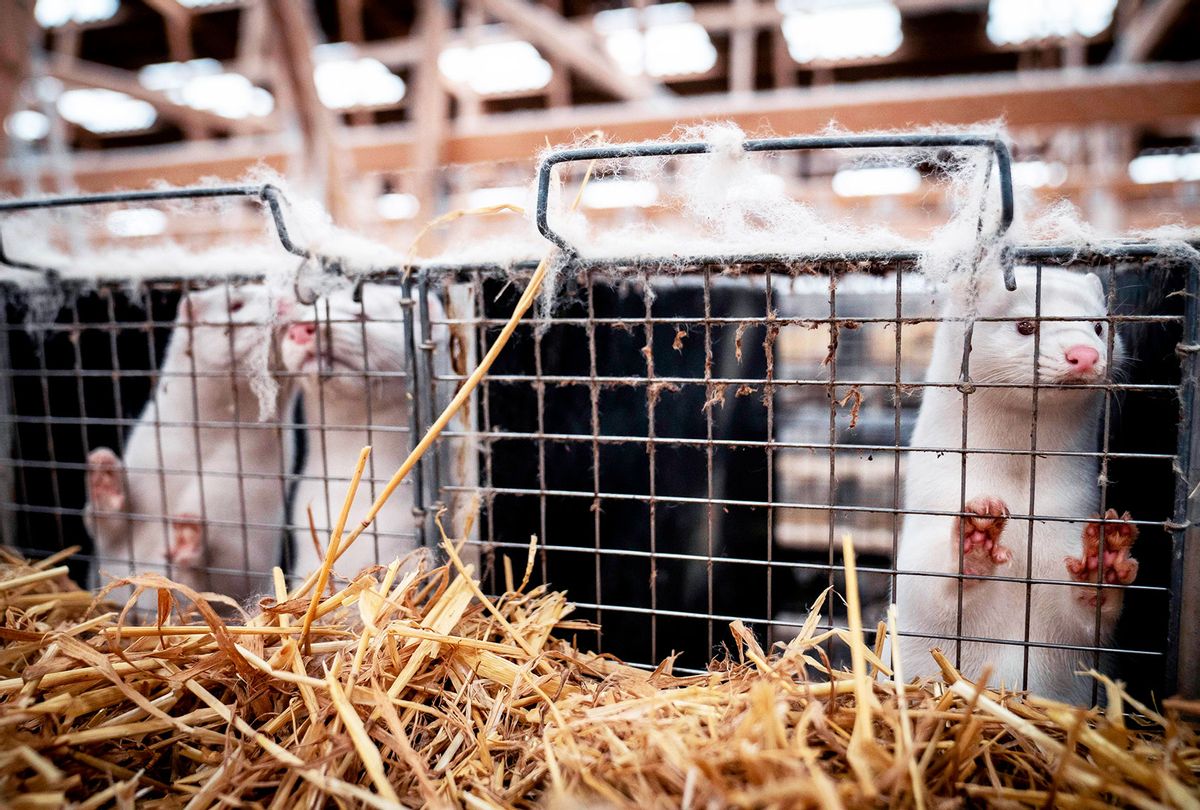
main article imageMink look out from their cage at the farm of Henrik Nordgaard Hansen and Ann-Mona Kulsoe Larsen as they have to kill off their herd, which consists of 3000 mother mink and their cubs on their farm near Naestved, Denmark, on November 6, 2020 (MADS CLAUS RASMUSSEN/Ritzau Scanpix/AFP via Getty Images)Facebook56TwitterRedditEmailcomments

Scott Beckstead remembers the mink that died from terror.

She was a beautiful female with a bluish shade to her coat — they’re known as “sapphires” in the mink industry — and he was at a mink farm owned by his grandfather. Beckstead describes his grandfather as a “kind, wonderful, generous man” who “sincerely tried to give his animals the best life he could.” That said, Beckstead recalled sadly, “there are some realities about mink farming that are just unavoidable.”Advertisement:https://fcbb08fbe086f07cd554333b80283d53.safeframe.googlesyndication.com/safeframe/1-0-37/html/container.html

This was one of them.

“The foreman pulled out this sapphire female, and she struggled and she screamed,” Beckstead told Salon, describing an incident occurred in one of the last year that he visited his grandfather’s southern Idaho mink farm. “Then she went limp. She literally died. There is no doubt that she was terrified. She had watched what was happening to the mink next to her. I think, honestly, the only explanation is that she died of sheer terror.”

His grandfather “cursed” when he saw that; “the sapphires are so fragile,” he rued. Beckstead was struck by the fact that his grandfather was genuinely upset at how that mink died. Though she was to be killed for her fur ultimately, he did not want her life to end in the way that it did.Advertisement:

Beckstead is now the director of campaigns for animal wellness action at the Center for a Humane Economy. The organization, a non-profit that tries to change how businesses behave in order to create a humane economic order, is supporting a recently-proposed bill that would ban mink farms in Oregon. There are many reasons to ban mink farms strictly from the perspective of animal rights, but a new reason has incentivize that movement: The COVID-19 pandemic.

For biological reasons, the novel coronavirus is particularly prevalent among mink, as mink and other mustelidae such as ferrets are notorious for unwittingly serving as virus mutation factories. Mink are so prone to developing COVID-19 infections that outbreaks have repeatedly disproportionately cropped up in areas with mink farms. The problem is extremely serious, to the point that last year Denmark ordered thousands of mink to be killed and buried in shallow graves to halt the spread of SARS-CoV-2. This led to the unappealing sight of bloated, decayed mink carcasses literally rising out of their graves as their corpses filled with gas.

Even when diseased minks aren’t threatening humans through zombie-like behavior, mink often put human beings at risk simply because they act like — well, like intelligent, wild animals.Advertisement:https://fcbb08fbe086f07cd554333b80283d53.safeframe.googlesyndication.com/safeframe/1-0-37/html/container.html

“When they’re put in confinement, they are in this very unnatural situation,” Lori Ann Burd, environmental health director at the Center for Biological Diversity, told Salon. Unlike pigs, cows, chickens and other animals that have spent generations being domesticated, mink don’t have that history; they still think and behave like wild animals. This is not to say that factory farms aren’t already vectors for disease and pollution (they are), or that mink won’t already be particularly prone to illness from living in such close quarters (they will).

In any case, minks strongly resist being held captive in small cages. And those wild instincts exacerbate matters.Advertisement:

“They’re extremely stressed in those situations,” Burd explained. “Because that confinement is so unnatural, mink are extraordinarily good escape artists.” There was already one instance where an Oregon farm had a COVID-19 outbreak and, despite being under quarantine, three of the mink managed to escape. Of those mink, two tested positive for COVID-19.

“We don’t have any exact numbers on the percent of mink that escape, but it’s obvious that escapes are common,” Burd explained. “They happen even when the facility is supposed to be under a strict quarantine.”

Not surprisingly, Oregon mink farmers are fighting against Senate Bill 832, which would ban mink farms in the state. Burd told Salon that to address this reality, the bill would offer assistance to people who would lose their jobs as a result of the ban. Yet many Oregon officials seem inclined to sweep the issue under the rug.Advertisement:

“They said, you know, ‘Don’t worry about it. We have everything under control,'” Burd recalled when describing how Oregon authorities reacted after her organization contacted them with concerns about mink farming and COVID-19 outbreaks. “That very day, the first outbreak at an Oregon farm was reported.” The Center for Biological Diversity reached out again to express concern that mink could spread the disease to wild animals, which subsequently happened.

Despite their concerns being validated, however, the facility ended its quarantine after testing a “minuscule” percentage of the mink and found them to be negative.

“Workers can come and go freely,” Burd told Salon. “Mink breeding is continuing and we’re very, very concerned because just because a few of the mink tested negative. [That] does not mean it’s not in this facility and COVID-19 in mink is unpredictable in its manifestations.”Advertisement:

Beckstead echoed Burd’s concerns, describing how the mink farming crisis has reached a new level of urgency because the conditions there make them ripe for COVID-19 outbreaks. He also spoke from the heart about how, when one understands the mind of a mink, it is easy to see how the farming practices are inherently cruel.

“This is an animal that has the instinct to be out roaming over vast territory,” Beckstead explained. “The animals are semi-aquatic, so they have a strong instinct to spend a lot of time in the water. To take a wild species and raise it on factory farm conditions is inherently cruel, which I think is why the animal welfare community has long wished that they would eventually become obsolete or extinct.”

He recalled another story from the days on his grandfather’s mink farm, the fact that he was not allowed to visit the mink yard when the females were having their babies because “the slightest disturbance would cause them to cannibalize their litters.”

“Those kinds of stories just speak to me of how unnatural of a setting these mink farms are,” Beckstead explained. “This is not a species that belongs on factory farms. I mean, no species belongs in factory farms, but to factory farm an inherently wild species, I think, adds an additional layer of suffering and misery.”