In the plethora of issues that the Pakistani government has to deal with, the reemergence of bird flu is threatening to induce further complications. With the virus reaching Russia even, transmission seems to be taking on a formidable character. Instead of waiting to deal with the problem as it comes, we need a preventative strategy in place that protects the country from the imminent disaster that the bird flu, coupled with Covid-19, could bring.
While Pakistan has not yet experienced any cases of this new variant of the bird flu, H5N8, neighbouring countries seem to be elbow deep into the crisis. India and Iran reportedly culled over 1.4 million poultry birds to contain the transmission of the virus. Unfortunately, the virus seems to have been transmitted to humans as Russia has reported its first case. Clearly, there is an immediate need for precautionary measures to be implemented to protect…
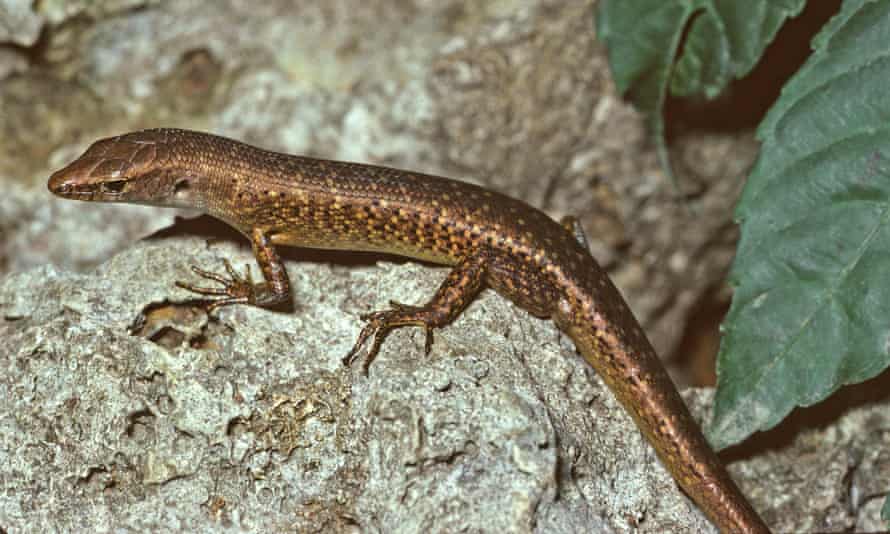
Christmas Island forest skink and 12 mammals on list, which also includes the desert bettong, broad-cheeked hopping mouse and Nullarbor barred bandicoot
The Christmas Island forest skink is the first reptile known to have gone extinct in Australia since European colonisation. More than 10% of the 320 land mammals known to have lived in Australia in 1788 are extinct. Photograph: Hal Cogger
The Australian government has officially acknowledged the extinction of 13 endemic species, including 12 mammals and the first reptile known to have been lost since European colonisation.
The addition of the dozen mammal species confirms Australia’s unenviable position as the world’s capital for mammal extinction, lifting the total number of mammals known to have died out to 34.
None of the 13 is a surprise. All but one of the mammal extinctions is historic, with most having disappeared between the 1850s and 1950s.
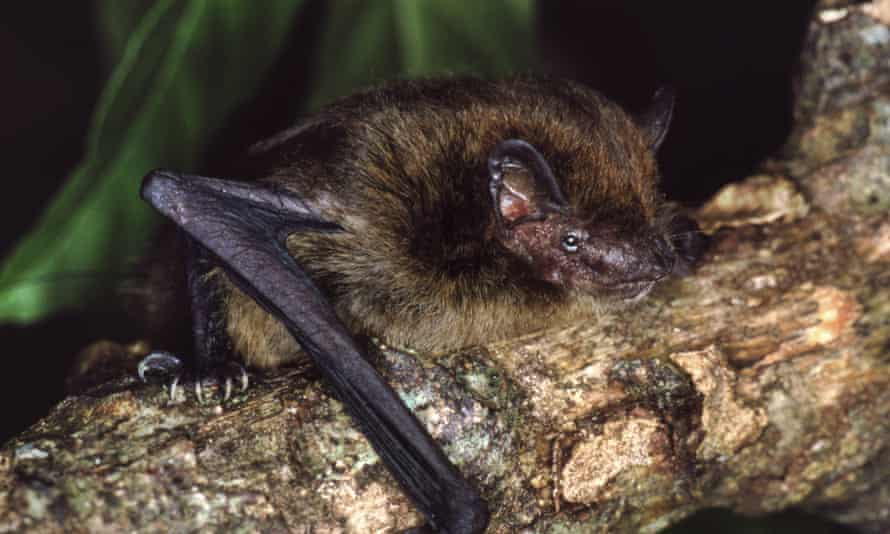
As Guardian Australia has reported, the last Christmas Island pipistrelle, a species of bat, died in 2009. It was followed by the sole remaining Christmas Island forest skink – the first Australian reptile known to have become extinct – in 2014. Both extinctions have previously been recorded by the International Union for the Conservation of Nature (IUCN).
The now extinct Christmas Island pipistrelle. Photograph: Lindy Lumsden
The updated list means more than 10% of the 320 land mammals known to have lived in Australia in 1788 are extinct.Advertisement
The Wilderness Society’s Suzanne Milthorpe said there was “not another country, rich or poor, that has anything like this record” in mammal extinction. She said Haiti was next on the IUCN list for mammal extinctions with a total of nine.
Prof John Woinarski, a conservation biologist at Charles Darwin University who helped record the plight of many of the newly listed extinct species in two books, said the listings were “humbling and sobering”.
He said it was a reminder that extinction was a “likely event” after a species was listed as threatened if not enough was done to save it. “It is important to acknowledge that the losses have occurred and it’s a reminder that if we don’t manage our threatened species then extinction is the end result,” he said.
The confirmed historic mammal extinctions are the desert bettong, the Nullarbor dwarf bettong, the Capricorn rabbit-rat, the broad-cheeked hopping mouse, the Liverpool Plains striped bandicoot, the marl, the south-eastern striped bandicoot, the Nullarbor barred bandicoot, the long-eared mouse, the blue-grey mouse and the Percy Island flying fox.Morrison government’s new environment commissioner ‘toothless’, conservation groups sayRead more
Woinarski said in almost all cases the most plausible explanation for their extinction was predation by feral cats, though introduced foxes, habitat destruction and fire may have played a role. “No other country has suffered anywhere near that number of mammal species extinctions over the past 200 years,” he said.
He said as museums had few-to-no records of the species, recording the extinctions often relied on knowledge shared by Indigenous elders living in remote parts of the country who had experienced them first-hand.
About 100 endemic Australian species have been listed as extinct by the government or the IUCN, but Woinarski said the real number was likely to be more than 10 times that once extinct invertebrates were counted. At least 50 invertebrate species on Christmas Island alone had not been seen for more than a century and were likely to be extinct, he said.
He said the first recorded modern extinction of an Australian reptile was “obviously a really lamentable landmark”. The Christmas Island forest skink was almost certainly killed by the accidental introduction of a predator from Asia, the wolf snake, in the 1970s.
He said the Christmas Island pipistrelle’s extinction was a result of a lack of government action, as it had been clear it was in rapid decline for two decades before it went extinct and the response was insufficient. There had never been an inquest or inquiry to find out what went wrong, he said.
“That was one we really should have been able to save,” he said.
Milthorpe, the Wilderness Society’s national environment laws campaign manager, said the updated list was a “devastating reality check on Australia’s environmental performance”. “It cements our reputation as the global leader in mammal extinctions,” she said.
“Unfortunately, we haven’t seen a full response to the review from the Morrison government yet, only a disjointed attempt to devolve their environmental responsibilities to the states,” Milthorpe said. “Without the full package [of recommendations], Samuel made clear that extinction and a decline of our iconic natural areas will continue.”
Ley’s spokesperson said the minister had overseen a comprehensive review of the historical extinction list to accurately reflect the state of Australia’s mammals and provide an important record that could help improve the management of native plants and animals.
They said the government had “mobilised” more than $535m for projects to support threatened species and ecological communities since 2014, was preparing a 10-year threatened species strategy and introducing new predator-free safe havens.
“We are working to manage threats to native animals and plants on Christmas Island and across the rest of Australia, including supporting the recovery from the catastrophic black summer bushfires,” the spokesperson said.
Labor’s environment spokeswoman, Terri Butler, said the Coalition was presiding over an “accelerating and disastrous extinction crisis”, and had slashed environment department funding since coming to power. “They have no solutions to this crisis and they just don’t care,” she said.
Flamingos walk at a salt lake in the southern coastal city of Larnaca, in the eastern Mediterranean island of Cyprus, Sunday, Jan. 31, 2021.(AP Photo/Petros Karadjias)
No media source currently available0:004:560:00Direct linkPop-out player
Animal activists in Cyprus are asking officials to expand a hunting ban throughout a group of salt lakes near the coast. They are worried that migrating flamingos could possibly eat deadly amounts of lead shotgunpellets.
A flamingo is a large bird, usually bright pink or orange, that often walks along the water line in coastal areas.
Martin Hellicar is director of Birdlife Cyprus. He said flamingos are at risk of eating the small pellets that lie…
The Senate voted along nearly party lines with Republican support and Democratic opposition to advanceSenate Bill 267andSenate Bill 314from Sen. Bob Brown, R-Thompson Falls. SB 267 would allow reimbursement payments to wolf hunters or trappers who successfully harvest a wolf. SB 314 directs Montana Fish, Wildlife & Parks and the Montana Fish and Wildlife Commission to consider more aggressive actions in an effort to bring down wolf populations in some areas of the state.
SB 267 has been characterized as a “bounty bill” by critics for allowing payment directly for the taking of a wolf.
Brown said on the Senate Floor on Monday that the bill did not use public funds or make changes to regulations or bag limits, but would allow…
NASA joins climate change battle in Greenland03:12
(CNN)Remember the movie, “The Day After Tomorrow,” in which a catastrophic series of global disasters strike after climate change causes the world’s ocean currents to stop?Well, new research reveals Earth’smajor ocean currents are slowing down, and though the consequences will not be as immediate or dramatic as in the Hollywood fiction, there are real-world impacts for global weather patterns and sea levels.
Cold Atlantic ‘blob’ puzzles scientistsThe slowdown of ocean circulation is directly caused bywarming global temperaturesand has been predicted by climate scientists.”This has been predicted, basically, for decades that this circulation would weaken in response to global warming. And now we have the strongest evidence that this is already happening,” said Stefan Rahmstorf of Potsdam University who contributed to this research.The…
The Biden administration is a single regulatory leap away from green-lighting the logging of hundreds of acres of old-growth forest in Montana. If approved, the U.S. Forest Service’s “Black Ram Project” would authorize commercial harvesting on 3,904 acres in the Kootenai National Forest, including the clear-cutting of at least 579 acres of trees that are hundreds of years old. On top ofpotentially violatingthe National Environmental Policy Act, carrying out the Trump-era project would undermine at least three major Biden administration commitments: tackling the climate crisis, preserving 30 percent of federal land and waters by 2030 and preventing future outbreaks of disease transmitted from animals (or zoonoses) like COVID-19.
Fish are farmed in higher numbers than any other animal, but they haven’t gotten much attention from the animal welfare movement — until now.By Kenny Torrella Mar 2, 2021, 9:30am EST
Young salmon swim in a pool. Salmon are one of the most commonly farmed fish species.
The way we eat now, and the food system that makes it possible, is so relentlessly grim for animals that it’s easy to forget that much progress has been made in the fight for their well-being.
In the early 2000s, no US states had laws on the books regulating the welfare of farmed animals. Now, a dozen do. Back then, fast food chains and grocers hardly considered the treatment of chickens and pigs in their supply chains. Now, hundreds have pledged to source higher-welfare meat and eggs. And it’s safe to say that the new generation of plant-based meat has been embraced by the mainstream.
Animals do still have it awful on factory farms, but it’s fair to argue that over time, our moral circle has expanded.
But one animal raised and killed in higher numbers than any other hasn’t quite become encompassed in that growing moral circle: fish.
Manyanimal welfare advocates consider fish farms to essentially be “underwater factory farms,” where fish are overcrowded in tanks, generally grown in terrible conditions like factory-farmed chickens, increasing their stress and susceptibility to disease.
Twice a week, we’ll send you a roundup of the best ideas and solutions for tackling the world’s biggest challenges — and how to get better at doing good. Sign up here.
It’s unsurprising that fish have been ignored. They live underwater, so we rarely interact with them. They can’t vocalize or make facial expressions, so it’s much harder to understand them than mammals and birds. And research has shown that the further animals are from us on the evolutionary chain, the less likely we are to try to protect them.
But as momentum grows for better treatment of farmed animals, we need to make sure that fish aren’t left behind. Continuing research into fish pain has given us greater insight into them than ever before — and has bolstered the moral case for caring about fish. Beyond the moral case, there’s an urgent environmental case to be made not just to improve fish welfare on farms but to scale back on fish farming altogether. That’s because over the course of their short lives, most farmed fish are fed anywhere from a few to over a hundred wild-caught fish — depleting fish species that play important roles in our oceans.
For advocates, the successes of the anti-industrial farming movement provide a road map. “We can learn from [the animal welfare movement’s] past successes and failures, and go from there,” Haven King-Nobles, a co-founder of Fish Welfare Initiative (FWI) — a new organization that advocates for higher animal welfare standards in the fishing industry — told me.
In January, FWI announced a project in India (ranked third in global fish farming) that could improve the welfare of several million farmed fish each year. The group plans to work with Indian farmers to improve water quality and set caps on how many fish can be kept in each tank or pond, among other changes. At the same time, investors are pouring millions into startups working to make plant-based and lab-grown, or cell-based, fish.
Industrial fish farming is a hugely consequential part of our food system. Yet it has received a fraction of the attention in our discussions on fixing the global food machinery. That needs to change.
Fish farming, explained
Industrial fish farming, or aquaculture, is relatively new. Humans have farmed fish for millennia, but it wasn’t until the mid-20th century that we saw industrial fish farming take shape, and it wasn’t until the 1990s that it really took off. Now we eat more farmed fish than wild-caught fish, and about 90 percent of them are farmed in Asia, primarily in China, Indonesia, India, and Vietnam.
In recent decades, fish farming has taken off as the fastest-growing sector of the food industry. We now eat more fish from farms than caught in the ocean.
We don’t have good data on how many fish are farmed or caught in the wild, since fish production is measured in weight, not the number of fish farmed or caught. Estimates of farmed and wild-caught fish vary, from hundreds of billions to trillions total, and there’s even a website dedicated to trying to figure this out. While the number of fish caught in the wild hasn’t changed much over the past few decades, fish farming has become one of the fastest-growing sectors of the food industry.
The rationale put forward for fish farming is simple: It’s a solution to overfishing. Populations or “stocks” of fish in the wild are thought to be overfished when so many are caught that their numbers plummet and they can’t recover fast enough. It can disrupt delicate marine ecosystems, not to mention decimate fish populations.
The number of wild-caught fish needed to raise one farmed fish varies, depending on whether the species is carnivorous, omnivorous, or herbivorous. For example, farmed Atlantic salmon are fed about 147 “feed fish” throughout their lives, whereas Nile tilapia are fed about seven. There are efforts to ameliorate this problem by using less fishmeal and more plants in farmed fish diets and shifting production to more omnivorous and herbivorous species, but the problem persists: A 2019 report found that about one-fifth of all wild-caught fish are turned into fishmeal and fish oil to feed farmed fish.
Then there are the animal welfare problems associated with fish farming.
In commercial ocean fishing, the welfare concerns are mostly relegated to the final minutes or hours of a fish’s life — they’re typically left to suffocate to death on deck, which can take under an hour or up to several hours. (Dylan Matthews did a podcast on a more humane way to slaughter caught fish.)
In fish farms, a different fate awaits the animals.They suffer for months, and for some species over a year, before they’re slaughtered. Fish farms come in many setups — some are tanks that look like big aboveground swimming pools, some are in ponds, and others are set up as offshore cages. But whatever the type of farm, three of the biggest welfare problems are the same as those on factory farms on land: overcrowding, disease, and rapid growth.
To get as much meat as possible in as little space, farmers cram a lot of fish into their tanks and pens, just like chickens in a barn. Overcrowding in fish farms can lead to poor water quality (from fish waste and antibiotic usage), higher injury rates, increased aggression, and susceptibility to disease. (Here’s a good overview of welfare issues in fish farms.) GRID VIEW
1 of 5A sturgeon farm at the Da Mi hydroelectric resovoir lake in Tanh Linh district, Vietnam’s central southern province of Binh Thuan. Hoang Dinh Nam/AFP via Getty Images
Poor water quality can also compromise fishes’ immune systems, which means more fish will get sick or die when disease spreads. One common problem found on fish farms is sea lice infestation. Sea lice are parasites that cause painful lesions on fish and are typically treated with harsh chemicals that further degrade water quality and fish health. When sea lice infect fish farms set up in offshore pens, those chemicals can leach into larger bodies of water and kill off other marine life.
Other welfare issues include rough handling and the inability to express natural behaviors, like migration and nesting.
The fish pain debate
A big obstacle to fish welfare has been the question of whether fish feel pain. For decades, the thinking went that because fish lack a neocortex — the part of the mammalian brain that processes sensory perception, consciousness, spatial reasoning, language, and motor commands — they are not conscious, and thus can’t feel pain.
In one of their experiments with rainbow trout, the researchers dropped Lego blocks into a tank to see how the fish would react. Normally, trout would avoid novel objects like Lego blocks out of fear. But when injected with a shot of acetic acid, the trout were less likely to avoid the Legos, as they were focused more on their own pain than avoiding a potential threat. When injected with both the acid and morphine, the trout avoided the blocks as they typically would.
In another experiment, the researchers found that when they injected the lips of rainbow trout with acetic acid, the trout would rub their lips against gravel rocks or the side of the tank, the way we might rub a toe when we stub it.
Their early work on fish pain inspired others, and there are now labs around the world that have built up a large body of research concluding that fish do in fact feel pain. One of the bigger findings of the past two decades has been that fish have nociceptors, sensory neurons that detect and respond to damaging or threatening stimuli — a strong indicator they experience pain. Sneddon, one of those early fish pain researchers, says the biology of the nociceptive system of fish is “strikingly similar” to that of mammals.
There are still some skeptics. One of the more outspoken is Brian Key, a professor of biomedical sciences at the University of Queensland in Australia. In an email, Key told me that “fish just don’t have the brains for pain.” He says that in experiments that supposedly demonstrate fishes’ capacity for pain, fish are just automatically reacting to harmful stimuli but that their brains don’t register it as pain the way ours do.
But Key is an outlier on this question. Dozens of researchers responded to his 2016 paper “Why fish don’t feel pain,” most of them in disagreement with his conclusion.
“We now know that fish have changes in brain activity in relation to potentially painful events that are different from non-painful events,” Sneddon told me when I asked her about fish pain skeptics. “In my opinion, research shows beyond a reasonable doubt that fish experience pain.” She also pointed out that the skeptics have only published reviews and opinion pieces — they haven’t conducted experimental research.
Much of the debate comes down to the simple fact that we can’t ask a fish — or a dog, or a chicken — how they’re feeling. But just like with other species, researchers have repeatedly demonstrated that fish behave differently in adverse conditions (for example, they limit eating and activity) and stop these behaviors when pain relief is given.
The emerging fish welfare movement
This consensus among scientists has begun to trickle into policymaking. The World Organization for Animal Health, an intergovernmental agency that sets minimum (though non-enforceable) animal welfare standards for member nations, published recommendations on fish slaughter in 2015. A couple of UK supermarket chains have set modest animal welfare standards for the fish they sell. And last year, the European Union’s Platform on Animal Welfare set fish welfare standards for the European Commission to consider.
These largely modest and symbolic developments are setting the floor for fish welfare, but aren’t as far along as the animal welfare standards for farmed birds and mammals (which are also far from perfect).
One reason for this delay in protections is the sheer complexity of fish production.
The factory farming of land animals is pretty uniform; a few kinds of animals are farmed, and an egg factory farm in the US is going to look pretty similar to an egg factory farm in India, or just about anywhere.
But there’s much more diversity in fish farming — many more species (and thus different welfare and dietary needs) and many more types of farming setups.
Despite these challenges, in the past two years, some older animal welfare organizations have made efforts to change things and have begun to document conditions inside US fish farms. And two new groups have formed to take up the issue — the aforementioned FWI, and the Aquatic Life Institute.
FWI plans to keep building relationships with farmers in India and other countries that farm a lot of fish, and hopes to work more collaboratively with the fishing industry, compared to the mostly combative relationship between the animal welfare movement and the egg, pork, dairy, and chicken sectors. “We have a blank slate for this movement, and I see potential for us to start on a good note with industry,” King-Nobles of FWI told me. “There’s talk about welfare in the industry already, and it’s not even demanded or fought for by people like us.”
Fish Welfare Initiative’s managing director, Karthik Pulugurtha, visits a fish farm in Andhra Pradesh, India.
Aquatic Life Institute (ALI) looks to fill other gaps. One area where it sees a lot of promise is in working with seafood certification programs, most of which look at environmental concerns and not animal welfare. ALI scored its first win in late 2020 when Global GAP, a seafood certifier with 2 percent market share, agreed to adopt some of its recommendations to improve fish welfare.
ALI also sees opportunity in working with researchers and industry to change the composition of fish feed. As noted earlier, much of the food fed to farmed fish is actually wild-caught fish, and ALI wants to make more fish feed fully or partially plant-based in order to reduce the overall number of fish caught in the wild.
Animal welfare advocates in Asia are also beginning to address fish welfare, though the movements there are still relatively small.
Last month, the Federation of Indian Animal Protection Organizations released the results of its investigation into 241 fish and shrimp farms and reported high levels of lead and cadmium in fish farms, high use of antibiotics, and poor animal welfare. Varda Mehrotra, the group’s executive director, told me in an email that the group plans to use its extensive findings to push for changes in the nascent and largely unregulated Indian fish farming industry.
Growing interest in plant-based and cell-based fish
If the fish welfare movement is coming on a bit late, especially compared to other animal welfare campaigns, it’s not quite as behind when it comes to producing plant-based fish meat.
At present, there are more than two dozen startups developing plant-based or cell-based fish with a lot of investor interest. Last month, BlueNalu, a California-based startup growing fish from cells, raised $60 million (the biggest funding round yet for cell-based fish) to advance its regulatory review with the Food and Drug Administration and open a pilot production facility.
Close-up of BlueNalu’s whole-muscle, cell-based yellowtail, beer-battered and deep-fried for fish tacos.
There’s still a long way to go. Beyond Meat and Impossible Foods are getting pretty close to making plant-based beef that tastes like the real thing, but plant-based fish startups are still far from nailing the taste of fish.
However, there is a lot of interest from the traditional seafood industry to narrow this gap. Thai Union, a major global seafood producer, was an investor in that recent round of funding for BlueNalu, and the company also plans to sell its own plant-based shrimp this year. Bumble Bee Foods, an iconic US seafood brand, has a distribution partnership with Good Catch, a plant-based fish startup. And VHC, another major fish company, has formed partnerships with a lab-grown fish company (Avant Meats) and a plant-based fish company (New Wave).
Industrial fish farming has become a dominant force in the food industry in just a few decades, recreating some of the environmental problems it was supposed to solve and creating a whole new set of animal welfare issues. But considering the progress made for farmed mammals and birds, there’s every reason to think the fight for fish welfare will become part of the anti-industrial farming movement. It’s the obvious next expansion in humanity’s moral circle, and it will gain even more momentum as the next generation of meatless substitutes gain purchase with consumers the world over.
Opening day for the 2021 turkey hunting season is just around the corner and there’s one major change from a year ago for the approximately 50,000 hunters who target gobblers in South Carolina.
The season structure and bag limits remain the same, but this year electronic reporting will be mandatory through SC Game Check.
“This was actually part of the season legislation that was passed in 2019 and went into effect last year. The harvest reporting part had a one-year implementation and we’re there now,” said Charles Ruth, Big Game Coordinator for the S.C. Department of Natural Resources.
SC Game Check is in the process of being rolled out now and…
THE PHILIPPINES has temporarily banned poultry imports from the Russian Federation after that country reported the world’s first case of human transmission of H5N8 highly pathogenic avian influenza (bird flu).
He also suspended the processing, evaluation, and issuance of sanitary and phytosanitary import clearances for such commodities from Russia.
Reuters reported on Feb. 20 that Russia’s consumer health regulator Rospotrebnadzor announced the world’s first case of H5N8 passed on from birds to humans.Advertisement
According to Anna Popova, head of Rospotrebnadzor, seven workers at a poultry plant in Astrakhan were infected with H5N8 during an outbreak at the plant in December, but added…