What’s Hiding Under Antarctica’s Ice Matters for Our Planet’s Future

Exposing the Big Game's avatarThe Extinction Chronicles

Scientists are mapping the land beneath this frozen underworld, which is crucial to predicting future sea level rise and the potential mayhem to come.

ByAnamaria SilicJanuary 26, 2021 3:00 PM

South Pole View From Above - shutterstock

(Credit: Artsiom Petrushenka/Shutterstock)

Newsletter

Sign up for our email newsletter for the latest science newsSign up for the NewsletterSIGN UP

The frozen kingdom of Antarctica may appear featureless from above, but beneath all that ice lies a mysterious and complex world that researchers say could be pivotal to understanding the effects of climate change.

It’s well established that the Antarctic ice sheet has been rapidly losing mass. As ocean temperatures have risen, the glaciers that make up the ice sheet are melting at a rate six times faster than that of 40 years ago. NASA reports that Antarctica is now losing 252 gigatons of ice per year — about three and a half Olympic swimming pools per second.

View original post 640 more words

Doomsday Clock stands at 100 seconds to midnight

Exposing the Big Game's avatarThe Extinction Chronicles

https://www.livescience.com/doomsday-clock-2021.html

ByMindy Weisberger-Senior Writer3 hours ago

Our destruction is close, but it creeps no closer … for now.

During Operation Upshot-Knothole, the U.S. Army exploded 11 nuclear bombs at a test site in Nevada between March and June in 1953. In the last of those tests — code name "Climax" — a 61-kiloton device was detonated on June 4, 1953.During Operation Upshot-Knothole, the U.S. Army exploded 11 nuclear bombs at a test site in Nevada between March and June in 1953. In the last of those tests — code name “Climax” — a 61-kiloton device was detonated on June 4, 1953.(Image: © Stocktrek Images/Getty)

Nuclear weapons, globalpandemics, acceleratingclimate change: Is humanity running out of time? Despite 2020’s general awfulness, humanity paused on the path forward to armageddon — at least, according to the Doomsday Clock, a hypothetical timepiece that annually assesses our nearness to utter annihilation.

This year, the Doomsday Clock’s hands will not be moving forward, and it continues to show the same time that was set last year: 100 seconds to midnight, the Bulletin of the Atomic Scientists (BAS), a global organization…

View original post 1,250 more words

Mystery of Greenland’s expanding ‘dark zone’ finally solved

Exposing the Big Game's avatarThe Extinction Chronicles

ByHarry Baker-Staff Writer6 hours ago

Algal blooms triggered by windblown phosphorus dust are to blame.

https://www.livescience.com/greenland-dark-zone-mystery-solved.html

Algal blooms darken the ice sheet and cause increased melting.Algal blooms darken the ice sheet and cause increased melting.(Image: © Jim McQuaid)

The mystery of a growing “dark zone” onGreenland‘s melting ice sheet has been solved.

Researchers have found thatphosphorus-rich dust blown across the ice may be the key to the phenomenon.

Greenland’s ice sheet is the second largest in the world. It covers around 656,000 square miles (1.71 million square kilometers), an area three times the size of Texas,according to the National Snow and Ice Data Center (NSIDC). However, the ice sheet is now in a state of permanent retreat and is losing 500 gigatons (500 billion tons) of ice every year,Live Science previously reported.https://imasdk.googleapis.com/js/core/bridge3.436.0_en.html#goog_14467798Volume 0%PLAY SOUND

That’s why thedark zoneis so worrisome. During the summer months, part of the…

View original post 542 more words

Sweden bans mink breeding in 2021 in fight against coronavirus pandemic

Exposing the Big Game's avatarThe Extinction Chronicles

by Reuters

Wednesday, 27 January 2021 13:06 GMT

STOCKHOLM, Jan 27 (Reuters) – Sweden will ban breeding of mink in 2021 to
prevent the risk of mutations of the coronavirus spreading to humans, the
government said on Wednesday.

Neighbour Denmark, one of the world’s biggest producers of fur for the
fashion industry, slaughtered its entire herd of around 17 million mink in
November after hundreds of farms suffered outbreaks of coronavirus and
authorities found mutated strains of the virus among people.

Sweden recorded coronavirus cases at several mink farms, although
authorities said in December the animals had not been found to carry the
mutated strain as evident in Denmark.

“In Sweden, the mutated virus has, luckily, not got into our mink farms,”
Financial Markets Minister Per Bolund told reporters at a news conference.
“But our mink industry remains a further risk factor that we need to
consider when it comes…

View original post 22 more words

Hyde County duck hunting trip where man was killed was ‘unforeseeable accident,’ NCWC investigation concludes

Exposing the Big Game's avatarCommittee to Abolish Sport Hunting Blog

LOCAL

by: Sarah Fearing, Jason O. BoydPosted: Jan 25, 2021 / 08:23 PM EST / Updated: Jan 26, 2021 / 05:59 PM EST

ENGELHARD, N.C. (WAVY) — The North Carolina Wildlife Resources Commission said Tuesday a duck hunting accident Monday in Hyde County was an “unforeseeable accident.”

The victim was identified Monday as Brandon Marshall of Engelhard.

Sgt. Daniel Kennedy with the NC Wildlife Resources Commission Law Enforcement Division said that the incident happened around 2:30 p.m. Monday. Marshall was shot by a member of his party while duck hunting. Authorities said Tuesday that Marshall was hunting with his family.

He was in a duck blind with his son when he was accidentally shot in the leg. His brother, who was in a duck blind next to Marshall and his son, tried to help Marshall until NC Wildlife officers arrived on the scene.

The officers proceeded with lifesaving efforts until EMS…

View original post 161 more words

Push For Wisconsin Wolf Hunting Season This Winter Fails

By SUSAN BENCE• JAN 25, 2021ShareTweetEmail

https://www.wuwm.com/post/push-wisconsin-wolf-hunting-season-winter-fails?fbclid=IwAR2466f6n-lgKxsXrKS35ORl5p4mtwD3mNYl66tiVN6cyZw3keJpMQpGy-s#stream/0

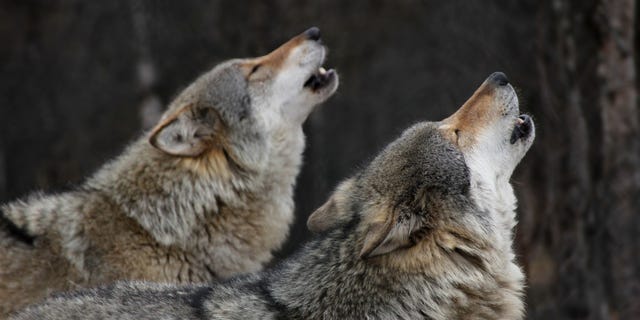
  • One of the concerns raised about a proposed late winter hunting season is that it could disrupt the wolf breeding season.UW-STEVENS POINT

ListenListening…5:49WUWM’s environment reporter Susan Bence reports on a Natural Resources Board special meeting to consider a call to hold a wolf hunting and trapping season this winter.

The controversy over how the gray wolf, humans, livestock and pets can coexist is not new. The wolf has been on and off of the federal endangered species list within the last decade.

Early this month, the U.S. Fish & Wildlife Service delisted the wolf, transferring its management to states.

A dozen Republican lawmakers in Wisconsin sent a letter to the state’s Natural Resources Board urging approval of a hunt this winter. The letter resulted in a special board meeting Friday to discuss the issue.

Sen. Rob Stafsholt reminded the board about the 2011 statute requiring — whenever the wolf is delisted — an annual hunting and trapping season from early November through February.

“Hunting and trapping regulations from the 2014 wolf harvest season could easily be used for a current season. Science was already used for that regulation book; no new science is needed,” he said.

The Natural Resources Board sets wildlife management policy for the Department of Natural Resources (DNR) to follow, which includes hunting seasons.

Wisconsin has held three concurrent annual wolf harvests, the last in 2014. DNR officials are proposing the next kick off November 6, 2021.

Wildlife and Parks Division Administrator Keith Warnke said that gives the DNR time to factor in the latest science — both biological and social. He said one of the first steps is updating the state’s wolf management plan.

“Our goal is to launch a wolf management webpage in early February, launch a public input process in late April or early May, and host the first of four public meetings on the wolf management plan in July,” explained Warnke.

The need of an updated management plan now is a point of contention.

“The management plan that’s in place now, it is solid science. Clearly the science in the current plan would be fully protective of the wolf population of the state of Wisconsin,” said George Meyer, executive director of the Wisconsin Wildlife Federation and a former DNR secretary.

Now-retired DNR wildlife biologist Adrian Wydeven headed Wisconsin’s wolf recovery program and helped craft the existing management plan more than 20 years ago. Wydeven said new research — including population modeling and people’s attitudes about sustaining a wolf population — needs to be considered to properly steward wolves now and into the future.

“We’ve got more information on just the ecological benefits of wolves, the potential impact on things like chronic wasting diseases and using that as a factor. I think there is a lot of work that has been done since the 1999 plan that needs to be included in updating this new wolf harvest system,” he said.

On Friday, lots of people had a lot to say about the gray wolf — over four hours of testimony. At least 800 watched remotely, and more than 1,000 comments flooded the Natural Resources Board inbox.

Ryan Klusendorf wanted anyone listening to know that his fourth generation 120-cow dairy farm “on the edge of the Northwoods” in Medford is being threatened by wolves.

“Our first known harassment started in 2011 and has not stopped since and I move my cattle within 100 feet of my buildings at night to protect them, and all it did was bring wolves closer to my children as well,” he said. “I plead with you, rural Wisconsin needs the hunt now.”Wildlife specialist Abi Fergus commented on behalf of the Bad River Band of Lake Superior Chippewa during the special Natural Resources Board meeting.CREDIT SCREEN SHOT

Abby Fergus said tribal input must be factored into Wisconsin’s wolf management and harvest plan. Fergus is a wildlife specialist for The Bad River Band of Lake Superior Chippewa and spoke on behalf of her tribe.

“Bad River and other Anishinaabe bands have stewarded relationships with Ma’iingans (wolves) since time in memorial and hold great knowledge in this area,” she said.

Fergus warned that a decision to hold a wolf harvest in February may create unintended consequences.

“I’d like to point out the high potential for a hunt concentrated during the sensitive mating season would entail even more negative and more unpredictable impacts. Wolves that survive may experience pack breakup and these situations can lead to increased livestock depredation,” she said. “The state has legal obligations to be working with the tribes on this.”

In the end, the board took up a motion to open a wolf hunting season no later than February 10, using the 2014 harvest quotas.

It was voted down 4 to 3, after a lengthy discussion about obligations under a 1983 federal court ruling that clarified treaties signed in the 1800s with Ojibwe tribes.

DNR Chief Legal Counsel Cheryl Heilman explained the state is required to consult with tribes before, not after, a harvest plan is finalized.

“The usual process is that if the department has a committee, and so we have a wolf committee. There needs to be tribal representation. And setting the quota, ordinarily the process would allow us to consult with the wolf committee to get that tribal input. There are other ways that the department could get the tribal input, but I believe based on at least the testimony I heard here today, you haven’t yet taken that step,” she said.

For now, it looks like the DNR will move forward with updating its management plan and approving a hunt starting November 6 after, the agency says, “working collaboratively and transparently with the wide array of diverse interests associated with wolf management in Wisconsin.”

Montana may expand wolf hunting

Exposing the Big Game's avatarCommittee to Abolish Sport Hunting Blog

22 hours ago

One of the proposals may change wolves to being classified as predators

By Michael Hollan | Fox News

https://www.foxnews.com/great-outdoors/montana-may-expand-wolf-hunting

Video

Fox News Flash top headlines for January 25

Fox News Flash top headlines are here. Check out what’s clicking on Foxnews.com.

Wolf hunting inMontanamay see some significant changes.

According to reports, multiple bills are being considered in the state right now that implement serious changes forwolf management. According to one of the lawmakers behind these bills, the state has seen a significant increase in the number of wolves.

The bills include proposals such as expanding trapping seasons, including wolf licenses with big game combination licenses and even reclassifying the animals as predators.

The bills include proposals such as expanding trapping seasons,including wolf licenses with big game combination licenses and even reclassifying the animals as predators.(iStock)

The bills include proposals such as expanding trapping seasons,including wolf licenses with big game combination licenses and even reclassifying the animals as predators,KTVBreports. Sen…

View original post 235 more words

Biden administration targets hunters with regulations on Day One

Exposing the Big Game's avatarCommittee to Abolish Sport Hunting Blog

6 days ago

Biden administration targets hunters with regulations on Day One

The administration plans to review rules that loosened restrictions for hunters and farmers

ByJulia Musto| Fox News

https://static.foxnews.com/static/orion/html/video/iframe/vod.html?v=20210119180528#uid=fnc-embed-1

Fox News Flash top headlines for January 20

Fox News Flash top headlines are here. Check out what’s clicking on Foxnews.com.

WhenJoe Bidenenters theWhite Housefor his first day as President of the United States, he is set tosign 17 executive actions and orders– many of which review or reverseenvironmental policywritten underPresident Donald Trump.

Ina fact sheetreleasedTuesday to the heads of relevant agencies, titled “President-elect Biden’s Day One Executive Actions Deliver Relief for Families Across America Amid Converging Crises,” the administration pledged to examine or instate changesregardingunion jobs, advancing environmental justiceand combattingclimate change.

“These actions are rooted in the rightful recognition of…

View original post 1,170 more words

Gray whales are starving and dying off at an alarming rate

Exposing the Big Game's avatarThe Extinction Chronicles

CBS News

Jeff BerardelliMon, January 25, 2021, 2:06 PM

As long as yellow school bus and weighing as much as 20 cars, the eastern North Pacific gray whale is a gentle giant often seen breaching just off the California coast. As of 2016 the population consisted of27,000individuals, but around two years ago unusual numbers of whales started dying off, alarming scientists.

Since 2019, gray whales have been decimated by something called anunusual mortality event, or UME. A UME is an unexpected phenomenon during which a significant number of marine mammals die. So far, this UME has resulted in 378 confirmed gray whale deaths, and possibly many more that are unrecorded. This event continues.

A dead adult female gray whale stranded in Laguna San Ignacio in Mexico on March 17, 2019. The whale was 12.8m in length. / Credit: Fabian Rodr
A dead adult female gray whale stranded in Laguna San Ignacio in Mexico on March 17, 2019. The whale was 12.8m in length. / Credit: Fabian Rodríguez-González

Scientists are not exactly sure why the…

View original post 1,013 more words

Audubon Files Lawsuit to Protect Migratory Bird Treaty Act

https://www.audubon.org/news/audubon-files-lawsuit-protect-migratory-bird-treaty-act?fbclid=IwAR0xihMe1PwjxeMdkX3O83JwxDwkWapGMdkj6DSWvUuz6DH5usDCa9-xqMI

A coalition of conservation groups is going to court to overturn Trump Administration’s weakening of the landmark bird protection law.By National Audubon SocietyJanuary 19, 2021

Popular Stories

Tundra Swans. Photo: Joshua Pelta-Heller/Audubon Photography Awards

Reverse the Rollback of the MBTA

Speak out to reinstate critical bird protections under the Migratory Bird Treaty Act.Take Action

WASHINGTON  – “What the Trump administration did to the Migratory Bird Treaty Act was illegal and we are going to do whatever it takes to reverse it,” said David Yarnold, president and CEO of the National Audubon Society. “This bird-killer policy has already been struck down in court and we’re confident that we’ll see the same outcome again here.”

The National Audubon Society, joined by several other conservation organizations,** filed a federal lawsuit today in the Southern District of New York challenging the Trump Administration’s weakening of the Migratory Bird Treaty Act. This is not the first legal challenge to the rollback of the MBTA. In August of 2020, in response to a previous lawsuit filed by Audubon, other organizations, and states, the Southern District ruled that the administration’s 2017 Solicitor’s Opinion did not align with the intent and language of the 100-year-old law, and overturned the policy.

Despite this ruling, the administration spent the remainder of its term racing to finalize a regulation to codify the unlawful Solicitor’s Opinion, and published the regulation two weeks ago.

“While we’re confident in the wide-ranging and bipartisan support to reinstate these vital protections, this lawsuit is necessary to challenge a plainly illegal policy that will devastate our bird populations, said Sarah Greenberger, interim chief conservation officer, National Audubon Society. “With both the law and public opinion on our side, we intend to act not only in the courts but with the new administration and Congress to quickly reinstate and strengthen the decades-old precedent for protecting our nation’s birds.”

The 2017 policy change by the Trump administration ignored the intent and language of the law to protect and conserve birds.  Instead, it attempted to limit the MBTA’s protection only to activities that purposefully kill birds, exempting all industrial hazards from enforcement. Any “incidental” death—no matter how inevitable, avoidable or devastating to birds—became immune from enforcement under the law. If the Trump administration’s legal opinion had been in place in 2010, BP would have faced no consequences under the MBTA for the more than one million birds killed in the Deepwater Horizon oil spill.

New science has revealed the loss of 3 billion birds in North America since 1970 and that two-thirds of those birds are at risk of extinction due to climate change. In light of these alarming reports, the National Audubon Society is advocating for a multi-front approach to reinstate the longstanding and common sense interpretation this foundational law.

“We hope to see the Biden-Harris administration begin a process to reinstate MBTA protections and use the opportunity to add a reasonable permitting process to manage incidental take,” said Greenberger. “We also hope to see Congress pass the Migratory Bird Protection Act to clarify these longstanding protections and authorize this common-sense approach.”

The Migratory Bird Protection Act was passed out of the House Natural Resources Committee in the 116th Congress and had a bipartisan group of 90+ co-sponsors. The bill would secure protections for birds and direct the Fish and Wildlife Service (FWS) to develop a permitting process for “incidental take” through which relevant businesses would implement best management practices and document compliance, further driving innovation in how to best prevent bird deaths.

**Co-plaintiffs in the lawsuit filed today are: the American Bird Conservancy, Center for Biological Diversity, Defenders of Wildlife, Natural Resources Defense Council, National Wildlife Federation, and Sierra Club.**