McCarthy gives green light to conservatives’ push to overturn Biden’s win, as senior Republicans raise alarms

https://www.cnn.com/2021/01/03/politics/kevin-mccarthy-republican-push-house/index.html

LIVE TVEdition

By Manu Raju, CNN Senior Congressional 

(CNN)The top House Republican has quietly blessed an effort by conservative lawmakers to overturn President-elect Joe Biden’s victory when a joint session of Congress meets later this week, even as other top congressional Republicans are raising alarms that the push could cause lasting damage to a pillar of democracy.The conservatives said on Sunday that House Minority Leader Kevin McCarthy has been supportive of their plans, a stark contrast from the position of many prominent Republicans — including Senate Majority Leader Mitch McConnell, Wyoming Rep. Liz Cheney and the former House speaker, Paul Ryan — who have publicly and privately raised major concerns about an effort that is doomed to fail but is bound to sow distrust over the sanctity of US elections.The internecine fight, which will play out on Wednesday when a joint session of Congress meets to affirm Biden’s Electoral College win, has turned into a loyalty test of sorts to President Donald Trump who has launched an unprecedented campaign to subvert the will of voters by making unsubstantiated claims of a rigged election that have been rejected by courts across the country.McCarthy, who has yet to acknowledge Biden’s victory and has said little publicly about the challenge, has joined two GOP conference calls in recent days during which the January 6 battle has been a subject of debate, including one on Saturday night and another on New Year’s Day.Content by Blue ApronThis meal kit is like having your own personal chefMiss restaurant-quality menus? Blue Apron is like having a sous chef in your own kitchen.On the New Year’s Day call, some members pressed McCarthy to specify his position, according to a person with knowledge of the call.On Sunday, several of those conservatives said there’s little doubt where McCarthy stands.close dialog

Sign up for CNN What Matters NewsletterEvery day we summarize What Matters and deliver it straight to your inbox.Sign Me UpNo ThanksBy subscribing you agree to ourprivacy policy.“Kevin McCarthy’s part of the team,” said Rep. Mo Brooks, Republican from Alabama who is leading the charge, adding that the California Republican has “told that to the President of the United States” as well as Ohio Rep. Jim Jordan.Asked if McCarthy had discouraged the effort at all, Jordan told CNN on Sunday: “Kevin’s been great. Kevin’s been fine. Kevin’s been great on this whole process.”Asked for comment, a McCarthy spokesman referred a reporter to comments the GOP leader made Saturday night on Fox News where he welcomed an audit into the election results, something that 11 GOP senators called for on Saturday before agreeing on whether to vote to affirm Biden’s win.

Republican efforts to undermine Biden victory expose growing anti-democratic streak

Republican efforts to undermine Biden victory expose growing anti-democratic streak“If you want to unite this nation, you start with having integrity in your election,” McCarthy said. “There are questions out there. … What’s wrong with bringing the information back so people have all the information to make those decisions?”Yet with GOP court challenges failing across the country, states certifying the results and the Electoral College voting to make Biden’s win official, some of McCarthy’s deputies and many Senate Republicans say joining Trump to mount a baseless campaign against the election will only hurt faith in democracy.On the New Year’s Day call, Cheney, the No. 3 House Republican, made clear her distaste for the push, multiple sources told CNN.Cheney told House Republicans that voting on the election is more consequential than any other vote — including votes to authorize war, according to two sources. She also argued that nothing in the Constitution supports the notion that Congress can substitute its views for voters in those states selecting the next President.In a 21-page memo sent to Republicans on Sunday, Cheney argued that objecting to the Electoral College count is unconstitutional and sets an “exceptionally dangerous precedent.””As you will see, there is substantial reason for concern about the precedent Congressional objections will set here. By objecting to electoral slates, members are unavoidably asserting that Congress has the authority to overturn elections and overrule state and federal courts,” she wrote. “Such objections set an exceptionally dangerous precedent, threatening to steal states’ explicit constitutional responsibility for choosing the President and bestowing it instead on Congress. This is directly at odds with the Constitution’s clear text and our core beliefs as Republicans.”Also on Sunday, a group of seven other House Republicans said in a joint statement that they also do not support their colleagues objecting to the certification of Electoral College votes this week because it is the responsibility of the states to choose electors, not Congress. They did not dismiss allegations of voter fraud, but pointed to “the narrow role” Congress has in the presidential election process.”We must respect the states’ authority here. Though doing so may frustrate our immediate political objectives, we have sworn an oath to promote the Constitution above our policy goals. We must count the electoral votes submitted by the states,” wrote the group, which included Reps. Thomas Massie of Kentucky, Kelly Armstrong of North Dakota, Ken Buck of Colorado, Mike Gallagher of Wisconsin, Tom McClintock of California and Chip Roy of Texas and Rep.-elect Nancy Mace of South Carolina.While the effort is certain to fail, it’s bound to put Republicans in a difficult spot. If one senator joins with a House member to object to a state’s electoral count, each chamber must debate the merits of the objection for up to two hours before casting a vote on whether to affirm the objection. The objections are certain to fail in both chambers, even though they could win the backing of a majority of House Republicans.

Nearly a dozen Republican senators announce plans to vote against counting electoral votes

Nearly a dozen Republican senators announce plans to vote against counting electoral votesCheney’s argument has been echoed by a number of top Republicans, including McConnell and his deputies, as well as the party’s 2012 presidential nominee, Sen. Mitt Romney of Utah.Ryan sided with his 2012 runningmate Sunday. “Efforts to reject the votes of the Electoral College and sow doubt about Joe Biden’s victory strike at the foundation of our republic,” the former speaker said in a statement. “It is difficult to conceive of a more anti-democratic and anti-conservative act than a federal intervention to overturn the results of state-certified elections and disenfranchise millions of Americans. The fact that this effort will fail does not mean it will not do significant damage to American democracy.”Others made clear they want their colleagues to drop the effort.”I like to come up with plans that have a chance of being successful,” said Sen. Roy Blunt, a member of the Senate GOP leadership team.Sen. Dan Sullivan, a Trump ally who just won reelection in Alaska, said he would “listen to” the arguments, but is “very dubious.”Yet at least a dozen Senate Republicans, including four incoming freshmen, are indicating they plan to vote against certifying the election results, arguing instead there needs to a commission to probe potential voter fraud, even as courts have turned back dozens of challenges by Trump and his allies about the election results since November 3.Sen. Roger Marshall, the new freshman Republican from Kansas, defended the effort.”I had to make a decision of the heart,” Marshall said of his decision to join the effort. “And this is a decision of the heart to follow through on some of these irregularities.”Sen. Tommy Tuberville, the incoming Alabama freshman who also is part of the effort, claimed he had “not lately” spoken to Trump about the challenge and said “no,” he hadn’t spoken with McConnell, either. He declined to address criticism he’s received from the effort, which is opposed by the senior Alabama senator, Republican Richard Shelby.

Why Josh Hawley's move could endanger Senate Republicans

Why Josh Hawley’s move could endanger Senate Republicans“I’m on the other side of that,” Shelby said when asked if he would join Tuberville. “It’s time to move on.”Trump’s staunchest defenders are plotting to object to six states’ election results, something that could extend floor debate through the day on Wednesday and into Thursday.But even after Trump loses the votes, his closest allies say he still shouldn’t concede the race where the result has been clear for nearly two months.”Absolutely not,” Brooks said when asked if Trump should concede after the joint session affirms Biden’s victory. “There’s no question at all in my mind that, if we were to only count lawful votes cast by eligible American citizens, Donald Trump won the Electoral College. Under those circumstances you should never concede because you didn’t lose. It was stolen.”This story has been updated with additional developments.

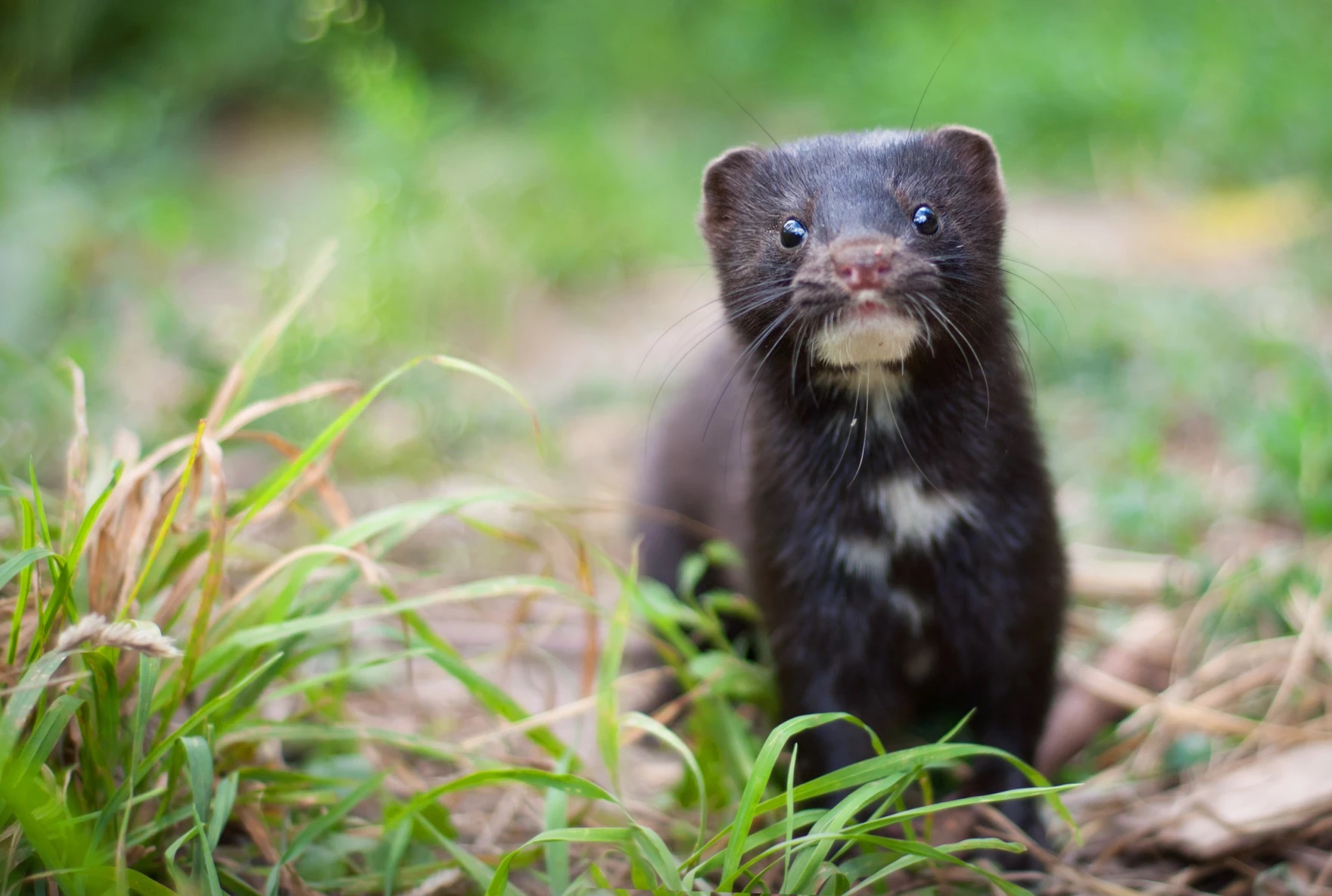
Mink infected with the coronavirus escapes Oregon fur farm

Exposing the Big Game's avatarCommittee to Abolish Sport Hunting Blog

ByApril Ehrlich(Jefferson Public Radio)Dec. 29, 2020 6:19 a.m.

A wild American mink.
A wild American mink.Sergey Ryzhkov / Wikimedia Commons

A mink caught outside a farm in Oregon in mid-December has tested positive for low-levels of the coronavirus.

State officials believe the mink escaped from a small farm that was already under quarantine because of a coronavirus outbreak among mink and humans.

In apress release, the Oregon Department of Agriculture said it won’t disclose where the farm is located, citing medical privacy laws.

The Center of Biological Diversity, an environmental group, says mink that escape from fur farms could potentially spread the virus to other wildlife.

Related:Mink are catching the coronavirus on farms — including one in OregonTHANKS TO OUR SPONSOR:Become a Sponsor

“Mink are related to a range of other species, including badgers, martens, fishers, weasels, otters, and wolverines,” said Jonathan Evans, the center’s environmental health legal…

View original post 191 more words

Hunt the Hunters Hunting Licenses

Exposing the Big Game's avatarCommittee to Abolish Sport Hunting Blog

Posted on

300807_10150348639491188_858580348_n

Satire, by Jim Robertson (with a nod to the late Cleveland Amory, author of Mankind?: Our Incredible War on Wildlife and founder of the Hunt the Hunters Hunt Club):

In a comment on one of the many tragic hunting accidents I’ve blogged about lately, a gentle reader mentioned there should be a hunt the hunters hunting season, to which another compassionate soul replied, “I’d contribute to that.”

We’ve all heard (ad nauseam) hunters boast that their license fees pay for wildlife programs, implying that it entitles them to kill the subjects of their alleged generosity—of course hunters don’t contribute out of the kindness of their hearts or their profound love for living animals. This got me to thinking we need a non-hunter license and tag system that emulates hunter tags, to finally put to rest this notion that hunters alone pay for wildlife through their consumptive use licenses…

View original post 400 more words

Feds release plan to better prevent right whale deaths by entanglement

Doug FraserCape Cod Times

https://www.capecodtimes.com/story/news/2021/01/01/noaa-says-new-plan-reduce-number-right-whale-deaths-60/4090582001/

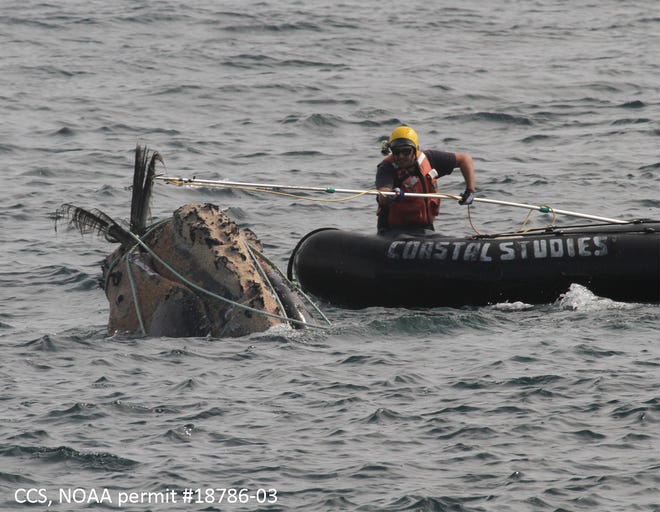
The National Ocean and Atmospheric Administration released a much-anticipated plan on Wednesday that it says will reduce North Atlantic right whale mortalities from entanglement in fishing gear by 60%.

The right whale is the most endangered great whale on the planet, with around 360 individuals remaining, including less than 100 breeding-age females.

The new plan achieves the 60% mortality reduction through new seasonally closed areas, increases in the number of pots connected to a buoy line and requirements to add more weak links that allow a whale to break vertical lines and hopefully shed lines and pots.

NOAA’s plan also proposes a more rigorous gear-marking system it hopes will make it possible to identify the fishery management area for fishing line found on entangled whales. That would allow for more precise targeting of problem areas.https://www.usatodaynetworkservice.com/tangstatic/html/ncct/sf-q1a2z3be0d353f.min.html

New closures include an area south of Nantucket where right whales are congregating year-round but had been subject only to voluntary speed reductions.

NOAA will be holding public hearings on the draft environmental impact statement for the new whale plan, and public comments will be taken until March 1, with an eye toward having new regulations in place for the beginning of the new fishing year on May 1.

A new plan released Wednesday by the National Oceanic and Atmospheric Administration calls for a 60% reduction in North Atlantic right whale deaths. The plan comes as the right whale population continues to decline in number.

The North Atlantic population size has been lower, with an estimated 270 individuals in 1990. The population rebounded to 481 by 2011.

Since then, however, the species has been in decline. Recently, as right whales have migrated into new territory in Canada in search of food, the number of dead right whales caught in fishing gear or hit by vessels has shot up. Particularly hard hit were females, leading some researchers to worry that the species could reach functional extinction — too few females to rebuild the species — within a decade or two.

Scientists have determined that less than one right whale per year, on average, can die of human-induced causes. But that number has been exceeded every year, particularly since 2017 when 17 right whales died, including 12 in Canada and five in the U.S.

NOAA reported that there were only 22 calves born from 2017 to November 2020, with 31 mortalities over that same period. An additional 13 right whales are considered to have life-threatening injuries. Ship strikes were once the leading cause of right whale death, but that has changed, with entanglements causing 85% of mortalities between 2010 and 2015.

The NOAA plan resembles one that was passed by an advisory group, the Atlantic Large Whale Take Reduction Team, over a year ago that also sought a 60% reduction in mortalities, including a 50% cut in the number of vertical lines in Maine and a 30% cut in Massachusetts, the two leading states in landings and effort for the lobster fishery. Maine subsequently withdrew from that multi-state agreement, and NOAA then took over the plan.

Environmental groups, scientists and animal rights activists worried that NOAA was going too slow as right whales continued to die and inch closer to extinction. Many also saw the measure as just an intermediate step bridging to the development of affordable and effective technology that would remove much of the vertical lines that ensnare whales by having gear buoys resting on the bottom until summoned by a signal from the fishing boat on the surface.

“After such an unprecedented delay, this new rule will help stem the surge of right whale deaths we’ve seen over the last several years,” said Erica Fuller, senior attorney at the Conservation Law Foundation. “Ropeless fishing is the only solution that protects whales and fishermen, and the rule expands that practice. However, NOAA must end its reliance on weak rope as a solution and get emergency protections on the water immediately while this rule is finalized.”

Sharon Young, the field director for marine wildlife protection for the Humane Society of the United States, worried that the fishing industry and others might think this was the solution.

“It’s a step in the right direction, however, there will still be a lot of risk-prone lines in the water that will entangle whales, and what we need to work towards is line-free fishing,” Young said.  “By no means does this fix the problem of fatal entanglements in a declining species.”

GA: DNR arrests 3 men on hunting violations

Exposing the Big Game's avatarCommittee to Abolish Sport Hunting Blog

https://www.northwestgeorgianews.com/polk_standard_journal/news/local/dnr-arrests-3-men-on-hunting-violations/article_32b851de-4de6-11eb-b094-1f30a78fe1aa.html

Georgia Department of Natural Resources - Law Enforcement Division

Deer season in Georgia may end this weekend, but Cpl. Chad Cox with the Department of Natural Resources hopes local hunters will continue to obey state laws and regulations.

Cox arrested three men in the early morning hours of Christmas Day for not following those rules, bringing the total number of hunters arrested in Polk County this deer season to seven.

In each instance, the people were charged with hunting deer at night, hunting upon or discharging weapons across a public road, and hunting from a vehicle.

Cox said while he couldn’t respond to the specific cases as they are pending in court, he did say that there are strict laws against shining bright lights — including vehicle headlights — into fields along roadways at night to try and draw out deer.

It can…

View original post 312 more words

Boris Johnson says COVID-19 lockdowns ‘probably going to get tougher’

Exposing the Big Game's avatarThe Extinction Chronicles

ByJackie Salo

https://nypost.com/2021/01/03/boris-johnson-covid-lockdowns-probably-going-to-get-tougher/

January 3, 2021 | 9:44am | UpdatedEnlarge Image

Britain's Prime Minister Boris Johnson

Britain’s Prime Minister Boris JohnsonAP

Sign up for ourspecial edition newsletterto get a daily update on the coronavirus pandemic.

MORE ON:

CORONAVIRUS

Ex-FDA boss predicts new COVID strain will ‘grow quickly’ in US

Inflatable Christmas costume may be linked to hospital where 43 staffers got COVID

Scott Stringer slams ‘frustrating’ COVID vaccine rollout in NYC

Trump rails against media coverage of Fauci: ‘He works for me’

UK Prime Minister Boris Johnson said Sunday that COVID-19 lockdown measures there are “probably going to get tougher” since the country needs to be “realistic” about the alarming spread of a new,more contagious strainof coronavirus.

Johnson said that there are “obviously a range of tougher measures that we would have to consider” as each region remains under a different tier of lockdown.

“What we are doing now is using the tiering…

View original post 177 more words

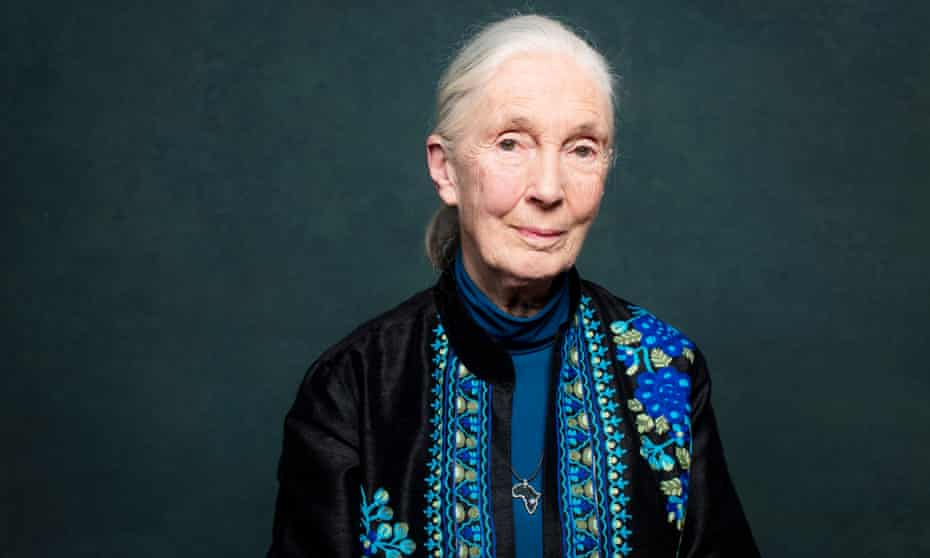
Jane Goodall: ‘Change is happening. There are many ways to start moving in the right way’

Interview

Jonathan Watts

https://www.theguardian.com/environment/2021/jan/03/jane-goodall-change-is-happening-there-are-many-ways-to-start-moving-in-the-right-way

Jane Goodall.

Jane Goodall: ‘Our disrespect for animals creates conditions for the emergence of zoonotic diseases.’ Photograph: David Levene/The Guardian

The primatologist and ecological activist on why population isn’t the cause of climate change, and why she’s encouraging optimism@jonathanwattsSun 3 Jan 2021 04.00 EST

895

Jane Goodall is a primatologist who is regarded as one of the world’s leading authorities on chimpanzees. She has spent 60 years studying the chimps that live in the Gombe Stream national park and she is a prominent advocate, via several foundations, of protecting the great apes and their habitats. She has been presented with awards by the UN and various governments for her conservation and environmental work. She appears in the Netflix documentary The Beginning of Life 2.

You warned last June that humanity will be finished if we don’t make drastic changes in response to the coronavirus pandemic and the climate crisis. Have you seen any indication of that drastic change?
The window is closing. Business as usual – using up natural resources faster and faster – can’t carry on. In some cases, we are already using resources faster than they can be replenished. And we can see the consequences. Look at climate change. It is not something that might happen in the future; we are already seeing terrible hurricanes and floods and fires. It is building up into an inferno. When you think globally like that, it is very, very depressing.Advertisementhttps://c015c01652c1d4c024600cef2ce37a0c.safeframe.googlesyndication.com/safeframe/1-0-37/html/container.html

Do you feel that the pandemic has shifted perceptions, or created more of a sense of urgency?
Maybe Covid has given a push that will make a difference. The most important lesson from this pandemic is that we need a new relationship with nature and animals. Our disrespect for animals creates conditions for the emergence of zoonotic diseases. You can see that same disrespect in factory farms, bushmeat and wildlife markets and the illegal wildlife trade. About 75% of all newly emerged diseases in humans are zoonotic.

What more needs to be done?
We need to move to a more sustainable relationship with the natural world. We need a greener economy. If countries move away from fossil fuels and subsidise clean, green energy that will create a lot of jobs. If you plant trees in a city it has enormous benefits – it cools the temperature, cleans the air, stabilises the soil against flooding and improves psychological and physical health, to mention only a few. We also need to cut down on waste. I grew up in the war, when food was rationed and you did not throw anything out. We need to value food more – as aboriginal people do.

Jane Goodall and inquisitive friend, Gombe Stream Research Centre, Tanzania, January 1972.
Jane Goodall and inquisitive friend, Gombe Stream Research Centre, Tanzania, January 1972. Photograph: Corbis

Do you think politicians and the public are focused enough on this challenge?
As damage is coming to a peak, awareness is coming to a peak. But it does not help to focus exclusively on the problems. Yes, the media must point out the harm we are inflicting. But they should give more space to all the amazing restoration programmes happening around the world – that gives people hope and they are more likely to do their bit. If you lose hope, why bother?Advertisementhttps://c015c01652c1d4c024600cef2ce37a0c.safeframe.googlesyndication.com/safeframe/1-0-37/html/container.html

Where do you find cause for hope?
Change is happening. Millions are switching to wind and solar energy, clearing up streams or picking up rubbish. Consumers are influencing the way business does its work. I am always meeting amazing people doing great projects to allow biodiversity to creep back. A lot of it in China. There are many different ways to start moving in the right way.

How about at the national and international level? The Global Biodiversity Outlook 5 report found the international community did not fully achieve any of the 20 Aichi biodiversity targets agreed in Japan in 2010 to slow the loss of the natural world. Can we expect anything better at the next big UN biodiversity meeting in Kunming, China, next year?
All I have seen, to be honest, is more decision makers talking about change and making plans, but not doing enough to make it happen. At these big meetings, there is so much talk and so little follow-up action. But now we are seeing more action among the youth. Children are standing up and influencing their parents, business leaders and politicians. Voting, in democracies, can make a big difference.

You and David Attenborough both appear to be more active than ever. But has your approach changed? You have tended to focus on individual responsibility in the past. Is it now time for something more radical, for system change?
I think we need many different approaches. There are instances when violent tactics are necessary to make people aware – like the anti-slavery movement. But violence can be counterproductive. I think people must change from within. If children point at dominant males and say “you are bad and we demand that you change”, the response may well be “I won’t be lectured by a young person”. My way is to tell stories, trying to reach the heart. Too often people give lip service to change but carry on with business as usual.

Our organisation, Roots & Shoots, works at the grassroots level with youth. The movement is growing very fast – all over North and South America, Africa, Europe and Asia, including over 1,000 groups in China. There are also new groups in the Middle East. Turkey and Israel, and I want to spread it further. We are linking youth from different countries together and finding partner organisations. It is really important to grow as the programme is giving young people hope. This is needed badly as we have caused so much environmental damage since we began in 1991. And without hope youth falls into apathy and does nothing. Many of of the early Roots & Shoots members are now in leadership positions.

We’re seeing the consequences of the idea that there can be unlimited economic development with finite natural resources

But this is not just a matter of changing individual behaviour. Aren’t there are deeper causes in the way the global economy is organised?
We are seeing the consequences of the crazy idea that there can be unlimited economic development on a planet with finite natural resources and a growing population. Decisions are made for short-term gain at the expense of protecting the environment for the future. Now, the world’s population is estimated at over 7 billion people and it is expected to be closer to 10 billion by 2050. If we carry on with business as usual what is going to happen? To be clear, the main problem is not population growth. I have never said that, although George Monbiot claims that I did, which is disappointing because I have always admired him. It is one of three main problems – the other two are our greedy lifestyle, our reckless burning of fossil fuels, the demand for meat, poverty – and, of course, we must also tackle corruption.

To what extent do you feel that traditional conservation needs to change?
We have to eliminate poverty. Because if people are really poor, they will destroy the environment because they have to feed themselves and their families. In 1990, I flew over Gombe national park [in Tanzania] and I was shocked to see the change. During the 1960s, it had been part of a vast equatorial forest. By 1990, Gombe was just a little island of trees, surrounded by land that had been stripped bare. It was then that I realised unless we could help people make a living without destroying their environment we couldn’t save chimps or forests. So we helped in many ways including providing scholarships for girls and offering microcredit opportunities, especially to women. It’s worked. If you fly over Gombe today, you don’t see those bare hills; the forest has come back. As women’s education improves, family sizes tend to drop. Women want to educate children. They don’t want to be birth machines.

In the Netflix documentary The Beginning of Life 2, you and many other biologists, conservationists and psychologists stress the mental health and social benefits that can come from a close connection to the natural world, and warn of the dangers that this is being lost among a younger, more urban generation.
When I was growing up, we did not even have television, so we immersed ourselves in books and nature. Children today have less time for that because they are fascinated by iPhones, laptops and video games. Also many more children grow up in cities, surrounded by concrete. The important thing is to get them into nature – the younger the better. In the documentary, you see the expression of wonder on a child’s face – a three-year-old boy watching a snail glide along. He suddenly picked it up, ran and put it on a window pane to watch it from the other side. This kind of experience is very, very important. It is only when you care for nature that you protect it. The film is very inspiring.Advertisementhttps://c015c01652c1d4c024600cef2ce37a0c.safeframe.googlesyndication.com/safeframe/1-0-37/html/container.html

How has lockdown affected people’s relationship with nature?
In some cases, it has meant closer contact, but that depends on whether people have a garden or live near parks or green areas where they can walk. So many poor people were confined to the concrete jungle.

And how has it affected you?
I miss the contact with people, my friends. But I have adapted. I used to be travelling 300 days a year and meeting people face to face. Since I have been in lockdown, I do everything virtually and have reached millions more people in many more countries. So there is a silver lining. I try to find the silver lining in everything. We mustn’t lose hope.

Bird Brains Are Far More Humanlike Than Once Thought

The avian cortex had been hiding in plain sight all along. Humans were just too birdbrained to see it

Bird Brains Are Far More Humanlike Than Once Thought
Credit: Gary Chalker Getty Images

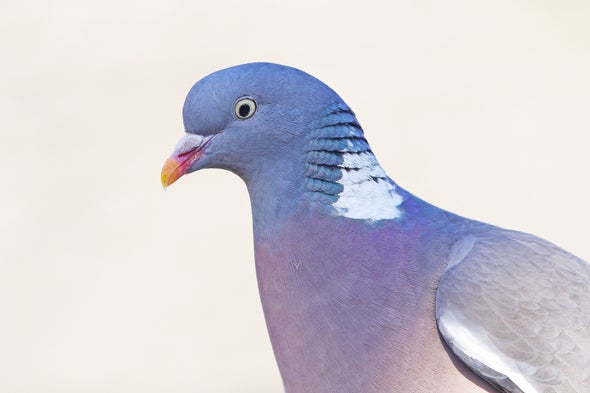
With enough training, pigeons can distinguish between the works of Picasso and Monet. Ravens can identify themselves in a mirror. And on a university campus in Japan, crows are known to intentionally leave walnuts in a crosswalk and let passing traffic do their nut cracking. Many bird species are incredibly smart. Yet among intelligent animals, the “bird brain” often doesn’t get much respect.10 Sec

Two papers published today in Science find birds actually have a brain that is much more similar to our complex primate organ than previously thought. For years it was assumed that the avian brain was limited in function because it lacked a neocortex. In mammals, the neocortex is the hulking, evolutionarily modern outer layer of the brain that allows for complex cognition and creativity and that makes up most of what, in vertebrates as a whole, is called the pallium. The new findings show that birds’ do, in fact, have a brain structure that is comparable to the neocortex despite taking a different shape. It turns out that at a cellular level, the brain region is laid out much like the mammal cortex,explaining why many birds exhibit advanced behaviors and abilities that have long befuddled scientists. The new work even suggests that certain birds demonstrate some degree of consciousness.

The mammalian cortex is organized into six layers containing vertical columns of neurons that communicate with one another both horizontally and vertically. The avian brain, on the other hand, was thought to be arranged into discrete collections of neurons called nuclei, including a region called the dorsal ventricular ridge, or DVR, and a single nucleus named the wulst.https://237a45e067e8a3c1a268e2ca88227257.safeframe.googlesyndication.com/safeframe/1-0-37/html/container.htmlADVERTISEMENT

In one of the new papers, senior author Onur Güntürkün, a neuroscientist at Ruhr University Bochum in Germany, and his colleagues analyzed regions of the DVR and wulst involved in sound and vision processing. To do so, they used a technology called three-dimensional polarized light imaging, or 3D-PLI—a light-based microscopytechnique that can be employed to visualize nerve fibers in brain samples. The researchers found that in both pigeons and barn owls, these brain regions are constructed much like our neocortex, with both layerlike and columnar organization—and with both horizontal and vertical circuitry. They confirmed the 3D-PLI findings using biocytin tracing, a technique for staining nerve cells.

[In a Scientific American article, Güntürkün describes how the avian brain demonstrates surprising cognitive abilities.]

“We can now claim that this layered, corticallike organization is indeed a feature of the whole sensory forebrain in most, if not all, birds,” says Martin Stacho, co-lead author of the study and Güntürkün’s colleague at Ruhr University Bochum.

“It’s not that the DVR is the neocortex,” says Vanderbilt University neuroscientist Suzana Herculano-Houzel, who wrote a commentary accompanying the two new papers and was not involved in either of them, “but rather that the whole of the pallium in mammals and in birds has similar developmental origins and connectivity, and therefore [the pallia of both classes] should be considered equivalent structures. Stacho shows that settling for what the naked eye sees can be misleading.”

The idea that the DVR was somehow related to the neocortex was proposed in the 1960s by neuroscientist Harvey Karten. Yet it didn’t stick. Others subsequently claimed the DVR actually corresponded with other mammalian brain regions, including the amygdala, which, among other tasks, carries out the processing of emotion. “The theory about a DVR [correlation] has been possibly one of the biggest disputes in the field of comparative neurobiology,” Stacho says. But his new work lends credibility to Karten’s original hypothesis.https://237a45e067e8a3c1a268e2ca88227257.safeframe.googlesyndication.com/safeframe/1-0-37/html/container.htmlADVERTISEMENT

Stacho and his colleagues think the findings also represent a glimpse into ancient animal brain evolution. The last common ancestor of birds and mammals was a reptile that roamed the earth around 320 million years ago. And its brain, the team believes, was probably a precursor to that of the two lineages that diverged through evolution. “Nobody knows how exactly the brain of the last common ancestor looked like,” Stacho says. “Most likely, it wasn’t like the neocortex or the DVR. It was probably something in between that, in mammals, developed to a six-layered neocortex and, in birds, to the wulst and DVR.”

The other new paper, by a group at the University of Tübingen in Germany, lends still more insight into the avian brain, suggesting that birds have some ability for sensory consciousness—subjective experiences in which they recall sensory experiences. Consciousness has long been thought to be localized in the cerebral cortex of smart primates—namely, chimps, bonobos and us humans. Yet crows appear to have at least a rudimentary form of sensory consciousness.

In the Tübingen group’s experiment, two carrion crows were trained to recall a previous experience to guide their behavior. When their training was completed, they went through a testing phase in which a gray square might appear followed by either a red or blue square 2.5 seconds later. In this exercise, the crows were trained to move their head if they saw a gray square and then a red one. And they learned to keep their head still if they saw a gray square and then a blue one. When the birds saw no stimulus followed by the appearance of a colored square,the sequence was reversed: blue signaled them to move their head, and red told them not to. So to correctly respond to the colored squares, the crows had to recall whether or not they had seen a gray one first—equating to a past subjective experience.

newsletter promo

It was crucial to the experiment to present the gray square in six different intensities, including at the threshold of the birds’ perception. This way, lead author and neurobiologist Andreas Nieder and his colleagues could confirm that the crows were not simply carrying out conditioned responses to stimuli but instead drawing on a subjective experience.

Further, by implanting electrodes in an avian brain region called the nidopallium caudolaterale (NCL), the researchers were able to monitor activity of individual neurons in response to the stimuli. When the crows viewed a dim gray square at their perceptual threshold, NCL neurons became active in the period between that stimulus and the presentation of a colored square—but only if the crows reported seeing the gray one. If they could not detect that square, the neurons remained silent. This result suggests a unique subjective experience was being manifested through neuronal activity.ADVERTISEMENT

Nieder does not claim crows have the self-conscious existence and self-awareness of apes but simply that the birds can partake in a unique, multipart sensory experience in response to a stimulus. “I am generally not a big fan of ascribing complex humanlike cognitive states to animals and prefer to maintain a conservative attitude,” he says. “Humans easily start to project their own mental states to other living (or even nonliving) beings. But in terms of sensory consciousness in other species, it is probably fair to assume that advanced vertebrates, such as mammals and birds, possess it.”

Nieder’s team’s findings suggest that the neural underpinnings of sensory consciousness either were in place before mammals evolved or developed independently in both lineages—with the avian line showing that being conscious does not necessarily depend on a bulky cerebral cortex.

Work by Herculano-Houzel demonstrates that the brains of corvids—members of a family of so-called “smart birds” such as crows, ravens and magpies—are very densely populated with interconnected neurons. Her studies jibe with the new Science papers. “With Güntürkün’s findings that pallium connectivity is indeed very similar between birds and mammals…, it all comes together very nicely,” she says, pointing out that the corvid pallium holds about as many neurons as you’d find in primates with a much larger brain.

This latest research also undercuts primate exceptionalism. “I hope that more people will be tempted to drop the notion that there is something very unique and exclusive about the human brain,” Herculano-Houzel says.

A Harvard professor says an alien visited in 2017 — and more are coming

Exposing the Big Game's avatarThe Extinction Chronicles

ByReed Tucker

January 2, 2021 | 1:41pm | UpdatedEnlarge Image

https://nypost.com/2021/01/02/a-harvard-professor-says-an-alien-visited-in-2017/

Professor Abraham Loeb and a rendering of ‘Oumuamua.

Professor Abraham Loeb and a rendering of ‘Oumuamua.NY Post photo composite

MORE ON:

ALIENS

Overachieving aliens likely doomed themselves: study

Alien-hunting scientists investigate mysterious radio ‘signal’ from star

Radio signal detected from deep space could give new ‘way to examine alien worlds’

Far-out! NYC UFO sightings are up 283%

When the first sign of intelligent life first visits us from space, it won’t be a giant saucer hovering over New York. More likely, it will be an alien civilization’s trash.

Avi Loeb, the chair of Harvard’s Department of Astronomy, believes he’s already found some of that garbage.

In his upcoming book, “Extraterrestrial: The First Sign of Intelligent Life Beyond Earth” (Houghton Mifflin Harcourt), out Jan. 26, the professor lays out a compelling case for why an object that recently wandered into our solar system was not just another rock…

View original post 1,528 more words