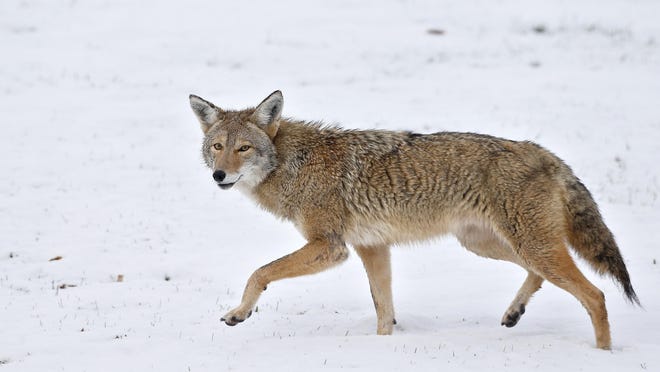
Were you aw re that the Kansas Department of Wildlife, Parks and Tourism has approved the hunting of coyotes at night using lights and thermal imaging equipment? Not only does this take any element of fair sport out of hunting; it is cruel, inhumane and totally unnecessary.
Responsible livestock and pet owners devise methods to keep their animals safe, so that predation, if it occurs at all, is minimal.However,the agency states that damage control was not a major basis for allowing the huntingand that another “benefit” included a “recreational harvest opportunity.”In other words, the sadistic killing of innocent animals for fun.
Please contact the Kansas Department of Wildlife, Parks and Tourism, the governor, and your elected state representatives to voice your opposition.
DefaultMono SansMono SerifSansSerifComicFancySmall CapsDefaultX-SmallSmallMediumLargeX-LargeXX-LargeDefaultOutline DarkOutline LightOutline Dark BoldOutline Light BoldShadow DarkShadow LightShadow Dark BoldShadow Light BoldDefaultBlackSilverGrayWhiteMaroonRedPurpleFuchsiaGreenLimeOliveYellowNavyBlueTealAquaOrangeDefault100%75%50%25%0%DefaultBlackSilverGrayWhiteMaroonRedPurpleFuchsiaGreenLimeOliveYellowNavyBlueTealAquaOrangeDefault100%75%50%25%0%Hiker says hunting dogs along popular trail attacked his family and their dogByRick Daysog|January 3, 2021 at 5:47 PM HST – Updated January 3 at 10:42 PM
HONOLULU, Hawaii (HawaiiNewsNow) – A Hawaii Kai man said a pack of hunting dogs attacked his wife and dog on Saturday morning, causing serious injuries to both.
The man said he, his wife, his twin daughters and their dog — a year-old golden doodle — were finishing their hike along the Aina Haina Valley trail when a hunting dog came out of the bushes and surprised them.
“There was as dog as large as my dog had pinned it down and was attacking it,” said the man, who only wanted to be identified by his first name “Scott.”
Fox News Flash top headlines are here. Check out what’s clicking on Foxnews.com.
Three menaccused ofattackingaFloridawildlifeofficerand leaving him for dead at a desolate hunting ground over the weekend have been taken into custody, authorities said Monday.
Lazaro Milian, 50, Michel Amalfi, 45, and Rodrigo La Rosa, 27, facemultiple charges, including attempted murder of a law enforcement officer and resisting arrest.
The incident happened Saturday night on the grounds of the River Ranch Hunt Club, located next to the Avon Park Bombing Range, Polk County Sheriff Grady Juddtold reporters at a press conference Sunday. The two properties make up…
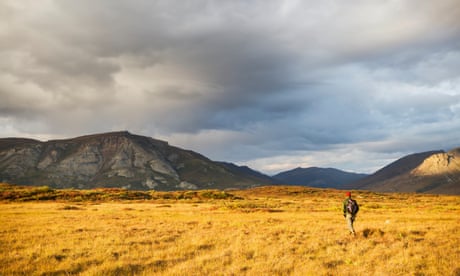
Rivers run through the lush tundra valleys of Alaska’s Arctic national wildlife refuge. Photograph: Acacia Johnson
In one of its last strikes against the American wilderness, Donald Trump’s administration will on Wednesday auction off portions of the Arctic national wildlife refuge to oil drillers.
The lease sales are the climax to one of the nation’s highest-profile environmental battles. The lands on the northern coastal plain of Alaska are home to denning polar bears and migrating herds of Porcupine caribou that indigenous communities depend on and consider sacred. But the oil industry has long suspected that the ground beneath the plain holds billions of barrels of petroleum.https://www.theguardian.com/email/form/plaintone/4199Sign up for monthly updates on America’s public lands
Once the leases in the refuge, known as ANWR, are sold to energy companies, they would be difficult to claw back. The incoming president, Joe Biden, could, however, discourage development in the refuge by putting regulatory hurdles in the way of drillers.
The refuge has become central to America’s debate over how quickly to stop drilling for and burning fossil fuels as the climate crisis accelerates. Climate experts say there should be no new oil and gas extraction, as the world is already more than 1C hotter than pre-industrial times. Even if humans stopped using fossil fuels today, the planet would continue to heat.
Oil from drilling west of the refuge, at Prudhoe Bay, has fueled the economic development the state has depended on to fill its coffers and write annual revenue checks to residents. That extraction also led to the most damaging oil spill in history, when the Exxon Valdez tanker spewed millions of barrels off Alaska’s southern coast in 1989.
“For us, it symbolizes just what’s at stake here. If you can’t draw a line at the tundra and keep this one area of the Arctic off limits, then the question is, where can you draw the line and what protected part or wildlife refuge in the United States will remain off limits?”
President Dwight Eisenhower designated the Arctic refuge in 1960, and in the ensuing decades, the industry and Republicans pushed for drilling there, while the US was trying to reduce its reliance on suppliers in the Middle East. That push continues even though oil is now plentiful, and a fracking boom has made the US a net exporter rather than importer.
Republicans in the US Congress and in Alaska achieved their goal in 2017, when they inserted a provision authorizing drilling into Trump’s landmark tax bill.
Trump and congressional Republicans argued that the government’s earnings from drilling in the refuge could help pay for the proposed tax cuts, which favored corporations and wealthier Americans. They said development would generate $900m, although an analysis by the non-partisan watchdog group Taxpayers for Common Sense, based on historical bid data, found that it would bring in just a fraction of that amount – no more than $27.6m. That would be split between the federal government and the state of Alaska.Advertisement
“The fact that this was being offered as an offset was definitely insincere at best, and we thought that was just kind of a joke,” said Autumn Hanna, vice-president of the group.
Taxpayers for Common Sense has argued the government should not be leasing any public land to oil and gas drilling now, while prices for the commodities are low and supplies are high worldwide. During the pandemic, oil demand has plunged as businesses have been shut down and people have driven less.
“We’re not opposed to oil and gas drilling, but we’re opposed to short-changing taxpayers,” Hanna said.
Industry interest in developing new oilfields is so low that some have suggested there might not be any bids for some tracts of land on the coastal plain. The former governors Frank Murkowski and Bill Walker have encouraged the state to bid on any unwanted tracts itself, and last week a state-owned economic development corporation voted to authorize bidding up to $20m.
“If there are no bidders on the lease sales at all, Alaska will likely never be able to develop our oil and gas potential from ANWR,” Murkowski said in an opinion piece in the Anchorage Daily News, where he also noted the oil and gas industry had historically contributed 70% of the state’s revenue.
On Monday, the Trump administration also dramatically expanded the area where the government can lease public land for oil drilling to the west of ANWR.
The plan would allow drilling in 82% of the National Petroleum Reserve-Alaska, an area bigger than the state of West Virginia, according to environmental groups, though the Biden administration could reverse that decision more easily than it could hold off drilling in ANWR.
Anaktuvuk Pass, Alaska, a Native Alaskan community of around 300 people, near Alaska’s Arctic national wildlife refuge. Photograph: Acacia Johnson
Advertisement
Native groups in Alaska have fought ANWR drilling proposals with lawsuits. For the Gwich’in, indigenous Alaskans who have migrated alongside the caribou and relied upon them as a food source, the fight is personal. They formed the Gwich’in Steering Committee in 1988 to oppose drilling in the coastal plain, which they call the Sacred Place Where Life Begins.
“We come from some of the strongest people that ever walked this earth. They survived some of the coldest, harshest winters so that we can be here,” Bernadette Demientieff, executive director of the committee, said during an AM radio segment last week. “I feel like this is my responsibility as a Gwich’in, to protect the caribou.”
Polar bear advocates say the habitat is also critical to a population in dire straits from development and rising temperatures that are melting sea ice. The Arctic is heating at a much faster pace than the rest of the world. Polar bear numbers in Alaska and western Canada declined 40% from 2001 to 2010, said Steven Amstrup, chief scientist for Polar Bears International.https://interactive.guim.co.uk/uploader/embed/2021/01/archive-zip/giv-3902hQ5VtsPfnFJZ
“If we want to have the best chance possible of maintaining that population until the time that we stabilize greenhouse gas emissions, we need to protect them on the ground as best we can,” Amstrup said.
Ken Whitten, a former caribou biologist for the state of Alaska, said drilling was likely to displace wildlife. “It’s the core of the Porcupine caribou herd calving area. It’s the major onshore denning place for polar bears in the Beaufort Sea, which is becoming more and more important as the sea ice disappears.”
The plain is a narrow band of land between mountains and the coast, so animals do not have many options when they are forced to relocate, he said. Much of the surrounding area is already being drilled.
“We are a wealthy nation,” Whitten said. “We can afford to leave some areas alone.”
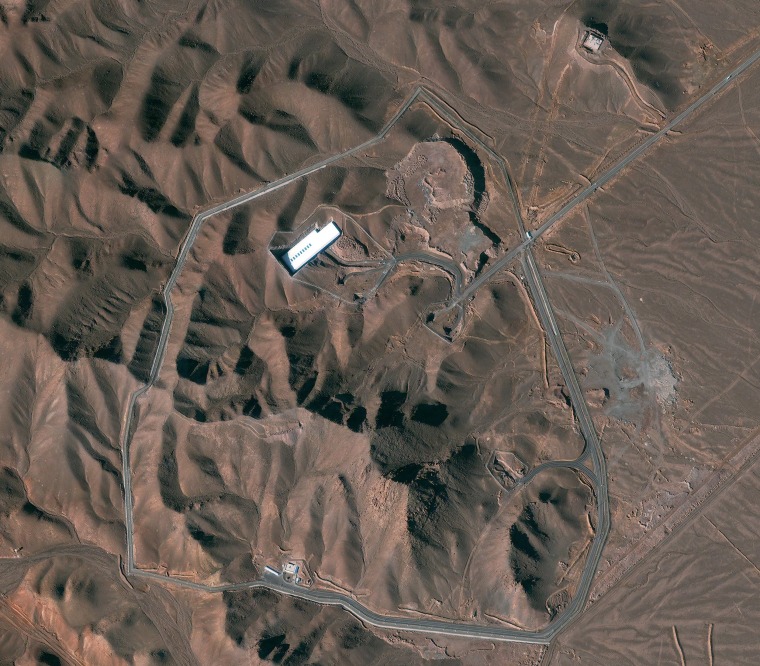
A satellite image of the Fordo facility in Iran in 2013.DigitalGlobe / Getty Images fileJan. 4, 2021, 5:42 AM PST/UpdatedJan. 4, 2021, 8:25 AM PSTByAli ArouziandSaphora Smith
TEHRAN, Iran — Iran has resumed enriching uraniumup to 20 percentin the country’s biggest breach yet of its landmark nuclear deal with world powers, a government spokesperson told state-run Mehr News on Monday.
Also Monday, Iran’s Revolutionary Guard seized a South Korean-flagged ship carrying thousands of tons of ethanol in the Persian Gulf, according to the state-linked news agencies IRIB and FARS News.
The U.S. State Department said it was tracking reports that the Iranian regime has detained a Republic of Korea-flagged tanker. “The regime continues to threaten navigational rights and freedoms in the Persian Gulf as part of a clear…
A study in the journal Nature Climate Change figures the carbon pollution already put in the air will push global temperatures to about 2.3 degrees Celsius.
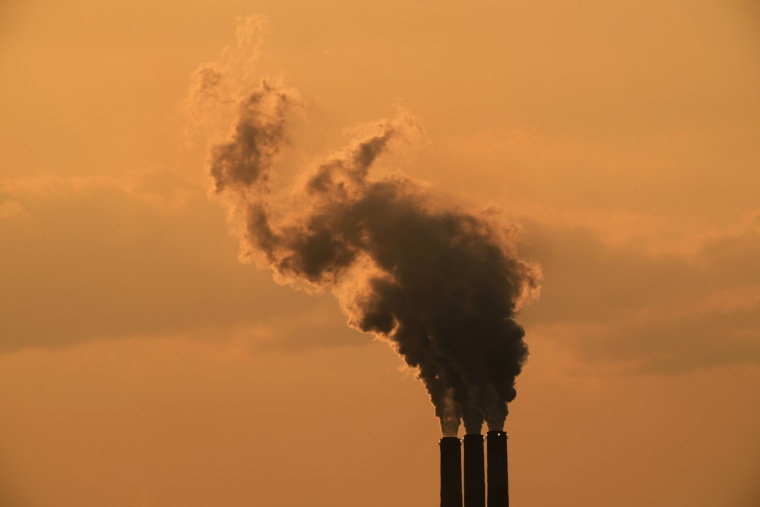
Smoke billows from the Jeffrey Energy Center coal-fired power plant on Sept. 12, 2020, near Emmet, Kan.Charlie Riedel / AP fileJan. 5, 2021, 6:15 AM PST/UpdatedJan. 5, 2021, 6:17 AM PSTByAssociated Press
The amount of baked-in global warming, from carbon pollution already in the air, is enough to blow past international agreed upon goals to limit climate change, a new study finds.
But it’s not game over because, while that amount of warming may be inevitable, it can be delayed for centuries if the world quickly stops emitting extra greenhouse gases from the burning of coal, oil and natural gas, the study’s authors say.
For decades, scientists have talked about so-called “committed warming” or the increase in future temperature based on past carbon dioxide…
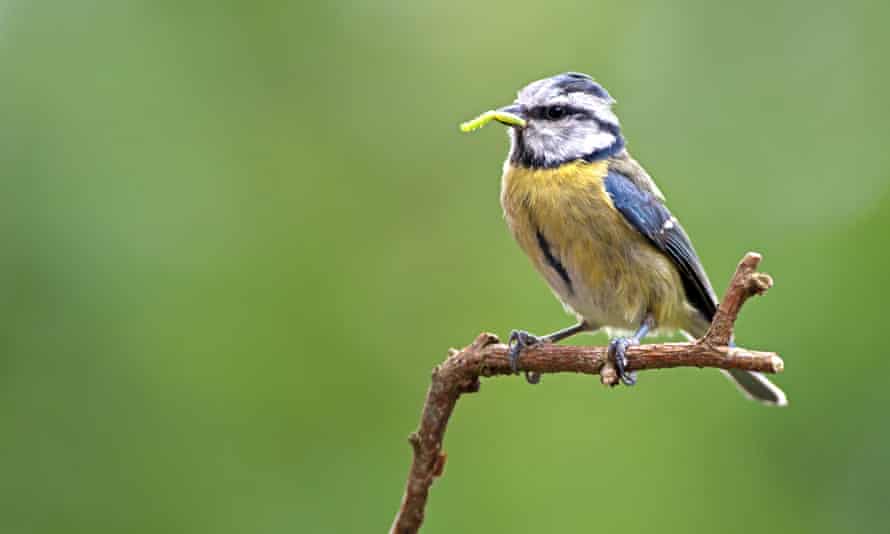
A blue tit with food for its young. If they fail to respond rapidly to earlier springs, their numbers will plummet. Photograph: Lisa Geoghegan/AlamyStephen Moss@stephenmoss_tvSun 3 Jan 2021 01.45 EST
Lockdown has sparked a renewed interest in our garden birds, with millions of us enjoying watching them from our windows. But could some species – including the common and familiar great tit – vanish from Britain’s gardens by the end of the century?
Researchers from the Norwegian University of Science and Technology, working with the University of Oxford, have modelled how great tits are reacting to the climate crisis. Specifically, are the birds able to respond to the earlier emergence of the caterpillars on which they feed their chicks?
Birds such as great tits have evolved to time their breeding cycle so it coincides with the peak of moth caterpillars that feed on oak leaves, which traditionally happens in late May and June. But as temperatures rise, so oaks are coming into leaf earlier, and the caterpillars have responded by hatching out earlier too.
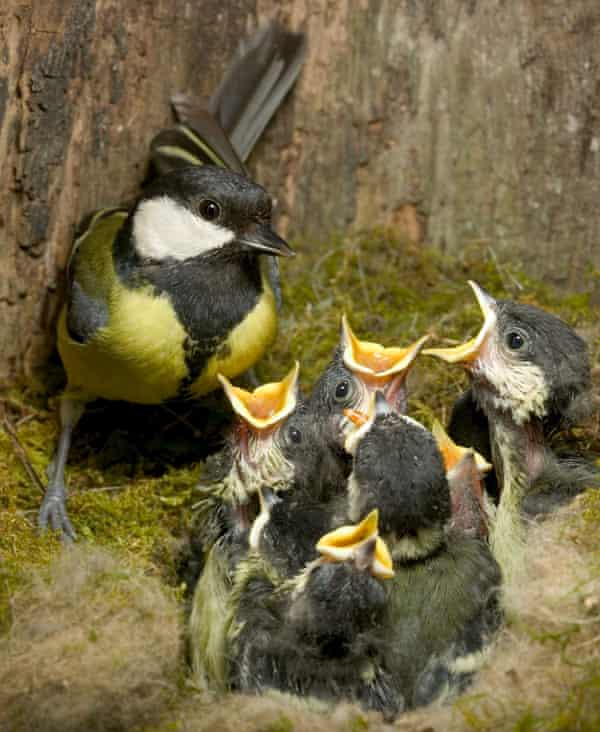
This means that when the great tit chicks are ready to be fed, the peak of caterpillars is already coming to an end. Because the parent birds need to find 1,000 caterpillars every day for their hungry offspring, any mismatch is likely to dramatically reduce breeding success.
A great tit with lots of hungry mouths to feed. Photograph: Andrew Darrington/Alamy
The researchers found that although the birds can respond to climatic shifts, they are not doing so quickly enough. Lead author Emily Simmonds estimates that the tipping point comes when oak leaves, and their associated caterpillars, appear 24 days earlier than usual.
The discovery that birds can and do respond to climate change by breeding earlier than normal was first made in the 1990s by Dr Humphrey Crick, a scientist working at the British Trust for Ornithology. He was analysing thousands of cards from the BTO’s long-running Nest Record Scheme, which had been filled in by amateur birdwatchers over the previous half-century, detailing the dates when eggs are laid and chicks hatch.Advertisementhttps://9911c2d216ab4f245f95ddb4284ceb8c.safeframe.googlesyndication.com/safeframe/1-0-37/html/container.html
Crick noticed a surprising trend: for many species, the date on which they laid their eggs had moved forward by an average of nine days. The resulting landmark paper, “UK birds are laying eggs earlier”, published in the journal Nature in 1997, provided some of the earliest empirical evidence that wild creatures were already responding to a warming climate.
A decade later, in 2006, I remember Bill Oddie introducingd Springwatch with the astonishing news that every blue tit nest they were monitoring had already fledged young – several weeks earlier than usual. Because blue tits only have one brood, they must respond very rapidly to changes such as earlier springs. If they fail to do so quickly enough, their numbers will plummet.
At the end of his 1997 paper, Humphrey Crick made this prophetic comment: “For birds, earlier nesting could be beneficial if juvenile survival is enhanced by a prolonged period before winter. Conversely, birds may be adversely affected if they become unsynchronised with the phenology of their food supplies.”
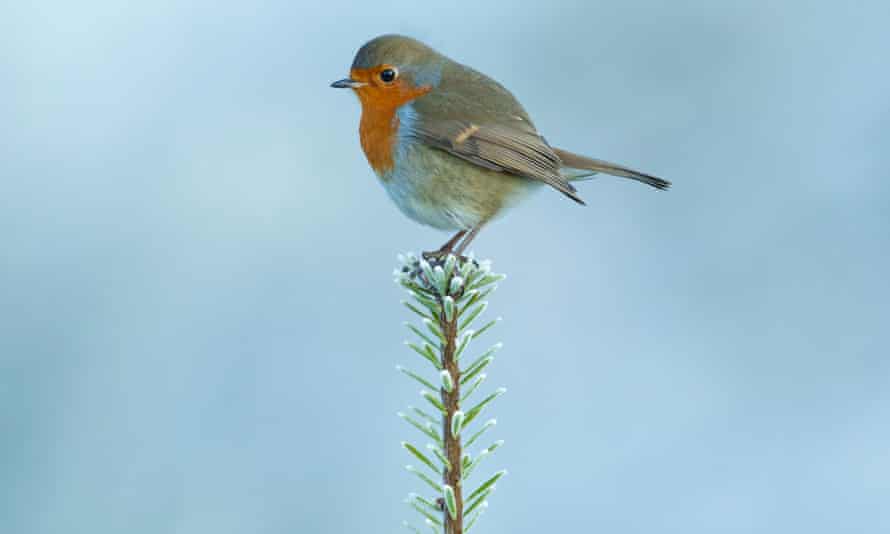
A longer breeding season benefits birds such as the robin, which produce two or more broods. Photograph: incamerastock/Alamy
Less than a quarter of a century later, both parts of that prediction appear to be coming true. In the short term, a longer breeding season has benefits, especially fr birds such as the robin, blackbird and song thrush, which produce two or more broods of young. Starting to nest earlier in the year might allow them to squeeze in an extra brood, and so produce more offspring in total.
Professor James Pearce-Higgins, the BTO’s director of science, points out that our smallest birds, such as goldcrests, wrens and long-tailed tits, are benefiting from another aspect of climate change: the much milder winters of recent years.
He also points to the positive impact of our habit of feeding garden birds, which helps species such as blue tits, great tits and goldfinches. At present, he suggests that the advantages of higher winter survival rates outweigh the failure to synchronise with the spring food supply, though that may not always be so.
Another climate-driven success is the way many species are now expanding northwards. The latest European Breeding Bird Atlas reveals that, on average, the ranges of Europe’s breeding birds have shifted north by 28km (17.5 miles) since the original survey was done in the late 1980s – almost 1km every year.
But as our climate becomes less predictable, with more extreme weather events such as storms, droughts and floods, what scientists have called the “honeymoon period” will come to an abrupt end.
As Professor Pearce-Higgins notes, ground-feeding birds may not be able to cope with prolonged summer droughts, which make it harder for them to find food: “One potential exception to this positive picture of warmer temperatures is thrushes and blackbirds, which rely on soil invertebrates. We know, from a study we have run recently asking schoolchildren to count earthworms in school playing fields, that the availability of worms – a major food source for many species – declines significantly in summer, particularly when it is dry.”
So, as we stand on the precipice of a runaway warming world, the future for many of our best-known and best-loved birds remains in the balance.
Foreign policy experts are sounding the alarm that U.S. President Donald Trump could launch an assault on Iran in the final weeks of his administration, potentially provoking a full-blown war just days before President-elect Joe Biden’s inauguration.
Fears of a military confrontation are mounting in the wake of the Pentagon’sannouncementSunday that the USS Nimitz would remain in the Middle East — a reversal of Friday’sdecisionto signal a de-escalation of hostility toward Tehran by redeploying the aircraft carrier out of the region prior to this past weekend’s one-year anniversary of the Trump-orderedassassinationof Iranian general Qasem Soleimani.
Nature has equipped Earth with several giant “sponges,” or carbon sinks, that can help humans battle climate change. These natural sponges, as well as human-made ones, can sop up carbon, effectively removing it from the atmosphere.
But what does this sci-fi-like act really entail? And how much will it actually take — and cost — to make a difference and slowclimate change?
Sabine Fuss has been looking for these answers for the last two years. An economist in Berlin, Fuss leads a research group at the Mercator Research Institute on Global Commons and Climate Change and was part of the original Intergovernmental Panel on Climate Change (IPCC) — established by the United Nations to assess the science, risks and impacts…
(CNN)UK Prime Minister Boris Johnson reimposed a lockdownin Englandon Monday as a more transmissible variant of Covid-19 fuels a surge in infections and hospitalizations in the country.”It is clear that we need to do more to bring this new variant under control,” Johnson said. “That means the government is once again instructing you to stay at home.”During his televised address to the nation, Johnson reimposed measures seen during the first lockdown last spring, including closures of secondary and primary schools to all except the children of key workers and vulnerable children. People will be allowed to leave their homes for limited reasons like shopping for essentials, exercise, and medical assistance.Johnson also said people could still leave home “to escape domestic abuse” — an issue thatarose earlier during the pandemic




 Planting 1 trillion trees is one way to store unwanted carbon.(Image: © Shutterstock)

