Coronavirus brought a swift end to the author’s hunting season.John Hafner
I was fishing for crappies last April, doing well with a small jig under a bobber. Another angler, who hadn’t caught a fish, walked over and asked what I was using. When I raised the jig, he held it in his hand for a closer look. After he left I squirted the jig with sanitizer.
Was I being paranoid? The coronavirus had recently debuted in our town in northwest Wyoming. I’m well into my golden years. I survived open heart surgery five years ago, and my cardiologist told me to be extra careful. I followed all the Covid guidelines, and my outdoor activities were severely curtailed.
Spring turkey season was the first big disappointment. I cancelled three hunts…
Avitrol is regulated by the U.S. Environmental Protection Agency (EPA). Currently, the EPA is reviewing Avitrol’s registration under the Federal Insecticide, Fungicide, and Rodenticide Act as part of a process that occurs only every 15 years or so. If the agency decides not to renew Avitrol’s registration, “pest”-control operators will no longer legally be able to use this hideous poison!
The EPA is accepting public comment regarding Avitrol until Monday, January 4, and your voice is urgently needed. Please follow these instructions carefully to submit a comment.
Visit the comment page and be sure to begin your comment with this text: “This comment pertains to 4-aminopyridine (4-AP), Case 0015, in Docket EPA-HQ-OPP-2016-0030, also known as Avitrol.”
Make sure the rest of your comment is personalized. The reviewers give less consideration to comments that appear to be copied and pasted from another source. You can draw ideas from our bullet points below, but be sure to use your own words, and feel free to do some additional research into the topic!
Click “Continue” to submit your comment.
Below are some talking points to consider for your personalized comment:
“Pest”-control companies often tell potential customers that Avitrol is a humane flock-dispersing agent that scares birds away from areas where they aren’t wanted. But Avitrol is acutely toxic and causes birds and other animals to suffer immensely.
“Nontarget” species, such as protected songbirds, often die from ingesting Avitrol, and predators such as raptors, foxes, hawks, cats, and dogs die from secondary poisoning after feeding on the dead or dying birds.
Wildlife pathologists have demonstrated repeatedly that protected and endangered birds, including red-tailed hawks and peregrine falcons, die as a result of ingesting the remains of pigeons and other birds poisoned with Avitrol. For these reasons, several cities have banned its use.
Poisoning birds does not resolve perceived problems with them. As long as areas remain attractive or accessible to birds, more will simply move in from surrounding areas to fill the newly vacant niches. However, the Avitrol Corporation, nuisance wildlife control operators, and “pest”-control companies refuse to reveal this fact to potential customers because the only thing that the use of poison guarantees is repeat business.
Once you’ve submitted your comment, please share this alert with all of your contacts. Thank you for taking action to protect birds and other animals imperiled by Avitrol!
This month witnessed the launch of the first-ever “Gas Index”, which ranks American metropolitan areas on the leakiness of the gas supply chains that service their cities. This new index — which Burlington, Vt., ranks in the middle of — takes into account methane leakage across the full life cycle of fossil gas, from oil and gas…
THANK YOU for every single thing you did to make a difference for animals in 2020!
We know there are many more victories and many more good news items for animals in 2020 and we know there are LOTS of opinions of what “victory” or “good news” mean.
These are good news/victories posted in our All-Creatures.org 2020weekly Newsletters[subscribeHERE].
If you have articles/stories to share, please send anemail.
clever, really kind of funny birds,” said Stanley Senner, vice president for bird conservation for the National Audubon Society. “Here in the United States, they have gone through several real bottlenecks. One was the use of DDT for several decades that really greatly reduced cormorant populations.”
“There have been periods of great persecution where they were getting shot all over the place. Yet, somehow this bird has managed not only to survive, but to thrive,” Senner said. “I admire their spunky nature and their ability to come back from these low points in their populations. As a Native American bird, they deserve an enormous amount of respect.”
The U.S. Department of Agriculture Wildlife Service is seeking comments after the agency “received 161 requests for assistance with managing double-crested cormorant damage in Ohio. Those requests for assistance came from both private and public entities, including other governmental agencies,” Gail Keirn, a spokeswoman for USDA, said in an emailed response to questions.
A 74-page environmental assessment was issued outlining the scope of the problems which range from posing a threat to aircrafts to the birds’ acidic feces killing off vegetation where they nest. The cormorants compete with other birds for resources. The cormorants are also often labeled as culprits when it comes to raiding aquaculture producers of fish.
The agency is considering authorizing the killing of the birds or destruction of nests to lower the population in Ohio. Another common technique is oiling the eggs in cormorant nests to prevent the eggs from hatching. The embryos are effectively suffocated and the nesting cormorants won’t lay new eggs, believing the eggs are still viable. https://2f178d57a87bcea45e3631ede495ae9a.safeframe.googlesyndication.com/safeframe/1-0-37/html/container.html
In Ohio, the cormorants are known to reside near the western basin of Lake Erie. Ohio’s breeding population of cormorants peaked at 5,296 breeding pairs in 2011 but has fluctuated between 2,400 to 4,300 pairs in the last several years, according to the assessment.
The Ohio Division of Wildlife estimated the birds were responsible for taking 273,386 fish valued at nearly $200,000, according to the assessment. The birds can eat about a pound of fish per day. On average, they live to be six years old.
“It is with sadness that I am reading this draft environmental assessment, which proports to condone the use of violent measures to kill these birds. I cannot envision any scenario where these birds are becoming a nuisance other than fisherman claiming they are taking their fish. There are enough fish in the sea for everyone!” Virginia Frati, in submitted comments.
The birds, by their very nature, will hunt for fish.
There are plenty of nonlethal methods to prevent cormorants from feeding on fish at hatcheries, he said.
“I think it’s unconscionable to build a hatchery and not built into it, a proper netting or other deterrence for birds. I’ve seen hatcheries that are set up to prevent bird depredations,” Senner said. “If the solution is just to go out and shoot cormorants, that’ll be a never-ending job.”
Under the rule, a new special permit for interested states add to existing measures to address conflicts with cormorants “to protect human health and safety, personal property and threatened and endangered species,” according to a released statement from the agency.
“The Trump Administration is providing tools under this coordinated approach for managing conflicts and economic damage associated with double-created cormorants while minimizing the regulatory burden on federal, tribal and state agencies and individual citizens,” U.S. Fish and Wildlife Service Director Aurelia Skipwith said in the release. “This special permit will help minimize human-wildlife conflicts while maintaining sustainable cormorant populations as required by the Migratory Bird Treaty Act.”
“If the birds are heavily persecuted, it could result in population declines at the state or even regional level,” Senner said.
Even though there have been no reports of aircraft strikes involving double-crested cormorants in Ohio from 1990 to 2018, that is still listed as a potential risk of plane crash and reason for why the birds should be destroyed.
“That doesn’t sound like the double-breasted cormorant is having a ‘significant impact on the human environment’ and since that is our only metric under the current administration the cost to taxpayers to help out businesses in controlling this problem is not necessary and should not be undertaken,” said Constance Jones, who submitted a comment to USDA.
After the Jan. 15 comment deadline passes, USDA will respond to the comments and those will be included in a final environmental assessment before the federal agency issues a final decision, Keirn said.
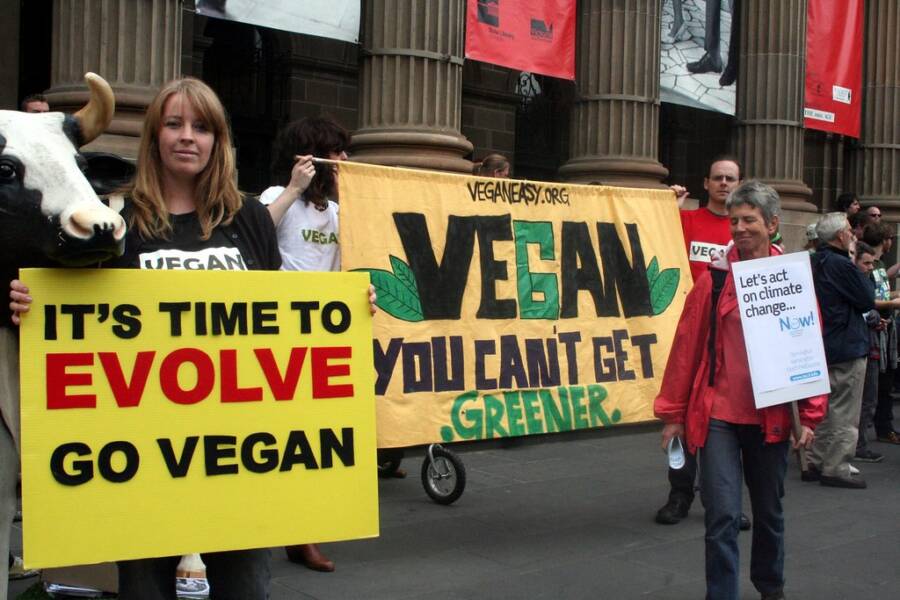
The study used a number of different methods to test participants’ reactions to vegans and ultimately produced a wide range of results. And while some of these results add up to an unclear picture about just how much discrimination vegans face as compared to other groups, a number of the conclusions are undeniably striking.
First, MacInnis and Hodson studied participiants’ attitudes toward vegans and found that they faced as much bias as racial and ethnic minorities that are common targets for such hatred. As the researchers wrote:
“As predicted, attitudes toward vegetarians and vegans were equivalent to, or more negative than, evaluations of common prejudice target groups… Both vegetarians and vegans were evaluated equivalently to immigrants, asexuals, and atheists, and significantly more negatively than Blacks. Vegetarians were evaluated equivalently to homosexuals, whereas vegans were evaluated more negatively than homosexuals.”
In fact, the study found that only drug addicts were seen more negatively than vegans.
“Although our findings suggest that vegetarians and vegans face less severe and less frequent discrimination than that experienced by other minority groups, they nonetheless are targets of (and experience) meaningful bias.”
In summary, the researchers wrote:
Overall, attitudes toward vegetarians and vegans are equivalent to, or more negative than, attitudes toward common prejudice target groups, and bias toward vegetarians and vegans is associated with these other biases. However, it appears that vegetarians and vegans are less likely to be targets of discrimination relative to these groups.
Furthermore, the authors concluded: “Unlike other forms of bias (e.g., racism, sexism), negativity toward vegetarians and vegans is not widely considered a societal problem; rather, negativity toward vegetarians and vegans is commonplace and largely accepted.”
Additionally, according to Psychology Today, prejudice toward vegans is far stronger than prejudice toward vegetarians. The deviation from traditional norms is simply that much more severe among vegans. That is, a person who doesn’t eat meat but does at least drink milk or eat eggs isn’t perceived to be as much of an “other.”
MacInnis and Hodson also found that vegan men are the most “despised” subgroup among vegans. A man who prefers tofu to turkey or beans to burgers, for instance, may be seen as potentially trying to subvert traditional values and gender norms, which engenders greater hatred.
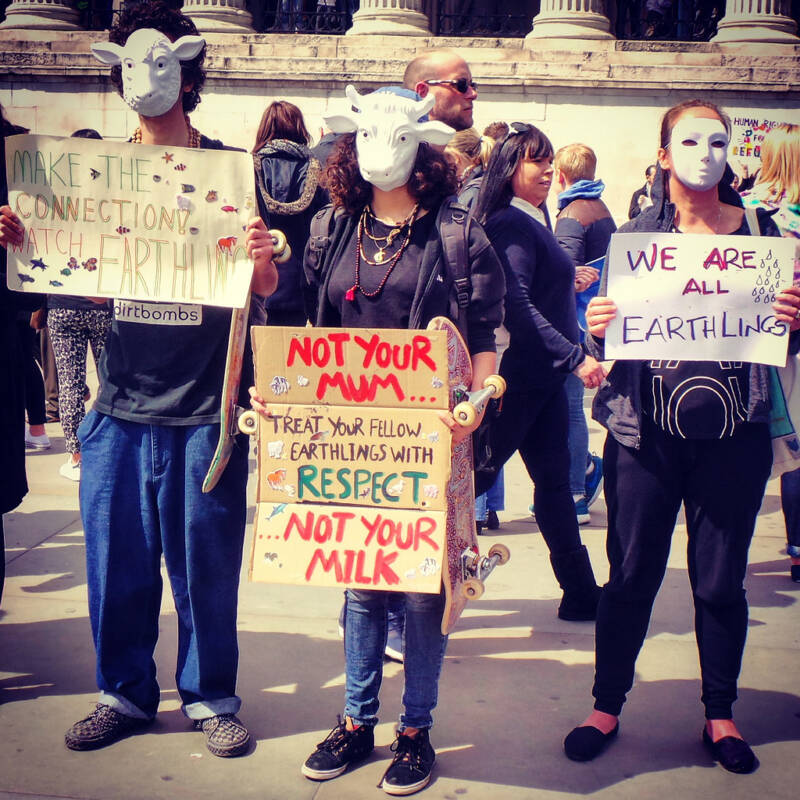
As Psychology Today furthermore reported, meat-eaters are also angrier at vegans who avoid meat for reasons related to empathy toward animals, as opposed to concern for the environment. In a world facing the threat of climate change, many anti-vegans believe that the health of the planet is an actual problem — while animal suffering is not.
Wikimedia CommonsThe study found that anti-vegan sentiment is stronger if the avoidance of meat is tied to concerns of animal welfare.
Hodson and MacInnis have argued that this particular finding indicates that anti-vegan prejudices have specific motivations and a particular kind of defensiveness at their core and that these hatreds are not simply a matter of disliking someone from another group for being different.
In terms of the political and cultural factors, both meat-eaters and those toward the right on the political spectrum feel threatened by the impact veganism has on their worldview. These particular anti-vegans fear a subversion of traditional norms that could even affect future generations.
In that sense, vegans are viewed as a threat not for doing something, but for not doing something. This is comparable to the frustration of peer-pressure when it fails. This eventually leads these particular meat-eaters to care less about animals and their well-being than they may have before.
FlickrSome research has found that reminding meat-eaters their food originates from animals increases their empathy.
Ultimately, Hodson claims that the people with whom anti-vegans truly have a problem is themselves and that their externalized anger is a result of unresolved inner conflict.
As Hodson wrote:
“Lashing out at other people will do little to reconcile or solve such inner conflicts, and in fact, may allow them to magnify. We could all benefit from careful and thoughtful discussion with others about the world in which we want to live, and how we want our grandchildren to judge us as they look back on this period in history.”
When we think of compassionate, intelligent creatures, cows normally don’t come to mind.
However, cows actually communicate how they feel to one another through their moos, according to a new study. The animals have individual vocal characteristics and change their pitch based on the emotion they’re feeling, according to research at the University of Sydney.
Alexandra Green, a Ph.D. student at the university and the study’s lead author, said:
“Cows are gregarious, social animals. In one sense it isn’t surprising they assert their individual identity throughout their life.”
Studying a herd of 18 Holstein-Friesian heifers over the course of five months, Alexandra found that the cows gave individual voice cues in different positive and negative situations. This behavior helps them communicate with the herd and express excitement, arousal, engagement, or distress.
Talking about the animals she studied, Ms. Green said:
“They have all got very distinct voices. Even without looking at them in the herd, I can tell which one is making a noise just based on her voice.”
She would record and study their “moos” to analyze their moods in various situations within the herd.
Previous research has discovered that cow moms and babies use their voices to communicate individuality.
However, this new study shows how cows keep their individual moos throughout their lives, even if they’re talking to themselves. The study found that the animals would speak to each other during mating periods, while waiting for or being denied food, and when being kept separate from one another.
“Ali’s research is truly inspired. It is like she is building a Google translate for cows,” said Cameron Clark, an associate professor at the university.
Ms. Green said she hoped this study would encourage farmers to “tune into the emotional state of their cattle, improving animal welfare.”
This research shows that animals are intelligent, sentient beings and deserve our respect. Vegetarianism and veganism are on the rise as people are waking up to how eliminating meat from our diets can positively impact health as well as show compassion to other living beings. Also, cows contribute greatly to greenhouse gas emissions, producing 37% of methane emissions resulting from human activity. One study showed that one cow, on average, produces between 70-120 kg of methane a year.
This is significant because across the globe, there are around 1.5 billion cattle. Many scientists are coming together to talk about how a plant-based diet could greatly help to slow down climate change.
Turns out that Andean condors don’t have to flap their wings much.Facundo Vital
Look, ma, no wing flaps.
An Andean condor, one of the largest flying birds on the planet, soared through the air for 100 miles (172 kilometers) and didn’t bother with flapping its wings. This epic example of flight comes to us from a team led by researchers at Swansea University in the UK.
The scientists took a deep look at the connection between environmental conditions and the amount of effort large birds put into their flights. To do this, they attached data recorders to Andean condors that allowed them to log every single flap of the wings as well as the birds’ flight paths.
CNET SCIENCE
From the lab to your inbox. Get the latest science stories from CNET every week.SIGN ME UP!
By signing up, you agree to our Terms of Use and acknowledge the data practices in our Privacy Policy. You may unsubscribe at any time.
“Our results revealed the amount the birds flapped didn’t change substantially with the weather,” said study co-author Hannah Williams of the Max Planck Institute for Animal Behaviour. “This suggests that decisions about when and where to land are crucial, as not only do condors need to be able to take off again, but unnecessary landings will add significantly to their overall flight costs.”
An interview with Dawn Wells, “What Would Mary Ann Do?” (2014) – New Day NWhttps://imasdk.googleapis.com/js/core/bridge3.432.0_en.html#goog_73804038Volume 90%Author:Associated PressPublished:2:44 PM EST December 30, 2020Updated:3:49 PM EST December 30, 2020
LOS ANGELES —Editor’s Note:The video above is an interview from 2014.
Dawn Wells, who played the wholesome Mary Ann among a misfit band of shipwrecked castaways on the 1960s sitcom “Gilligan’s Island,” died Wednesday of causes related to COVID-19, her publicist said. She was 82.