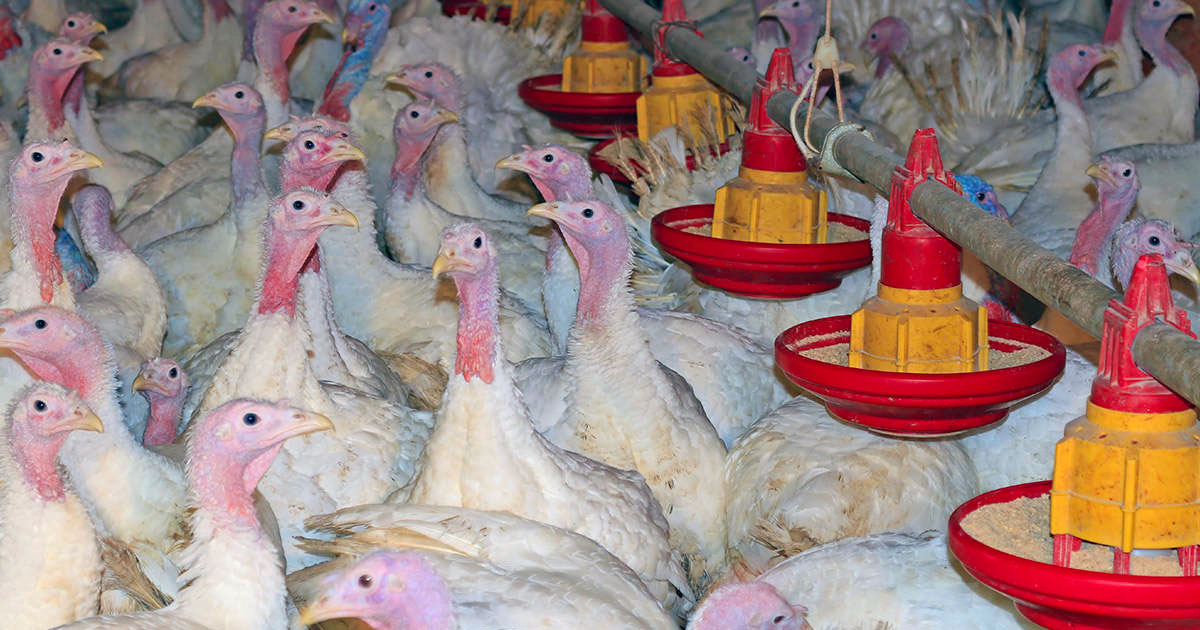
When I interviewed a “live hanger” who worked at House of Raeford Farms turkey facility in Raeford, NC, he told me the turkeys arrive at the slaughterhouse with broken and dislocated limbs. When you try to remove them from their crates, their legs twist completely around, offering no resistance he told me. “The turkeys must be in a lot of pain but they don’t cry out. The only sound you hear as you hang them is trucks being washed out to go back and get a new load.” – Martha Rosenberg
Thanksgiving turkeys endure extreme suffering (Image by Martha Rosenberg)
As “Turkey Day” approaches, animal lovers cringe, food safety advocates become vigilante and turkey producers hope you are not reading the news.
They hope you have forgotten that scientists at the Bloomberg School’s Center for a Livable Future and Arizona State’s Biodesign Institute found Tylenol, Benadryl, caffeine, statins and Prozac in feather meal samples that included U.S. turkeys: “a surprisingly broad spectrum of prescription and over-the-counter drugs,” said study co-author Rolf Halden of Arizona State University.
They hope you have forgotten that ractopamine is still used in turkeys, the asthma-like growth enhancer to add muscle weight.
Here’s What Turkey Producers Don’t Want You to Know
People always tell us they love our newsletter. Find out yourself with a weekly dose of our ad‑free, independent journalismYour emailYour emailSUBSCRIBE
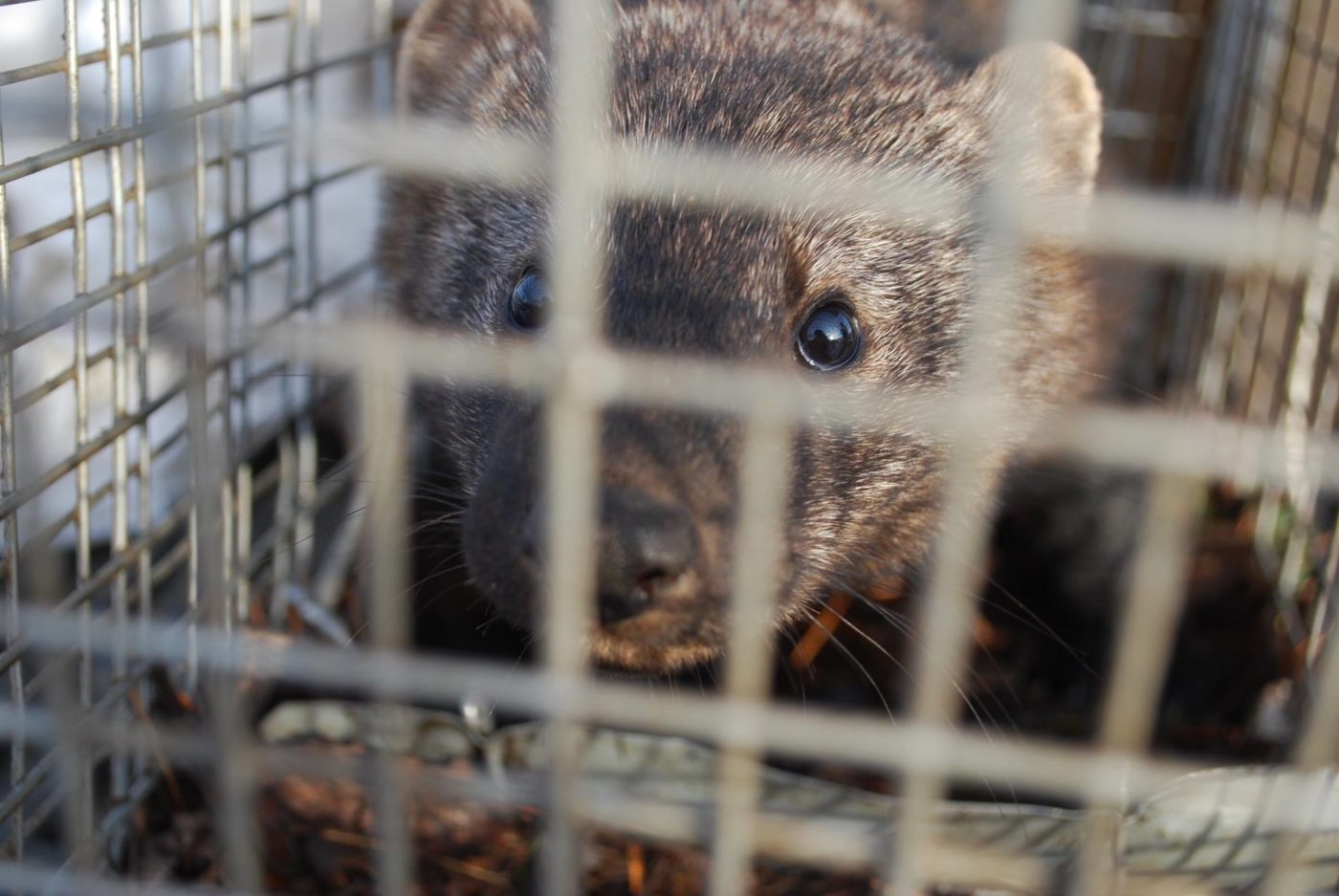
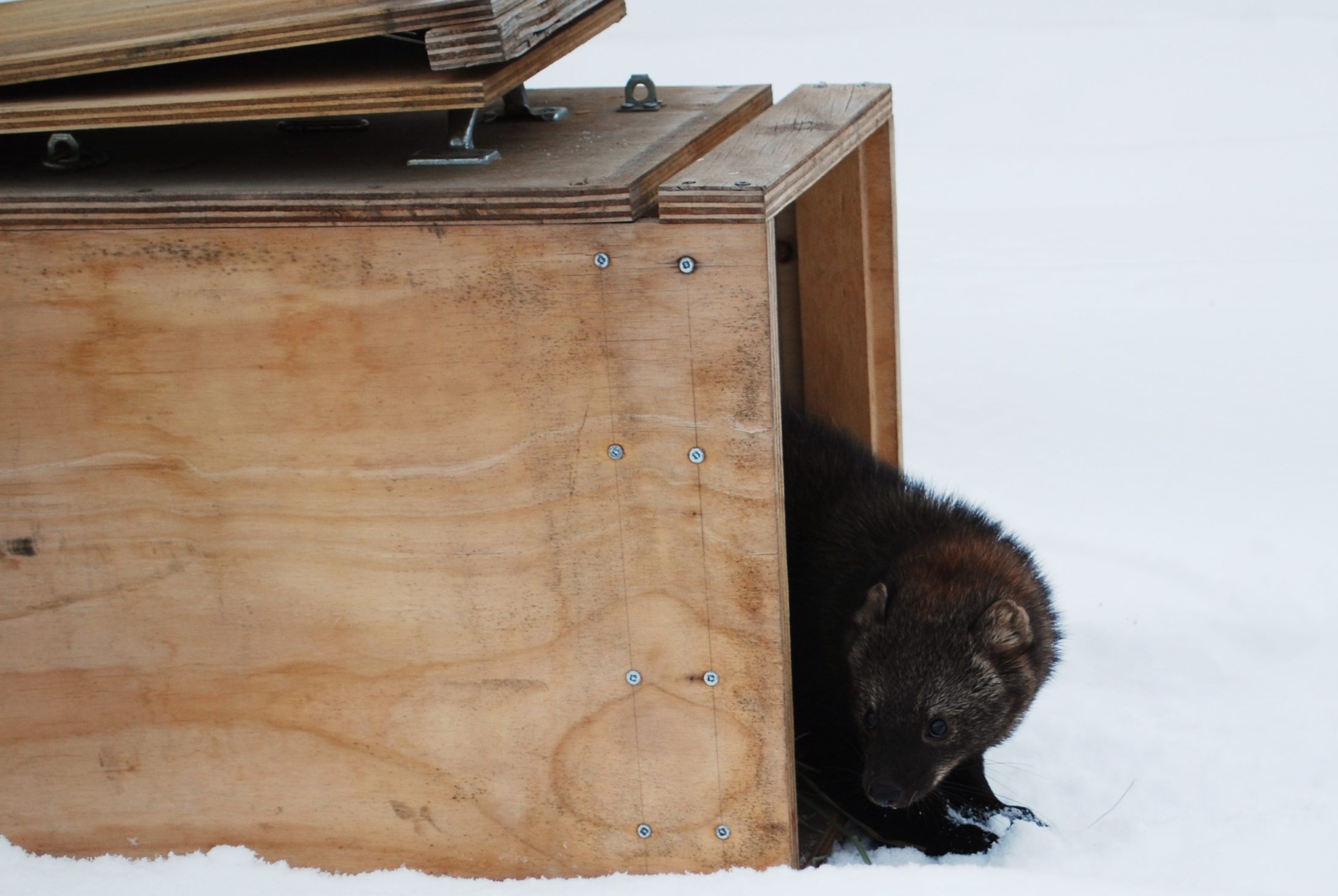
Trappers Wayne and Leilah Kirsh stopped harvesting fisher on their trapline, in the Nazko region southwest of Prince George, as fisher disappeared following industrial logging. Photo: Leilah KirshNEWS
Unlike six other provinces, B.C. has no endangered species legislation, which allows species at risk to be killed outside of protected areasSarah Cox Nov 20, 2020 11 min read
Nine months after listing the interior fisher population as endangered, the B.C. government has approved winter trapping of the elusive forest animal even though a scientist warns it could wipe out fishers in some areas.
“A red-listed population of this size, with a negative population growth rate … should not be trapped,” biologist Larry Davis, a member of the B.C. fisher working group, told The Narwhal.
“These animals are a low-density species. So many areas have been impacted by [forest] harvesting and fires that removing even a few more animals from these areas will probably result in local extirpations.”
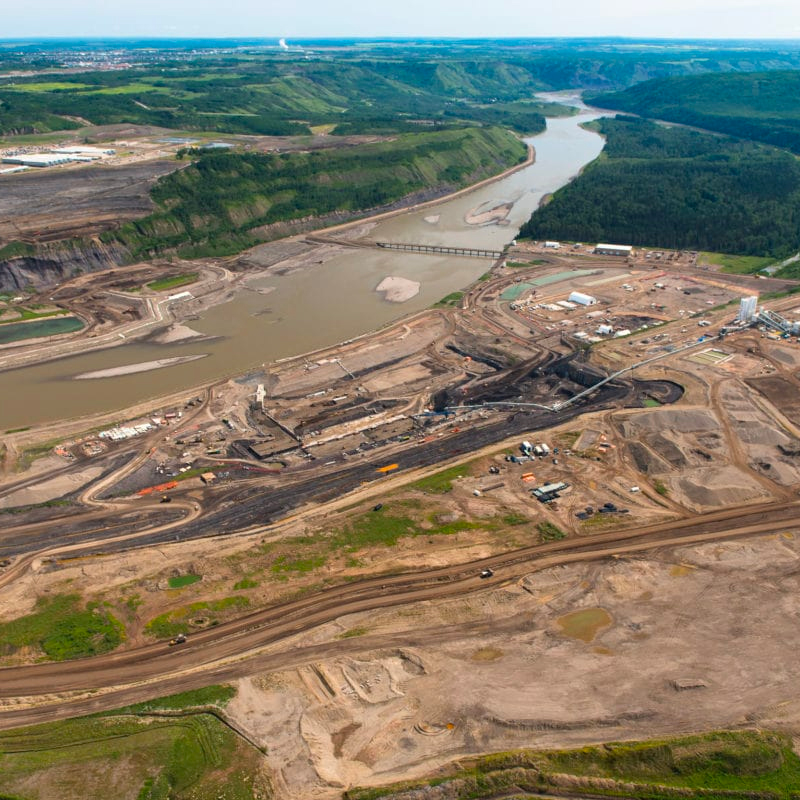
What’s going on with the Site C dam?
You’ve got questions, we’ve got answers. Join The Narwhal Nov. 26 for a panel discussion on the future of the most expensive public infrastructure project in B.C.’s history.REGISTER
B.C. has no endangered species legislation, allowing species at risk of extinction to be killed outside of protected areas. Out of 1,336 species at risk currently recognized by the province, only four are legally protected under B.C.’s Wildlife Act — the burrowing owl, American white pelican, Vancouver Island marmot and sea otter.
B.C.’s hunting and trapping regulations for 2020-2022, which came into effect on July 1, noted the interior fisher was red-listed earlier this year, meaning the genetically unique population is in danger of disappearing. The regulations said fisher trapping seasons were under review and could be amended prior to the start of trapping season on Nov. 1, but no changes have been made.
Fisher, which are about the size of a housecat but stretched out like a limo, require mature trees for denning and shelter. Only five species of tree in B.C. have cavities suitable for female fisher to birth and raise their kits while avoiding predators.
The interior fisher population has suffered steep declines, largely due to habitat destruction as a result of accelerated logging for the mountain pine beetle, which has eliminated fisher denning trees such as cottonwoods and balsam poplars.
Only 300 to 500 interior fishers remain, according to Davis.
“If an area’s already been impacted by extensive harvesting and wildfires, the remaining fisher population is likely to have a hard time sustaining itself — and even removing a few more individuals will make that more difficult,” he said.
B.C. doesn’t protect endangered species
The fisher trapping season coincides with a Nov. 16 letter sent to Premier John Horgan from 17 scientists, urging the newly elected NDP government to create “long overdue” endangered species legislation and to invest in protection and recovery efforts needed to reverse biodiversity loss across the province.
“Provincial leadership is sorely needed,” the scientists wrote. “With every passing year, it becomes more and more difficult to reverse species declines.”
B.C., the most biodiverse province in Canada, has the greatest number of species at risk of extinction, with 1,336 species on the red and blue lists. Another 1,037 species meet provincial status requirements for red and blue listings but have not yet been added.
Red and blue listing in B.C. is currently an empty exercise, however, because species at risk of extinction receive no unified legal protection in the province.
Unlike six other provinces that have endangered species legislation, B.C. relies on an uncoordinated mish-mash of legislation to protect plants and animals, including the Forests and Range Practices Act, the Oil and Gas Activities Act, the Environment and Land Use Act, and the Wildlife Act.
When the NDP came to power in 2017, Premier John Horgan instructed Environment Minister George Heyman to enact an endangered species law, in keeping with an election promise made by the party. But the government subsequently reneged on its commitment.
Tara Martin, one of the scientists who signed the letter to Horgan, said she and other scientists worked with the province and other stakeholders to advance the promised legislation.
“We were hugely disappointed that nothing came of it,” Martin said in an interview. “Essentially, the province walked away from their commitment, with no statement as to why.”
Lack of endangered species legislation ‘negligent’
The push for B.C. endangered species legislation comes as scientists around the world warn we are witnessing the sixth mass extinction event in the planet’s four-billion-year history. Scientists estimate as many as half of all species may be headed toward extinction in the next 30 years, in large part due to habitat destruction.
Martin said species continue to be added to B.C.’s list of at-risk species and ecosystems.
“This is negligent. This is really unacceptable. We’re losing many opportunities that come with having a biodiverse region. We’re so fortunate to live where we do, and we are not heeding the responsibility that we have for protecting these species and ecosystems,” she said.
Martin and the other scientists told Horgan that B.C.’s wildlife populations are decreasing in abundance, “with many species approaching extinction” due to unsustainable land use and development.
“We’re all losing,” Martin said. “We’re losing our life support system. We’re losing our natural heritage. We’re losing our economic opportunities. And we’re really impacting future generations by taking away opportunities, by not putting in legislation to safeguard our species and ecosystems.”
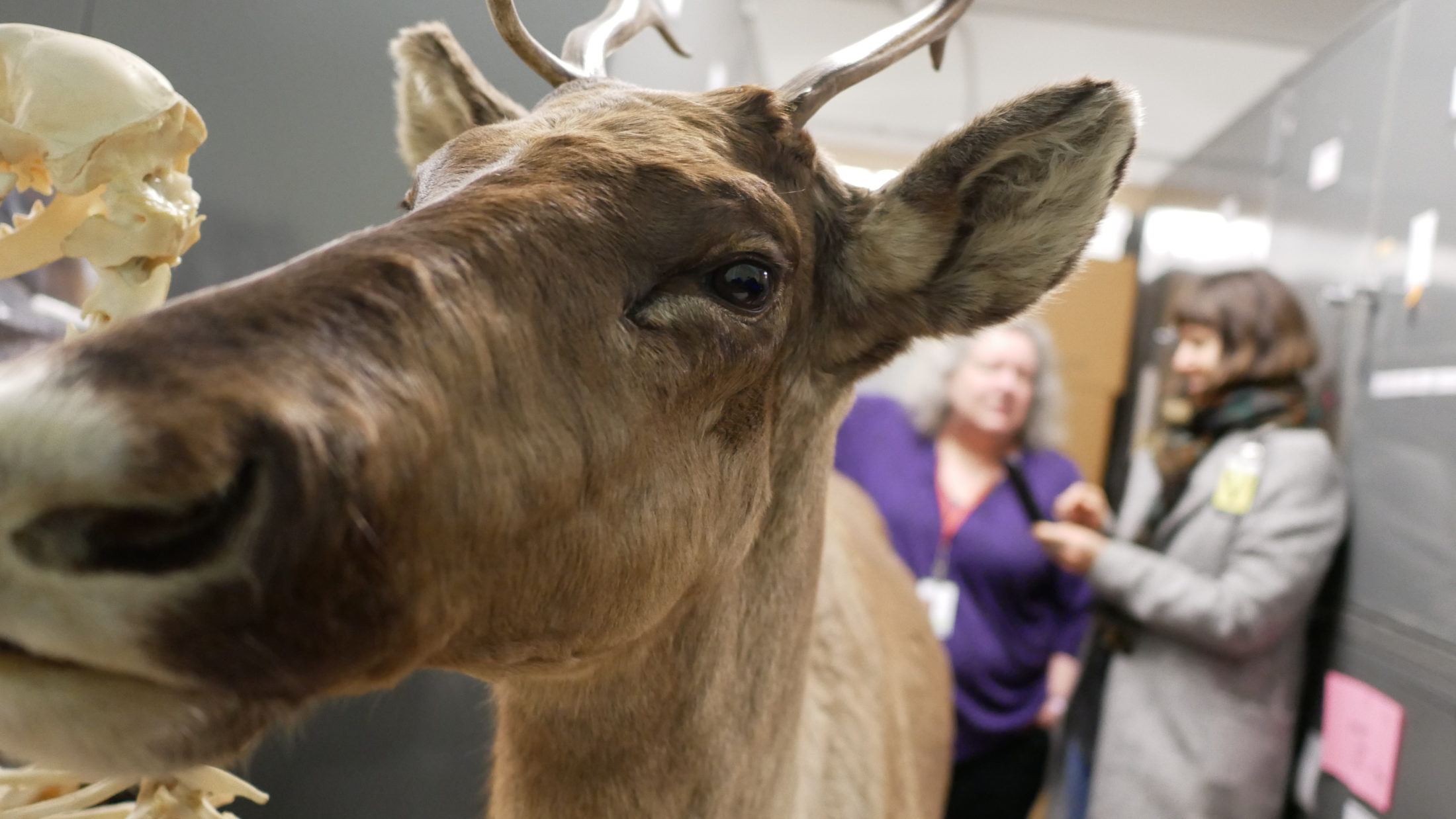
A taxidermied caribou cow from an extirpated herd in a back room of the Royal B.C. Museum. Caribou populations have been winking out of existence in B.C. due to over development, industrial logging, road building and other human incursions into wilderness. Photo: Carol Linnitt / The Narwhal
Failing to protect B.C.’s species and ecosystems also violates the rights of Indigenous peoples to have access to species for food, social and ceremonial purposes, the scientists said in their letter. “Not protecting biodiversity in the province is antithetical to the B.C. government’s commitments to reconciliation,” they stated.
Trapper Wayne Kirsh said he is frustrated by the B.C. government’s lack of action to protect fisher habitat. “I don’t think the trapping is going to hurt the fisher, compared to the loss of habitat,” said Kirsh, who trapped interior fisher for decades.
Kirsh and his wife Leilah stopped harvesting fisher on their trapline, in the Nazko region southwest of Prince George, as fisher disappeared following industrial logging. The couple tried, unsuccessfully, to persuade logging companies and the provincial government to leave behind denning and nesting trees.
“When you have a trapline it’s kind of like having a farm. You have to farm it because if you don’t, in a couple of years, you have nothing left to trap,” Kirsh said in an interview.
In 2016, the Kirshes filed a complaint with B.C.’s forest practices board, an independent watchdog for forestry practices, saying forestry companies were harvesting heavily on their traplines with no designated cutting areas.
The forest practices board upheld the complaint, saying the provincial government failed to use legal tools available to protect fisher habitat.
Kirsh, who worked in the forestry industry for 37 years, said logging practices in interior fisher habitat “haven’t changed one bit. They’re just going in there and raping the habitat.”
“Why don’t they leave some habitat? … It’s not the trapper who is screwing things up,” he said. “Fires are one thing, but logging is the number one killer. They’re not leaving their denning trees and they’re not leaving the spruce with the witch’s broom.”
Fisher use witch’s broom, a dense mass of shoots on a tree branch that resembles a nest, for resting sites and to shelter from the elements.
David said about 170 fishers are trapped each year in B.C., which has a second fisher population in the Peace region that is blue-listed, meaning it is vulnerable to local extinction.
The Kirshes’ stopped trapping fisher for fur in the Nazko in 2014, in a voluntary effort to help the struggling population. In 2015 and 2016, the couple live-trapped 19 fisher for a reintroduction project in Washington state’s Cascade Mountains. Photo: Leilah Kirsh
Trapping guidelines note ‘increased concern’ for fisher
Biologist Eric Lofroth said it’s not typical for a red-listed species like the fisher to be harvested.
The impact will depend on where interior fishers are trapped, said Lofroth, adding that government-approved trapping “is certainly not going to be of any help” in recovering populations. “Whether it’s going to result in the extirpation of fisher from any particular part of its current distribution is hard to know.”
He said new data — that he and other scientists have collected — indicates the interior fisher population has a lower reproductive rate than the boreal fisher population in the Peace, possibly due to food availability. Fisher prey on shrews, mice, voles, snakes, squirrels, snowshoe hares and grouse. They also consume mushrooms and berries but not, despite their name, fish.
“The number of females that den on an annual basis and the average litter size is much lower in the central interior than it is in the boreal population,” Lofroth said, noting that a paper on the new data is awaiting peer-review. “That has a real bearing on potential population growth rates.”
The province’s new hunting and traplines guidelines regulations said there is “increased concern” for fisher populations in areas of the Thompson, Cariboo, Omineca and Skeena Regions that have experienced large habitat changes due to forest harvest and salvage of beetle and fire-killed forests.
“Where habitats are compromised, trapping poses a compounding threat to population persistence,” say the regulations, which encourage trappers to reduce the incidental capture of fisher by modifying marten boxes, which attract fisher.
Davis said he has spoken with a few trappers who are not planning to trap fisher this year due to low fur prices related to the COVID-19 pandemic. “That at least gives us a glimmer of hope that those populations of fishers won’t be heavily impacted with the trapping this winter.”
“There are areas out there that could be refugium for fishers, whereas in other areas trappers are still active.”
The fisher working group, supported by the B.C. government, has built close to 1,000 boxes to give out to trappers who harvest marten but who also catch fisher in their traps, Davis said.
“We are rolling that out right now, trying to get these boxes out to trappers, just to test them, to see if they’re comfortable using them.”
The boxes have an entry plate with a hole designed for the skull size of martens, which are smaller than fishers. “There’s a difference in the width of their head so they’ve designed the box to have a hole that would fit a large male marten but shouldn’t allow a female fisher to enter, and for sure a male fisher would not be able to enter,” Davis said.
In response to a forest practices board report based on the complaint from Wayne and Leilah Kirsh, the B.C. forests ministry said it would develop a provincial fisher management plan. In June, the ministry told The Narwhal the plan is underway, with a “targeted” completion date of 2022.
Endangered species legislation was not mentioned in the 2020 NDP election platform. Instead, the party vaguely pledged to “work with neighbouring jurisdictions to cooperatively develop and invest in new strategies aimed at better protecting our shared wildlife and habitat corridors.”
B.C. has no laws that specifically prohibit harm to species at risk (other than prohibitions around hunting) or laws that provide mandatory protection for the habitat that species vulnerable to extinction require for their survival and recovery. Nor do B.C. laws require recovery planning or implementation for species at risk.
The scientists are requesting a meeting with B.C.’s next environment minister, who will be named on Nov. 26 when the new provincial cabinet is announced, to discuss how the new government can safeguard endangered species and ecosystems.
“We feel that Horgan has a clear mandate to govern, and a responsibility to re-engage in this really important effort to bring about species at risk legislation for the province,” Martin said.
The B.C. government is not answering media questions during the interregnum period following the Oct. 24 election, unless questions pertain to health and safety or statutory requirements.
I could begin this historical overview with the Big Bang and the spreading out of all matter throughout the once-empty universe, followed by the resultant formation of stars and the planets which took up orbit around them, but for the sake of promised brevity, I’ll skip ahead a few billion years and focus on the fully-formed, sufficiently-cooled Earth. And as far as the ongoing human-driven extinction spasm, our story must skip on to the final few moments of a12-hour timescale. If you’re with me so far, we’re talking about the arrival of the most cunning, ruthless, self-aggrandizing. overly-intelligent primate species ever to reach the dead-end at which we now find ourselves, thanks to hunting. Hunting and meat-eating in general. Evolution is the process through which dinosaurs sprouted wings and…
The actions of the U.S. meat industry throughout the pandemic have brought to light the true corruption and waste that are inherent within our food system. Despite a new wave of rising COVID-19 cases, the U.S. Department of Agriculture recently submitted a proposal to further increase slaughter line speeds by 25 percent, which are already far too fast and highly dangerous. It’s evident that the industry will exploit its workers and animals all to boost its profit.
The revelations continued when Tyson Foods, the world’s second-largest producer of chicken, beef and pork, cooperated with the Department of Justice to avoid scrutiny into the company’s role in the monopolization of the industry to fix prices of chicken for both consumers and retailers. This news comes at a time when Tyson has already been under fire for exposing its workers to an enormous risk of contracting COVID-19. We can now add competitors and consumers to the ever-growing list of those victimized by the corporate giant. This is further evidence that it’s time for our nation’s food supply chain to change in a big way.
Tyson Foods former CEO Noel White, replaced by Dean Banks in October, rushed to cooperate under the Department of Justice’s antitrust leniency program, stating, “I am proud to lead a company that took appropriate and immediate actions in reporting the wrongdoing we discovered to the Department of Justice.” What White failed to mention is that cooperating will afford Tyson protection from public scrutiny and legal fines, at the expense of its competitors.
Unethical business practices seem to be the norm for Tyson Foods. Due to a lack of proper safety measures and harsh attendance policies, more than 10,000 Tyson plant workers tested positive for the virus, substantially more than any other U.S. meat company. Before the pandemic, working on a meat processing line was one of the most dangerous jobs in the United States. Now, with the constant threat of COVID-19 looming over these elbow-to-elbow assembly lines, meat processing may be among the most deadly jobs in the world. Workers are not just getting sick from this virus — they’re dying.
The pandemic has led to major disruptions in the supply chain. While Tyson has not yet engaged in the mass “depopulation” of animals that other producers resorted to, in a typical week, the company slaughters an estimated 37 million chickens. The poor treatment of the chickens within its supply chain — including breeding birds to grow at such an unnaturally fast rate that they can’t even hold up their own bodies — has made Tyson the target of public campaigns urging the company to make meaningful changes.
More than 120 labor, food justice, animal welfare and environmental organizations have banded together to take action against the company. Tyson must take immediate action to protect the safety and well-being of its workers, make improvements to support animal welfare and reduce its harsh impact on the environment.
For too long, the unethical, avaricious practices of the meat industry have been hidden from view. The scandals surrounding Tyson and other major producers are making clear that vulnerable workers, abused animals and a rigged system are the foundation of an unethical and destructive business model.
Tyson had a role in creating the industrialized system, and it must step up its role in fixing it. The meat giant has had one singular focus since its inception: profit. The company’s greed has caused it to exploit anyone in its path. Tyson’s disregard for human and animal life extends to its workers, animals killed in its plants, consumers and now its competitors. Tyson took ownership for rigging the system using price-fixing. It’s time for Tyson to take ownership for exploiting and endangering its more vulnerable victims as well.
Sign the petition urging Tyson to stop neglecting workers, animals and public health.
Sign the petition urging the U.S. chicken meat industry to end the cruel practice of boiling birds alive.
This article was produced by Earth | Food | Life, a project of the Independent Media Institute.
Scientists suspect that rapid warming in the Arctic is causing more climate extremes farther south, including bouts of severe cold and snow in the Northeast.
BY BOB BERWYN, INSIDECLIMATE NEWS
NOV 22, 2020
A satellite view of Northwestern Greenland in the Arctic Circle on Aug. 12, 2019. Credit: Orbital Horizon/Copernicus Sentinel Data 2019/Gallo Images via Getty Images)
By any measure, theArctic has changed profoundlyin the last 40 years, warming three times as fast as the global average, and losing half its summer sea ice, as well as billions of tons of land-based glacier ice.
And even though the Arctic only encompasses about 6 percent of the Earth’s surface area, the warming there has kicked off climate chain reactions that are disrupting weather and climate patterns across the mid-latitudes of the Northern Hemisphere, including most major North American and European cities and agricultural areas. The abrupt and accelerating…
By: Kelsey KenyPosted at 2:22 PM, Nov 22, 2020 and last updated 12:34 PM, Nov 22, 2020
CHEATHAM CO., Tenn. (WTVF) — A missing Hendersonville man was found dead after a hunting accident, officials say.
The TWRA says relatives of the 70-year-old man called authorities Sunday, when they hadn’t heard from him in 3 days. He had told them he was going hunting.
Responders searched the Cheatham Wildlife Management Area. They found the man’s truck, then found the man’s body fallen from his treestand. He was not wearing a fall restraint device.
Thu 19 Nov 202003.00ESTLast modified on Thu 19 Nov 202003.02EST
Shares338
A plastic ring on a dolphin. Photograph: Q. Gibson/University of North Florida
Endangered marine mammals and sea turtles are routinely being entangled in or are swallowing pieces of plastic that now riddle the oceans off US coastlines, a new report has found.
The plastic-induced toll stretches from Florida, where a manatee was found dead with a stomach filled with plastic bags and straws, to Virginia where a sei whale died after swallowing a DVD case causing stomach lacerations, to California, where a juvenile elephant seal was discovered with a packing strap wrapped around its neck. In South Carolina, a loggerhead sea turtle defecated out almost 60 pieces of plastic while being rehabilitated.