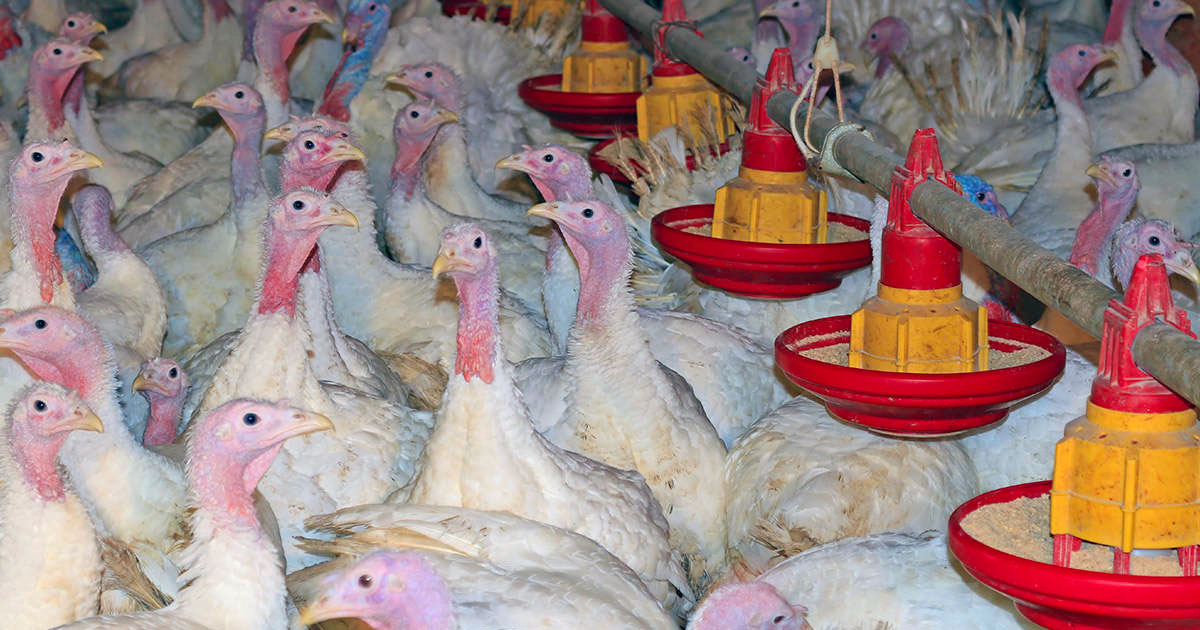
Because of crowded conditions on factory farms (where most Thanksgiving turkeys are raised), beautiful birds who started out as a species looking like this …
when kept in dark, stinking windowless barns (with maybe a small access door to the muddy, lifeless yard, so the farmer can claim they’re “free-range”) turn out looking like this…
Perhaps it’s time to swear off flesh foods and give the turkeys something to be thankful for. Someday you’ll give thanks you did.
For the first time in more than 100 years, wolverines have returned to Mount Rainier National Park in Washington state, the National Park Service announced Thursday.
The National Park Service and scientists with the conservation organization Cascades Carnivore Project spotted the female wolverine and her two offspring, also called kits.
“It’s really, really exciting,” Mount Rainier National Park Superintendent Chip Jenkins said.
Wolverines are rare in the U.S. with less than 1,000 living in the lower 48 states, officials said. In Washington state, there are only about 20, according to the Washington Department of Fish and Wildlife. Scientists say climate change is presumably a threat to the species.
But a recent sighting in the state caught scientists off guard. During Memorial Day weekend, a wolverine was spotted at a Pacific County beach, Q13 FOX reported.
The National Park Service says they have set up cameras throughout the park as more sightings have been reported throughout the state.
Officials are asking the public to report any wildlife observations or wolverine photos to the park’s database or to the Cascade Wolverine Project’s website to help scientists study wolverines’ return to the Cascade ecosystem.
“Wolverines are solitary animals and despite their reputation for aggressiveness in popular media, they pose no risk to park visitors,” National Park Service ecologist Dr. Tara Chestnut said.
Greenland is the largest island in the world and on it rests the largest ice mass in the Northern Hemisphere. If all that ice melted, the sea would rise bymore than 7 metres.
But that’s not going to happen, is it? Well, not any time soon, but understanding how much of the ice sheet might melt over the coming century is a critical and urgent question that scientists are trying to tackle using sophisticated numerical models of how the ice sheetinteracts with the rest of the climate system.
The problem is that the models aren’t that good at reproducing recent observations and are limited by our poor knowledge of the detailed topography of the subglacial terrain and fjords, which the ice flows over and in to.
Photo provided by Karen Martin Karen Martin has harvested a buck with her bow for each of the last five years. She processes all of the meat herself, and even makes her own mounts to display the antlers.
Every morning before she heads off for school, 13-year-old Maddie Boop wakes up at 4 a.m. and ventures into the darkness with her father, Garrett to gohuntingand trapping.
It doesn’t matter if it’s bitter cold and snowing, or raining, Maddie maintains the early morning routine through the fall and winter, diligently checking the traps that she and her father set.
Photo provided by Garrett Boop Maddie Boop and her father, Garrett, with their end of season catch from last year’s trapline. The father-daughter duo traps coyotes, beaver, fox and raccoons…
President-elect Joe Biden will reenter the U.S. into the Paris Climate Agreement, the global pact forged five years ago among nearly 200 nations to avoid the worst impacts of climate change.
Upon rejoining, the U.S. will likely be expected to provide an updated climate target since the Obama administration’s goal and a plan to reduce domestic emissions from the power and energy sector.
The U.S. isthe world’s second largest emitter of greenhouse gases behind China, and is seen as key in the global effort to avoid the worst impacts of climate change.
WILMINGTON, DE – NOVEMBER 19: President-elect Joe Biden answers a reporter question after he delivered remarks at the Queen in Wilmington, Delaware on Thursday, Nov. 19, 2020. (Photo by Salwan Georges/The Washington Post via Getty Images)The Washington Post | The Washington Post | Getty Images
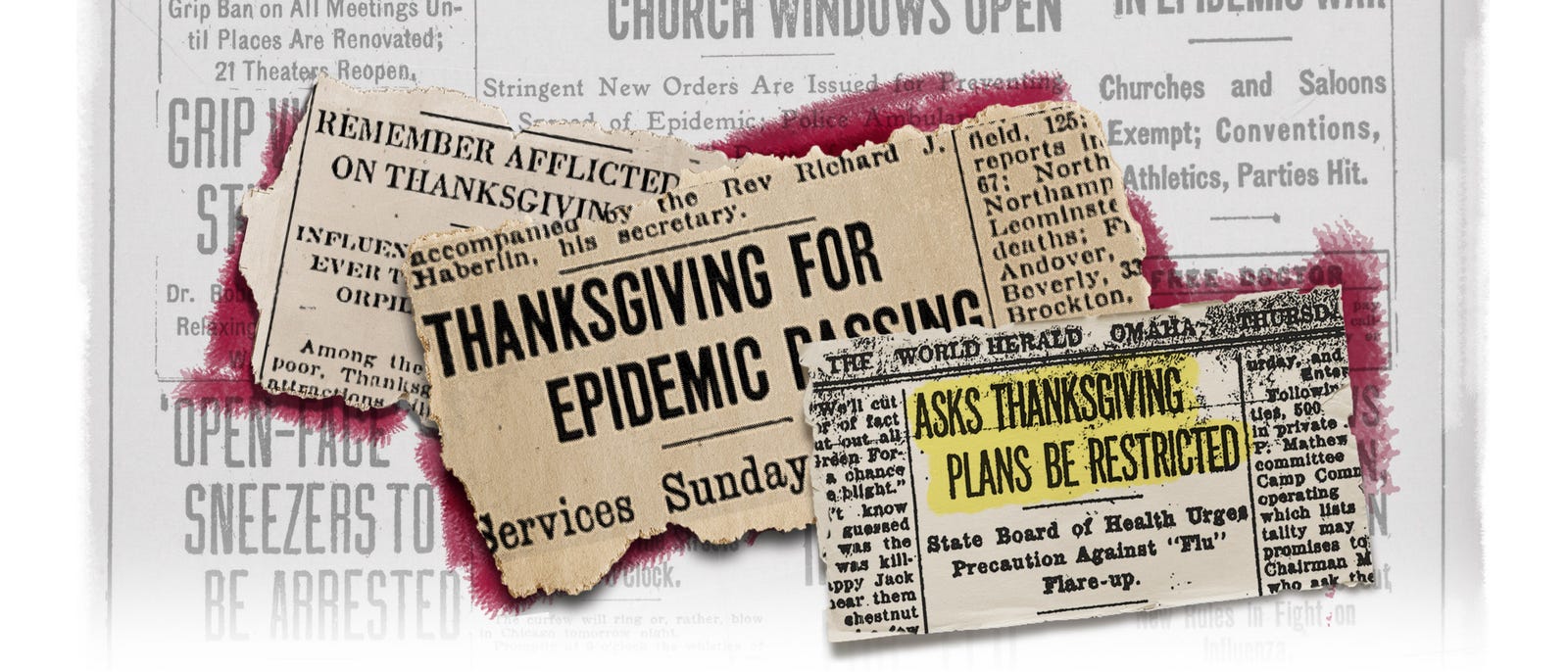
On Thanksgiving more than a century ago, many Americans wereliving under quarantines, and officials were warning people to stay home for the holiday.
Grace Hauck, USA TODAYUpdated 7 hours ago
More than 200,000 dead since March. Cities in lockdown. Vaccine trials underway.
And a holiday message, of sorts:”See that Thanksgiving celebrations are restricted as much as possible so as to prevent another flare-up.”
But it isn’t the message of Thanksgiving 2020. It’s the Thanksgiving Daynotice that ran in the Omaha World Heraldon Nov. 28, 1918, when Americans found themselves in a similar predicament to the millions now grappling with how to celebrate the holiday seasonamid the coronavirus pandemic.
“Every time I hear someone say these are unprecedented times, I say no, no they’re not,” saidBrittany Hutchinson, assistant curator at the Chicago History Museum. “They did this in 1918.”
On Thanksgiving more than a century ago, many Americans…
The Barrens a mile north of Mines was the scene of a hunting accident on Saturday when Samuel F. Harker was accidentally shot by John Miller of Hollidaysburg.
Miller fired at a pheasant and the charge entered the body of Harker who was some distance away, the shot causing death. The dead man was aged 30 years and made his home with his father, Jacob Harker.
Kathlein Heit, 9-year-old daughter of Capt. and Mrs. George Heit, died on the way to the hospital as a result of a gunshot wound sustained in an unusual way. The girl had been visiting at the home of her grandparents, Mr. and Mrs. William Heit of Snake Spring Valley, and was being taken home by her father. A loaded gun in the car exploded and the…
By Jason ZimmermanPublished: Nov. 20, 2020 at 7:05 PM PST|Updated: 17 hours ago
GRAND CHUTE, Wis. (WBAY) – On the eve of the gun-deer season, while hunters were stocking up on last-minute items, meat processors were also preparing for what might be a busier weekend than recent years.
As soon as the sun rises, hunters across the state will begin this year’s deer harvest. Because of the COVID-19 pandemic, participation is likely to be a lot higher.
It was a busy Friday night at stores like Niemuth’s Southside Market in Appleton.
“A lot of people shopping, both Thanksgiving and deer hunting. Food is going out great. We got some good Wagyu steaks, a lot of good steaks going out for deer camp. The hot pickles for the Bloody Mary’s,” Richard Niemuth said.ADVERTISEMENThttps://77aa5539aa6ec22d993a5e4a8dc9767b.safeframe.googlesyndication.com/safeframe/1-0-37/html/container.html
Local meat processors wanted to make sure they’re ready for the crowds this weekend.
John Haen, co-owner of Haen Meats, says he already saw a surge in business during the recent bow hunt.
“COVID, I think a lot more people are spending time outdoors enjoying nature and taking part in the hunt that maybe that didn’t in past years, so something to do.”
In the back parking lot of Haen Meats, trailers are set aside for the harvest. They’re expected to fill up.ADVERTISEMENThttps://77aa5539aa6ec22d993a5e4a8dc9767b.safeframe.googlesyndication.com/safeframe/1-0-37/html/container.html
“During the gun season we do process a large amount of deer, but we do get to a point where we do get full, so we’ll cut as many as we can until we get to that point and then after that we just accept boneless venison because that’s something we can keep frozen,” Haen said.
Last year’s harvest was down by about 50,000 deer, but hunting license sales were up this year and it’s more likely we will see a spike.
TRAVERSE CITY, Mich. — Hunting was a big part of Zane Goucher’s youth, when he pursued whitetail deer and ruffed grouse in the Maine woods with his father. He eventually drifted away from the sport but has returned after a 22-year absence, inspired by the coronavirus outbreak.
Many Americans appear to be doing likewise, as sales of hunting and fishing licenses are spiking in much of the U.S. Weary of being cooped up at home — and of masking and social distancing when they go elsewhere — they’re taking refuge in outdoor sports that offer safety and solitude.
The trend has abruptly reversed a steady decline in hunting’s popularity that once appeared permanent and provided a potential new source of food for families and food banks pressed by the pandemic.
“I’d been meaning to get back into it and just never…
Pork giant Smithfield has settled with North Carolina residents who sued over stench, flies and truck traffic from Kinlaw FarmsAnimals farmed is supported byAbout this content
Barry Yeoman
Fri 20 Nov 2020 11.34 EST
Shares889
Pigs in a pen at a farm in Ayden, North Carolina. Photograph: Callaghan O’Hare/Bloomberg/Getty
A US judge has issued a blistering condemnation of industrial farming practices. The judgment comes as one US meat giant finally settles after a six-year legal battle with plaintiffs who sued the company over the stench, flies, buzzards and truck traffic coming from its industrial swine farms in North Carolina.
J Harvie Wilkinson III, one of the judges in a case that pitted locals against the Smithfield subsidiary formerly known as Murphy-Brown, decried the “outrageous conditions” at Kinlaw Farms, the operation at the center of the lawsuit – “conditions that there is no reason to suppose were unique to that facility”.
“How did it come to this?” wrote Wilkinson, who was nominated to the fourth US circuit court of appeals by then president Ronald Reagan and has served since 1984. “What was missing from Kinlaw Farms – and from Murphy-Brown – was the recognition that treating animals better will benefit humans. What was neglected is that animal welfare and human welfare, far from advancing at cross-purposes, are actually integrally connected. The decades-long transition to concentrated animal feeding operations [CAFOs] lays bare this connection, and the consequences of its breach, with startling clarity.”
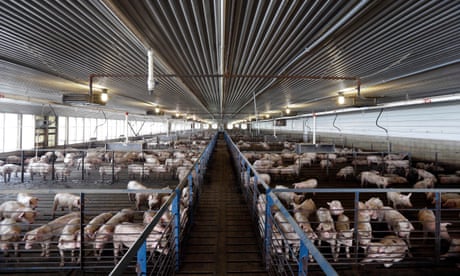
Wilkinson described a system in which pigs were forced to live in enclosures they had outgrown, reducing them “to almost suffocating closeness … The dangers endemic to such appalling conditions always manifested first in animal suffering. Ineluctably, however, the ripples of dysfunction would reach farm workers and, at last, members of the surrounding community.”
His comments concurred with the court’s main opinion.
More than 500 North Carolinians, most of them black, filed more than two dozen lawsuits in 2014. Some lived near farms that had contracts with Smithfield. Others lived near farms owned by the company outright. They described being trapped inside their own homes, sickened by the smell of hog waste stored in open pits, and unable to hang laundry, cook outdoors, or entertain visitors.
The announcement of the company’s decision to settle came immediately after the fourth circuit in Richmond, Virginia, rejected a call from the world’s largest pork producer for a retrial of one of the cases. Juries in 2018 and 2019 had awarded hog farm neighbors almost $550m. The US district court in Raleigh, North Carolina, knocked the awards down to about $98m because of a state law capping punitive damages.
Smithfield’s chief administrative officer, Keira Lombardo, said in a statement: “In the midst of a global pandemic, where food shortages have been commonplace, it is now the time to keep our full attention on the important work of producing good food in a responsible and sustainable way – rather than returning to the court for what would be ongoing and distracting litigation.” Details of the settlement were not disclosed.
Smithfield lost the first five cases that went to trial. It appealed the three largest verdicts, calling the litigation an “almost existential threat” to North Carolina farmers. It claimed the district court had made numerous errors, such as allowing the neighbors’ odor expert to testify while excluding some testimony from Smithfield’s expert.
In the new ruling, a three-judge panel rejected most of the pork producer’s arguments. The company “persisted in its chosen farming practices despite its knowledge of the harms to its neighbors, exhibiting wanton or wilful disregard of the neighbors’ rights to enjoyment of their property,” Judge Stephanie Thacker, an Obama nominee, wrote for the court.
The appellate judges did agree with Smithfield on one point: that the plaintiff’s lawyer improperly used the parent company’s financial data to convince jurors that punitive damages had to be large enough for the pork giant to feel. The appellate ruling said jurors should not have heard those details. “We fail to see what value the parent company financial evidence would have that could possibly outweigh the substantial risk of prejudice it carries in that delicate context,” wrote Thacker.
Elsie Herring, a plaintiff in another of the cases, said she was pleased that the court had sided with the neighbors on most issues. “Our lives have been destroyed by the industry,” she said. The North Carolina law firm Wallace & Graham, which represented the plaintiffs, did not respond to questions about the settlement. It said in a statement that the appellate court “fully got the truth” of its clients’ struggles.