Wolf populations continue to be dangerously low all around the United States and these apex carnivores, so crucial to their ecosystems, now occupy only 15 percent of their historic range in this country.Photo by Richard Seeley/iStock.com1.2KSHARES
Wisconsin, which has a history of decimating its wolf population, is once again raring to open season on these animals soon after a federal rule stripping Endangered Species Act protections for wolves in the lower 48 states goes into effect in January.
At a September meeting of the Wisconsin Natural Resources Board, a governor-appointed group that sets policy for the state’s Department of Natural Resources, members pushed for a wolf hunt to occur immediately upondelistingand recommended bypassing the important step of letting state residents weigh in on the decision.
Today, the Humane Society of the United Statessent a letterto Wisconsin’s Gov. Tony…
If the federal government is serious about building our economy back better and more resilient, it should help this declining fur industry make the transition to something better.Author of the article:Michèle HamersPublishing date:Nov 19, 2020•Last Updated 1 day ago•3 minute read
Minks at farmer Stig Sørensen’s estate where all minks must be culled due to a government order on Nov. 7, 2020 in Bording, Denmark. PHOTO BY OLE JENSEN/GETTY IMAGES.PHOTO BY PHOTO BY OLE JENSEN/GETTY IMAGES.
In April 2020, when news first hit that farmed mink in the Netherlands were able to contract and transmit COVID-19 to humans, I experienced another spike of anxiety. As an immigrant from the Netherlands who made the tough decision to stay in Canada during the pandemic, this news added to my feeling of powerlessness, especially since my family and friends live in the province of North-Brabant where most mink farms are located…
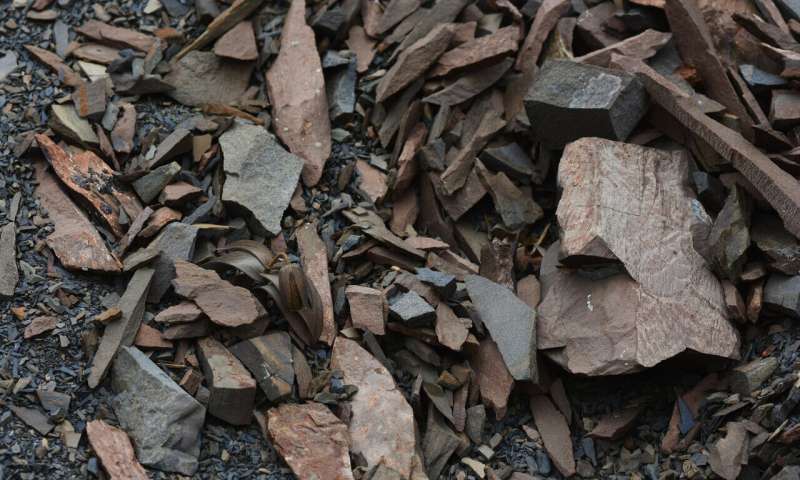
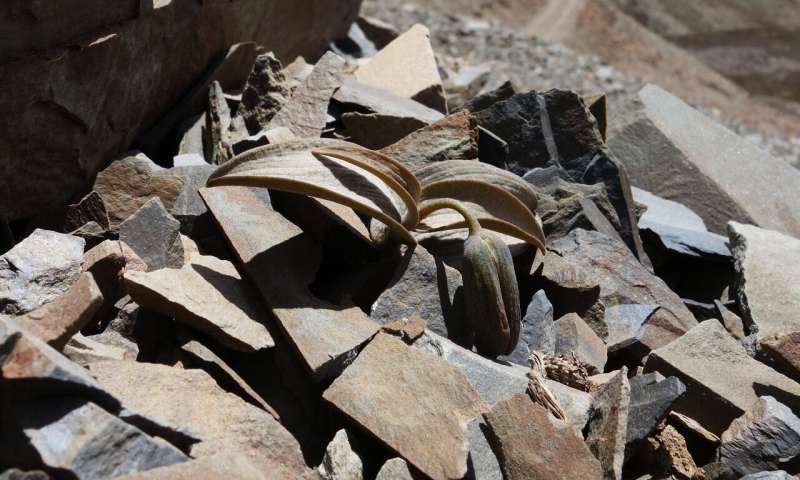
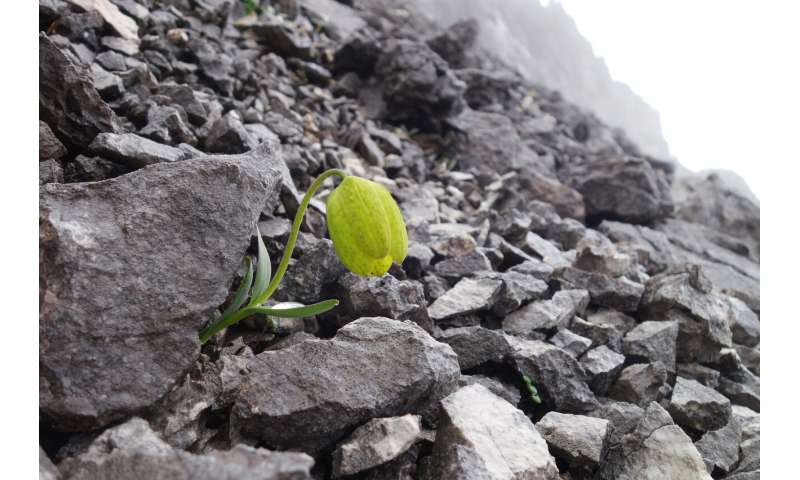
Fritillaria delavayi in a population with high harvest pressure. Credit: Yang Niu
A plant used in traditional Chinese medicine has evolved to become less visible to humans, new research shows.
Scientists found that Fritillaria delavayi plants, which live on rocky slopes of China’s Hengduan mountains, match their backgrounds most closely in areas where they are heavily harvested.
This suggests humans are “driving” evolution of this species into new colour forms because better-camouflaged plants have a higher chance of survival.
The study was carried out by the Kunming Institute of Botany (Chinese Academy of Sciences) and the University of Exeter.
“It’s remarkable to see how humans can have such a direct and dramatic impact on the colouration of wild organisms, not just on their survival but on their evolution itself,” said Professor Martin Stevens, of the Centre for Ecology and Conservation on Exeter’s Penryn Campus in Cornwall.
“Many plants seem to use camouflage to hide from herbivores that may eat them—but here we see camouflage evolving in response to human collectors.
“It’s possible that humans have driven evolution of defensive strategies in other plant species, but surprisingly little research has examined this.”
Fritillaria delavayi in a population with high harvest pressure. Credit: Yang Niu
In the new study, the researchers measured how closely plants from different populations matched their mountain environment and how easy they were to collect, and spoke to local people to estimate how much harvesting took place in each location.
They found that the level of camouflage in the plants was correlated with harvesting levels.
In a computer experiment, more-camouflaged plants also took longer to be detected by people.
Fritillaria delavayi is a perennial herb that has leaves—varying in colour from grey to brown to green—at a young age, and produces a single flower per year after the fifth year.
Fritillaria delavayi in a population with low harvest pressure. Credit: Yang Niu
The bulb of the fritillary species has been used in Chinese medicine for more than 2,000 years, and high prices in recent years have led to increased harvesting.
“Like other camouflaged plants we have studied, we thought the evolution of camouflage of this fritillary had been driven by herbivores, but we didn’t find such animals,” said Dr. Yang Niu, of the Kunming Institute of Botany. “Then we realised humans could be the reason.”
Professor Hang Sun, of the Kunming Institute of Botany, added: “Commercial harvesting is a much stronger selection pressure than many pressures in nature. “The current biodiversity status on the earth is shaped by both nature and by ourselves.”
The paper, published in the journal Current Biology, is entitled: “Commercial harvesting has driven the evolution of camouflage in an alpine plant.”
(CNN)As the coronavirus surges unchecked across the United States, officials at the Centers for Disease Control and Prevention on Thursday urged Americans not to travel for Thanksgiving, and to celebrate only with members of their own households.”What is at stake is the increased chance of one of your loved ones becoming sick and then being hospitalized and dying around the holidays,” said Henry Walke, the CDC’s Covid-19 incident manager.The appeal, issued at the first CDC press conference in months, came on the same day that the nation reported more than 185,000 new coronavirus cases and 2,000 deaths in 24 hours — yet another grim record. More than a quarter-million Americans have died of Covid-19, exceeding public health officials’ worst predictions. Now, experts are forecasting 471,000 Americans will die from the virus by March.Still, many are planning to celebrate with friends and family this Thanksgiving — one of the most heavily traveled weeks of the year — as shown by the hours-long lines at Covid-19 testing centers in some cities. But even for those that can get tested, experts warn a negative result doesn’t guarantee you’ll be Covid-free by the time relatives, old and young, gather around the table for the turkey to be carved.Content by AmazonSmall town company’s big time growth through AmazonSince 2010 Amazon has invested over $270 billion in the US, including infrastructure and compensation to our employees – $72 billion in 2018 alone.As the US tries to make it through a coronavirus Thanksgiving unscathed, Europe is already worried about Christmas.Europe’s leaders have forced hundreds of millions of people back into lockdown to combat a second wave of the virus, in the hopes that the crisis will improve by the holidays. Someone in Europe died from Covid-19 every 17 seconds over the past week, WHO Europe’s Regional Director Hans Kluge said Thursday. But there are some positive signs that tier-based systems of restrictions are beginning to work: Cases dropped by 10% across the continent last week.close dialog
Do you want the news summarized each morning?We’ve got you.Sign Me UpBy subscribing you agree to ourprivacy policy.“It’s a small signal, but it’s a signal nevertheless,” Kluge said.
YOU ASKED. WE ANSWERED
Q: Is it still safe to go to the gym?A:It seems to be at one Virginia gym. Velvet Minnick, the owner and head coach of 460 Fitness, thought she had a nightmare scenario on her hands when she learned that 50 athletes were potentially exposed to Covid-19 by one of the gym’s coaches. But not a single member ended up contracting the virus, thanks to the extra safety precautions and ventilation measures she put in place.When Virginia entered Phase 2 of reopening in June and gyms were allowed to reopen, Minnick consulted one of her members — a professor of civil and environmental engineering at Virginia Tech — for help making the facility safe. Lindsey Marr, who joined 460 Fitness about two years ago, has an expertise in airborne transmission of viruses, air quality and nanotechnology.Among the measures she put in place: Opening bay doors around the facility, workout stations spaced 10 feet apart, no sharing equipment, no traveling around the gym, and a carbon dioxide monitor to track indoor levels — a good indicator of whether viruses are building up in the air.Send your questions here. Are you a health care worker fighting Covid-19? Message us on WhatsApp about the challenges you’re facing: +1 347-322-0415.
WHAT’S IMPORTANT TODAY
Europe averted a Covid collapse — here’s what the US could learnCovid-19 is spreading faster than ever in the US, with hospitals in some states running at capacity. America is now in the same situation that France, Belgium and the Czech Republic were last month, when rapidly rising infections put their health care systems weeks away from collapse.For now, these countries have managed to avoid the worst-case scenario, in which people die because hospitals are full and they can’t access the care they need. They slowed down the epidemics by imposing lockdowns — a strategy that the US could learn from. The problem: Many governments are still making decisions based on politics, not science, Ivana Kottasová writes.”By no means what we have done in Europe is perfect, these governments are probably reacting a little bit slowly, but they are at least reacting, they are doing what they can to make sure that health services are not overwhelmed … and I think this is clearly what’s needed in the US,” said one expert and UK government scientific adviser.First White House Covid briefing in months presents two divergent realitiesStanding in front of a map of the US awash in red, the White House coronavirus response coordinator appeared with other top health officials for the first time in months on Thursday. Dr. Deborah Birx delivered a grim assessment of the rapidly worsening pandemic — spurred in part by a cold snap in the country’s heartland — and urged Americans to “increase their vigilance” as they eagerly await a vaccine.Dr. Birx, once a senior member of the task force, said she’s been traveling the country trying to encourage governors and other state and local leaders to enact measures that will stop the spread of the virus, repeatedly urging people to wear masks — and wearing one herself throughout the briefing. But she’s had mixed results at best — including getting through to the Trump administration itself.Striking a dramatically different tone, Vice President Mike Pence offered a far rosier assessment of the pandemic in America, saying the US “has never been more prepared” to take on the virus, as he spoke out against the need for nationwide lockdowns and school closures.Dr. Birx speaks at a coronavirus task force briefing at the White House on Thursday.WHO says remdesivir should not be used on hospitalized Covid patientsThe WHO has advised against using the antiviral drug remdesivir to treat hospitalized patients, no matter how severe their illness may be. According to the update, published in the medical journal the BMJ, current evidence does not suggest remdesivir affects the risk of dying from Covid-19 or needing mechanical ventilation, among other important outcomes.WHO’s new update comes about a month after Gilead Sciences, the maker of remdesivir, announced that the US Food and Drug Administration approved the drug for the treatment of coronavirus infection. Remdesivir became the first coronavirus treatment to receive FDA approval. On Thursday, FDA gave emergency use authorization to a combination of remdesivir and the rheumatoid arthritis drug baricitinib to treat suspected or confirmed cases of Covid-19.Remdesivir may have received FDA approval but not WHO’s recommendation because of emerging research, said Dr. Amesh Adalja, senior scholar at the Johns Hopkins Center for Health Security, who was not involved in the WHO guidance. Studies initially showed some benefit against Covid-19, but as more data accumulates, that appears to be changing.
ON OUR RADAR
US Treasury Secretary Steven Mnuchin is pulling the plug on funding for emergency Federal Reserve, as the pandemic continues to rage across America.
Supervisors at a Tyson meat plant in Iowa took bets on how many workers would get infected with Covid-19, even as they denied knowledge of the spread of the virus, according to new allegations in a lawsuit against the company and some employees.
Mexico has surpassed 100,000 Covid-19 deaths — making it the fourth country to hit the grim milestone, after the US, Brazil and India.
South Australia will lift its six-day lockdown on Saturday — a few days before originally planned — after health authorities found that a person lied to contact-tracing officials.
Japan has recorded yet another daily high of Covid-19 cases, but the government says no state of emergency is needed.
TOP TIPS
Public health experts have made it abundantly clear that you should not travel for Thanksgiving, or celebrate with people outside of your immediate household. But still, it’s tough to thwart tradition — especially when it means saying “no” to your family.If you opt to bail on Thanksgiving plans this year, etiquette experts say it’s a good idea to express your choice as a personal one. Here are some more tips on declining invitations in the name of Covid, and how you might consider giving thanks a bit differently this year.
TODAY’S PODCAST
“You’re one handshake away from heaven with this virus.” — Reverend David Sealy’s doctorReverend Sealy’s congregation needs him for many things — socially distant services, phone calls, and funerals for those who’ve died from Covid-19. The problem is, he’s at high risk himself. CNN Senior Writer Thomas La
A “fossil galaxy” has been found hidden inside of our Milky Way.
The discovery of the long-dead galaxy could change our understanding of the history of the Milky Way, and how it became the vast web of stars that surrounds us today.
The fossil, known as Heracles, is thought to have collided with the Milky Way 10 billion years ago, when our galaxy was still at a very young age.
Its remnants make up about a third of Milky Way’s spherical halo, researchers report. But despite its vast scale, astronomers were not able to see it until they uncovered detailed information about tens of thousands of stars.
Dr Ricardo Schiavon, of Liverpool John Moores University’s Astrophysics Research Institute, said: “To ‘catch sight’ of that galaxy is awesome.
In August 2019, Iceland held a funeral for the Okjökull Glacier, the first Icelandic glacier lost to climate change. The community commemorated the event with a plaque in recognition of this irreversible change and the grave impacts it represents. Globally, glacier melt rates have nearly doubled in the last five years, with an average loss of 832 mmw.e. (millimeters water equivalent) in 2015, increasing to 1,243 mmw.e. in 2020 (WGMS). This high rate of loss decreases glacial stores of freshwater and changes the structure of the surrounding ecosystem.10 Sec
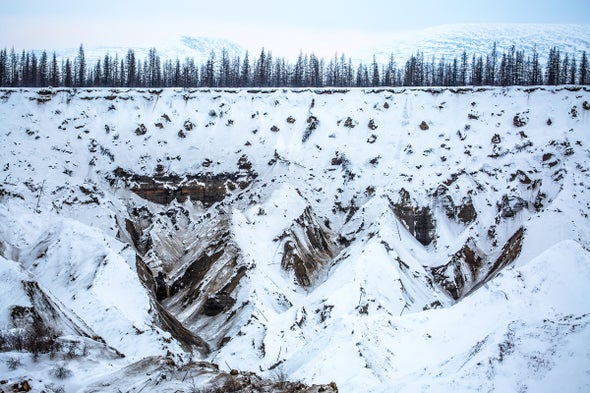
In the last 10 years, warming in the Arctic has outpaced projections so rapidly that scientists are now suggesting that the poles are warming four times faster than the rest of the globe. This has led to glacier melt and permafrost thaw levels that weren’t forecast to happen until 2050 or later. In Siberia and northern Canada, this abrupt thaw has created sunken landforms, known as thermokarst, where the oldest and deepest permafrost is exposed to the warm air for the first time in hundreds or even thousands of years.
As the global climate continues to warm, many questions remain about the periglacial environment. Among them: as water infiltration increases, will permafrost thaw more rapidly? And, if so, what long-frozen organisms might “wake up”?ADVERTISEMENT
Permafrost covers 24 percent of the Earth’s land surface, and the soil constituents vary with local geology. Arctic lands offer unexplored microbial biodiversity and microbial feedbacks, including the release of carbon to the atmosphere. In some locations, hundreds of millions of years’ worth of carbon is buried. The layers may still contain ancient frozen microbes, Pleistocene megafauna and even buried smallpox victims.As the permafrost thaws with increasing rapidity, scientists’ emerging challenge is to discover and identify the microbes, bacteria and viruses that may be stirring.
Some of these microbes are known to scientists. Methanogenic Archaea, for example metabolize soil carbon to release methane, a potent greenhouse gas. Other permafrost microbes (methanotrophs) consume methane. The balance between these microbes plays a critical role in determining future climate warming.
Others are known but have unpredictable behavior after release. New evidence of genes moving between thawing ecosystems indicates a restructuring at multiple levels. In the Arctic Ocean, planktonic Chloroflexi bacteria recently acquired genes used for degrading carbon from land-based Actinobacteria species. As melt-swollen Arctic rivers carried sediments from thawing permafrost to the sea, the genes for processing permafrost carbon were also transported.
Permafrost thaw in Siberia led to a 2018 anthrax outbreak and the death of 200,000 reindeer and a child. But the hardy spores of Bacillus anthracis may represent an exception to the brutal freeze-thaw cycle that degrades more delicate bacterial and viral pathogens. Their adaptable characteristics have allowed them to remain frozen and viable over centuries of inactivity.
Organisms that co-evolved within now-extinct ecosystems from the Cenozoic to the Pleistocene may also emerge and interact with our modern environment in entirely novel ways. A potential example, the emerging Orthopoxvirus species Alaskapox causing skin lesions, has appeared and disappeared in Alaska twice in the last five years. It is possible that the virus was transmitted through animal-human contact, but this novel virus’s origin remains unknown.https://112a65d74e1de1d0ca21c1453242b3e1.safeframe.googlesyndication.com/safeframe/1-0-37/html/container.htmlADVERTISEMENT
The microbiomes of the Arctic contain resilient and tenacious cold-adapted microbes. Some species survive as psychrophiles, a type of specialist specieshighly adapted to prolonged exposure to subfreezing conditions. These species may be lost with warming. Others survive by being highly adaptable, inhabiting many, varied niches. Understanding more about these generalists’ ecology and genomic diversity offers a window into the microbiome of the New Arctic. These generalist microbes that adapt to diverse conditions are the likely winners, as we lose the cryosphere.
And then there are microbes that are entirely unfamiliar to scientists, which may represent a novel threat.
It is clear that the warmer we make the Arctic, the weirder it will get, as temperatures at the surface become more extreme and thawing deepens. With the coalescence of microbes reawakening from the deep and surface conditions unprecedented in human history, it is challenging to assess risks accurately without improved Arctic microbial datasets. We should pay attention to both known unknowns, such as antibiotic-resistant bacteria,and unknown unknowns, including the potential risks from the resurrection of ancient and poorly described viral genomes from Arctic ice by synthetic biologists.
Let’s imagine we were giving an award for the worst social problem in the world today. Do you have any nominations?
International conflict? Racialprejudice? Environmental destruction? Millions of homeless refugees? Exploitation of women? There’s one problem that connects all of those, but politicians are often silent about it.
Overpopulation may not be the root of all evil, but it is indeed at the root of many of the world’s other miseries.
Just do the math. As a minimum, every additional person needs a certain quantity of food to eat and clean water to drink. Extra people could, in theory, live without roofs over their heads, but no one wishesfor a world with more homeless people. Beyond basic needs for food, water, and shelter, more people need more energy—to light their homes and cook…
Nicholas Stern, the former chief economist of the World Bank, calls climate change the ‘greatest and widest-ranging market failure ever seen’. Photograph: David McNew/Getty Images
The massive wildfires that have been rampaging across the American west this year are not purely natural disasters. They are partly products of theunnatural disaster of climate change – “unnatural”, in that the ultimate responsibility for global warming belongs not to physics but to our economic system. Nicholas Stern, the former chief economist of the World Bank, calls climate change the “greatest and widest-ranging market failure ever seen”. Sadly, climate change is only one – albeit a whopper – of the countless market failures that degrade our lives.
Though it sounds like a generic phrase, “market failure” is actually a technical term. It doesn’t refer to scams like insider trading or corporate fraud. A failure occurs when the marketplace allocates resources in a way that does not optimally deliver wellbeing. We understandably focus a lot of attention on the depredations of greedy tycoons and corporations, but many of the most consequential market failures stem from innate characteristics of our current market system.
Many of us probably already have a gut feeling that our current market system often fails. In order to build a more sustainable, just and prosperous economy, however, it’s vital that we better comprehend the shortcomings deep in the market’s DNA. Greater awareness would reduce blind faith in the market and enable people to see the market for what it is: a tool. It can be an excellent tool when used for the right job, but relying on the market to deal with something like climate change is like trying to pound nails with a saw.Advertisement
One major inherent flaw involves communication. In an ideal version of the market, continuous indirect communication between consumers and producers leads to the best allocation of society’s resources. Consumers make their desires known by the prices they’re willing to pay, and producers convey their costs by the prices they charge.
However, producers only communicate a narrow range of costs. For example, an oil company will account for typical expenses, like payments to its employees, and then set its prices accordingly. Consumers will receive those price signals and decide whether to buy that company’s gasoline. But markets enable businesses to scrub most social and environmental costs from these signals, which garbles communication with consumers. For instance, the price of gas doesn’t reflect the cost of the revved-up wildfires we suffer due to the additional global warming caused by burning that oil company’s gasoline. Numerous studies estimate that the true cost of gas is two to four times higher than what we pay at the pump.
Incomplete communication misleads us consumers into buying products laden with hidden costs. Countless goods and services bear the stains of harms such as pollution, habitat destruction, floods, child labor, extinctions and disease. When we fill up at the gas station the price we are charged doesn’t tell us that our purchase increases the odds that a wildfire will burn down our community. Making such partially informed choices is like buying a house having seen only the kitchen.
Another characteristic of the market that leads to failure is its inability to provide incentives for businesses to produce or protect public goods, such as fire departments or city parks. Most important, the market doesn’t generate the public goods sometimes known as “ecosystem services”, such as nutrient cycling, soil formation, oxygen creation and a livable climate. Many of these essential services operate in the background; like plumbing and wiring, they go unnoticed and unappreciated unless they fail.
Purposeful collective action is the overarching solution to market failures
Take the flooding that drowned parts of coastal Louisiana and Mississippi in 2005 when Hurricane Katrina thrashed the Gulf coast. More than 1,800 people died, cherished communities disintegrated, and the price tag swelled to more than $100bn. Much of the devastation occurred because oil and gas development had decimated the coastal marshes that previously had tamed storm surges. The protection those marshes provide is an extremely valuable ecosystem service, yet no entrepreneurs hustle to produce that protection.
And why would they? The market doesn’t give private businesses a profit motive to produce public goods. For example, even if a company were to restore a marsh, they wouldn’t be able to sell that service because they couldn’t exclude anyone living on that coast from using that protection for free.
Private restoration companies exist, of course, and some make a profit by rehabilitating marshes. But market forces didn’t spawn these outfits. At some point somebody recognized the value of the marshes and made a conscious choice to try to preserve or restore them. Most likely a number of somebodies made that choice and pressed their government to hire a restoration company. More broadly, environmental and social projects happen when a great many somebodies vote for candidates who support such efforts. Such purposeful collective action is the overarching solution to market failures. Instead of passively counting on supply and demand to provide everything we need, we sometimes need to exert our judgment.
And there it is, the J-word: “judgment”. Free-enterprise disciples view most efforts to use our collective judgment to shape the economy as central planning that will foul the gears of the market. But banishing judgment about how to allocate our resources will result in a world with plenty of video game consoles and fashionable shoes and precious little biodiversity and climate stability – and, all too soon, biological poverty and climate chaos will also cripple the economy of stuff, and video game consoles and shoes will become scarce, as well.
Citizens who scorn judgment should note that we’ve exercised some collective judgment to help guide the economy since the advent of government. The problem is that we’re not exercising it enough. In recent decades we’ve gotten out of balance and are leaning too far toward an unrestrained market even when it’s the wrong tool for the job.
Consider your toaster. It’s loaded with hidden costs that the market doesn’t communicate and that individual consumers can’t be expected to discover. But government (well, good government that pays attention to science) has the expertise to evaluate your toaster. If we citizens decide that we want to address climate change and air pollution, then government can do our bidding by devising energy efficiency standards for our appliances.
In fact, they did, decades ago. According to the American Council for an Energy-Efficient Economy, those regulations have saved more than $1tn to date and have reduced greenhouse gas emissions by the equivalent of the annual emissions of 800m cars. And we don’t even know the standards are there – hardly the heavy hand of government that haunts free-marketeers’ fever dreams.
So let’s use our judgment to create an economy that better aligns with our values. Instead of surrendering our autonomy to the soulless mechanics of the market, we can freely choose to grow beyond being mere consumers and become forceful citizens.
Robert S Devine is the author of Bush Versus the Environment and The Sustainable Economy: The Hidden Costs of Climate Change and the Path to a Prosperous Future
Denmark was forced to mass-cull its farmed mink population after mutated strains of Covid-19 had transferred to humans. Will this be the moment fashion cuts ties with fur for good?
Last week, Denmark announced it would be undertaking a mass cull of the country’s farmed mink population after mutated strains of Covid-19 had transferred to humans, infecting at least 12 people. The international concern is that the mutation could jeopardise the effectiveness of any potential vaccines, including the formulation announced this week by Pfizer.
Denmark is the world’s most prolific producer of mink pelts: with between 15 and 17 million of the animals housed in more than 1,000 mink farms when the cull was announced (meaning the mink population is at least treble that of Denmark’s human one). The mink are bred purely for their fur, much of which ends up being made into clothing, as well as furniture and soft furnishings. Although latest reports indicate that the cull has been scaled back to infected areas in face of growing opposition and questions over the government’s legal advice, this could prove to be a crucial turning point for the global fur trade.
The scale of the cull –– indicative of the appetite among brands and consumers for fur –– is perhaps surprising, given that the fashion industry’s taste for fur is seemingly on the wane. Over the past few years a roster of high profile brands including Prada, Burberry, Gucci, Chanel, Versace, Armani, and DKNY have all pledged to stop using fur altogether: some ceasing use of all pelts including mink, chinchilla, and rabbit, with others going even further and halting production of anything made of exotic animal skins and angora, too.
This anti-fur stance has been gaining traction among retailers as well. The Yoox Net-a-Porter group stopped selling fur in 2017, while last year Farfetch and Macy’s declared their intentions to do the same. As for the catwalk, in 2018 the British Fashion Council vowed that London Fashion Week’s catwalks would no longer feature fur, and the British government is now considering banning all sales of fur after Brexit (fur farming itself was made illegal in the UK in 2000). The manufacture and sale of new fur products is also banned in California and even the Queen has got in on the act, making a switch to faux fur last year (according to Lyst, Buckingham Palace’s announcement on the matter in November 2019 led to a 52 per cent increase in viewing of faux fur products.)
These kinds of industry pledges are increasingly welcome as the public perception of fur continues to sour. No longer the marker of luxury it was, fur is now often seen as a retrograde product mired in unjustifiable ethical issues. The rise of innovative fur alternatives has also helped. While Shrimps, Maison Atia, and Stand Studio renew the desirable status of faux fur on a season-by-season basis, Stella McCartney is continuing to pioneer sustainable alternatives via its Koba Fur Free Fur (made from a mix of plant products and recycled polyester) which is engineered to look and feel like fur, minus the animal cruelty.
So, will this mink cull force the fashion industry to finally kill off its fur trade? It’s hard to tell. Most of Denmark’s mink pelts are exported to China, where demand remains strong. But the fur industry has undoubtedly taken a downward turn in recent years. Although the British Fur Trade Association and auction houses such as Saga Furs claim that younger consumers are increasingly turning to fur, overall sales seem to be dropping. Between 2015 and 2018, global fur sales fell from $40 billion to $33 billion, while mink prices have apparently declined from €59 a pelt in 2013 to just €19 in September 2020.
As the pandemic continues to put strain on an already ailing industry, perhaps it also provides a useful moment to pause and once more question the validity of fur’s presence in the fashion industry at all. This could be the time to say goodbye to it — for good.
MANISTEE COUNTY, MI – Michigan State Police say a hunter died shortly after he shot a doe in Manistee County.
A DNR conservation officer said Gregg Salisbury, 61, of Portage was found dead near his friend’s home in Onekama Township at 10 p.m. on Monday. He had been reported missing at approximately 8 p.m.
There are no indications of foul play at the scene, police said. Family and friends indicate Salisbury had an extensive history of medical issues, which are believed to be a factor…




 Dr. Birx speaks at a coronavirus task force briefing at the White House on Thursday.WHO says remdesivir should not be used on hospitalized Covid patientsThe