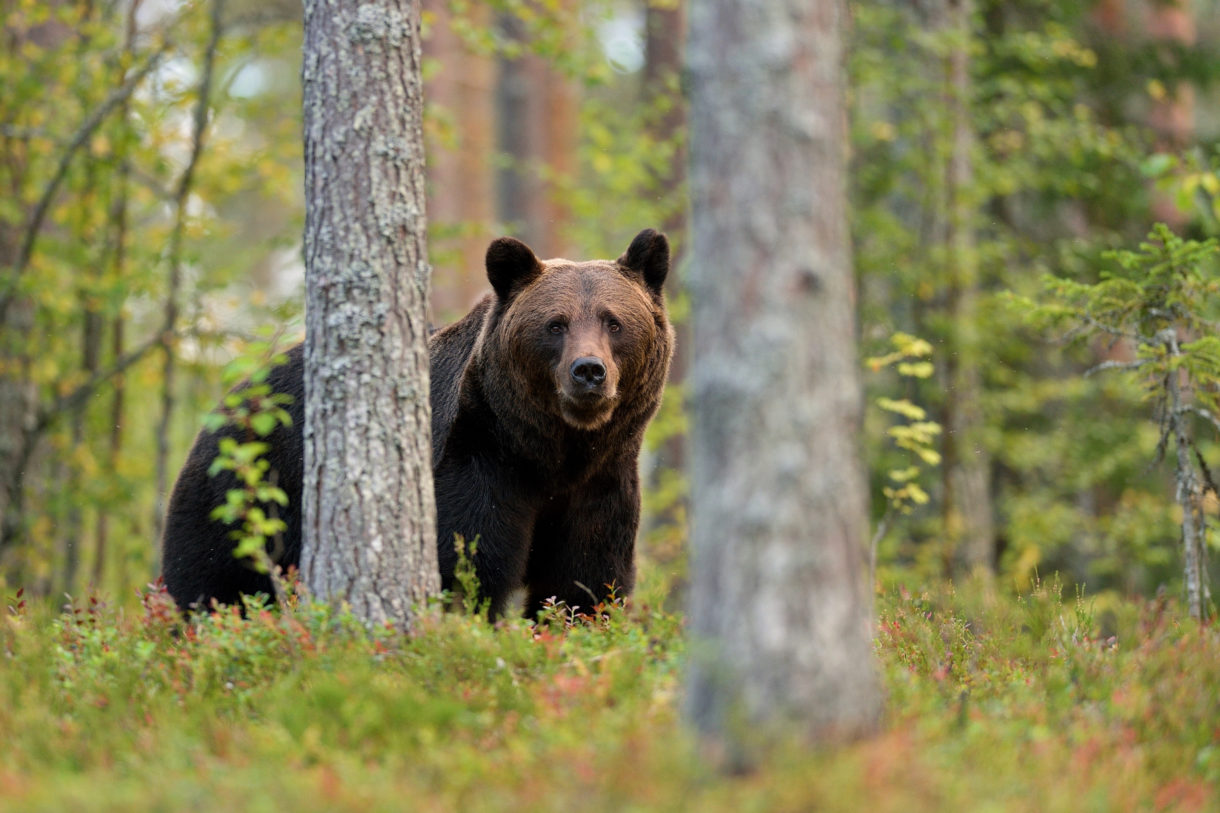
Trophy hunters target bears who are weak and unable to fully protect themselves. Often their victims are mother bears with cubs born during hibernation.Photo by Frank Leung/iStockphoto156SHARES
As black bears work extra hard to pack on the pounds and prepare for the barren winter months ahead, trophy hunters are rampaging through their habitats, slaughtering these iconic animals so they can hang their heads on walls. Some states are even allowing these hunters to use dastardly practices like bear baiting–leaving piles of rotting donuts and pastries to attract bears and shoot them—and hound hunting—the practice of having GPS-collared hounds chase down the animals.
Trophy hunting of bears is now in full swing in most states, including in New Jersey, where 336 bears have beenslaughteredsince the state opened its season last month. This number includes cubs, who have no protections in the…
ABiden victory likely signals a sea change in federal policy approaches in ways that should be beneficial for large mammals like grizzly bears. While Biden may not have a grizzly-policy per se, his platform addresses key issues—such as climate change and conservation—that will impact the health of grizzlies as a part of the large landscapes of the Mountain West.
Here’s a quick primer on where we expect positive changes:
As part of the cabinet, the Secretary of the Interior is appointed by the president, and oversees succeeding government agencies such as U.S. Fish and Wildlife, the National Park Service, and the Bureau of Reclamation. These agencies’ on-the-ground work significantly impacts the conservation (or lack thereof) of our public lands and the creatures who roam through those areas.
Under a Biden administration, we can expect presidentially-appointed officials who more genuinely support conservation over development. Additionally, Biden has committed to banning new oil and gas development on public lands. While there isn’t much research vis-a-vis fracking’s impact on grizzlies, energy development comes hand-in-hand with new road building, and as a 2019 study from the University of Alberta showed, more roads simply equals fewer grizzlies. “Not only do bears die near roads,” commented author of the study, Clayton Lamb, to Science Daily, but “bears also avoid these areas, making many habitats with roads through them less effective.”
Not to be overlooked, the Biden-Harris platform also includes conserving 30 percent of America’s lands and waters by 2030. This “30 by 30” goal is ambitious; according to Scientific American, however, it could have bipartisan support under a Biden Administration and is considered by many to be the “last best hope for saving many of the United States’ iconic species and wild places.”
Climate Change
The argument that succeeded in keeping grizzlies on the Endangered Species List hinged on climate change, and specifically, uncertainty around how bears would respond to declines in whitebark pine seeds. The seeds are an important food source for bears and are diminishing due to warming-accelerated beetle infestations, shrinking habitable territory, and intensifying wildfire cycles.
President Trump has an equivocally poor record on climate policies and environmental protections. His administration has rolled back nearly 100 environmental rules, in sectors ranging from wildlife protections to drilling to air pollution. In contrast, Biden has committed to re-entering the Paris Climate Agreement, reinstating regulations on methane pollution from fracking, and achieving net-zero emissions by 2050.
In short, we’re relieved and enthusiastic to look ahead to days in which the large landscapes of the West—an integral element of our communities and culture—are valued for the immense, irreplaceable resources that they are.
More Americans are happy that President Donald Trump lost his reelection bid than are happy that President-elect Joe Bidenwon the election, according to a Monmouth University poll.Play VideoPresident-elect Biden says ‘it’s an embarrassment’ that President Trump isn’t concedingClick to expand
About one-third of the country said they are “happy” that Trump lost the Nov. 3 presidential election compared withone-quarter of Americans who say they are happy that Biden won.
An additional 18% said they were “satisfied” with Trump’s loss, compared with 28% who were “dissatisfied” and 10% who were “angry.”
Wed 18 Nov 202012.31ESTLast modified on Wed 18 Nov 202014.58EST
Shares612
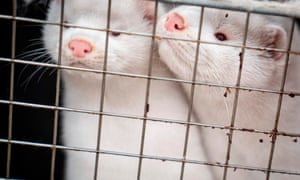
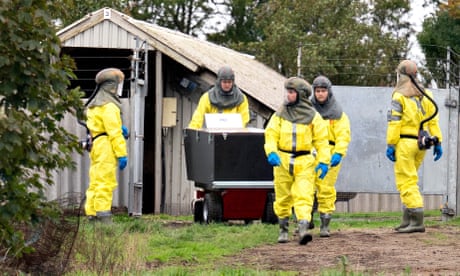
Danish farmers have until midnight on Thursday 19 November to cull all mink in the country. Photograph: Mads Claus Rasmussen/Ritzau Scanpix/AFP/Getty
Seven countries are now reporting mink-related Sars-CoV-2 mutations in humans, according to new scientific analysis.
The mutations are identified as Covid-19 mink variants as they have repeatedly been found in mink and now in humans as well.
Uncertainty around the implications of the discovery of a Covid-19 mink variant in humans led Denmark, the world’s largest mink fur producer, to launch a nationwidecullearlier this month.
The cull was sparked by research from Denmark’s public health body,the…
Wed 18 Nov 2020 12.31 ESTLast modified on Wed 18 Nov 2020 14.58 EST
Shares612
Danish farmers have until midnight on Thursday 19 November to cull all mink in the country. Photograph: Mads Claus Rasmussen/Ritzau Scanpix/AFP/Getty
Seven countries are now reporting mink-related Sars-CoV-2 mutations in humans, according to new scientific analysis.
The mutations are identified as Covid-19 mink variants as they have repeatedly been found in mink and now in humans as well.
Uncertainty around the implications of the discovery of a Covid-19 mink variant in humans led Denmark, the world’s largest mink fur producer, to launch a nationwide cull earlier this month.
The cull was sparked by research from Denmark’s public health body, the Statens Serum Institut (SSI), which showed that a mink variant called C5 was harder for antibodies to neutralise and posed a potential threat to vaccine efficacy.Advertisement
Denmark, the Netherlands, South Africa, Switzerland, the Faroe Islands, Russia and the US have all reported cases of mink-related mutations.
Despite a political backlash the cull has continued, and farmers have until midnight on Thursday to cull all mink in the country. However, the row over the cull has forced the resignation of the Danish agriculture minister, Mogens Jensen.
SSI director Kåre Mølbak has also said he would resign. It was the SSI’s findings on reduced antibody efficacy that led to the cull order. Mølbak told local media he is retiring because he is 65 and denied it was related to the mink cull.
Until now there had been no widespread reports of mink variants in humans outside Denmark. But scientists uploading virus sequencing and variant information to Gisaid, a global database initiative, said there have been signs of the mink variants around the world.
“We knew there were these mink variants in seven countries, but we only had about 20 genomes of each, which is very few. Then last week the Danes uploaded 6,000 genome sequences and with those we were able to identify 300 or more of the mink variant Y453F in viruses having infected humans in Denmark,” said University College London (UCL) Genetics Institute director Francois Balloux.
Asked about the implications of the findings, Balloux said it was an indication of the need to cull farmed mink. “A bigger host reservoir means more infections in humans. The main point here, I think, is that although the mutation might not be scary, there is still very good reason to get rid of the mink reservoir. We just don’t need it.” In Denmark, he added, they have a lot of mink, “over three times more than humans”.
The prevalence of Danish mink-related mutations is evident in the Gisaid database. “Denmark has 329 F-variant sequences, which roughly maps to as many individuals, although there may be some duplicates,” said Prof Seshadri Vasan from the University of York, who analysed the database for the mink variants. “The Netherlands has six. South Africa and Switzerland have two each, while the Faroe Islands, Russia and Utah [US] have one each.”
Asked how the spread might have happened, Vasan said that given some of the human and mink F-variants were from samples collected in Denmark in June, it might be that “movement of people, animals or goods could have spread the F-variant to other countries”.
But, because the Gisaid database includes only patchy patient information and no travel history – and as some of the samples lack collection dates – he said it is impossible to say exactly how and when the spread took place, although local scientists might be better placed to understand.
Last month, Vasan and his team published a global template aimed at improving the collection and sharing of de-identified patient information in a bid to improve data quality.
Viruses are known to mutate, but variants alone are not necessarily a problem. Most importantly, said Prof Joanne Santini, a microbiologist at UCL, we still don’t know whether this mutation happened in mink or humans first.
In a joint email this week to the Guardian, Santini and UCL colleague Prof Sarah Edwards, a bioethicist, said the Sars-CoV-2 Y453F variant in the spike protein is “unlikely to pose any serious risk to the expected efficacy of current candidate vaccines, or itself pose a new public health threat” on its own.
If, however, the variant originated in mink and spread to humans, “then we would have to doubt our ability to manage outbreaks in otherwise seemingly contained farm animals once detected”.
Constant mutations could be a source of concern too. The email added that “multiple additional variants in the spike protein could indeed have concerning implications for how infectious the virus is to humans and also to animals”, potentially posing “new threats to the expected efficacy of our candidate vaccines”.
“The early observations by CSIRO [Commonwealth Scientific and Industrial Research Organisation] scientists demonstrate the possible implications for the wider spread of Sars-CoV-2 variants between humans and animals,” she said.
Although Denmark is the only country to order a nationwide mink cull, others, including the Netherlands, Spain and, most recently, Greece, are killing mink with Covid-19. On Tuesday, Reuters reported mandatory mink testing had started in Poland, despite industry fears that tests could lead to a nationwide cull.
On the business side, the Danish cull has had immediate effects. Last week, Denmark’s breeder association and world’s largest fur auction house, Kopenhagen Fur, announced a “controlled shutdown” over the next three years, while Danish thinktank estimates put the cost of mink farm closures at about DKK3bn (£360m).
Baiting brown bears– luring them with rotting piles of sugary foods and then killing them– is an extreme practice that biologists have raised alarms about.Photo by Erik Mandre/iStock.com33.8KSHARES
A federal court has ruled that brown bears in Alaska’s Kenai National Wildlife Refuge should continue to be protected from the cruel and biologically unsound hunting practice of baiting—luring these animals with piles of rotting foods like donuts and pastries and then killing them.
The Humane Society of the United States and our coalition partners, led by Trustees for Alaska, intervened in a lawsuitin 2017to defend an Obama administration rule that, among other protections, banned the baiting of brown bears. We did so because the state of Alaska and trophy hunting groups, including Safari Club International, went to court soon after that rule was finalized in…
Baiting brown bears– luring them with rotting piles of sugary foods and then killing them– is an extreme practice that biologists have raised alarms about. Photo by Erik Mandre/iStock.com33.8KSHARES
A federal court has ruled that brown bears in Alaska’s Kenai National Wildlife Refuge should continue to be protected from the cruel and biologically unsound hunting practice of baiting—luring these animals with piles of rotting foods like donuts and pastries and then killing them.
The Humane Society of the United States and our coalition partners, led by Trustees for Alaska, intervened in a lawsuit in 2017 to defend an Obama administration rule that, among other protections, banned the baiting of brown bears. We did so because the state of Alaska and trophy hunting groups, including Safari Club International, went to court soon after that rule was finalized in 2016 to try and overturn it.
On Friday, Judge Sharon L. Gleason of the federal court for the District of Alaska sided with us on maintaining protections for brown bears, ruling that state law does not control federal wildlife management on federal lands such as the Kenai National Wildlife Refuge. The judge also discussed the extreme harm that baiting does to vulnerable brown bear populations, and held that it was reasonable for the U.S. Fish and Wildlife Service to be concerned that potentially habituating bears to human food could create dangerous bear-human interactions.
The ruling sends a clear signal to the Department of the Interior, which is now in the process of overturning that rule to allow bear baiting on Kenai, that this practice is not in the best interests of Alaska’s wildlife.
This is a huge victory—and a welcome one—but the work to protect Alaska’s wildlife is far from over. In addition to the proposed rule attempting to overturn protections for brown bears on Kenai, the administration has given trophy hunters the green light to kill Alaska’s bears, wolves and other wildlife using some of the cruelest hunting methods on 20 million acres of pristinely beautiful national preserves. We are now fighting that decision in court.
Baiting brown bears is an extreme practice—one that biologists have raised alarms about because of its ability to dangerously decimate bear populations and habituate bears to human food, and due to rotting baits’ toxicity to all animals in the environment.
Alaska’s brown bears and other wildlife already face multiple threats, including loss of habitat, climate change and heavy persecution under the Alaska Board of Game’s scientifically unsupported “intensive management” regulations. Allowing trophy hunters to mow them down with practices that are as cruel as they are unnecessary is not something Americans want or support. Even as we celebrate this court victory, we will continue our work full-steam to ensure that lawmakers fulfill their scientific, moral and legal responsibilities to conserve and responsibly manage wildlife on federal lands.
Sara Amundson is president of the Humane Society Legislative Fund.
By Indiana Department of Natural Resources, news release
ATV rollover causes impalement from deer antlers
(Dillsboro, Ind.) – Indiana Conservation Officers are investigating an off-road vehicle (ORV) accident that resulted in the operator being airlifted with serious injuries.
At approximately 2:00 p.m.,responderswere dispatched tothe 11000 block of South Fork Road in Dillsboro,regarding a hunter who was involved in a rollover accident.
Earl Hagy,63, of Dillsboro, was airlifted from the scene and flown to the University of Cincinnati Hospital in stable condition.
Hagy was retrieving a harvested antlered deer from the bottom of a steep incline where he had been hunting.Aftersecuringthe deer to the rear of the off-road vehicle, Hagy attemptedto navigate back up the steep inclinebuttheORVrolled over backward, throwinghimfrom the vehicle.
As a result of the accident, Hagy was impaled in the right side of his torsoby the antlers of the deer.




 © Bruce Bennett/Getty ImagesAn American bald eagle carries a freshly caught fish at Mill Pond on August 10, 2018 in Centerport, New York. The severed feet of eight raptors, including four bald eagles, have been found in Woodbury, Minnesota.