U.S. will deny visas to wildlife traffickers

Exposing the Big Game's avatarCommittee to Abolish Sport Hunting Blog

By Kitty Block and Sara Amundson

November 13, 2020 0Comments

U.S. will deny visas to wildlife traffickers

Rhinos are killed for their horns, which are used in bogus tonics and aphrodisiacs and carved ornamental cups.Photo by Volodymyr Burdiak/Alamy Stock Photo

The United States is one of the world’s largest destinations for illegal wildlife products. Each year, traffickers smuggle in millions of dollars’ worth of items from poached animals, including shark fins, pangolin scales, ivory trinkets, animal trophies, and live animals like monkeys, parrots and snakes for the pet trade and entertainment.

This week, in a move designed to strike a body blow to our nation’s participation in this multibillion-dollar global trade that is driving thousands of animal species to extinction around the world,the State Department announced it will deny visas to known wildlife traffickerstrying to enter the United States.

The new policy treats wildlife trafficking as the extremely serious crime it is, by…

View original post 383 more words

A Japanese Town Is Using Creepy Robotic Wolves to Scare Away Bears

Exposing the Big Game's avatarThe Extinction Chronicles

Jonathan Small5 hrs ago


https://www.msn.com/en-us/health/wellness/a-japanese-town-is-using-creepy-robotic-wolves-to-scare-away-bears/ar-BB1aZ6ko?ocid=msedgntp

Mich. judge rejects demand to block certificationTrump to Rush Drilling Leases in Arctic Before Biden Takes OverA Japanese Town Is Using Creepy Robotic Wolves to Scare Away Bears

There is a bear crisis in Takikawa, a town on Japan’s northernmost island of Hokkaido.According to CNN, sightings of brown bears are at a five-year high, and bears have attacked residents, killing two people so far in 2020.https://www.youtube.com/embed/t-eZ6eAi-zY?autoplay=0&showinfo=1&wmode=opaque&modestbranding=1&enablejsapi=1&fs=1&rel=0&origin=https%3A%2F%2Fwww.msn.com&widgetid=1Video player from: YouTube(Privacy Policy,Terms)

Experts believe the uptick inattacks is being caused by a shortage of acorns in the bears’ natural habitat, forcing the animalsto wander into more populated areas searching for food.

“There is less to eat in the mountains and that is why they are coming down into villages,” Yuko Murotani, president of theJapan Bear and Forest Societ, toldThe Guardian.

To keep the bears at…

View original post 68 more words

Drilling company, animal welfare group add to reward after white moose killed

‘It’s very heart-warming to see that issue of the spirit moose has gained some traction’a day ago By: Dariya Baiguzhiyeva

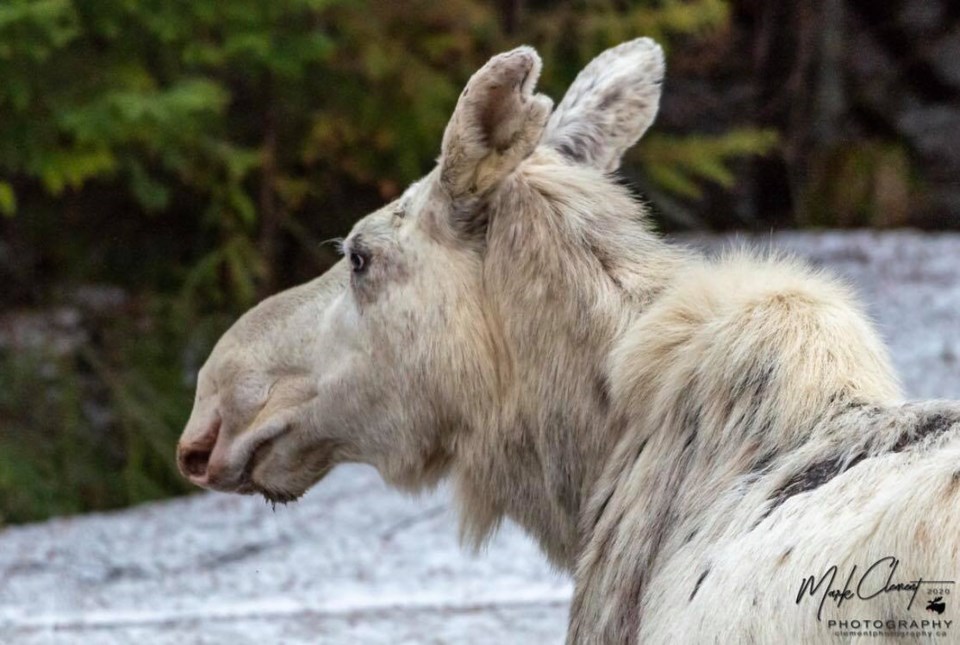
202011-05 white moose MarcA white moose was shot and killed near Foleyet the week of Oct. 26. The Ministry of Natural Resources and Forestry is looking for the people responsible. Marc Clement Photography photo

The reward for information about a white moose killed near Foleyet now sits around $8,000.

The news about a white cow moose, that was killed and harvested on Nova Road sometime during the week of Oct. 26, sparked social media outrage. It also prompted Flying Post First Nation member Troy Woodhouse to offer a $1,000 reward that would lead to an arrest or encourage people involved to turn themselves in.

In less than a week, the initial amount has increased thanks to individual donations and offers from Missinaibi Drilling, and The Gordon and Patricia Gray Animal Welfare Foundation.

“It was nice to see that there are people in the community that care about the spirit moose,” Woodhouse said. “It’s very heart-warming to see that issue of the spirit moose has gained some traction and some people want to help out in these tough financial times … Hopefully, it leads to an arrest or someone coming forward about the crime.”about:blank

The drilling company offered to match Woodhouse’s reward, while the animal welfare foundation has offered $5,000.

“We’re very much against this kind of activity, illegal hunting, and we know how important (Indigenous) traditions are, so just agreed to do that,” said Gordon Gray. “We do everything we can in our foundation to support the wild being of wildlife.”

The Ministry of Natural Resources and Forestry (MNRF) is investigating the incident.

“In 2006, the MNRF protected predominantly white-coloured moose in recognition of their cultural and spiritual significance to First Nation communities, and for the purpose of enhancing wildlife viewing opportunities within the local Foleyet area,” the ministry’s spokesperson Jolanta Kowalski said in an email.https://0e39ca9bcb7c55a619ae5c319f375bd8.safeframe.googlesyndication.com/safeframe/1-0-37/html/container.html

It is illegal to hunt and harvest predominantly white-coloured moose in wildlife management units 30 and 31.

Kowalski said white-coloured moose are not a separate species, and their colour may be caused by a recessive gene that occurs within the broader moose population.

If you have any information about the incident, call Crime Stoppers at 1-800-222-TIPS (8477) or visit P3tips.com.

If your information leads to an arrest, you could earn up to $2,000 in cash. You will remain anonymous and not have to testify in court.

Scientists discover new endangered primate species, with only 260 left

Exposing the Big Game's avatarThe Extinction Chronicles

https://www.cnn.com/2020/11/10/asia/myanmar-new-primate-species-intl-hnk-scli-scn/index.html

ByJessie Yeung, CNN

Updated 1:30 AM ET, Wed November 11, 2020The Popa langur, a newly discovered primate species in Myanmar that is critically endangered.The Popa langur, a newly discovered primate species in Myanmar that is critically endangered.

(CNN)Scientists have discovered a new primate species in the jungles of Myanmar — and it’s already at risk of extinction.The Popa langur is a type of monkey with a long tail, rings around its eyes, and a crest of fur on top of its head. There are only an estimated 200 to 260 left, according to a news release by the London Natural History Museum, which collaborated on this study.The research team named the Popa langurs after the sacred extinct volcano Mount Popa and classified them as “critically endangered.””Sadly this is a bittersweet discovery due to the limited number of individuals left in the wild and fragmented populations,” said Roberto Portela Miguez, a senior curator at the Natural History Museum, in the…

View original post 519 more words

Ecocide: Should killing nature be a crime?

https://www.bbc.com/future/article/20201105-what-is-ecocide

From the Pope to Greta Thunberg, there are growing calls for the crime of “ecocide” to be recognised in international criminal law – but could such a law ever work?I

In December 2019, at the International Criminal Court in the Hague, Vanuatu’s ambassador to the European Union made a radical suggestion: make the destruction of the environment a crime.

Vanuatu is a small island state in the South Pacific, a nation severely threatened by rising sea levels. Climate change is an imminent and existential crisis in the country, yet the actions that have caused rising temperatures – such as burning fossil fuels – have almost entirely taken place elsewhere, to serve other nations, with the blessing of state governments. 

Small island states like Vanuatu have long tried to persuade large powerful nations to voluntarily reduce their emissions, but change has been slow – so ambassador John Licht suggested that it might be time to change the law itself. An amendment to a treaty known as the Rome Statute, which established the International Criminal Court, could criminalise acts that amount to ecocide, he said, arguing “this radical idea merits serious discussion”.Campaigners are calling for the destruction of nature to be recognised as an international crime (Credit: Getty Images)
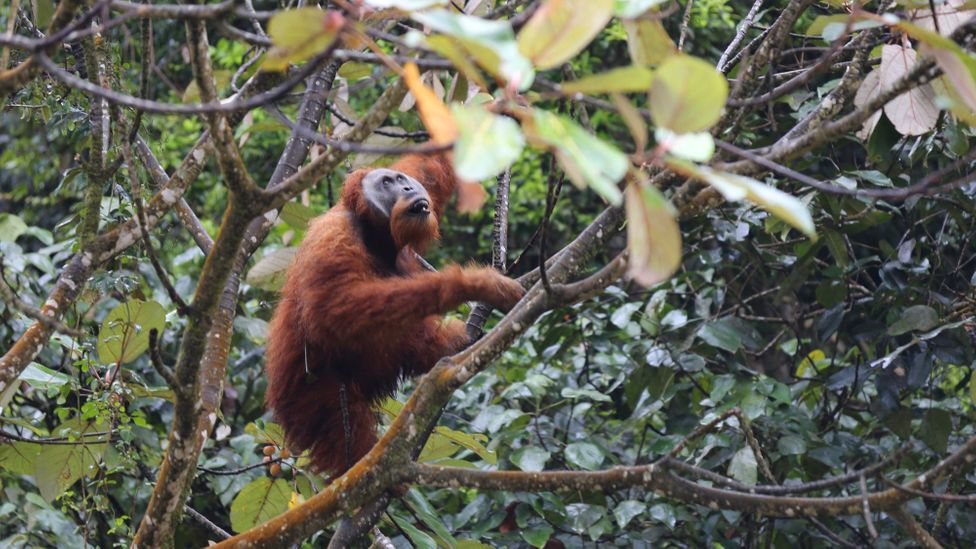
Campaigners are calling for the destruction of nature to be recognised as an international crime (Credit: Getty Images)

Ecocide – which literally means “killing the environment” – is an idea that seems both a highly radical and, campaigners claim, a reasonable one. The theory is that no one should go unpunished for destroying the natural world. Campaigners believe the crime should come under the jurisdiction of the International Criminal Court, which can currently prosecute just four crimes: genocide, crimes against humanity, war crimes and crimes of aggression.

If something’s a crime, we place it below a moral red line – Jojo Mehta

While the International Criminal Court can already prosecute for environmental crimes, this is only possible within the context of these four crimes – it does not place any legal restrictions on legal harms that occur during times of peace. While individual countries have their own rules and regulations to prevent such harms, ecocide campaigners argue that mass environmental destruction will continue until a global law is in place.

You might also like:

This wouldn’t be the fluffy and arguably toothless rulemaking that often emerges from international processes – such as the Paris Agreement on climate change, where countries set their own emissions reductions targets. By adding a fifth crime of ecocide to the Rome Statute of the International Criminal Court, the perpetrators of environmental destruction would suddenly be liable to arrest, prosecution and imprisonment. 

But it would also help to create a cultural shift in how the world perceives acts of harm towards nature, says Jojo Mehta, co-founder of the Stop Ecocide campaign.

“If something’s a crime, we place it below a moral red line. At the moment, you can still go to the government and get a permit to frack or mine or drill for oil, whereas you can’t just get a permit to kill people, because it’s criminal,” she says. “Once you set that parameter in place, you shift the cultural mindset as well as the legal reality.”Jojo Mehta argues that a law against ecocide would hold to account people who cause significant damage to the environment (Credit: Ruth Davey/Look Again Photography)
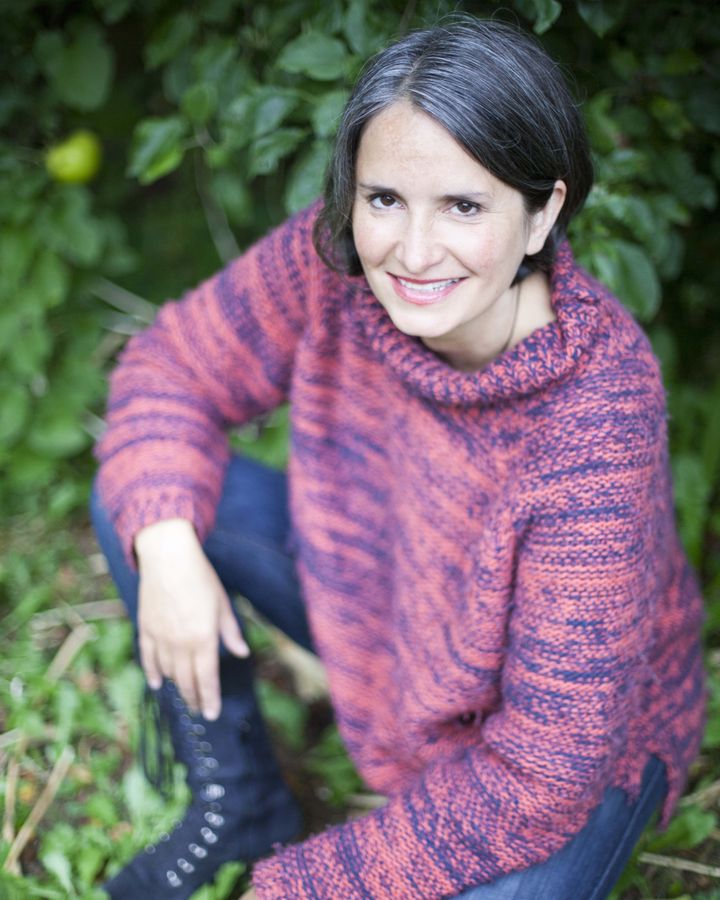
Jojo Mehta argues that a law against ecocide would hold to account people who cause significant damage to the environment (Credit: Ruth Davey/Look Again Photography)

Campaigners believe the crime of ecocide should only apply to the most serious harms, encompassing activities like oil spills, deep-sea mining, industrial livestock farming and tar sand extraction. In 2010, Polly Higgins, a British barrister, defined ecocide as “extensive damage… to such an extent that peaceful enjoyment by the inhabitants of that territory has been or will be severely diminished.”

The mother of all battles is international: to ensure that this term is enshrined in international law – Emmanuel Macron

Last year, Higgins died aged 50, after being diagnosed with cancer. It was a blow for the ecocide movement – she had been its leading legal light and fiercest advocate, selling her house and giving up her high-paying job in order to dedicate her life to the campaign. Despite her passing, that the movement now appears to be gaining momentum. After decades of existing at the radical fringes of the environmental movement, ecocide is now being discussed by parliamentarians and leaders across the world.

Among them is Emmanuel Macron, the president of France, who has become one of ecocide’s highest profile supporters. Earlier this year, more than 99% of the French citizens’ assembly, a group of 150 people selected by lot to guide the country’s climate policy, voted to make ecocide a crime. That prompted Macron to announce that the government would consult with legal experts on how to incorporate it into French law. But he went further. “The mother of all battles is international: to ensure that this term is enshrined in international law so that leaders… are accountable before the International Criminal Court,” he responded to the assembly. 

Elsewhere in Europe, Belgium’s two Green parties have introduced an ecocide bill that proposes addressing the issue at both a national and international level – an idea that also has support among Swedish parliamentarians. “We have all the conventions, we have all the goals. But the beautiful visions must go from paper into action,” said Rebecka Le Moine, the Swedish MP who submitted a motion to her national parliament. “If these actions should be anything more than goodwill or activism, it must become law.”

Pope Francis has also called for ecocide to be recognised as a crime by the international community, and Greta Thunberg has backed the cause too, donating €100,000 (£90,000) in personal prize winnings to the Stop Ecocide Foundation. Supporters of a law against ecocide argue it would place emphasis on the environmental and human costs of issues such as climate change (Credit: Getty Images)
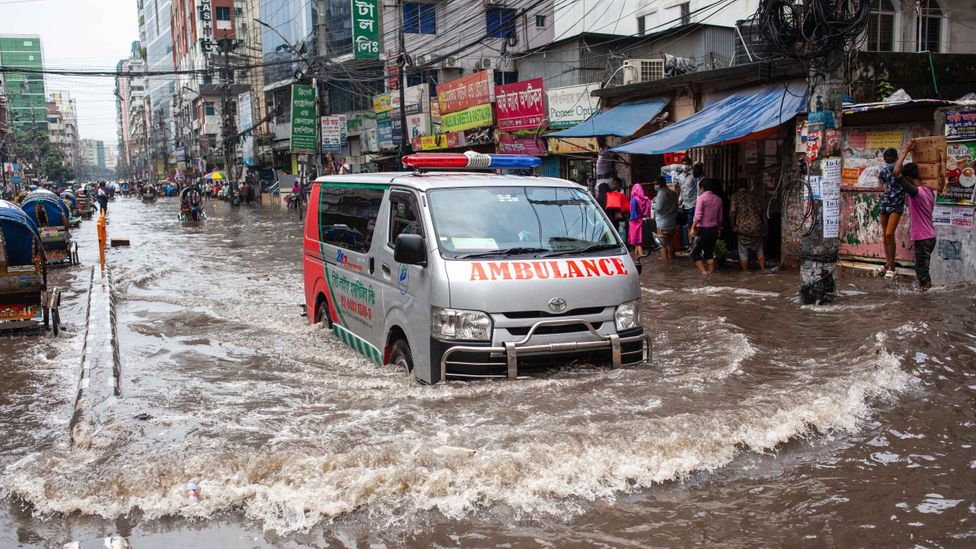
Supporters of a law against ecocide argue it would place emphasis on the environmental and human costs of issues such as climate change (Credit: Getty Images)

The International Criminal Court has itself placed increasing emphasis on prosecuting environmental crimes within the limitations of its existing jurisdiction. A 2016 policy paper on case selection highlighted the court’s inclination to prosecute crimes involving illegal natural resource exploitation, land grabbing and environmental damage. While this doesn’t change the status quo, it “could be regarded as an important step towards the establishment of a crime of ecocide under international law”, according to one paper.

Even so, the concept of ecocide has its limitations. David Whyte, professor of socio-legal studies at the University of Liverpool and author of a book called Ecocide, warned that an international law would not be a silver bullet that eradicates environmental destruction. Corporations cannot be prosecuted under international criminal law, which only applies to individuals, Whyte points out – and bringing down a CEO may not actually rein in the business itself.

“It’s really important to change our language and the way we think about what’s harming the planet – we should push through this crime of ecocide – but it’s not going to change anything unless, at the same time, we change the model of corporate capitalism,” he says.

While there is still a long way to go before ecocide could be recognised as an international crime, the movement continues to gather pace, says Rachel Killean, a senior lecturer in law at Queen’s University Belfast, who has recently written about alternative ways in which the International Criminal Court could address environmental harms.

“You can never say never – and it’s gaining momentum that we maybe would never have imagined previously – but the challenges are still so significant. First of all, you have political resistance. I think the chance of an assembly of state parties agreeing to an additional crime is unlikely, particularly one that might curb economic expansion,” she says.Greta Thunberg is among those calling for ecocide to be recognised as a crime (Credit: Getty Images)
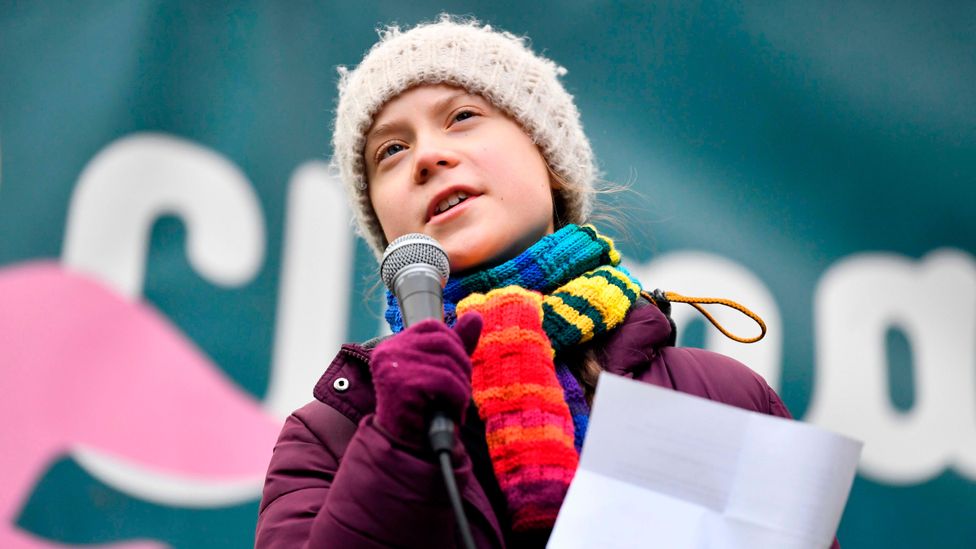
Greta Thunberg is among those calling for ecocide to be recognised as a crime (Credit: Getty Images)

An international law on ecocide would also be difficult from a legal perspective, adds Killean – lawyers would have to ensure that there were sufficient grounds for prosecution.

 “If you think about all the parts of the criminal prosecution, you need to have an individual – so who’s the individual that’s responsible for ecocide? There needs to be intention – so how do you prove intention for the destruction of a territory? All these different things that build up a criminal trial become really complicated when you’re thinking about ecocide.”

Campaigners like Mehta understand these difficulties. Her campaign group, Stop Ecocide, is currently pulling together a panel of top international lawyers to write a “clear and legally robust” definition of ecocide that countries could propose at the International Criminal Court.

Once that’s in place, the next step would be for a country to back it at The Hague. While Vanuatu has raised the issue, it did not submit a formal proposal to amend the Rome Statute, and whether there will be a government brave enough to do so remains an open question – leading on such an issue requires a certain level of diplomatic clout. Mehta believes that such a move is becoming more likely due to the growing number of governments that have expressed their theoretical support. “There’s safety in numbers,” she says. “It’s less of a political risk.”

But the journey wouldn’t end there. Once a proposal is submitted, it would have to be adopted by a two-thirds majority vote – in practice, that means it needs the support of 82 countries. No country has veto power, and all nations have the same voting power regardless of size or wealth. It’s a process that Mehta envisages taking anywhere between three and seven years.

Whether or not the process happens so quickly, or if it even happens at all, ecocide has proved to be a powerful idea. It has crystallised a concept that often gets lost in discussions of policy and technology: that many see that there is a moral red line when it comes to destroying the environment. And it is a reminder that it is not a victimless act: when forests burn and oceans rise, humans are suffering around the world. Moreover, the perpetrators of these acts are not blameless. For campaigners like Mehta, criminalising ecocide is a way to call time on the destruction of the Earth’s ecosystems and those who live in them.

—

The emissions from travel it took to report this story were 0kg CO2. The digital emissions from this story are an estimated 1.2g to 3.6g CO2 per page view. Find out more about how we calculated this figure here.

Invisible Air Rivers in The Sky Have Been Leaving Giant Holes in Antarctic Ice

Exposing the Big Game's avatarThe Extinction Chronicles

main article image

The 2017 polynya. (NASA)ENVIRONMENT

https://www.sciencealert.com/invisible-rivers-of-air-flowing-in-the-sky-are-leaving-giant-holes-in-antarctic-ice

PETER DOCKRILL12 NOVEMBER 2020

It appeared in 1973, seemingly out of nowhere: a hole in the sea ice off the coast of Antarctica. But this was no ordinary hole. It was so big it couldswallow California.

The mysterious opening remained in place for the following three winters. Then it seemed to largely disappear before emerging again in 2017, with a giant mawthe size of Maine.

This giant hole with a sometimes state-sized appetite is what’s called apolynya– an area of open water surrounded by sea ice, kind of like the opposite of an iceberg.

But the mysteriousWeddell Polynya– occurring above the oceanic plateau of Maud Rise, in the Weddell Sea waters of the Southern Ocean – is a rather extreme example of this environmental phenomenon. Why it opens up so dramatically and yet so infrequently…

View original post 361 more words

Indiana authorities investigating 3rd incident, in a week of hunter falling from tree stand

Exposing the Big Game's avatarCommittee to Abolish Sport Hunting Blog

https://www.whas11.com/article/news/local/indiana/indiana-four-deer-hunters-fall-from-tree-in-two-weeks/417-61e7c12c-1581-4f03-b4c8-bb8ffe8e63d8

Indiana Conservation officers said hunters should practice safe hunting, wear a harness and safely secure themselves when hunting from an elevated position.

INDIANA, USA — An Indiana man is in the hospital with serious injuries after conservation officials said he fell from a tree stand Monday afternoon. Investigators said the accident happened around 1:45 p.m. in the 11000 block of North Hogan Road.

Louis Gehring, 60, of Aurora, was found with severe injuries to both legs along with possible internal injuries after falling 23 feet while either attempting to hang or remove his elevated tree stand, according to officials with the Indiana Department of Natural Resources (DNR).

Gehring was airlifted from the scene to the University of Cincinnati Hospital, officers said.

Authorities said in apress releasethat Gehring was not wearing a full body harness at the time of his fall.

Indiana Conservation Officer Travis Stewart tellsWHAS11

View original post 129 more words

Police Investigating After Hunter From West Virginia Shot And Killed In Colorado

Exposing the Big Game's avatarCommittee to Abolish Sport Hunting Blog

The alleged shooter has not been arrested and is cooperating with authorities.November 11, 2020 at 9:43 pmFiled Under:Colorado,Hunting Accident,West Virginia,West Virginia Newshttps://www.cbsnews.com/live/cbsn-local-pit/?premium=1&optanonConsent=15

KREMMLING, Colo. (AP) — An investigation is underway after a hunter was shot and killed in a remote area in northwestern Colorado.

Grand County sheriff’s officials say 26-year-old Simon Jacob Howell, of Ridgeley, West Virginia, was shot by a fellow hunter west of Kremmling on Monday morning. Investigators have not released any details about the circumstances of the shooting.

The alleged shooter has not been arrested and is cooperating with authorities. The district attorney’s office will evaluate the investigation by the Grand County Sheriff’s Office to determine if charges are warranted.

Colorado Parks and Wildlife officials say more than 500,000 licensed hunters take to the field in the state each year. In 2019, only five hunting-related injuries were…

View original post 23 more words

Clots, Strokes And Rashes. Is COVID-19 A Disease Of The Blood Vessels?

Exposing the Big Game's avatarThe Extinction Chronicles

November 5, 202012:02 PM ET

WILL STONE

FROMLISTEN·4:474-Minute ListenAdd toPLAYLIST

  • Embed

COVID-19 can cause symptoms that go well beyond the lungs, from strokes to organ failure. To explain these widespread injuries, researchers are studying how the virus affects the vascular system.

Jasmin Merdan/Getty Images

Whether it’s strange rashes on the toes or blood clots in the brain, the widespread ravages of COVID-19 have increasingly led researchers to focus on how the novel coronavirus sabotages the body’s blood vessels.

As scientists have come to know the disease better, they have homed in on the vascular system — the body’s network of arteries, veins and capillaries, stretching more than 60,000 miles — to understand this wide-ranging disease and to find treatments that can stymie its most pernicious effects.

Some of the earliest insights into how COVID-19 can act like a vascular disease came fromstudyingthe aftermath of the most serious infections. Those reveal that the virus warps a critical piece of our vascular infrastructure: the single layer of cells lining the inside of every blood vessel, known…

View original post 1,499 more words

Mink Threat Isn’t Going Away, Denmark’s Top Covid Scientist Says

By Morten ButtlerNovember 10, 2020, 4:09 AM EST

https://www.bloomberg.com/amp/news/articles/2020-11-10/denmark-s-top-covid-scientist-says-mink-threat-isn-t-going-away

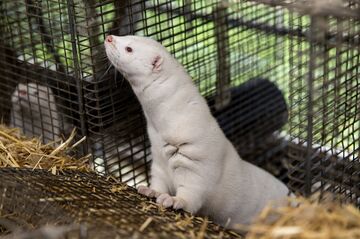
For now, farmers across Denmark have halted the mass slaughter of mink, and are only putting down animals that are infected.
For now, farmers across Denmark have halted the mass slaughter of mink, and are only putting down animals that are infected. Photographer: Ole Jensen/Getty Images

Mink farms pose a serious threat to human health in the age of Covid, and will continue to do so even if individual mink mutations of the virus are fought back, according to Kare Molbak, Denmark’s top epidemiologist.

The arrival of Covid-19 in the Nordic country was a clear “game changer” for its mink farmers, Molbak told newspaper Politiken in an interview published on Tuesday. Maintaining the industry now “represents far too high a national health risk,” he said.https://98d9b09f678ee7849ab26912d98fc298.safeframe.googlesyndication.com/safeframe/1-0-37/html/container.html?n=0

Denmark had planned to cull its entire population of mink — 17 million animals — after discovering a new strain of Covid-19 that has the potential to derail global efforts to develop a vaccine. The so-called cluster 5 variant carried in Danish mink led to mutations in the virus pod’s spike protein, which most vaccines target.

But this week, the planned cull was shelved after political infighting forced Denmark’s minority government to acknowledge it didn’t have parliament’s support to move ahead. There are even questions as to the legality of its order to exterminate the country’s mink population.

For now, farmers across Denmark have halted the mass slaughter, and are only putting down animals that are infected. Before the government was forced to back down, farmers had already culled about 2.5 million mink, according to broadcaster TV2.https://98d9b09f678ee7849ab26912d98fc298.safeframe.googlesyndication.com/safeframe/1-0-37/html/container.html?n=0

With political agendas dominating the day, the concern now is that the scientific arguments will get drowned out. Molbak, in his interview with Politiken, voiced his concern over the focus of lawmakers, which he suggested is misplaced.

“I think that the issue of cluster 5 has received far too much attention,” he said. Even if the cluster 5 mutation dies out, “there’d be new variants in mink that would spawn equivalent or bigger problems, a cluster 6, 7 or 8.”

Molbak says the key question now is whether it’s reasonable to continue farming mink, given the risks.https://98d9b09f678ee7849ab26912d98fc298.safeframe.googlesyndication.com/safeframe/1-0-37/html/container.html?n=0

“Our biggest concern since June has been the large reservoir that the mink provide the virus,” he said. “It’s a perfect storm. You have an animal that’s particularly receptive toward the virus and that, at the same time, is kept in large numbers, as is the case in Denmark.”

“Mink are very easily infected by the coronavirus, and once it’s there, it spreads at the speed of light,” he said. “We’ve seen how that then spreads to humans. That makes it practically impossible to handle the spread during a pandemic.”