‘Crossroads of the climate crisis’: swing state Arizona grapples with deadly heat

Exposing the Big Game's avatarThe Extinction Chronicles

Maricopa county is home to America’s hottest city, where deaths from the heat are weighing on voters’ minds

https://www.theguardian.com/us-news/2020/nov/01/climate-change-arizona-us-election-2020

Maanvi SinghandLauren Gambinoin Phoenix, Arizona

Sun 1 Nov 202002.00ESTLast modified on Sun 1 Nov 202002.03EST

Shares204

A runner passes saguaro that were burned in a wildland fire in early 2020 in Cave Creek, Arizona.
A runner passes saguaro that were burned in a wildland fire in early 2020 in Cave Creek, Arizona. Photograph: Caitlin O’Hara/The Guardian

https://www.theguardian.com/email/form/plaintone/minute-usSign up for the Guardian’s Fight to Vote newsletter

Even now, Ivan Moore can’t think why his father didn’t didn’t tell anyone that the air conditioning in their house was busted. “I honestly don’t know what was going through his mind,” he said.

That week three years ago, temperatures in Phoenix, Arizona were forecasted to top 115F (46C). Moore, his wife and two children went to the mountains for a camping trip, and his dad Gene, stayed behind. A few days later, Gene died.

The air conditioning had been blowing…

View original post 1,966 more words

2020 Election Will Be Crucial in Determining Whether We Avoid a Climate Catastrophe

BY RENEE CHO |OCTOBER 29, 20203 Comments

https://blogs.ei.columbia.edu/2020/10/29/2020-election-climate-catastrophe/

Photo: NASA

The ability of humans to live safely and comfortably as we have for centuries is on the November ballot. We are already experiencing increased flooding; sea level rise as the ice caps continue to melt; slower and stronger hurricanes; more intense wildfires, including in the Amazon and the Arctic; drought and water scarcity; and the dying of coral reefs. The World Bank predicted these climate impacts could force 100 million more people into extreme poverty by 2030.

The next 10 years are critical because the Intergovernmental Panel on Climate Change (IPCC) has warned that the planet could warm 1.5˚C above pre-industrial levels by 2030. Overshooting 1.5˚C could precipitate disastrous climate impacts, potentially sending us over tipping points that would hasten more warming and send Earth into an irreversible “hothouse” state.

To avert this catastrophic future and keep the global temperature rise to 1.5˚C, we must cut CO2 emissions 45 percent from 2010 levels by 2030, and reach net zero by 2050. What happens in the next few years will determine our fate, which makes the outcome of the U.S.’s November 3 presidential election critically important.

“The 1.5˚C temperature target is very difficult to achieve right now, although it is theoretically possible,” Michael Gerrard, director of the Sabin Center for Climate Law at Columbia University has said. “If Trump is re-elected, I think it goes into the realm of physical impossibility. We’d have to wait another four years for another election to try to rectify that. But by then, a lot more fossil fuel infrastructure will have been locked in and a lot more greenhouse gases will have gone into the atmosphere. So, it would be very bad news for the climate indeed.”

What are our options?

Donald Trump’s plan

Photo: Gage Skidmore

President Trump, who does not acknowledge the role of human activity in climate change, does not have a plan to combat climate change, though he claims to champion clean water and clean air. In 2017, he pulled the U.S. out of the Paris Agreement, making the U.S. the lone country to renege. The U.S. withdrawal becomes official on November 4, one day after Election Day. Since the U.S withdrew, some countries, such as Australia, Saudi Arabia, Brazil and Russia have done little to cut their emissions.

Trump’s goal is to ensure U.S. energy independence. To achieve this, his administration has supported domestic fossil fuel production and rolled back many environmental regulations that it considers burdensome to the fossil fuel industry.

According to the Sabin Center for Climate Change Law at Columbia University, Trump has taken 163 actions to roll back climate mitigation and adaptation measures. He rescinded the Obama administration’s Clean Power Plan, which was expected to cut power sector emissions 32 percent by 2030, relative to 2005, replacing it with the Affordable Clean Energy rule. Because the replacement does not set limits for emissions, it will lead to more emissions and air pollution, which the Environmental Protection Agency (EPA) itself has projected could result in 1,400 additional premature deaths. He has weakened regulations  limiting methane emissions from oil and gas production on federal lands, and the requirement to report methane emissions. The Environmental Defense Fund estimated that this could result in an increase of five million metric tons of methane emissions each year. Methane is a greenhouse gas that, over 20 years, traps more than 84 times more heat in the atmosphere than carbon dioxide does.

Domestic bills to phase down hydrofluorocarbons (HFCs)—potent greenhouse gases used in air conditioners and refrigerants—are being discussed in the Senate and House of Representatives, but the Trump administration has not ratified the Kigali Amendment to the Montreal Protocol, which would require countries to set targets to cut their use of HFCs.

Trump signed an executive order to join the global One Trillion Trees Initiative, a World Economic Forum proposal to slow deforestation and climate change. And he has allotted $900 million a year to the Land and Conservation Fund and $9.5 billion over five years for land conservation as part of the Great American Outdoors Act. But he has also opened U.S. waters and public lands to oil and gas drilling, including national monument land in Utah and the Arctic National Wildlife Refuge; he allowed logging and road construction on nine million acres of Alaska’s Tongas National Forest; and attempted to ease the pipeline permitting process.

Trump has loosened fuel economy standards for vehicles for model years 2021 through 2026; they now only need to increase fuel economy by 1.5 percent a year instead of the Obama rule’s 5 percent a year. In addition, he has moved to revoke California’s waiver—its right to determine its own more stringent fuel economy standards, which are followed by 14 states and the District of Columbia.

Trump issued an executive action to speed reviews of infrastructure projects under the National Environmental Policy Act, Clean Water Act, and Endangered Species Act. He claims that the loosening of these rules will save money because it limits environmental reviews of major federal infrastructure projects such as highways, power plants and pipelines, and speeds their completion.

The Rhodium Group, an independent research provider, has estimated that as a result of the Trump rollbacks already in place, U.S. emissions will increase by 1.8 gigatons by 2035, an amount equal to almost one-third of all U.S. emissions in 2019. Total U.S. emissions will be 3 percent higher in 2035 than they would have been under the Obama regulations.

The Sabin Center’s Romany Webb, associate research scholar, and Daniel Metzger, postdoctoral research scholar, identified policy objectives that Trump is expected to advance if re-elected. Continuing his support for fossil fuels, he would open more federal land and the continental shelf to oil and gas drilling and loosen regulations for operating there.

The Trump Department of Energy has already weakened energy efficiency standards for light bulbs, which is projected to increase carbon emissions by 34 million metric tons by 2025. In a second Trump term, the administration might also cut energy efficiency standards for appliances. Other possible proposals include weakening regulations on greenhouse gas emissions from landfills, reducing penalties on carmakers that don’t meet fuel economy standards, and limiting the ability of states to take actions against climate change that are more aggressive than those of the federal government.

Trump is expected to continue to reduce the role of science in decision-making by agencies. One proposal for rules developed under the Clean Air Act would limit the consideration of co-benefits—often pollution reduction, which impacts public health—when conducting cost-benefit analyses of new agency rules.

To ensure that the U.S. continues to rely on fossil fuels, the Department of Energy has earmarked $72 million for research into carbon capture technologies, of which $21 million was allocated for direct air capture. Trump will also likely promote nuclear energy over renewable energy.

Adapting to climate change

A $16 billion program overseen by Trump’s Department of Housing and Urban Development will help states prepare for natural disasters, although when the rules were announced, there was no mention of climate change or global warming. The Federal Emergency Management Agency (FEMA) will spend $500 million, with more to come, to relocate communities from flood zones.

If the Republicans hold onto Congress, Trump’s overall plans are expected to create 11.2 million jobs during his second term, according to Moody’s Analytics.

Legal considerations

Many of Trump’s actions have been stymied in the courts. The Institute for Policy Integrity at the New York University School of Law found that the Trump administration has lost 87 percent of the challenges to all (not just environmental) of its deregulation efforts. Some of the major environmental rule changes that are currently being challenged in court include the Affordable Clean Energy Rule, methane emissions rules, the fuel efficiency standard and the California waiver. If Trump is re-elected, the Department of Justice will no doubt vigorously defend these cases; in addition, the administration would likely revisit environmental rule changes that courts have struck down and revamp them to try to get them right.

Joe Biden’s plan

Photo: Gage Skidmore

Joe Biden knows climate change is an existential threat to our future. One of his priorities as president would be to rejoin the Paris climate agreement and encourage countries to make their climate goals more ambitious. This is key because all countries are expected to submit their ramped-up climate goals by the end of this year, and U.S. leadership could motivate other countries to set more ambitious targets.

Biden has unveiled a plan of $2 trillion to be spent over four years to both help the economy recover from the pandemic and deal with climate change by expanding the use of clean energy and cutting fossil fuel emissions. He aims to make the power sector emissions-free by 2035 and reach net-zero before 2050. To achieve this, he would establish an enforcement mechanism that requires emitters to pay the cost of their carbon polluting and could conceivably institute a carbon tax.

Biden has promised to immediately issue executive actions to limit methane emissions for new and existing oil and gas projects, and develop new fuel-economy and energy efficiency standards.

He would end new oil and gas drilling, including fracking, on federal lands. While he does not support a ban on fracking, he would regulate its methane emissions.

Biden would incentivize utilities and developers to build new renewable energy power plants. Because he wants all new U.S. cars and trucks to be electric by 2035, he would encourage the adoption of electric vehicles through tax credits, provide incentives for automakers to produce electric vehicles, and establish a federal procurement program for clean energy and zero-emission vehicles.

A Biden administration would invest $400 billion to research and develop clean tech such as battery storage, new nuclear reactors and carbon capture. Biden will also push the agriculture sector to employ practices that remove CO2 from the air and store it in the soil.

Biden would upgrade infrastructure, including railroads, mass transit, roads, bridges, and the electrical grid, and by 2030, build 500,000 public charging stations for electric vehicles nationwide.

His goal is to reduce the carbon footprint of buildings by 50 percent by 2035; this entails making four million buildings more energy efficient, and weatherizing two million homes. To achieve this, he will offer incentives for retrofits that involve appliance electrification, efficiency, and clean energy.

Biden would invest more in communities of color and ensure that solutions to environmental issues are developed through an inclusive, community-driven process.

To protect biodiversity, slow extinction rates, and draw on natural climate mitigation processes, Biden aims to conserve 30 percent of America’s lands and waters by 2030.

Moody’s Analytics estimates that if the Democrats sweep Congress, Biden’s overall economic plan will create 7.4 million more jobs than Trump’s, based on the candidates’ campaign proposals.

Adapting to climate change

Beyond modernizing infrastructure, Biden will develop regional climate resilience plans in conjunction with universities and national labs to prepare for climate impacts. He will invite innovators to help design zoning and building codes that enable communities to better deal with natural disasters. In addition, any new federal infrastructure funding will have to take climate change into consideration to ensure that buildings, water, transportation, and energy infrastructure can withstand the impacts of climate change.

Legal considerations

The Sabin Center’s Romany Webb said that, to reverse any Trump administration rollbacks that have already been finalized, the Biden administration would have to start over in the regulatory process. “For example, for the replacement for the Clean Power Plan, the Biden administration has to go to a new regulatory process.” The process for an agency like the EPA to issue regulations or change regulations and get them finalized entails first putting out a proposal and asking for public comment on it; after it accepts public comment, and reviews all the comments, it can then move to a final proposal. By contrast, for regulatory rollbacks that have not been finalized, “The Biden administration could just choose not to finalize them. And we’d be left with those pre-existing regulations that the Trump administration was trying to get rid of,” Webb said.

To deal with Trump’s attempted rollback of rules that are being challenged in court but are in early stages, the Department of Justice under Biden could go to the court and ask to have the case held in “abeyance”—put on hold. Biden could then ask that the rule be returned to the agency that issued it for review, and the agency would be in a position to write new more stringent regulations. “A Biden administration could go further, filling in those regulatory gaps that were left at the end of the Obama administration and that the Trump administration has not done anything about,” said Webb.

Ultimately, to achieve his ambitious climate goals, Biden will need a Democratic Congress to pass legislation that is less susceptible to reversal by legal challenges. According to the New York Times, Biden will likely try to incorporate climate actions into legislation with more bi-partisan support, such as an economic recovery bill. To facilitate climate legislation, however, a Democratic Congress might need to get rid of the filibuster, which allows any senator to block action on a bill unless 60 senators agree to end debate. If a Republican Congress thwarts Biden, he has promised to use executive actions; however, the risk of using administrative executive actions to address climate change is that they can be undone by the next Republican administration, said Webb. This is what happened to Obama’s efforts to mitigate climate change.

What difference in climate could we see?

While cutting carbon emissions now is essential to saving human lives and natural ecosystems in the short and long term, it’s important to understand that even with strong measures, we likely won’t see temperatures drop for decades.

Because of the COVID-19 lockdowns, CO2 emissions in the first half of this year dropped an unprecedented 8.8 percent from the same period in 2019 and as much as 17 percent in April. Many have wondered if this decrease would make a difference in global temperatures. Unfortunately, because of the amount of CO2 already in the atmosphere, it will not.

Galen McKinley, a professor of earth and environmental sciences at Columbia University and Lamont-Doherty Earth Observatory, said, “Changes in emissions that are being discussed right now will not substantially reduce climate change through 2030. If we were to stop all emissions right now, which is not feasible, we could likely stabilize the temperature at the current level by 2030.“

That’s because although emissions cuts would lead to less heat being absorbed, it might take decades before any temperature reduction could be measured as the climate responds so slowly to changes in emissions. We might not see any decrease in global temperatures before 2035, according to a recent study by Norway’s Center for International Climate Research, which analyzed the effect of immediately implementing drastic measures to slash all greenhouse gas emissions, black carbon and other pollutants. The researchers stressed that this does not mean, however, that the cuts in emissions would not be working. Over the long term, they would still make a difference in reducing the severity of climate impacts.

“Since to cut off all CO2 emissions immediately is not feasible, we must plan for adaptation to change in addition to committing to mitigation,” said McKinley. “The mitigation we do today will have substantial impact on climate past 2050, and can prevent catastrophic changes via warming and sea level rise in the second half of this century. In other words, the mitigation we do now is in the interest of keeping Earth in a state where our children and grandchildren can continue to live using the infrastructure that we and our parents and grandparents have built.”

Ingrid Newkirk’s new book “Animalkind” argues that animals’ individuality is underestimated

Up Next

PETA president Ingrid Newkirk explains to Salon how animal abuse is embedded in the economy and society

 https://www.salon.com/2020/10/31/ingrid-newkirk-book-animalkind-interview-peta/

MATTHEW ROZSA
OCTOBER 31, 2020 6:00PM (UTC)

Ifeel a great deal of remorse admitting that I am an animal lover who still eats animals.

I tried to put this shameful feeling out of my mind as I interviewed Ingrid Newkirk — the president of PETA (People for the Ethical Treatment of Animals), perhaps the world’s most famous animal rights group — about her new book, “Animalkind,” which she co-authored with writer Gene Stone. Certainly the book deserves a good read, regardless of one’s stance on animal rights; and it may recall strong feelings in other readers, too. In a sense, it is really two books: The first half is a tribute to the diversity and complexity of animals ranging from charismatic animals like dogs, pigs and chickens, all the way down to snails and slime molds. The second half condemns the way society exploits animals for food, clothing, scientific study and our own entertainment.Advertisement:https://23e0f90b20991356a7b8ffb87a0e1ec5.safeframe.googlesyndication.com/safeframe/1-0-37/html/container.html

If you support animal rights, “Animalkind” is a handy bible, an easy go-to resource for all of the intellectual arguments and poignant anecdotes you’ll require when making your case to others. If you oppose animal rights, “Animalkind” is a must-read for no other reason than intellectual honesty. From a moral perspective, no one has the right to support acts of cruelty without being fully aware of what they are doing, and why.

I strongly suspect that I am not alone in feeling guilt about the animals that I’ve indirectly hurt in my life. All of us who eat meat or wear leather think at some point in our lives about the animals that brought us these things. If people didn’t know on some visceral level that eating meat was wrong, we wouldn’t have factory farms go out of their way to stop journalists from documenting what they do. It wouldn’t be common for carnivores to mock vegetarians and vegans not by pointing out any flaws in their logic or morality, but simply because the meat-eater feels a little more comfortable, a little less uncertain than they did before.

That is why, when my editor suggested that I interview Newkirk about “Animalkind,” I felt compelled to say yes. I do not claim to be a good person, at least when it comes to this issue. But I hope I am at least good enough to realize that I should, and could, be better. And I was curious to hear what Newkirk had to say about these moral questions about animals that linger in the back of our minds every day.Advertisement:https://imasdk.googleapis.com/js/core/bridge3.419.0_en.html#goog_1695448922https://imasdk.googleapis.com/js/core/bridge3.419.0_en.html#goog_578263414https://imasdk.googleapis.com/js/core/bridge3.419.0_en.html#goog_945155448https://imasdk.googleapis.com/js/core/bridge3.419.0_en.html#goog_1403356993Chelsea Handler, Kathy Griffinand more on finding resilience with comedyGo To Video Page

This interview has been lightly edited and condensed for clarity.

You quoted Charles Darwin, who says that animals are emotional beings and feel the same range of emotions as us. Of all the stories in your book covering those themes of animal emotions, which ones really stand out to you? 

Of course we are one animal among many, and all the animals experience all the emotions. They are great emotional beings. They’re not robots or tables or chairs.Advertisement:https://23e0f90b20991356a7b8ffb87a0e1ec5.safeframe.googlesyndication.com/safeframe/1-0-37/html/container.html

I’m very taken with the love, the fidelity, the protectiveness, particularly of birds who tend to have a 95% separation rate. And I say “separation” because separation usually comes from accidents or being shot. Compared to our 45% or higher divorce rate among human beings.

And I’m particularly interested, not in the exotic species so much — because people understand them or respect them more — but in the denigrated species like pigeons, who are devoted parents. Both the male and the female pigeon make milk for their baby in their crop. And so if you see a pigeon with their bill down another pigeon’s bill, they could be feeding their baby — they take turns doing that — or they could be kissing, because they’re incredibly romantic. And in fact, years ago, when I was protesting the Hegins pigeon shoot — where these pigeons are rounded up in cities, taken out and shot — I noticed that some pigeon mates and friends would come and sit beside an injured wing-shot pigeon, even at great danger and peril to their own lives.Advertisement:https://23e0f90b20991356a7b8ffb87a0e1ec5.safeframe.googlesyndication.com/safeframe/1-0-37/html/container.html

So their loyalty and so on really strikes me. But almost everything about animals is undervalued when we should be in awe of them.

Your book warns against anthropomorphizing animals. Why do you feel this way?

It actually isn’t so much against anthropomorphizing. I think it makes a different point. The people anthropomorphize, meaning put animals’ feelings, emotions, reactions into other animals that they feel themselves. And for years, scientists warned us not to do that in the same way that they don’t want people to give names to animals caged in laboratories who are going to be experimented on because it personalizes them. It makes them real to you as other individuals.Advertisement:https://23e0f90b20991356a7b8ffb87a0e1ec5.safeframe.googlesyndication.com/safeframe/1-0-37/html/container.html

But I think it’s anthropocentric not to recognize that love and joy and all the things you previously just said, these emotions of shared emotions. They are not peculiar to the human animal. We all value our young and hope to protect them unless we’re psychotic. We all do the same things. These are shared traits, shared emotions. And so the days of anthropomorphism need to, or the word “anthropomorphism” needs to disappear from our vocabulary. 

I have a peculiar question, about “cuteness.” I know a lot of us think of animals as being cute. On the one hand, I think that finding animals cute is a positive because it does breed empathy, and it’s an emotion that involves love. At the same time, one could argue that finding animals cute is patronizing and allows us to not see them as our full equals, and excludes the rights of animals that may not be “cute.” A frog may not be considered cute by many, but it doesn’t it have the same rights as a dog. What are your thoughts? 

This is a wonderful question! I often say we infantilize animals. As we see them as accoutrements to our own lives or toys. They have to match our drapes or suit our personalities. So as you say, it is unlikely in the main that anyone would do anything horrific to an animal they considered cute. You do find people picking up a baby dolphin, who is about to be stranded on a beach, or messing around with another cute animal to their detriment, sometimes even causing their deaths while they take selfies with them and what have you, because they want to be so close that “cuteness.”Advertisement:https://23e0f90b20991356a7b8ffb87a0e1ec5.safeframe.googlesyndication.com/safeframe/1-0-37/html/container.html

I’ll give you a little story, if I may. I have a one-footed crow, a mother crow with one foot who comes onto my window sill every morning for breakfast. And she’s just phenomenal. She has to deal with traffic, with winter, with ice. She has to balance on her one foot, on cables and fire escapes, and what have you. She has to find food every day, not just for herself. She has two children. And I know that they’re her offspring because one of them has been extremely noisy and she’s had to deal with them. But they come with her and she has to look after them. She has to shelter them herself. I couldn’t do what she does. And yet one day someone puts their head around the corner of my office and saw her on the window sill and said, “How cute!” Just like that.

And I thought, this is a disabled individual who is caring for a family without a supermarket or a physician, without any of the things that we have, and so “cute” would not be the word I would use to describe her, any more than it’s the word I would use to describe a person living on the street trying to eke out an existence.

In your book, you mention the “three Rs” of humane animal research. I was wondering if you could explain how implementing them would not impair research.

The three Rs are reduction, replacement and refinement, and no one could argue that even if they support the use of animals in experiments, that those three things shouldn’t be done. Why would you use more animals? Why would you not replace them when you should? And why would you not reduce the amount of pain and suffering and so on by refining the experiment?Advertisement:https://23e0f90b20991356a7b8ffb87a0e1ec5.safeframe.googlesyndication.com/safeframe/1-0-37/html/container.html

But I’ll go one step further. What we need now, in this era of high-technology and of high-speed computers programmed with human data, with organs on a chip, with whole human DNA on the internet, with all this wonderful state of the art advancement, is we need to replace. Get rid of animal experiments, swap them out for these wonderful advances that we have made.

Unfortunately, in many laboratories, we have career animal experimenters who are not working on anything to do with human health. They’re working on psychology experiments and they are interfering with the brains of monkeys and rats and frightening them with rubber spiders and snakes and swimming them to exhaustion, just to see what happens. And these are not unusual goings-on in laboratories. We need to change all that now.

I want to ask you a slightly personal question about eating meat and being kind to animals. A lot of cruelty towards animals is embedded in the economy. And for a lot of people, habits are hard to break. What is your advice on changing our behavior to respect animals? 

Well, I think we’re all grown up now and we all understand the concept of personal responsibility. And so we need to be brave and we need to be disciplined and we need to do our best. Nowadays it is so easy, because there are what I call ‘taste alikes’ for every single thing, from steak to shrimp. There is cavi-art instead of caviar and faux gras instead of foie gras.Advertisement:https://23e0f90b20991356a7b8ffb87a0e1ec5.safeframe.googlesyndication.com/safeframe/1-0-37/html/container.html

From the most exotic to the most basic, like the Beyond Burger, I challenge anybody not to satisfy their taste buds while making the switch. So if we do object to the transport, the factory farming, the horrors of the slaughterhouse, the horrors of the laboratories, and so on, we can change easily enough. We’ve got 5,000 companies on our cruelty-free cosmetic and household products list. It’s not hard to find them if you just spend a second or two looking.

So I would say, if there’s an animal in the equation, we have to remember that they’re not volunteers. They didn’t give up the skin on their back or their flesh or volunteer to be an experiment and be killed, or be used in confinement. 

Put yourself in their shoes. What we were taught as children is the golden rule: Do unto others as you would have them do unto you. And if I was in that position, would I wish somebody to pay money for myself or no? So I would say, look, we’ve made it so easy at PETA. We have lists of everything you could possibly imagine: alternatives to dissection. I mean, you name it. Wonderful fashionable shoes. Practical jackets. you can climb Mt. Everest in. Anything you want, there is a vegan version these days. So it really doesn’t take much except a little bit of self-discipline, a little decision that I’m going to do my best.

“Animalkind: Remarkable Discoveries about Animals and Revolutionary New Ways to Show Them Compassion,” by Ingrid Newkirk and Gene Stone, is out now from Simon & Schuster. 

‘Trump Train’ in Texas followed Biden bus down highway, FBI investigating

Exposing the Big Game's avatarThe Extinction Chronicles

29 mins ago

Biden campaign staffers called 911 and cancelled two events after the incident

ByDanielle Wallace| Fox News

    https://static.foxnews.com/static/orion/html/video/iframe/vod.html?v=20201031214539#uid=fnc-embed-1

    Could Biden flip Texas? Democrats claim opportunity to turn state blue for first time in decades

    https://www.foxnews.com/us/trump-train-biden-campaign-bus-texas-highway-fbi

    The ruby red state ‘is not ready for them to take,’ Republican Party of Texas Chairman Allen West tells ‘Fox & Friends’ 

    Supporters of PresidentTrumpriding in trucks surrounded a JoeBidencampaign bus onaTexashighway Friday, prompting alarmed staffers to call 911 and cancel at least two stops scheduled later thatday, according to reports.

    People in several trucks formed a so-called “Trump Train,” waving flags and honking horns while surroundingthebus asit traveled down Interstate 35, boundfrom San Antonio to Austin, videos show.

    Biden campaign officials said afterward that they feared the Trump devoteesmight run their bus off the road.

    The FBI isinvestigatingthe incident, according to theTexas Tribune

    View original post 521 more words

    Portland anti-capitalism protest declared riot after windows smashed, cops targeted

    Exposing the Big Game's avatarThe Extinction Chronicles

    13 mins ago

    The damage was caused during the ‘Capitalism is Scary’ march

    New York Post

      https://www.foxnews.com/us/portland-anti-capitalism-protest-declared-riot-windows-smashed-cops-targeted

      https://static.foxnews.com/static/orion/html/video/iframe/vod.html?v=20201031214539#uid=fnc-embed-1

      Fox News Flash top headlines for November 1

      Fox News Flash top headlines are here. Check out what’s clicking on Foxnews.com.

      Police declared amarchagainst capitalism and police violence a riot inPortland, Oregon, after demonstrators smashed the windows of businesses and threw projectiles at cops.

      The damage was caused during the “Capitalism is Scary” march that began around 7:15 p.m. Saturday from Irving Park,Oregon Live reported.

      POLICE DECLARE UNLAWFUL ASSEMBLY IN BEVERLY HILLS AFTER TRUMP SUPPORTERS AND COUNTERPROTESTERS CLASH

      But as the group marched south to Portland’s convention center, some of the protesters smashed the windows of buildings, including a bank, a real estate agency, two phone company stores, a hotel, and a Starbucks, the outlet reported.

      The AT&T store’s windows were vandalized while a worker was…

      View original post 63 more words

      Dreaded Methane Deposits in Arctic Start to Escape; Scientists Warn of Abrupt Climate Change in Future

      Exposing the Big Game's avatarThe Extinction Chronicles

      ByTWC India Edit Team

      3 days ago

      TWC India

      https://weather.com/en-IN/india/science/news/2020-10-29-methane-deposits-arctic-escape-scientists-warn-abrupt-climate

      Arctic sea ice.(NASA/Kathryn Hansen)
      Arctic sea ice.(NASA/Kathryn Hansen)

      Chunks of frozen methane deposits in the Arctic Ocean, famously known as the “sleeping giants of the carbon cycle”, appear to have woken up now following unprecedented heatwave and ice melting around the north pole. Research suggests that deposits have begun leaking methane over a large area of around 1,500 sq. km., area of the continental slope off the East Siberian coast,reportsThe Guardian.

      Methane is an extremely potent greenhouse gas with a global warming potential of 80, meaning a molecule of methane can lead to 80 times more warming than a carbon dioxide molecule. The methane trapped in the permanently frozen region of the arctic region is an accumulation of hundreds of thousands of years of biomass hidden from the atmosphere. As warming continues, the glacier melts, releasing large amounts of methane and…

      View original post 666 more words

      “Insanely Warm” Arctic Ocean Waters Are Delaying Freeze-Up and Pouring Heat Into the Atmosphere

      Exposing the Big Game's avatarThe Extinction Chronicles

      In late October, sea ice off Siberia has only now begun to start freezing — an unprecedented situation for that part of the Arctic

      ImaGeoBy Tom YulsmanOctober 30, 2020 5:00 PM

      https://www.discovermagazine.com/environment/insanely-warm-arctic-ocean-waters-are-delaying-freeze-up-and-pouring-heat

      Arctic temperature forecast

      Temperatures in large parts of the Arctic are expected to remain warmer than normal, as seen in this graphic showing a model prediction for Nov. 13. (See below for an animation of the day-by-day forecast between now and then.) Temperatures are expected to remain high for awhile because wide swaths of open water are releasing huge amounts of heat into the atmosphere. (Credit: WXCHARTS.COM)

      Newsletter

      Sign up for our email newsletter for the latest science newsSign up for the NewsletterSIGN UP

      In September, Arctic sea ice reached its second lowest extent on record.

      Now, in one significant way, the situation has only gotten worse.

      With the onset of winter, large swaths of Arctic waters that should…

      View original post 929 more words

      Gray Wolves To Be Removed From Endangered Species List

      Exposing the Big Game's avatarExposing the Big Game

      October 29, 20204:42 PM ET

      NATHAN ROTTTwitterInstagram

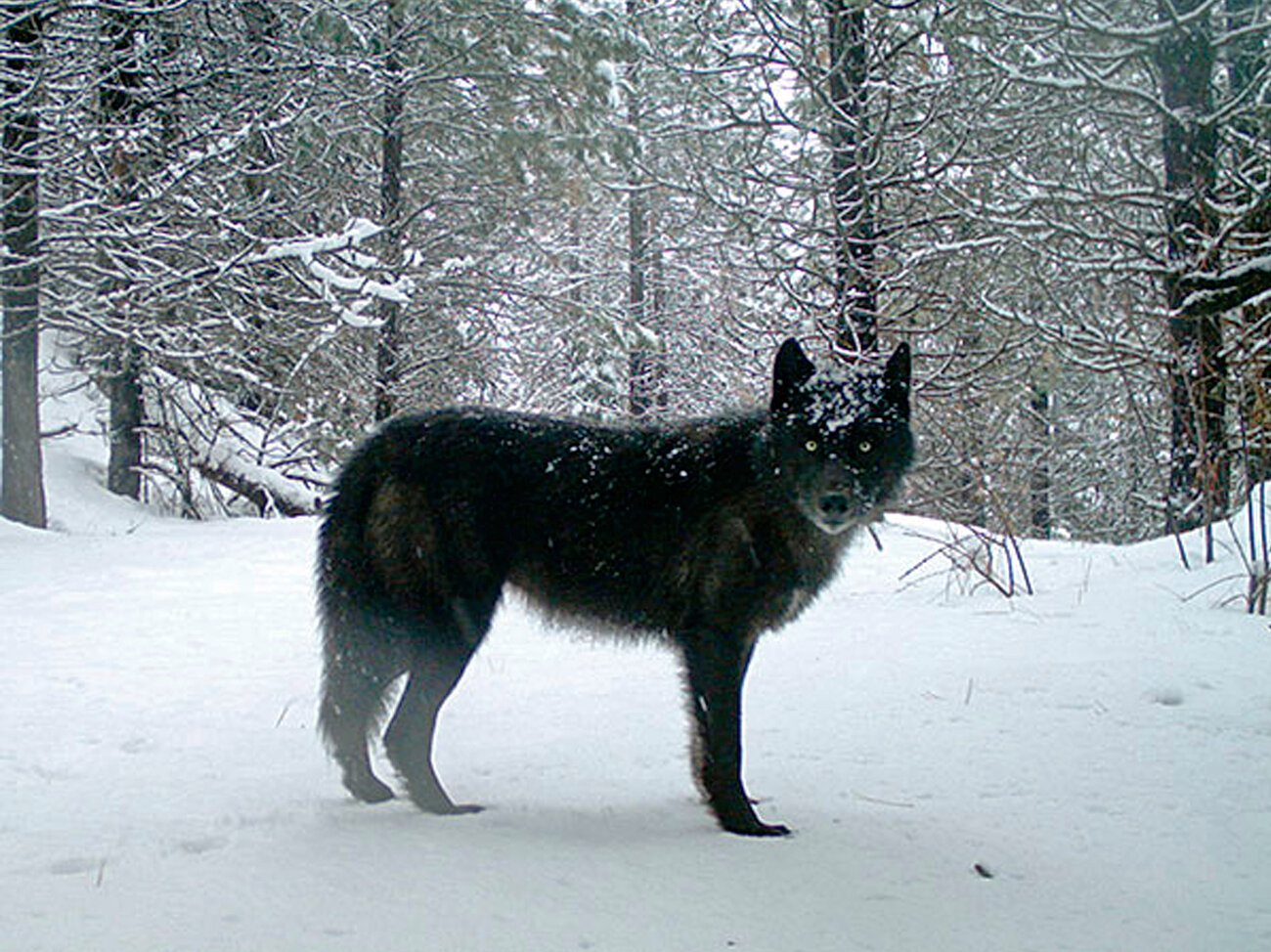
      A gray wolf is captured by a remote camera on U.S. Forest Service land in Oregon in 2017.Oregon Department of Fish and Wildlife/AP

      Gray wolves, a species that has long been vilified and admired, will no longer receive federal protections under the Endangered Species Act in the Lower 48 U.S. states, the Trump administration announced Thursday.

      Thelong-anticipated moveis drawing praise from those who want to see the iconic species managed by state and tribal governments, and harsh criticism from those who believe federal protections should remain in place until wolves inhabit more of theirhistorical range. Gray wolves used to exist across most of North America.

      “After more than 45 years as a listed species, the gray wolf has exceeded all conservation goals for recovery,” said Interior Secretary David Bernhardt,announcing the delisting, which will…

      View original post 471 more words

      Gray Wolves To Be Removed From Endangered Species List

      October 29, 20204:42 PM ET

      NATHAN ROTTTwitterInstagram

      A gray wolf is captured by a remote camera on U.S. Forest Service land in Oregon in 2017.Oregon Department of Fish and Wildlife/AP

      Gray wolves, a species that has long been vilified and admired, will no longer receive federal protections under the Endangered Species Act in the Lower 48 U.S. states, the Trump administration announced Thursday.

      The long-anticipated move is drawing praise from those who want to see the iconic species managed by state and tribal governments, and harsh criticism from those who believe federal protections should remain in place until wolves inhabit more of their historical range. Gray wolves used to exist across most of North America.

      “After more than 45 years as a listed species, the gray wolf has exceeded all conservation goals for recovery,” said Interior Secretary David Bernhardt, announcing the delisting, which will revert management of wolf populations to local wildlife agencies.

      Federal wildlife officials are hailing the move as a success story, similar to endangered species recovery stories such as the bald eagle and American alligator.

      After being nearly wiped clean from the contiguous U.S. by the mid-20th century, there are now more than 6,000 gray wolves in the Lower 48 states, largely clustered in the Northern Rocky Mountains and the Western Great Lakes region.Article continues after sponsor messagehttps://f5581fa88159aeabf2406214dd563910.safeframe.googlesyndication.com/safeframe/1-0-37/html/container.html

      Critics are calling the move premature, though, and are already promising to sue.

      “This is no ‘Mission Accomplished’ moment for wolf recovery,” said Kristen Boyles, an attorney for Earthjustice.”Wolves are only starting to get a toehold in places like Northern California and the Pacific Northwest, and wolves need federal protection to explore habitat in the Southern Rockies and the Northeast.”

      Some critics are portraying the move as another environmental attack by the Trump administration, which has rolled back dozens of environmental regulations, including protections for endangered species and migratory birds. But wolves have a complicated history that doesn’t fit cleanly into the bipartisan rancor that now dominates U.S. environmental policies.

      After being hunted, trapped, poisoned and harassed to the point of near extirpation in the contiguous U.S., all gray wolves south of Canada were given federal protections under the Endangered Species Act in 1978.

      Under that protection, their numbers slowly recovered in the Great Lakes region, and in 1995 federal wildlife officials reintroduced gray wolves to central Idaho and Yellowstone National Park, where their population has since flourished.

      In 2013, the Obama administration also proposed to delist gray wolves, saying that the species had rebounded to the point where they were no longer at risk of extinction and should be managed by state and tribal governments.

      A couple of years earlier, wolf populations in Montana and Idaho were delisted by a congressional budget rider, authored by a Democrat and Republican senator in each of those states who were pressured by agricultural and sportsmen groups. Wolves are an apex predator that, at times, kill livestock. Subsequent lawsuits saw gray wolves get delisted, relisted and delisted again in Wyoming.

      Today, state wildlife agencies manage wolf populations in Montana, Idaho and Wyoming, and hunting of the species is permitted.

      Similar hunting seasons are expected in some Midwestern states if the national delisting survives the anticipated court challenges, and wildlife groups contend that hunting seasons will limit wolves’ ability to repopulate other parts of the country.

      Randy Johnson, a large carnivore specialist for Wisconsin’s Department of Natural Resources, told Wisconsin Public Radio this month that if wolf management fell back to the state, it would use all of the tools available to find a balance “between a healthy and sustainable wolf population, but also addressing those social concerns and livestock concerns when and where needed.”

      U.S. Fish and Wildlife Service to federally delist gray wolves

      Exposing the Big Game's avatarCommittee to Abolish Sport Hunting Blog

       Brandon Hansen October 29,

      (PRESS RELEASE/WDFW)

      On October 29, 2020, theUnited States Fish and Wildlife Service (USFWS)announcedthat gray wolves in much of the contiguous 48 stateswill bedelisted from the federal Endangered Species Act(ESA).The rule willpublishin theFederal RegisteronNovember 3, 2020and willbe effective 60 days afterpublicationon January4, 2021.

      Once the rule is in effect, state and tribal wildlife managementagencieswill resume responsibility for sustainable conservationof federallydelisted gray wolves.The state of Washington has facilitated wolf recovery for more than a decade and is well-prepared to be the management authority for wolves statewide.TheUSFWS willmonitor the state’s wolvesfor five years to ensure the continued success of the speciesand that itcontinues to meetthefederal recovery objectives.

      Of the 26 known wolf packs in Washington, 21 reside in the eastern third of the statewherewolves have not been federally listed under the ESAsince2013.The recent federal decision to delist gray wolves applies to the western two-thirds…

      View original post 170 more words