Our relationship with wildlife has thankfully evolved since 80 AD when during a single day 50,000 cheering fans packed the Roman Coliseum to witness the slaughter of over 5,000 animals — including bears. Or since Elizabethan times when blindfolded chained bears were pitted against mastiffs to entertain blood-thirsty drunken crowds. Or since bounty hunters and well-armed settlers in the American West killed every wolf, bear, and cougar they could find in the name of Manifest Destiny.
Our treatment of animals has surely become more enlightened. We have banned wanton abuse of animals and curbed killing of wildlife. We have also learned a lot about the critical role that large carnivores play in the web of life and our national psyche. Our collective grief over the extirpation of many species fueled the passage of the Endangered Species Act (ESA) that codifies a national moral commitment to…
With Arctic sea ice in a spiraling decline—2020 was recently declared thesecond-lowest ice yearin the satellite record—it’s an axiom of climate change that polar bears are in peril. But until now, scientists have been unable to pinpoint when and where populations of this charismatic marine mammal will begin to collapse. A novel model combining projections of future sea ice loss by region with calculations of the maximum number of ice-free days polar bears can withstand now gives a timeline for one of the most familiar symbols of global warming.
The outlook is grim. If our greenhouse gas emissions continue at their current high rate, dwindling sea ice will cause nearly all of the 19 polar bear (Ursus maritimus
Thu 29 Oct 202010.00EDTLast modified on Thu 29 Oct 202011.41EDT
Shares1,918
Regenerated palm oil trees growing on the site of a destroyed tropical rainforest in Kuala Cenaku, Riau province, as deforestation continues in Sumatra, Indonesia. Photograph: Dimas Ardian/Getty
The world is in an “era of pandemics” and unless the destruction of the natural world is halted they will emerge more often, spread more rapidly, kill more people and affect the global economy with more devastating impact than ever before, according to areport from some of the world’s leading scientists.
The emergence of diseases such as Covid-19, bird flu and HIV from animals was entirely driven by the razing of wild places for farming and the trade in wild species, which…
By CONNIE KUNTZ • OCT 28, 2020ShareTweetEmailA deer across the street from the WNIJ station on 1st St. in DeKalb.CREDIT CONNIE KUNTZ
It’s deer mating season. It’s also deer hunting season and the fall harvest. That means deer are out and about. They’re looking for love, safety and food — especially at dusk and dawn.ListenListening…0:49
Peggy Doty is an extension educator on the environmental and energy stewardship team for the University of Illinois Extension. When you are driving, she said to remember to slow down, give yourself extra space between vehicles, and, if it’s dark, scan the road for eyeshine.
“There’s a membrane in the eye right behind the retina in many animals — not in humans — and you’ll notice a lot of the animals that do have eyeshine tend to me more nocturnal.” She continued, “The little membrane acts like a mirror and bounces it [light] back.”
Doty explained that not all animal eyes glow the same.
“Deer tend to have a green reflective,” she said. “It has to do with chemicals in the membrane — you know, different substances, supposedly, and there’s varying amounts of pigments. I know for a fact that skunks have red eyes.”
Doty said you can even see this eyeshine in spiders.
“If you shine a light in the summer in the wet grass, and you see a little itty bitty bright light, chances are it’s the reflection from that little membrane of a spider,” she said, “It’s kind of a cool thing.”
Doty said scanning for eyeshine increases your awareness of roadside animals and improves your chances of avoiding a collision.
“I drive, looking for any shine,” she said. “Of course, then you see a reflective light on a poll and you’re like ‘Oh, it’s nothing, right?’ Some things are reflective from the Department of Transportation.”
But having that increased awareness may help you avoid a collision. Doty has never hit a deer.
If you do hit a deer, Doty warned, “You’re going to be frazzled.” She said the best thing to do is “find a safe place to pull over and put your hazards on and regroup.”
Doty said if you feel it’s necessary, call the police for assistance, but if you don’t, you still need to document the accident. And, no matter how curious you are, stay away from the animal.
“If it’s unconscious and jumps up, and it’s a full-size deer, you’re talking about them possibly bouncing off of your body,” she said. “It’s best to stay away.”
Furthermore, it is illegal for anyone except law enforcement to kill a crippled deer, so resist the urge to put it out of its misery.
Deer killed from a vehicle collision can be claimed by any Illinoisan. Call 217-782-6431 or visit deer.wildlifeillinois.org for more information about claiming road kill.
Accidents happen, but training your eye to scan for eyeshine is a big step in avoiding a collision. And if a deer should cross your path, don’t swerve to avoid it. Swerving could cause you to lose control of your vehicle or increase the severity of the crash. Instead, try to “glance” your vehicle off the deer. This could save your life.
In 2019, there were more than 16,000 deer accidents in Illinois. Most occurred in Cook, Madison, Sangamon, Will, Fulton, Peoria, Kane, Rock Island, Jacksn and Bureau counties. 604 of the accidents caused personal injuries and four of the deer-vehicle crashes resulted in human fatalities.
The Missouri Department of Conservation reminds hunters to be aware of baiting regulations during the fall deer and turkey hunting seasons.byNews TribuneOct. 28 2020 @ 12:05am
Document: 2020 Missouri Fall Deer & Turkey Hunting Regulations and Information
The Missouri Department of Conservation reminds hunters to be aware of baiting regulations during the fall deer and turkey hunting seasons.
The use of bait, including grain or other feed placed or scattered to attract deer or turkey, while hunting is illegal, MDC noted in a Monday news release. The regulations are in place to help limit the spread of chronic wasting disease in deer and to ensure fair chase.
Randy Doman, MDC protection division chief, noted in the news release an area is considered baited for 10 days after complete removal of the bait.
“It’s important to note a hunter can be in violation if they take…
WASHINGTON, D.C.— Today the U.S. Fish & Wildlife Service finalized a rule removing protections for all gray wolves in the lower-48 states except for a small population of Mexican wolves in Arizona and New Mexico.
The rule, proposed last year, outraged Americans, with approximately 1.8 million comments submitted by the public opposing delisting. Additionally, 86 members of Congress (in both the House and Senate), 100 scientists, 230 businesses, and 367 veterinary professionals submitted letters opposing the wolf delisting plan. Today Dr. Jane Goodall released a video in response to the decision. Even the scientific peer reviews commissioned by the Fish and Wildlife Service itself found that the agency’s proposal contained numerous errors and appeared to come to a predetermined conclusion, with inadequate scientific support. Despite this public and scientific outcry, the rule issued today removes all federal protections from gray wolves.
The following are statements from a coalition of organizations that work toward wildlife conservation:
“This is no ‘Mission Accomplished’ moment for wolf recovery,” said Kristen Boyles, Earthjustice attorney. “Wolves are only starting to get a toehold in places like Northern California and the Pacific Northwest, and wolves need federal protection to explore habitat in the Southern Rockies and the Northeast. This delisting decision is what happens when bad science drives bad policy – and it’s illegal, so we will see them in court.”
“Wolves are too imperiled and ecologically important to be cruelly trapped or gunned down for sport,” said Collette Adkins, Carnivore Conservation Director at the Center for Biological Diversity. “The Trump administration is catering to trophy hunters, the livestock industry and other special interests that want to kill wolves. We’ll do everything we can to stop it.”
“The decision to remove critical protections for still-recovering gray wolves is dangerously short-sighted, especially in the face of an extinction crisis. We should be putting more effort into coexistence with wolves instead of stripping critical protections still needed for their full recovery. The science is clear that we need to be doing more to protect nature and wildlife, not less.,” said Sierra Club Executive Director Michael Brune.
“We are disappointed in the U.S. Fish and Wildlife Service’s final determination to remove federal protections for the gray wolf in the lower 48 states,” states Angela Grimes, CEO of Born Free USA. “With current gray wolf habitats spanning states that are hostile towards the species, gray wolves still teeter on the verge of recovery. Delisting this American icon appeases a small percentage of the American public and will surely damage the viability of future populations.”
“Without the protections afforded by the Endangered Species Act, gray wolves would never have recovered in the places where they are now,” said Leda Huta, Executive Director of the Endangered Species Coalition. “By removing protections across the country, the Trump Administration is abandoning efforts to restore this iconic American species to millions of acres of wild habitat.”
“Protecting and restoring the iconic call of the wolf is our duty to not only the populations of wolves that continue to be persecuted to this day, but to the ecosystems that depend upon them. Removing protections for wolves under the Endangered Species Act ensures that these much-maligned creatures will continue to struggle for their rightful place in the natural world, ” stated Louie Psihoyos, Founder and Executive Director of Oceanic Preservation Society. “As we confront the 6th Mass Extinction, we must work to defend every living component to maintain nature’s complex and delicate balance.”
“Wolves are just beginning a tentative recovery in states like Washington, Oregon, California, and Colorado, and the howl of the wolf is completely absent from their natural habitats in states like Nevada and Utah,” said Erik Molvar, a wildlife biologist and Executive Director of Western Watersheds Project. “Removing Endangered Species Act protections before wolf populations are secure, and before their recovery is complete, is ecologically irresponsible.”
“By turning over gray wolf management to the states, the Fish and Wildlife Service is relying on local management regimes that often undermine gray wolf recovery efforts,” said Cathy Liss, president of the Animal Welfare Institute. “Many of the states’ wolf management plans are vague and unenforceable, lack sources of funding, and prioritize recreational hunting interests over the maintenance of viable wolf populations. Gray wolves are apex predators who play a vital role in ecosystems, contribute to a multibillion-dollar outdoor tourism industry, and are a beloved symbol of our nation’s wildlands.”
“Where wolves are unprotected, they are mercilessly persecuted, as we’ve already had a glimpse of in Wyoming, Idaho, and Montana, ” said Lindsay Larris, Wildlife Program Director at WildEarth Guardians. “Now they are defenseless across their range, which is bad news for wolves, but good news for people who want to shoot and trap them. The Trump administration is once again destroying our shared natural resources for the interests of a few.”
“Stripping protections for gray wolves is premature and reckless,” said Defenders of Wildlife President and CEO, Jamie Rappaport Clark. “Gray wolves occupy only a fraction of their former range and need continued federal protection to fully recover. We will be taking the U.S. Fish and Wildlife Service to court to defend this iconic species.”
“If we want to save wolves, we need a national plan, if not a continental one,” said Environment America’s Conservation Program Senior Director Steve Blackledge. “Wolves need plenty of space to roam, and it just doesn’t make sense to create arbitrary boundaries for them. Do we really want to lose the hearty howl of the gray wolf on our watch?”
“You cannot have a national wolf recovery without putting forward a national wolf recovery plan. This still has not happened, so eliminating federal protections for gray wolves is a huge setback in recovery efforts,” said Sylvia Fallon, Senior Director, Wildlife for the Natural Resources Defense Council. “Wolves are still missing from much of their remaining habitat in the West and throughout the Northeast. As we face a biodiversity crisis of global proportions, now is the time to restore species to the landscape – not dial back efforts. Unfortunately, the Trump Administration has decided on the exact opposite.”
“The many threats that caused wolves to become endangered still exist,” said Nancy Warren, Executive Director National Wolfwatcher Coalition. “States have shown over and over again, that wolf management is based on politics rather than science. The cumulative effects of interpack strife, aggressive hunting and trapping practices, legal and illegal killings, car collisions and disease impact not only wolf populations but also the social structure of packs well beyond the extent of each individual threat.”
“Once large carnivores lose federal protections, the states often open liberal hunting and trapping seasons, purposely depleting populations,” said Garrick Dutcher, Research and Program Director for Living with Wolves. “History shows this to be especially true for the gray wolf, whose recovery is underway, but nowhere near complete. There is no biologically sound reason to lessen or remove protections for wolves.”
“The return of the wolf reflects more fully functional and wild ecosystems,” said Wolf Conservation Center Executive Director, Maggie Howell. “While we agree that wolves cannot be recovered everywhere they used to be found, there is still plenty of suitable habitat left in areas where wolves have yet to recover. Vast swaths of existing, highly suitable habitat in the Southern Rockies, parts of West, and the Northeast will now remain forever impoverished by reduced biological diversity and impaired ecosystem health.”
“Wolves are only recovered in 15% of their range at best,” stated Camilla Fox, Founder and Executive Director of Project Coyote. “Only anti-wolf bias, and certainly not credible science, would conclude that 15% constitutes a significant portion of wolves’ historic range. This completely contravenes the notion of evidence-based policy or science-based wolf recovery.”
“Given that gray wolves in the lower 48 states occupy a fraction of their historical and currently available habitat, the Fish and Wildlife Service determining they are successfully recovered does not pass the straight-face test,” said John Mellgren, an attorney with the Western Environmental Law Center. “On its face, this appears to be politically motivated. While the Trump administration may believe it can disregard science, the law does not support such a stance. We look forward to having a court hear our science-based arguments for why wolves desperately need Endangered Species Act protections to fully recover.”
“Restoring endangered species is much more than a minimum population numbers game”. stated David Parsons, Carnivore Conservation Biologist at The Rewilding Institute. “The first purpose of the ESA is to restore ecosystems that are critical to the recovery of endangered species. Gray wolves are keystone species in their ecosystems, and removing their protection under the ESA will forever preclude them from re-inhabiting significant areas historically occupied habitats, leaving these areas ecologically impoverished.”
“Until all wildlife voices are weighted equally and the state agencies inhumane and unscientific management plans are changed to reflect real Wisconsin values on wolf conservation and independent research, then the wolf hasn’t truly recovered. Endangered species conservation begins and ends with managing and educating people. Delisting would essentially throw the wolf back into the hands of the very same attitudes and practices that caused their extinction in Wisconsin,” said Melissa Smith, director of Great Lakes Wildlife Alliance and Friends of the Wisconsin Wolf & Wildlife.
“Entrusting states with gray wolf management is a brutal and failed experiment,” said Kimberly Baker, Executive Director of the Klamath Forest Alliance. “Idaho serves as a horrific example, where 60% of the state’s wolf population, including dozens of pups, were exterminated in a single year, destroying decades of wolf recovery efforts.”
“Delisting will cause wolves to fall prey to the whim of state governments, led by boards disproportionately represented by hunting/trapping interests,” said Karol Miller, President of The 06 Legacy. “This conflict of interest is without consideration of the positive role of wolves or the need for sufficient populations to fulfill their role as a critical keystone species in a healthy ecosystem.”
“The northeast has been totally ignored by state and federal governments despite the fact that it contains tens of thousands of square miles of potentially suitable wolf habitat, abundant prey, and is as near as sixty miles to existing wolf populations in Canada,” according to John Glowa, President of The Maine Wolf Coalition, Inc. “Furthermore, recent evidence indicates that wolves have returned to the region. This keystone predator is an essential part of the ecosystem in the northeast where deer populations are exploding and where moose are lacking natural predators. Stripping federal protection will doom natural wolf recolonization and will ensure that the ecosystem is never returned to its natural state.”
“Wolves are one of the most highly persecuted species in North America, and the humans that came before us did a remarkable job of eliminating these carnivores from our landscapes,” said Wildlands Network Conservation Director and Interim Executive Director Greg Costello. “We now recognize the ecological need for wolves, and must continue to uphold the inherent right of this species to coexist in the world.”
“The U.S. Fish and Wildlife Service has once more shown its blatant disregard for the values of the majority of Americans who care deeply about wolves and don’t want to see them killed for the pleasure of a few trophy hunters,” said Sara Amundson, President of Humane Society Legislative Fund. “ This politicized decision by the Trump Administration throws away decades of science-based recovery efforts and is based on the same fearmongering and hate that caused the extirpation of wolves a hundred years ago. We’ll never give up fighting to secure their permanent protection from such wanton cruelty and destruction.”
“Wolves are among the essential wildlife for healthy, resilient ecosystems, especially during these times of chaotic climate change. In addition, wolves are also valued by many Americans for their intrinsic worth as co-inhabitants of the Earth’s wildlands.” Kim Crumbo, Wildlands Coordinator, The Rewilding Institute.
“Removing protections for gray wolves amid a global extinction crisis is short-sighted and dangerous to America’s conservation legacy,” said Bart Melton, Wildlife Program Director for the National Parks Conservation Association. “Rather than working alongside communities to support the return of wolves to parks and surrounding landscapes including Dinosaur National Monument, North Cascades and Lassen National Forest, the administration essentially today said, ‘good enough’ and removed Endangered Species Act protections. The Fish and Wildlife Service’s proposal ignores the requirements of the Endangered Species Act, science, and common sense.”
“The gray wolf is a keystone species that plays a critical role in maintaining healthy ecosystems across its historic range,” said Danielle Kessler, U.S. Country Director for the International Fund for Animal Welfare. “Wolf populations are far from recovered in much of their native territory. Removing federal protections now and placing wolves in the hands of state managers only threatens already fragile gains. No state has the breadth of vision to oversee recovery efforts for species that range beyond its boundaries. For the sake of our shared environment, as well as the health and survival of gray wolves themselves, federal protections remain essential for this iconic American species.”
“Howling For Wolves is adamant in our opposition to wolf trophy hunting and trapping. We have witnessed how wolf hunting and trapping harms the wolf population. Human wolf killing destroys the individual wolf, which is a magnificent and social animal, and these killings cause other secondary wolf deaths. Research shows that human wolf killing disrupts wolf packs, causing unstable and unpredictable effects including increased wolf-livestock conflicts,” said Howling For Wolves President and Founder Dr. Maureen Hackett.
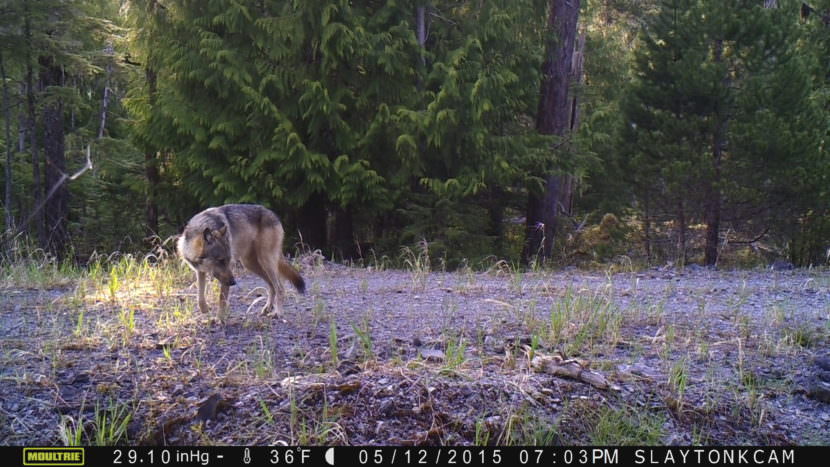
A wolf on Prince of Wales Island, as captured by a trail camera. (Photo courtesy of the Alaska Department of Fish & Game)
Last year’s record hunting and trapping season eliminated more than half of Prince of Wales Island’s wolf population. That’s according to the2019 population estimatereleased on Monday that proposes a 16-day trapping season next month.
The Alaska Department of Fish and Game’s estimate of the wolf population last year is 316. But that number doesn’t factor in the 165 wolves reported taken last winter — more than half the island’s population estimate.
The agency says it considers a 30% harvest to be sustainable. But over half is not. Southeast Regional Wildlife Supervisor Tom Schumacher said as much to the Southeast Alaska Subsistence Regional Advisory Councilwhich met last week.
“There’s no reason that the population couldn’t stand the harvest…
Anyone growing up in Washington would surely have heard it referred to by its nickname, “The Evergreen State.” But not all of the conifers coating the forested mountainsides are “ever”green. A few species of coniferous trees actually turn a brilliant color and shed their needles each fall, only to return to their green phase in the spring and summer.
Western Larches and their alpine cousins, the tamarack, can be found in extreme northern Washington, across Idaho and Montana to the Rockies and up into British Columbia and Alberta, Canada. Some are even found in suitable (usually cold and shady) habitats in the Arctic.
The larch forest zone is home to some distinctive animal species, including snowshoe hare, lynx, timber wolf and woodland caribou; gray jay, mountain chickadee and the Clark’s nutcracker (pictured here), all of whom thrive in some of the harshest climates the planet has to offer.
During the winter, after larches have lost their orange needles, they may appear to be standing dead snags. But each spring these unique conifers again sprout new, light green needles, which turn a darker shade of green as the days grow longer and their short growing season begins again in earnest.
Duck Stamp Artists Turn to Spent Shotgun Shells to Meet New Pro-Hunting Mandate
The government art competition now requires hunting imagery, a change that some wildlife painters say undermines its conservation message.By Andy McGlashenAssociate Editor, Audubon MagazineOctober 06, 2020
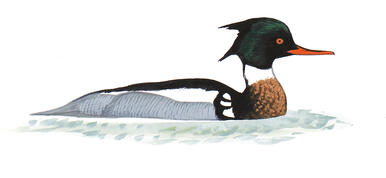
The paintings submitted for this year’s federal duck stamp contest feature familiar images of wildlife art: A Cinnamon Teal bobs on a mountain lake. Two Brant tuck in to land in coastal chop. A placid pair of Red-breasted Mergansers float side by side…
Less than two weeks after signing an executive order to have the U.S. join the One Trillion Trees Initiative, President Donald Trump stripped nearly 20-year-old protections from Alaska’s Tongass National Forest, one of the world’s largest intact temperate rainforests, paving the way for new roads and logging in over 9.3 million acres of near-virgin forest.
A forest scene at Takatz Bay on Baranof Island, Tongass National Forest, Alaska, USA.(PHOTO BY WOLFGANG KAEHLER/LIGHTROCKET VIA GETTY IMAGES)
KEY FACTS
Starting Thursday it will be legal to pave roads andcut downand remove timber from Tongass National Forest, according to a report by theWashington Post; it has been under federal protection since2001.
Experts say Tongass is a “massive carbon sink” where the trees, some of which are up to…