Exposing the Big Game

Forget Hunters' Feeble Rationalizations and Trust Your Gut Feelings: Making Sport of Killing Is Not Healthy Human Behavior

Exposing the Big Game

Jeff Bezos and Elon Musk’s plans to colonize space are even crazier than we thought

Exposing the Big Game's avatarThe Extinction Chronicles

https://nypost.com/2020/08/08/billionaires-who-plan-to-colonize-space-live-in-a-dream-world/

Enlarge Image

As a child, Elon Musk would read comic books and sci-fi novels and dream of fantastical worlds. Now the tech entrepreneur is on the verge of visiting one.

Musk’s focus narrowed some 20 years ago while poking around NASA’s website. He noticed that there was no timetable…

View original post 1,494 more words

‘Thugs illegally hunting are threatening to burn down farmers’ sheds’ – McGrath

Exposing the Big Game's avatarCommittee to Abolish Sport Hunting Blog

‘Thugs illegally hunting are threatening to burn down farmers’ sheds’ – McGrath

Independent TD Mattie McGrath has said that “thugs illegally hunting hares and rabbits are threatening to burn down farmers’ sheds”.

Deputy McGrath was responding to the recent call by the Irish Wildlife Trust (IWT) for a ban on hare coursing to be put in place.

He explained: “Maurading gangs with lurchers and terriers that are threatening farmers is something that is never talked about.” He said that such crimes will “thrive” if hare coursing is banned.

Also Read: Call for ban on ‘cruel and barbaric’ hare coursing – IWT

Deputy McGrath said that groups such as the IWT “undermine rural Ireland” by condemning hare coursing, while “never opening their mouths about the gangs going around killing hares and rabbits and terrorising farm families”.

“They have total double standards – these groups. I never hear the Irish anti-blood sport groups talking about this illegal carry-on of terriers…

View original post 427 more words

How botched cases kept ivory cartels in business

Exposing the Big Game's avatarCommittee to Abolish Sport Hunting Blog

Mansur Surur and how botched cases kept ivory cartels in business Sunday, August 02, 2020

Kenya Wildlife Services rangers display elephant tusks and rhino horns intercepted at the Jomo Kenyatta International Airport in Nairobi in 2009. Photo | Reuters

By JOHN KAMAU
What you need to know:
Mansur Surur is believed to be a poaching kingpin.
He was arrested this week, marking a potential end to a pursuit championed by conservationists.
On January 10, 2016, just before sunset, Fredrick Muchina was driving on a dusty road near Ruiru town when he was blocked by a saloon car. His vehicle, a Toyota Kluger registration KBQ 242N, swerved as if to give way – but it was too late. He was shot six times in the chest. He died on the spot.

Mr Muchina was on the radar of both the police and the Kenya Wildlife Service (KWS). He had been linked…

View original post 1,962 more words

Hunted and traded for body parts, the Bengal slow loris needs a conservation strategy

by Deepanwita Gita Niyogi on 7 August 2020
 
The Bengal slow loris is a gum-eating, nocturnal, tree-dwelling primate species found in northeast India.
Limited information on its status and ecology is the main hindrance to developing a conservation strategy for this species in India, state experts.
The species, which is listed as Endangered in the International Union for Conservation of Nature’s Red List, is heavily hunted and traded despite being legally protected under the Wildlife Protection Act, 1972.
Researchers recommend community awareness drives comprising schoolchildren in villages surrounding protected areas and more scientific studies.
 
Trying to trace the shy and nocturnal Bengal slow loris, primatologists in India’s biodiversity-rich northeast India kept missing the gum and sap-feeding endangered primate species till 2008. It was only in 2009 when primatologists in the region got together and switched methods to scout out for the little-known venomous primate that they uncovered more about it.
 
“Bengal slow loris (Nycticebus bengalensis) is solitary and shy. So, it is tough to detect it in the wild. And for a long time, all the methods researchers were using to trace the Bengal slow loris were meant for diurnal primates,” said Jihosuo Biswas.
 
“That’s why we missed it,” Biswas of Primate Research Centre North East India based in Assam, told Mongabay-India. “Up to 2008, I encountered mostly rescued and released animals. I did not find any loris in the wild, even though I extensively searched for it in the forests. Then when we started a project with Nabajit Das, we followed proper methods and found the animal,” Biswas said.
 
The range of the Bengal slow loris extends from Vietnam to China, but in India, it is confined to India’s northeast. This region harbours 12 of India’s 26 non-human primate species. The species is facing habitat loss and hunting pressures across its range.
 
An arboreal animal, the Bengal slow loris is found in almost all types of trees, but they mainly prefer those that release gum or sap.
According to Dilip Chetry, head of primate research and conservation division of Aaranyak, a wildlife non-profit based in Guwahati, there are a few tree species where the species is found. These are Grewia microcos, Schima wallichii (needlewood tree), Gmelina arborea (beechwood or goomar teak), Delonix regia (Royal poinciana) and Terminalia chebula (black-or chebulic myrobalan).
 
According to Nabajit Das’ research, the animals are seen in trees up to
30 feet from the ground in the forests of Assam and Arunachal Pradesh.
Sometimes, they are also found in bamboo thickets. “They sleep by day in hollowed out trees, tree crevices and branches. Generally, they sleep curled up like a ball, with the head tucked under their arms,” said Das of Primate Research Centre North East India.
Threats at large
 
Das who is also affiliated with the Nocturnal Primate Research Group of Oxford Brookes University said in a paper that limited information on its status and ecology is the main hindrance to developing a conservation strategy for this species in India.
 
Slow lorises are a group of primates comprising eight species occurring in South and South-East Asia. They are the only known venomous primates, and their bite can lead to “severe anaphylactic shock (allergic
reaction) in humans.” Bengal slow lorises are the largest of the species, weighing up to two kilograms.
 
Bengal slow loris is facing habitat loss due to felling of roosting and feeding trees across its range. Jhum cultivation, expansion of tea estates and the conversion of forests for agricultural uses are endangering the animal.
 
The Bengal slow loris which prefers to search for its food under the cover of night is protected under the Wildlife Protection Act, 1972 as a Schedule-I species that accords the highest level of protection.
However, hunting continues even in protected areas mainly for use in traditional medicines.
 
“There is this belief that lorises have healing properties and are used for a large number of treatments. Fuelled by this belief, people in the hilly and remote areas use all body parts of the Bengal slow loris, even if there is no scientific basis for the diagnosis by local traditional medicine practitioners,” Das pointed out.
 
As witchcraft prevails in many places, people use their hands and legs in rituals, added Biswas. Mostly, the animal is rescued from kitchens in the villages after being trapped.
 
According to a study, slow lorises in many parts in Asia are traded as exotic pets. It points out that Mong La in Myanmar is a major trading centre for Bengal slow lorises. In Mong La in Myanmar on the China border, the animals were killed, dissected and dried, with the individual body parts, such as the arms, legs, skin and skeleton sold separately as medicine.
Since 2009, the northeast region has lost at least 3,199 sq. km. of area. Photo by Saurabhsawantphoto/Wikimedia Commons.
 
However, Das pointed out that no evidence has been observed to date that the hunting in northeast India is linked to the trade hub. He maintained that hunting is principally carried out to meet the local needs for traditional medicines. The prevalent belief that the animal is useful for medicines makes it an easy target for humans, who often catch it during firewood collection in the hilly areas of northeast India.
 
As on July 2020, the Bengal slow loris is listed as Endangered on the IUCN Red List of threatened species, due to a combination of habitat loss and severe pressures from hunting. The pressures are causing a reduction in the population of more than 50 percent over three generations (approximately 24 years). The species is also predicted to decline by more than 50 percent over the next three generations across its entire range due to continuing hunting pressures and loss of habitat, researchers said.
Tracing the species inside protected areas
 
Das and colleagues including Biswas carried out night-time surveys of the species in 16 protected areas in Assam and one protected area in Arunachal Pradesh from February 2009–May 2010. Through their surveys, they found that while the encounter rate was relatively low in the study area compared to encounter rates for slow lorises elsewhere in their range but it was higher than recorded by other studies in north-east India.
 
“We found that despite hunting and habitat loss Bengal slow lorises still exist in Assam and Arunachal Pradesh, albeit patchily within a forest block. The protected area network in these states is important for their conservation,” Das and colleagues write in their study.
Saving the Bengal slow loris
 
Mass awareness about Bengal slow loris and other primate species are urgently needed in their distribution ranges as people are not much aware of this nocturnal species and its role in the ecosystem as well as the importance of its conservation, said Das. He recommends organising community awareness drives comprising schoolchildren in the villages surrounding the protected areas.
 
“Some awareness drives have been conducted in selective sites. As it is exclusively found almost in all the forested areas of northeast India, our efforts are negligible,” Das said.
 
Lack of funding also plagues adequate research on the species. “A few researchers are studying it, but there is a lack of funding resources also. Still, it is the least studied species in India and is now getting some importance. We mainly need scientific studies along with awareness on the species for conservation,” said Chetry, adding that primatology is a comparatively new field of study in the region.
 
Das observed a change in the mindset of local community members after each awareness drive. “People now want to know more about primate species and their role in forests in their areas. Even villagers seem to be interested more about nocturnal animals mammalian species,” Das explained, adding that night-blooming flowers are pollinated by the Bengal slow loris, which is vital for a healthy forest ecosystem.
 
https://india.mongabay.com/2020/08/hunted-and-traded-for-body-parts-the-bengal-slow-loris-needs-a-conservation-strategy/

Plan would allow river otters to be trapped in South Dakota

Exposing the Big Game's avatarCommittee to Abolish Sport Hunting Blog

The North American river otters are very active during the winter months.

An Aug. 16 deadline for commenting on a South Dakota Game Fish & Parks’ proposal that would create a trapping season for river otters is drawing both support and scorn for the idea.

The proposal to alter the state river otter management plan to allow trapping comes after the Game Fish & Parks Commission voted in May to remove the river otter from the state’s threatened species list, where it had been since 1978 when South Dakota first compiled a list of threatened mammals.

The decision to remove the otter was supported by trappers, including South Dakota Trappers Association President John Hopple, who argued that removing the river otter as a threatened mammal would give Game Fish & Parks flexibility to manage the species.

“Based on their decisions after this action, the river otter will continue to flourish and expand its…

View original post 350 more words

Climate change: carbon dioxide is the main greenhouse gas but cutting methane emissions is crucial too

Exposing the Big Game's avatarThe Extinction Chronicles

 – Dr Richard Dixon

New research has concluded that methane has a much more powerful effect on temperature than once thought, writes Dr Richard Dixon

<img class=”i-amphtml-intrinsic-sizer” style=”max-width: 100%; display: block !important; object-fit: cover;” role=”presentation” src=”data:;base64,” alt=”” aria-hidden=”true” />A climate change protestor calls for action on climate change, but carbon dioxide is not the only gas we need to worry about. Methane also plays a significant role.  (Picture: Peter Macdiarmid/Getty Images)

A climate change protestor calls for action on climate change, but carbon dioxide is not the only gas we need to worry about. Methane also plays a significant role. (Picture: Peter Macdiarmid/Getty Images)

There has been increased concern about the role of methane in causing climate change in recent weeks. We all know that the main greenhouse gas is carbon dioxide, which comes mainly from burning fossil fuels. But the second most important greenhouse gas is methane. We know it mostly as the natural gas that is in use in many people’s homes. Methane emissions come mainly…

View original post 711 more words

Why the U.S. government is allowing bears, wolves to be hunted in their dens

Exposing the Big Game's avatarCommittee to Abolish Sport Hunting Blog

The rollback of a rule banning controversial hunting methods in Alaska’s national preserves has some worried the National Park Service is ceding control to states with less conservation-oriented goals.

In June, the National Park Service announced a new rule that allows previously banned hunting practices—including baiting bears with human food and killing mother bears with cubs

… Read More

PHOTOGRAPH BY AARON HUEY, NAT GEO IMAGE COLLECTION

WHEN WOLF HUNTING season opened in Alaska on August 1, it became legal in many national preserves for hunters to kill nursing mothers in dens with their pups. In October, when black bear hunting season begins, females settling down for hibernation with cubs can be targeted in portions of Denali National Preserve and Gates of the Arctic National Preserve. And in spring, when cubs and their mothers emerge, they too will be legal…

View original post 2,325 more words

Beaver families win legal ‘right to remain’

Exposing the Big Game's avatarCommittee to Abolish Sport Hunting Blog

Share this with Email Share this with Facebook Share this with Twitter

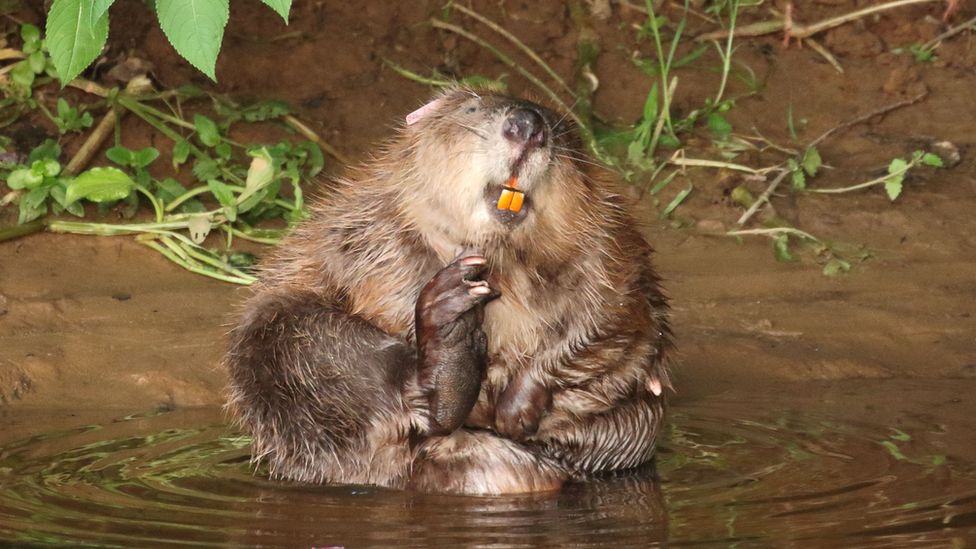
Image copyrightDEVON WILDLIFE TRUSTBeaver
Image captionA female beaver, having a good scratch … She was one of the first in England to be born in the wild

Fifteen families of beavers have been given the permanent “right to remain” on the River Otter in East Devon.

The decision was made by the government following a five-year study by the Devon Wildlife Trust into beavers’ impact on the local environment.

The Trust called it “the most ground-breaking government decision for England’s wildlife for a generation”.

It’s the first time an extinct native mammal has been given government backing to be reintroduced in England.

Environment minister Rebecca Pow said that in the future they could be considered a “public good” and farmers and…

View original post 723 more words

Despite Perdue’s High Welfare Standards, Some Chickens Can’t Survive 45 Days

Kelly Guerin / We Animals

By: Jennifer Mishler
Reading Time: 5 minutes

As a filmmaker for We Animals Media (WAM), Kelly Guerin has traveled to farms and slaughterhouses around the world to document the life and death of the farmed animals confined inside.

Most poultry farms look the same, says Guerin, easily recognized by their long barns with fluorescent lighting and the noise of whirring fans. But this chicken farm is the first she’s gained access to in the United States—where chickens account for 95 percent of the land animals killed for food each year—and, as she puts it, is “the first with a company name I recognized, who sends chickens to very familiar restaurants.”

This time, a farmer invited her in, wanting to talk openly about being caught up in the supply chain of Perdue Farms.

The farm, owned by Rudy Howell, contracts exclusively with Perdue which slaughters 700 million chickens each year making it the country’s fourth-largest poultry producer.

“[Perdue] calls themselves a family farm, but they’re a corporate farm. They have control over everything out here,” he said.

On Perdue’s website, they proudly claim, “We give our chickens room to roam.” In February, Perdue reported having met its goal of 25 percent of its chicken supplier farms meeting “free-range” standards, which still allow crowded barns as long as there is a way for birds to access the outdoors, however limited.

On the farm, Guerin witnessed what rapid growth in chickens actually looks like and why animal protection groups are pushing to end the practice.

Along with confined environments and overweight birds, culling is a daily reality inside factory farms that, before COVID-19, often went unseen. Perdue is no exception.

As Guerin toured Howell’s farm, she was shown how sick and dying young birds are killed. Farmers often use a method called cervical dislocation, in which a chicken’s head is stretched away from the body, as the bird is decapitated by hand. According to Perdue and the rest of the poultry industry, this is considered an acceptable way for farmed chickens to be killed.

In fact, a reminder to cull animals daily was listed on signs provided by Perdue and posted on the doors of the barn during Guerin’s tour.
The Rise of Factory Farmed Chicken
In the late 1920s, chickens became the first large-scale farmed animals, bred and raised indoors for egg production. The 1948 Chicken of Tomorrow Contest, marked the start of significant investment in the world of poultry production. What was then a 3 billion dollar industry with chickens bred for “plumper thighs” has now grown into a $48.3 billion dollar industry, where chickens are bred for rapid growth leading to the conditions we see today:  CHICKENS ARE THE MOST FACTORY-FARMED LAND ANIMAL ON EARTH. But they didn’t use to be. According to PEW Trusts, in 1950, more than 1.6 million farms grew chickens for American consumers. By 2007, 98 percent of those farms were gone, and Americans were eating even more chicken. Broiler sales jumped by 8 billion birds (1,400%), meaning nearly all of them were raised on a factory farm. 

The U.S. chicken market is now largely controlled by four companies—Tyson Foods, Pilgrim’s (JBS), Sanderson Farms, and Perdue Foods—all of which own and operate large-scale chicken farms. In 2019, Tyson Foods slaughtered 45 million chickens per week within 183 facilities. Being one of the top meat producers in the United States means that production cycles must be fast, animals must be bred in large quantities, and the slaughtering process must be continuous, leading to the increased potential for severe animal suffering and workplace injuries.

Organizations including Animal Outlook and PETA have conducted investigations at Tyson suppliers and processors unveiling severe abuse, neglect, and physiological issues as a result of selective breeding. One worker told an undercover investigator for PETA that, “Yesterday, I ain’t gonna lie, man, I straight up broke one’s back…I hurt an innocent chicken because the other chickens made me mad.”
 U.S. CHICKEN PRODUCTION IS BOOMING. For lack of more elegant phrasing, people want cheap chicken and they want a lot of it. Producers know this, and they’ve shaped their supply chains to accompany the booming demand. Fifty years ago, chickens became the first animals to be farmed at a large-scale. At the time, scientists believed there would be no way to continue feeding animal products to a rapidly growing human population without farming animals more efficiently. So they stuck animals in barns, crammed them in cages, and turned the farm into a well-oiled machine.

Today, roughly 25 million chickens are killed for food each day in the U.S. alone. To document the undisputed cruelty within modern chicken farms, Jo-Anne McArthur of We Animals produced Undercover: Stories from a Former Investigator. This short film documents former undercover investigator, Geoff Regier, and his time handling chickens on more than 50 farms and one processing plant for Maple Lodge Farms in Ontario, Canada.

“You stop seeing suffering. You stop seeing individuals. Animal dying alone on the floor becomes just a mess to be cleaned up. Otherwise good people, people with families and senses of humor are doing terrible things to animals because that’s how the system is set up,” Regier states.
 CHICKEN PRODUCERS IN THE U.S. SET GLOBAL STANDARDS FOR ANIMAL WELFARE. Over the past 10 years, large-scale farming practices honed in the U.S. have spilled over into Europe. And in an attempt to meet the steadily rising global demand for chicken, Europe’s poultry production centers have become overrun with factory farms. Although European farms with more than 5,000 broilers barely represent 1 percent of the total number of broiler farms in the EU, they account for more than nine in 10 broiler chickens.

Every year, more than 60 billion chickens live and die on factory farms around the world. They spend their lives crowded into industrial feeding operations where they barely have enough room to flap their wings. Many suffocate and die due to overcrowding. Then, over the course of just 40 days, they reach full size.

After the birds’ accelerated growing period—which can cause heart disease, lethargy, and lameness—they are sent to slaughter. Factory farmed chickens live their lives confined, without access to sunlight, for less than six weeks before they are killed, sent to be processed, and sold by the world’s largest fast-food companies.
Guerin saw some young chicks who had just arrived from the hatchery and already “could only take a few steps and then plop down. They had their legs splayed out beneath them.” Some tried and were unable to walk away as she got closer. “They would be laying there, breathing heavily, eyes closed,” she says.

“These animals have been bred to grow so fast that their hearts and legs can hardly keep up with the pressure from their bulking bodies,” says WAM founder Jo-Anne McArthur. “To some, death comes quickly. Others wither slowly away.”

If factory farming has become the new normal for chickens, and even the highest animal welfare standards aren’t enough, should companies like Perdue be able to claim that they are committed to animal care?  

Read the full story here
Our next session will leave you with the tools you need to develop your personal brand and develop your social profile.

New York Times bestselling author and top web influencer Neil Patel, vegan influencer and producer of The Invisible Vegan Jasmine Leyva, and social media influencer John Oberg will teach you how to harness the power of social media.

Limited tickets available—secure your spot now.
Covering COVID-19
With the worst global pandemic we’ve seen in over a century, it’s more important than ever to make sure the truth is reported in its entirety, not just what’s convenient.

Help us share the facts during these uncertain times and make sure the world knows our species cannot survive if we continue our exploitation of the planet and nonhuman animals.
Kelly Guerin / We Animals
Despite Perdue’s High Welfare Standards, Some Chickens Can’t Survive 45 Days
By: Jennifer Mishler
Reading Time: 5 minutes

As a filmmaker for We Animals Media (WAM), Kelly Guerin has traveled to farms and slaughterhouses around the world to document the life and death of the farmed animals confined inside.

Most poultry farms look the same, says Guerin, easily recognized by their long barns with fluorescent lighting and the noise of whirring fans. But this chicken farm is the first she’s gained access to in the United States—where chickens account for 95 percent of the land animals killed for food each year—and, as she puts it, is “the first with a company name I recognized, who sends chickens to very familiar restaurants.”

This time, a farmer invited her in, wanting to talk openly about being caught up in the supply chain of Perdue Farms.

The farm, owned by Rudy Howell, contracts exclusively with Perdue which slaughters 700 million chickens each year making it the country’s fourth-largest poultry producer.

“[Perdue] calls themselves a family farm, but they’re a corporate farm. They have control over everything out here,” he said.

On Perdue’s website, they proudly claim, “We give our chickens room to roam.” In February, Perdue reported having met its goal of 25 percent of its chicken supplier farms meeting “free-range” standards, which still allow crowded barns as long as there is a way for birds to access the outdoors, however limited.

On the farm, Guerin witnessed what rapid growth in chickens actually looks like and why animal protection groups are pushing to end the practice.

Along with confined environments and overweight birds, culling is a daily reality inside factory farms that, before COVID-19, often went unseen. Perdue is no exception.

As Guerin toured Howell’s farm, she was shown how sick and dying young birds are killed. Farmers often use a method called cervical dislocation, in which a chicken’s head is stretched away from the body, as the bird is decapitated by hand. According to Perdue and the rest of the poultry industry, this is considered an acceptable way for farmed chickens to be killed.

In fact, a reminder to cull animals daily was listed on signs provided by Perdue and posted on the doors of the barn during Guerin’s tour.
The Rise of Factory Farmed Chicken
In the late 1920s, chickens became the first large-scale farmed animals, bred and raised indoors for egg production. The 1948 Chicken of Tomorrow Contest, marked the start of significant investment in the world of poultry production. What was then a 3 billion dollar industry with chickens bred for “plumper thighs” has now grown into a $48.3 billion dollar industry, where chickens are bred for rapid growth leading to the conditions we see today:  CHICKENS ARE THE MOST FACTORY-FARMED LAND ANIMAL ON EARTH. But they didn’t use to be. According to PEW Trusts, in 1950, more than 1.6 million farms grew chickens for American consumers. By 2007, 98 percent of those farms were gone, and Americans were eating even more chicken. Broiler sales jumped by 8 billion birds (1,400%), meaning nearly all of them were raised on a factory farm. 

The U.S. chicken market is now largely controlled by four companies—Tyson Foods, Pilgrim’s (JBS), Sanderson Farms, and Perdue Foods—all of which own and operate large-scale chicken farms. In 2019, Tyson Foods slaughtered 45 million chickens per week within 183 facilities. Being one of the top meat producers in the United States means that production cycles must be fast, animals must be bred in large quantities, and the slaughtering process must be continuous, leading to the increased potential for severe animal suffering and workplace injuries.

Organizations including Animal Outlook and PETA have conducted investigations at Tyson suppliers and processors unveiling severe abuse, neglect, and physiological issues as a result of selective breeding. One worker told an undercover investigator for PETA that, “Yesterday, I ain’t gonna lie, man, I straight up broke one’s back…I hurt an innocent chicken because the other chickens made me mad.”
 
U.S. CHICKEN PRODUCTION IS BOOMING. For lack of more elegant phrasing, people want cheap chicken and they want a lot of it. Producers know this, and they’ve shaped their supply chains to accompany the booming demand. Fifty years ago, chickens became the first animals to be farmed at a large-scale. At the time, scientists believed there would be no way to continue feeding animal products to a rapidly growing human population without farming animals more efficiently. So they stuck animals in barns, crammed them in cages, and turned the farm into a well-oiled machine.

Today, roughly 25 million chickens are killed for food each day in the U.S. alone. To document the undisputed cruelty within modern chicken farms, Jo-Anne McArthur of We Animals produced Undercover: Stories from a Former Investigator. This short film documents former undercover investigator, Geoff Regier, and his time handling chickens on more than 50 farms and one processing plant for Maple Lodge Farms in Ontario, Canada.

“You stop seeing suffering. You stop seeing individuals. Animal dying alone on the floor becomes just a mess to be cleaned up. Otherwise good people, people with families and senses of humor are doing terrible things to animals because that’s how the system is set up,” Regier states.
 
CHICKEN PRODUCERS IN THE U.S. SET GLOBAL STANDARDS FOR ANIMAL WELFARE. Over the past 10 years, large-scale farming practices honed in the U.S. have spilled over into Europe. And in an attempt to meet the steadily rising global demand for chicken, Europe’s poultry production centers have become overrun with factory farms. Although European farms with more than 5,000 broilers barely represent 1 percent of the total number of broiler farms in the EU, they account for more than nine in 10 broiler chickens.

Every year, more than 60 billion chickens live and die on factory farms around the world. They spend their lives crowded into industrial feeding operations where they barely have enough room to flap their wings. Many suffocate and die due to overcrowding. Then, over the course of just 40 days, they reach full size.

After the birds’ accelerated growing period—which can cause heart disease, lethargy, and lameness—they are sent to slaughter. Factory farmed chickens live their lives confined, without access to sunlight, for less than six weeks before they are killed, sent to be processed, and sold by the world’s largest fast-food companies.
Guerin saw some young chicks who had just arrived from the hatchery and already “could only take a few steps and then plop down. They had their legs splayed out beneath them.” Some tried and were unable to walk away as she got closer. “They would be laying there, breathing heavily, eyes closed,” she says.

“These animals have been bred to grow so fast that their hearts and legs can hardly keep up with the pressure from their bulking bodies,” says WAM founder Jo-Anne McArthur. “To some, death comes quickly. Others wither slowly away.”

If factory farming has become the new normal for chickens, and even the highest animal welfare standards aren’t enough, should companies like Perdue be able to claim that they are committed to animal care?  

Read the full story here

Our next session will leave you with the tools you need to develop your personal brand and develop your social profile.

New York Times bestselling author and top web influencer Neil Patel, vegan influencer and producer of The Invisible Vegan Jasmine Leyva, and social media influencer John Oberg will teach you how to harness the power of social media.

Limited tickets available—secure your spot now.
Covering COVID-19
With the worst global pandemic we’ve seen in over a century, it’s more important than ever to make sure the truth is reported in its entirety, not just what’s convenient.

Help us share the facts during these uncertain times and make sure the world knows our species cannot survive if we continue our exploitation of the planet and nonhuman animals.