Exposing the Big Game

Forget Hunters' Feeble Rationalizations and Trust Your Gut Feelings: Making Sport of Killing Is Not Healthy Human Behavior

Exposing the Big Game

VIDEO: Filmmaker Jack Harries Shows Reality of ‘Wet Markets’

VIDEO: Filmmaker Jack Harries Shows Reality of ‘Wet Markets’

Posted by Saskia on June 11, 2020 | Permalink

Filmmaker Jack Harries joins forces with PETA in a brand-new video, discussing how disease-ridden “wet markets” and factory farms breed global pandemics like COVID-19 – and why they need to be shut down immediately.https://www.youtube-nocookie.com/embed/5uR5BaY7Ku4?wmode=transparent&rel=0&autoplay=0

The video includes footage of living and dead animals, including bats, rats, and frogs, at wet markets in Asia. Terrified animals are confined to small cages, and floors and countertops are smeared with faeces, blood, and urine. This footage was taken in April 2020 – a month after the COVID-19 outbreak was declared a pandemic. Jack explains the link between animal exploitation and deadly diseases:

“Today, three out of every four new or emerging infectious diseases come from animals, mainly via the wildlife trade or factory farming. Unless we stop exploiting animals – and soon – there will be more pandemics to come.”

Enough Is Enough

Experts say that the COVID-19 outbreak originated in a wet market in Wuhan, China, where humans had direct contact with live animals and dead animal flesh.

Despite a growing death toll, calls by world leaders for a ban on such markets, and the continued importance of flattening the curve, these markets are still conducting business as usual.

To prevent more diseases like COVID-19, all live-animal markets must close. Join PETA in urging the World Health Organization to call for an end to live-animal meat markets:Take Action

The exploitation and slaughter of living, feeling beings has led millions of us to be infected with a dangerous disease – and it’s not the first time something like this has happened.
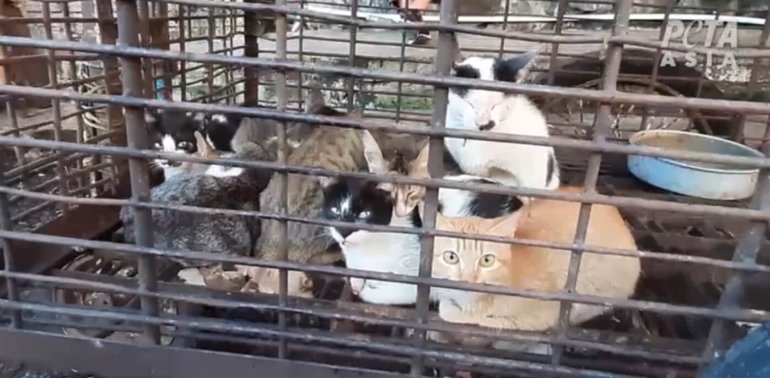
According to Public Health England, “Many (60 to 80% [of]) emerging infections are derived from an animal source.” Filthy factory farms, abattoirs, and meat markets threaten the health of every human being on the planet by providing a breeding ground for deadly pathogens like the ones behind COVID-19, SARS, bird flu, and more.

Will the Next Pandemic Come From a UK Farm?

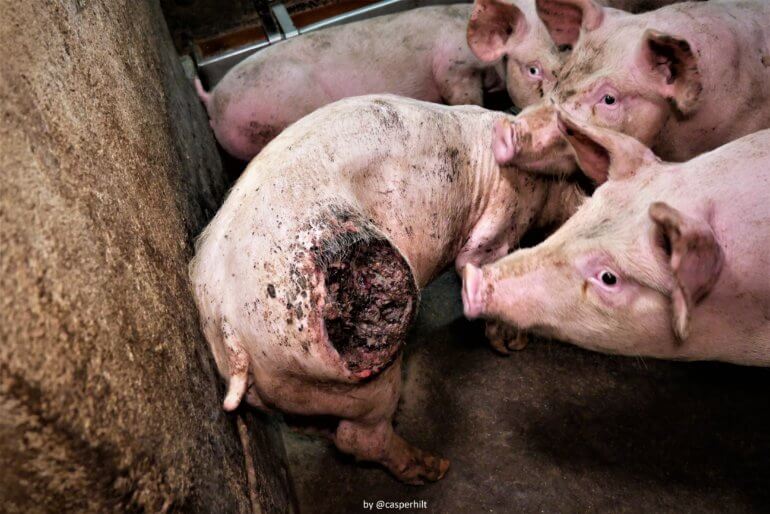
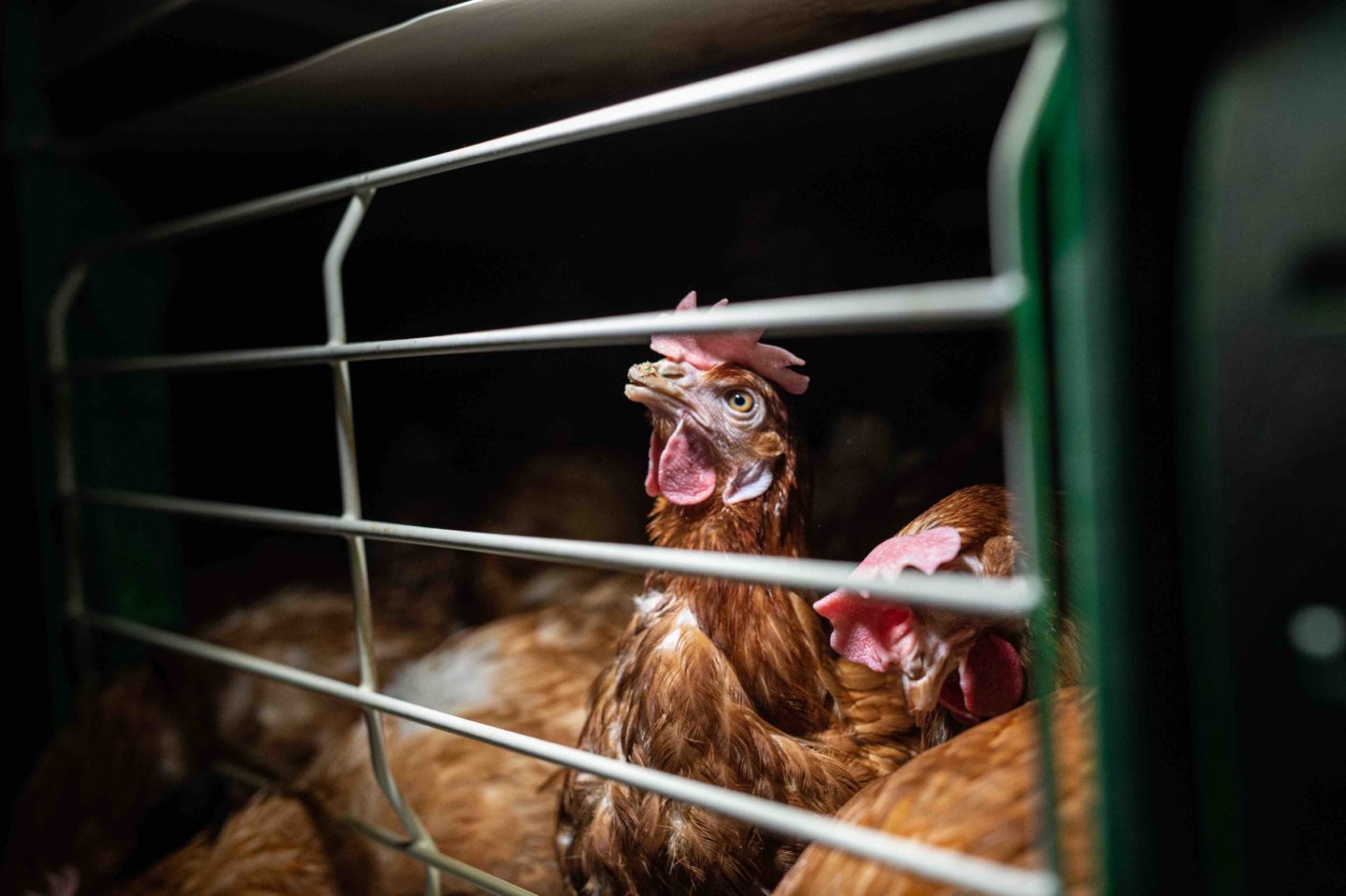
On farms in the UK, stressed animals are crammed into cages or sheds by the thousands and pumped full of antibiotics to keep them alive in filthy conditions that would otherwise kill them. Pathogens flourish in such environments.

We’re playing a dangerous game. Given the huge population of animals living on factory farms in the UK and around the world, we’re leaving ourselves vulnerable to further catastrophic disease outbreaks and pandemics.
casperhilt

And in part because of the widespread use of antibiotics in animal agriculture, experts believe that by 2050, more people will die of antibiotic-resistant diseases than of cancer.

What You Can Do

Not only is our mistreatment of animals responsible for deadly pandemics and putting human lives at risk, it also causes other animals immense suffering and is destroying the planet. Now is the time for each and every person to take responsibility for their part.
Filmmaker Jack Harries joins forces with PETA in a brand-new video, discussing how disease-ridden “wet markets” and factory farms breed global pandemics like COVID-19 – and why they need to be shut down immediately.https://www.youtube-nocookie.com/embed/5uR5BaY7Ku4?wmode=transparent&rel=0&autoplay=0

The video includes footage of living and dead animals, including bats, rats, and frogs, at wet markets in Asia. Terrified animals are confined to small cages, and floors and countertops are smeared with faeces, blood, and urine. This footage was taken in April 2020 – a month after the COVID-19 outbreak was declared a pandemic. Jack explains the link between animal exploitation and deadly diseases:

“Today, three out of every four new or emerging infectious diseases come from animals, mainly via the wildlife trade or factory farming. Unless we stop exploiting animals – and soon – there will be more pandemics to come.”

Enough Is Enough

Experts say that the COVID-19 outbreak originated in a wet market in Wuhan, China, where humans had direct contact with live animals and dead animal flesh.

Despite a growing death toll, calls by world leaders for a ban on such markets, and the continued importance of flattening the curve, these markets are still conducting business as usual.

To prevent more diseases like COVID-19, all live-animal markets must close. Join PETA in urging the World Health Organization to call for an end to live-animal meat markets:Take Action

The exploitation and slaughter of living, feeling beings has led millions of us to be infected with a dangerous disease – and it’s not the first time something like this has happened.

According to Public Health England, “Many (60 to 80% [of]) emerging infections are derived from an animal source.” Filthy factory farms, abattoirs, and meat markets threaten the health of every human being on the planet by providing a breeding ground for deadly pathogens like the ones behind COVID-19, SARS, bird flu, and more.

Will the Next Pandemic Come From a UK Farm?

On farms in the UK, stressed animals are crammed into cages or sheds by the thousands and pumped full of antibiotics to keep them alive in filthy conditions that would otherwise kill them. Pathogens flourish in such environments.

We’re playing a dangerous game. Given the huge population of animals living on factory farms in the UK and around the world, we’re leaving ourselves vulnerable to further catastrophic disease outbreaks and pandemics.

casperhilt

And in part because of the widespread use of antibiotics in animal agriculture, experts believe that by 2050, more people will die of antibiotic-resistant diseases than of cancer.

What You Can Do

Not only is our mistreatment of animals responsible for deadly pandemics and putting human lives at risk, it also causes other animals immense suffering and is destroying the planet. Now is the time for each and every person to take responsibility for their part.

Understanding Euthanasia: When Life and Words Become Worthless

Animals subjected to “euthanasia” often die by carbon dioxide poisoning, ventilation shutdown, and other mass-killing techniques that prolong suffering for minutes, even hours.Reading Time: 4 minutes

hen cage animal
Jo-Anne McArthur/Animal Equality

The American Veterinary Medical Association’s Guidelines for the Euthanasia of Animals rightly defines euthanasia as a “good death.” But the Guidelines make all kinds of exceptions for situations in which the inhumane killing of animals—a very bad death—may be considered “euthanasia.”

People take their beloved companion animals reluctantly to the veterinarian to be euthanized, not to get rid of an inconvenience or for some other selfish purpose, but because their pet’s suffering is profound, cannot be alleviated, and will only worsen. Euthanizing a hopelessly suffering nonhuman animal or human being is an act of mercy. In such cases, the decision-makers implicitly understand the true meaning of euthanasia. The sufferer is not going to die slowly and painfully with an infusion of, say, carbon dioxide gas (CO2), or be baked to death “humanely,” as described in “How to Kill Half a Million Chickens at Once” and in “Pigs Roasted Alive in Coronavirus Mass-Extermination, Probe Uncovers” where the investigators errantly refer to the killings as “euthanizing.”

This verbal corruption confounds our discourse when, instead of a companion animal or human sufferer, the subject is a chicken, a pig, a turkey, or a mouse on a farm or in a laboratory. In these settings, the individual is one of the hundreds, thousands, or millions of captive individuals who exist solely for human use. They are born to be harmed—injured, infected, killed—for human “benefit.” When the researcher or the farmer decides in the interest of expedience to kill them, by whatever means, the term that is used to characterize the procedure is “euthanasia.”

An example appears in the Iowa State University College of Veterinary Medicine publication, Water-Based Foam for Poultry Depopulation, which cites the American Veterinary Medical Association (AVMA) in support of the mass-suffocation of poultry under rolling carpets of chemically irritating fire-fighting foam:

Euthanasia of large numbers of birds in a quick, efficient manner with welfare consideration. The process is used to control disease spread or end the suffering of dying birds during a disease outbreak or natural disaster situations.

Though decades of research have confirmed that exposure to CO2 gas causes pain, panic and slow suffocation in mammals and birds, who will desperately seek to escape a CO2-filled chamber, the AVMA Guidelines 2020 equivocate, as in this directive for killing small animals in experimental settings:

In addition to humane outcomes, an important consideration in the choice of method for euthanasia of laboratory animals is the research objectives for the animals being euthanized.

For small animals like mice and rats in laboratories: Carbon dioxide, with or without premedication with halogenated [inhaled] anesthetics, is acceptable with conditions for euthanasia of small rodents.

In other words, a “humane outcome”—a manner of death that is painless, swift, and compassionate—may be sacrificed to “research objectives” and still be called “euthanasia,” and even absurdly at times, “humane euthanasia.”

Appallingly, the AVMA has fostered a language of impunity for agribusiness and the animal research industry to the point of elevating, in public and industry discourse, the opposite of what euthanasia and humane treatment literally mean. This fraudulent usage is a perfect example of Orwellian “newspeak,” which Merriam-Webster defines as “propagandistic language marked by euphemism, circumlocution, and the inversion of customary meanings.”

It’s easy for the public and for animal advocates to get lulled into a sense of complacency when all around us the authorities use terms like “euthanasia” to not only characterize but endorse the mass killings of farmed animals and animals in laboratories by asphyxiating, baking, or engulfing them in deadly chemicals with fire-fighting foam. Animals subjected to the cruelties of carbon dioxide, fire-fighting foam, and ventilation shutdown can take up to ten minutes, even hours, to die while struggling together in agony; and many survive these automated, crude procedures only to be trashed, buried or bulldozed, alive.

Where does this leave us—the animal advocacy community—in confronting the massive, unrelenting, painful carnage of living, breathing beings? Do we ignore it because the problem is too big for us to change? Do we justify our position because, as even animal advocates have said on occasion, fraught with frustration that can degenerate into apathy, “They’re going to die anyway”?

Of course, we’re all going to die, but when it comes to our own species and our beloved companion animals, we do not invoke our mortal fate as an excuse for abuse. The conundrum in the case of laboratory animals and farmed animals isn’t simply that they are “going to die anyway.” It’s that they are going to die inhumanely in a slaughterhouse or as part of an experiment, or in the inhumane circumstances that surround slaughter and experimentation—transportation, neglect, rough handling, overwhelming stress, fear, and learned helplessness.

There is no quick or easy answer because if there were, animal advocates would champion it. But this much we know: Silence and euphemisms like “euthanasia” are not the answer. We may be uncomfortable with a problem that is so immense and seemingly intractable, but we need to speak up—and speak accurately—even if we feel we’re shouting in the wind.

As animal advocates, we cannot allow animal exploiters to define the conversation for us, lull us into false rhetoric, or determine how we regard animals. Succumbing to these pressures, we degrade the lives of the animals down to the level at which the exploiters abuse them. By submitting to linguistic subterfuges, we accommodate virtually any mistreatment of animals as acceptable. This is the moral downslide that allows agribusiness and animal researchers to inflict pain, torment, and death on animals unfazed. It’s the type of “convenience” that debased language facilitates. As advocates for animals, let us not call the brutal mass-extermination of innocent, defenseless creatures for the sake of human convenience, “euthanasia.”

For the animals’ sake, we cannot let ourselves, or the public, be “put to sleep.”

Karen Davis, PhD is the President and Founder of United Poultry Concerns, a nonprofit organization that promotes the compassionate and respectful treatment of domestic fowl including a sanctuary for chickens in Virginia. She is the author of numerous books, essays, articles, and campaigns advocating for these birds. Her latest book is For the Birds: From Exploitation to Liberation: Essays on Chickens, Turkeys, and Other Domesticated Fowl (Lantern Books, 2019).

Barbara Stagno is the President and Founder of Citizens for Alternatives to Animal Research & Experimentation (CAARE). Since 1995, Barbara has worked to oppose the exploitation of animals, especially the use of animals in experiments. She founded CAARE in 2014 to disseminate information about the power of emerging science to end the use of animals in research, while also raising awareness of their immense suffering. Before starting CAARE, Barbara was a campaign director for a national animal protection organization.

Breaking news: Dutch parliament votes to permanently close mink fur farms

June 24, 2020 1 Comment

Breaking news: Dutch parliament votes to permanently close mink fur farms

After the Dutch government confirmed that two fur farm workers were “extremely likely” to have contracted the virus from mink, the country ordered the killing of hundreds of thousands of mink on the infected farms to prevent future outbreaks. Photo by BirdImages/iStock.comShare7KTweetRedditEmail7KSHARES

The Dutch parliament has voted to permanently shut down an estimated 128 mink fur farms in the wake of coronavirus outbreaks on 17 of these farms since April. If approved by the Dutch government, the decision would bring a welcome end to the cruel business of fur farming in the country—a business that causes immeasurable suffering for millions of animals each year.

Mink on fur farms in the Netherlands have already paid a heavy price during the pandemic. After the government confirmed that two farm workers were “extremely likely” to have contracted the virus from mink, the country ordered the killing of hundreds of thousands of mink on the infected farms to prevent future outbreaks. Most of the animals killed were days’ old and weeks’ old pups.

Denmark, which is Europe’s largest mink producer, has also discovered infected mink on its fur farms and has culled at least 11,000 mink as a result.

The Netherlands is Europe’s third largest producer, producing 4.5 million mink pelts, according to the latest data available. Along with a dozen other countries in the European Union, the Netherlands has been in the process of phasing out ​mink fur farming ​since 2013, when a ban was adopted, with a deadline of December 2023. But animal protection groups, including Humane Society International, have been lobbying the Dutch government to end the practice sooner in the wake of the pandemic.

The Netherlands has already phased out fox and chinchilla fur farming.

The novel coronavirus is believed to have originated at a wildlife market in Wuhan, China, and since the outbreak there has been more attention focused than ever before on trades that cruelly confine animals. We have been warning for years about the animal welfare problems inherent in such businesses, and the strong public health risk they pose. Last month the Humane Society family of organizations released an 11-point policy report to prevent the risk of future pandemics, including ending the wildlife trade, ending fur farming, ending the large-scale commercial breeding of dogs in puppy mills, and ending the intensive confinement of farm animals on factory farms.

Infectious disease experts around the world have voiced similar concerns over future pandemic outbreaks and animals kept in close confinement.

Conditions on fur farms are not all that different from those in a wildlife market: scared animals are kept in filthy, crowded cages. Many are often sick or injured, creating the perfect environment for diseases to breed. An HSl investigation of a fur farm in Finlandshowed hundreds of foxes and mink crammed in small, barren and filthy battery cages. Many of the animals had eye infections and gaping wounds, including a mink with a large, bloody hole in the head. Some animals lay dead in the cages and others ate them or walked over them.

The vote yesterday in the Netherlands shows that the people of that country do not want their nation contributing to such cruelty anymore, and we urge the government to approve the closure of fur farms without delay. The experience of the Netherlands should also serve as a reminder for other fur-producing nations that this is a business rife with animal welfare and public health problems, and that they should act swiftly to end fur farming on their soil. The market for fur is dropping fast, with major fashion houses and retailers shutting their doors on this cruel commodity. Now, with the danger of disease looming, there is not a single reason to keep this fading industry alive.

Grizzly cubs should be rehabbed

Exposing the Big Game's avatarCommittee to Abolish Sport Hunting Blog


BY LETHBRIDGE HERALD OPINON ON JUNE 25, 2020.

Judy Malone

TOURISTS AGAINST TROPHY HUNTING

In his response to a recent open letter to the Alberta and B.C. governments, signed by more than 100 scientists, bear experts and advocates, asking for three grizzly cubs to be rehabbed for return to the wild, and for an updated grizzly recovery plan, Alberta government spokesperson Gordon Stenhouse seems unaware of recent studies in grizzly rehabilitation and behaviours. It is evidence that should factor into any decisions regarding individuals of a threatened species.

Until 2018 Alberta protocol for all orphaned bear cubs stated they are to be either shot by a conservation officer or sent to a zoo. But as the government well knows, the public reacts strongly to bad news about baby bears. It was only after intense public pressure in 2018 that two black bear cubs were eventually released to the Cochrane…

View original post 611 more words

Europe swelters with another day of extreme heat

Exposing the Big Game's avatarThe Extinction Chronicles

Excessive heat as far north as Scandinavia

JUST WATCHED

Excessive heat as far north as Scandinavia

01:49/01:49
Now PlayingExcessive heat as far…
Excessive heat as far north as Scandinavia 01:49

(CNN)Only one week into the official start of summer and parts of Europe have already been experiencing near-record temperatures.

Fast forward to Wednesday and London’s Heathrow Airport observed its hottest weather of 2020 with a temperature of 91 degrees Fahrenheit (32.6 C). A 68 degree afternoon (20 C) in London is more typical for this time of year.
Thursday, another day of excessive heat is forecast, as highs climb into the upper 80s…

View original post 129 more words

161 ways to prevent another pandemic: Cambridge University academics say going vegan,

Exposing the Big Game's avatarThe Extinction Chronicles

 banning trade of exotic animals and clamping down on crowded farms will stop the world being hit by more killer diseases

  • University of Cambridge study said shutting down wet markets was not enough 
  • Highlighted seven ways pandemic could jump from animals to humans in future
  • Gave 160 ways to mitigate future crises, from going vegan to limiting livestock

Going vegan, banning the trade of exotic animals and clamping down on crowded farms could prevent the world from being ravaged by another pandemic, leading scientists warned today.

A 25-strong team of wildlife and veterinary experts have identified seven routes by which pandemics could occur moving forward — and 161 ways to reduce the risk of another infectious disease striking every corner of the planet.

The team — led by Cambridge University experts — said humans must drastically change…

View original post 333 more words

CDC adds 3 new coronavirus symptoms to list

Exposing the Big Game's avatarThe Extinction Chronicles

The Centers for Disease Control and Prevention (CDC) appears to have recently added three new symptoms of the novel coronavirus to its ongoing list.

Congestion or runny nose, nausea, and diarrhea were added, joining the federal agency’s list that already included fever or chills, cough, shortness of breath or difficulty breathing, fatigue, muscle or body aches, headache, new loss of taste or smell and sore throat.

CLICK HERE FOR FULL CORONAVIRUS COVERAGE

“This list does not include all possible symptoms. CDC will continue to update this list as we learn more about COVID-19,” per the CDC. 

The new symptoms were quietly added, with one news outlet reporting that the changes were made on May…

View original post 211 more words

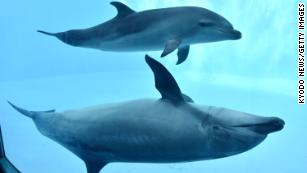
Dolphins are learning smart fish-catching trick from peers, not mothers

By Katie Hunt, CNN

https://www.cnn.com/2020/06/25/world/dolphins-tools-shell-learning-scn/index.html

Updated 1:56 PM ET, Thu June 25, 2020

Dolphins learn this fish-catching trick from their peers

Dolphins learn this fish-catching trick from their peersCNN01:27/01:27Now PlayingDolphins learn this…

Source: CNNDolphins learn this fish-catching trick from their peers 01:27

(CNN)Only a very few animals use tools. Crows wield sticks to find food, chimps have fashioned primitive spears to hunt and dolphins in Australia have been spotted trapping fish in huge conch shells.Now, scientists have discovered just how these dolphins learn to catch their prey in this extraordinary way — using their beaks to bring the shells to the surface and then shake the fish into their mouths — similar to how we humans get at those last few chips at the bottom of a packet.”Our study shows that the foraging behavior ‘shelling’ — where dolphins trap fish inside empty seashells —spreads through social learning among close associates,” said Sonja Wild, who conducted this research for her doctorate at the University of Leeds.

It's not only humans who are right-handed. Dolphins also have a dominant side

It’s not only humans who are right-handed. Dolphins also have a dominant side“This is surprising, as dolphins and other toothed whales tend to follow a ‘do-as-mother-does’ strategy for learning foraging behavior,” she said in a press statement. Dolphin mothers and calves typically form very tight bonds, staying close to one another for at least two years learning social behaviors and feeding techniques.The findings provided more evidence of similarities between dolphins and great apes — chimpanzees, gorillas and humans — who have also shown a range of socially learned foraging behavior, the study, which published Thursday in Current Biology, said.close dialog

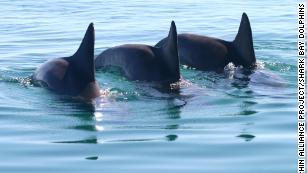
Receive Fareed Zakaria’s Global Analysisincluding insights and must-reads of world newsActivate Fareed’s BriefingBy subscribing you agree to ourprivacy policy.“Despite their divergent evolutionary histories and the fact they occupy such different environments: Both dolphins and great apes are long-lived, large-brained mammals with high capacities for innovation and the cultural transmission of behaviors,” saidMichael Krützen, director of the department of anthropology at the University of Zurich and senior author on the study.Using boats, the international team of researchers conducted surveys in the western gulf of Shark Bay, Australia, between 2007 and 2018 to evaluate how shelling behavior spread across the population.In 5,278 encounters with dolphins during that time, the scientists identified 1,035 different Indo-Pacific bottlenose dolphins (Tursiops aduncus). They spotted 19 dolphins in the act of shelling 42 times.This image shows a dolphin shelling in Shark Bay in Western Australia. This image shows a dolphin shelling in Shark Bay in Western Australia.Although shelling appears quite rare, both the number of shelling events and the number of individual “shellers” is likely to be an underestimate, according to the study, as the shell-shaking only lasts a few seconds, and is therefore hard to observe.”Some dolphins use shells quite regularly during foraging, while others have only ever been seen with a shell once,” said Wild.”So, while there may be other explanations, it’s possible that some dolphins have mastered the skill more than others.”
The social network

To find out how this way of foraging had spread from one dolphin to the next, the researchers looked at the influence of environmental factors, genetic predisposition and the dolphin’s social network.The model they developed showed that dolphins learn shelling from associates within their social group and they concluded that using the shells spreads primarily within — rather than between — generations, providing the first evidence that dolphins are also capable of learning from their peers, not just their mothers.

Male bottlenose dolphins form gangs to get a mate

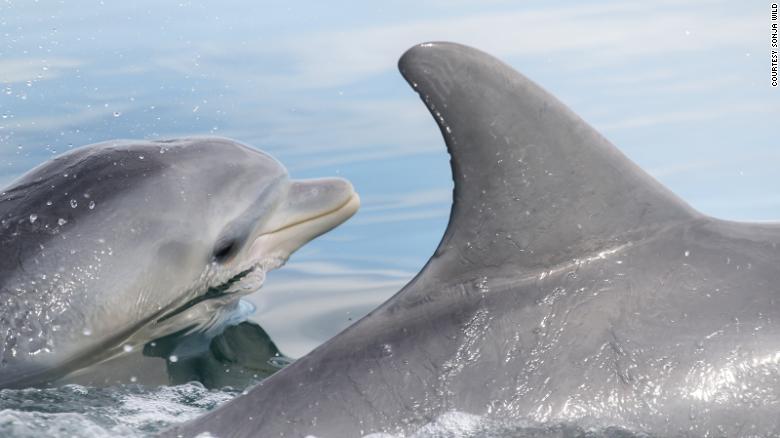
Male bottlenose dolphins form gangs to get a mateShelling is only the second reported case of tool use in dolphins. Dolphins in the same area are also known to use marine sponges as foraging tools to help them catch prey, according to the researchers.Wild said that a marine heat wave in 2011 wiped out Shark Bay’s critical seagrass habitat and triggered a die-off of fish and invertebrates, including the gastropods — sea snails — that live in the giant shells. She said it was possible that the resulting abundance of dead giant gastropod shells may have made it easier for the dolphins to learn this behavior.A mother and calf swimming together in Shark Bay, Australia.A mother and calf swimming together in Shark Bay, Australia.”Our results show that dolphins are definitely capable, and in the case of shelling, also motivated to learn new foraging tactics outside the mother-calf bond,” Wild said.”Learning from others allows for a rapid spread of novel behaviors across populations, and it has been suggested that species with the capacity for learning from others in this way may be better able to survive,” she said.

  • Paid Content4/5

Gray wolf hunting and trapping regulations for 2020-2021 announced

Exposing the Big Game's avatarCommittee to Abolish Sport Hunting Blog

  •  

FLATHEAD RESERVATION — The Tribal Council recently approved Gray Wolf Hunting and Trapping Regulations for the Flathead Indian Reservation for the 2020-21 hunting and trapping season. Wolf hunting and trapping tags will be available from the Tribal Fish, Wildlife, Recreation and Conservation Permit Office to CSKT Tribal members who present valid Tribal Identification.

There are three wolf hunting and trapping zones within the Flathead Indian Reservation:

The Mission Mountain zone, the Northwest zone and the Southern zone. The Mission Mountains Zone is described as the Reservation south of the northern boundary of the Reservation along the east shore of Flathead Lake to Kerr Dam, then southward to the confluence of the Flathead River and the Jocko River, then east along the north side of the Jocko River to the source of its middle fork at the east boundary of the Reservation. Hunting season…

View original post 483 more words