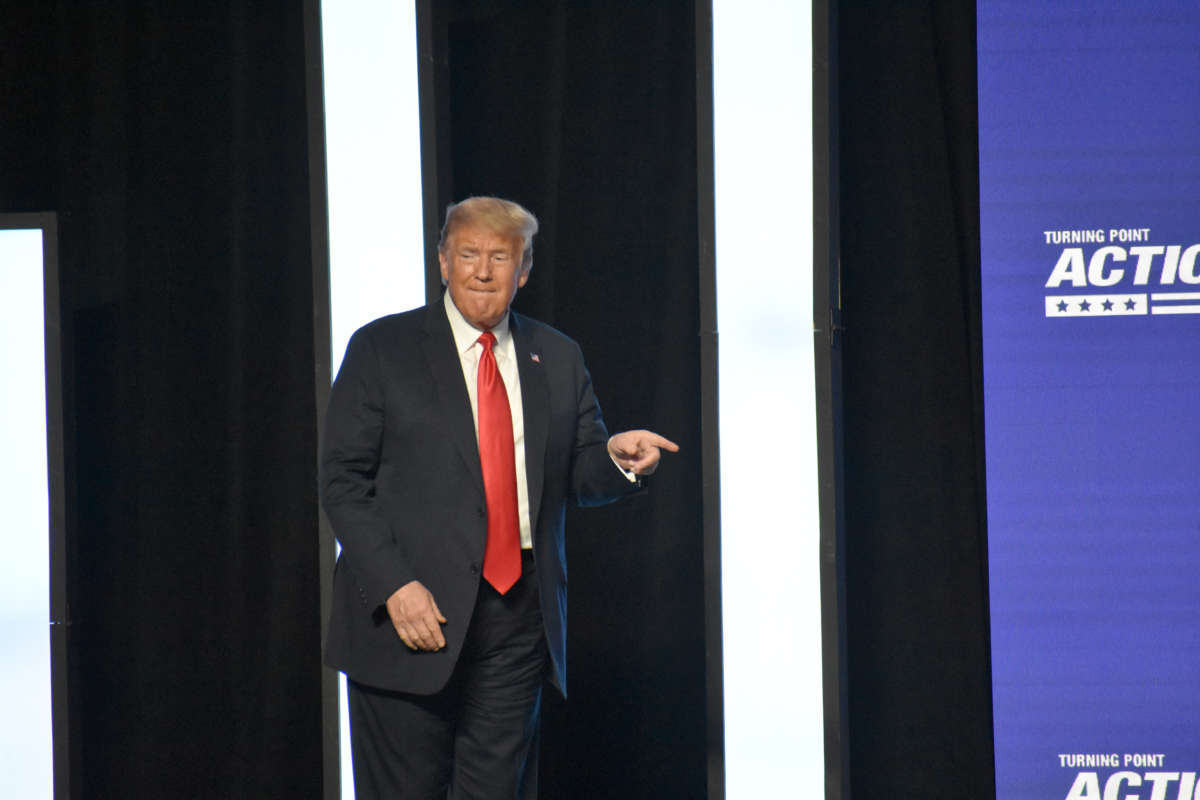
Trump’s Arizona Rally Confirms His COVID Policy Is Driven Only by His Ego
View original post 1,321 more words

Trump’s Arizona Rally Confirms His COVID Policy Is Driven Only by His Ego
View original post 1,321 more words
PUBLISHED THU, JUN 25 202010:49 AM EDTUPDATED 38 MIN AGOAmelia LucasKEY POINTS

The “P.L.T.” sandwich is arranged for a photograph at a McDonald’s Corp. restaurant in London, Ontario, Canada, on Wednesday, Jan. 8, 2020.Cole Burton | Bloomberg | Getty Images
Shares of Beyond Meat fell 7% in morning trading after the CBC reported that McDonald’s stopped testing a burger made with its patties in Canada.
In a tweet to a consumer asking about the burger, McDonald’s Canada said that the test ended April 6. The chain has no plans to bring back the item at this time.
“We can only comment generally and share that we were pleased with the test,” a Beyond spokesperson said in a statement to CNBC.
Beyond Meat CEO Ethan Brown told analysts in early May that the test concluded “for no negative reason at all.”
“I mean, we feel very good about our relationship with McDonald’s. And what’s going to be happening both, there and potentially elsewhere,” Brown said. “So, by the nature of it being a test, it had a beginning and an end.”
In September, McDonald’s joined the push for more meat alternatives in North America when it started testing the meat-free P.L.T. burger in southwestern Ontario. The test expanded to another 24 locations in January for a 12-week test.
McDonald’s said in a statement that there has been no change to its relationship with Beyond Meat.
“We’re evaluating learnings from our recent test to inform future menu options. As we look ahead, we will plan to bring plant-based options to the menu at the right time for customers in individual markets,” the company said.
Other international McDonald’s markets have found more success with meatless burgers. Restaurants in Germany, for example, have added veggie burgers made by Nestle to their menus.
In the United States, McDonald’s has yet to test a vegan burger. The coronavirus pandemic led the chain to streamline its menus temporarily and to push back product launches, including a new chicken sandwich.
Rival Burger King has been serving an Impossible Whopper nationwide for nearly a year. The Restaurant Brands International chain recently announced that it will be adding a meat-free breakfast sandwich to national menus.
Beyond’s stock, which has a market value of $8.9 billion, has risen nearly 84% so far this year. Shares of McDonald’s, which has a market value of $140 billion, has fallen 8% in 2020.

WATCH NOWVIDEO01:28Beyond Meat launches cookout value pack in latest play for market shareTRENDING NOW
JUNE 25, 2020 / 9:22 AM / UPDATED 3 HOURS AGO
WASHINGTON (Reuters) – Government experts believe more than 20 million Americans could have contracted the coronavirus, 10 times more than official counts, indicating many people without symptoms have or have had the disease, senior administration officials said.FILE PHOTO: Emergency workers walk past an ambulance parked at Houston Methodist Hospital, amid the global outbreak of the coronavirus disease (COVID-19), in Houston, Texas, U.S., June 22, 2020. REUTERS/Callaghan O’Hare
The estimate, from the Centers for Disease Control and Prevention, is based on serology testing used to determine the presence of antibodies that show whether an individual has had the disease, the officials said.
The officials, speaking to a small group of reporters on Wednesday night, said the estimate was based on the number of known cases, between 2.3 million and 2.4 million, multiplied by the average rate of antibodies seen from the serology tests, about an average of 10 to 1.
“If you multiply the cases by that ratio, that’s where you get that 20 million figure,” said one official.
If true, the estimate would suggest the percentage of U.S. deaths from the disease is lower than thought. More than 120,000 Americans have died from the disease since the pandemic erupted earlier this year.
The estimate comes as government officials note that many new cases are showing up in young people who do not exhibit symptoms and may not know they have it.
Officials said young people with no symptoms, but who are in regular contact with vulnerable populations, should proactively get tested to make sure they do not spread it.
“We have heard from Florida and Texas that roughly half of the new cases that are reporting are people under the age of 35, and many of them are asymptomatic,” one official said.
The CDC has sent 40 response teams to help deal with the outbreaks, they said.
More than 36,000 new cases of COVID-19 were recorded nationwide on Wednesday, just shy of the record 36,426 on April 24, concentrated on states that were spared the brunt of the initial outbreak or moved early to lift restrictions aimed at curbing the virus’ spread.
LONDON/GENEVA (Reuters) – Pine trees are bursting into flames. Boggy peatlands are tinderbox dry. And towns in northern Russia are sweltering under conditions more typical of the tropics.
Reports of record-breaking Arctic heat – registered at more than 100 Fahrenheit (38 Celsius) in the Siberian town of Verkhoyansk on June 20 – are still being verified by the World Meteorological Organization. But even without that confirmation, experts at the global weather agency are worried by satellite images showing that much of the Russian Arctic is in the red.
That extreme heat is fanning the unusual extent of wildfires…
View original post 700 more words


Money Laundering and the Illegal Wildlife Trade
Also available:
25 June 2020 – The illegal wildlife trade is a major transnational organised crime, which generates billions of criminal proceeds each year. The Financial Action Task Force (FATF) has conducted a new study to provide guidance to countries on measures they can take to combat money laundering from the illegal wildlife trade.
Wildlife traffickers exploit weaknesses in the financial and non-financial sectors, to move, hide and launder their proceeds, enabling further wildlife crimes and damaging financial integrity. One of the most effective ways to identify the broader criminal networks and take the profit out of this crime, is to follow the financial trails of wildlife traffickers.
Despite the significant criminal gains involved, countries and private sector are not prioritising efforts to trace and combat financial flows from this trade…
View original post 168 more words
WARNING: This story contains an image that some people may find upsetting.
A moose left dying with bullet wounds on a B.C. forest service road has a wildlife group asking the public for help to find the poacher.
The Pemberton Wilidlife Association (PWA) is offering a reward to anyone who might have information about how the animal was shot and left for dead at the summit of the Hurley River Forest Service Road.
The road runs through woodlands just north of Pemberton, B.C.
The B.C. Conservation Officer Service confirms that a mature bull moose was shot and died in the area some time between June 6 at 7 p.m. and June 7 at 9 a.m. PT.
“We are hoping some person with a sense of moral responsibility knows who did this senseless stupid act,” said Sgt. Bob Butcher.
PWA president Allen McEwan suspects the moose was illegally shot…
View original post 247 more words
Animals subjected to “euthanasia” often die by carbon dioxide poisoning, ventilation shutdown, and other mass-killing techniques that prolong suffering for minutes, even hours.
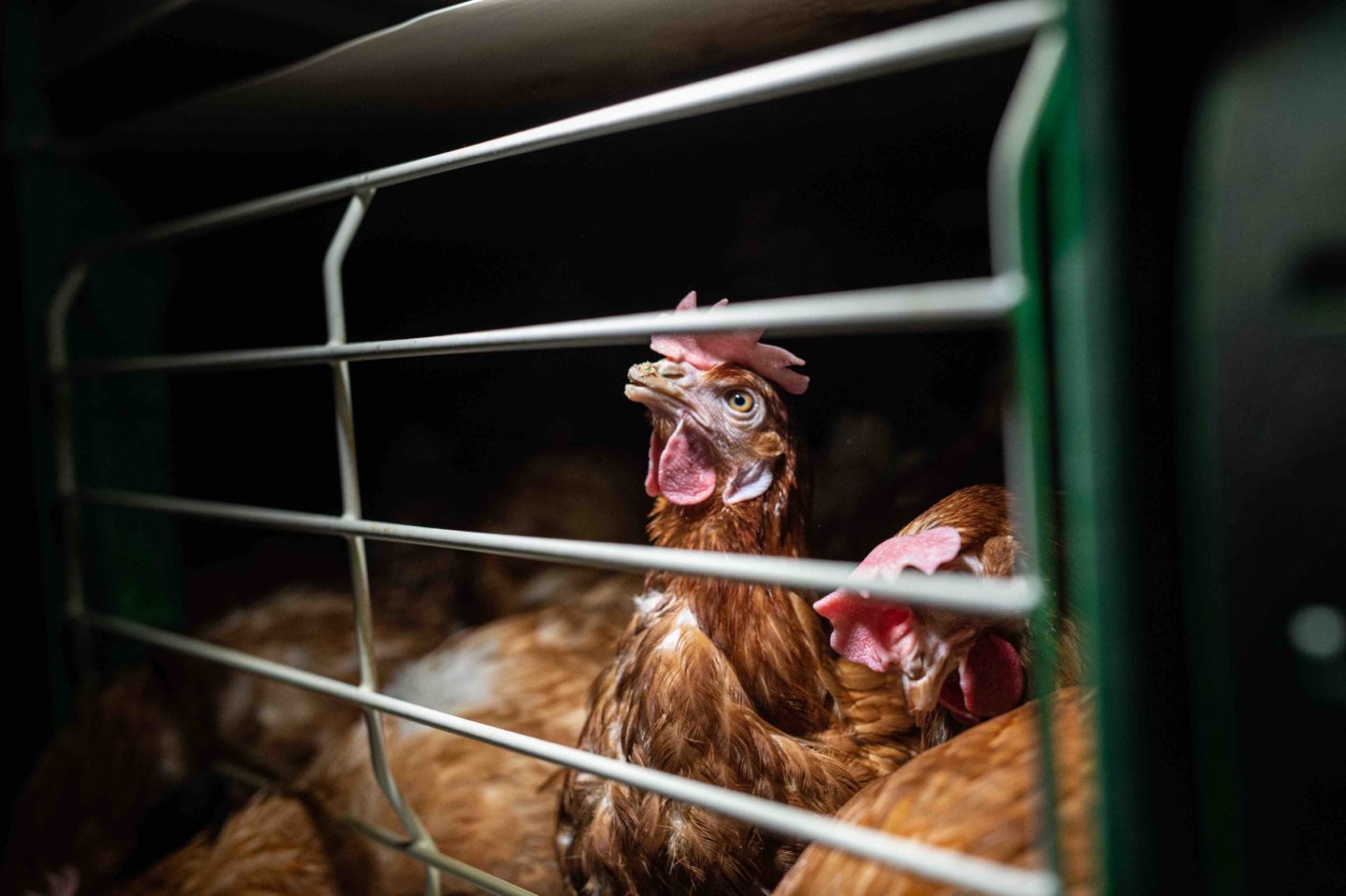
The American Veterinary Medical Association’s Guidelines for the Euthanasia of Animals rightly defines euthanasia as a “good death.” But the Guidelines make all kinds of exceptions for situations in which the inhumane killing of animals—a very bad death—may be considered “euthanasia.”
People take their beloved companion animals reluctantly to the veterinarian to be euthanized, not to get rid of an inconvenience or for some other selfish purpose, but because their pet’s suffering is profound, cannot be alleviated, and will only worsen. Euthanizing a hopelessly suffering nonhuman animal or human being is an act of mercy. In such cases, the decision-makers implicitly understand the true meaning of euthanasia. The sufferer is not going to die slowly and painfully…
View original post 1,007 more words
‘Please watch this. We need to find compassion in our hearts to see what we are doing to this world’MARIA CHIORANDO6 HOURS AGO
https://www.plantbasednews.org/culture/lewis-hamilton-urges-fans-watch-new-vegan-documentary

Lewis Hamilton has urged his fans to watch a new pro-vegan documentary.
The film, created by leading animal protection agency Viva!, is called HOGWOOD: a modern horror story. It will be available to stream on Amazon Prime, Apple TV and Google Play Movies from tomorrow (June 25).
Hamilton said of the movie: “Please watch this. We need to find compassion in our hearts to see what we are doing to this world.”
The film centers around Viva!’s four undercover investigations into Hogwood Farm. According to the organization, ‘we recorded a catalogue of cruelty including extreme overcrowding, routine mutilation, sick and dying pigs abandoned in gangways, painful lacerations and live cannibalism’.
The farm was eventually dropped by supermarket Tesco and food verification organization Red Tractor – but it took years of campaigning. Now the film goes beyond its investigation to explore the reasons behind factory farming and expose the negligence and inaction by government bodies and corporations alike.https://www.instagram.com/p/CB0PLguAUbw/embed/captioned/?cr=1&v=12&wp=658&rd=https%3A%2F%2Fwww.plantbasednews.org&rp=%2Fculture%2Flewis-hamilton-urges-fans-watch-new-vegan-documentary#%7B%22ci%22%3A0%2C%22os%22%3A17420.819999999367%2C%22ls%22%3A16394.29999998538%2C%22le%22%3A16443.28999996651%7Dhttps://fb51260ad01f7304469310c0d56d7300.safeframe.googlesyndication.com/safeframe/1-0-37/html/container.html
In a statement sent to Plant Based News, Viva said: “The conspiracy unfolds as we fight against some of the most powerful players in the animal agriculture industry. This is a gripping tale of negligence, greed and inaction, and our unrelenting fight to help the pigs trapped in Hogwood Farm.
“Join us as we take you through our battle for justice against Hogwood Farm, a Red Tractor approved farm who were supplying supermarket giant, Tesco, supposedly representing some of the highest animal welfare standards in the world.
“This is a huge milestone for us and we could not have done it without your support. You helped us show the demand for this film to be made and now, it will be screened to the masses from June 25.”
The film, which has a running time of just over 30 minutes, is presented by actor Jerome Flynn.
Speaking about the movie, Flynn said: “”It is an honor to be presenting this very important film. After seeing the horrendous conditions and animal abuse that is happening behind Hogwood’s walls I had to do something. The pigs of Hogwood aren’t just meat products, they are sensitive, emotionally aware beings just like us and they deserve better than this.”https://www.youtube-nocookie.com/embed/v_kHNUwm3Yw
Director Tony Wardle added: “I have been producing investigative documentaries for many years and no film has been more harrowing than HOGWOOD. The name ‘a modern horror story’ could not be more apt; there are modern horror stories taking place each day in the British countryside.
“Not only are these horrors hidden from sight, but they are endorsed by huge corporations and the government. That is why this film had to be made – because the public has a right to see what takes place beyond the factory farm walls.”
Viva! adds: “We realized that Hogwood is part of a bigger story, one that aims to end factory farming for good — and so we created HOGWOOD: a modern horror story. Now we need your help to get this film seen by the masses.”
Scientific Reports volume 10, Article number: 10166 (2020) Cite this article
The most comprehensive data on poaching of African elephants comes from the Monitoring the Illegal Killing of Elephants (MIKE) program, which reports numbers of illegally killed carcasses encountered by rangers. Recent studies utilizing MIKE data have reported that poaching of African elephants peaked in 2011 and has been decreasing through 2018. Closer examination of these studies, however, raises questions about the conclusion that poaching is decreasing throughout the continent. To provide more accurate information on trends in elephant poaching, we analyzed MIKE data using state-space models. State-space models account for missing data and the error inherent when sampling carcasses. Using the state-space model, for 2011–2018, we found no significant temporal trends in rates of illegal killing for Southern, Central and Western Africa. Only in Eastern Africa have poaching rates decreased substantially since 2011. For Africa as a whole, poaching did decline for 2011–2018, but the decline was entirely due to Eastern African sites. Our results suggest that poaching for ivory has not diminished across most of Africa since 2011. Continued vigilance and anti-poaching efforts will be necessary to combat poaching and to conserve African elephants.
Beginning around 2007, a wave of poaching for ivory affected populations of savannah elephants (Loxodonta africana) and forest elephants (L. cyclotis) across Africa1. The total population of savannah elephants decreased by 30% between 2007 and 20152, and an estimated 100,000 elephants of both species were poached between 2010 and 20123. In some countries, elephant populations declined by over 50% in under 10 years2. With elephant populations and ranges already greatly reduced from pre-colonial levels, such losses put many populations at risk of extirpation4,5.
Recent reports, however, indicate that elephant poaching may be abating6,7. Since 2016, some African parks have reported reductions or even a halt in elephant poaching8,9. Likewise, global ivory prices appear to have peaked and may have begun to fall, perhaps as a result of bans on ivory sales10. Accurately determining whether or not poaching is diminishing is critical for evaluating the success of ivory trade bans and other anti-poaching measures. Controversially, several African countries have proposed selling stockpiles of ivory11. Such sales may not be justifiable if elephant poaching is continuing at the high levels of the early 2010s.
Elephant population surveys tend to be infrequent, so our main source of information on poaching rates is the Monitoring the Illegal Killing of Elephants (MIKE) program, administered by the Convention on the International Trade in Endangered Species of Wild Fauna and Flora (CITES). Accordingly, rangers at sites across African gather data on the cause of death for elephant carcasses encountered during patrols12. The proportion of carcasses killed illegally, as opposed to deaths due to natural causes, legal hunting, or killing of problem animals by wildlife authorities, is known as “PIKE” and is considered an index of poaching rates3. PIKE data are typically aggregated to estimate regional or continental poaching rates. For all of Africa, estimates using the MIKE program’s methodology show a 31% reduction in PIKE between 2011 and 2018 (see Results). The program recently reported that PIKE has exhibited a “steady downward trend” since 20116.
CITES estimates PIKE values for Africa as a whole via general linear models, treating region and year as fixed effects so that
More: https://www.nature.com/articles/s41598-020-66906-w#Sec3

