A Tennessee man faces jail time for illegally killing a cow elk that was part of a University of Tennessee research project. (TWRA Photo)
Sean Doney, 33, of Caryville, Tenn. has pleaded guilty to illegally killing a cow elk on the North Cumberland Wildlife Management Area (NCWMA) in Campbell County.
TWRA Elk Biologist Brad Miller got the call and found the dead elk on Dec. 23, 2019. The elk was wearing a GPS collar designated “Cow #15” as part of a 3-year elk research study with the University of Tennessee Department of Forestry, Wildlife and Fisheries.
After an investigation and assistance from the local district attorney, Tennessee Wildlife Resources Agency Wildlife Officer Brenden Marlow charged Doney after he was identified by members of the public in result…
Regan did not have to go out that day, Friday, June 19th. The government
had issued a heat alert for here in southern Ontario, the dangers of heat
and humidity augmented by the presence of Covid-19, the pandemic. There is
social unrest everywhere. It was safest, for those of us who had the ability
to do so, to putter about our homes in air-conditioned comfort. Regan
certainly did not have to go out that day, the last day of her life, her
final hours spent to the last moment doing what she did in opposition to
oppression, abuse and cruelty.
These are unhappily strange times and early on the morning of the 19th I
was, as usual, perusing news about the social upheavals worldwide as a
result of events forcing enhanced recognition of bigotry, racial disparity,
and the plight of minorities supressed disproportionately, even killed by the police when there…
Late last week an Ontario woman was run over and killed by a semi-truck outside of Fearmans Pork slaughterhouse in Burlington. Details surrounding the incident have yet to be revealed, but what is known now is that Regan Russell, 65, was a long-time animal and human rights activist who was there to bear witness to the pigs on that truck. She was there because the secrecy enshrouding meat, dairy and egg production, and lack of legal oversight concerning farmed animal welfare forced her to be there. She was there because it is only outside of those trucks that concerned citizens can gain a mere moment of interaction with the animals, to document their conditions, and to show compassion before they are trucked off into the darkness. On this day in particular, Russell was there because soon, the newly passed Bill 156 will make it illegal to do so, and soon that darkness will grow much darker.
Russell witnessed animals used and abused in awful ways for many years, says Jenny McQueen, a well-known Toronto activist and friend of Russell. Russell was absolutely committed to speaking up on behalf of the animals and showing that, week after week, people need to do the right thing. Russell attended slaughterhouse vigils regularly, participated in a recent Black Lives Matter protest, and was a strong women’s rights advocate. There are so many instances when she was standing up for the oppressed, McQueen says.
Vigils have been held outside of Fearmans Pork for several years, organized by international animal rights group The Save Movement, which originated in Toronto. Typically, peaceful activists stand outside of slaughterhouses on public land, and, when trucks hauling live animals pull up, drivers are asked to stop for two minutes to allow activists to provide water, document conditions, and offer some words of apology, love and comfort. Vigils are extremely powerful, says McQueen. If you go, and connect, and look an animal in the eye, in person, it’s life-changing.
With the passing of Bill 156, the Security from Trespass and Protecting Food Safety Act, however, individuals who interact with animals in this way could soon be fined up to $15,000.
Tensions between vigil participants and some truck drivers have been bubbling for years, but for the most part the requested two minutes is usually provided without incident. Since the passing of Bill 156 just days before Russell’s death, though, activists can’t help but wonder if the industry, including that truck driver, may be feeling emboldened.
In Canada, there are no laws overseeing the daily treatment of animals on farms. An accepted form of on-farm euthanasia for piglets is bashing their heads into concrete. Pigs are transported in open-sided, non-climate-controlled trucks for up to 36 hours without food, water or rest, regardless of the weather. Fearmans Pork kills approximately 10,000 young pigs every single day. These are things Russell would want you to know. These are the things she was trying expose with her activism. These are the things Bill 156 will drive further away from the public eye, further into the darkness.
I am incensed to read that last summer Donald Jr. went to Mongolia and while there shot an argali sheep which is a threatened species. After the killing, according to Pro Publica, he then was able to obtain a “coveted and rare” permit to hunt this sheep. The permit was issued after the fact, of course, because of his father’s status. The trip cost us taxpayers $76,859.36 according to a Freedom of Information Act filing by Citizens for Responsibility and Ethics in Washington, for his Secret Service protection.
Now, his father’s administration has taken another step to endanger animals. The current secretary of the Interior, Daniel Bernhardt, has reversed hunting restrictions introduced in 2015 by the previous administration to protect animals within the jurisdiction of the national parklands in Alaska. He says they will increase hunting…
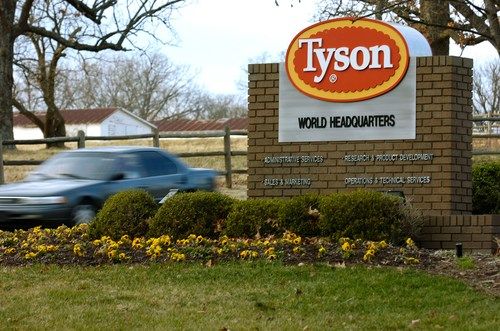
By Laura He, CNN Business China has suspended poultry imports from a Tyson Foods plant in the United States because of concerns about an outbreak of coronavirus at the facility.Monday, June 22nd 2020, 5:04 AM EDTUpdated: Monday, June 22nd 2020, 7:04 AM EDT
By Laura He, CNN Business
China has suspended poultry imports from a Tyson Foods plant in the United States because of concerns about an outbreak of coronavirus at the facility.
The country’s General Administration of Customs on Sunday said that Tyson confirmed a “cluster of Covid-19 infections among employees recently” at the plant, which it identified only by a registration number.
Asked for comment, Tyson did not say which plant the Chinese government was referring to — though the company told other media outlets that the announcement pertained to a plant on Berry Street in Springdale, Arkansas. The US Department of Agriculture has also used the same number to refer to a poultry plant at that location.
Tyson did not immediately respond to a request for further details.
The US company announced Friday that 481 of its workers recently tested positive for coronavirus at locations in Arkansas, nearly half of whom were at the Springdale plant. More than 3,700 people were tested in total, and all but 26 of the people who tested positive had no symptoms.
“We are confident our products are safe and we’re hopeful consultations between the US and Chinese governments will resolve this matter,” Tyson said in a statement to CNN Business.
The decision by China comes as the country continues to deal with fallout from a Covid-19 outbreak originally linked to a wholesale food market in Beijing. Traces of the virus were reportedly detected in multiple environment samples taken from the market, including on a chopping board used by a seller of imported salmon, though there are concerns that the virus had been quietly spreading for weeks before it was first detected.https://687800fd98e2e0eb5777156362b9ef25.safeframe.googlesyndication.com/safeframe/1-0-37/html/container.html
Tyson pointed out in its statement that the World Health Organization, the Centers for Disease Control and Prevention, the US Department of Agriculture and the US Food and Drug Administration all agree that “there is no evidence to support transmission of Covid-19 associated with food.” But Chinese health officials have warned that the virus could be “hidden” on packaging of imported frozen food products and vowed to strengthen inspections of all shipments from overseas.
Overseas food facilities aren’t China’s only concern. PepsiCo said Sunday that it shut down a factory in Beijing after reporting eight cases of coronavirus. The factory made potato chips. Pepsi said there have been no cases at its bottling facilities in the country.
China, meanwhile, is an important market for Tyson, and it’s unclear how much the country may still be importing from the company’s other plants. The company in February said that Chinese orders for pork increased nearly 600% in its fiscal first quarter compared to a year earlier.
Tyson also said at the time that it expected Chinese imports of US chicken to double after an outbreak of African swine fever ravaged China’s pig population last year, forcing customers to look for meat alternatives.
That outbreak was widely seen as a factor in pushing China last November to lift an import ban on US poultry as Beijing and Washington negotiated compromises ahead of January’s phase one trade agreement. Chinese authorities said that lifting the ban could help the country meet the demand for meat.
US chicken imports were banned in China in 2015 because of an outbreak of bird flu in the United States.Two years earlier, the United States exported more than $500 million worth of poultry to the country, according to the Office of the US Trade Representative.
“If tariffs are lifted or reduced, we would likely see an acceleration of already increased global demand for US pork, beef and chicken,” the company said.
Only four mountain lions can be killed in the 2021 hunting season.
DAVID HENDEE/THE WORLD-HERALD
Mountain Lions in Nebraska
Play Video
spaceplay / pause
qunload | stop
ffullscreen
shift + ←→slower / faster
↑↓volume
mmute
←→seek
. seek to previous
12… 6 seek to 10%, 20% … 60%
The Nebraska Game and Parks Commission is cutting the number of mountain lions approved for hunting in half for the 2021 season.
Only four mountain lions can be killed in 2021, compared with 2020’s limit of eight mountain lions, under staff recommendations approved by the commission on Friday.
Game and Parks also cut the number of permits in half compared with 2020 and dropped subunits in the Pine Ridge area. There will be 320 permits given to Nebraskans via a lottery system, according…
There is no justification for killing and hurting seals who are just trying to survive by eating fish in the oceans they inhabit. Photo by Ken Canning/iStock.com
For years, Scotland has allowed fish farmers and other fisheries to shoot seals in order to keep them from eating their fish —a brutal practice that has resulted in so much unnecessary suffering and death among these charismatic marine mammals. Last week, in a long-awaited move that Humane Society International/United Kingdom fought hard for, Scotland finally changed its laws, banning this cruel cull. It also added tough penalties for anyone found in violation.
The ban is also a victory for animal lovers in the United States. It was introduced in the Scottish parliament after the U.S. government, pressed by the Humane Society of the United States and the Humane Society Legislative Fund, changed regulatory requirements under the Marine Mammal Protection Act to mandate all fish imports from Scotland stop after 2022 if that nation continues to allow fish farmers and fisheries to kill and harm seals.
With organizations like HSI working to raise awareness, there is also growing understanding within Scotland about the need to end such cruelty. Officials from Marine Scotland, the government agency that oversees Scotland’s coastal waters and seas, told members of the Scottish parliament that their goal, with the ban, is to enhance and improve the welfare of seals.
Under the new law, penalties for illegal seal shooting could include 12 months’ imprisonment and a fine of £40,000 (around $50,000). Upon indictment, this could increase to an unlimited fine and five years’ imprisonment.
There is no justification for killing and hurting seals who are just trying to survive by eating fish in the oceans they inhabit. HSI/U.K. has worked hard to illustrate the cruelty of culling, including the lack of any independent oversight, under-reporting of numbers of seals killed, the killing of pregnant females and mothers who may have dependent pups, and evidence that shooting does not always lead to instantaneous death.
The U.K. is home to two important seal species, the grey seal and the harbor seal, and both face recovery challenges in a warming ocean. Moreover, seal populations are still declining in some parts of the world.
We applaud Scotland for taking decisive steps to ban the unnecessary and unkind cull and we are now calling for the ban to be swiftly enforced and for careful and independent monitoring of the situation to ensure that there is no spike in seal killing before the law is fully implemented, or any illegal killing afterwards. Seals face a multitude of threats today, including entanglement in fishing gear and marine litter, pollution, and disturbance on their breeding and molting grounds, and it is imperative that all nations act to protect these marine mammals who play such an important role in keeping our oceans healthy.
COVID-19 has become the second-worst pandemic in U.S. history. Experts say we could learn a lot from America’s response to the worst pandemic in history.
The coronavirus pandemic altered life as humans knew it in 2020, and as much of the world starts to examine how and when to resume daily activities, it’s clear that there are many challenges to overcome before normal daily life can resume in full.
The outbreak, which originated in late 2019 in Wuhan, China, officially became a pandemic in March. SARS-CoV-2, the virus that causes the disease COVID-19, has infected millions worldwide and killed hundreds of thousands, but more than 4 million have recovered from the ferocious disease. Health experts are conducting a frantic race to develop a vaccine while also performing vital research into the behavior of the virus, what…
Three days ago, Regan Russell (65) was murdered by a cold-blooded monster devoid of empathy and compassion. She was deliberately run down by a truck driver. His cargo were pigs stuffed into the truck in over-heated conditions and extremely stressed from thirst.
For a few moments a compassionate woman named Regan Russell attempted to alleviate both thirst and stress by bringing water to the captives through the narrow slits in the side of the truck.
Her kindness was rewarded with a death sentence callously delivered by the driver of the truck.
Some people have said that the driver was just doing his job. I don’t buy it. He was aware of the protests. He could have given a warning, he could have stopped to allow the protesters to give water to the pigs. He could have driven cautiously slow. Instead he slowed down and suddenly sped up. The fact is that he was negligent. The fact is that a woman is dead and he killed her and he should be charged with vehicular homicide.
Every year over a million pigs die during transport and every year some 121 million pigs are transported to slaughter. Over the last few days I have seen some very insensitive comments about Regan Russell which is not surprising considering the lack of empathy by so many people for the treatment of pigs and other captive bred animals. When people are in denial or worse when they actually embrace the horror of pig farming and transport, it is to be expected that such people will lack compassion for other humans, especially for humans who challenge the sadistic carnage of the human species.
One comment said that it was stupid to risk human life to defend pigs. Yet these same people think nothing of supporting the loss of human lives in defense of real estate, oil wells, flags and religion.
Regan Russell was a woman who lived her life in the spirit of St. Francis of Assisi. Yes, she died exercising compassion for captive pigs but she also died for the collective sins of humanity, for our support of cruelty, misery and death.
Regan Russell died because one of the servants of global slaughter decided that her life, like the lives of the prisoners he was transporting was insignificant and expendable. She died on the last day of legal protests. An agricultural gag law (bill 156) is now in effect making it a crime to give water to thirsty pigs being transported.
The monsters that drive the truck are just as culpable as the monster who slit the throats. Three million pigs are slaughtered each and every day.
Fearman’s Pork in Burlington, Ontario kill’s some 10,000 pigs each day. The trucks arrive continuously. In 30+Centigrade weather, the pigs are screaming in desperation from thirst, over-heating, stress, and exhaustion. If these were dogs or cats, the public would be furious at such horrific abuse. These facilities are an abomination of which every person who eats bacon is complicit. Think about what goes on in just this one evil place. 10,000 pigs each and every day, their throats slit, after enduring a torturous transportation. Raised in concentrated populations on concrete floors and abused daily from birth until death. These murder facilities spill tons of blood each day, out of sight and out of mind except for a small handful of compassionate people risking their lives and freedom to expose the atrocities. And now their compassion is being criminalized. To make providing water to a thirsty sentient being a crime is a total perversion of the laws of society and civilization.
Like Jill Phipps who died in 1995 by being struck by a truck carrying live veal calves in Britain, Regan Russell is the second person murdered by this ruthless industry. And like Jill, Regan will not be forgotten, her courage, her kindness and her actions will be marked as milestones in this global movement towards a more just and humane world.