There are only an estimated 120-230 mature-age Florida panthers left in the wild, with nearly 90% of deaths caused by collisions with vehicles. Photo by U.S. Fish and Wildlife Service
A key House committee has approved a package of investments in America’s infrastructure, including provisions to make U.S. roadways safer for both drivers and wildlife and to create more humane conditions for transporting horses within the country.
The INVEST in America Act package, H.R. 2, passed the House Transportation and Infrastructure Committee on Thursday by a 35 to 25 vote, and it now heads to the full House floor for consideration.
Provisions in the bill address the creation of safe passageways, including bridges and tunnels, for wildlife moving across landscapes to find food, water and shelter, adapt to changing environmental conditions, and migrate to reach breeding or wintering areas.
Such cooperation is thought to be rare among the young of other birds
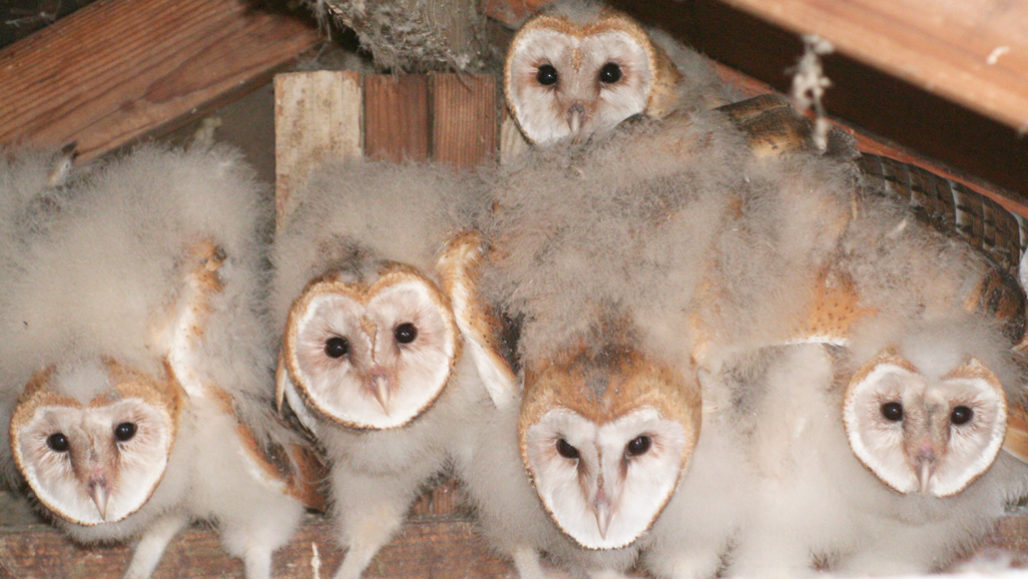
In a barn owl nest, older siblings sometimes donate their meal to a younger, needier sibling, but only if the younger chick grooms the elder first, a study finds.CHDWCKVNSTRSSLHM/FLICKR (CC BY-2.0)
If ever there were a competition to rank sibling relationships in the animal kingdom, barn owls would be close to the top. That’s because elder barn owlets will sometimes give away their meal to their younger siblings. Such cooperative behavior has been reported in adult nonhuman primates and birds, but rarely among young (SN: 2/6/12).
“I don’t know any other species where you can find it,” says Pauline Ducouret, an evolutionary biologist at the University of Lausanne in Switzerland. But scientists weren’t sure what prompted the food sharing. Now, observations of nests show that elder barn owlets offer their food to their younger siblings in exchange for grooming, Ducouret and her colleagues report in the July issue of the American Naturalist.
Barn owls (Tyto alba) raise six chicks at once, on average, and sometimes as many as nine (SN: 9/19/17). But not all chicks hatch at the same time, which means that elder chicks are usually healthier and larger than their younger brothers and sisters.
That’s because all chicks are entirely dependent on the parents for food, and food, in this case, is usually a small rodent, like a vole or a shrew, that can’t be easily split. So at any given visit, mom or dad can feed only one chick at a time. In many bird species, the eldest siblings would simply outcompete the rest, but not barn owls.
Sign Up For the Latest from Science News
Headlines and summaries of the latest Science News articles, delivered to your inboxE-mail*GO
To understand the seeming generosity of the elder birds, Ducouret and her team observed 27 broods of barn owls across the Switzerland countryside. The scientists videotaped each brood for two consecutive days and nights to understand how the owlets interacted and attached a tiny microphone backpack to each chick to help identify individual calls.
The team found that older chicks preferentially shared food with the younger siblings that extensively groomed them. And younger owlets, in general, groomed elder siblings more often than the older ones groomed the youngsters, “perhaps to maximize the probability of being fed in return,” the researchers write. In some cases, an elder chick would also offer food to the neediest sibling, which called out incessantly, irrespective of whether it groomed or not.
But food sharing occurred only when the researchers provided extra food to the owlets. So it wasn’t a case of the older chicks risking their survival to feed the youngsters. But when there was enough food to go around, the elder siblings chose to share instead of hoard.
“[It’s an] interesting study with a large sample size and technically nice observation techniques,” says Ronald Noë, a retired behavioral ecologist from the Netherlands who was not part of the research. “One usually reads about competition among siblings and even siblicide,” he says.
Ducouret says that this food-sharing behavior could have evolved because the elder siblings enjoy both indirect and direct benefits. Being groomed offers such immediate boons as protection against parasites like lice or fleas. Grooming could also reduce conflict and social stress among the owlets. And, by helping their genetically related younger kin survive, the elder siblings ensure that more of their genes stay in the gene pool, thus indirectly benefitting themselves in the long, evolutionary run.
Alarming heat scorched Siberia on Saturday as the small town of Verkhoyansk (67.5°N latitude) reached 100.4 degrees Fahrenheit, 32 degrees above the normal high temperature. If verified, this is likely the hottest temperature ever recorded in Siberia and also the hottest temperature ever recorded north of the Arctic Circle, which begins at 66.5°N.
The town is 3,000 miles east of Moscow and further north than even Fairbanks, Alaska. On Friday, the city of Caribou, Maine, tied an all-time record at 96 degrees Fahrenheit and was once again well into the 90s on Saturday. To put this into perspective, the city of Miami, Florida, has only reached 100 degrees one time since the city began keeping temperature records in 1896.
Jeff Berardelli@WeatherProf
Likely the hottest temperature ever recorded in the Arctic happened today-100.4 F- What’s happening in Siberia this year is nothing short of remarkable. The…
patients in China may still be vulnerable to a mutant form of the pathogen spreading overseas, a new study says.
According to Professor Huang Ailong from Chongqing Medical University, there is an urgent need to determine what threat the mutation, known as D614G, poses to people who have recovered from a different form of the virus.
D614G began spreading in Europe in early February and by May was the dominant strain around the world, presenting in 70 per cent of sequenced samples in Europe and North America.
You go out to a bar with friends this week, and you’re planning to visit your elderly relatives in a few days. You feel healthy, and you even get a COVID-19 test out of caution. The result comes back negative. Is it safe to go?
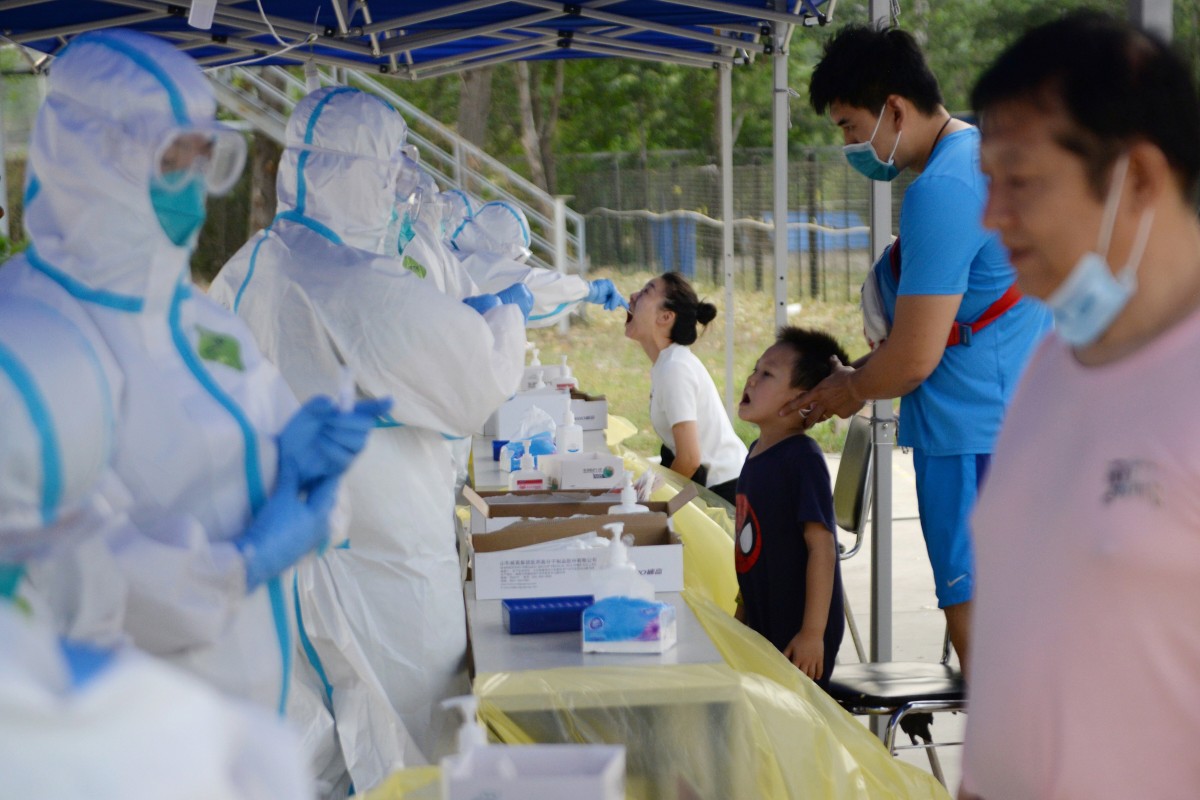
Not exactly, experts say. How well COVID-19 tests work in people who feel healthy is still a key unknown of the pandemic. The test may overlook the small but growing amounts of virus in someone who has not yet developed symptoms, who could still go on to spread COVID-19 without knowing it. So as Americans weigh the risks of attending protests, rallies, birthday parties, dinners, and all the social gatherings that make up normal life, they will have to contend…
As her father lay dying in a hospital bed in Arizona, after testing positive for Covid-19, Lina Washington pleaded with him to keep fighting.
When they hung up, Washington scrolled through Instagram. She saw stories of friends and former classmates drinking and socializing at crowded bars and clubs, even as coronavirus infections rose exponentially across the state. Yet there they were, smiling, maskless, as if the threat had disappeared and life returned to normal.
Would they be so reckless, she wondered, if they knew that just a few miles away doctors and nurses…
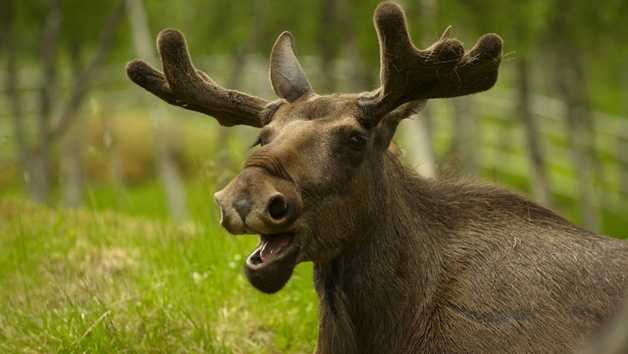
CONCORD, N.H. —Forty-nine people from seven states have been awarded permits to hunt moose in New Hampshire this October.
The state’s annual moose hunt lottery drawing was held Friday. Winners were selected from a pool of more than 6,000 applicants.
Nearly all of the 49 winners are from New Hampshire, but there also were also a handful from other states including Massachusetts, Connecticut, New York, Maryland, Michigan and Virginia.
The hunters are assigned to specific wildlife management areas.
The moose hunting season runs from Oct. 17-25. Last year, hunters killed 38 moose, a success rate of 76 percent.
TALLAHASSEE, Fla. – Black bears, once a threatened species in Florida, will get stiffened protections against poachers, some of whom see the animals resurgence as a growing nuisance.
Gov. Ron DeSantis agreed to increase the penalties against illegal bear hunting to further deter hunters from killing the once-imperiled creatures. The bill was among a slate of 21 pieces of legislation the governor signed Saturday.
The black bear population dwindled to the low hundreds back in the 1970s, but has since come roaring back with more than 4,000 of the creatures now roaming the state.
Under the new rules, which go into effect July 1, the minimum fine for bear poaching would rise to $750 from $500. Hunting licenses could also be suspended for three…
Florida and South Carolina break new-cases records for the third straight day.
For the third straight day, Florida and South Carolina broke their single-day records for new cases, while infection levels for Missouri and Nevada also reached new highs on Saturday.
And on Friday, the United States reported more than 30,000 new infections, its highest total since May 1, with cases rising in 19 states across the South, West and Midwest.
Florida reported 4,049 new cases on Saturday, breaking Friday’s record (3,822) and Thursday’s record (3,207). The state now has had 93,797 cases and 3,144 deaths.
South Carolina broke its record with 1,155 new cases; Nevada had 452 and Missouri had 375.
The new infections have skewed younger, with more people in their 20s and 30s testing positive, Gov. Ron DeSantis of Florida said.
On Saturday, the Florida Department of Health issued an additional health advisory, recommending that people avoid…
(KOMO) – The daily increase in new coronavirus cases surged by the greatest number ever recorded in Washington state since the start of the pandemic in late February, health officials reported Saturday.
Some 624 new confirmed cases were recorded over the past 24 hours, raising the total number of COVID-19 cases to 28,225, according to the state Department of Health.
Never before have there been so many new cases been tallied in a single day in Washington state. The previous record was 543 new confirmed cases on March 26.
Ten new fatalities also were reported Saturday, raising the statewide death toll to 1,265.
00:0101:39
The stunning increase in positive test results comes amid an “explosion” of new cases in Yakima County and the Tri-Cities area – but other counties also are reporting increases as well, health officials said.