Several animals are off my list when it comes to hunting
Reply

Published
Sep 15, 2026 at 02:29 PM EDT
Fresh Bird Flu Outbreak Hits America’s Biggest Turkey-Producing Region – Newsweek
updated
Sep 16, 2026 at 02:35 AM EDT
Continue0:00 / 1:08

By Jordan King
Reporter
Newsweek is a Trust Project memberPrefer Newsweek on Google
to see more of our trusted coverage when you search.
A fresh wave of bird flu has struck commercial turkey farms across Minnesota and the Dakotas, affecting more than 417,000 birds as the virus resurges during fall migration.
The latest cases include two Minnesota flocks containing a combined 62,300 birds, bringing the number affected in the country’s leading turkey-producing state this fall to 92,100, according to the U.S. Department of Agriculture’s Animal and Plant Health Inspection Service (APHIS).
The outbreak, concentrated across the Upper Midwest poultry industry, has hit ahead of the holiday season.
Non-Dairy Dessert Recalled Nationwide Due to Potential Foreign Material4 min read

China’s AI Double Fear8 min read

Voters Like $5,000 Checks—But Doubt Trump Will Deliver5 min read

Since August 12, the virus has been confirmed in five South Dakota commercial flocks containing approximately 284,000 birds, including meat-turkey farms and breeding operations. Three Minnesota flocks totaling 92,100 birds have also been affected, along with a commercial flock of 41,600 turkeys in LaMoure County, North Dakota, according to federal outbreak data.
The North Dakota detection marked the second outbreak at a commercial turkey farm in LaMoure County this year, following a case confirmed in April, according to the North Dakota Department of Agriculture. The latest cluster is part of a nationwide outbreak that reached commercial poultry in February 2022 and has repeatedly forced producers to destroy entire affected flocks to limit the disease’s spread, the APHIS says.
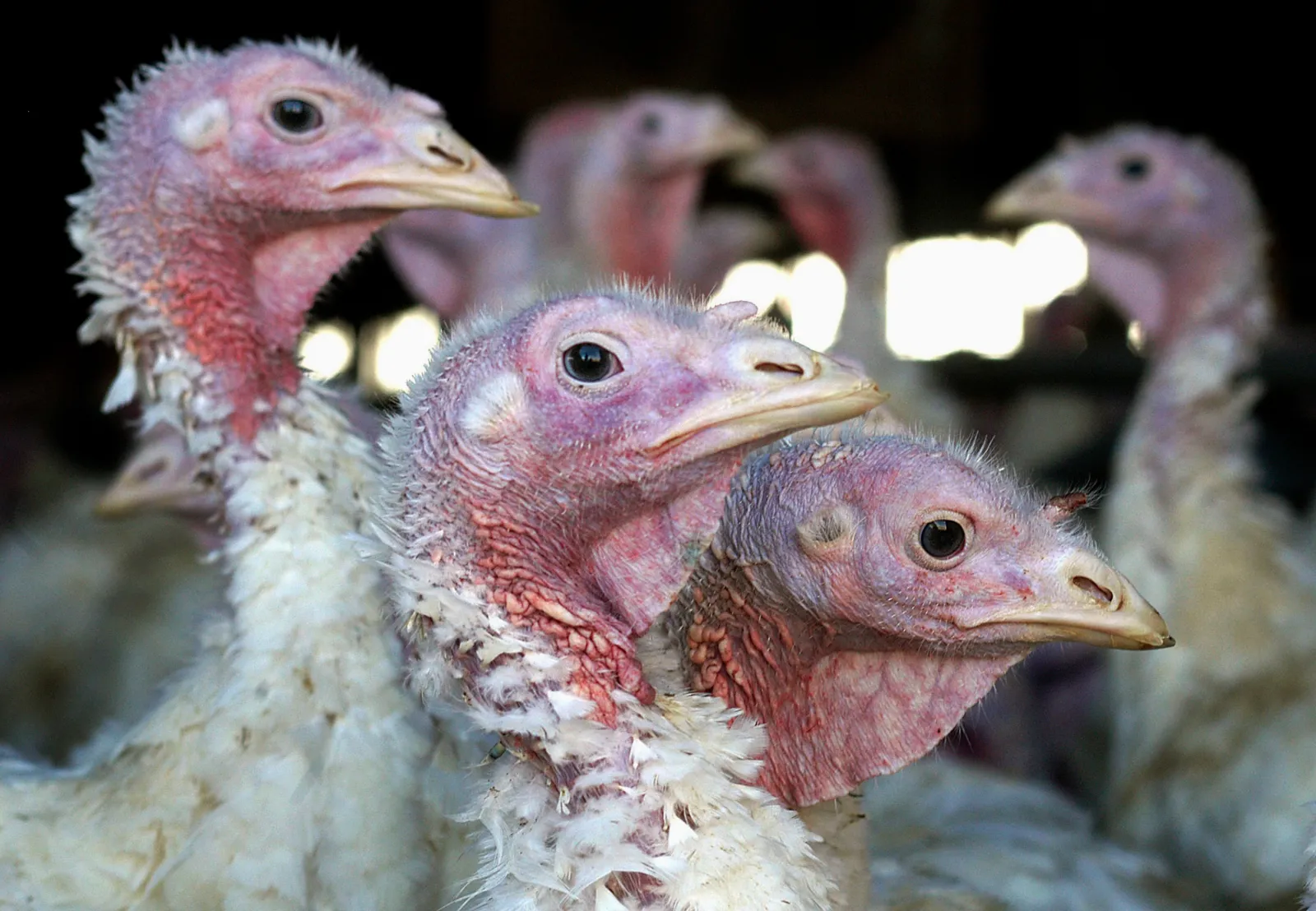
Unrelated file photo of turkeys at a turkey farm in Minnesota on November 2, 2005. | AP Photo/Janet Hostetter, File
The newest detections were reported at two Minnesota operations: a meat-turkey flock of 44,300 birds and a commercial breeding flock containing 18,000 birds, according to APHIS outbreak data. They followed a case involving 29,800 meat turkeys in Wright County, west of Minneapolis.
The regional resurgence began in South Dakota’s Beadle County on August 12, when the virus was confirmed in a commercial flock of 74,900 meat turkeys. Federal records show a further detection affected 73,800 birds at a turkey breeding operation in Hamlin County, while another breeding flock of 30,200 birds was affected in Edmunds County. The South Dakota Department of Health then alerted medical providers to watch for possible infections among people exposed to affected poultry in Edmunds and Hamlin counties.
Two more South Dakota cases were confirmed on September 9, affecting 61,300 meat turkeys in McPherson County and 43,800 in Turner County, according to local outlet KELO-TV. The detections placed affected farms across eastern South Dakota, including counties near the Minnesota and North Dakota borders.


Want the morning news straight to your inbox?Sign upSign up to Breaking News alerts
By clicking “sign up” you are agreeing to our
Terms of Service and Privacy Policy
Across the state line, H5N1 was confirmed on September 1 at a turkey facility in LaMoure County, North Dakota. The county sits in the southeastern part of the state, north of the South Dakota border and west of Minnesota. The affected locations show the latest commercial outbreak extending across a connected portion of the northern Plains and Upper Midwest rather than being confined to a single production area.
The detections are significant because they are occurring at the center of the U.S. turkey industry. Minnesota raised 32 million turkeys in 2025—more than any other state—while South Dakota raised 2.4 million, according to the USDA’s latest annual Turkeys Raised report. The agency said the six largest producing states accounted for 68 percent of the national total.
Highly pathogenic avian influenza can disrupt production beyond the birds that initially become sick. Infected flocks are depopulated under federal and state supervision, while affected premises must undergo disposal, cleaning and virus-elimination procedures before they can resume normal operations, according to APHIS guidance.
The timing places renewed pressure on producers ahead of the Thanksgiving and Christmas period, when demand for turkey traditionally rises. However, the confirmed losses represent only a fraction of annual U.S. production, and federal officials have not indicated that the latest cases will cause a nationwide shortage. The USDA’s next annual estimate of turkeys raised, due later in September, should provide a clearer picture of the industry’s overall supply.
The risk to the general public remains low, according to the U.S. Centers for Disease Control and Prevention. Although sporadic infections have been recorded among American poultry and dairy workers, the latest turkey farm detections do not by themselves indicate an increased risk to people without direct animal exposure.
People who work with infected birds, carcasses or contaminated materials face a greater risk because infection can occur when the virus enters the eyes, nose or mouth or is inhaled. The CDC recommends protective equipment and other workplace controls for people who handle sick birds or cull affected flocks. It also recommends monitoring exposed people for symptoms for 10 days after their last exposure.
The outbreaks do not mean properly prepared turkey is unsafe to eat. Federal safeguards make it unlikely that infected poultry will enter the food supply, and the Food and Drug Administration says there is no evidence of bird flu transmission through properly prepared food. The USDA recommends cooking all poultry to a minimum internal temperature of 165 degrees Fahrenheit, according to its Food Safety and Inspection Service.
The timing of the new cases coincides with the beginning of fall migration, when wild birds can carry avian influenza across long distances. Wild birds may be infected without appearing sick and can introduce the virus to new areas as they migrate, potentially exposing domestic poultry, according to the USDA’s Animal and Plant Health Inspection Service.
Select an option to vote. You can change it anytime.
That makes migration a plausible factor in the renewed activity, but officials have not publicly identified how the virus entered each affected farm. Transmission can occur through direct contact with infected birds or indirectly through contaminated feces, water, equipment, vehicles, clothing and footwear.
The USDA uses surveillance of wild birds as an early-warning system for threats to poultry. Farms can reduce the likelihood of infection by limiting contact with wild birds, controlling access to poultry houses, and disinfecting equipment, but biosecurity cannot eliminate the risk entirely.
Contact Newsweek editors on this story: Rebecca Flood and Sam Wilson.
View Editorial & AI Guidelines
Ad
© 2026 Newsweek Digital LLChttps://i.liadm.com/sync-container?duid=01a1b5c576a3–01hdps01sdapkm3frjxak65b01&appId=a-08dr&euns=0&s=Cm4KBgj5ARDMHgoFCAoQzB4KBgikARDMHgoGCN0BEMweCgYIpQEQzB4KBgiSAhDMHgoGCKMBEM4eCgYI4wEQzB4KBgiAAhDOHgoGCOEBEMweCgYIogEQzB4KBgj_ARDMHgoGCNIBEMweCgUIfhDMHg&version=v3.18.0&cd=.newsweek.com&pv=b8f5e410-a8b5-4348-a329-eaec8d4813ad

The famous Mollie’s wolf pack is safe, for now, after returning to Yellowstone National Park just before the start of Wyoming’s hunting season Tuesday. But hunters are hopeful they will stray back out of the park before hunting season closes in December.
Just As Wyoming Wolf Season Begins, Famous Mollie’s Pack Returns To Yellowstone | Cowboy State Daily
September 15, 20267 min read
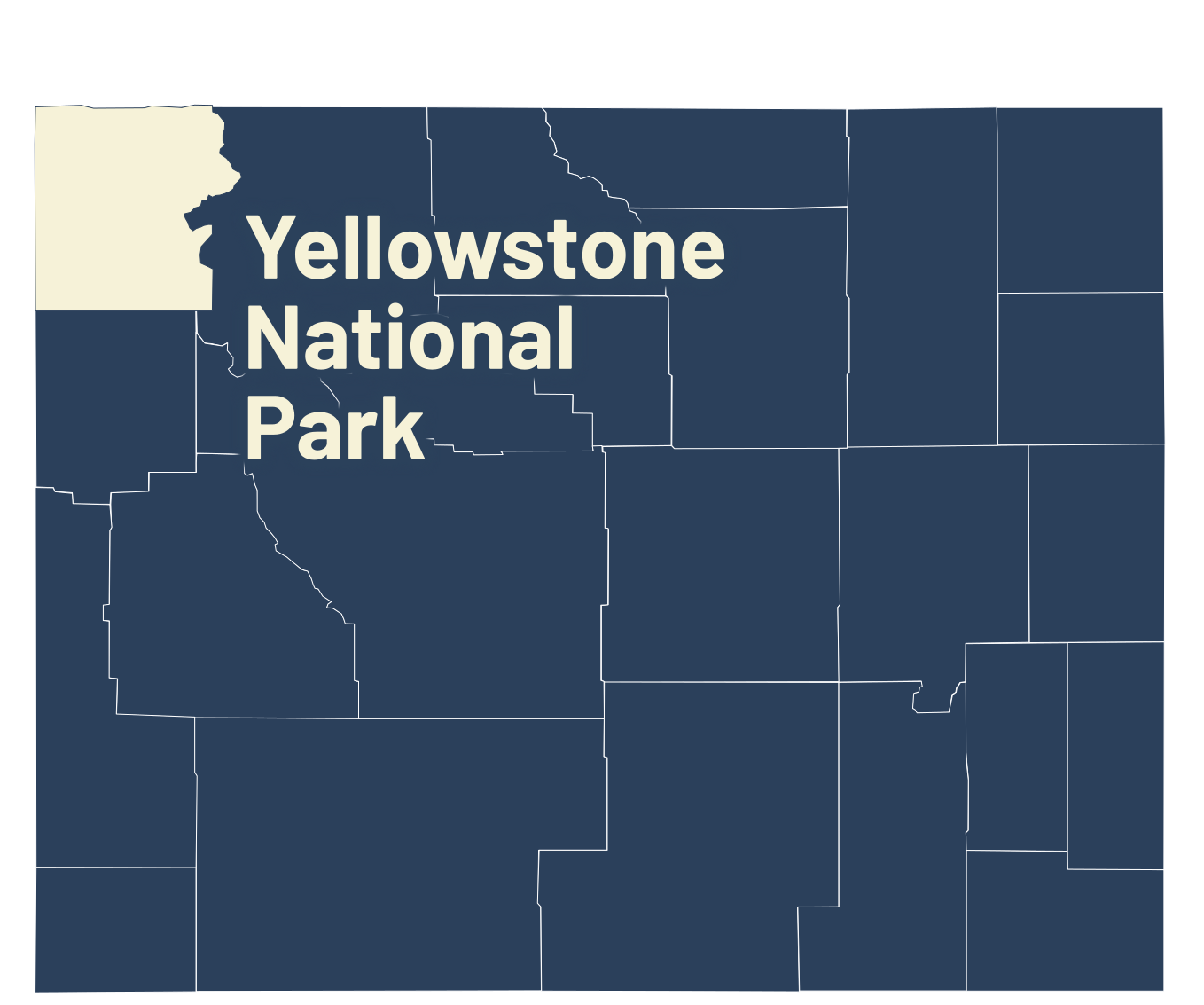
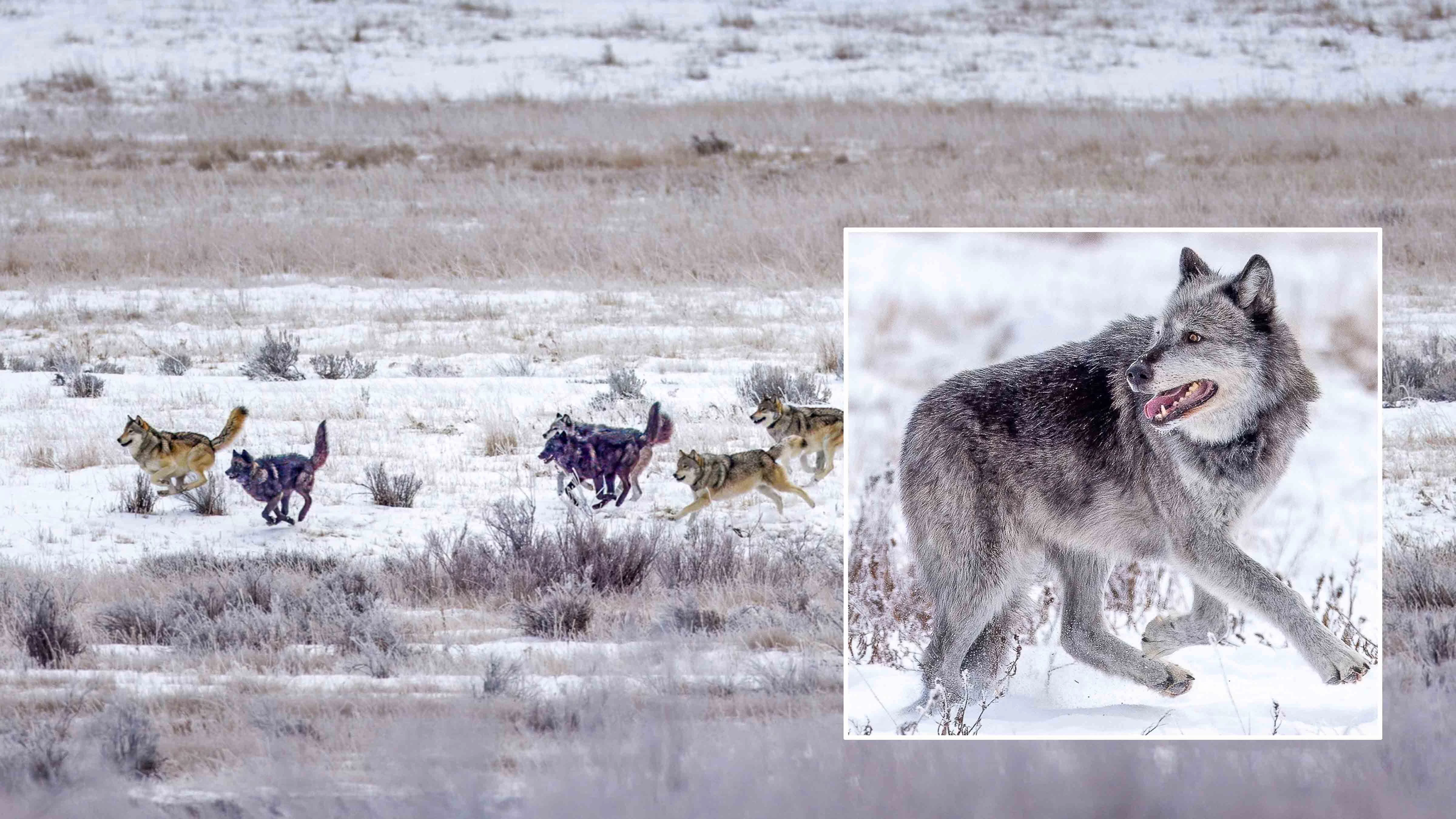
After a storm of controversy leading up to Tuesday’s opening of the Wyoming wolf hunting season, the famous pack at the center of it all, the Mollie’s, apparently is safely back in Yellowstone National Park.
That wasn’t perfectly timed intuition on their part. They’re just doing what wolves normally do this time of year: Moving around because their pups are old enough to do so, a prominent wolf biologist says.
“The transition goes from the den to moving around close to the den, then to a bigger area,” Robert Crabtree, founder, chief scientist and president of the Yellowstone Ecological Research Center, told Cowboy State Daily. “Then they move to a rendezvous site.”
Even so, hunters are hopeful, and wolf advocates are fearful, that the Mollie’s will stray back out of the park sometime before the hunting season closes in December or the wolf kill quota is met in that area.
So, it’s still possible that members of the Mollie’s, including its 12-year-old matriarch, Wolf 1090F, could get shot. She’s thought to be the oldest living wolf in the Yellowstone area and the second-oldest ever in the park.
Wolf advocate Samantha Miller told Cowboy State Daily the Mollie’s should get special protection from hunters because of the pack’s scientific value and its value to the wolf tourism industry.
Wolves “don’t know the invisible boundaries of the park,” said Miller, the senior carnivore campaigner with the Center for Biological Diversity.
Outdoorsman Olin Machen of Cody took a different view.
“As far as the Mollie’s pack, my only thoughts are pretty simple: If they are out of the park boundary, they are fair game,” he told Cowboy State Daily.
The Mollie’s are the oldest pack in Yellowstone. They’re one of the park’s most visible and frequently photographed packs, which has earned them a worldwide fanbase.
The pack was established when wolves were restored into Yellowstone in 1995 and originally called the Crystal Creek Pack.
In 2000, the pack was renamed the Mollie’s in honor of the late Mollie Beattie, who accompanied the first wolves into the park as the first woman director of the U.S. Fish and Wildlife Service.
Controversy kicked off late last year, when the Mollie’s decided to raise pups outside of Yellowstone for the first time.
The pack denned on the Shoshone National Forest east of the park boundary. The site is also in the Wyoming Game and Fish Department’s Wolf Hunt Area 1.
For the 2026 wolf season, there is a four-wolf kill quota for hunt areas 1 and 2. That means that once a total of four wolves have been killed in either or both of those areas the hunt will shut down, regardless of how many hunters are left holding unfilled tags.

There was recent chatter that at least some of the Mollie’s had moved back into Yellowstone. It’s not unusual for packs to vacate den sites this time of year. A roughly 6-month-old pup is old enough to move with adults.
Biologist Doug Smith, who led the wolf program in Yellowstone National Park for nearly three decades, confirmed to Cowboy State Daily on Tuesday that the Mollie’s had apparently re-entered Yellowstone, and the pups being old enough to move was probably the reason.
Crabtree explained that the Mollie’s are right on schedule for becoming highly mobile.
Most wolf packs include a breeding pair, and mating occurs in February. Pups are usually born in early April, he told Cowboy State Daily.
While the pubs are young, the pack’s life centers on the den, but that changes as the offspring grow.
The final stage is moving beyond the aforementioned rendezvous site “more across their entire territorial area,” Crabtree said.

That’s probably the stage the Mollie’s are in, he said.
The pack’s historical range is all inside the park. But that might have changed, Crabtree said.
“Territories shift,” and the primary driver is the availability of a prey base, such as elk, he said.
And it’s not just the sheer number of prey animals, he added. Prevailing snow conditions can also dictate where packs choose to live and hunt.
Wolves have a distinct advantage over prey in deep snow. Their large paws allow them to run across the surface if it’s crusted, whereas prey animals’ hooves punch through the snow.
“If wolves can sense that deer and elk are post-holing (sinking their legs into the snow), there’s going to be multiple kills that night,” he said.

As most packs would, the Mollie’s will probably hang tight together while the pups are still young enough to rely on adults to provide food, Crabtree said.
“The pack is going to be very cohesive until next spring and fall, until the pups are old enough to start dispersing,” he said.
Meanwhile, even if the Mollie’s become aware that hunters are after them in certain areas, they’ll go where the best food opportunities are, he said.
“Wolves are willing to risk getting shot by hunters to feed their rapidly growing pups,” Crabtree said.
Cody-area sportsman Ed Epperson was out hunting pronghorn Tuesday when he took a call from Cowboy State Daily.
Despite missing the opening day of wolf season, he said he plans to try filling a wolf tag.

Even if the Mollie’s pack has cleared out, there will be an opportunity, he said.
“There are still wolves around. We’ve been hearing them,” he said.
Leading up to the hunting season, Austin, Texas-based wolf advocate Jonas Black and others put up a 10,000 reward for information leading to the identity of hunters who shot 1090F or other members of the Mollie’s.
They later withdrew the offer and took down social media posts referencing the reward.
Even so, the reward offer prompted some hunters, or at least those claiming to be hunters, to post vows on social media to kill 1090F.
Epperson thinks the reward offer backfired and essentially “put a bounty” on the Mollie’s.
If the Mollie’s move back into a hunt area, they could be easy for hunters to identify because they’ve been photographed so frequently.
He wryly noted that hunters determined to find Mollie’s wolves could buy posters of them “so they’d know which wolves to shoot.”
Machen said he’d also like to fill a wolf tag if he gets a chance.
“I am not planning on hunting wolves alone (specifically). I generally just always have a tag and am more opportunistic,” he said.
“You have to have horses to really get after them,” he added.
Wolf advocates have tried pressuring the Wyoming Game and Fish Commission to make an exception for the Mollie’s, perhaps suspending hunting in Area 1.
The commission thus far has refused. Some commissioners previously told Cowboy State Daily they trust the recommendations of the Game and Fish department biologist and wildlife managers in setting the wolf hunting seasons and quotas.
Miller said advocates aren’t ready to give up. She and others plan to attend the commission’s next meeting, scheduled for Sept. 21-22 in Evanston.

