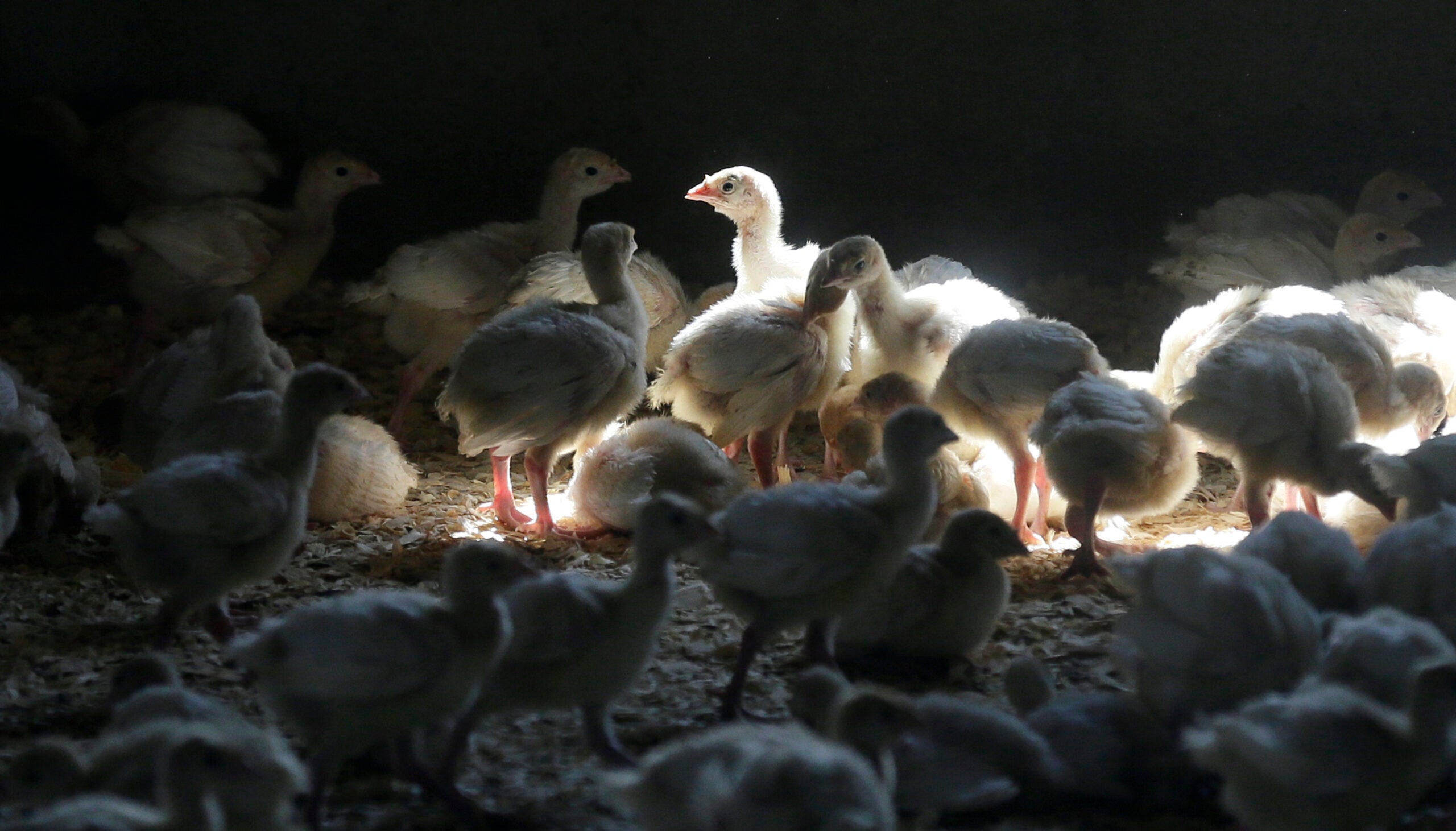
SYDNEY, June 22 (Reuters) – Australia reported a second case of highly pathogenic H5N1 bird flu in Western Australia on Monday, after confirming its first over the weekend, as the government vowed to rein in the spread of the virus.
A migratory seabird known as a northern giant petrel found sick on a remote beach tested positive, Agriculture Minister Julie Collins said, after a brown skua case on Saturday. Both birds were found near the coastal town of Esperance, about 570 km (350 miles) southeast of the state capital of Perth.
Keep up with the latest medical breakthroughs and healthcare trends with the Reuters Health Rounds newsletter. Sign up here.
Advertisement · Scroll to continue
“We’re working very closely with both the chicken, meat and the egg poultry system and industries to do everything that we can do and improve biosecurity, and those systems and those areas to stop it from getting into those production systems,” Collins said.
“Can we do that forever? We don’t know the answer to that, that is a hypothetical,” she added.
Human infections remain rare, but the global spread of avian influenza has devastated flocks, disrupted supplies and pushed up food prices in recent years.
Until now, Australia had been the only continent without a confirmed mainland case, though the virus was detected in late 2025 on the sub-Antarctic territory of Heard Island.
Advertisement · Scroll to continue
In its efforts to tackle bird flu, Australia has tightened farm biosecurity, increased testing of shorebirds, vaccinated vulnerable species and conducted response simulations.
Poultry producer Inghams (ING.AX), opens new tab said it would move to a complete lockdown as a precaution across all farms and processing sites in Western Australia.
“There has been no detection in commercial poultry, which includes Ingham’s operations and its supply chain,” Inghams said in a statement.
Advertisement · Scroll to continue
Reporting by Christine Chen and Renju Jose in Sydney; Editing by Alasdair Pal and Himani Sarkar
Thousands of Britain’s most charismatic and protected marine wildlife, including whales, porpoises, dolphins, seals and seabirds are being killed as “collateral damage” by fishing vessels every year, according to the first-ever analysis of bycatch data.
The analysis, by the Wildlife and Countryside Link, a coalition of voluntary conservation groups, reveals the devastating toll bycatch, the accidental capture and killing of non-target species by fishing vessels, is having on marine species.
The “shocking” scale of annual deaths in the report, Hidden in the haul: The true scale of bycatch is likely to be “the tip of the iceberg”, it said, as only a fraction of the UK fishing fleet monitor bycatch. Only 0.05% of dredging vessels monitor this. They, like the bottom trawlers exposed in the recent David Attenborough film Oceans, drag heavy gear across the sea floor and are known for doing damage to marine life on the sea bed. Non-UK vessels operating in UK waters were not included in the data.
A starfish is returned to the sea off the coast of Kyleakin, Scotland. Any small amounts of bycatch are tossed back into the loch when caught by creel fisheries and the vast majority of it survives the process. Photograph: Emily Whitney/AP
The deaths estimated in the report, which were extrapolated from datasets on bycatch and discard numbers, were more than 1,000 harbour porpoises and common dolphins killed annually, 10,000 seabirds and 500 seals. Six humpback whales and 30 minke whales were also found dead in Scottish creel ropes. Over 1,000 endangered Atlantic salmon and 120 tonnes of protected sharks, skates and rays are also caught and killed as bycatch by commercial fishing vessel every year.
Richard Benwell, the chief executive of Wildlife and Countryside Link, said most of the deaths were avoidable by using a range of mitigation measures. He called on the government in England to deliver promised action on bycatch of protected species.
“From razorbills and dolphins to endangered salmon and sharks, the scale of destruction exposed in this report is shocking, with animals dying in awful and unnecessary ways.”
In English waters, the use of gillnets, a type of static net that hangs like a curtain in the water, is the highest risk for seabird bycatch. Birds including puffins, gannets and razorbills get caught and drown when they dive for food. Gillnets cause 400,000 seabird deaths globally, according to research by BirdLife International.
Gillnets are the highest risk for seabird catch. Photograph: Seaphotoart/Alamy
Benwell said: “The government mustn’t let these terrible losses continue. To protect marine wildlife, Ministers must finally deliver strong bycatch action plans, backed by strict mandatory monitoring and enforcement, before more wildlife is pushed closer to extinction.”
“We need to support fishers to move to more modern methods and not cause collateral damage.”
Cetaceans dying as bycatch is a key reason the UK is failing to meet its legal obligations to achieve good environmental status in some British seas, the report found.
Ruth Williams, head of marine conservation at the Wildlife Trusts, said:“For many in the fishing industry, bycatch is a distressing and unwanted outcome – these species are critical to the health of our seas, and their deaths will have serious consequences on marine ecosystems.”
Successive governments have failed to address this “silent and largely unseen” crisis, Williams said.
The coalition is also calling on the government to require remote electronic monitoring on all fishing vessels operating in English waters, including small vessels under 10 metres that it said are responsible for a large proportion of bycatch.
While the study covered deaths in UK waters, the recommendations are largely targeted at the UK government in England, drawing on the expertise of WCL’s English members, the report said.
It highlighted solutions already employed by UK fishers. Small-scale fishers in Filey Bay, Yorkshire, near the UK’s largest mainland colony of seabirds, worked with conservationists to reduce annual bycatch from 700 seabirds to four or five by trying new methods, including heavier nets. In Scotland, where research found most whale entanglements were caused by floating ropes between creels, trials of weighted creel ropes have shown success in reducing the risk of whales becoming entangled.
A Defra spokesperson said:“This government is committed to restoring our oceans to good health and we are taking action to reduce the bycatch of marine species.”
“Our flagship programme, Clean Catch, uses electronic monitoring to collect bycatch data and evaluate the effectiveness of mitigation measures, and our new Seabird Bycatch Action Plan will look to reduce seabird deaths in and around English waters.”
Epidemiologist Jean Baptist du Prel on a potential threat scenario in which humans play a major role
Ebola, Marburg, Hanta, COVID-19 and bird flu are all deadly viruses that have jumped from animals to humans. This process is called spillover. Many pathogens have long coexisted with humans, but are now becoming increasingly dangerous to us. Epidemiologist PD Dr Jean Baptist du Prel works in the Department of Ergonomics at the University of Wuppertal and says: “You have to see the whole thing as a complex process. Environmental conditions change and human behaviour changes nature. Viruses replicate every day as normal and copying errors can occur.” Sometimes viruses then spread to other species as a result. “It’s always about probabilities. So what is the probability that an animal will encounter another species and that viruses that have changed will be transmitted to the other species and infect it? It’s a random game of mutation rate based on copying errors that makes it possible to jump to other species.” The contact rate then also plays a decisive role, and then humans come into play.
At least another 10,000 unknown viruses could infect humans
The diversity of pathogens in animals is astonishing. Biologists estimate that there are at least 10,000 unknown viruses on our planet that could infect humans. So the danger of further spillover has not yet been banished. “That’s right,” states du Prel, “the changed conditions mean that a large number of animals that harbour viruses are more likely to encounter humans. The moment animal populations shift, for example due to climate change or human behaviour such as slash-and-burn, they leave their old habitat and are therefore more likely to encounter humans. The other probability is that copying errors can lead to viruses changing, spreading to humans and becoming pathogenic (disease-causing, editor’s note). In this case, two probabilities practically come together. We make a decisive contribution to this through our behaviour by changing nature and the climate.” But what causes a virus to change host? In this context, the epidemiologist speaks of the “survival of the fittest”, i.e. the survival of the individuals best adapted to their environment, and makes it clear that this process is not a conscious, controlled process, but happens purely by chance. “If the virus carries certain structures that suit the host, then an infection begins in another species. It doesn’t necessarily have to be humans, there are also intermediate hosts. Frequent mutations are often to the disadvantage of viruses, only in rare cases are they to their advantage because they are then better adapted to a potential host.” A current example is the situation recently reported in the media on the cruise ship Hondius, where the hantavirus, a zoonotic pathogen that primarily “jumps” from infected rodents to humans by inhaling virus-containing aerosols from urine, faeces or saliva, was probably also transmitted at least partially from person to person through close contact. The so-called Andean virusis a specific variant of the hantavirus found in South America and the only one for which human-to-human transmission has been proven to date.
Marburg virus Photo: public domain
Predicting spillover
In order to prevent spillover from animals to humans, the development of spillover must first be understood. du Prel explains: “It’s a complex process. I first have to look at how viruses change and how pathogen reservoirs change, for example through movement. Then I also have to look at the virus’s ability to bind to humans and examine the extent to which humans themselves spread the virus. It’s always a Sherlock Holmes game. I have to see how these movements fit together. You can predict these spillovers to a certain extent in terms of probability theory by combining different mechanisms. There are viruses that have a relatively high mutation rate compared to other organisms, such as SARS-CoV-2, the pathogen that causes COVID-19. A high mutation rate, which is often the case with RNA viruses, increases the likelihood of a copying error occurring that enables the new virus variant to change host. In pandemics, humans themselves then play an important role again.”
Humans amplify pandemics through their behaviour
The Hendra virus (1994), the Nipah virus (1999) and presumably also the Ebola virus (1976) were transmitted by bats. There are 1400 species of bats worldwide. That is 25% of all mammals. It is now known that these animals had to leave their original homes due to slash-and-burn agriculture or climate change, for example, and settled in other places – closer to humans. The Marburg virus (1967), on the other hand, came from monkeys that had themselves become infected during a transport diversions at Gatwick Airport in London. Many different animals from all over the world were loaded there, allowing the virus to spread. “Humans are an amplifier of a process that is actually natural,” explains the expert. “These spillovers would also take place without humans, but humans as amplifiers make the occurrence of a spillover as well as the emergence and extent of a pandemic much more likely through their behaviour, for example by shifting habitats and contributing to the spread of the pathogen. Today, we have much more movement in the human population through flights, trade or flight. If there is then a mutant or a modified virus and we continue to move transcontinentally, the probability of a pathogen spreading worldwide is naturally also higher.” The proximity of humans to their livestock can also play a role in this context. Reports of farms on which thousands of animals are culled for safety reasons in suspected cases are no longer a rarity.
3D graphic of the SARS-CoV-2 virion (coloured model) Photo: public domain
Viruses mutate every day
In 2003, a previously unknown coronavirus (SARS-CoV-1) killed people in Hong Kong for the first time. Until then, coronaviruses were considered harmless and perhaps caused the common cold. Today we know that coronaviruses can exchange genetic material with each other and create a new virus from it. Even back then, it was therefore only a matter of time before a pandemic would occur. Researchers predicted this as early as 2003, and viruses mutate every day. “Yes, that happens all the time and is completely normal,” says du Prel. “We have an incredible number of virus species and copying errors are constantly occurring. For the most part, the mutations that occur are not bad at all, because they also lead to the demise of a virus or have no effect at all. But some mutations can lead to them becoming dangerous for us.” In 1980, the WHO (World Health Organisation) declared the eradication of monkeypox (MPOX). “But Ithink monkeypox never went away,” says du Prel firmly, “the only question is, where did it stay?” Although human infections were rarer, they were still present in monkeys and rodents. After the declared end of smallpox, people were no longer vaccinated against it. “Vaccinations became increasingly rare, but the smallpox vaccination also provided a certain degree of protection against monkeypox. In this respect, it is also inherent to the host (due to factors in the host itself, editor’s note) that we are more susceptible to monkeypox again.”
Global warming promotes potential pandemics
Scientists say that global warming is setting everything on earth in motion. Just 1 degree of warming causes animals to migrate hundreds of kilometres further, where they meet other animals they would otherwise never have encountered. These encounters promote the possibility of spillover. Seen in this light, climate change could also promote the accumulation of pandemics. “At the very least, it is an important amplifier,” concludes du Prel. “We will never eradicate mutations, they simply exist. It remains a game of different probabilities, both in the mutation and in the encounter of different species. These can be different animal species meeting each other, or humans meeting animals.”
Uwe Blass
Jean-Baptist du Prel studied human medicine at the University of Würzburg, where he also gained his doctorate in 2000, and public health at the University of Düsseldorf. He was a research associate in epidemiology at the German Diabetes Centre and taught epidemiology and medical biometry at the Universities of Mainz and Ulm. Since 2015, he has been a member of the scientific management team at the Chair of Occupational Science at the University of Wuppertal, where he also habilitated in 2022 and teaches subjects including preventive medicine and biological risks.
Interior Sec. Doug Burgum visited Anaktuvuk Pass in May, 2026, to announce the department’s decision to restore ATV access to the park.
Marc John Morry has been hunting caribou around Anaktuvuk Pass since he was a child. But in the summer and fall, most of the land around the village has been off-limits to hunters like him.
That’s because residents were not allowed to use four-wheelers in the majority of the roadless Gates of the Arctic National Park and Preserve, which surrounds the village. But last month, the U.S. Department of the Interior announced it would restore off-road-vehicle access to the park for subsistence.
Residents have been advocating for that change for decades..
“This is life changing,” Morry said. “Now that we’re able to access the lands, we can learn ourselves and relearn what our ancestors taught us about certain areas that always have caribou.”
“We heard many stories from our elders about hunting grounds that we weren’t able to access, which they remember before we even formed a community,” Morry said.
The federal government established the Gates of the Arctic around Anaktuvuk Pass when it passed the Alaska National Interest Lands Conservation Act. The law allowed subsistence hunting by residents using snowmachines, motorboats and other traditional transportation methods, but it didn’t mention ATVs.
Then, in 1986, the park interpreted the law to ban hunts on ATVs because they were not used traditionally. Lillian Stone, the city mayor of Anaktuvuk Pass, said the ban created invisible boundaries for residents relying on hunting for survival.
“It was like we were prisoners in our own land for 40 years, where before that it was — we could hunt anywhere, we could travel anywhere,” Stone said.
Susan Mekiana-Morry, the city vice mayor, said the ban didn’t just affect food gathering. Residents also couldn’t use the land to gather animal skins for making traditional clothing, tools and masks.
“We were deprived of our way of life, our culture, our heritage,” she said.
Three Anaktuvuk Pass hunters harvest caribou near Anaktuvuk Pass.
In the decades since, residents and local leaders have been advocating for ATV access to the park for subsistence — but without progress.
“We felt like it wasn’t getting anywhere, and we weren’t getting the answers that were needed,” Stone said.
Local Native corporations exchanged lands with the Park Service in the late 90s, making about 125,000 acres within the park available for subsistence ATV hunts, National Park Service spokesman for the Alaska region Scott Claggett said. Still, access remained limited.
“The people of Anaktuvuk Pass were limited to just 1% of the park’s 8.45 million acres for subsistence purposes,” Claggett wrote in an email. “Secretary Burgum’s decision last month vastly expands subsistence hunting access to indigenous peoples.”
A year after local leadership traveled to Washington D.C. to meet with the Interior Department, Interior Sec. Doug Burgum visited the village in May to announce the decision to restore ATV access to the park.
“No one knows or cares for this land more than the people who live here,” Burgum wrote in a social media post.
Claggett said that in the next six months, the Park Service will consult local communities to establish the new rule and consider any necessary protections for vegetation, cultural sites and wildlife.He said local subsistence hunters should contact the Gates of the Arctic for current information on using ATVs while the regulatory process is underway.
For Kristen Morry, an Anaktuvuk Pass hunter and a mother of two, the announcement means that she will be able to teach her children how to hunt and process the meat to continue the Nunamiut traditions.
“I have no words for what just happened, because it just makes me really emotional,” she said. “I’m excited to be out there and to no longer have to worry about when we have to stop, because I’m out there year-round.”