By Sterling Miller, John Schoen, Charles Schwartz and Jim Faro
Published: 1 day ago
A young adult brown bear walks in front of a forested area in Katmai National Park and Preserve. (National Park Service photo)
The attention focused on the spectacle of state wildlife biologists flying around in helicopters shooting every grizzly bear they can find (186 killed so far plus 5 black bears and 20 wolves) on the calving grounds of the Mulchatna Caribou Herd in Southwest Alaska should not obscure the geographically much larger campaign against grizzly bears being conducted by the Alaska Department of Fish and Game and the Alaska Board of Game.
This war, often termed “intensive management,” is being conducted through decades of liberalized bear hunting regulations motivated by the desire to reduce bear numbers in the hope this will result in more moose and caribou for harvest by hunters (most of whom live in urban areas).
The Mulchatna program is officially defined as being “predator control” because it involves aerial shooting of bears by Fish and Game staff. The geographically much larger effort to reduce bear abundance using regulation liberalizations is not defined as predator control. This lawyerly sleight-of-hand by definition allows Fish and Game to misleadingly claim that predator control on bears (and wolves) is occurring only in the relatively small portions of Alaska where aerial shooting of bears is ongoing. The opposite is true using a commonsense definition of predator control, which is to achieve declines in predator numbers.
We are four retired Alaska Department of Fish and Game biologists who have published one or more peer-reviewed papers documenting this effort to reduce grizzly abundance through regulation liberalizations. We documented this in an area that represents approximately 76% of Alaska; the area where liberalizations of bear hunting regulations are most aggressive. This is everywhere except in Southeast Alaska, Kodiak, Prince William Sound and the Alaska Peninsula, where bears are large and are still managed for sustainable trophy harvests. It includes all areas where moose and/or caribou are common. Some elements of the liberalizations in this area include:
• Liberalized regulations in a Game Management Subunit a total of 253 times and made more conservative only six times. This contrasts dramatically with the pattern prior to passage of the Intensive Management law in 1994, when regulation changes were equally balanced between small tweaks in either direction.
• Increasing the bag limit from one bear every 4 years (everywhere in 1980) to one or two bears per year. In 2005, 5% of the area had an annual bag limit of two per year but this increased to 45% by 2020 and to 67% by 2025.
• Longer open hunting seasons to include periods when hides are in poor condition and bears are in dens. The whole area had hunting seasons totaling less than 100 days in 1975; by 2015, 100% of the area had seasons longer than 300 days (20% longer than 350 days).
Everyone knows the signature song from the Toy Story movies, “You’ve Got a Friend in Me” and those are the exact words that played in my head as I watched a recent video posted by the Sheldrick Wildlife Trust.
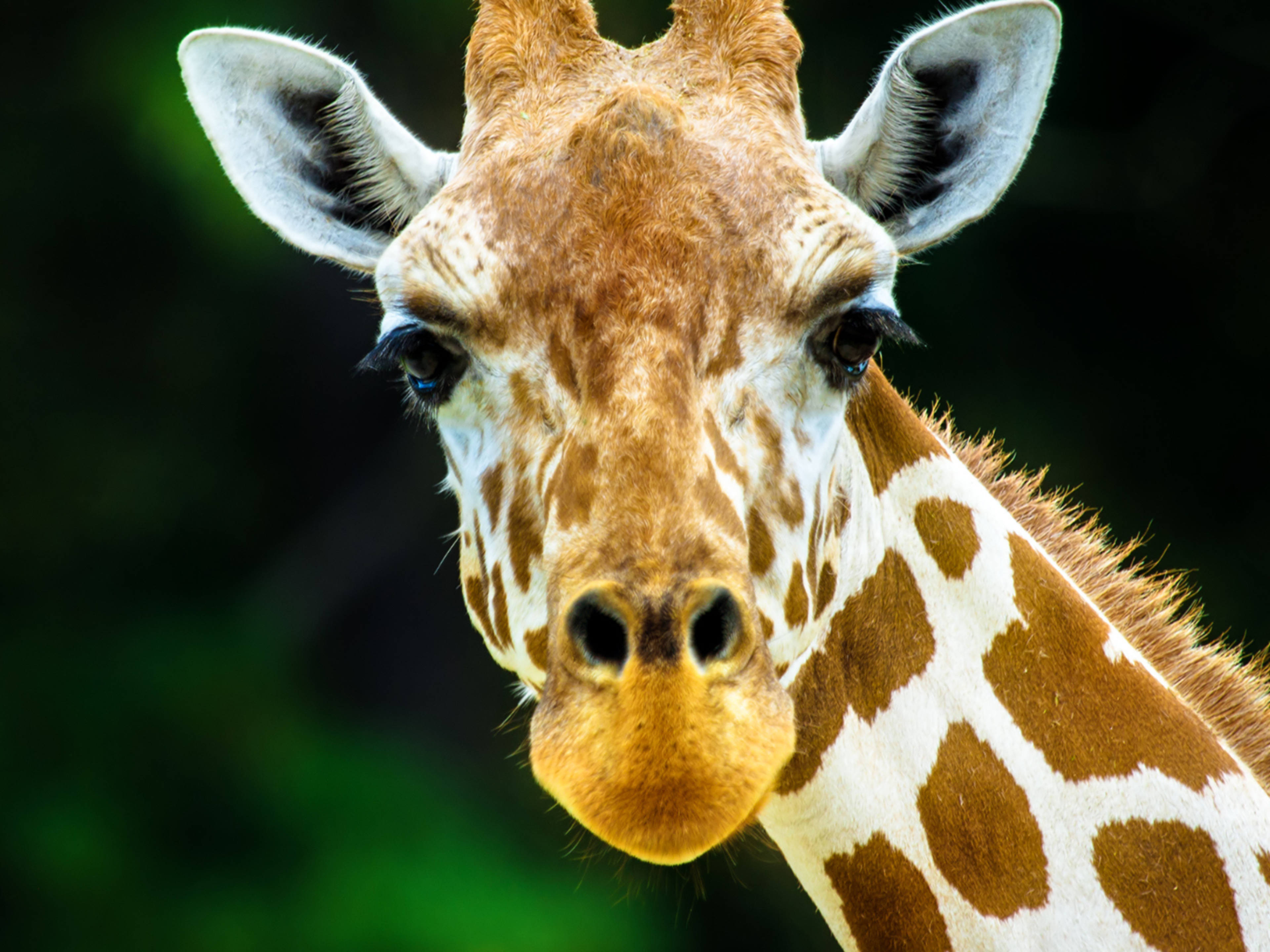
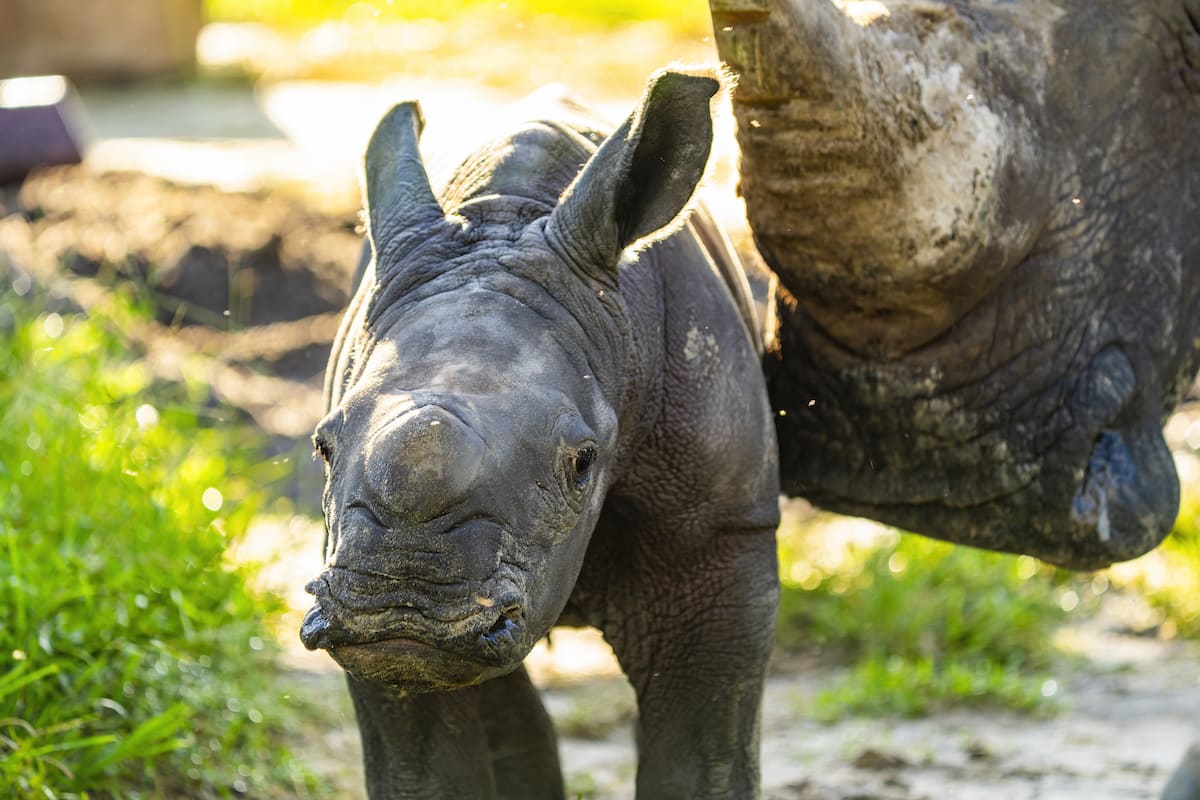
As the TikTok video starts, we are introduced to Twiggy the giraffe and Chamboi the rhinoceros. Apparently, despite their obvious differences, these two go together like peas and carrots.
16-Year-Old Orange Cat’s Final Kiss With His Mom Is Sure to Bring On the Tears16-Year-Old Orange Cat’s Final Kiss With His Mom Is Sure to Bring On the Tears
Read More
This adorable pair enjoy each other’s company immensely and every evening they take a stroll with their keepers at the Kaluku Unit in Nairobi. As two of the youngest members of the herd, they have gravitated toward each other and now go looking for one another when they aren’t together.
Twiggy was orphaned for unknown reasons. She was found wandering with a herd of zebras, however, there were no other giraffes in sight. She is now a thriving 3-year-old busybody who likes to visit all of the animals in the nursery unit—just to see what they are up to!
Chamboi is also nearly 3-years-old and was rescued from a watering hole where he appeared abandoned. He was alone and a tiny newborn but now he is a curious full-sized rhino who generally keeps to himself with the exception of his time with Twiggy!
As the clip continues, we notice that Twiggy is slowing her pace to allow Chamboi to keep up with her in the most endearing way. Fans of the Sheldrick Wildlife Trust love this pair just as much as we do and here are a few of the comments they left:
“It’s heartwarming to see such a beautiful bond between Chamboi and Twiggy. This friendship shows the true spirit of care and conservation!”
“Totally amazing but not surprised! Size, weight, skin color, tall or short, or whatever should not diminish the love we have for each individual!”
“How neat to see two animals enjoying the same land from different viewpoints. A special friendship indeed.”
Having lifelong friends is extremely important to humans and it makes sense that it is important to extra-large mammals as well. The friendship level of these two is truly the goal that we all have for ourselves!
In honor of upcoming International Respect for Chickens Day, May 4, 2023,Species Unite is delighted to feature this exclusive interview with KAREN DAVIS, PhD, President and Founder of United Poultry Concerns, a nonprofit organization that promotes the compassionate and respectful treatment of domesticated birds including a sanctuary for chickens in Virginia. Inducted into the National Animal Rights Hall of Fame for Outstanding Contributions to Animal Liberation, Karen is the author of numerous books, essays, articles and campaigns. Her latest book is For the Birds – From Exploitation to Liberation: Essays on Chickens, Turkeys, and Other Domesticated Fowl published by Lantern Publishing & Media. Karen hosts a biweekly podcast series titled Thinking Like a Chicken – News & Views! Media celebrity Ira Glass, host of the popular Public Radio International program This American Life aired on NPR, appeared on Late Night with David Letterman where he told Letterman and millions of viewers that his visit to United Poultry Concerns’ chicken sanctuary led him to become a vegetarian.
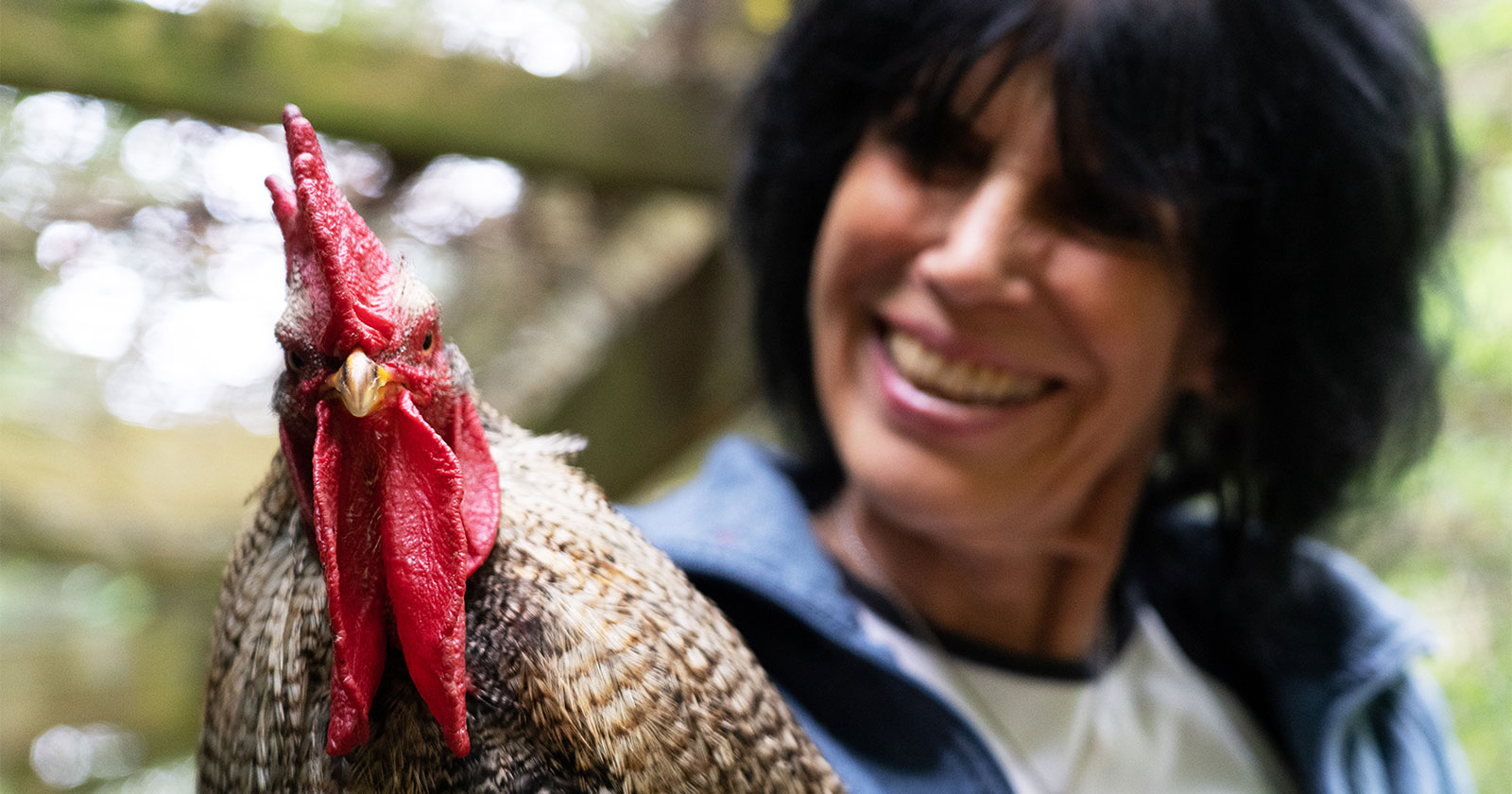
Karen Davis with Rainbow. Photo: Unparalleled Suffering
What Are The Highlights Of Your Journey To Establish United Poultry Concerns?
I grew up eating animals without thinking that meat was the body part of a pig or cow or chicken or a turkey. All children were supposed to drink milk for “strong bones” so that was taken for granted. Eggs meant egg salad sandwiches for lunch and scrambled or fried eggs or hard-boiled eggs for breakfast or picnics. My father hunted rabbits and pen-raised pheasants for sport. This was in Altoona, Pennsylvania. Once I understood something about hunting, at age 13 or so, I began arguing with my father about it over a dinner table laden with meat whose origin did not give me pause.
Not until I read an essay by the Russian writer Leo Tolstoy called “The First Step” in 1974 at age 30 did the origin of meat from animals become a conscious, heart stopping realization. Tolstoy’s description of a Moscow slaughterhouse he visited was so dreadful and sad that I stopped eating meat immediately. Because the suffering of animals killed to be eaten affected me so deeply and completely, I did not miss eating them and never have missed this depressing diet.
In 1983 I quit dairy and eggs. The Cookbook for People Who Love Animals included brief accounts among the vegan recipes of how badly cows are treated to “give” milk that is stolen from them and their calves. Peter Singer’s 1975 book Animal Liberation educated me about all those eggs I had thoughtlessly hard boiled, how they came from hens in wire cages. And then they too, too, and the cows, are slaughtered. I did not want animals to be born for my appetite or convenience anymore. I was glad to be done with all that.
A few times I succumbed to eating crab and flounder at a restaurant, but that ended quickly. Rightfully, I was plagued with guilt.
In 1974 I joined a tour to the Gulf of St. Lawrence to see the newborn harp seals and their mothers on the ice, thinking that the seals were safe from being clubbed to death, an atrocity I had recently learned about. In reality, they were being clubbed to death by the locals. Witnessing the massacre from a distance and seeing bloody ice at my feet was so traumatizing that I stayed away from everything relating to animal abuse until 1983 when I responded to an ad for World Laboratory Animals Day in Washington, DC. Viewing images of animals tortured in laboratory experiments, I determined on the spot that never again would I abandon the animals because I couldn’t bear to know about their suffering. I became that day and have been ever since, a dedicated animal rights activist.
Viva. Photo: Karen Davis
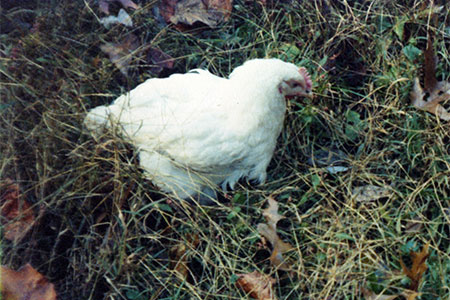
Thereafter I participated in many PETA activities and worked in the mid-1980s as a volunteer at the newly formed Farm Sanctuary, located at the time in Avondale, PA. I was, as I always have been, especially drawn to the birds, although these kinds of birds were new to me: chickens and turkeys, rescued from farming abuse and neglect. I also volunteered for several months at a farmed-animal sanctuary run for a few years by PETA in Washington, DC. Most crucially, in 1985 I met a chicken, a small white, lame hen abandoned in a shed owned by our landlady on the property my husband and I were renting. I brought this hen from the shed into the house, and we named her Viva, because she was the solitary survivor of the little flock our landlady had sent to slaughter.
Viva illuminated my future. Caring for her led me to found a nonprofit organization dedicated to promoting the compassionate and respectful treatment of domesticated birds. In 1990, United Poultry Concerns (UPC) was established.
What Are Some Of UPC’s Greatest Successes And Challenges?
Overall, UPC’s greatest success has been putting chickens on the modern animal advocacy map. In the late 1980s when I decided to start an organization for chickens and turkeys, I was told by a number of fellow advocates that a focus on chickens and turkeys would never succeed financially or otherwise since most people don’t relate to birds compared to mammals and especially not to birds they eat. A statement by one person was: “we can’t even get people to care about whales. How could we ever hope to get people to care about chickens?” Of course, the task of an advocate/activist is to discover and create ways to get people to care.
In the early 1990s I learned about the US egg industry practice of removing all food from egg-laying hens for as long as two full weeks to manipulate the economics of commercial egg production. From 1992 to 2004 we campaigned relentlessly to expose and eliminate this practice with a particular focus on United Egg Producers (UEP), the industry trade group, and the American Veterinary Medical Association (AVMA). The AVMA was worse than UEP in refusing to revise their policy of endorsing forced molting by food deprivation to one of opposing it. The AVMA relented only when I succeeded in getting a huge front-page article in The Washington Post followed by a full-page ad in The New York Times sponsored by UPC and three other national animal advocacy organizations. Once the AVMA saw how damaging their continued support for starving hens was from a public relation standpoint, they revised their forced-molting policy to one of opposition to total “feed withdrawal.”
Esbenshade Farms in Mount Joy, Pennsylvania. Credit: Zoe Weil
We’ve had successes on many fronts – too many individual campaigns to enumerate including getting the annual Bob Evans Farm Festival to eliminate their years-long Chicken-flying Meet which involved shoving chickens off a high platform with a toilet plunger. In addition, UPC introduced the concept and practice of Open Rescue to US activists– in which the rescuers remove suffering chickens and other farmed animals from their horrible conditions and openly declare themselves and their actions in order to bring public attention to the plight of these animals and the willingness of the rescuers to take legal responsibility for their rescue operation.
Our biggest successes are getting people who had never thought about chickens much or at all to enlighten their perspective once they heard me speak or read an essay or a book of mine that opened their mind and heart to chickens. Nothing makes me happier than to be told by someone how hearing me speak or reading my story of Viva and other chickens I have known caused them to stop eating chickens and eggs and on occasion even to adopt a companion chicken.
The biggest challenges are getting people to care about chickens (and other farmed animals) to the extent that they will stop consuming them and their “products.” People who might otherwise choose an animal-free diet are reluctant because eating and mealtime are the happiest part of their day and they don’t want this happiness to be turned into yet another source of stress, anxiety and conflict with family and friends. They fear rejection and ridicule. They worry they will not feel “full” on an animal-free diet, a worry that includes psychological fulfillment and satisfaction.
Then, grievously, there’s the fact that many people simply don’t care about chickens/farmed animals and their suffering, or care enough. Those who say they want farmed animals to be treated “humanely” seldom translate that passive sentiment into personal conduct upon being told why animals raised and killed for food cannot be treated humanely in any meaningful sense. People who say they want “better welfare” for the animals will often choose the cheapest products despite knowing that cheaper means poorer or no “welfare.”
Despite decades of animal activism, thousands of vegan recipes, investigative reports and videos, news of food poisoning from eating poultry and egg products and the environmental consequences of industrialized animal farms, most people still cling to their dietary habits and the psychological disconnection between animals and food. The mainstream media encourages people to NOT choose vegan.
All the more reason why farmed animal activists must persist. More and more people are choosing to be vegan or vegetarian compared to 30 years ago. We must view our challenge as “We’ve only just begun” and fight relentlessly for animal liberation and vegan ethics.
“He felt her beating heart and soft feathers and flesh as a revelation of her reality as a fellow creature, no longer “something to eat.”
The Idea Of “Chicken” As Food As Opposed To Chickens As Sentient Beings With Agency Is Deeply Ingrained In Our Culture. How Do We Change Hearts And Minds?
I believe we change hearts and minds by helping people to perceive chickens and relate to them as individuals who, when they are not mistreated, are full of observable vitality, desires and interests in their own right. I seek to educate people about chickens I have known by writing and talking about them and by sharing photographs and videos and by inviting people to visit our sanctuary and meet our chickens. My essay The Social Life of Chickens has inspired many readers to tell me how much it awakened them to the personalities and feelings and individuality of chickens. A man once told me that when he rescued a hen for the first time and held her in his arms, he felt her beating heart and soft feathers and flesh as a revelation of her reality as a fellow creature, no longer “something to eat.”
Weaver Brothers Egg Farm in Versailles, Ohio. Photo: Mercy For Animals
Chickens Originated In A Vibrant, Lush Environment In Southeast Asia And The Foothills Of The Himalayas. What Are Some Remarkable Attributes Of Chickens In Their Natural Environment?
Chickens in their natural tropical forest environment are flock and family members. They are busy all day doing what they like to do and what they must do in order to thrive, raise their families, protect their chicks and stay safe. Their day begins when they see the infrared light of the rising sun. The roosters start to crow and the flock flutters down from the tree branches to the forest floor to begin foraging for food by scratching the ground vigorously with their claws and pecking for seeds and other morsels with their beaks. They break up into smaller groups comprising a rooster and four or five hens. The roosters in these sub-flocks crow back and forth to one another to communicate where each group is currently located and other vital information.
Hens and roosters alike will fight to the death if need be to protect their chicks.
Just as the chickens spread out to forage and explore in the morning, they reconvene in the early afternoon to sunbathe and dustbathe, then spread out again in the late afternoon for a final foraging before gathering together at dusk for their silent night in the tree branches.
In Contrast, What Are The Most Egregious Harms That We Inflict On Chickens?
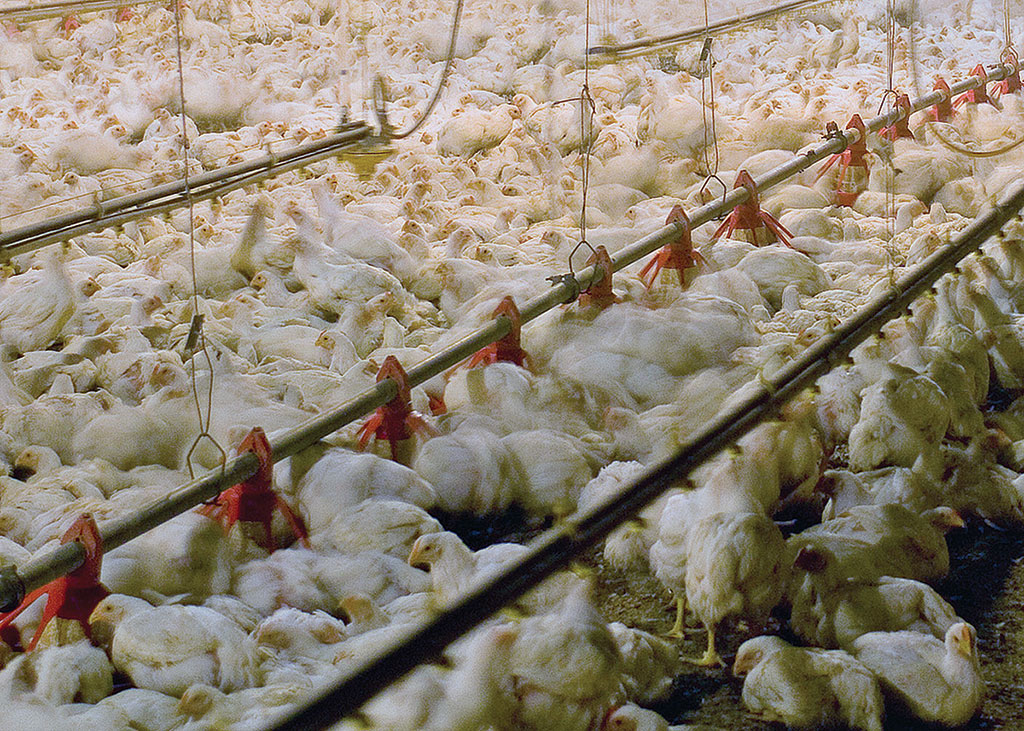
Everything done to chickens from the early 20th century up to and beyond this very minute is egregious to the point of being a crime against them and against Nature. They have been stripped of their Earthrights – the right of sentient beings to experience the Earth in which they evolved, and which brings joy and comfort and meaning to their lives. They are incarcerated in huge, filthy sheds thick with excretory ammonia and other toxic gases and dense with toxic microbes including bacteria, viruses, funguses and parasites. They can never escape touching each other’s bodies. The entire world to which they are condemned is alien to them. There is nothing like it in Nature. There is nothing in Nature that resembles the human invention of chronic, abject atrophy and Learned Helplessness and Hopelessness. There is a look in an imprisoned chicken’s eyes and in her or his whole face that does not appear in the natural world: a look of sunken hopelessness.
Since chickens who cannot escape the irritating and abnormal sensation of each other’s bodies around themselves, and since they are deprived of all activity apart from forming and laying eggs, eating powdered “feed” (which they cannot peck grains and seeds out of but can only ingest) and drinking a drop at a time from a plastic nipple drinkers hanging over them, egg-industry hen can be driven to pick and peck at one another because chickens are genetically designed to forage for food with their beaks. They must peck. They must dustbathe and if they do not have an earthy material in which to perform a dust bath, they can be driven to pulling on their cage mates’ feathers as a substitute for the soil that has been denied to them. Because they are driven to abnormally peck and pull at each other’s feathers trapped helplessly as they are, the egg industry painfully burns, lasers or chops part of their sensitive beaks off at the hatchery.
The newborn male chicks of the egg industry are ground up alive – 34,000 per hour in US hatcheries – because they don’t lay eggs and are therefore economically useless apart from petfood and farmed animal “feed.”
Modern chicken house in the United States, Perdue Farms, Delaware. Photo: David Harp
“As the birds hit the scald water you could hear their little voices peeping.”
The Eden Prairie man who became well-known for killing Cecil the Lion, has been charged with DWI.
Walter Palmer was arrested for a May 26 incident in Eden Prairie. The address of his home and arrest matches the address of the Walter Palmer who killed Cecil the Lion in 2015.
He was allegedly driving his Porsche erratically, smelled of alcohol and refused a blood test.
FOX 9 reached out to the Hennepin County Attorney’s Office and Eden Prairie Police Department to confirm it was the same Walter Palmer who was arrested for DWI. Eden Prairie police did not respond.
Walter Palmer arrested for DWI
What we know:
According to the charges, Eden Prairie police responded at about 8:50 p.m. on May 26 to a report of a Porsche Cayenne driving all over the road and hitting multiple curbs in the area of Hennepin Town Road and Riverview Road. Authorities spoke with the driver of another vehicle who was following the car and reported the erratic driving. An officer pulled into the driveway of the home owned by Palmer, and he was identified as the driver of the Porsche.
The officer told Palmer they received a 911 call about how he was driving. He denied hitting multiple curbs, then stepped away from the officer, pointed his finger and said, “You didn’t see anything wrong though, did you? No. Nope. Okay. Thank you,” the complaint states.
The complaint states the officer observed that Palmer smelled of alcohol. He asked Palmer how much alcohol he had consumed, to which Palmer said, “None.” He then said, “Uh, I’m not driving.” He said he wanted an attorney, and his car had been parked at his home for 20 minutes.
The complaint states Palmer walked away when the officer told him he had to perform field sobriety tests. The officer grabbed him, Palmer pulled away and said he wanted to call his wife. Palmer and the officer continued in a physical struggle before Palmer said, “I’m unconscious.”
The complaint states the garage service door opened, and Palmer’s wife and son came out. They both pleaded with Palmer to listen to the officer. Palmer then said, “Why are you doing this? Because I’ve had a beer?”
Police spoke with the witness and his wife, who observed Palmer driving erratically and followed him to his home. He was the only one to get out of the Porsche at that time.
Authorities obtained a search warrant to get Palmer’s blood tested, and he refused.
Cecil the Lion
The backstory:
In July 2015, Palmer paid more than $50,000 to go on a big game hunt in Africa that resulted in the death of Cecil the Lion, one of the most beloved lions on Africa. Palmer killed the lion with a bow and arrow.
He was accused of illegally killing the popular lion in Zimbabwe. But officials dropped the charges after they were deemed too vague, and the circumstances didn’t constitute a chargeable offense.
The Source: Charges filed in Hennepin County Court.




 article
