Two plead guilty to hare coursing offences in Burbage
Reply

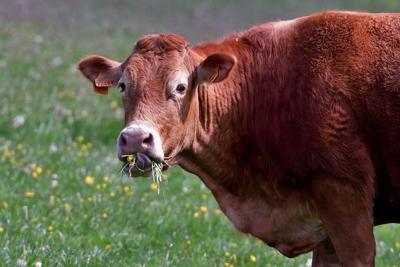
A year after bird flu was discovered in Texas dairy cows, the first case in a sheep has been identified in the U.K.
It’s been one year since scientists discovered bird flu in dairy cows in Texas.
This strain of flu has decimated both wild and domestic bird populations for years. But its leap into cattle signaled a new phase for the virus. Shortly thereafter, dairy workers were found to have contracted the same strain. It also affected cats near the dairy, and a number of other species of animals.
ADVERTISING
Earlier this week, the British government confirmed that researchers identified the first sheep with avian flu.
Epidemiologists are doing their best to track and predict the virus’ spread, including Gregory Gray, professor in infectious disease epidemiology at the University of Texas Medical Branch in Galveston. He spoke to the Texas Standard about the current risk to humans.
This transcript has been edited lightly for clarity:
Texas Standard: How would you characterize this current trajectory of the bird flu’s transmission? What’s going on?
Gregory Gray: Well, the strains that are circulating now in North America are very different, and they have not only rapidly spread in wild birds, but we’ve seen some very unusual transmission to many different types of mammals, and then most recently livestock, so it’s very odd.
Very odd in what way? Because of the transmission to livestock or because of something else?
Well, it’s odd in the sense that there’s been so many spillovers to new species, so the viruses have adapted characteristics that make that possible. And we just haven’t seen that since the 1930s, I guess, when we first understood influenza viruses.
I’m having a little bit of difficulty understanding how this would pop up in the U.K. Is it related to the strain that we’re seeing in the U.S.?
I’m not quite sure about those strains, and those data are very new regarding the spread to the sheep. But through many parts of the world, there are certain groups of these viruses that have become prevalent and show the propensity to spill over to new species.
What sort of risk does the virus pose by mutating like this?
Well, there’s the possibility that if multiple characteristics in the genome and multiple gene segments acquire increased markers for severe disease and markers for transmission within humans, between humans, then we’re in trouble.
How does this seem to be transmitting? Through breath? Through the air? What exactly?
Well, the transmission that we’ve seen recently in avian species, as well as in livestock, particularly cattle, it seems to have been through different mechanisms — and sometimes that’s been, for the birds, oral-fecal transmission. So one bird species gets in contact with fecal material of another.
In the cattle, how that moved from the birds to the cattle we don’t fully know, but there seems to be transmission within the cattle through several different means, primarily through milking and maybe secondarily through some respiratory. But we don’t fully understand it all, and especially we don’t understand how it jumps from farm to farm.
How concerned should everyday folks be about this mutating and becoming a major issue for humans?
Well, I think it’s something to be concerned about, but I wouldn’t panic just yet. I think what’s happening is we need to keep a pulse on this and monitor the strains that are moving between species and the outbreaks, if you will, that are occurring in livestock, make sure they haven’t adapted the characteristics that would make them highly transmissible to humans.
And particularly if we digest food products, whether they be poultry, eggs or milk, as long as those products are cared for in the expected ways — proper cooking and heating with pasteurization — we’re very safe.
If you ingest raw milk products or raw cheese products, that’s a different story. You could put yourself at risk.
Default Mono Sans Mono Serif Sans Serif Comic Fancy Small CapsDefault X-Small Small Medium Large X-Large XX-LargeDefault Outline Dark Outline Light Outline Dark Bold Outline Light Bold Shadow Dark Shadow Light Shadow Dark Bold Shadow Light BoldDefault Black Silver Gray White Maroon Red Purple Fuchsia Green Lime Olive Yellow Navy Blue Teal Aqua OrangeDefault 100% 75% 50% 25% 0%Default Black Silver Gray White Maroon Red Purple Fuchsia Green Lime Olive Yellow Navy Blue Teal Aqua OrangeDefault 100% 75% 50% 25% 0%A Steuben County man is speaking out after his dog was shot and killed while they were out hunting.
Published: Mar. 26, 2025 at 7:41 PM PDT|Updated: 13 hours ago
HAMILTON, Ind. (WPTA) – A Steuben County man is speaking out after his dog was shot and killed while they were out hunting.
Tyler Steury was out hunting coyotes with two of his hounds on February 2.
“My older one went in there and got struck, starting chasing the coyote. We had permission for the whole section we were in,” Steury said.
His Garmin tracker showed that his younger hound, 11-month-old Ralf, went in a different direction and eventually stopped moving.
“All my dogs are tone-broke. So if I honk my horn and tone, they come to me, so I toned in, honked my horn, nothing, and that’s when the guy yelled from his house, can’t really say what he told me on camera, but he said that he pretty much shot my dog.”
Steury called the Steuben County Sheriff’s Office, and after about an hour, a deputy led him to Ralf’s location inside the man’s property.
A police report 21Alive received on Wednesday includes details from the investigation.
56-year-old David Diehl of Steuben County was arrested on Tuesday in connection to the incident. He has since been released on bail.
According to the police report, Diehl admitted to shooting the dog, but as the investigation continues, they have found discrepancies in his story.
The report mentions a previous incident where Diehl was accused of shooting another dog that wandered onto his property.
“I don’t want to see this happen to someone else’s dog. It’s not the dog’s fault. If you want to give me a trespassing ticket, I’ll pay my ticket, but don’t point-blank shoot the dog,” Steury said.
Diehl is being charged with killing a domestic animal, a level 6 felony.
We will keep you updated as the case moves along the judiciary system.
Steury has created a Facebook group, ‘Justice for Hunting Dogs’, for people who go through similar situations. You can find it by clicking here.
by Karen Mehall Phillips, NRA Media – Tuesday, March 25, 2025
FacebookXShare https://www.nrahlf.org/articles/2025/3/25/usda-officials-kill-colorado-wolf-that-crossed-into-wyoming-and-killed-five-sheep/
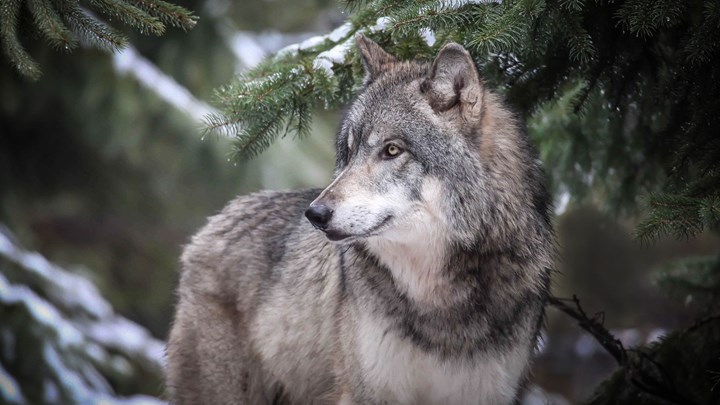
Gray wolves are in the news again, this time because one of Colorado’s recently introduced gray wolves crossed into Wyoming, killed five sheep and was killed by U.S. Department of Agriculture wildlife officials. The GPS-collared wolf, known as 2505-BC, was one of the 15 wolves transported to Colorado from British Columbia in January following passage of a 2020 ballot initiative mandating the species’ reintroduction, which passed by less than 1 percent.
As the officials took note of the Colorado Parks and Wildlife (CPW) collar around the wolf’s neck, CPW received a mortality alert. In an official announcement, CPW explained, “Wolves are known to travel long distances to find food or mates, including into other states. The United States Department of Agriculture, Animal and Plant Health Inspection Service (APHIS) in Wyoming was conducting livestock depredation mitigation in response to multiple livestock losses in Wyoming.” It added that it does not comment on wildlife movements, operations or regulations in other states and directed those seeking further information to contact APHIS, which is tasked with providing wildlife services and protecting agriculture, wildlife and other natural resources, property and human health and safety.
Of course, wildlife species do not understand state boundaries, and the wolf did not know it was supposed to stay in Colorado to help populate the species. Any of the 30 Colorado wolves that cross into Wyoming may meet the same fate in a state that not only has protocol in place to address depredation using lethal means but also a wolf hunting season to keep populations in check as managers of America’s renewable wildlife resources work to balance predator and prey species alike.
In the meantime, as Colorado’s reintroduced wolves do what wolves do—inside and outside state boundaries—the CPW Commission continues to issue depredation payments to farmers and ranchers and already has relocated some of the wolves for killing livestock. Adding to the concern, CPW commissioners just approved $343,415 in depredation payments, which leaves only $6,585 in the depredation compensation fund.
Milwaukee Journal Sentinel
1:34
2:50
For the third time in 14 years, a bill to open a sandhill crane hunting season in Wisconsin has been introduced in the Legislature.
The previous proposals failed to advance to the governor, even though they were authored by Republicans and introduced in a Republican-controlled Assembly and Senate. One even failed to get out of committee.
The coming months will tell if the Republican caucus – which still controls both chambers – has more support for the latest version of a crane hunting bill. The proposal is called SB112 in the Senate and AB117 in the Assembly.

Sandhill cranes were nearly eliminated from Wisconsin a century ago but thanks to state and federal protections and environmental improvements the birds have increased substantially in number. Wisconsin hosted an average of 51,000 cranes from 2018-22, according to the U.S. Fish and Wildlife Service.
The increased population of sandhill cranes in Wisconsin has led to crane-caused crop damage estimated at $1.9 million annually, according to the U.S. Department of Agriculture. Most of the crop damage in Wisconsin occurs in spring when cranes eat newly-planted corn. Other losses occur later in the year to crops including peas and potatoes.Need a break? Play the USA TODAY Daily Crossword Puzzle.
The current crane hunting bill is different from its predecessors in two basic respects: it was prepared by the 2024 Legislative Study Committee on Sandhill Cranes and it includes new measures to provide financial compensation to farmers.
The Legislative Study Committee on Sandhill Cranes met five times last year to consider issues related to cranes in Wisconsin.
Since committee chair Rep. Paul Tittl (R-Manitowoc, and author of the 2021 crane hunting bill) selected the group’s membership with a majority of representatives and individuals on record in support of crane hunting, it wasn’t a surprise when it voted 8-4 in favor of a crane hunting proposal.
The draft bill was advanced to the Joint Legislative Council which, as is customary, in turn introduced it in the Legislature.
Get the Outdoors Briefing newsletter in your inbox.
Get your weekly collection of outdoors news across Wisconsin.
Delivery: FriYour Email
The bill would direct the Department of Natural Resources to initiate a crane hunt in the state as well as provide a cost-share to farmers to treat corn with a seed coating to deter cranes and increase the agricultural damage surcharge on all Wisconsin hunting licenses to allow farmers compensation for crane damage.
The proposal would require $1.875 million of general tax dollars (called GPR) in fiscal years 2025-26 and 2026-27. Combined with a 50% cost share, the state funding would reimburse producers for seed treatment covering 300,000 acres of corn, according to a Wisconsin Legislative Council estimate.
If crane hunting were allowed in Wisconsin, farmers could apply for compensation for crane-caused agricultural damage. However, since the claims could exceed what is currently available in the fund, the bill would tack on from $1 to $4 to all Wisconsin hunting licenses, raising an estimated additional $1.3 million for the state’s wildlife damage claim fund.
It will remain to be seen whether the proposal’s mix of a new hunting opportunity and financial support for farmers bundled with additional costs to tax payers and hunters will help or hurt the bill’s odds of passing the Assembly and Senate.
Sen. Romaine Quinn (R-Cameron), vice chair of the crane study committee, said in December the Republican caucus has mixed support on issues of sandhill crane management but he thought the bill advanced by the crane committee would have the best chance to make it through the GOP-controlled Legislature and budget-writing committee.
Sen. Mark Spreitzer (D-Beloit), also a member of the crane study committee, said he didn’t see compelling evidence to authorize a crane hunt in Wisconsin and his constituents didn’t want one. When he polled voters in his district 63% were opposed, 18% were in support and 18% didn’t answer, Spreitzer said.
In the only social science work on the issue in Wisconsin, a 2023 study by the University of Wisconsin Survey Center found 47.6% of its panel of state residents opposed crane hunting while 35% were neutral and 17.6% supported it.
It’s not clear whether Gov. Tony Evers would sign or veto the bill should it come to his desk. However he may have foreshadowed his preference on the issue in his 2025-27 state budget. Evers included a proposal to provide $3.7 million to reimburse corn farmers up to 50% of the cost of crane-deterring seed treatment. It does not include a crane hunting option.
Senate Bill 112 and Assembly Bill 117 would set the base cost of a crane hunting permit at $20 for a resident and $100 for a nonresident.
The Senate and Assembly versions of the bill were heard and referred March 7 and 11, respectively, to committees in their chambers.
The Senate version of the bill, SB112, was assigned to the Senate Committee on Financial Institutions and Sporting Heritage. It is chaired by Sen. Rob Stafsholt (R-New Richmond); the vice chair is John Jagler (R-Watertown).
And AB117 was assigned to the Assembly Committee on Sporting Heritage. The committee is chaired by Rep. Treig Pronschinske (R-Mondovi). Rep. Paul Tittl (R-Manitowoc), who led the Legislative Study Commitee on Sandhill Cranes and authored the unsuccessful 2021 bill on crane hunting, is vice chair.
As of March 21 neither committee had scheduled a hearing for the bill.
Wisconsin Conservation Hall of Fame virtual ceremonies: The Wisconsin Conservation Hall of Fame will hold virtual ceremonies April 5 to honor its 2025 inductees, J. Baird Callicott, David Carlson and Robert Freckmann.
The WCHF was established in 1985. Its slogan is “Celebrating, Advancing, and Sharing Wisconsin’s Conservation Legacy.”
One-hundred twelve members have been inducted since its inception, including Frederick and Frances Hamerstrom, Aldo Leopold, John Muir and Gaylord Nelson.
The April 5 induction ceremonies will be held via Zoom. Each will feature speeches and presentations. Callicott’s induction is scheduled at 2 p.m. Carlson’s at 4 p.m. and Freckmann’s at 6 p.m.
For additional information on the WCHF, including how to support the organization and to register for the April 5 induction ceremonies, visit www.wchf.org.
Default Mono Sans Mono Serif Sans Serif Comic Fancy Small CapsDefault X-Small Small Medium Large X-Large XX-LargeDefault Outline Dark Outline Light Outline Dark Bold Outline Light Bold Shadow Dark Shadow Light Shadow Dark Bold Shadow Light BoldDefault Black Silver Gray White Maroon Red Purple Fuchsia Green Lime Olive Yellow Navy Blue Teal Aqua OrangeDefault 100% 75% 50% 25% 0%Default Black Silver Gray White Maroon Red Purple Fuchsia Green Lime Olive Yellow Navy Blue Teal Aqua OrangeDefault 100% 75% 50% 25% 0%There’s now a local animal rights group set to speak to the Mobile City Council Tuesday in an effort to save the beavers.
By Shelby Myers
Published: Mar. 24, 2025 at 3:15 PM PDT|Updated: 21 hours ago
MOBILE, Ala. (WALA) -Taking care of “nuisance beavers” in the city of Mobile has become a hot button issue.
There’s now a local animal rights group set to speak to the Mobile City Council Tuesday in an effort to save the beavers.
The Mobile City Council has already voted to re-hire Randy Howell with Waylon Wildlife Services LLC for about $13,000 a year.
Howell said he’s been catching beavers in Mobile for close to 20 years.
Howell said he sets up and checks on multiple traps in 23 locations across Mobile.
The goal is to keep the beavers from damming up local waterways so debris doesn’t pile up in neighborhoods.
Howell said because of state law, he can’t take the beavers and re-locate them.
In his words, there’s “no magic land to take the beavers to”.
According to him, the beaver could carry a disease or spread a certain type of algae into other waterways. So because of that, he does kill the beavers after he traps them.
It’s a necessary evil, he said that must happen in order to keep roads from flooding and development to continue.
On the other side of that, Awakening Respect and Compassion for All Sentient Beings, or ARC, plans to speak to at Mobile City Council meeting Tuesday.
ARC director, Tracey Glover said they want a humane solution to the beaver problem instead of them being killed.
She said she plans to ask council about the process to trap and kill the beavers and present humane alternatives.
Howell said he would love it if he didn’t have to kill the beavers, but doesn’t think it’s possible.
“I expected some variation.”
by Alexis McDonellMarch 23, 2025

Photo Credit: iStock
We like to think we have animals figured out: Owls prowl at night, squirrels scamper by day, and bears sleep through winter. But it turns out wildlife isn’t following our rule book, and a new global study reveals just how much their schedules are shifting in ways we never expected.
A massive study led by researchers from the University of Rhode Island and Colorado State University found that the presence of humans is dramatically altering the daily schedules of many animals, Earth.com reported.
By analyzing 8.9 million wildlife images from camera traps across 38 countries, scientists discovered that more than half (61%) of the 400 mammal species studied don’t follow the activity patterns we’ve assumed for years. And 74% changed their activity in response to humans.
“I expected some variation, but basically most species that we had adequate data on showed that they would change their diel activity,” said Brian Gerber, the lead researcher of the study.
Some animals have become night owls (literally) to steer clear of human activity, while others are embracing the daylight, possibly lured by city lights or the promise of an easy meal. These findings challenge our long-held beliefs that animal behavior is set in stone.
“The most striking thing is that when you are taught an animal is diurnal or is nocturnal, that is not always correct,” Gerber explained.


Upway is the No. 1 destination for e-bikes — with up to 60% off retail prices and a wide selection of top-tier brands like Cannondale, Specialized, Rad Power Bikes, and many more.
Shop for electric city cruisers, cargo bikes, mountain bikes, and everything in between with brand-new and certified pre-owned options. Whatever you choose, you’ll get it delivered straight to your doorstep in just a few days.
Giant snails invading New York City?
0 seconds of 30 secondsVolume 0%
00:42
00:42
Disrupting an animal’s routine isn’t a small change; it can have serious consequences. Animals that suddenly find themselves navigating an unfamiliar time of day may struggle to hunt, find food, or avoid predators.
And it’s not only about survival. These shifts could lead to more unexpected run-ins with humans. A nocturnal animal suddenly venturing out in daylight might wander into traffic, and a species that’s normally out in the daytime could find itself in the wrong place at the wrong time when predators are lurking. These disruptions ripple through entire ecosystems, throwing off the delicate balance that keeps nature in check.
This is yet another example of how human expansion forces wildlife to adapt in ways they weren’t built for. Some species might be able to keep up, but for others, the rapid changes could be too much, contributing to population declines and threatening biodiversity.
Conservationists are finding ways to reduce human disruptions to wildlife. Efforts like creating safe migration corridors, protecting green spaces, and dimming artificial lights help animals stick to their natural rhythms. Some cities have even launched “dark sky” initiatives to cut excessive nighttime lighting, making it easier for nocturnal creatures to stay on schedule.
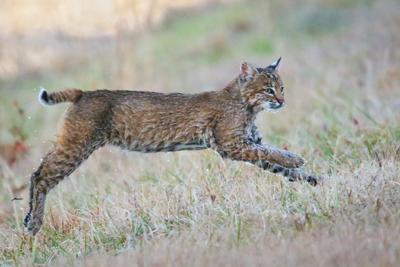
After receiving more than 3,000 public comments, Indiana’s Natural Resources Commission on Tuesday approved a bobcat trapping season in 40 southern Indiana counties.
The vote tally was not announced at the meeting but wasn’t unanimous.
There will be a statewide harvest, capped at 250 bobcats, allowing licensed trappers to take one bobcat per season and sell the hide. The season will begin Nov. 8. Trappers can use a cage trap, foothold trap types permitted under law or a snare with a relaxing snare lock.
Lawmakers mandated that the Indiana Department of Natural Resources establish a bobcat trapping season in 2024 legislation.
DNR gathered data before proposing specific rules. Project head Geriann Albers said the agency worked to procure data on bobcat populations, including by having Purdue University create a population model.
“Bobcats are important to us. We have a strong foundation and plans for the future to keep monitoring them because they are important to Indiana,” Albers said.
Need to get in touch?
Have a news tip?
DNR also held several public hearings on its plans and took written comments.
Aaron Bonar, an administrative law judge for the commission, acknowledged that the majority of public comments were against the proposal and many sought to establish a zero bag limit. But he said that wouldn’t be in compliance with the Indiana General Assembly’s mandate.
While before a House committee in February last year, bobcat season author Sen. Scott Baldwin said the bag limit would be driven by science.
“DNR’s process could very well result in season one (having) zero bobcats allowed to be taken. That’s very much a possibility. If science dictates, season one may not allow the taking of any bobcats,” Baldwin said. “All this bill says is: establish a season, start the process and figure it out.”
Once an endangered species in Indiana, bobcats were removed from the state’s endangered species list in 2005.
Since then, the bobcat population has grown — especially in recent years, according to DNR.
Samantha Chapman, Indiana state director at Humane World for Animals, said it was a “sad day” for wildlife conservation in Indiana.
“The Natural Resources Commission’s decision to green-light the trapping and killing of 250 of Indiana’s recovering bobcats – when there is still no adequate population data and no scientific evidence to justify killing hundreds of bobcats – contradicts ethical and science-based wildlife conservation,” she said in a news release. “This instead favors a tiny special interest group who wish to profit off Indiana’s wildlife by selling bobcat furs to overseas markets.”
The counties where bobcat trapping will be allowed are Bartholomew, Brown, Clark, Clay, Crawford, Daviess, Dearborn, Dubois, Floyd, Franklin, Gibson, Greene, Harrison, Jackson, Jefferson, Jennings, Johnson, Knox, Lawrence, Martin, Monroe, Morgan, Ohio, Orange, Owen, Parke, Perry, Pike, Posey, Putnam, Ripley, Scott, Spencer, Sullivan, Switzerland, Vanderburgh, Vermillion, Vigo, Warrick and Washington.
 Exposing the Big Game