Recreational trails disturb grizzly bears and wolves more than expected

by Michael Brown, University of Alberta

grizzly
Credit: Pixabay from Pexels

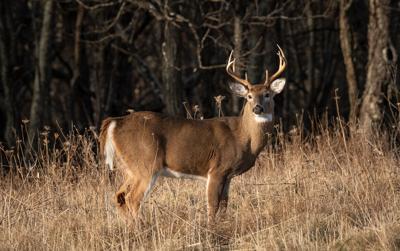
Human recreation on mountain trails is displacing grizzly bears and wolves from their natural habitats, even when the trails are hundreds of meters away, according to a new study from the University of Alberta. The research underscores the need for more effective planning to ensure that recreationists and wildlife can coexist, particularly in the busy Bow River Valley, which has long served as a natural corridor connecting the prairies to the Continental Divide.

The study was led by Peter Thompson, a former postdoctoral fellow with Colleen Cassady St. Clair in the Department of Biological Sciences. Thompson and St. Clair worked with biologists from Parks Canada and Alberta Parks who installed camera traps at more than 1,600 locations in the Bow River Valley and adjacent areas in the mountain parks between 2007 and 2022.

For the study, published in the Journal of Applied Ecology, the researchers analyzed more than one million images of humans and tens of thousands of images of bears and wolves, comparing the detection of each species in areas with different levels of human use.

Using statistical models, Thompson estimated human use over the entire landscape, then determined the likelihood that grizzly bears and wolves would be present in various areas.

Not surprisingly, nearly all large carnivores would completely avoid the areas immediately adjacent to the busiest trails. However, this displacing effect seemed to linger over large distances.

Though trails that never receive any use from humans have little to no effect on wildlife, only half of grizzlies studied would venture within 300 meters of trails with the highest human use. This effect was more pronounced in wary wolves, whose radius of comfort extended to 600 meters from the busiest trails. Thompson says these “zones of influence” caused by people are much larger than previously thought.

Human recreation pushing the forest's largest carnivores further than previously thought
Human disturbance indices for grizzly bears and wolves, as estimated by our model, for a subset of the study area that includes Banff, Alberta and Canmore, Alberta, the area’s two largest towns. Credit: Journal of Applied Ecology (2025). DOI: 10.1111/1365-2664.14837

“We initially thought bears might use hiking trails as efficient routes when humans weren’t around, but they actually avoid these areas altogether,” says Thompson, who is now a postdoctoral fellow at Simon Fraser University. “Our results show that human recreation has significant effects on wildlife, substantially influencing their behavior even hundreds of meters away from the trail.”

https://googleads.g.doubleclick.net/pagead/ads?client=ca-pub-0536483524803400&output=html&h=135&slotname=8188791252&adk=2329133447&adf=4203178812&pi=t.ma~as.8188791252&w=540&abgtt=6&fwrn=4&lmt=1736885850&rafmt=11&format=540×135&url=https%3A%2F%2Fphys.org%2Fnews%2F2025-01-recreational-trails-disturb-grizzly-wolves.html&wgl=1&uach=WyJXaW5kb3dzIiwiMTUuMC4wIiwieDg2IiwiIiwiMTMxLjAuMjkwMy4xNDYiLG51bGwsMCxudWxsLCI2NCIsW1siTWljcm9zb2Z0IEVkZ2UiLCIxMzEuMC4yOTAzLjE0NiJdLFsiQ2hyb21pdW0iLCIxMzEuMC42Nzc4LjI2NSJdLFsiTm90X0EgQnJhbmQiLCIyNC4wLjAuMCJdXSwwXQ..&dt=1736885848541&bpp=1&bdt=2433&idt=1810&shv=r20250114&mjsv=m202501090101&ptt=9&saldr=aa&abxe=1&cookie=ID%3D99381b150347a4b4%3AT%3D1734030601%3ART%3D1736288108%3AS%3DALNI_MZq0mMp1czLWDbBoGdjIe7MDY8noQ&gpic=UID%3D00000f7366a638a1%3AT%3D1734030601%3ART%3D1736288108%3AS%3DALNI_Mai2EeCfBqmBMHz0wANksfYUHj0dg&eo_id_str=ID%3D2d1e7c39e4d44ea4%3AT%3D1734030601%3ART%3D1736288108%3AS%3DAA-AfjagSvF7ZgxFcBuvNUGGbe7q&prev_fmts=0x0&nras=1&correlator=8238357713974&frm=20&pv=1&rplot=4&u_tz=-480&u_his=1&u_h=864&u_w=1536&u_ah=816&u_aw=1536&u_cd=24&u_sd=1.25&dmc=8&adx=395&ady=2790&biw=1521&bih=710&scr_x=0&scr_y=0&eid=95348683%2C95349949%2C31089684%2C42532523%2C95333409%2C95350243%2C95347433&oid=2&pvsid=1245351065824501&tmod=2106514271&wsm=1&uas=0&nvt=1&fc=1920&brdim=0%2C0%2C0%2C0%2C1536%2C0%2C1536%2C816%2C1536%2C710&vis=1&rsz=%7C%7CpeEbr%7C&abl=CS&pfx=0&fu=128&bc=31&bz=1&td=1&tdf=2&psd=W251bGwsbnVsbCxudWxsLDNd&nt=1&ifi=2&uci=a!2&btvi=1&fsb=1&dtd=1816

Thompson adds he hopes the findings will help land managers in the Bow River Valley create safe, quiet spaces for grizzly bears, wolves and other large carnivores that require undisturbed habitats for movement.

“When trails become busier, people may not realize the extent to which they are disrupting wildlife movement and habitat security,” he explains.

St. Clair, Thompson’s former supervisor, emphasizes that parks planning in Alberta—particularly in the Canmore region, where this study was based—has increasingly focused on managing human-wildlife interactions.

“Wolves are even more affected by human recreation than grizzly bears, and they are active year-round, coinciding with winter recreational activities,” says St. Clair. “This research highlights the critical need to manage human use in a way that allows people to share the landscape with these wary predators.”

More information: Peter R. Thompson et al, Integrating human trail use in montane landscapes reveals larger zones of human influence for wary carnivores, Journal of Applied Ecology (2025). DOI: 10.1111/1365-2664.14837

Journal information: Journal of Applied Ecology 

Provided by University of Alberta 


Explore further

Bears avoid trails with motorized recreational activity, study confirms


4 shares

Feedback to editors

Team develops plan for 3D-printed microscope, including lens, that costs less than $60

5 hours ago

0

Quantum experiment generates long-range entanglement in 54-qubit system

5 hours ago

0

Astronomers discover a new dense sub-Saturn exoplanet

6 hours ago

0

Neutron star cooling simulations set new constraints on light QCD axions

8 hours ago

0

Increased AI use linked to eroding critical thinking skills

Jan 13, 2025

5


Seabirds make clever use of winds to plan foraging trips over hundreds of kilometers2 hours agoDo aliens exist? We studied what scientists really think2 hours agoDigital mindfulness program shows promise in enhancing employee happiness and engagement2 hours agoExocyst study reveals new roles for protein complex in membrane fusion2 hours agoReal-time fluorescent sensor could allow for precise monitoring of wine quality2 hours agoFirst-ever detection of a mid-infrared flare in Sagittarius A*, the Milky Way’s supermassive massive black hole2 hours agoNewfound galaxy class may indicate early black hole growth2 hours agoDiversified cropping systems boost nitrogen supply but not soil carbon, ongoing field trial discovers3 hours agoSAMURI’s intricate 3D structure offers insights into RNA modification3 hours ago


Relevant PhysicsForums posts

How does laser hair removal work?

Jan 11, 2025

Are you concerned about toxic chemicals in plastic food packaging?

Jan 9, 2025

Controlling optical wavelength of illumination to improve reproduction rates in microorganisms

Jan 7, 2025

What are the costs for tests to measure bacteria and virus levels on surfaces?

Jan 5, 2025

Interesting Veritasium YouTube on PCR tests and how they came to be

Dec 30, 2024

Electrical stimulation of the Vagus nerve may relieve treatment-resistant depression

Dec 28, 2024

More from Biology and Medical


Apex predators captured in Canada to be flown to Colorado and released. Here’s why

By Mitchell Willetts January 12, 2025 1:23 PM| 1 Wildlife experts are capturing predators from Canada to release them in Colorado. Lance Anderson via Unsplash Wildlife experts are in the process of capturing gray wolves from Canada in order to release them in Colorado, effectively doubling the state’s small, recently reintroduced population. Until recently, gray wolves were virtually extinct in Colorado, but state officials are going to great lengths to change that. TOP VIDEOS As many as 15 gray wolves will soon be released, all of them captured in British Columbia, Canada, Colorado Parks and Wildlife announced in a Jan. 11 news release. They will be put in crates, loaded into an aircraft and flown, then released in western Colorado, officials said. The move comes after the state in 2023 reintroduced gray wolves, which were exterminated from Colorado in the 1940s through hunting, trapping and poisoning because the wolves had been targeting cattle and livestock. The controversial effort to bring gray wolves back has had mixed success. Of the first 10 wolves brought in from Oregon, dubbed the Copper Creek pack, just six remain in the wild, with one having been recaptured and three killed, Coloradoan.com reported. The pack has also preyed on livestock which, while not unexpected, prompted wildlife officials to relocate some of the wolves, McClatchy News reported. Gray wolves are native to Colorado but were extirpated from the state in large part due to intentional hunting and trapping efforts. Michael LaRosa via Unsplash Releasing the Canadian gray wolves will more than double the animal’s population in the state — and officials are just getting started. “CPW plans to release 10-15 gray wolves on the West Slope per year, for a total of 3 – 5 years, as outlined in the Colorado Wolf Restoration and Management Plan,” Colorado Parks and Wildlife said. Officials said the wolves being captured in Canada don’t have a history of going after livestock. “Gray wolves from this area of B.C. do not overlap with areas where livestock are present, so there are no concerns about reintroducing wolves that are from packs that are involved in situations of repeated livestock depredations.” Loss of livestock is a primary reason gray wolves were wiped out from Colorado in the 40s, and it’s a real concern once again. As of August 2024, the Copper Creek pack had preyed on more than 24 livestock animals and three dogs, McClatchy reported, adding that the owners of those animals were reimbursed in cases where they filed claims. The risks posed by reintroducing the wolves are small compared to potential benefits to the ecosystem, advocates say. “You’d think the sky was falling, but the fact is, it’s not. The fact is, wolves are being wolves. Most of the wolves that were reintroduced haven’t gotten into problems with livestock,” Rob Edward, president of the Rocky Mountain Wolf Project told KCNC.

Read more at: https://www.sacbee.com/news/nation-world/national/article298418708.html#storylink=cpy

This ostrich farm survived wildfires. Now, avian flu means 400 birds need to be culled

Universal Ostrich looking at options after federal agency ordered cull amid ongoing avian flu outbreak

Akshay Kulkarni · CBC News · Posted: Jan 12, 2025 2:48 PM PST | Last Updated: 3 hours ago

A herd of ostriches is seen in a snowy field.
The herd of ostriches at Universal Ostrich in Edgewood, B.C., is facing a cull order from the Canadian Food Inspection Agency (CFIA) after avian flu was detected on the farm. (Submitted by Katie Pasitney)

Social Sharing

An ostrich farm in B.C.’s West Kootenay has been ordered to cull its entire herd of 400 birds after the Canadian Food Inspection Agency (CFIA) confirmed the presence of avian flu there. 

Universal Ostrich has been told to get rid of its birds by Feb. 1, according to Katie Pasitney, whose mother and mother’s business partner have operated the Edgewood, B.C., farm for over 35 years.

In the CFIA’s letter to the farm, shared with CBC News, the agency says it issued the cull order on Dec. 31 following an avian flu detection earlier that month. CFIA says it follows the World Organisation for Animal Health (WOAH) in classifying the ostriches as “poultry.”

The order comes as highly pathogenic avian flu (the H5N1 variant) continues to spread in Canada, impacting more than 15 million domestic birds, an unknown number of wild birds, and even some dairy cattle and people.


But Pasitney says the ostriches present little risk to the wider population, as flightless birds that aren’t being sold for meat, and that the farm has implemented strict quarantine protocols since the disease was detected in early December.

“There’s gonna be a huge impact to mental health here, as well as to the world, honestly,” she told CBC News through tears.

“If you kill 400, it’s a mass massacre of animals and it’d be heartbreaking to see this happen.”

WATCH | Pasitney speaks with CBC News as 2021 wildfires threaten her farm: 

Edgewood, B.C., residents hunker down with 500 ostriches amid wildfire threat

3 years ago

Duration5:58A family in Edgewood, B.C., says they’ll stay put as fires burn around them because it’s not fair to abandon the 500 ostriches on their farm.

Pasitney’s mother’s farm and her ostriches survived wildfires in 2021. She says the decades-old birds have become like family.

The B.C. woman says not all of the birds have fallen sick, and some of the herd have resisted infection completely since it was first detected. She estimates around nine per cent of the 400-plus birds have died.

In a statement, the CFIA says it’s the first time they’ve detected avian flu in Canadian ostriches since they began responding to the highly pathogenic flu outbreak in December 2021.

Obligation to follow treaties

J. Scott Weese, a professor at the Ontario Veterinary College, told CBC News in an email that a decision to cull animals at a farm is a cost-benefit decision, where the costs and benefits can’t be quantified easily.

“In general, culling makes more sense when there’s widespread infection, risk to people around the animals, limited other exposure risk, where disease is more severe and where there’s less value — economic, conservation, human-animal bond — of the animals,” he said.

But Weese added that H5N1 is now well established in Canada, and there may be less justification for culling from the standpoint of controlling disease.

WATCH | Poultry farms face avian flu threat: 

Avian flu threatening B.C. poultry farms

10 days ago

Duration5:37Close to 80 poultry farms in B.C. have experienced avian flu outbreaks since the middle of October, according to the B.C. Poultry Association.

Jean-Pierre Vaillancourt, a professor at the University of Montreal’s veterinary school, says Canada has signed a treaty with the WOAH, which means it has agreed on certain specific measures when it comes to controlling avian flu, like culls.

“Whether you’re in Europe or in Canada and [the] United States, it will be essentially the same reaction,” he said. “We try to extinguish the fire — so essentially the virus can’t feed and replicate if it has other birds around.”

Vaillancourt added that ostriches are no less susceptible to avian flu than other birds, especially over the past few years with the highly pathogenic variety, and could potentially carry the disease even if they aren’t symptomatic.

A sea of blue membranes punctuated by yellow circles and sticks.
This colourized electron microscope image released by the National Institute of Allergy and Infectious Diseases on March 26, 2024, shows avian influenza A H5N1 virus particles (yellow) grown in Madin-Darby Canine Kidney (MDCK) epithelial cells (blue). (CDC/NIAID/The Associated Press)

But Pasitney says the CFIA is losing an opportunity to study the genes of the birds who have resisted the flu, something the farm has been doing in its own time.

“We have 35-year-old birds here with genetics and DNA we’ll never get back,” she said. “So it’d be nice if we can all band together and [get] all the support we can get to make a policy change.”

A herd of ostriches is seen in a snowy field.
Pasitney says her ostriches pose little risk to the wider population, as they are flightless birds who are not being used for meat. (Submitted by Katie Pasitney)

In the CFIA’s letter to the farm, it says its assessment of the herd didn’t meet the bar to be considered a breed with “rare and valuable poultry genetics.”

“Robust processes must be in place (ex. genomic testing) to actively select and breed for specific desirable traits, with subsequent evidence that this genetic value is critical to the Canadian poultry industry,” the letter reads.

Still, Pasitney says she’s looking at her options to preserve the herd, and is asking the CFIA to extend the cull deadline beyond Feb. 1.

The penalty for disobeying the CFIA’s cull order is unclear. CBC News has reached out to the agency to find out more.

Clarifications

  • This story has been clarified to reflect that Katie Pasitney’s mother and her mother’s business partner are the primary operators of Universal Ostrich.Jan 13, 2025 8:56 AM PST