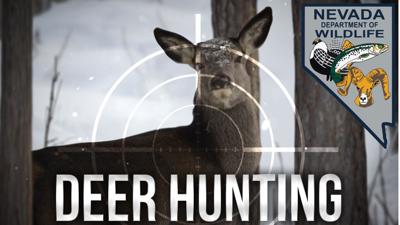
After a thorough investigation, two people were found guilty of several wildlife offenses.
The offenses including unlawful hunting and residency fraud, related to the illegal harvest of a mule deer in Hunt Unit 114 on the Utah-Nevada border, mostly in the Humboldt-Toiyabe National Forest.
Officers from the Utah Division of Natural Resources (DNR) tipped the Nevada Department of Wildlife (NDOW) in December 2022 about a resident of Panguitch, Utah, who reportedly used a fake resident hunting tag to kill a huge 5×4 mule deer in Nevada.
According to NDOW, the person was not eligible for the resident tag used in the hunt as investigators verified that they had lived in Utah for more than three years.
Authorities discovered through search warrants and investigative methods that the spouse of the person in question, who filled out applications and obtained licenses under false pretenses, was responsible for the fraudulent application and tag purchases.
Both people were charged with felonies, gross misdemeanors, and misdemeanor wildlife offenses following an in-depth review of official papers, bank records, and digital evidence.
The primary suspect’s hunting privileges were suspended for five years after they entered a guilty plea to aiding and abetting unlawful possession, a serious offense.
The offender was also given a 12-month probationary period with stringent conditions, a 60-day suspended jail sentence, and a total loss of 36 hunting bonus points.
In addition, a $4,999.99 joint civil penalty was imposed on both parties.
In addition to sharing the civil penalty, the second person was found guilty of a misdemeanor offense, which led to license suspension and financial penalties exceeding $600.
“This case could not have been solved without the crucial collaboration between NDOW and Utah DNR, this case exemplifies the importance of interagency partnerships in protecting wildlife and enforcing conservation laws.”
– said Lieutenant Anderson
According to NDOW, a hunting or fishing license suspension in one participating state is recognized and enforced in all other member states under the Interstate Wildlife Violator Compact (IWVC), which prohibits someone from getting a license in another state.
They say Alaska is the only state not included in this pact, which covers 49 states.
Therefore, thee two people who were given a five-year hunting right suspension will thus not be able to get a license in any of the states that are involved.
NDOW says residency fraud is still a major problem that undermines conservation financing and denies opportunity to legitimate hunters.
The significance of public collaboration in safeguarding animal resources is highlighted by this example.
NDow says sportsmen and the general public can utilize the new NDOW Tip app or the OGT hotline at (800) 992-3030 to report wildlife crime.
CHEYENNE, Wyo. — An Alabama man was recently convicted in a decades-old Wyoming Game and Fish Department wildlife case after failing to appear in court for more than 20 years.
Kenny Craig, 53, of Elkmont, Alabama, and formerly of Lysite, Wyoming, was arrested in March 2024 on a bench warrant issued in February 2000 after he failed to appear in court for multiple hunting violations.
The Wyoming Highway Patrol arrested Craig during a traffic stop in Crook County. He was taken to jail and later released on a $1,000 bond.
Advertisement
16
On June 25, 2024, Craig was convicted in Fremont County Circuit Court for the original wildlife crimes he committed during the 1998 hunting season. As part of a plea agreement, 9th Judicial District Circuit Court Judge Dan Stebner accepted Craig’s no-contest plea to one count of taking a deer without a license. He was ordered to pay $410 in fines and court costs, along with $1,000 in restitution for the illegally taken buck mule deer. His hunting, fishing and trapping privileges were suspended for three years. In exchange for his plea, three additional charges were dismissed and two further violations were not charged.
Craig’s violations date back to Oct. 24, 1998, when he illegally killed a 5-by-5 buck mule deer on Game and Fish’s Sand Mesa Wildlife Habitat Management Area near Riverton. He was hunting in Deer Hunt Area 157 — a limited-quota area — with a general deer license, which was not valid for that hunt area. Craig failed to tag the buck and later used his brother’s limited-quota license to validate the animal illegally.
In addition, Craig illegally purchased a Wyoming resident general deer and elk license before meeting the state’s residency requirement. At the time he only lived in Wyoming for three months after moving from New Mexico. Wyoming law requires a person to be a resident for at least one year before applying for or purchasing a resident hunting or fishing license. Craig also failed to complete the mandatory hunter education course, which is required for anyone born after Jan. 1, 1966.
Advertisement
about:blank
Game and Fish began investigating Craig in fall 1999. Now retired game wardens Chris Daubin and Brad Gibb investigated the case. After collecting evidence and completing the case, four must-appear citations were issued and two additional violations were pending. Craig was scheduled to appear in court in late October 1999 but failed to do so and fled to Alabama.
A bench warrant was issued in February 2000, but Craig remained outside Wyoming until his recent arrest.
“There is no statute of limitations for wildlife crimes in Wyoming,” said Lander Region Wildlife Supervisor Jason Hunter. “Cases like these send a clear message: wildlife crimes will not be ignored, no matter how much time has passed.
Advertisement
about:blank
“Lawful sportsmen take great care to apply for the correct licenses in the correct areas and follow the existing laws and regulations. It shows respect for the resource, too. Violators must be held accountable when they don’t follow the rules. This ensures there are opportunities for all users to enjoy the wildlife resource well into the future.”
While all the original investigating officers, prosecutors and judges involved in the case have since retired, Fremont County Attorney Pat LeBrun and Assistant County Attorney Ember Oakley pursued the charges based on the detailed case reports compiled by officers at the time.
“I’m pleased that Mr. Craig has been held accountable for his wildlife crimes in Wyoming,” Oakley said. “This case demonstrates the exceptional work of our Wyoming wardens and their dedication to thorough investigations. Even 20 years after the crime, we were able to pick the case up and complete the prosecution. Their top-notch work is essential to protecting our state’s wildlife.”
ELY, Nev. (KOLO) – Two Utah residents have been found guilty of residency fraud and illegal hunting in connection with the illegal harvest of a mule deer near the Utah/Nevada border.
Neither suspect was identified by the Nevada Department of Wildlife.
In December of 2022, officers with the Utah Division of Natural Resources handed over a tip to the Nevada Department of Wildlife about a Utah resident who had allegedly harvested a large mule deer using a fraudulent hunting tag.
Investigators determined the suspect had been a Utah resident for more than three years and were thus ineligible to use the tag.
“Residency fraud is becoming a real problem,” said John Anderson, Game Warden Lieutenant for the Nevada Department of Wildlife. “In the past, we might see just a handful of these types of cases, but in the last few years that number has grown to a point where our game wardens are spending quite a bit of time investigating residency fraud. That’s valuable time where they could be in the field protecting the states resources.”
Authorities were able to uncover the fraudulent application and tag purchases were coordinated by the individual’s spouse, who completed applications and license applications under false pretenses. Both were subsequently charged with felony, gross misdemeanor, and misdemeanor wildlife violations.
The primary suspect pleaded guilty to aiding and abetting unlawful possession, resulting in a five year suspension of their hunting license. They also received a suspended jail sentence of 60 days, a 12-month probation period, and a combined loss of 36 hunting bonus points.
Both suspects were also ordered to pay $5,000 in fines.
The second suspect was convicted of a misdemeanor, resulting in license suspension, and fines exceeding $600.
“This case could not have been solved without the crucial collaboration between NDOW and Utah DNR,” said Lieutenant Anderson. This case exemplifies the importance of interagency partnerships in protecting wildlife and enforcing conservation laws.”
CENTRAL POINT, Ore. – Oregon authorities are dealing with the increasing use of thermal imaging devices in illegal hunting activities. These devices, which detect heat signatures, give hunters an unfair advantage by making animals visible in darkness or through cover.
“When you look at them through a thermal scope, they’re going to glow white or red, or whatever the settings are, and just, no matter the brush, no matter if they’re crouched down, hiding, and tall grass, whatever, they’re just going to stick out and glow like a candle out there,” said Mathew Vargas, a wildlife biologist with Oregon Fish and Wildlife’s Rogue District.
The use of thermal imaging scopes is prohibited in Oregon. “There’s no hunting at nighttime to begin with,” Vargas said. He added that the technology undermines fair chase, a principle valued by both the Oregon Department of Fish and Wildlife and the hunting community.
Vargas said that wildlife has adapted to the environment with camouflage and other natural defenses. Thermal imaging disrupts these adaptations. “It causes an unfair advantage for people at that point,” Vargas said.
Enforcement of the ban on thermal imaging is challenging. Oregon State Police Fish and Wildlife troopers must catch individuals in the act of using the devices for illegal hunting. “It’s not illegal for somebody just to have a thermal imaging scope and go look for wildlife,” Vargas noted.
Vargas said it is up to the hunting community in reporting suspected illegal activity. “There’s a lot of benefits to having the hunter community be on our side and give us tips and information and call things in that look suspicious,” he said.
Vargas believes the issue is present throughout the state. “My guess is, it’s an issue everywhere, and it’s just a matter of finding the people doing it,” he said.
Illegal use of thermal imaging is sometimes associated with other offenses, such as spotlighting at night, trespassing, or other poaching activities. In December, Oregon state police arrested 13 individuals during recent operation in Clackamas County for illegally using thermal imaging devices to hunt big game. Officials seized 14 infrared thermal imaging devices along with a rifle and four deer, after months of investigation.
Residents are encouraged to report any suspicious activity to the Turn In Poachers (TIP) Line at 1-800-452-7888 or *OSP (*677) from a mobile phone.
Thermal imaging equipment and rifle seized during the arrest of 13 hunters in December 2024.
It’s morning in a hunting blind at the Santiam Valley Ranch, a private duck hunting club near Turner, Oregon. It’s cold and wet. But it’s not hunting season, so Mike Totey isn’t shooting.
“I remember going out with my dad and uncles and family friends before I was even hunting,” Totey says. “I cherish those memories. You know, I lost my Dad 10 years ago and he was one of my favorite hunting partners.”
As the cost of thermal imaging cameras has dropped, from thousands of dollars to about $200, Totey says, more hunters have started using them to find deer or elk. But officials are cracking down on hunters using the technology.
Pointing to a tangle of blackberry bushes less than 10 feet away, Totey explains that the benefits are obvious.
“There are pheasant and quail out there,” he says. “Upland birds, tight under cover. If you had thermal imaging, maybe you could find those over in that thick brush there.”
A few years ago, the state made hunting with thermal imaging cameras illegal. Totey says the Oregon Hunters Association agrees with the ban.
“They evolved pretty quickly and started getting used in the hunting community and people were like, ‘You know, I think that might be crossing a line,’” he says. “For some people it crossed a line much sooner than others. Others might say, ‘I don’t think that line has been crossed at all and I don’t understand why I can’t use it.’”
Oregon Hunters Association Conservation Director Mike Totey, pictured in Turner, Ore., on March 12, 2025, says thermal imaging in hunting is controversial — some see it as ethical, others don’t, with opinions varying on whether it crosses a line.
What would happen if someone brought a thermal camera to Totey’s hunting blind?
“We’d tell him to basically take it back to the truck. We can’t have that out here,” Totey says. “Just because you’re not the one holding the device, doesn’t mean you’re not benefiting from it or using it.”
“We’ve been receiving a lot of complaints about thermal users involved in hunting,” said Lt. Clint Galusha with the Oregon State Police.
He’s one of 128 wildlife enforcement officers in the state. He said technology is constantly evolving to make hunting easier, whether it be rifle scopes with clearer glass that automatically calculate range, duck decoys that move like the real thing, or just clothes that are warmer and lighter.
“I think in general, technology, as it increases, we have to look at the regulations and how they affect ethical hunting and fair chase,” Galusha said.
Lt. Clint Galusha of Oregon State Police emphasizes that evolving technology, from advanced rifle scopes to realistic decoys, requires ongoing regulation to ensure ethical hunting and fair chase practices.
The Oregon Hunters Association defines ethical hunting and fair chase as the sportsmanlike and lawful taking of a wild animal in a manner that doesn’t give the hunter an unfair advantage. Unfair means the deer or elk or bird should have a reasonable chance of escape.
The OHA wants fair chase hunters to understand that hunting is not only about what is legal, but also about what is honorable. The group said technology shouldn’t reduce the skill of hunting to simple shooting.
Brian Wolfer with the Oregon Department of Fish and Wildlife said poaching with illegal tech affects other hunters, because it reduces the population of the species.
“We are setting the hunting season relative to the population, and so you have that reduction in opportunity for lawful hunters,” Wolfer said.
There are lots of longstanding technological prohibitions for hunters. For example, they’re not supposed to use lights at night, because it robs prey of the ability to use darkness to escape.
“We don’t allow people to use scopes that electronically link with range finders, or phones that would automatically adjust point of aim, and things like that,” Wolfer said.
But not everyone follows the law, and laws change significantly from state to state. Galusha said people flout the laws for many reasons.
An infrared thermal imaging camera captures a deer in the woods at an unspecified location, showing the grass at 45.8 F and the deer’s fur at 78.2 F. The camera brand has been cropped out of the original image. (License link)
“Some shoot for the thrill of killing. They’ll leave them and the meat would be wasted,” Galusha said. “Some harvest it and give to others, their family or friends. Sometimes it’s just cutting off the head, and taking the head and antlers as a trophy.”
Fines for poaching in Oregon can reach $50,000, and jail time is an option. The Oregon Department of Fish and Wildlife has a tip line to report unsporting conduct at 1-800-452-7888.
The Clackamas County District Attorney’s office has filed several different wildlife charges against the 13 hunters arrested in December.
Oregon State Police are not releasing more information at this time citing an ongoing investigation.
This story comes to you from the Northwest News Network, a collaboration between public media organizations in Oregon and Washington.
With non-hunters having more and more say on hunting matters via voting for anti-hunting officials or ballot initiatives, it is more important than ever to choose how you speak to others about hunting. (Photo courtesy of Justin Moore)
March 21, 2025By Andrew McKean
My buddy Ed has a way with verbs. He says he “stuck” a buck when he connects with his bow, he “blasts” or “schwee-schwacks” deer with his rifle, and he “gives dirt naps” to the elk he drops in the Montana mountains.
His is colorful and descriptive language, but those verbs don’t convey much empathy for the animals that will feed his family and quench his passion for hunting. I don’t care that much. I know Ed as a hard and serious hunter, and his earthy descriptions of killing wildlife form a sort of code between committed hunters. I find myself sometimes describing how I “blasted” a duck or goose.
But what if a non-hunter or even an anti-hunter overhears Ed? They’re likely to judge him—and by extension, other hunters—as a careless butcher with little regard for wildlife simply by the words he uses to describe the final part of a successful hunt.
Ed’s vocabulary is an extreme example of a debate I bet you’ve heard and maybe participated in. It’s whether we hunters “kill” or “harvest” the animals we hunt. If you think this particular choice of words is just one more reflection of political correctness intruding in our traditions, you’re dead wrong. The debate goes all the way back to the founder of modern wildlife management, the venerable Aldo Leopold.
Leopold, the poet laureate of wildlife management, is best known for his lyrical essays collected in “A Sand County Almanac,” but earlier in his career he outlined the basis for the scientific management of America’s recovering wildlife populations. He borrowed heavily from the language of farming, which is where we get our management practices of “planting” hatchery trout, “improving” habitat and managing big-game herds for “maximum sustainable harvest.” It’s almost Biblical. We hunters reap what we sow.
In his 1933 textbook “Game Management,” Leopold described the work of newly formed fish-and-game agencies in agricultural terms: “Game management is the art of making land produce sustained annual crops of wild game.” In that construct, “harvest” is the natural term to describe hunters’ role in managing wild crops.
We’ve passed that term down through generations. To “harvest” a deer sounds responsibly utilitarian, a social contract in which we pledge to convert a commodity, wild meat, to feed our families. The term has the happy byproduct of being just clinical enough to convince non-hunters that we hunters are doing a public service and that we approach the task with unemotional detachment.
How many hunters have experienced that heart-pounding moment when we decide to take the life of a wild animal? All of us. It’s what unites and defines us as hunters. There’s nothing clinical or detached about it, and the charged emotion of the moment is what keeps us doing it, getting out of bed at obscenely early hours, venturing into wild places, enduring cold and discomfort, finding and killing wild animals.
The honesty of this life-taking moment confirms that humans are authentic predators, a recognition that connects each of us to nameless ancestors who fed the families that ultimately produced us. In this moment, we are killers, not harvesters, and we should be comfortable with the act and the term.
I write this with the expectation that most of you will nod in agreement. After all, you’re readers of a hunting magazine. But I probably wouldn’t describe myself as a “killer” of game to an audience that doesn’t share my deeply personal relationship with wildlife. In mixed company, I stay away from charged terms, so my description of “killing” a deer becomes a “harvest” of the same deer.
I might say I “took” a deer, or even “managed to bring a deer home,” which sounds like I gave it a ride, buckled smartly into the passenger seat. I recognize that I’m not being fully honest when I use euphemisms to describe the act of killing, but I’m comfortable with that, because it’s not my goal to turn my audience against me or my fellow hunters.
I think this is an important recognition, and I mention it this month as hunters prepare for seasons to come and reflect on seasons past. March is the month for storytelling, for recreating the details and the emotion of past hunts. Stories are the most enduring parts of a hunt, living on long after the venison or goose is eaten, and the most powerful stories bring an audience to the field, the chase, the smell of the snow and the sound of the wind in the trees. As a storyteller, I don’t wish to push my audience away with graphic or politically charged words.
If I have to sanitize my vocabulary to not alienate some people, I figure it’s worth a certain amount of euphemizing. The alternative is that I could allow non-hunters to discount all hunters as bloodthirsty or oblivious to the biological, cultural and emotional implications of taking an animal’s life. These are folks who may, then, vote for anti-hunting politicians or support ballot initiatives that seek to ban certain types of hunting.
The fact remains, I hunt to kill, and in some ways I kill to have hunted. It’s an honest verb and one that connects us with not only our ancestors, but also the rest of nature. After all, a grizzly bear that might come upon an oblivious human isn’t interested in “harvesting” us. It aims to kill us, and that’s the correct and accurate description of the relationship between predators and prey, whether you’re a human hunter, a coyote pouncing on voles or a bass smashing baitfish.
The HHS secretary has suggested letting bird flu ‘run through the flock,’ an idea one public health expert says could amplify the virus’ spread and ‘is just letting (birds) suffer.’
Eggs are fried in a pan on Mar. 19, 2025, in Baden-Württemberg, Stuttgart.
Bird flu continues to spread in the U.S., infecting thousands of wild birds and poultry while posing an increasing threat to humans.
Since the outbreak among U.S. livestock was first detected in March 2024, there have been 70 human cases in the U.S., which have resulted in one death, according to the Centers of Disease Control and Prevention, and among domesticated animals, the virus has been detected in nearly 1,000 cattle and millions of chickens, according to the U.S. Department of Agriculture.
Concerns over the continued spread of bird flu in the U.S. are compounded by recent comments made by Health and Human Services Secretary Robert F. Kennedy Jr., who suggested letting the bird flu found on poultry farms “run through the flock” so that “we can identify the birds, and preserve the birds that are immune to it.”
And while much of the current bird flu outbreak has been fueled by the H5N1 subtype of bird flu, recent reports of an outbreak of the H7N9 bird flu strain on a poultry farm in Mississippi confirmed on March 13 are further complicating matters. That marks the first confirmed U.S. cases of that strain – which has proven deadly in humans – since 2017, according to the State of Mississippi Board of Animal Health.
Meghan Davis, an associate professor in the Department of Environmental Health and Engineering at the Johns Hopkins Bloomberg School of Public Health, spoke with U.S. News about Kennedy’s idea to let the virus spread, as well as the public health threat posed by the recent detection of the H7N9 strain and how the disease response effort can be more effective moving forward.
How effective would HHS Secretary Kennedy’s idea of allowing the bird flu to ‘run through the flock’ at poultry farms be toward controlling the virus spread?
“I think it’s a terrible idea, and there are a couple of different reasons. What happens with bird flu is that these animals get quite sick, so just the animal welfare issues of just letting them suffer is one element of this that I strongly disagree with. The other element is that now you could be prolonging the infection within the flock given that the birds that don’t die very quickly could still be spreading it and that can amplify the potential spread.
“We now have identified that it may be possible for these farms to actually have proximity-based spread through shedding (of feathers) through the air. So that means now you are continuing to have lots of viruses around. So, I think what it’s going to lead to is more disease and a bigger impact to animal production than the current policy.
“If you have continued shedding , then that’s continued exposure for workers over a potentially longer period of time.”
Sign Up for U.S. News Decision Points
Your trusted source for breaking down the latest news from Washington and beyond, delivered weekdays.Sign Up
Sign up to receive the latest updates from U.S News & World Report and our trusted partners and sponsors. By clicking submit, you are agreeing to our Terms and Conditions & Privacy Policy.
How much of a public health threat does the H7N9 bird flu strain pose?
“We’ve seen it globally, just as we’d seen H5N1 prior to the late 2021, early 2022 North American incursion. When we see it globally, it can cause sporadic disease in people and it can also lead to production losses. So, I think we have reason to be concerned about it.”
What is the chance of bird flu spreading between humans?
“What we are most concerned about is a sustained chain of transmission. What happens when you don’t have a virus that is particularly suitable for sustained transmission is that you get it going from one person to a second but you would rarely have third and fourth cases.
“Right now we’re definitely seeing sustained chains of transmission within animal species. So, this is the big thing that would be problematic for any virus – whether it was a H5 or H7 – especially if they re-assort with a seasonal influenza virus and pick up more characteristics that could potentially be associated with the ability to have a sustained transmission chain.
“That would put us a big step down the path toward a pandemic.”
In what ways would you like to see the federal government improve its bird flu outbreak response?
“The poultry industry has struggled a little bit with vaccination given that there are trade barriers and that disease-free status is often a part of these trade agreements. But I’m starting to hear a lot more softening on that – that maybe we should be better exploring vaccination as part of our control strategy within poultry. Exactly how that would be done is something that we need to evaluate. Same thing for dairy cows, I think that we’re just starting to recognize that there could be some longer-term production loss related to it, and that could change some of the economic algorithm for use of vaccination.
“We don’t yet have great eyes everywhere, and I don’t think we have great surveillance within two key areas. The first would be among consumers – people who consume raw milk products, or who have other exposures that are outside of the workplace-based exposure.
“We also have very little in the way of companion animal surveillance. A lot of these just end up being suspect cases that go to a veterinarian who can alert the authorities rather than something that is more active and really more systematic.”
In an interview with Fox News this week, Health and Human Services Secretary Robert F. Kennedy Jr. proposed a novel fix to the nation’s bird flu epidemic: Let the virus spread.
Andrew Harnik / Getty Images
“They should consider maybe the possibility of letting it run through the flocks so that we can identify the birds, and preserve the birds, that are immune to it,” Kennedy said of poultry farmers and federal authorities.
It is the nation’s agriculture secretary, Brooke Rollins, who has authority over the nation’s poultry management, not Kennedy. But Rollins appears to be in agreement with her counterpart at HHS. As The New York Times noted, she floated the idea of a pilot program that would allow the disease to ravage a flock, while extra layers of protection contained the spread within a certain perimeter. The surviving birds could then be studied.
But there are reasons that scientists recommend immediately culling infected flocks, and letting the virus run rampant could have dire consequences.
The bird flu, H5N1, has a near 100% fatality rate in chickens and turkeys, and has already killed millions of wild birds.
One of the ways it can spread to healthy poultry farms is by a single infected duck visiting a flock and shedding the virus through feces. H5N1 kills relatively quickly, causing respiratory distress, swelling, lack of coordination and other symptoms before death. (Culling is therefore considered more humane.)
The virus has cropped up on farms and in backyard flocks around the country, resulting in some 166 million birds culled so far — resulting in the alarmingly high egg prices seen around the country.
Although not common, humans can become infected with H5N1, and one person in the U.S. has died of the infection. Most of the human cases so far have been seen in those who have had prolonged contact with infected birds or dairy cows. There has been no human-to-human transmission observed in the United States so far.
But that could change. As with other viruses, mass spread gives H5N1 the chance to mutate as it multiplies, running the risk of a mutation that allows the virus to spread easily from human to human. Experts are already alarmed at the fact that the virus has jumped from birds to dairy cows, as it represents a leap between different species.
The mortality rate in humans is estimated to be around 50%.
“Hens bred specifically for maximum egg production tend to have inherently fragile immune systems,” Scott Gottlieb, a former FDA commissioner during Trump’s first term, explained in an op-ed for Stat. “Worse, permitting unchecked transmission could inadvertently incubate viral mutations, potentially transforming the outbreak into an even more dangerous threat.”
Kevin Carter / Getty Images
Emily Hilliard, the HHS deputy press secretary, told The New York Times that Kennedy was merely trying to say that “culling puts people at the highest risk of exposure” due to the close contact it requires, which is why the secretary and National Institutes for Health “want to limit culling activities.”
“Culling is not the solution. Strong biosecurity is,” Hilliard said.
Allowing the virus to proliferate, however, would still risk a mutation that could make H5N1 a bigger threat to humans. This article originally appeared onHuffPost.
A panel of three federal judges in 10th Circuit Court of Appeals in Denver is considering whether mustangs, including rare curly-haired horses, will be rounded up and removed from southwest Wyoming.
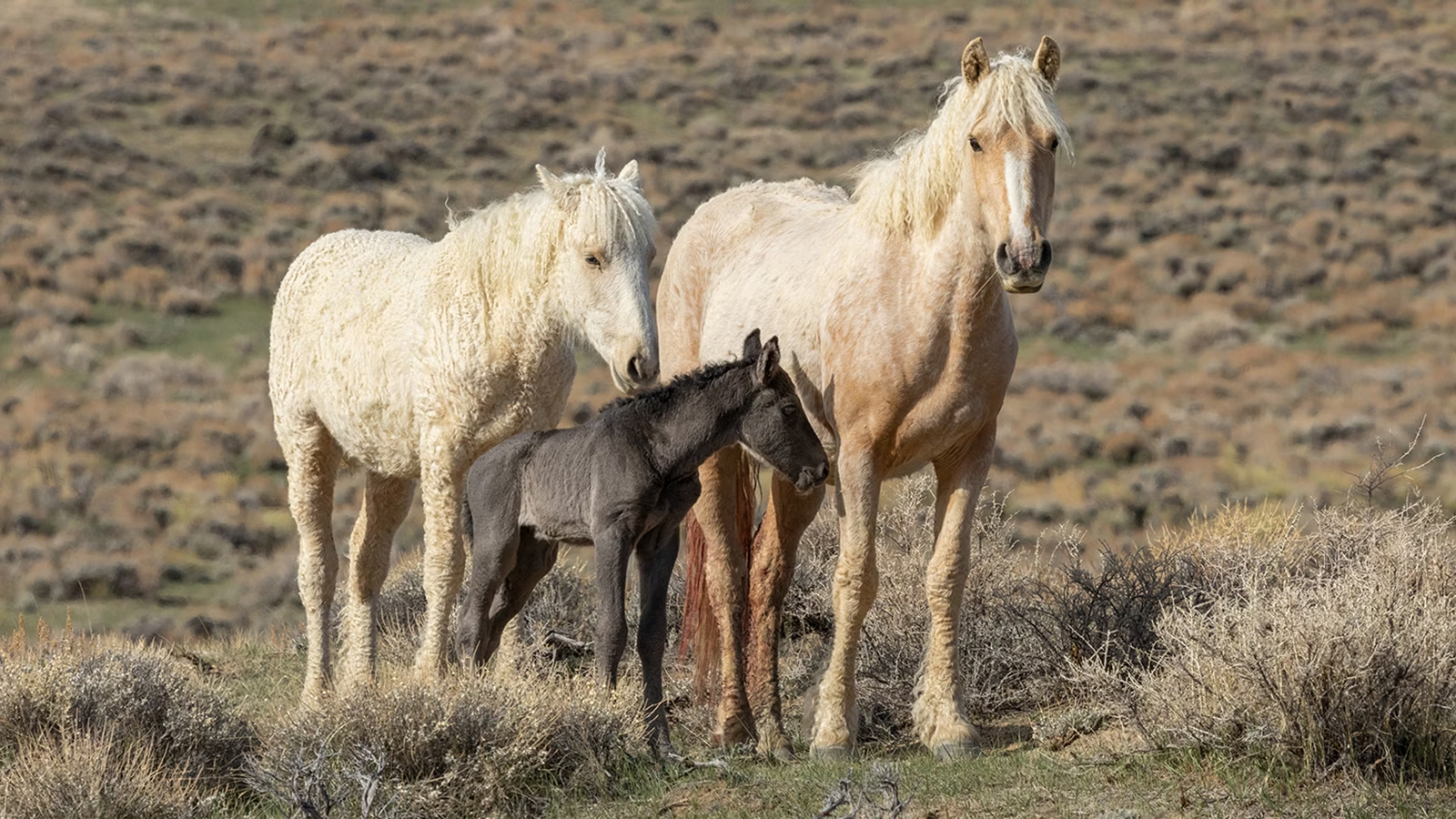
A federal court will decide whether a herd of rare curly-haired mustangs will be rounded up and removed from southwest Wyoming. (Courtesy Carol Walker)
Whether a herd of rare curly-haired mustangs will continue to run free in the vast expanses of southwest Wyoming is being decided within the confines of a federal courtroom in Denver.
Attorneys this week presented their arguments to a three-judge panel in the 10th Circuit Court, regarding whether the Bureau of Land Management can proceed with plans to round up the entire Salt Wells Creek mustang herd.
That herd is thought to include several hundred horses, about 100 of which are of the unusual curly-haired variety.
That’s the largest known population of “curlies” in the country, mustang advocate Carol Walker told Cowboy State Daily.
The BLM also plans to round up mustangs from the Divide Basin herd. And about half of the mustangs are slated to be removed from a herd near Adobe Town, one of Wyoming’s most remote and picturesque areas.
Walker is among the plaintiffs that filed a lawsuit against the BLM in 10th Circuit Court, calling for the cancelation of the roundups.
BLM Says Mustangs Are Invading Private Land
In the desert regions near Rock Springs, there are thought to be about 4,800 mustangs, BLM spokesman Micky Fisher told Cowboy State Daily during an interview in December 2024.
The BLM plans to whittle the herds down through roundups over the next three years, he said. There’s concern over the mustangs becoming overpopulated and degrading the desert habitat.
Particular herds, such as the Salt Wells Creek mustangs, will be zeroed out — or entirely rounded up — because they inhabit “checkerboard” areas, he said.
Those are areas where square BLM parcels are intermixed in a checkerboard pattern with private parcels, he said. There’s concern about the mustangs spending too much time on private land.
Fisher declined to give further comment on Wednesday because the matter was still pending in court.
A federal court will decide whether a herd of rare curly-haired mustangs will be rounded up and removed from southwest Wyoming. (Courtesy Carol Walker)
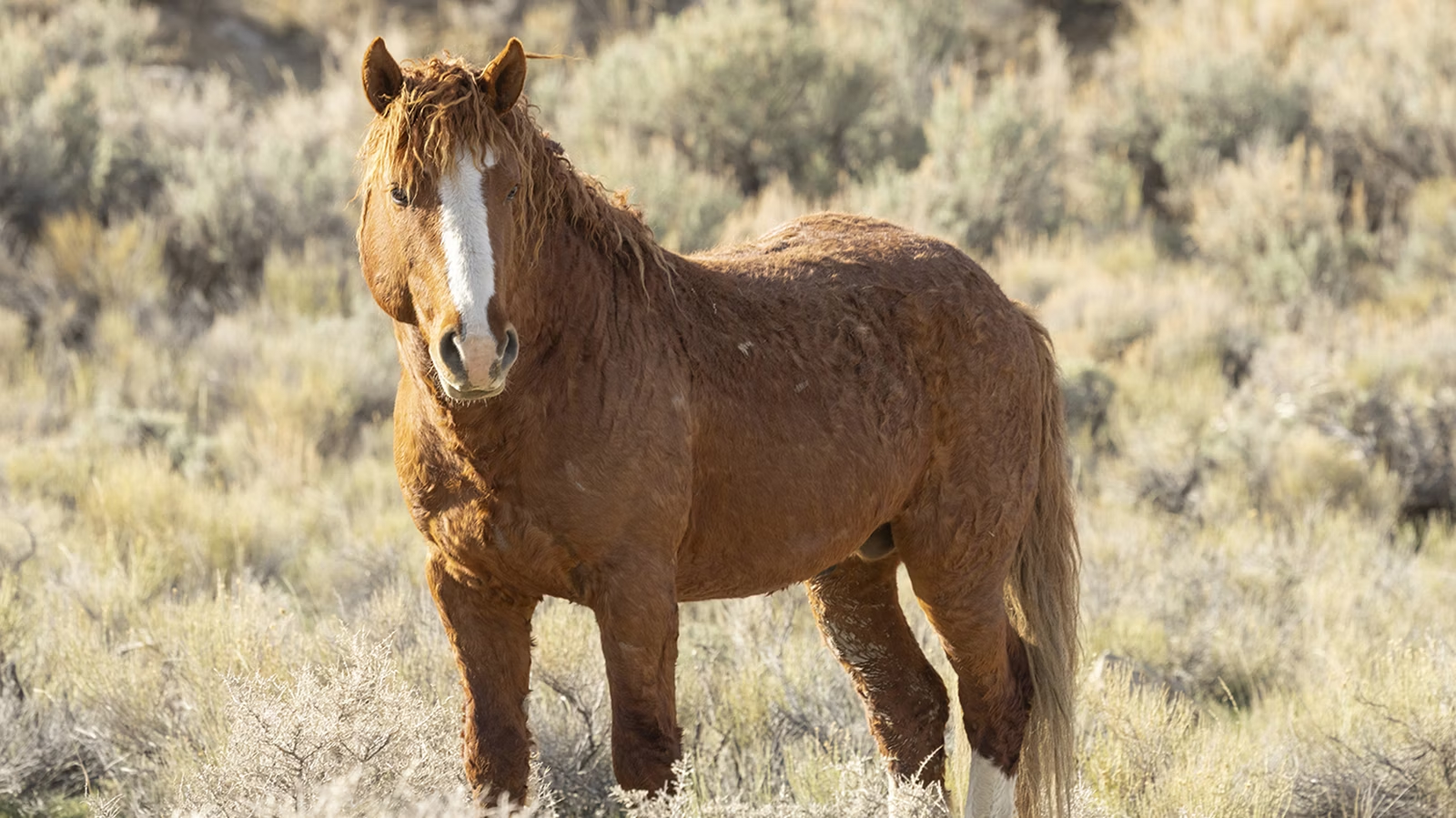
Stallions Bubba and Scarface have curly manes, a rare characteristic found among the Salt Wells Creek mustang herd near Rock Springs. (Courtesy Carol Walker)
A rare horse with a curly coat and mane. (Getty Images)
Bubba was a legendary curly-maned stallion that was part of the Salt Wells Creek herd near Rock Springs. (Courtesy Carol Walker)
The Salt Wells Creek mustang herd near Rock Springs is only one of two herds in Wyoming known to have horses with curly coats. (Courtesy Buller)
A mustang called Julian, part of the Salt Wells Creek herd near Rock Springs, grows a rare curly coat during the winter. (Courtesy Carol Walker)
Two of a herd of horses with curly coats and manes. (Mark J. Barrett via Alamy)
Arrow leftArrow right
Attorneys Argue For Roundups
A Justice Department attorney representing the BLM argued on Tuesday that the agency has latitude to determine if habitat is suitable for mustangs, according to court records.
Leaving the horses in the areas in question would require staff to go out and push them off private land almost constantly, attorney Ezekiel Peterson argued to the panel of judges.
Danielle Bettencourt, attorney for the Rock Springs Grazing Association, also sided with the BLM, according to court records.
Landowners may ask for mustangs to be removed from their property under a provision of Wild and Free-Roaming Horses and Burros Act of 1971, Bettencourt argued.
If the roundups go forward, the horses will be taken to BLM holding facilities in Rock Springs and Wheatland, where many of them will be put up for adoption.
‘Inconvenient’ Mustangs
Walker said the plaintiffs are arguing that the BLM’s claims don’t hold up.
The agency was put in charge of managing mustang herds under the 1971 act. And rounding up an entire herd just because some stray on to private land isn’t sound management, the plaintiffs argue.
“You can’t just decide that because it’s inconvenient to manage them, you then just remove all of them,” Walker said.
She added that she couldn’t guess which way the judges might rule. But she and other mustang advocates hope the court rules in their favor, before the roundups start in July.
Curly Hair Remains A Mystery
The Salt Wells Creek mustangs and nearby White Mountain mustangs are the only Wyoming herds known to have curly-haired horses.
It’s not known for certain why these two remote Wyoming mustang herds include curly-haired horses, Walker said.
There are some domestic horse breeds in Europe that have that feature. But a genetic link between the European horses and the Wyoming mustangs remains disputed, she said.
Removing the Salt Wells Creek mustangs would mean the loss of a rare and hugely popular attraction, Walker said.
“Salt Wells Creek is one of the most beloved horse herds in Wyoming. People come from all over the world to see them,” she said.
She also questioned the need to thin the herd near Adobe Town, because it already suffered heavy losses during the brutal winter of 2022-2023.
Tens of thousands of deer, antelope and elk starved or froze to death that winter in central and southwest Wyoming, as well as in northwest Colorado.

 by
by 





 A federal court will decide whether a herd of rare curly-haired mustangs will be rounded up and removed from southwest Wyoming. (Courtesy Carol Walker)
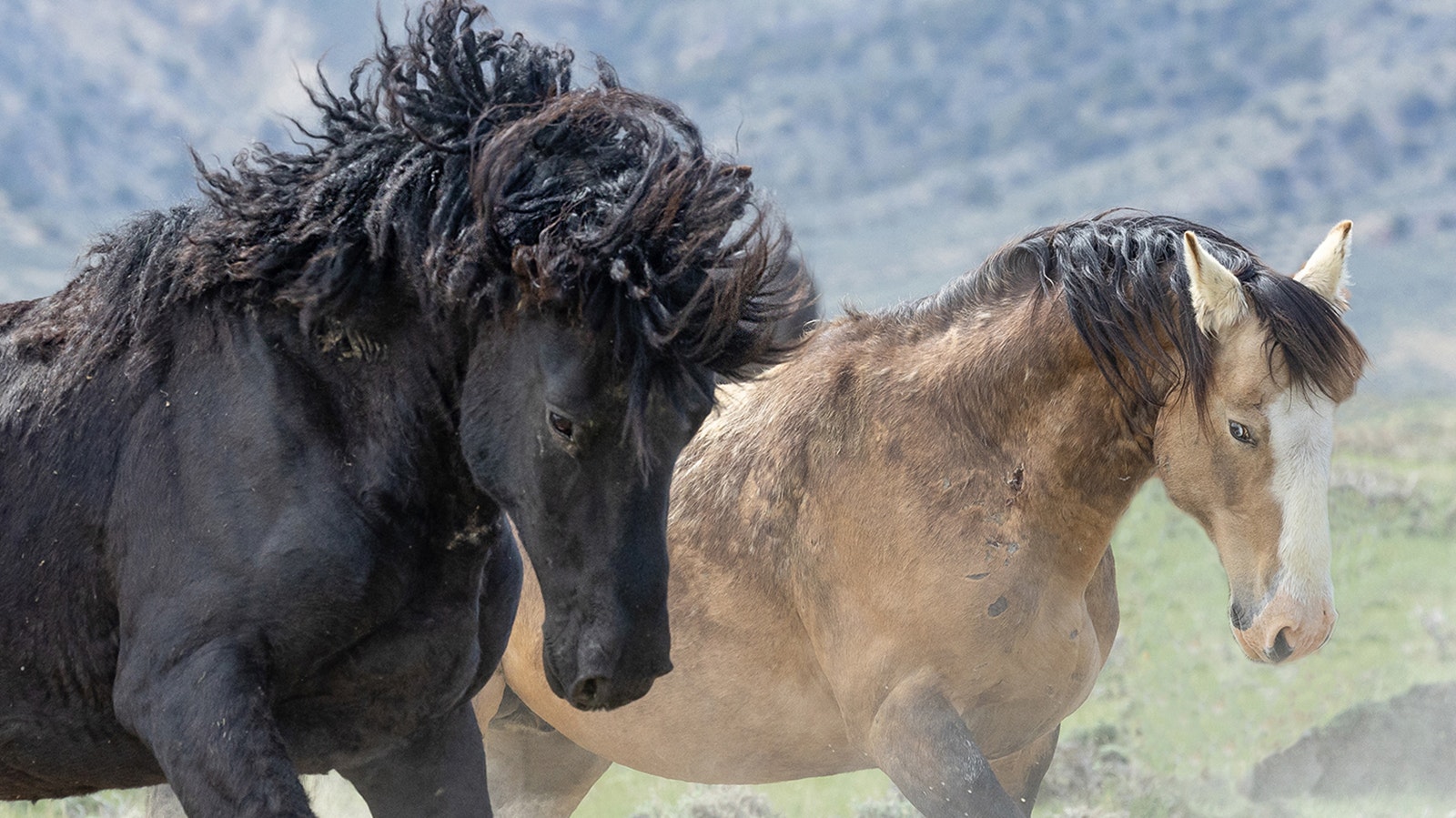 Stallions Bubba and Scarface have curly manes, a rare characteristic found among the Salt Wells Creek mustang herd near Rock Springs. (Courtesy Carol Walker)
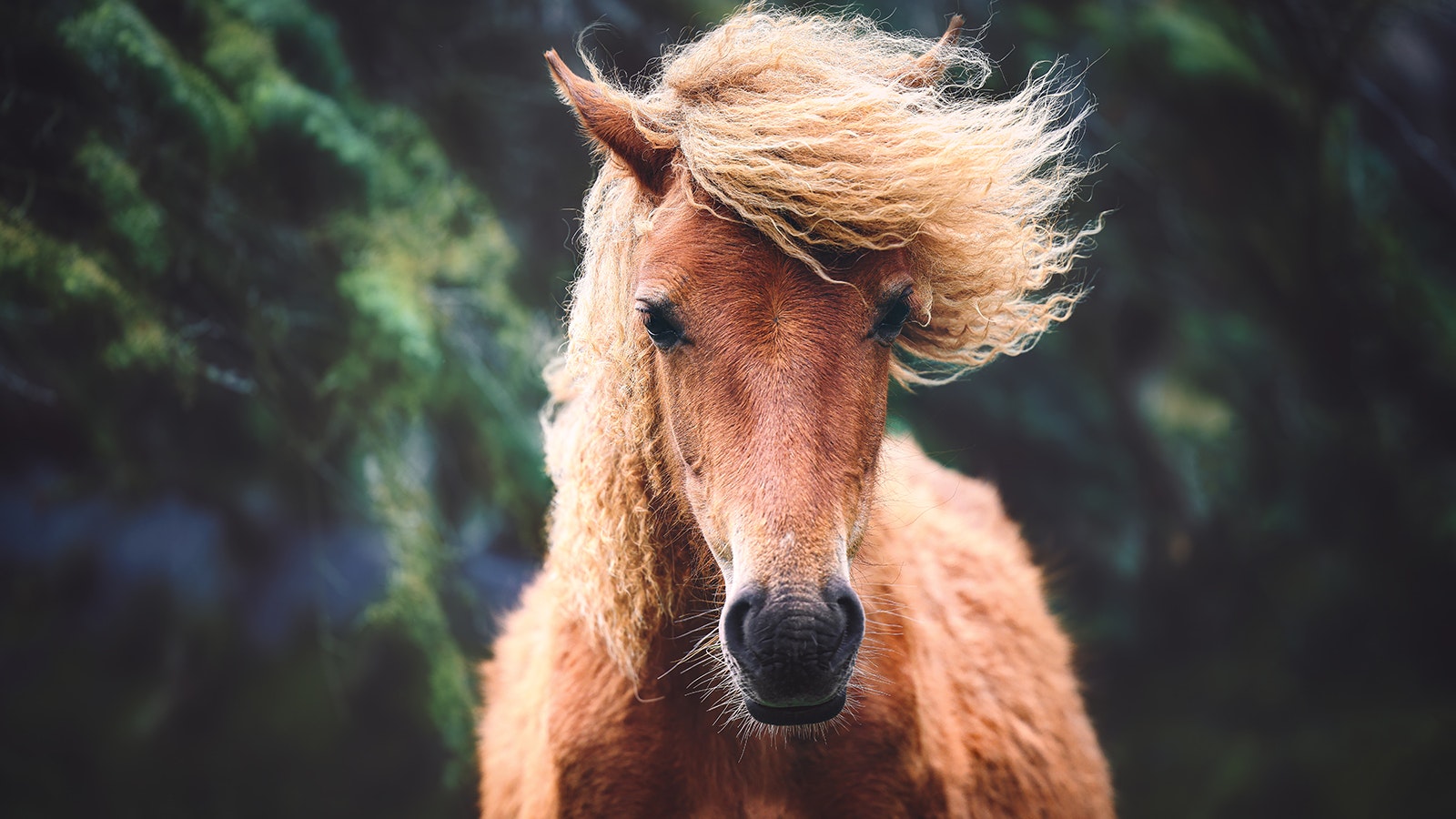 A rare horse with a curly coat and mane. (Getty Images)
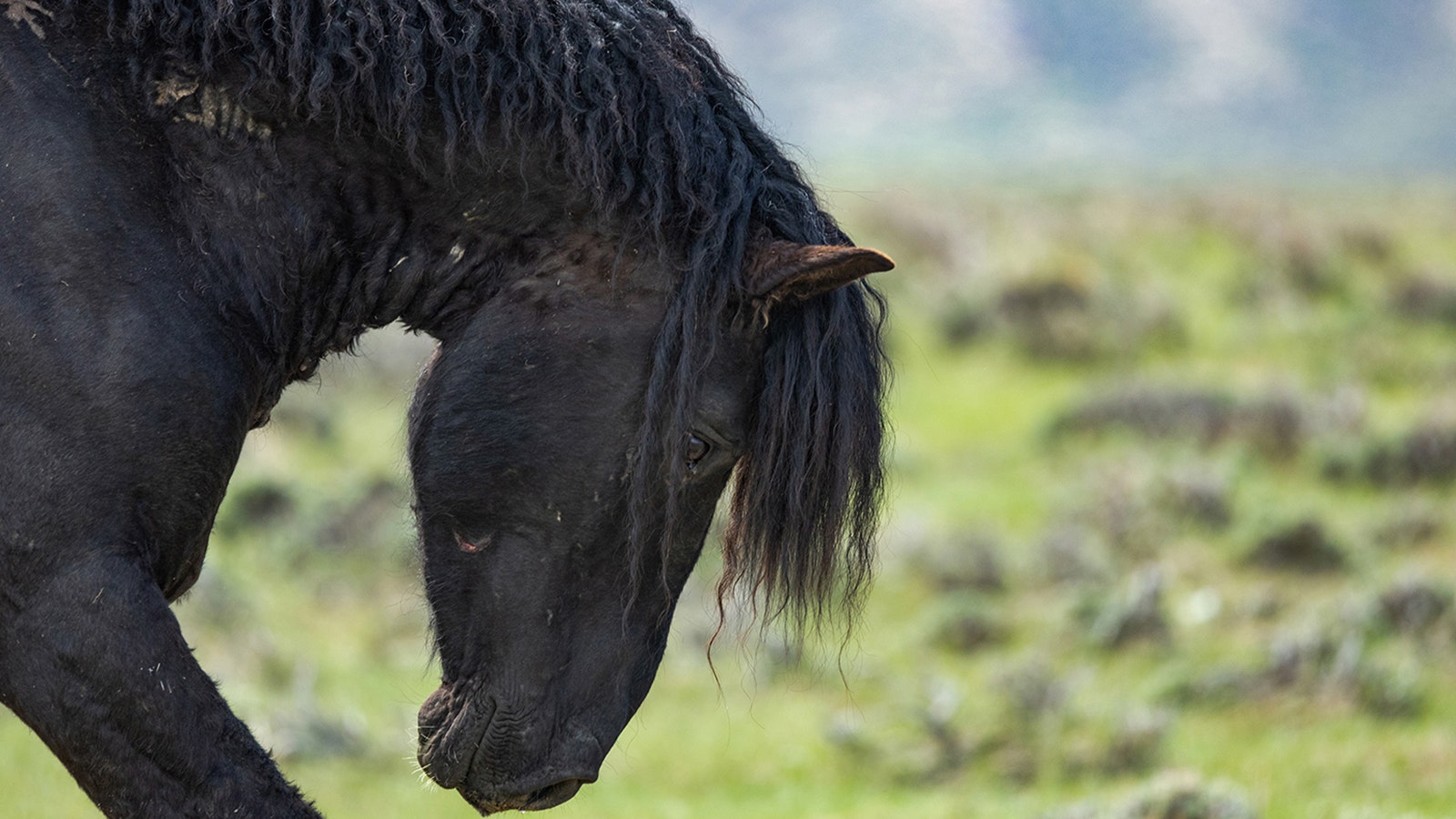 Bubba was a legendary curly-maned stallion that was part of the Salt Wells Creek herd near Rock Springs. (Courtesy Carol Walker)
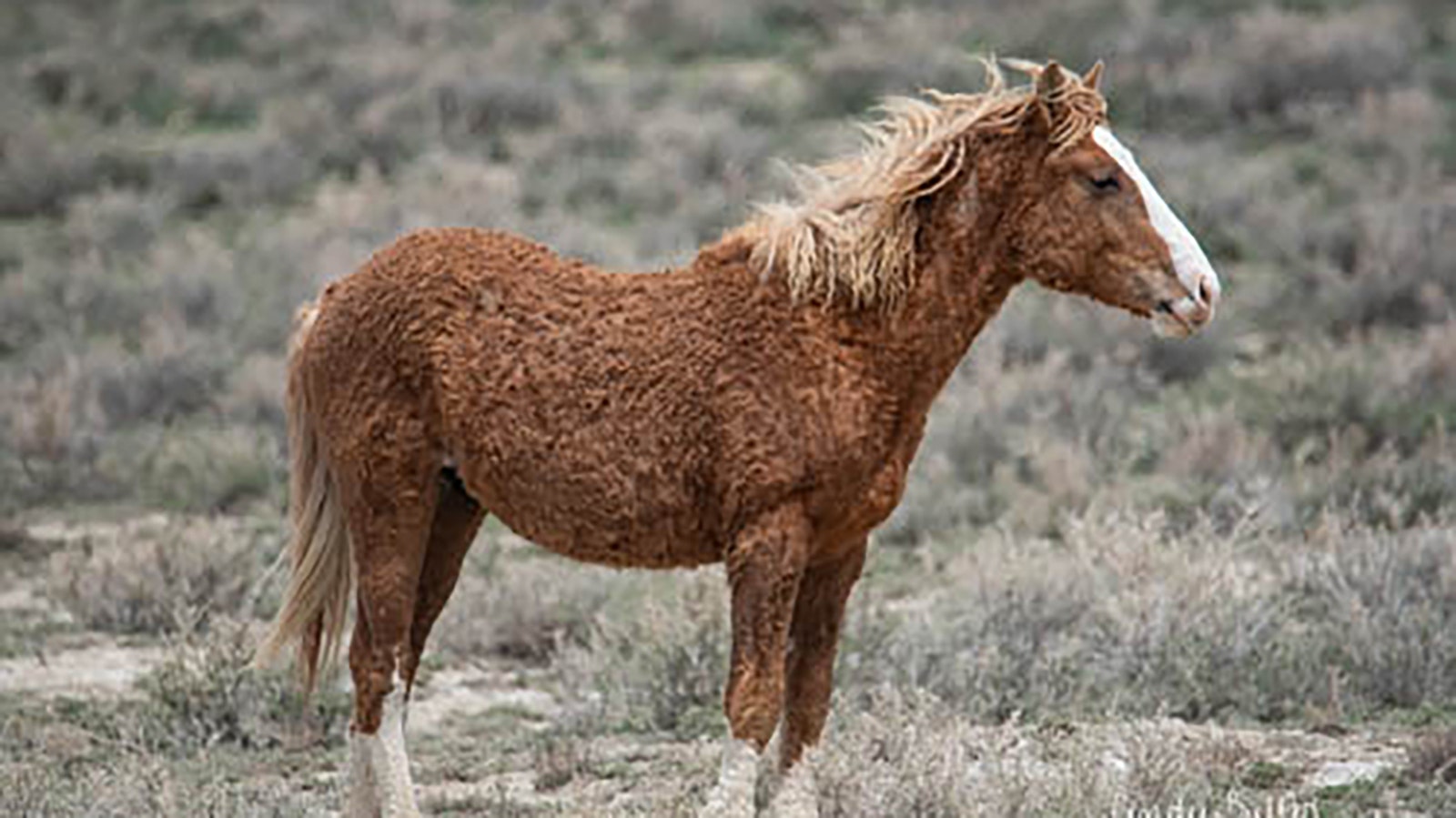 The Salt Wells Creek mustang herd near Rock Springs is only one of two herds in Wyoming known to have horses with curly coats. (Courtesy Buller)
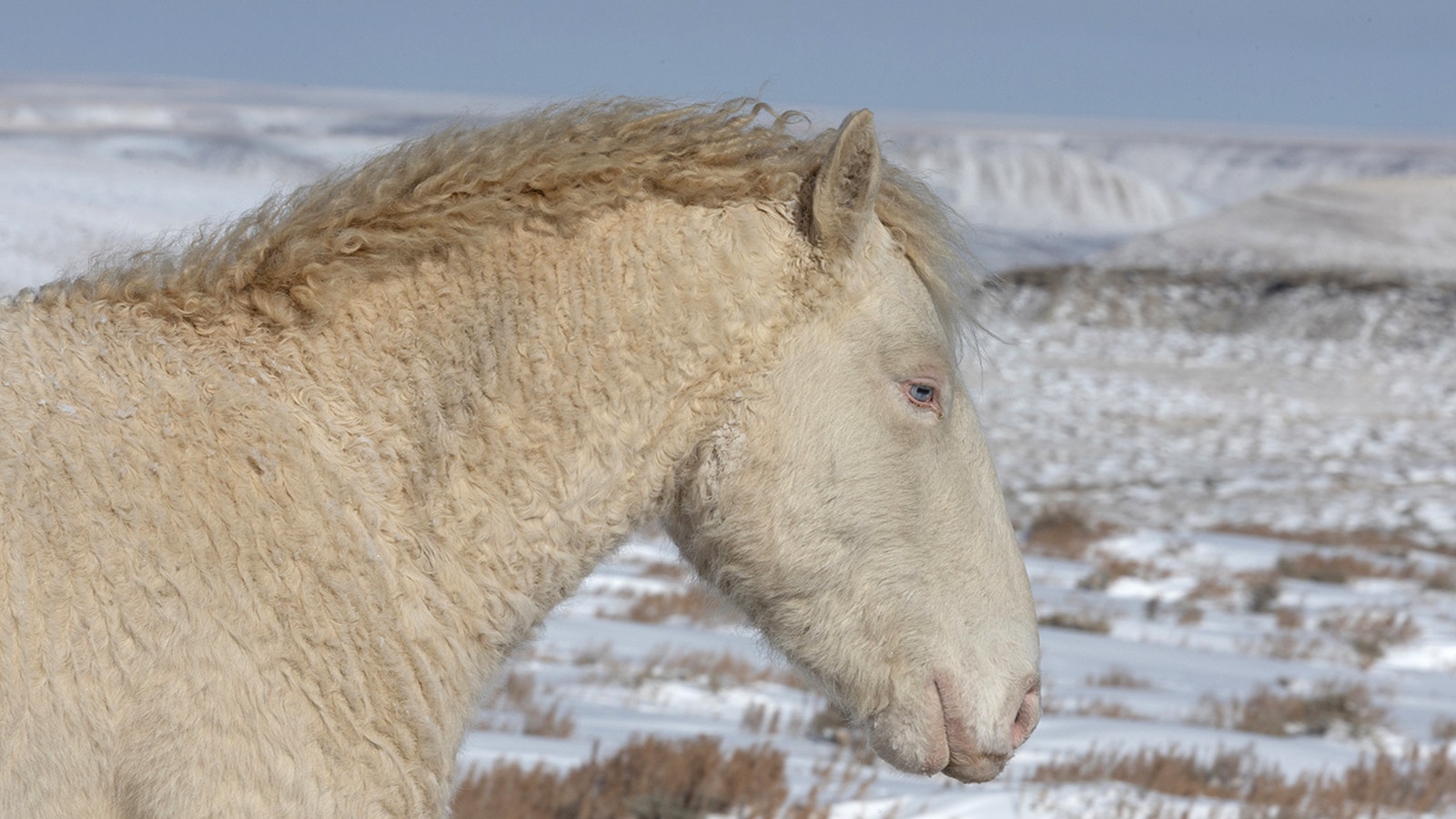 A mustang called Julian, part of the Salt Wells Creek herd near Rock Springs, grows a rare curly coat during the winter. (Courtesy Carol Walker)
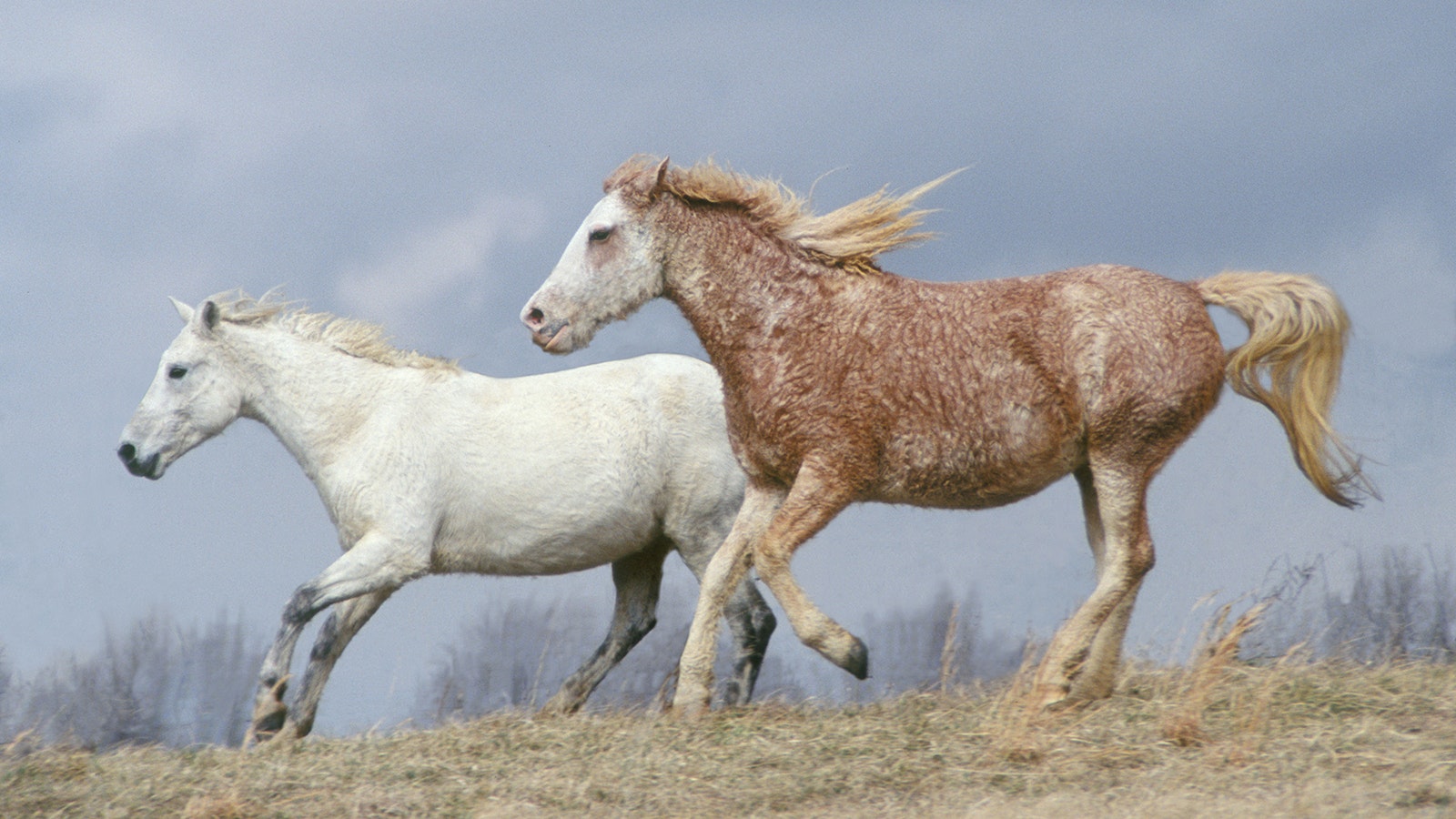 Two of a herd of horses with curly coats and manes. (Mark J. Barrett via Alamy)


