Writers on the Range: Why do we blame lions?
Reply

News brief
Today at 8:51 a.m.
Topics
Avian Influenza (Bird Flu)Share
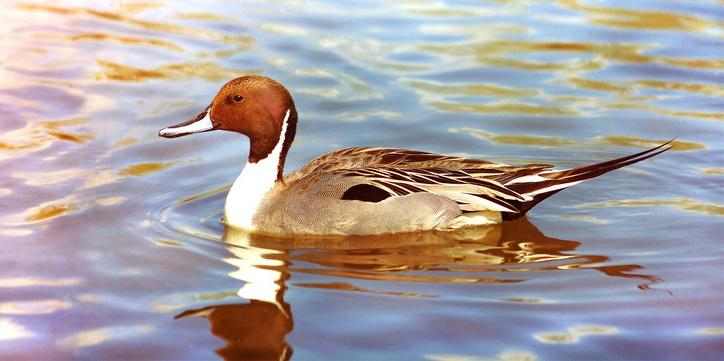
A retrospective analysis reveals that H5 avian flu surfaced in Oregon wastewater weeks before the state’s first outbreak in poultry and wild birds and 2 years before the first outbreak in US cattle.
A team led by Oregon State University researchers evaluated 551 influenza A virus–positive wastewater samples from 20 sites from September 2021 to July 2024.
In January 2022, H5N1 clade 2.3.4.4b virus was first identified in wild birds in the United States. In Oregon, the clade was first detected in wild birds and poultry in May 2022.
“Interpretation of avian influenza A(H5) subtype detections in wastewater requires an understanding of human and animal contributors to the sewershed because current testing does not distinguish between human and animal sources,” the authors wrote. “Potential animal contributors include wild birds, farms with poultry or dairy cattle outbreaks, and dairy processing facilities.”
The results were published in Morbidity and Mortality Weekly Report.
Of the 551 influenza A–positive samples, 21 (3.8%) tested positive for H5 in 12 communities 6 weeks before Oregon’s first outbreak in domestic poultry, 7 weeks before the first detection in wild birds, and 2 years before the first outbreak in US dairy cattle (the virus hasn’t been found in cattle or milk in Oregon).
Wastewater surveillance, with consideration of all animal contributors and in conjunction with other surveillance metrics, has the potential to strengthen ongoing avian influenza surveillance efforts.
“No association was found between detection of avian influenza A(H5) in a community’s wastewater and history of an HPAI A(H5) outbreak among poultry in the county or presence of dairy processing facilities or dairy farms within the sewershed,” the researchers wrote.
Avian flu was found most often in two communities with important wild bird habitats, which the authors said implicates wild birds as a significant contributor to wastewater H5 contamination.
“Oregon is located along the Pacific Flyway, a major north-south route for migratory birds in the Americas that extends from Alaska to Patagonia,” the authors wrote. “Wastewater surveillance, with consideration of all animal contributors and in conjunction with other surveillance metrics, has the potential to strengthen ongoing avian influenza surveillance efforts.”

The IndependentFollow
1.4M Followers
https://www.msn.com/en-us/news/technology/scientists-trying-to-bring-back-the-woolly-mammoth-end-up-with-woolly-mice/ar-AA1AeuBm?ocid=widgetonlockscreen&cvid=8ceba05361cc4bbfbfec673c1ec96341&ei=55
Story by Christina Larson
• 4h •
3 min read
Extinction may be forever, but the next best thing may be just around the corner. Biotech company Colossal Biosciences is attempting to genetically engineer living animals to resemble extinct species such as the woolly mammoth.
Woolly mammoths, which disappeared roughly 4,000 years ago, once roamed the icy landscapes of Europe, Asia, and North America. Colossal first announced its audacious plan to “revive” the woolly mammoth, and later the dodo, in 2021. Since then, the company has concentrated on identifying key traits of these lost creatures by analyzing ancient DNA. Their goal, according to CEO Ben Lamm, is to genetically engineer these traits into living animals.
This approach has been met with a mixed reception from the scientific community, with some questioning its potential benefits for conservation efforts.
“You’re not actually resurrecting anything — you’re not bringing back the ancient past,” said Christopher Preston, a wildlife and environment expert at the University of Montana, who was not involved in the research.
On Tuesday, Colossal announced that its scientists have simultaneously edited seven genes in mice embryos to create mice with long, thick, woolly hair. They nicknamed the extra-furry rodents as the “Colossal woolly mouse.”
Genetically edited mice with long, thick, woolly hair at a lab in Dallas, Texas. (Colossal Biosciences via AP) (© John Davidson)
Results were posted online, but they have not yet been published in a journal or vetted by independent scientists.
The feat “is technologically pretty cool,” said Vincent Lynch, a biologist at the University of Buffalo, who was not involved in the research.
Scientists have been genetically engineering mice since the 1970s, but new technologies like CRISPR “make it a lot more efficient and easier,” said Lynch.Related video: 10 Believed Extinct Animals Still Alive (Wild Wonders)
about:blank
There have been sightings of animals which have been said

10 Believed Extinct Animals Still Alive
More videos
The Colossal scientists reviewed DNA databases of mouse genes to identify genes related to hair texture and fat metabolism. Each of these genetic variations are “present already in some living mice,” said Colossal’s chief scientist Beth Shapiro, but “we put them all together in a single mouse.”
They picked the two traits because these mutations are likely related to cold tolerance — a quality that woolly mammoths must have had to survive on the prehistoric Arctic steppe.
Colossal said it focused on mice first to confirm if the process works before potentially moving on to edit the embryos of Asian elephants, the closest living relatives to woolly mammoths.
Wooly Mammoth’s lived during the last Ice Age, feeding on tundra vegetation (Natural History Museum)
However, because Asian elephants are an endangered species, there will be “a lot of processes and red tape” before any plan can move forward, said Colossal’s Lamm, whose company has raised over $400 million in funding.
Independent experts are skeptical about the idea of “de-extinction.”
“You might be able to alter the hair pattern of an Asian elephant or adapt it to the cold, but it’s not bringing back a woolly mammoth. It’s changing an Asian elephant,” said University of Montana’s Preston.
Still, the refinement of precision gene-editing in animals could have other uses for conservation or animal agriculture, said Bhanu Telugu, who studies animal biotechnology at the University of Missouri and was not involved in the new research.
Telugu said he was impressed by Colossal’s technology advances that enabled scientists to pinpoint which genes to target.
The same approach might one day help fight diseases in people, said Lamm. So far, the company has spun off two health care companies.
“It’s part of how we monetize our business,” said Lamm.
The Independent is the world’s most free-thinking news brand, providing global news, commentary and analysis for the independently-minded. We have grown a huge, global readership of independently minded individuals, who value our trusted voice and commitment to positive change. Our mission, making change happen, has never been as important as it is today.


