China Says ‘Forced’ To Acquire Nuclear Weapons as US Sounds Warning
Reply

Default Mono Sans Mono Serif Sans Serif Comic Fancy Small CapsDefault X-Small Small Medium Large X-Large XX-LargeDefault Outline Dark Outline Light Outline Dark Bold Outline Light Bold Shadow Dark Shadow Light Shadow Dark Bold Shadow Light BoldDefault Black Silver Gray White Maroon Red Purple Fuchsia Green Lime Olive Yellow Navy Blue Teal Aqua OrangeDefault 100% 75% 50% 25% 0%Default Black Silver Gray White Maroon Red Purple Fuchsia Green Lime Olive Yellow Navy Blue Teal Aqua OrangeDefault 100% 75% 50% 25% 0%A young dog is now in the care of a St. Louis animal rescue after being injured by a hunting trap. (Source: KMOV)
By Caroline Hecker and Jordan Gartner
Published: Jan. 15, 2025 at 1:27 PM PST|Updated: 18 hours ago
ST. LOUIS (KMOV/Gray News) – A dog is now in the care of animal rescuers after being injured by a hunting trap in rural Missouri.
According to Stray Rescue, a nonprofit animal rescue, the dog was spotted by neighbors in Perryville a few weeks ago limping around with his back leg caught in a hunting trap.
After more than a week of trying to catch him, homeowners in the area were successful in removing the hunting trap and getting the dog over to the rescue team in St. Louis.
“These things shut so tightly, they just completely caught off circulation, so he had no blood flow essentially from his ankle down,” Dr. Edie Oliver, a veterinarian at Stray Rescue, said.
Veterinarians said they had to make the difficult decision to amputate the injured leg from the 1-year-old Husky-Shepard mix who has since been named Behrle.
But the team says he is already recovering well from the procedure.
“Dogs recover really well without the back leg as they put the majority of their weight on their front legs,” Oliver said. “So he’ll be up and about like nothing ever happened in a matter of weeks.”
Stray Rescue’s lead rescue officer Donna Lochmann said she’s never seen a dog caught in a hunting trap like this before.
“I feel like they’re so inhumane,” she said.
Using hunting traps like the one that injured Behrle is not illegal in Missouri, but veterinarians encourage hunters to use other means for catching animals.
“If you want to do trapping and that kind of thing there are way more humane ways to do it,” Oliver said.
Behrle is continuing his recovery before he is placed in a foster home and then becomes ready for adoption.
“He’s such a good boy,” Oliver said. “Sweet, calm and I think he’ll continue to get more comfortable.”

Follow
1.4M Followers
Story by Doyle Rice, USA TODAY
• 1h • 4 min read
Hoping for a January thaw? Dream on.
Wasn’t this supposed to be a milder-than-average winter for the East and the South? Toasty isn’t exactly how you will describe the bone-numbing coming days.
“Multiple waves of arctic air continue to gather over northern Canada with eyes for the central and eastern United States in the days and weeks ahead,” AccuWeather meteorologist Paul Pastelok said this week.
Renewal By AndersenThis is How Much New Windows Should Cost in 2025
Start the day smarter. Get all the news you need in your inbox each morning.
The most potent blast will enter the north-central U.S. on Friday, the National Weather Service warned, before roaring across much of the rest of the nation over the weekend. Arctic air will plunge from the northern Rockies and Great Plains, crossing the Gulf Coast and Midwest on Saturday night and the Eastern Seaboard on Sunday night.
A bundled-up pedestrian walks in downtown Louisville on Jan. 10, 2025, as a nearby bank clock and temperature sign show a temperature of -13 degrees Celsius or 10 degrees Fahrenheit.© Matt Stone/Courier Journal/USA Today Network via Imagn Images
“By Tuesday, the entire Lower 48 (will be) blasted with extreme Arctic cold. … The first days of the new Trump administration will be heavily focused on weather-related problems,” meteorologist Ryan Maue posted on X this week.
Even parts of the west coast of Greenland will be warmer than Texas, he said.
“Now is the time to prepare for an extended period of time of cold weather,” the weather service said.
As is typical, the coldest weather will be over the northern Plains and upper Midwest, where some spots may see subzero high temperatures next Sunday and Monday. Low temperatures are forecast to dip to 20 below zero or even lower.
Wind chills should be even colder and more dangerous.
likonlineBest Christmas Gift: The Best Cordless Table Lamp for Making Your Room a Whole
“Dangerous to life-threatening wind chills are expected” in North Dakota, and readings of 40 below are possible Sunday morning and again Monday morning, the weather service said. “This poses a great risk of hypothermia and frostbite to exposed skin. Have a cold weather kit if traveling.”
Minnesota-based meteorologist Paul Douglas said on X Wednesday: “It’s not cheap hype: the bitter air arriving Sunday through Tuesday originated over Siberia. Expect subzero highs Sunday and Monday with -20 to -30F wind chills. This will probably be the coldest air of the winter.”
In New York City, highs will be mainly in the 20s next week and nighttime lows in the 10s. “It is possible that on at least one day, highs may struggle to reach 20 (degrees) and night temperatures could dip into the single digits,” AccuWeather meteorologist Alex Sosnowski said.
Insurance Auto Advice{Washington Big Changes Near {Okanogan Leaves Drivers Fuming
In Atlanta, highs will be in the 30s for the first half of next week but could recover later in the week. Nighttime lows will be mainly in the 20s Monday and beyond when the arctic air arrives.
In Houston, there may be a couple of days when temperatures reach no higher than 40 degrees with nighttime lows in the 20s to near 30 degrees, meaning a hard freeze is possible. “Hard freezes can be hazardous to people, pets, plants and pipes,” the weather service in Houston said. Sosnowski added that “at this level, which is 20-25 degrees below the historical average, pipes in exposed or unheated areas may freeze and burst.”
In Chicago, at least one day is likely to bring temperatures no higher than the single digits, AccuWeather said. Multiple nights with temperatures below zero are expected next week. “This renewed period of frigid temperatures will also likely lead to an increased threat for ice jams on area rivers next week,” the weather service in Chicago said.
Along with the bitter cold will come multiple chances for snow in the central, southern and eastern U.S. What may ultimately turn out to be the most significant storm is forecast for next week in the South: “The track and intensity of that storm will determine if heavy snow falls on parts of the Southern states and if some of that snow is able to reach into the Mid-Atlantic for the middle of next week,” Sosnowski said.
1 / 2


©Scott Eisen, Getty Images
People sled with their dog on the Boston Common following a snowstorm on Dec. 21, 2024 in Boston.
The winter forecast from the federal government – which covered December, January and February – predicted a warmer-than-average winter for the southern and eastern U.S. So far, January has been very cold, especially in the eastern half of the nation, but December was the fourth-warmest on record, nationally.

Get unlimited digital access to USA TODAY and premium Sports+ storiesOne month freeGet it now
So the jury is still out on NOAA’s preseason temperature forecast. “I’m always a bit nervous to make claims about winter with months left before the season is over,” NOAA meteorologist Tom DiLiberto said in a recent email to USA TODAY. “We’ve seen in past years how one month can impact the seasonal pattern.”
As for precipitation, he said, “so far this winter, the patterns seen over the U.S., including drier than average conditions across the southern tier, and wetter than average conditions in the Pacific Northwest, are consistent with the historically expected La Niña pattern, and also generally consistent with the winter outlook issued in November 2024.”
This article originally appeared on USA TODAY: Arctic blast about to invade US. What happened to warm winter predictions?
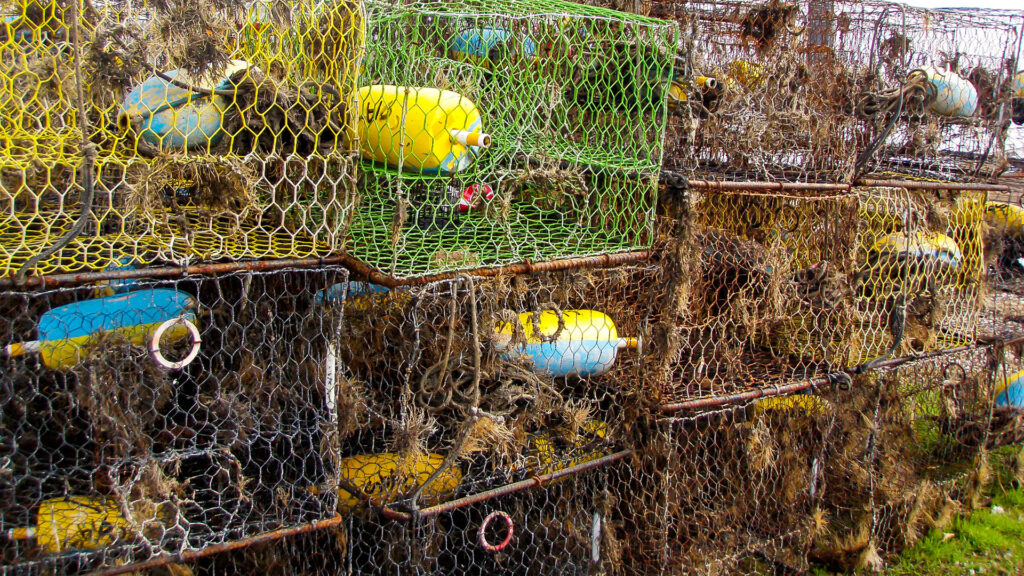
Abandoned crab pots collected in Virginia. Photo by the Center for Coastal Resources Management.
By John Page Williams / January 15, 2025
Share:
FacebookTwitterLinkedInEmailShare
The Virginia Institute of Marine Science (VIMS) and William and Mary’s Coastal Sciences school are leading the charge nationwide to clean up discarded fishing gear and “ghost pots” from U.S. waterways.
William & Mary’s Batten School and VIMS, administrators of the National Fishing Trap Removal, Assessment, and Prevention (TRAP) Program, has awarded $1.4 million to fund 11 projects to retrieve derelict lobster and crab traps in 2025. This initial round supports projects in California, Connecticut, Delaware, Florida, Louisiana, Maine, Maryland, New York, Washington and the Pacific Island State of Palau, as well as ongoing efforts by the Virginia Marine Debris Program.
In 2023, using funds from the Bipartisan Infrastructure Law, the National Oceanic and Atmospheric Administration’s (NOAA) Marine Debris Program awarded an $8 million, four-year competitive grant to the Batten School & VIMS to administer the TRAP program. One important feature of the project will be standardizing data collection practices and establishing a national database to evaluate the environmental and economic impacts of these projects.
“This is a special program because it allows local communities to tackle the issues that impact their environments and livelihoods the most, all under the same overarching goal,” said Kirk Havens, who directs the Center for Coastal Resources Management at VIMS. “The Batten School & VIMS is uniquely positioned to lead these efforts thanks to our nearly two decades of experience tackling this issue in the Chesapeake Bay.”
Lost, abandoned, discarded fishing equipment can harm ecosystems and economies by trapping and killing animals, damaging marine habitat, and competing with actively fished gear. After the crab disaster declaration in 2008, VIMS and the Virginia Marine Resources Commission worked with local watermen to begin the Virginia Marine Debris Removal Program, which ultimately led to the removal of more than 34,000 derelict crab pots between 2008 and 2014.
The NOAA Marine Debris Program supported that research. A 2016 study estimated removal efforts over the six-year period in Virginia and Maryland increased blue crab harvests in the Chesapeake Bay by 38 million pounds, putting an extra $33.5 million into the pockets of local watermen. An additional 2016 report revealed that removing just 10% of derelict crab pots and lobster traps on a global basis could increase landings by 293,929 metric tons—a yearly value of $831 million.
Here on the Chesapeake, the Batten School & VIMS received $152,669 to continue the Virginia Marine Debris Removal Program, employing local watermen. In Maryland, the Oyster Recovery Partnership received $134,226 to fund the removal of derelict pots from Anne Arundel County waters. It, too, builds on two decades of successful derelict trap removal projects to benefit watermen and improve local waterways.
This year’s TRAP projects must submit standardized data on their progress to the Policy Innovation Lab, a partnership between the Batten School & VIMS and the University of Georgia Carl Vinson Institute of Government. The lab’s analysis of this broad dataset will help to prevent trap loss and improve programs to remove them.
Later in the spring, the Batten School & VIMS will solicit proposals for TRAP funding in 2026. For more information, visit trapprogram.org. For more on TRAP, including a list of the 2025 projects that received funding, click here.
Data from the USDA shows more than 20 million egg-laying chickens in the U.S. died last quarter because of bird flu.

Photo by: James Dobson/MTN News file
Data from the USDA shows more than 20 million egg-laying chickens in the U.S. died last quarter because of bird flu.
By: Alexander Tin – CBS News
Posted 2:10 PM, Jan 13, 2025
More than 20 million egg-laying chickens in the U.S. died last quarter because of bird flu, data from the U.S. Department of Agriculture shows, marking the worst toll inflicted on America’s egg supply since the outbreak began.
The record number of chicken deaths, which includes those birds culled when infection is discovered in a flock, come as figures show egg prices have soared to the highest they have been in years, driven in large part by the virus.
00:03
02:24
Read More
“Unlike in past years, in 2024, all major production systems experienced significant losses including conventional caged, cage-free, and certified organic types,” a USDA report said this month.
Taxpayers will pick up the tab for the lost birds. To incentivize farmers to quickly report and stomp out the virus, a USDA program pays producers for the eggs and poultry they cull.
Last year, the Animal and Plant Health Inspection Service said it had spent $1.25 billion on payments to farmers since the outbreak started in 2022.
U.S. officials brace every winter for upticks in bird flu because migrating wild birds that spread the virus fly south during the colder months.
It’s also easier for the virus to spread in the winter. Heat and sunlight degrade the virus on surfaces, the USDA says.
This winter has been different because a strain of the bird flu virus has spilled over into dairy herds too, leading to hundreds of infected herds.
Authorities suspect the virus has been hitching a ride in droplets of contaminated raw milk. Those are ferried between farms by workers’ clothing, equipment and animals shared between farms.
California has been hit especially hard in recent months, forcing the state to declare a state of emergency to try to respond to the bird flu outbreak.
This winter’s surge of bird flu is from a different virus than the uptick of seasonal flu infections that also drives humans to emergency rooms every winter.
While bird flu led to millions of dead poultry over the past year, the Centers for Disease Control and Prevention has tallied only 66 confirmed human cases in the U.S. from bird flu viruses.
Most American cases of bird flu have been mild. A majority were farm workers who were infected after close contact with animals infected by a bird flu strain that spilled over into dairy cows in late 2023.
Researchers think this bird flu strain mutated to be milder to humans than other variants spreading in the wild. Those other strains usually cause more severe disease when they jump into humans.
The USDA announced this week it is drawing up a new stockpile of poultry vaccines. That vaccine will target the D1.1 strain of the virus, which has been spreading in wild birds and was recently to blame for a fatal human case in Louisiana.
But officials said it’s unlikely the vaccine will be used. The Biden administration has been weighing the possibility of vaccinating poultry for bird flu for years.
That is different from plans to potentially vaccinate cows for bird flu, which the USDA says appears “more feasible and more likely to be successful” in battling the virus. Seven potential vaccines are now being tested in field safety trials, the department said.
One major hurdle has been the fear that vaccines will only hide the symptoms of the otherwise highly lethal disease in birds. That could result in export restrictions from countries afraid the virus could spread to them through poultry products.
In 2023, the USDA banned imports of some products from Europe after authorities announced they would start vaccinating some poultry for bird flu.
Spread of the virus through contaminated meat in the U.S. has already happened during this year’s outbreak at least twice: raw pet food made from sick animals was linked to an outbreak that killed cats in California and Oregon.
A Food and Drug Administration spokesperson told CBS News that the agency is now urging the animal food supply chain to take steps to curb the threat of the virus spreading, including heat treatment to kill off the virus and avoiding using infected animals.
“All recent detections of H5N1 in cats had these things in common: the infected cats ate wild birds, unpasteurized milk, raw poultry, and/or raw poultry pet food,” the spokesperson said.


