The sickness of wolf trapping
Reply

Default Mono Sans Mono Serif Sans Serif Comic Fancy Small CapsDefault X-Small Small Medium Large X-Large XX-LargeDefault Outline Dark Outline Light Outline Dark Bold Outline Light Bold Shadow Dark Shadow Light Shadow Dark Bold Shadow Light BoldDefault Black Silver Gray White Maroon Red Purple Fuchsia Green Lime Olive Yellow Navy Blue Teal Aqua OrangeDefault 100% 75% 50% 25% 0%Default Black Silver Gray White Maroon Red Purple Fuchsia Green Lime Olive Yellow Navy Blue Teal Aqua OrangeDefault 100% 75% 50% 25% 0%
Published: Jan. 14, 2025 at 3:40 PM PST|Updated: 21 hours ago
ST. LOUIS, Mo. (First Alert 4) -A young dog is now in the care of a St. Louis animal rescue after being injured by a hunting trap in rural Missouri.
According to non-profit Stray Rescue, the dog was first spotted by neighbors in Perryville a few weeks ago. The dog was seen with his back leg caught in a hunting trap, limping around with the trap attached to his paw.
After more than a week of trying to catch him, nearby homeowners were successful, removing the hunting trap and handing the dog over to Stray Rescue in St. Louis.
“These things shut so tightly, they just completely caught off circulation, so he had no blood flood essentially from his ankle down,” said Dr. Edie Oliver, a veterinarian at Stray Rescue.
The one-year-old Husky-Shepard mix is now named Behrle and on Monday, the decision was made to amputate his back leg, due to the injury caused by the trap.
“The good thing about his back leg being gone is dogs recover really well with that leg, since they put the majority of their weight on their front legs,” said Dr. Oliver. “So in a matter of weeks he’ll be up and about like nothing ever happened.”
Donna Lochmann is Stray Rescue’s Chief Life Saving Officer and traveled down to Perryville, nearly daily, in an attempt to catch Behrle. In her years of animal rescue, she’s never seen a dog caught in a hunting trap like this.
“No, I actually have never seen a trap like that attached to a dog,” she said. “I’ve heard of them and I feel like they’re so inhumane.”
Using hunting traps like the that injured Behrle is not illegal in Missouri, but veterinarians encourage hunters to use other means for catching animals.
“If you want to do trapping and that kind of thing there are way more humane ways to do it,” said Dr. Oliver. “He was able to drag this around but usually they’re staked in the ground and that’s assuming someone is coming around regularly to check them.”
Behrle will spend the next few weeks recovering, before being placed in a foster home and becoming ready for adoption.
“He’s a stray, but he’s such a good boy,” said Dr. Oliver. “Sweet, calm and I think he’ll continue to get more comfortable.”
Published on 01/13/2025 at 4:08 pm·Written by Van McGrath·It will take you : 4 minutes
Show table of content
In a heartwarming tale of reciprocity and animal intelligence, a rescued crow has captured the hearts of many by assisting its human savior at work. This extraordinary story unfolds in Turkey, where a mosque attendant’s act of kindness towards a fallen bird blossomed into an unlikely partnership, demonstrating the profound connections that can form between humans and animals.
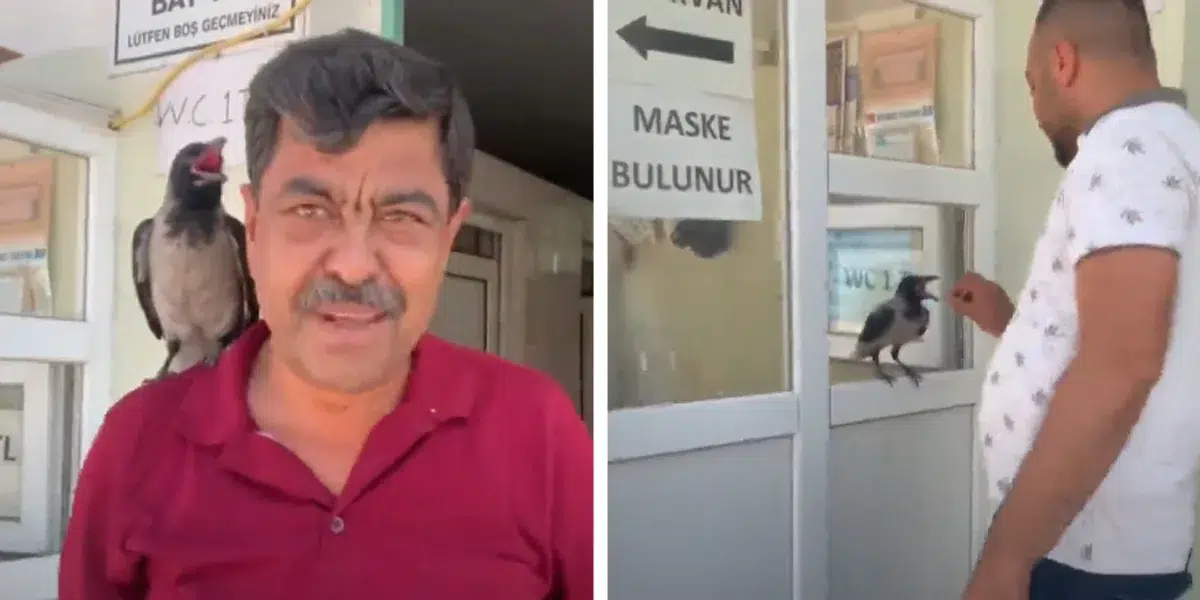
İsmail Atmaca, a dedicated mosque attendant in Turkey, experienced a life-changing moment during a routine workday. While tending to his duties, he witnessed a young crow tumble from a nearby tree. Moved by compassion, Atmaca investigated the scene and discovered the bird was unable to fly.
https://googleads.g.doubleclick.net/pagead/ads?gdpr=0&us_privacy=1—&gpp_sid=-1&client=ca-pub-7994036760405448&output=html&h=280&slotname=7418520743&adk=2765657539&adf=2602936798&pi=t.ma~as.7418520743&w=744&abgtt=6&fwrn=4&fwrnh=100&lmt=1736935089&rafmt=1&format=744×280&url=https%3A%2F%2Fthinkstewartville.com%2F2025%2F01%2F13%2Fgrateful-crow-repays-mans-kindness-covering-his-work-shift-rescue%2F&fwr=0&fwrattr=true&rpe=1&resp_fmts=3&wgl=1&uach=WyJXaW5kb3dzIiwiMTUuMC4wIiwieDg2IiwiIiwiMTMxLjAuMjkwMy4xNDYiLG51bGwsMCxudWxsLCI2NCIsW1siTWljcm9zb2Z0IEVkZ2UiLCIxMzEuMC4yOTAzLjE0NiJdLFsiQ2hyb21pdW0iLCIxMzEuMC42Nzc4LjI2NSJdLFsiTm90X0EgQnJhbmQiLCIyNC4wLjAuMCJdXSwwXQ..&dt=1736967118428&bpp=4&bdt=4931&idt=504&shv=r20250114&mjsv=m202501130101&ptt=9&saldr=aa&abxe=1&cookie=ID%3Daf5fb022edc801ce%3AT%3D1736967119%3ART%3D1736967119%3AS%3DALNI_MYqUlIbjr9h7Ow5UTT6DcAjdrI6vA&gpic=UID%3D00000fc06d187d8d%3AT%3D1736967119%3ART%3D1736967119%3AS%3DALNI_Mb5HXtH-rmekWW_KUuvEz7RYVsVyg&eo_id_str=ID%3D68bf83d04fac9647%3AT%3D1736967119%3ART%3D1736967119%3AS%3DAA-AfjaUpMYI0KPrf_azZLutYUsf&prev_fmts=0x0%2C1521x710&nras=2&correlator=1751459261140&frm=20&pv=1&u_tz=-480&u_his=1&u_h=864&u_w=1536&u_ah=816&u_aw=1536&u_cd=24&u_sd=1.25&dmc=8&adx=200&ady=1176&biw=1521&bih=710&scr_x=0&scr_y=0&eid=95350246%2C31089708&oid=2&pvsid=201992574728041&tmod=749057475&wsm=1&uas=0&nvt=1&fc=1920&brdim=0%2C0%2C0%2C0%2C1536%2C0%2C1536%2C816%2C1536%2C710&vis=1&rsz=%7C%7CeEbr%7C&abl=CS&pfx=0&fu=128&bc=31&bz=1&td=1&tdf=2&psd=W251bGwsbnVsbCxudWxsLDNd&nt=1&ifi=2&uci=a!2&btvi=1&fsb=1&dtd=M
Without hesitation, Atmaca took the fledgling under his wing, both literally and figuratively. He brought the crow to his booth and began nurturing it with care and attention. Little did he know that this simple act of kindness would evolve into a remarkable bond, reminiscent of the touching story of Jack, the once-unwanted dog who found a loving family.
Animals22-year-old tourist killed by an elephant while bathing with the animal
Atmaca’s decision to bring the crow home and subsequently to work initiated a daily routine that would soon captivate the local community. The bird, affectionately named Cabbar, quickly became more than just a rescued animal – he transformed into a loyal companion and an eager assistant.
https://googleads.g.doubleclick.net/pagead/ads?gdpr=0&us_privacy=1—&gpp_sid=-1&client=ca-pub-7994036760405448&output=html&h=280&slotname=7418520743&adk=4260473795&adf=3661144903&pi=t.ma~as.7418520743&w=744&abgtt=6&fwrn=4&fwrnh=100&lmt=1736935089&rafmt=1&format=744×280&url=https%3A%2F%2Fthinkstewartville.com%2F2025%2F01%2F13%2Fgrateful-crow-repays-mans-kindness-covering-his-work-shift-rescue%2F&fwr=0&fwrattr=true&rpe=1&resp_fmts=3&wgl=1&uach=WyJXaW5kb3dzIiwiMTUuMC4wIiwieDg2IiwiIiwiMTMxLjAuMjkwMy4xNDYiLG51bGwsMCxudWxsLCI2NCIsW1siTWljcm9zb2Z0IEVkZ2UiLCIxMzEuMC4yOTAzLjE0NiJdLFsiQ2hyb21pdW0iLCIxMzEuMC42Nzc4LjI2NSJdLFsiTm90X0EgQnJhbmQiLCIyNC4wLjAuMCJdXSwwXQ..&dt=1736967118432&bpp=2&bdt=4935&idt=505&shv=r20250114&mjsv=m202501130101&ptt=9&saldr=aa&abxe=1&cookie=ID%3Daf5fb022edc801ce%3AT%3D1736967119%3ART%3D1736967119%3AS%3DALNI_MYqUlIbjr9h7Ow5UTT6DcAjdrI6vA&gpic=UID%3D00000fc06d187d8d%3AT%3D1736967119%3ART%3D1736967119%3AS%3DALNI_Mb5HXtH-rmekWW_KUuvEz7RYVsVyg&eo_id_str=ID%3D68bf83d04fac9647%3AT%3D1736967119%3ART%3D1736967119%3AS%3DAA-AfjaUpMYI0KPrf_azZLutYUsf&prev_fmts=0x0%2C1521x710%2C744x280&nras=2&correlator=1751459261140&frm=20&pv=1&u_tz=-480&u_his=1&u_h=864&u_w=1536&u_ah=816&u_aw=1536&u_cd=24&u_sd=1.25&dmc=8&adx=200&ady=1829&biw=1521&bih=710&scr_x=0&scr_y=0&eid=95350246%2C31089708&oid=2&pvsid=201992574728041&tmod=749057475&wsm=1&uas=0&nvt=1&fc=1920&brdim=0%2C0%2C0%2C0%2C1536%2C0%2C1536%2C816%2C1536%2C710&vis=1&rsz=%7C%7CeEbr%7C&abl=CS&pfx=0&fu=128&bc=31&bz=1&td=1&tdf=2&psd=W251bGwsbnVsbCxudWxsLDNd&nt=1&ifi=3&uci=a!3&btvi=2&fsb=1&dtd=M
As Cabbar grew stronger under Atmaca’s care, he began to display an uncanny interest in his rescuer’s work duties. The crow’s curiosity led to a surprising development: Cabbar started mimicking Atmaca’s actions at the mosque booth.
Initially, Cabbar’s involvement was limited to playfully toying with coins in the booth. However, his behavior evolved, and he soon began actively collecting money from patrons who used the facilities. This unexpected turn of events showcased the crow’s remarkable intelligence and adaptability.
The unique partnership between Atmaca and Cabbar garnered attention from locals and eventually caught the eye of a news station. Footage of the duo working together quickly spread, highlighting their special bond and Cabbar’s newfound role as an unofficial assistant.
https://googleads.g.doubleclick.net/pagead/ads?gdpr=0&us_privacy=1—&gpp_sid=-1&client=ca-pub-7994036760405448&output=html&h=280&adk=2892215255&adf=3979061941&w=744&abgtt=6&fwrn=4&fwrnh=100&lmt=1736935089&num_ads=1&rafmt=1&armr=3&sem=mc&pwprc=7986881675&ad_type=text_image&format=744×280&url=https%3A%2F%2Fthinkstewartville.com%2F2025%2F01%2F13%2Fgrateful-crow-repays-mans-kindness-covering-his-work-shift-rescue%2F&fwr=0&pra=3&rh=186&rw=744&rpe=1&resp_fmts=3&wgl=1&fa=27&uach=WyJXaW5kb3dzIiwiMTUuMC4wIiwieDg2IiwiIiwiMTMxLjAuMjkwMy4xNDYiLG51bGwsMCxudWxsLCI2NCIsW1siTWljcm9zb2Z0IEVkZ2UiLCIxMzEuMC4yOTAzLjE0NiJdLFsiQ2hyb21pdW0iLCIxMzEuMC42Nzc4LjI2NSJdLFsiTm90X0EgQnJhbmQiLCIyNC4wLjAuMCJdXSwwXQ..&dt=1736967120223&bpp=2&bdt=6725&idt=3&shv=r20250114&mjsv=m202501130101&ptt=9&saldr=aa&abxe=1&cookie=ID%3Daf5fb022edc801ce%3AT%3D1736967119%3ART%3D1736967119%3AS%3DALNI_MYqUlIbjr9h7Ow5UTT6DcAjdrI6vA&gpic=UID%3D00000fc06d187d8d%3AT%3D1736967119%3ART%3D1736967119%3AS%3DALNI_Mb5HXtH-rmekWW_KUuvEz7RYVsVyg&eo_id_str=ID%3D68bf83d04fac9647%3AT%3D1736967119%3ART%3D1736967119%3AS%3DAA-AfjaUpMYI0KPrf_azZLutYUsf&prev_fmts=0x0%2C1521x710%2C744x280%2C744x280&nras=3&correlator=1751459261140&frm=20&pv=1&u_tz=-480&u_his=1&u_h=864&u_w=1536&u_ah=816&u_aw=1536&u_cd=24&u_sd=1.25&dmc=8&adx=200&ady=2523&biw=1521&bih=710&scr_x=0&scr_y=0&eid=95350246%2C31089708&oid=2&pvsid=201992574728041&tmod=749057475&wsm=1&uas=0&nvt=1&fc=1408&brdim=0%2C0%2C0%2C0%2C1536%2C0%2C1536%2C816%2C1536%2C710&vis=1&rsz=%7C%7Cs%7C&abl=NS&fu=128&bc=31&bz=1&td=1&tdf=2&psd=W251bGwsbnVsbCxudWxsLDNd&nt=1&ifi=4&uci=a!4&btvi=3&fsb=1&dtd=M
AnimalsWoman goes to help a stuck turtle and gets shocked when she lifts him up
The story of Atmaca and Cabbar serves as a testament to the complex emotional capabilities of animals. Experts in animal behavior suggest that Cabbar’s actions may indeed be a form of gratitude, challenging our understanding of avian cognition.
Here are some fascinating aspects of crow intelligence that might explain Cabbar’s behavior:
This heartwarming tale reminds us of the power of compassion and its ability to transcend species boundaries. Much like the story of the security guards who welcomed a dog they were supposed to evict, Atmaca’s kindness towards Cabbar resulted in an unexpected and beautiful friendship.
https://googleads.g.doubleclick.net/pagead/ads?gdpr=0&us_privacy=1—&gpp_sid=-1&client=ca-pub-7994036760405448&output=html&h=280&adk=2892215255&adf=3095269630&w=744&abgtt=6&fwrn=4&fwrnh=100&lmt=1736935089&num_ads=1&rafmt=1&armr=3&sem=mc&pwprc=7986881675&ad_type=text_image&format=744×280&url=https%3A%2F%2Fthinkstewartville.com%2F2025%2F01%2F13%2Fgrateful-crow-repays-mans-kindness-covering-his-work-shift-rescue%2F&fwr=0&pra=3&rh=186&rw=744&rpe=1&resp_fmts=3&wgl=1&fa=27&uach=WyJXaW5kb3dzIiwiMTUuMC4wIiwieDg2IiwiIiwiMTMxLjAuMjkwMy4xNDYiLG51bGwsMCxudWxsLCI2NCIsW1siTWljcm9zb2Z0IEVkZ2UiLCIxMzEuMC4yOTAzLjE0NiJdLFsiQ2hyb21pdW0iLCIxMzEuMC42Nzc4LjI2NSJdLFsiTm90X0EgQnJhbmQiLCIyNC4wLjAuMCJdXSwwXQ..&dt=1736967120233&bpp=1&bdt=6735&idt=2&shv=r20250114&mjsv=m202501130101&ptt=9&saldr=aa&abxe=1&cookie=ID%3Daf5fb022edc801ce%3AT%3D1736967119%3ART%3D1736967119%3AS%3DALNI_MYqUlIbjr9h7Ow5UTT6DcAjdrI6vA&gpic=UID%3D00000fc06d187d8d%3AT%3D1736967119%3ART%3D1736967119%3AS%3DALNI_Mb5HXtH-rmekWW_KUuvEz7RYVsVyg&eo_id_str=ID%3D68bf83d04fac9647%3AT%3D1736967119%3ART%3D1736967119%3AS%3DAA-AfjaUpMYI0KPrf_azZLutYUsf&prev_fmts=0x0%2C1521x710%2C744x280%2C744x280%2C744x280%2C1005x124&nras=5&correlator=1751459261140&frm=20&pv=1&u_tz=-480&u_his=2&u_h=864&u_w=1536&u_ah=816&u_aw=1536&u_cd=24&u_sd=1.25&dmc=8&adx=200&ady=3443&biw=1521&bih=710&scr_x=0&scr_y=639&eid=95350246%2C31089708&oid=2&psts=AOrYGskaFjc6wHhpyeRdUPTWa6MDfmtEgcNfspmdz_kGY90Qtw6FD9no-Q_aw3nQK4TwG0EKBgK6-GcF28IEhu7Ou3uKJXpAiVEJipSwGaFcoQ85wwJsGA%2CAOrYGsnwA-2mcGB1cAvDjyuHOA4PY70gDeSVrllWOFOx0mLO7tF-f7ajQqISxa3o0RKrj2AUi2sewPlElWh8bZ4Npwwp0DkU%2CAOrYGskWqXGCBzGddR6MIhxb_YE20VRfIOJ2w3EH6igamKECm3vokbiQLSCYHDmt1PPcXRS0PG9-36ZWG_uS2daPCtBC9hwa%2CAOrYGsmNC5DdBED3xvCfi1ftQMWyCtL4USvPjiRIAa6UpGlSHpvfdc6v_HAtS9NMWMg2f6eLDvCJS492QXCTa2DXgOGUo4m8&pvsid=201992574728041&tmod=749057475&wsm=1&uas=3&nvt=1&fc=1408&brdim=0%2C0%2C0%2C0%2C1536%2C0%2C1536%2C816%2C1536%2C710&vis=1&rsz=%7C%7Cs%7C&abl=NS&fu=128&bc=31&bz=1&td=1&tdf=2&psd=W251bGwsbnVsbCxudWxsLDNd&nt=1&ifi=5&uci=a!5&btvi=5&fsb=1&dtd=M
The relationship between Atmaca and Cabbar highlights the profound impact that animal companionship can have on human well-being. Studies have shown that interacting with animals can reduce stress, lower blood pressure, and improve overall mental health.
Consider the following table illustrating the benefits of human-animal interactions:
| Benefit | Description |
|---|---|
| Stress Reduction | Interacting with animals lowers cortisol levels |
| Improved Mood | Animal companionship increases oxytocin and serotonin |
| Enhanced Social Connections | Pets can facilitate human-to-human interactions |
| Increased Physical Activity | Caring for animals often involves exercise |
| Sense of Purpose | Caring for an animal provides a meaningful routine |
Atmaca’s experience with Cabbar exemplifies these benefits. He expresses how the crow’s presence brings him joy and companionship, echoing the sentiments of many who find solace in animal relationships. This connection can be particularly powerful for those facing challenges, as seen in the case of the exhausted father who found support through social media.
https://googleads.g.doubleclick.net/pagead/ads?gdpr=0&us_privacy=1—&gpp_sid=-1&client=ca-pub-7994036760405448&output=html&h=280&adk=2892215255&adf=2420737995&w=744&abgtt=6&fwrn=4&fwrnh=100&lmt=1736935089&num_ads=1&rafmt=1&armr=3&sem=mc&pwprc=7986881675&ad_type=text_image&format=744×280&url=https%3A%2F%2Fthinkstewartville.com%2F2025%2F01%2F13%2Fgrateful-crow-repays-mans-kindness-covering-his-work-shift-rescue%2F&fwr=0&pra=3&rh=186&rw=744&rpe=1&resp_fmts=3&wgl=1&fa=27&uach=WyJXaW5kb3dzIiwiMTUuMC4wIiwieDg2IiwiIiwiMTMxLjAuMjkwMy4xNDYiLG51bGwsMCxudWxsLCI2NCIsW1siTWljcm9zb2Z0IEVkZ2UiLCIxMzEuMC4yOTAzLjE0NiJdLFsiQ2hyb21pdW0iLCIxMzEuMC42Nzc4LjI2NSJdLFsiTm90X0EgQnJhbmQiLCIyNC4wLjAuMCJdXSwwXQ..&dt=1736967120242&bpp=1&bdt=6745&idt=1&shv=r20250114&mjsv=m202501130101&ptt=9&saldr=aa&abxe=1&cookie=ID%3Daf5fb022edc801ce%3AT%3D1736967119%3ART%3D1736967119%3AS%3DALNI_MYqUlIbjr9h7Ow5UTT6DcAjdrI6vA&gpic=UID%3D00000fc06d187d8d%3AT%3D1736967119%3ART%3D1736967119%3AS%3DALNI_Mb5HXtH-rmekWW_KUuvEz7RYVsVyg&eo_id_str=ID%3D68bf83d04fac9647%3AT%3D1736967119%3ART%3D1736967119%3AS%3DAA-AfjaUpMYI0KPrf_azZLutYUsf&prev_fmts=0x0%2C1521x710%2C744x280%2C744x280%2C744x280%2C1005x124%2C744x280&nras=6&correlator=1751459261140&frm=20&pv=1&u_tz=-480&u_his=2&u_h=864&u_w=1536&u_ah=816&u_aw=1536&u_cd=24&u_sd=1.25&dmc=8&adx=200&ady=4523&biw=1521&bih=710&scr_x=0&scr_y=1714&eid=95350246%2C31089708&oid=2&psts=AOrYGskaFjc6wHhpyeRdUPTWa6MDfmtEgcNfspmdz_kGY90Qtw6FD9no-Q_aw3nQK4TwG0EKBgK6-GcF28IEhu7Ou3uKJXpAiVEJipSwGaFcoQ85wwJsGA%2CAOrYGsnwA-2mcGB1cAvDjyuHOA4PY70gDeSVrllWOFOx0mLO7tF-f7ajQqISxa3o0RKrj2AUi2sewPlElWh8bZ4Npwwp0DkU%2CAOrYGskWqXGCBzGddR6MIhxb_YE20VRfIOJ2w3EH6igamKECm3vokbiQLSCYHDmt1PPcXRS0PG9-36ZWG_uS2daPCtBC9hwa%2CAOrYGsmNC5DdBED3xvCfi1ftQMWyCtL4USvPjiRIAa6UpGlSHpvfdc6v_HAtS9NMWMg2f6eLDvCJS492QXCTa2DXgOGUo4m8&pvsid=201992574728041&tmod=749057475&wsm=1&uas=3&nvt=1&fc=1408&brdim=0%2C0%2C0%2C0%2C1536%2C0%2C1536%2C816%2C1536%2C710&vis=1&rsz=%7C%7Cs%7C&abl=NS&fu=128&bc=31&bz=1&td=1&tdf=2&psd=W251bGwsbnVsbCxudWxsLDNd&nt=1&ifi=6&uci=a!6&btvi=6&fsb=1&dtd=M
The story of Atmaca and Cabbar serves as a poignant reminder of the ripple effects of kindness. A simple act of helping a fallen bird led to a friendship that not only enriched Atmaca’s life but also touched the hearts of many who witnessed their bond.
This tale encourages us to consider the impact of our actions, no matter how small they may seem. Just as a mysterious donor’s generosity brightened a family’s holiday, Atmaca’s compassion resulted in an unexpected and heartwarming outcome.
Moreover, the story challenges our perceptions of animal intelligence and emotional capacity. Cabbar’s apparent gratitude and desire to “help” at work demonstrate that the bonds between humans and animals can be more complex and meaningful than we often assume.
https://googleads.g.doubleclick.net/pagead/ads?gdpr=0&us_privacy=1—&gpp_sid=-1&client=ca-pub-7994036760405448&output=html&h=280&adk=2892215255&adf=1819332784&w=744&abgtt=6&fwrn=4&fwrnh=100&lmt=1736935089&num_ads=1&rafmt=1&armr=3&sem=mc&pwprc=7986881675&ad_type=text_image&format=744×280&url=https%3A%2F%2Fthinkstewartville.com%2F2025%2F01%2F13%2Fgrateful-crow-repays-mans-kindness-covering-his-work-shift-rescue%2F&fwr=0&pra=3&rh=186&rw=744&rpe=1&resp_fmts=3&wgl=1&fa=27&uach=WyJXaW5kb3dzIiwiMTUuMC4wIiwieDg2IiwiIiwiMTMxLjAuMjkwMy4xNDYiLG51bGwsMCxudWxsLCI2NCIsW1siTWljcm9zb2Z0IEVkZ2UiLCIxMzEuMC4yOTAzLjE0NiJdLFsiQ2hyb21pdW0iLCIxMzEuMC42Nzc4LjI2NSJdLFsiTm90X0EgQnJhbmQiLCIyNC4wLjAuMCJdXSwwXQ..&dt=1736967120249&bpp=1&bdt=6752&idt=1&shv=r20250114&mjsv=m202501130101&ptt=9&saldr=aa&abxe=1&cookie=ID%3Daf5fb022edc801ce%3AT%3D1736967119%3ART%3D1736967119%3AS%3DALNI_MYqUlIbjr9h7Ow5UTT6DcAjdrI6vA&gpic=UID%3D00000fc06d187d8d%3AT%3D1736967119%3ART%3D1736967119%3AS%3DALNI_Mb5HXtH-rmekWW_KUuvEz7RYVsVyg&eo_id_str=ID%3D68bf83d04fac9647%3AT%3D1736967119%3ART%3D1736967119%3AS%3DAA-AfjaUpMYI0KPrf_azZLutYUsf&prev_fmts=0x0%2C1521x710%2C744x280%2C744x280%2C744x280%2C1005x124%2C744x280%2C744x280&nras=7&correlator=1751459261140&frm=20&pv=1&u_tz=-480&u_his=2&u_h=864&u_w=1536&u_ah=816&u_aw=1536&u_cd=24&u_sd=1.25&dmc=8&adx=200&ady=5160&biw=1521&bih=710&scr_x=0&scr_y=2326&eid=95350246%2C31089708&oid=2&psts=AOrYGskaFjc6wHhpyeRdUPTWa6MDfmtEgcNfspmdz_kGY90Qtw6FD9no-Q_aw3nQK4TwG0EKBgK6-GcF28IEhu7Ou3uKJXpAiVEJipSwGaFcoQ85wwJsGA%2CAOrYGsnwA-2mcGB1cAvDjyuHOA4PY70gDeSVrllWOFOx0mLO7tF-f7ajQqISxa3o0RKrj2AUi2sewPlElWh8bZ4Npwwp0DkU%2CAOrYGskWqXGCBzGddR6MIhxb_YE20VRfIOJ2w3EH6igamKECm3vokbiQLSCYHDmt1PPcXRS0PG9-36ZWG_uS2daPCtBC9hwa%2CAOrYGsmNC5DdBED3xvCfi1ftQMWyCtL4USvPjiRIAa6UpGlSHpvfdc6v_HAtS9NMWMg2f6eLDvCJS492QXCTa2DXgOGUo4m8&pvsid=201992574728041&tmod=749057475&wsm=1&uas=3&nvt=1&fc=1408&brdim=0%2C0%2C0%2C0%2C1536%2C0%2C1536%2C816%2C1536%2C710&vis=1&rsz=%7C%7Cs%7C&abl=NS&fu=128&bc=31&bz=1&td=1&tdf=2&psd=W251bGwsbnVsbCxudWxsLDNd&nt=1&ifi=7&uci=a!7&btvi=7&fsb=1&dtd=M
AnimalsScientists make a surprising discovery when they open the world’s rarest whale
As we reflect on this extraordinary tale, we’re reminded of the importance of kindness, the potential for unexpected friendships, and the profound connections that can form across species. In a world that sometimes feels divided, stories like that of Atmaca and Cabbar remind us of the universal language of compassion and the joy that can come from helping others, regardless of their form.
While not every act of kindness may result in such a remarkable partnership, the story encourages us to remain open to the possibilities that arise when we extend a helping hand. It serves as a heartwarming counterpoint to more somber news, such as the passing of a young TikTok influencer, reminding us to cherish the connections we form and the positive impact we can have on others’ lives.
Gray wolves were exterminated in Colorado in the 1940s through hunting, trapping and poisoning
Associated Pressabout 21 hours agoabout 21 hours ago

Wildlife experts are in the process of capturing gray wolves from Canada in order to release them in Colorado, effectively doubling the state’s small, recently reintroduced population.
Until recently, gray wolves were virtually extinct in Colorado, but state officials are going to great lengths to change that.
As many as 15 gray wolves will soon be released, all of them captured in British Columbia, Canada, Colorado Parks and Wildlife announced in a Jan. 11 news release. They will be put in crates, loaded into an aircraft and flown, then released in western Colorado, officials said.
The move comes after the state in 2023 reintroduced gray wolves, which were exterminated from Colorado in the 1940s through hunting, trapping and poisoning because the wolves had been targeting cattle and livestock.
The controversial effort to bring gray wolves back has had mixed success. Of the first 10 wolves brought in from Oregon, dubbed the Copper Creek pack, just six remain in the wild, with one having been recaptured and three killed, Coloradoan.com reported.
The pack has also preyed on livestock which, while not unexpected, prompted wildlife officials to relocate some of the wolves, McClatchy News reported.
Releasing the Canadian gray wolves will more than double the animal’s population in the state — and officials are just getting started.
about:blank
“CPW plans to release 10-15 gray wolves on the West Slope per year, for a total of 3 – 5 years, as outlined in the Colorado Wolf Restoration and Management Plan,” Colorado Parks and Wildlife said.
Officials said the wolves being captured in Canada don’t have a history of going after livestock.
“Gray wolves from this area of B.C. do not overlap with areas where livestock are present, so there are no concerns about reintroducing wolves that are from packs that are involved in situations of repeated livestock depredations.”
Loss of livestock is a primary reason gray wolves were wiped out from Colorado in the 40s, and it’s a real concern once again. As of August 2024, the Copper Creek pack had preyed on more than 24 livestock animals and three dogs, McClatchy reported, adding that the owners of those animals were reimbursed in cases where they filed claims.
The risks posed by reintroducing the wolves are small compared to potential benefits to the ecosystem, advocates say.
about:blank
“You’d think the sky was falling, but the fact is, it’s not. The fact is, wolves are being wolves. Most of the wolves that were reintroduced haven’t gotten into problems with livestock,” Rob Edward, president of the Rocky Mountain Wolf Project told KCNC.
— Mitchell Willetts, The News Tribune (Tacoma, Wash.)

