Letters: Right to hunt or trap?
Reply

| It’s not the job of Congress to pluck wolves or any other species from the endangered list. |
| By Wayne PacelleJust over a week ago, Sen. Ron Johnson, R-Wis., stood at his desk in the ornate chamber and told a story about wolves older than the republic. Without ranting or raving, the three-term senior senator from Wisconsin suggested that wolves menaced game populations, ate up livestock, and caused kids to scurry away from school bus stops.Then he asked the Senate to pass the so-called Pet and Livestock Protection Act — already approved in the House by a narrow margin, 211–204, and co-led by Rep. Tom Tiffany, R-Wis. He was a hair’s breadth away from sending the bill to President Trump for his signature.Sen. Cory Booker stood in the breach. Deciding which rare creatures live under the shield of the Endangered Species Act, he noted, is not a job for senators, who may be under the sway of Farm Bureau or the trophy hunting lobby. It’s a job for wildlife scientists hewing to the conservation standards in the law, with their work, too, subject to judicial review.Booker’s objection blocked the anti-wolf bill. The narrative special interest groups proffered about wolves was more myth than fact, more supposition than science, more “Jaws” than David Attenborough documentary.I know it’s a myth, because I’ve stood where the truth lives. I lived with wild wolves.Help us defend wolves and the laws that protect them!DONATE TODAY TO PROTECT WOLVES Wolves and MenDuring a summer in college, I spent more than three months in the wilds of Isle Royale National Park, whose rocky shores are buffeted by the swells of Lake Superior.There are no permanent settlements on the 210-square-mile World Heritage Site. It’s closed for half the year, when the wildlife has the run of the place. And even though its shimmering aspens and white birches, its rocky ridgelines, and crystalline inland lakes together compose a breathtaking landscape, it draws fewer visitors than any U.S. national park. It’s that remote. |
With ever more cases of highly pathogenic avian influenza detected in its wild population, Australia is preparing to vaccinate some endangered native birds against the H5N1 virus serotype.
Further spread of H5N1 avian flu virus in Australian wild birds | WATTPoultry.com
August 14, 2026
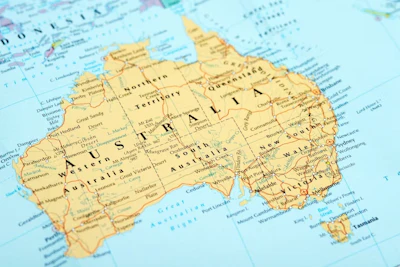
BeyhanYazar | iStock.comArticle Summary
H5N1 avian flu cases in Australian wild birds have surged to 205 across six states as of mid-August, more than doubling in nine days, prompting the world’s largest wildlife vaccination campaign targeting 5,000 little penguins in Victoria.
Over the past week, a further 60 wild birds have tested positive for the H5N1 highly pathogenic avian influenza (HPAI) virus in Australia.
Majority of the birds were swift terns, according to the latest notification from the veterinary authority to the World Organisation for Animal Health (WOAH). They were found around the end of July and early August in the states of South Australia and Victoria.
The H5N1 virus was first identified in Australia in mid-June. Since then, 88 wild birds had tested positive for the virus across five states of the country up to that date.
This week, the Australian Broadcasting Corporation (ABC) reported that the first wild bird case had been confirmed in the island state of Tasmania.
Latest update on the disease situation from the federal government (dated August 13) puts the total number of cases at 205 — more than double the number of reported nine days previously. — across six states (including Tasmania).
Recording by far the most cases to date has been South Australia with 139 virus-positive birds, while outbreaks have also been recorded in Western Australia, Victoria, New South Wales and Queensland.
In order to protect key endangered bird populations from the disease, around 5,000 little penguins on Philip Island in Victoria will be rounded up to receive the first of two doses of vaccine, reports ABC. This is thought to be the largest wildlife vaccination campaign anywhere in the world.
According to the same source, Australia’s federal government has so far acquired around 1,500 doses of vaccine.
No more wild birds have tested positive for the H5N1 virus serotype in New Zealand.
Since the country’s first ever cases of this virus were detected in mid-July, the number of infected wild birds remains at two, reported the Ministry for Primary Industries on August 12. Both of the infected birds were found in the Wellington area in the south of the North Island.
To date, the H5N1 HPAI virus has not been detected in any of New Zealand’s poultry flocks.
Based on notifications to WOAH, poultry at 91 of the nation’s farms tested positive for the H5N1 virus variant between mid-March and the start of July this year.
However, Kathmandu Post reported recently that the number of affected flocks stood at 162 (as of July 23). Officials confirmed that more than 835,000 poultry have been culled in order to control the spread of the infection, along with over 1.22 million eggs and 264 metric tons of feed.
According to this source, the virus was first detected in Nepal in this disease series in mid-February, and that cases had been identified in 12 districts up to mid-July.
To compensate affected poultry owners, the government is reported to have paid 507 million rupees (NPR; US$3.3 million) to 104 farmers, this source reports.
In the Philippines, the Department of Agriculture’s Bureau of Animal Industry reports that new H5N1 HPAI infections have been detected in just one municipality in the previous 31 days (up to August 7).
This latest outbreak appears to have been at a chicken farm in Kalinga, a province in the Cordillera Administrative Region on the island of Luzon. Meanwhile. the outbreak situation remains on-going in Pangasinan province in the Ilocos Region — also on Luzon — where the virus has been detected in 27 flocks of chickens and ducks.
Taiwan’s animal health agency has recently declared to WOAH that an earlier HPAI outbreak series has been “resolved.”
Between July of last year and the end of the same month in 2026, the H5N1 virus serotype was detected at 28 locations in eight cities/counties, according to the closing report. Directly impacted through mortality or preventative culling were more than 873,000 commercial poultry.
In the past week, the authorities in India have also declared an end to earlier H5N1 HPAI outbreak series.
Two declarations followed six outbreaks in poultry in the northeastern state of Sikkim, and another in wild birds in Bihar the east of the country. Both series commenced in January of this year, and were considered closed in late July.
Archery testing to open in September for Cheboygan deer hunters
Cheboygan Daily Tribune
Aug. 15, 2026, 4:01 a.m. ET
Those wishing to take part in the City of Cheboygan’s limited archery deer hunting season will need to pass mandatory archery testing next month.
According to rules posted on the city’s website, the testing will begin on Sept. 2 at the DPW complex and continue throughout the month. Testing will be from 5-7 p.m. on Mondays and Wednesdays and from 9-10 a.m. on Saturdays. There will be no testing on Labor Day, Sept. 7, and no testing will be available after Sept. 30.

More: Cheboygan council allows fall bow hunt to control deer populationMore: Cheboygan council extends special deer bow hunt in city for another month
Last year, the city council approved a fall archery hunt to manage the growing deer population. The hunt is restricted to designated private parcels of land. Less than 25 hunters qualified for a hunting permit. During the Oct. 1 to Nov. 14 period, the hunters killed 17 deer — 14 does and three bucks.
The hunt was later extended for another month due to its success.
Applications for the hunt are available at cheboygan.org/news.
idfg-bpearson
Friday, August 14, 2026 – 12:36 PM MDT
Two large wildfires have burned through some of Southwest Idaho’s most popular hunting units this summer, and with some early seasons opening Saturday, Aug. 15, hunters have questions. Here’s what the Big Grass and Tartar fires currently mean for hunting seasons, access, and wildlife in the region, how Idaho Fish and Game is responding, and how you can help.
If you’re a hunter simply looking for the Cliff’s Notes, here they are: No hunting seasons have changed to date. Fires rarely close entire hunting units, and fire restrictions rarely last through a whole season. But access closures are in effect for both the Big Grass Fire and Tartar Fire as of Aug. 14, conditions on the ground are rough, and the situation is still fluid. If there’s one tip we can provide before seasons kick off, it’s that hunters should check official sources for access closures and current fire information before every trip, especially in early-season hunts.
The Big Grass Fire has burned more than a half-million acres in Owyhee County and eastern Oregon. The fire remains active.
Closure status: BLM’s Owyhee Field Office has temporarily closed the area south of Trout Creek and Silver City roads, from the Oregon border east to Highways 78 and 51. BLM currently anticipates the closure will remain in effect through Aug. 20, but that can change. Check the BLM Idaho closures page and the Big Grass Fire InciWeb page for current status.
What it affects: Portions of Game Management Units 40, 41, and 42 fall within the closure area and the fire perimeter. Hunts opening while the closure and fire activity continue include archery pronghorn in Hunt Area 40-1 and archery deer controlled hunts in hunt areas 40 and 41-1 (Units 41 and 42), all opening Aug. 15. Shortly after, general archery deer seasons open on Aug. 30 and sage-grouse season opens Sept. 15. Until the BLM closure is lifted, some huntable country in these units lies outside the current fire perimeter and closure area.
The Tartar Fire started by lightning in late July and burned roughly 158,000 acres north of Weiser, in the Mann Creek, Hitt and Sturgill mountain, and Brownlee country.
Closure status: A temporary closure covering all BLM-managed lands, roads and trails remains in place for the Tartar Fire and is expected to remain in effect through Aug. 24, depending on conditions. In addition, there is a U.S. Forest Service fire area closure on a portion of Payette National Forest land that hunters need to be aware of. Check the BLM Idaho closures page, Payette National Forest alerts page, and Tartar Fire InciWeb page before you go.
What it affects: The fire burned in Game Management Unit 31 and the Brownlee Elk Zone. The antlerless elk season on and within 1 mile of agricultural lands in Unit 31 opens Aug. 15, with archery deer and Brownlee A archery elk opening Aug. 30 and additional hunts running into late fall.
A word about landowners: Much of the hunting in this country happens on or next to private ground, and many of the landowners who make that possible spent the last several weeks fighting fire, moving livestock, and losing fence and feed. Ask permission every time. Ask what has changed on their place and offer to help where you can. Close gates, watch for damaged fence and downed lines, and be patient. Courtesy right now goes a long way.
Under rules that took effect this year, the deadline to exchange general season deer and elk tags was July 31, and no exchanges are processed after that date. Refunds for deer, elk, and pronghorn tags are limited to specific circumstances such as death, serious illness or injury, pregnancy or military deployment. Fire impacts to a hunt area are not a qualifying reason. Rainchecks are now only possible due to military deployment.
Moose, bighorn sheep, and mountain goat tag holders have a separate refund provision for widespread environmental impacts; contact IDFG with questions about a specific tag.
What you can do: many hunting seasons in these units run weeks past the anticipated dates for area closures, and conditions in late September and October will look very different than they do today. Know your hunt area’s boundaries, check closure status before every trip, and plan around the country that is open.
Wildfires often burn through valuable wildlife habitat in Idaho’s canyons, deserts, foothills, and mountains, and what happens next is often a question on people’s minds, especially in relation to big game animals that hunters and other Idahoans cherish. The answer is often “it depends” because fires and their effects can be different depending on many factors.
For more information about overall fire effects on wildlife, check out this article from 2025.
Fish and Game’s focus will be on recovery and habitat rehabilitation. Biologists are monitoring fires’ effects on wildlife and are already engaged with federal and state land management agencies and private property owners regarding post-fire rehabilitation planning.
Volunteer for recovery work. Fish and Game will announce specific volunteer projects as post-fire rehabilitation planning takes shape. Sign up now and we will follow up as projects come together.
Respect closures and private land. Suppression and recovery work are still underway on both fires.
Get your information from official sources. Fire status, closures, and evacuations come from the incident teams and land management agencies, not rumor:
August 15, 2026 BY James Taylor

Fears grow as bird flu moves closer to Geelong – Geelong Times
The Swan Bay Environment Association is worried about how bird flu will affect the tens of thousands of black swans that gather seasonally in the bay. Photo: Georgina Steytler/Swan Bay Environment Association.
WILDLIFE rescuers and environmental groups are bracing for the arrival of bird flu in the Geelong region, fearing potentially devastating losses among local bird populations.
The H5 strain has already reached Victoria, with the state’s first case detected in a greater crested tern at Portland on 28 July.
Of particular concern locally are the tens of thousands of black swans that gather seasonally at Swan Bay, with the species rated at very high risk from the virus.
Swan Bay Environment Association president Will Johnston said the prospect of an outbreak was deeply concerning.
“It’s an awful situation because there’s not much we can do,” he said.
The H5 strain has caused mass deaths among poultry, wild birds and marine mammals overseas.
It had never been detected in Australia until a case was confirmed in a skua in Western Australia in June this year. There is no evidence yet of the virus infecting other wildlife or poultry in Australia.
The federal government has since released national risk ratings for native birds and mammals, with black swans among those considered at very high risk of infection.
Johnston said the potential consequences for Swan Bay were difficult to contemplate.
“It’s hard to envisage but we could find ourselves in a situation where there are thousands of dead birds in Swan Bay,” he said.
“I haven’t come to terms with
that yet.
“I think their genetic makeup means black swans are not likely to have any ability to resist this at all.”
Sulphur-crested cockatoos and orange-bellied parrots, by comparison, are rated at low risk.
Johnston said an outbreak affecting well-known Australian species such as magpies would be especially confronting for the community.
“My hope in the end is this is a moment when governments sit up and pay attention to the fact
Australian wildlife is unique in the world and really precious, and we have a responsibility to protect it,” he said.
“My disappointment is with all levels of government that they haven’t taken this role seriously enough in recent times.”
Wildlife rescuers are also preparing for the difficult prospect of having to leave potentially infected animals untreated.
Australian health authorities advise people not to approach or touch sick or dead birds or other wildlife, but to record what they see and report it to the 24-hour Emergency Animal Disease Hotline.
Surf Coast Wildlife Rescue director Jason Cichocki said his volunteers had been told not to rescue animals suspected of having bird flu.
“It’s one of those things that under the circumstances, there’s not a lot we can do,” he said.
“If it’s got a broken wing or something obvious we will be taking that animal and treating it as usual, but if we’ve got animals that seem to have the bird flu then I can’t risk having any of my teams touching them.”
He said many of the group’s volunteers had wildlife shelters at home and could not risk carrying the virus back to animals in their care or their pets.
Bird flu does not easily infect people and the Australian Centre for Disease Control considers the risk to people in Australia low.
But Cichocki said even the small risk was enough to warrant caution.
“For now, it’s just a safety factor and yes, it is disappointing not to help, but it would be even more disappointing if one of my rescue team were the first of the humans in Australia to get the virus,” he said.
“They’re saying it’s a really slim chance, but it is a chance, and I can’t take that chance.”
 Jillian Fellows
 Tweet
Tweet Facebook
 Mail
Mail
