Blind Hunter Shoots Wyoming Buck, Hopes To Inspire Others
Reply

[WARNING: Barf-inducing photos below…]
Pennsylvania Outdoors Columnist
0:30
2:14
A 7-year-old Pennsylvania girl is celebrating getting a black bear, a buck and a gobbler in less than two weeks to complete her goal of earning the triple trophy of hunting in one license year.
Josephine “Jojo” Roberts started her season by harvesting a 185-pound bear while hunting with her father Danny Roberts, 37, of Titusville, Crawford County.
They were hunting on Oct. 25 during the special firearms season. “I like spending time with dad and granddad,” she said about being in the woods hunting.

The duo hunted with a group that ended up with a total of three bears that day on State Game Lands property near Warren.
“We walked in and got on our spot,” she said about setting up for the other hunters to move bears their way. “We heard a bunch of shots at bears,” she said. Soon one of the bears turned and ran toward her and her dad. “It stopped at about 70 yards and she shot it,” her father said.
The mentored-youth hunter made a good shot with her .243 rifle and the bruin fell a short distance away down over a hill. “She was a little excited,” he said.
Jojo slowly approached because she wasn’t sure what to think.
“I thought it was going to jump back up. I was excited,” she said when she realized what she had done.
“I think I was shaking more than she was,” the proud father said. “You don’t understand what you just did. I said you’re 7 years old,” he remembers telling her in the woods. When she hunts with a gun or crossbow, her dad places the gun in a tripod that helps hold it in place for her to aim.
“It made me feel good,” she said.
More:Pa. hunter gets a buck with his crossbow the day after his 101st birthday

The group of hunters used a long limb to carry the 185-pound boar out of the woods instead of dragging the bear on the ground, which could have damaged the bear’s fur.
“She cheered us on the whole way,” her dad said.
She added, “It took us four hours to get the bear out.”
Get the Go Outdoors PA newsletter in your inbox.
Join Brian Whipkey in new adventures every Thursday.
Delivery: THURSYour Email
Jojo said she’s looking forward to eating bear steaks and they are having a full mount made of the bear with it standing on its hind legs.
“We got a good group of people we hunt with,” he said about them working together to move bears toward each other. “We saw 10 that day. Five of them came out of one drive,” he said.

On Saturday, Nov. 2, Jojo got a 4-point buck with her crossbow in Crawford County. She was hunting with her dad in an elevated hunting blind they call “the cabin” when the buck appeared in the woods. She watched as it walked to 20 yards and she made the shot. “It ran around in two circles and started tipping side to side and then it fell,” she said about being excited and her feet started shaking.

On Monday, the duo returned to the woods in search of wild turkeys. When they hunt turkeys, she sits in front of her dad between his legs and he helps her hold the .410 shotgun on the tripod. “It works perfect,” he said.
The father and daughter were in the woods before daylight waiting for the turkeys to respond and fly off the roost. “We waited a long time, the three turkeys came out and Dad says they were like 22 to 24 yards maybe and I shot at the first one that came out,” she said.
The mature gobbler has a 10.5-inch beard and 1 3/8-inch long spurs.
She looked forward to the hunt despite the early morning.
“I woke her up at 5 o’clock and she was a little groggy. I asked her if she wanted to go hunting and she jumped right up,” he said.
Roberts plans to cape out the turkey for her to remember the day.
“I’m really proud of the kid. She put in a lot of time this year,” he said.
Having the successful season has left her speechless about what she’s accomplished at a young age.
When asked which hunt she liked the best she said, “The bear. Because we’re not sitting down. We moved around a bit to get the shot at the bear.”
It’s her first year hunting bears, but she did get a 6-point buck last year with a crossbow at age 6 and she got a spring gobbler this year with her .410 shotgun.
Getting a bear is a rare accomplishment for any hunter as the Pennsylvania Game Commission estimates less than 3% of black bear hunters are successful. Travis Lau, communications director for the Pennsylvania Game Commission, congratulated Jojo on her success.
“I know plenty of bear hunters who are still awaiting their first opportunity at a Pennsylvania black bear so that, in and of itself, is an accomplishment. A triple trophy is rarer still. And to put that kind of hunting season together, at such a young age, truly is remarkable,” he said through an email. “Many consider a triple trophy season the accomplishment of a lifetime, and this young hunter has already checked it off the list, while smiling from ear to ear, no doubt.”
Pa. hunter gets a buck with his crossbow the day after his 101st birthdayPennsylvania hunters check in more than 900 bears including one weighing near 700 poundsPGC biologist explains why turkey hunters should see more birds, highlights spring harvestThree Pennsylvania men charged with illegally killing dozens of bucksPGC expert explains what hunters should know about CWD and new extended rifle doe seasonHere’s where Pa. still has antlerless deer licenses and how hunters can share venisonPa. deer hunters should consider also hunting in some developed areas, too. Here’s whyPA hunting season opens up for small and large game

Thinking about Jojo’s accomplishments, her father said, “She impresses me. I’m really impressed with my kids. I can’t believe the time they put into it. It makes me feel good.”
Jojo isn’t the first person in her family to get all three big game animals in one license year. Her 12-year-old sister Millicent “Milli” did it two years ago. She got a 222-pound bear, a nine-point buck and a gobbler.
They are a hunting family. Roberts and his wife Amy’s third daughter, Amelia, 10, got an eight-point already this year with a crossbow.
Milli is learning taxidermy from a friend of the family and plans to do a shoulder mount of Jojo’s buck.
Roberts is glad his three daughters enjoy hunting as he likes to spend as much time in the woods as possible. He personally has harvested six bears himself over the years and completed the triple trophy five times since 2017.
“I missed the buck one year,” he said.
Now he’s more focused on helping his daughters find game.
“I could care less if I kill anything anymore. It’s just so much fun. I get more enjoyment watching them shoot,” he said.
Dave ThomasPublished: November 5, 2024Photo by Jennifer Kalenberg on Unsplash
If you listen carefully, you’ll hear the giddy purr of excitement that hunters are feeling right now as the countdown to the opening of Firearm Deer Season this Saturday.

Get our free mobile app
Hunters think about and strategize for these precious few days out of the year they can take to the woods. It’s a man versus beast, or a man versus nature arena that keeps them coming back day after day and year after year.
With all the excitement of the upcoming kickoff to the new hunting season, here’s something that you need to keep in mind if you ride a 4-Wheeler, ATV or (if the time comes) snowmobile, the times and areas you can ride are going to be restricted.
You may only ride before legal shooting time starts, which is one- half hour before sunrise, between 11am and 2pm, and then one-half hour after sunset.
This applies to all public and private lands.
An emergency permit could be issued by a Conservation Officer for use on public land in the event of an emergency or special condition. There are some cases landowners or those authorized to be on private lands can use an ATV or snowmobile.
The reason for these restrictions is to help reduce potential conflict between riders and hunters. Riders are encouraged to know the area they plan to ride on to try and avoid pitfalls or accidents. Avoid riding near streams, wetlands, lakes or rivers.
Sign up for the KDHL Radio Newsletter
It would also be a good idea to wear reflective clothing if you’re going to be in an area where others may be. These ATV, 4-Wheeler and Snowmobile restrictions will be in place during both phases of firearm season as well as muzzleloader season which ends on December 15th.
If you have any questions, you should reach out to the Minnesota Department of Natural Resources.
Read More: Restrictions For ATV Riders As Hunting Season Starts in Minnesota | https://kdhlradio.com/ixp/911/p/restrictions-for-atv-riders-as-hunting-season-starts-in-minnesota/?utm_source=tsmclip&utm_medium=referral
That goat, Cedar, was ultimately slaughtered after local authorities tracked him down like a fugitive.
Alan Riquelmy / November 1, 2024
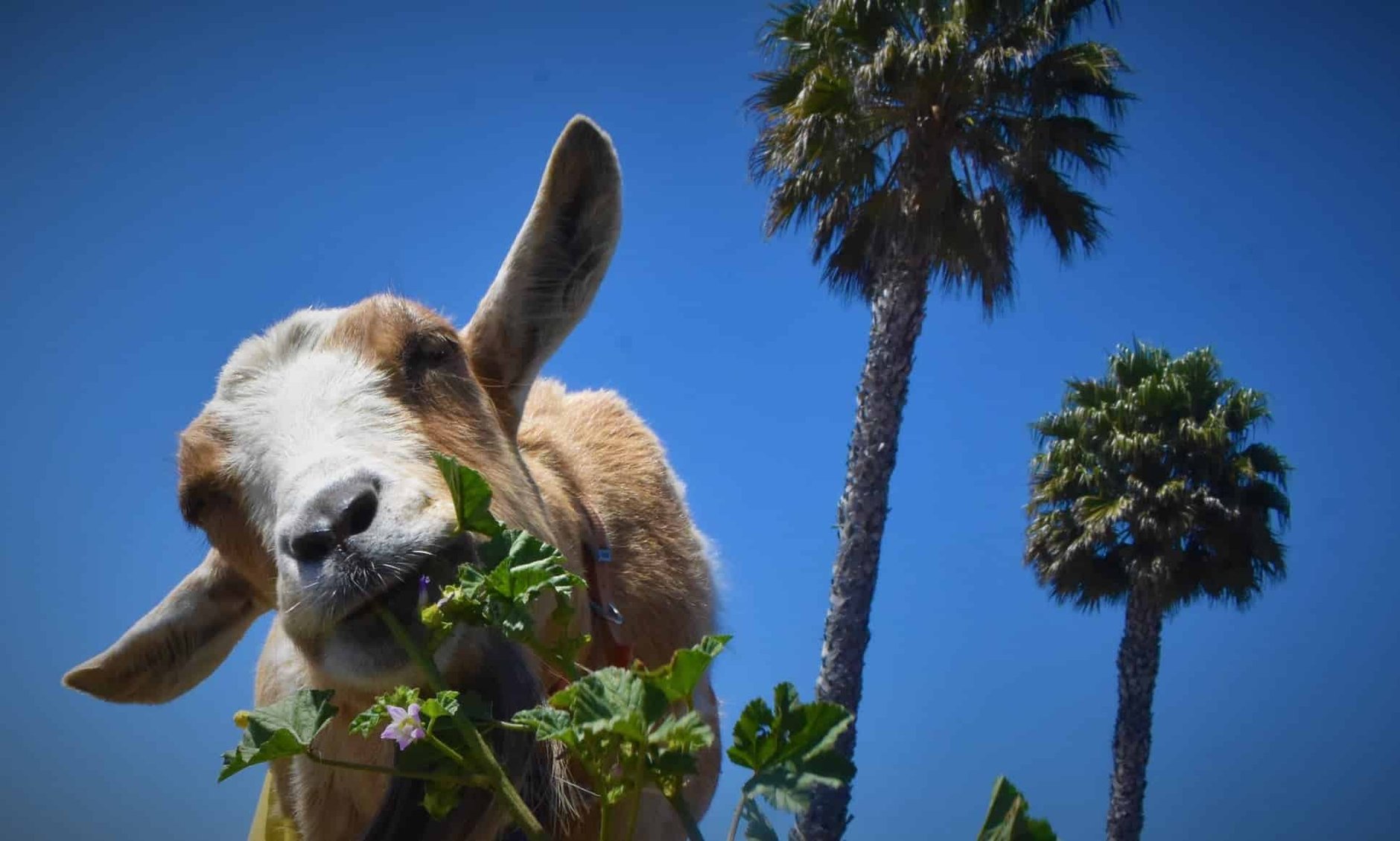
SACRAMENTO, Calif. (CN) — A lawsuit accusing Shasta County officials of improperly seizing a 9-year-old girl’s goat ended Friday with a settlement.
Shasta County and its sheriff’s office, along with a lieutenant and two detectives, agreed to settle the infamous viral case of Cedar the goat for $300,000.
Of that total amount, $100,000 is specifically earmarked in the settlement agreement. Attorneys will get $35,000 in fees, while the remaining $65,000 will go into a trust fund for the girl, now 11.
Other defendants, including fair employees and a 4-H volunteer, still remain in the suit.
The legal fight centers around the purported sale of Cedar at a 2022 district fair. That incident drew significant media attention when it happened, as it included accusations of goat theft by law enforcement and featured a California state senator.
Jessica Long, the girl’s mother, argued the family never agreed to sell Cedar. She said her daughter cried in the goat’s pen, saying she didn’t want to sell Cedar and that the Shasta Fair Association had no right to him.
Despite this, one detective from the settlement obtained a warrant to seize Cedar. Two other officers then drove to Sonoma County, where they seized the goat.
“As a result, the young girl who raised Cedar lost him, and Cedar lost his life,” Long wrote in her suit. “Now plaintiffs can never get him back.”
Ryan Gordon, an attorney for Long and her daughter, said in a statement to Courthouse News that no litigation can bring Cedar back.
Nonetheless, “the $300,000 settlement with the county of Shasta and Shasta County Sheriff’s Office is the first step in moving forward,” he added. “We continue to litigate against the California fair entity and related employees, and a 4-H volunteer.”
Attorneys for the defendants couldn’t be reached for comment.
According to Long, her daughter became Cedar’s owner in April 2022, caring for and feeding him daily until around July 2022. The girl, who was enrolled in a local 4-H youth program, ultimately exhibited Cedar at the Shasta District Fair.
While the fair had a junior livestock auction, the Shasta Fair Association didn’t own the goat. Long wrote that at most, the association should receive 7% of the payment that a 4-H exhibitor gets for selling an animal.
Regardless, Long said such no sale ever occurred, as the family acted to stop their participation in the livestock auction. The fair association claimed fair rules didn’t allow for that, though no such legal rules exist.
State Senator Brian Dahle, a Bieber Republican whose district includes Shasta County, made the high bid for Cedar at $902 through a representative.
“After the auction, [the girl] would not leave Cedar’s side,” Long wrote. “[She] loved Cedar and the thought of him going to slaughter was something she could not bear. While sobbing in his pen beside him, [she] communicated to her mother she didn’t want Cedar to go to slaughter.”
Long, wanting to avoid conflict, told the fair association she’d pay for any losses. Long also worried about fallout from the decision and opted to take Cedar to a Sonoma County farm, giving her time to fix any community rifts.
Fearing legal threats from the fair association’s livestock manager, Long again offered to pay for any losses. She also contacted Dahle’s office. His representatives told her he wouldn’t hinder her efforts to save Cedar.
In spite of that, the sheriff’s office began an investigation, leading to a warrant to seize Cedar from a Napa County business.
The lieutenant and a detective then drove at least 500 miles to seize Cedar — but the goat had never been there. They later found Cedar at the Sonoma County farm and seized the goat, even though, as Long noted, they had no warrant for that location.
Posted Monday, November 4, 2024 5:47 pm
Nic DeCastro
LandTrust
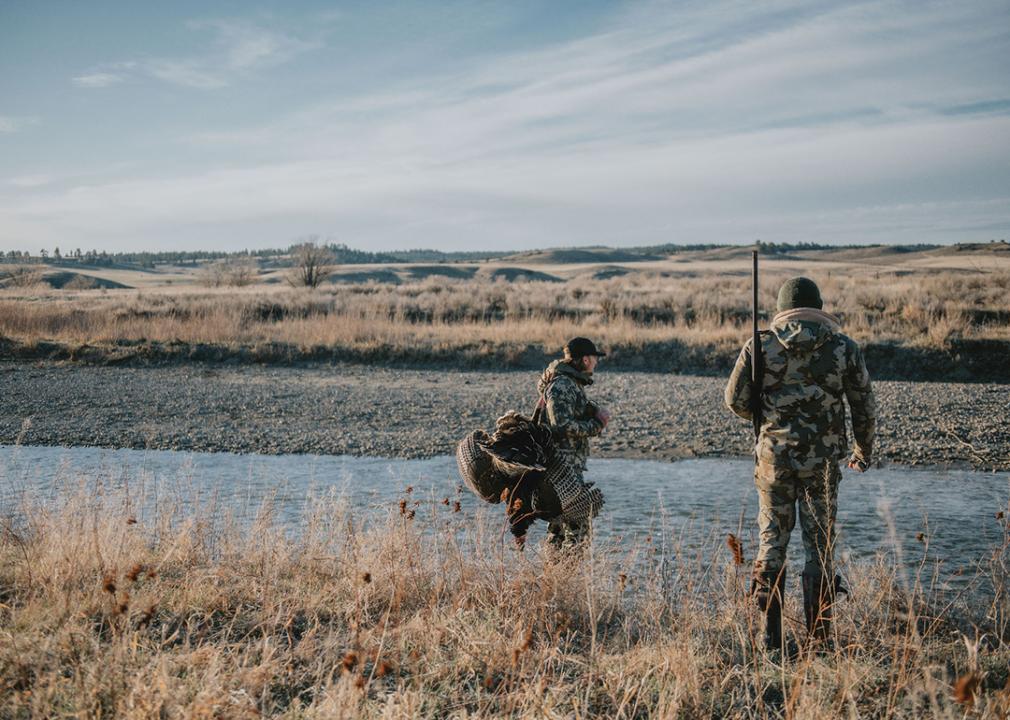
The intersection of political leanings and hunting participation presents an interesting paradox in American culture. Based on research from the land-sharing marketplace for outdoor recreation, LandTrust, this article explores the top 10 liberal and liberal-leaning states with the highest number of hunters per capita and the top 10 conservative and conservative-leaning states with the least number of hunters per capita, challenging common stereotypes about hunting and political affiliations.
The per capita analysis reveals a significantly different picture compared to the raw numbers, highlighting the importance of considering population size when examining hunting participation rates across states.
The per capita analysis of licensed hunters across states challenges simplistic narratives about the relationship between political ideology and hunting culture. It reveals that factors such as rural traditions, geography, and overall outdoor recreation culture play significant roles in determining hunting participation rates.
This nuanced picture emphasizes the need for a more sophisticated understanding of American cultural practices and their relationship to political ideologies. It suggests that common ground on issues related to land use, conservation, and outdoor recreation may be found across the political spectrum, potentially offering opportunities for dialogue and cooperation in an often divided political landscape.
Ultimately, this analysis reinforces the complexity of American cultural identity and the danger of making broad generalizations based on political affiliations alone. It invites a deeper exploration of the diverse factors that shape regional traditions and practices, encouraging a more nuanced approach to understanding the intersection of culture, politics, and outdoor activities in the United States.

